Almond Butter Macros: Complete Nutrition Guide + Healthy Alternatives
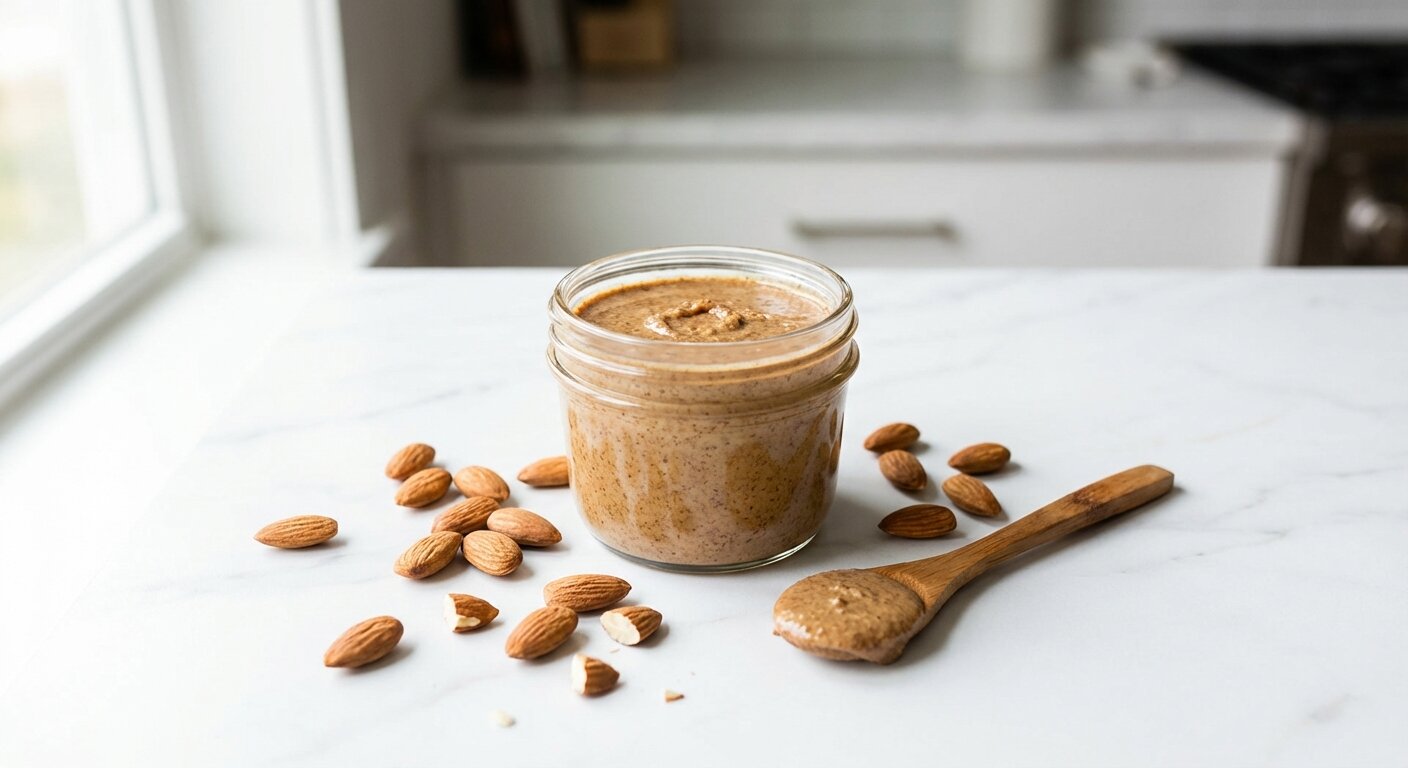
Almond butter has become a health food staple, but most people have no idea how calorie-dense it actually is. One “innocent” spoonful straight from the jar? That’s nearly 100 calories, and let’s be honest—nobody stops at one spoonful.
If you’re tracking macros for weight loss, muscle building, or body recomposition, understanding almond butter’s nutritional profile is non-negotiable. For a complete introduction to tracking protein, carbs, and fats, start there. This guide breaks down the complete macro breakdown, portion control strategies, and smarter alternatives so you can enjoy almond butter without derailing your goals.
Ready to dial in your macros? Use our Macro Calculator to get your personalized daily protein, carb, and fat targets based on your goals.
Almond Butter Macros Breakdown
Almond butter is calorically dense—meaning a small volume packs a significant caloric punch. Here’s the complete nutritional profile:
Per 1 Tablespoon (16g)
- Calories: 98 kcal
- Protein: 3.4g
- Carbohydrates: 3.0g
- Fiber: 1.6g
- Net carbs: 1.4g
- Fat: 8.9g
- Saturated fat: 0.8g
- Monounsaturated fat: 5.2g
- Polyunsaturated fat: 2.2g
Per 2 Tablespoons (32g)
- Calories: 196 kcal
- Protein: 6.7g
- Carbohydrates: 6.0g
- Fiber: 3.2g
- Net carbs: 2.8g
- Fat: 17.8g
Key Takeaways
- High in calories: 98 calories per tablespoon means portions matter
- Moderate protein: 3.4g per tablespoon is decent but not exceptional
- Low carb: 1.4g net carbs makes it keto-friendly
- High fat: Primarily heart-healthy monounsaturated fats
The fat content is predominantly monounsaturated (the same type found in olive oil), which supports cardiovascular health and hormone production. However, with 98 calories per tablespoon, it’s easy to blow through 300-400 calories without realizing it.
How Almond Butter Fits Your Macros
Almond butter can support various dietary goals when portioned correctly. Here’s how it fits into common macro frameworks:
For Fat Loss (Cutting)
Recommended serving: 1 tablespoon (98 calories)
Almond butter’s combination of protein, fiber, and healthy fats promotes satiety—but only if you control portions. A single tablespoon can help curb hunger between meals, but eating directly from the jar is a fast track to a calorie surplus.
Pro tip: Pre-portion almond butter into small containers (1 tablespoon each) to avoid mindless snacking.
For Muscle Building (Bulking)
Recommended serving: 2-3 tablespoons (196-294 calories)
Almond butter is an excellent bulking food because it’s calorie-dense without being excessively filling. It’s an easy way to add 200-300 calories to a smoothie or post-workout meal.
Example bulking shake:
- 2 scoops whey protein (240 calories, 48g protein)
- 2 tbsp almond butter (196 calories, 6.7g protein)
- 1 banana (105 calories, 27g carbs)
- 1 cup oat milk (120 calories, 16g carbs)
- Total: 661 calories, 54.7g protein, 43g carbs, 17.8g fat
For Low-Carb / Keto Diets
Recommended serving: 1-2 tablespoons
With only 1.4g net carbs per tablespoon, almond butter is a keto-friendly fat source. It pairs well with celery, low-carb crackers, or mixed into keto smoothies.
For Balanced Macros (IIFYM)
Recommended serving: 1-2 tablespoons
Almond butter fits seamlessly into flexible dieting frameworks. Just log it accurately and ensure it fits within your daily fat and calorie targets.
Portion Control: Why Most People Overeat Almond Butter
Here’s the uncomfortable truth: most people dramatically underestimate almond butter portions.
The Portion Distortion Problem
- “A spoonful” = anywhere from 1 to 3+ tablespoons (98-294+ calories)
- “Spreading it on toast” = often 2-3 tablespoons (196-294 calories)
- “Eating from the jar” = literally impossible to track accurately
How to Measure Almond Butter Accurately
- Use a food scale – Weigh out exactly 16g (1 tablespoon) or 32g (2 tablespoons)
- Pre-portion servings – Divide a jar into single-serving containers
- Use measuring spoons – Level off the spoon (don’t heap it)
- Track immediately – Log it in your app before eating
A heaping tablespoon can easily be 20-24g (122-235 calories), which means you could be consuming 25-50% more calories than you think.
Almond Butter vs. Other Nut Butters
How does almond butter stack up against other popular nut butters? Here’s a macro comparison per tablespoon (16g):
| Nut Butter | Calories | Protein | Carbs | Fat |
|---|---|---|---|---|
| Almond Butter | 98 | 3.4g | 3.0g | 8.9g |
| Peanut Butter | 96 | 4.0g | 3.5g | 8.2g |
| Cashew Butter | 94 | 2.8g | 4.4g | 7.9g |
| Sunflower Seed Butter | 99 | 3.1g | 4.0g | 9.0g |
| Tahini (Sesame Butter) | 89 | 2.6g | 3.2g | 8.1g |
Key Insights
- Peanut butter has slightly more protein (4g vs. 3.4g)
- Almond butter has more fiber and vitamin E
- Cashew butter has more carbs (4.4g vs. 3.0g)
- Calories are nearly identical across all nut butters
The differences are minimal from a macro standpoint. Choose based on taste preference, budget, and ingredient quality.
Best Almond Butter Brands (No Junk Added)
Not all almond butter is created equal. Many commercial brands add sugar, palm oil, and emulsifiers that increase calories and reduce nutritional value.
What to Look For
- Ingredients: Almonds (and maybe salt). That’s it.
- No added sugar: Check the ingredient list, not just the label
- No palm oil or hydrogenated oils
- Minimal processing: Look for “dry roasted” or “raw”
Top Brands
- MaraNatha Organic Almond Butter (ingredients: organic almonds, sea salt)
- Barney Butter Bare Smooth (ingredients: blanched almonds)
- 365 by Whole Foods Almond Butter (ingredients: almonds, sea salt)
- Once Again Almond Butter (ingredients: organic almonds)
- Justin’s Classic Almond Butter (ingredients: dry roasted almonds, palm oil – note: contains palm oil)
Pro tip: Natural almond butter separates (oil rises to the top). Stir it thoroughly and store it upside down in the fridge to prevent re-separation.
Healthier Almond Butter Alternatives
If you’re tracking macros and find almond butter too calorie-dense, here are some lower-calorie alternatives:
PB2 / PB2 Almond (Powdered Almond Butter)
- Calories per 2 tbsp: 45-50
- Protein: 5g
- Fat: 1.5g
- Carbs: 5g
Powdered almond butter is made by pressing out most of the oil, reducing calories by ~75%. It’s perfect for mixing into smoothies, oatmeal, or Greek yogurt.
Downside: Lower fat content means less satiety. You miss out on the heart-healthy fats.
Almond Butter Mixed with Greek Yogurt
- 1 tbsp almond butter + ½ cup Greek yogurt:
- Calories: 158
- Protein: 15g
- Carbs: 9g
- Fat: 10g
This combo gives you the creamy texture of almond butter with significantly more protein from Greek yogurt.
Walnut Butter (Higher Omega-3s)
- Calories per tablespoon: 100
- Protein: 2.5g
- Fat: 9.5g (higher omega-3 content)
Walnut butter is nearly identical calorically but offers more anti-inflammatory omega-3 fatty acids.
How to Use Almond Butter Without Destroying Your Macros
Almond butter is delicious, but it’s easy to overdo it. Here are smart ways to incorporate it into your diet:
Breakfast Ideas
- 1 tbsp on whole grain toast (adds 98 calories, 3.4g protein)
- Mixed into oatmeal (adds creaminess without sugar)
- Blended into a protein smoothie (adds 98-196 calories depending on serving)
Snack Ideas
- 1 tbsp with apple slices (total: ~198 calories)
- 1 tbsp with celery sticks (total: ~118 calories)
- 1 tbsp mixed into Greek yogurt (total: ~168 calories)
Post-Workout Ideas
- 2 tbsp in a post-workout shake (adds 196 calories, 6.7g protein)
- 2 tbsp on a rice cake (adds 196 calories to a quick carb source)
Meal Prep Tip
Pre-portion almond butter into small silicone molds or containers (1 tablespoon each). Pop them in the fridge or freezer. When you need a serving, grab one—no guessing, no overeating.
Common Mistakes When Tracking Almond Butter Macros
Mistake #1: Eating from the Jar
You’ll consume 2-4x more than you think. Always measure.
Mistake #2: Using “1 Serving” Without Weighing
“1 serving” can mean 16g, 32g, or whatever the manufacturer decides. Always check the weight in grams.
Mistake #3: Forgetting to Log It
A tablespoon here, a spoonful there—by the end of the day, you’ve added 300-400 untracked calories.
Mistake #4: Buying Sweetened Almond Butter
Some brands add 3-5g of sugar per tablespoon, increasing calories and carbs. Read the ingredient list.
Mistake #5: Pairing It with High-Calorie Foods
Almond butter + chocolate + granola = 500+ calories. Be mindful of what you pair it with.
Almond Butter Macros for Special Diets
Vegan / Plant-Based Diets
Almond butter is a solid plant-based protein source, but it’s not a complete protein (lacks some essential amino acids). Pair it with legumes or quinoa to create a complete amino acid profile.
Gluten-Free Diets
Almond butter is naturally gluten-free and safe for celiac disease or gluten intolerance.
Paleo Diets
Almond butter fits perfectly into Paleo frameworks. Just avoid brands with added sugars or industrial oils.
Low-FODMAP Diets
Almond butter is high in FODMAPs and may trigger digestive issues in sensitive individuals. Stick to small servings (1 tablespoon max).
Is Almond Butter Worth the Hype?
Almond butter is nutrient-dense, rich in healthy fats, and moderately high in protein—but it’s not a magic food. Here’s the bottom line:
Pros
- High in heart-healthy monounsaturated fats
- Good source of vitamin E, magnesium, and fiber
- Low in net carbs (keto-friendly)
- Versatile and convenient
Cons
- Extremely calorie-dense (easy to overeat)
- Not a primary protein source (only 3.4g per tablespoon)
- Expensive compared to peanut butter
- High in omega-6 fatty acids (may promote inflammation if consumed in excess)
Verdict: Almond butter is a great addition to a balanced diet when portioned correctly. Use it as a flavor enhancer and fat source—not a primary protein source.
Frequently Asked Questions
What are the macros in almond butter?
One tablespoon (16g) of almond butter contains approximately 98 calories, 3.4g protein, 3.0g carbs (1.6g fiber, 1.4g net carbs), and 8.9g fat. Two tablespoons (32g) provides 196 calories, 6.7g protein, 6.0g carbs (3.2g fiber, 2.8g net carbs), and 17.8g fat.
The fat content is predominantly monounsaturated (5.2g per tablespoon), which supports cardiovascular health. The fiber content (1.6g per tablespoon) helps with satiety and digestive health.
Pro tip: Always weigh almond butter on a food scale. A “heaping” tablespoon can be 20-24g (122-235 calories), which significantly impacts your daily calorie totals.
Is almond butter good for weight loss?
Almond butter can support weight loss when portion-controlled due to its protein, fiber, and healthy fats that promote satiety. However, with 98 calories per tablespoon, it’s very easy to overconsume and create a calorie surplus.
The key is strict portion control. Pre-portion servings into small containers (1 tablespoon each) to avoid mindless snacking. Pair almond butter with high-protein foods like Greek yogurt or protein shakes to maximize satiety per calorie.
Reality check: If you’re eating 3-4 tablespoons per day without tracking, you’re adding 294-392 untracked calories—enough to stall fat loss progress entirely.
How much protein is in almond butter?
Almond butter provides 3.4g of protein per tablespoon (16g) or 6.7g per two tablespoons (32g). While this is decent for a plant-based food, it’s not a primary protein source compared to options like chicken breast (31g per 100g), Greek yogurt (10g per 100g), or whey protein (24g per scoop).
Almond butter’s protein is incomplete (lacks some essential amino acids), so it should be paired with complementary protein sources like legumes, quinoa, or dairy for optimal muscle protein synthesis.
For muscle building: Don’t rely on almond butter to hit your daily protein target. Use it as a calorie-dense fat source, and prioritize lean meats, fish, eggs, and protein powder for your protein intake.
Is almond butter better than peanut butter?
Almond butter has slightly more fiber (1.6g vs. 1.0g per tablespoon), vitamin E, and minerals (magnesium, calcium) than peanut butter. However, peanut butter has more protein (4g vs. 3.4g per tablespoon).
From a macro standpoint, the differences are minimal:
- Almond butter: 98 cal, 3.4g protein, 3.0g carbs, 8.9g fat
- Peanut butter: 96 cal, 4g protein, 3.5g carbs, 8.2g fat
Choose based on: Personal preference, budget (peanut butter is cheaper), and macro targets. If you need slightly more protein, choose peanut butter. If you want more fiber and micronutrients, choose almond butter.
What’s the healthiest way to eat almond butter?
The healthiest approach is portion-controlled servings (1-2 tablespoons) paired with protein sources to maximize satiety and nutritional balance. Here are some smart combinations:
Option 1: 1 tablespoon almond butter + ½ cup Greek yogurt (high protein, moderate fat) Option 2: 1 tablespoon almond butter + 1 scoop whey protein in a smoothie (300-400 calories, 25-30g protein) Option 3: 1 tablespoon almond butter + celery or apple slices (low-calorie, high-fiber snack)
What to avoid:
- Eating directly from the jar (impossible to track accurately)
- Pairing it with high-calorie foods like chocolate or granola (creates a calorie bomb)
- Choosing sweetened or flavored varieties (adds unnecessary sugar and calories)
Can I eat almond butter every day?
Yes, you can eat almond butter daily in moderation as part of a balanced diet. Stick to 1-2 tablespoons per day (98-196 calories) to avoid excessive calorie intake, and ensure you’re getting protein from other sources to meet your daily requirements.
Almond butter is high in omega-6 fatty acids, which can promote inflammation when consumed in excess without balancing omega-3 intake. If you eat almond butter daily, consider pairing it with omega-3-rich foods like salmon, chia seeds, or walnuts.
Daily guideline: 1-2 tablespoons per day fits most macro frameworks. More than 3 tablespoons (294+ calories) daily is excessive for most people unless you’re bulking or have very high calorie needs.
How many calories are in a spoonful of almond butter?
One level tablespoon of almond butter contains approximately 98 calories. However, a “spoonful” can vary significantly:
- Level tablespoon: 16g = 98 calories
- Heaping tablespoon: 20-24g = 122-235 calories
- Serving spoon (larger): 25-32g = 154-196 calories
This is why weighing almond butter on a food scale is critical. A “heaping” tablespoon can add 50-100 extra untracked calories compared to a level tablespoon.
Tracking tip: Use the barcode scanner in your tracking app and weigh portions in grams. This eliminates guesswork and ensures accurate macro tracking.
Is almond butter high in carbs or fat?
Almond butter is high in fat (8.9g per tablespoon), not carbs (3.0g per tablespoon, with 1.6g fiber = 1.4g net carbs). The majority of calories come from heart-healthy monounsaturated fats (5.2g per tablespoon).
Macronutrient breakdown per tablespoon:
- Fat: 8.9g (71% of calories)
- Protein: 3.4g (14% of calories)
- Carbs: 3.0g (12% of calories), with 1.6g fiber
This makes almond butter a low-carb, high-fat food suitable for keto, low-carb, and Paleo diets. However, the high fat content also makes it extremely calorie-dense, so portions still matter even on high-fat diets.
Final Thoughts: Should You Eat Almond Butter?
Almond butter is a nutrient-dense food that can fit into nearly any macro framework—if you control portions. The biggest mistake people make is underestimating how calorie-dense it is and eating directly from the jar.
Key takeaways:
- 1 tablespoon = 98 calories, 3.4g protein, 8.9g fat, 1.4g net carbs
- Always weigh portions on a food scale to avoid overeating
- Pair it with protein sources like Greek yogurt or protein powder
- Choose unsweetened, minimal-ingredient brands for maximum nutritional value
- Use it strategically as a flavor enhancer, not a primary protein source
If you’re serious about hitting your macro goals, track every gram of almond butter you consume. It’s one of the easiest foods to underestimate—and one of the fastest ways to sabotage your progress.
Want to optimize your macro split for your goals? Use our Macro Calculator to get your personalized daily targets.
Related Articles

Dragonfruit Macros: Complete Nutrition Guide for Pitaya
Complete macro breakdown of dragonfruit (pitaya). Learn the calories, protein, carbs, and...
Read guide →
Bulgur Macros: Complete Nutritional Guide & Health Benefits
Discover bulgur's complete macro breakdown, nutritional benefits, and how to incorporate...
Read guide →
Radish Macros: Nutrition Facts and Health Benefits
Complete guide to radish macros and nutrition. Learn calories, protein, carbs, and health...
Read guide →Note: Nutrition values are approximate and may vary based on preparation method and source.