Apple Juice Macros: Nutrition Facts, Calories & Sugar Content
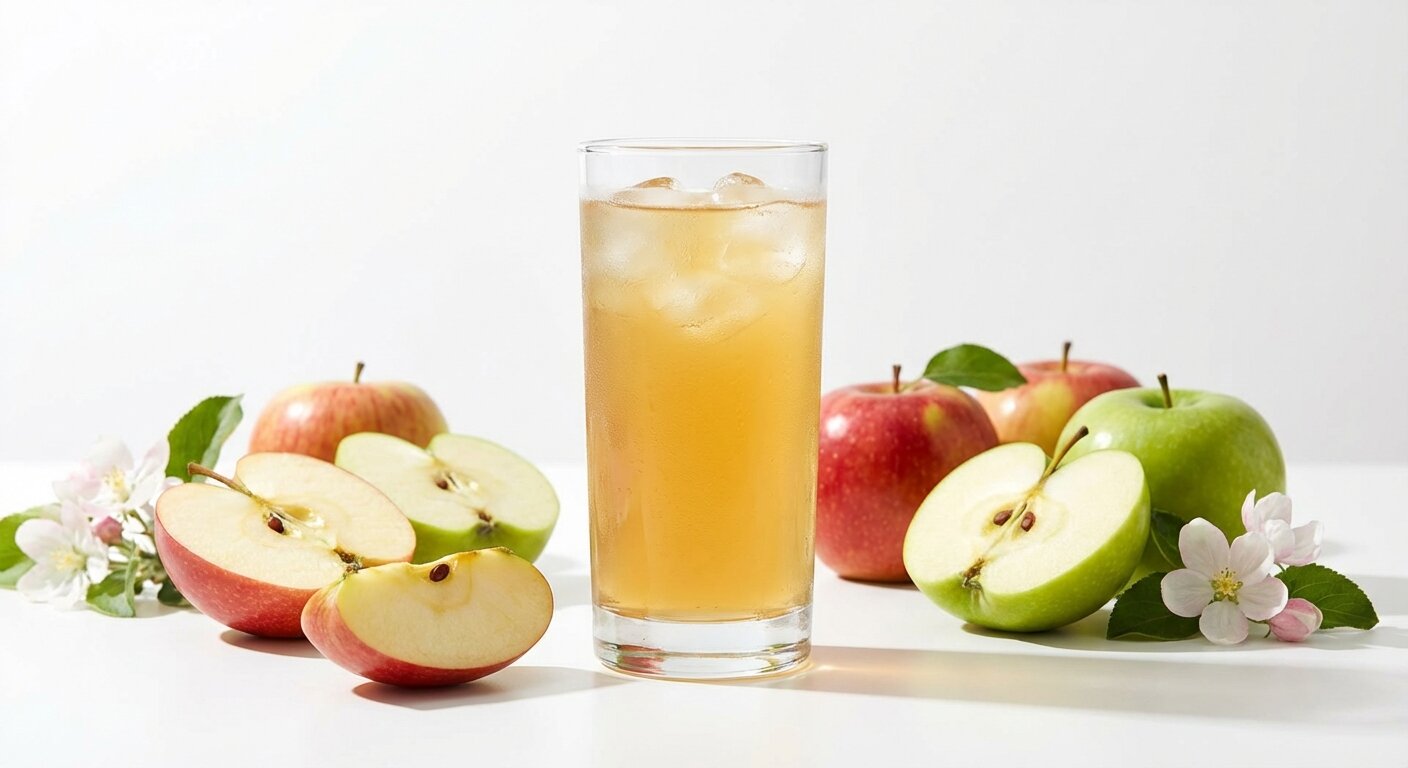
Related: Learn more about what macros are and how they impact your diet.
Apple Juice Macros Overview
Per 8 oz (240ml) serving of 100% unsweetened apple juice:
- Calories: 114
- Protein: 0.2g
- Carbs: 28g
- Fat: 0g
- Fiber: 0.2g
- Sugar: 24g
Apple juice is almost pure carbohydrates with virtually no protein, fat, or fiber. While it provides vitamin C and potassium, it lacks the fiber and phytonutrients found in whole apples.
The high sugar content combined with minimal fiber means apple juice causes faster blood sugar spikes than whole fruit. This makes it useful for quick energy but less ideal for sustained satiety or blood sugar management.
Understanding these macros helps you determine when—and how much—apple juice fits your nutrition goals, whether you’re tracking macros for fat loss, muscle gain, or general health.
Ready to calculate your personalized macro targets? Use our macro calculator to determine your optimal protein, carb, and fat intake based on your goals and activity level.
Complete Macronutrient Breakdown
Standard Serving Size (8 oz / 240ml)
This is the most common serving size for apple juice—what you’d pour into a standard drinking glass.
| Nutrient | Amount | % Daily Value |
|---|---|---|
| Calories | 114 | 6% (2,000 cal diet) |
| Protein | 0.2g | 0% |
| Carbohydrates | 28g | 10% |
| Fiber | 0.2g | 1% |
| Sugars | 24g | — |
| Fat | 0g | 0% |
| Vitamin C | 2.2mg | 2% |
| Potassium | 250mg | 7% |
| Iron | 0.3mg | 2% |
| Magnesium | 7mg | 2% |
Nutritional data based on USDA FoodData Central for 100% unsweetened apple juice
Different Serving Sizes
Apple juice servings vary significantly depending on container size and context:
Small Box (6 oz / 177ml):
- Calories: 85
- Protein: 0.2g
- Carbs: 21g
- Sugar: 18g
Standard Glass (8 oz / 240ml):
- Calories: 114
- Protein: 0.2g
- Carbs: 28g
- Sugar: 24g
Large Glass (12 oz / 355ml):
- Calories: 171
- Protein: 0.3g
- Carbs: 42g
- Sugar: 36g
Bottle (16 oz / 473ml):
- Calories: 228
- Protein: 0.4g
- Carbs: 56g
- Sugar: 48g
Many single-serve bottles contain 15.2-16 ounces, nearly double a standard serving. This can add over 200 calories to your daily intake without providing meaningful satiety.
Types of Apple Juice: Macro Comparison
Not all apple juice is created equal. Processing methods, additives, and concentration levels significantly impact the nutritional profile.
100% Apple Juice (No Sugar Added)
Per 8 oz serving:
- Calories: 114
- Carbs: 28g
- Sugar: 24g (all natural)
- Fiber: 0.2g
This is pure pressed apple juice with no added sweeteners. Despite “no sugar added” labeling, it’s still very high in natural fruit sugars.
Apple Juice from Concentrate
Per 8 oz serving:
- Calories: 117
- Carbs: 29g
- Sugar: 26g
- Fiber: 0.2g
Made by removing water from pressed juice, then reconstituting. Macros are nearly identical to fresh-pressed juice, though some vitamin C may be lost during processing.
Cloudy Apple Juice (Unfiltered)
Per 8 oz serving:
- Calories: 120
- Carbs: 28g
- Sugar: 24g
- Fiber: 1-2g
Retains more natural apple solids and pectin. The higher fiber content (though still low) provides marginally better blood sugar response than clear juice.
Apple Juice Cocktail (Sweetened)
Per 8 oz serving:
- Calories: 130-140
- Carbs: 32-35g
- Sugar: 30-32g (natural + added)
- Fiber: 0g
Contains added sugars or high-fructose corn syrup. Provides no nutritional advantage over 100% juice while adding extra calories and sugar.
Sparkling Apple Juice
Per 8 oz serving:
- Calories: 110-120
- Carbs: 28-30g
- Sugar: 24-26g
- Fiber: 0.2g
Carbonated apple juice with similar macros to regular juice. The carbonation doesn’t change nutritional content but may increase satiety slightly.
Apple Juice vs Whole Apples: The Critical Difference
The macronutrient profiles tell only part of the story. The physical form dramatically impacts how your body processes apple nutrition.
Whole Apple (1 medium, 182g)
| Nutrient | Whole Apple | Apple Juice (8oz) |
|---|---|---|
| Calories | 95 | 114 |
| Protein | 0.5g | 0.2g |
| Carbs | 25g | 28g |
| Fiber | 4.4g | 0.2g |
| Sugar | 19g | 24g |
| Volume | 182g solid | 240ml liquid |
Key differences:
Fiber: Whole apples contain 20x more fiber than apple juice. This fiber:
- Slows sugar absorption
- Promotes satiety and fullness
- Supports digestive health
- Helps regulate blood sugar levels
Satiety: Eating a whole apple triggers mechanical chewing and stomach distension, signaling fullness to your brain. Drinking apple juice provides no such feedback, making overconsumption easy.
Blood Sugar Impact: Despite similar sugar content, whole apples have a glycemic index of 36 (low), while apple juice rates around 41-45 (medium). The fiber in whole apples prevents the rapid blood sugar spike juice causes.
Volume vs Calories: You can drink 16oz of apple juice (228 calories) in 60 seconds. Eating the equivalent 3-4 apples would take 15-20 minutes and leave you full.
Bottom line: For macro tracking and overall health, whole apples are vastly superior to apple juice. Choose juice only when convenience or quick carbs are the priority.
Apple Juice in Different Diets
Apple Juice for Weight Loss
Apple juice is challenging for fat loss diets:
Challenges:
- High calorie density (114 per 8oz)
- Zero fiber = no satiety
- Liquid calories don’t trigger fullness
- Easy to overconsume (500+ calories without noticing)
- Rapid blood sugar spike followed by crash
Research finding: Studies show liquid calories don’t reduce subsequent food intake the way solid calories do. Drinking 200 calories of juice won’t make you eat 200 fewer calories at your next meal.
Better alternatives for cutting:
- Whole apples: More volume, fiber, and satiety for fewer calories
- Water with lemon: Zero calories, hydrating
- Herbal tea: Zero calories, can satisfy sweet cravings
- Green tea: Zero calories with potential metabolic benefits
If you must drink apple juice while cutting:
- Limit to 4oz portions
- Count the carbs and calories precisely
- Drink with or after a high-fiber, high-protein meal
- Use as a dessert replacement, not a thirst quencher
Apple Juice for Muscle Gain/Bulking
Apple juice can support muscle-building goals:
Advantages:
- Easy way to add carbs when eating is difficult
- Quick-digesting carbs for post-workout glycogen replenishment
- Can help meet high calorie targets (3,000+ calories/day)
- Convenient liquid calories for busy schedules
How to use it:
Post-workout: 8-12oz apple juice provides 28-42g fast carbs to replenish glycogen stores. Pair with 25-40g protein from whey or another source.
Between meals: If struggling to meet calorie targets, 16oz apple juice adds 230 calories without requiring appetite or digestion capacity for more solid food.
With meals: 8oz juice with high-protein meals adds carbs without increasing meal volume.
Caution: Even when bulking, prioritize nutrient-dense whole foods. Apple juice should supplement, not replace, whole apples and vegetables in your diet.
Apple Juice for Keto/Low-Carb
Apple juice is incompatible with ketogenic diets:
- 8oz serving = 28g carbs (exceeds daily keto limit of 20-50g)
- Zero fat = doesn’t support ketosis
- Zero fiber = pure sugar hit
Even small amounts of apple juice can kick you out of ketosis. Strict keto dieters should avoid entirely.
Low-carb alternatives (under 5g carbs per serving):
- Water
- Unsweetened almond milk
- Black coffee
- Tea (unsweetened)
- Lemon water
Apple Juice for Athletes/High-Carb Diets
Apple juice works well for endurance athletes and high-intensity training:
Pre-workout (30-60 minutes before):
- 8oz provides 28g quick carbs for energy
- Liquid form digests faster than solid food
- Won’t cause GI distress during exercise
During workout (sessions over 90 minutes):
- 4-8oz every 30-45 minutes provides easily digestible fuel
- Can mix with water to create lower-concentration sports drink
- Pair with electrolytes for longer efforts
Post-workout (within 30 minutes):
- 8-12oz with protein shake provides 28-42g carbs
- Rapid absorption supports glycogen replenishment
- Convenient when whole food isn’t practical
Daily carb loading (before events):
- Can contribute 200-400 calories toward high-carb intake goals
- Easier to consume than equivalent solid food
- Maintains hydration while adding carbs
Caution: For shorter workouts (under 60 minutes), water is sufficient. Save apple juice for genuinely high-intensity or long-duration training.
Apple Juice vs Other Juices
How does apple juice compare to other popular fruit juices?
| Juice (8 oz) | Calories | Carbs | Sugar | Fiber | Vitamin C |
|---|---|---|---|---|---|
| Apple | 114 | 28g | 24g | 0.2g | 2% DV |
| Orange | 110 | 26g | 21g | 0.5g | 137% DV |
| Grape | 152 | 37g | 36g | 0.2g | 104% DV |
| Cranberry (unsw.) | 116 | 31g | 24g | 0.2g | 39% DV |
| Pineapple | 132 | 32g | 25g | 0.5g | 94% DV |
| Grapefruit | 96 | 23g | 21g | 0.2g | 96% DV |
Key takeaways:
- Apple juice is middle-of-the-pack for calories and carbs
- Significantly lower in vitamin C than orange or grapefruit juice
- Similar sugar content to most fruit juices (20-30g per serving)
- Fiber content is low across all juices (whole fruit is better)
For macro tracking: Most fruit juices are nutritionally similar—choose based on taste preference, but prioritize whole fruit when possible.
Common Apple Juice Nutrition Myths
Myth 1: “Apple juice is healthy because it’s natural”
Reality: While apple juice contains natural sugars rather than added sugars, your body processes them similarly. The lack of fiber means juice impacts blood sugar much like soda.
Natural doesn’t automatically mean nutritious. Whole apples are natural AND nutritious. Apple juice is natural but nutritionally inferior.
Myth 2: “Cloudy apple juice is much healthier than clear”
Reality: Cloudy juice has marginally more fiber (1-2g vs 0.2g) and may retain more polyphenols, but the difference is small. Both are still high-sugar, low-fiber beverages.
If choosing between them, cloudy is slightly better. But neither compares to eating whole apples.
Myth 3: “No sugar added means low sugar”
Reality: “No sugar added” only means no additional sweeteners were included. 100% apple juice naturally contains 24g sugar per 8oz serving—as much as most sodas.
The label is technically accurate but misleading. The juice is still very high in sugar.
Myth 4: “Apple juice helps with hydration better than water”
Reality: While apple juice does hydrate, the high sugar content can actually delay absorption compared to plain water. For basic hydration, water is superior.
Use apple juice for calories and carbs, not as your primary hydration source.
Myth 5: “Organic apple juice is more nutritious”
Reality: Organic and conventional apple juice have identical macronutrient profiles. Organic refers to farming practices (pesticide use, fertilizers) not nutritional content.
Choose organic for environmental or pesticide-reduction reasons, but don’t expect different macros.
How to Track Apple Juice Accurately
Measure Liquid Volume
Kitchen tools needed:
- Measuring cup (8oz markings)
- Or digital food scale
By volume (most accurate for liquids):
- Use measuring cup with clear 8oz marking
- Pour at eye level for precision
- Standard glass holds 12-16oz (not 8oz)
By weight:
- 8oz apple juice = approximately 245g
- Weigh glass empty, then full, subtract difference
Reading Nutrition Labels
Check serving size: Labels show nutrition per serving, which may not be the entire container.
Example label confusion:
- Bottle contains 15.2oz (1.9 servings)
- Label shows 60 calories, 14g carbs
- Actual bottle total: 114 calories, 26.6g carbs
Always calculate: (servings per container) × (per-serving nutrition) = total nutrition
Common Portion Size Errors
Restaurant servings: Often 12-16oz (1.5-2× standard serving)
- Diner glass: ~12oz = 171 calories, 42g carbs
- Large fast food: ~16oz = 228 calories, 56g carbs
Juice boxes: Range from 4.23oz to 10oz
- Small box (4.23oz): 60 calories, 15g carbs
- Large box (10oz): 143 calories, 35g carbs
Bottles: Most single-serve bottles are 15.2-16oz, not 8oz
- Assume 200+ calories unless you verify
Kids’ cups: Often 6-8oz (parents: check actual volume)
Tracking Apps
Most apps have multiple apple juice entries:
Search for:
- “Apple juice, unsweetened” (most accurate)
- “Apple juice, 100%” (good)
- Check USDA database entries (most reliable)
Avoid generic entries:
- “Apple juice” without specification (may include cocktails)
- User-created entries without source
- Entries with incomplete nutrition info
Cross-reference: 8oz should show approximately:
- 110-120 calories
- 28-30g carbs
- 24-26g sugar
If numbers are significantly different, find a better entry.
Apple Juice for Kids: Considerations for Parents
The American Academy of Pediatrics provides specific juice guidelines for children:
Recommended Limits by Age
Under 12 months: No juice (breast milk or formula only)
1-3 years: Maximum 4oz per day
- 60 calories, 15g carbs per day from juice
- Serve with meals, not as standalone snack
4-6 years: Maximum 4-6oz per day
- 85-114 calories from juice
- Dilute with water if needed
7+ years: Maximum 8oz per day
- One standard serving maximum
- Prioritize whole fruit over juice
Why These Limits Exist
Tooth decay: Frequent juice exposure bathes teeth in sugar and acid, promoting cavities. The American Dental Association identifies juice as a major cavity risk factor in children.
Displacement of nutrients: Juice fills small stomachs with calories but little nutrition, displacing more nutrient-dense foods like vegetables, proteins, and whole grains.
Weight gain: Children who drink juice regularly consume more total calories without increased satiety. Multiple studies link regular juice consumption to higher BMI in children.
Digestive issues: Excess juice can cause diarrhea, bloating, and GI distress in young children due to high fructose content.
Healthier Alternatives for Kids
Instead of apple juice:
- Whole apples: Sliced with nut butter provides fiber, protein, and satisfaction
- Apple slices in water: Infuses water with apple flavor without sugar
- Diluted juice: 2oz juice + 6oz water reduces sugar while maintaining taste
- Other fruits: Berries, oranges, bananas offer variety and nutrition
Apple Juice Storage and Shelf Life
Proper storage maintains quality and prevents spoilage:
Unopened Apple Juice
Shelf-stable (unrefrigerated):
- Pantry: 12-18 months from production date
- Check “best by” date on packaging
- Store in cool, dark place
Refrigerated (fresh):
- Refrigerator: 7-10 days from purchase
- Must remain cold (never leave at room temp)
- Check expiration date
Opened Apple Juice
After opening:
- Refrigerator: 7-10 days
- Tightly seal container
- Smell before drinking (sour smell = spoiled)
Freezing:
- Freezer: 8-12 months
- Leave headspace (juice expands when frozen)
- Thaw in refrigerator, shake before serving
Signs of Spoilage
Don’t drink juice if you notice:
- Sour or fermented smell
- Fizzing or bubbling (except sparkling varieties)
- Mold on surface or container
- Off-taste or discoloration
- Swollen or damaged container
When in doubt, throw it out. Spoiled juice can cause foodborne illness.
Frequently Asked Questions
Is apple juice better than soda?
Apple juice and soda have surprisingly similar nutritional profiles when it comes to macros. Both contain 100-120 calories and 24-30g sugar per 8-ounce serving. The key difference is that apple juice provides small amounts of potassium (250mg per serving) and trace amounts of vitamin C, while soda offers no meaningful micronutrients.
However, both lack fiber, causing similar rapid blood sugar spikes. Studies comparing fruit juice to soda consumption show little difference in metabolic effects when consumed in equal amounts. Your body processes the concentrated sugars similarly regardless of source.
The bottom line: Apple juice is marginally better than soda due to trace micronutrients, but neither should be a dietary staple. Whole apples provide all the benefits of apple juice plus fiber and satiety, making them the superior choice for regular consumption. If choosing between juice and soda for a rare treat, apple juice is the better option, but water should be your go-to beverage for hydration.
Can I drink apple juice on an empty stomach?
Drinking apple juice on an empty stomach causes rapid blood sugar spikes due to the high concentration of simple sugars (24g per 8oz) and absence of fiber, protein, or fat to slow absorption. Your blood sugar can rise dramatically within 15-30 minutes, triggering a large insulin response.
The subsequent insulin surge often causes blood sugar to crash 1-2 hours later, leading to hunger, energy crashes, shakiness, and difficulty concentrating. This rollercoaster effect is particularly problematic for people with insulin resistance, prediabetes, or diabetes.
For most people, occasional apple juice on an empty stomach won’t cause harm, but it’s not optimal. You’ll experience better energy stability and satiety if you:
- Eat protein and fat with the juice (like almond butter or Greek yogurt)
- Drink juice after a balanced meal rather than alone
- Choose whole apples instead, which provide fiber to moderate sugar absorption
- Save juice for post-workout when rapid carb absorption is actually beneficial
If you have diabetes, metabolic syndrome, or PCOS, avoid drinking apple juice on an empty stomach entirely.
Does apple juice cause weight gain?
Apple juice doesn’t directly cause weight gain, but its properties make overconsumption easy, which can lead to calorie surplus and weight gain. The primary issue is that liquid calories don’t trigger satiety mechanisms the way solid food does.
When you drink 16oz of apple juice (230 calories), your brain doesn’t register the same fullness as eating two whole apples (190 calories). Research consistently shows that liquid calories don’t reduce subsequent food intake proportionally, meaning you’re likely to eat the same amount at your next meal despite the juice calories.
This effect compounds over time. Drinking just one 16oz bottle of apple juice daily without reducing other food intake adds:
- 1,610 calories per week
- 6,900 calories per month
- 83,950 calories per year
- Potential weight gain: 24 pounds per year
However, if you account for juice calories within your daily calorie targets—using a macro calculator to determine appropriate intake—apple juice won’t cause weight gain. The problem isn’t the juice itself, but the tendency to drink it without considering its caloric contribution.
For weight management, treat apple juice as a calorie-dense food item, not a beverage. Track it precisely, and consider whether whole fruit might better satisfy cravings while providing more satiety per calorie.
Is fresh-pressed apple juice better than store-bought?
Fresh-pressed apple juice and store-bought 100% apple juice have nearly identical macronutrient profiles—both contain approximately 114 calories, 28g carbs, and 24g sugar per 8-ounce serving. The differences lie primarily in micronutrients, processing effects, and shelf stability.
Fresh-pressed advantages:
- Contains more polyphenols and antioxidants (oxidation hasn’t degraded them)
- Slightly more vitamin C (pasteurization reduces vitamin C by 10-30%)
- No additives or preservatives
- Retains more natural apple flavor compounds
Store-bought advantages:
- Consistent nutritional content year-round
- Pasteurized for safety (kills harmful bacteria like E. coli)
- Longer shelf life (12-18 months vs 2-3 days)
- Lower cost per ounce
- More convenient for most households
Important safety note: Unpasteurized fresh-pressed juice can contain harmful bacteria that cause serious illness, particularly in young children, elderly adults, pregnant women, and immunocompromised individuals. The FDA recommends pasteurized juice for these populations.
For macro tracking purposes, the difference is negligible. Both are high-sugar, low-fiber beverages that impact blood sugar similarly. If choosing fresh-pressed, ensure it’s from a reputable source following proper sanitation protocols.
The greater question isn’t fresh vs. store-bought, but juice vs. whole apples. Both juice types pale in comparison to eating whole apples, which provide 20× more fiber and significantly better satiety.
Can diabetics drink apple juice?
Most diabetes educators and endocrinologists recommend that people with diabetes avoid or strictly limit apple juice due to its rapid impact on blood glucose. With 28g carbohydrates and 24g sugar per 8-ounce serving—and virtually no fiber, protein, or fat—apple juice causes quick, substantial blood sugar spikes.
Why apple juice is problematic for diabetics:
Rapid absorption: Without fiber to slow digestion, the simple sugars enter your bloodstream within 15-20 minutes, causing sharp glucose elevation.
High glycemic impact: Apple juice has a glycemic load of 12 (per 8oz serving), considered high. Regular consumption can worsen long-term glucose control (HbA1c).
Easy overconsumption: The liquid form makes it easy to consume multiple servings without realizing it, compounding the blood sugar impact.
Limited nutritional benefit: Apple juice provides minimal vitamins, minerals, or antioxidants compared to whole apples, making the glycemic cost hard to justify.
If you have diabetes and choose to drink apple juice:
- Limit to 4oz portions maximum
- Drink only with meals containing protein, fat, and fiber
- Test blood sugar before and 1-2 hours after to understand your response
- Count all carbs toward your meal total
- Never drink juice to quench thirst (choose water instead)
- Avoid drinking juice when blood sugar is already elevated
Better alternatives:
- Whole apples (4.4g fiber moderates sugar absorption)
- Water with apple slices
- Unsweetened tea
- Low-carb beverages
Exception: During hypoglycemia (low blood sugar below 70 mg/dL), 4oz apple juice can provide quick glucose to raise blood sugar rapidly. This is one scenario where juice’s fast absorption is beneficial.
Always work with your healthcare provider to determine whether any amount of apple juice fits your diabetes management plan.
Does apple juice help with constipation?
Apple juice contains sorbitol, a sugar alcohol with mild laxative properties, which has led to its reputation as a constipation remedy. However, the evidence for its effectiveness is mixed, and whole apples are generally more effective.
How apple juice may help:
Sorbitol content: Sorbitol draws water into the intestines, softening stool and promoting bowel movements. Apple juice contains approximately 1-3g sorbitol per cup, enough to have a mild effect in some people.
Hydration: The liquid content helps maintain adequate hydration, which is essential for preventing and relieving constipation.
Quick digestion: The simple sugars may stimulate intestinal motility in some individuals.
Limitations:
Low fiber: With only 0.2g fiber per 8oz, apple juice provides virtually no fiber to add bulk to stool or feed beneficial gut bacteria—both critical for regular bowel movements.
Inconsistent effects: Sorbitol sensitivity varies widely between individuals. Some people respond to small amounts, while others need large quantities to see effects.
Sugar load: Drinking enough juice to impact constipation (12-16oz) adds 171-228 calories and 42-56g sugar, which may not align with your nutrition goals.
Better alternatives for constipation:
- Whole apples: 4.4g fiber per medium apple plus sorbitol
- Prunes/prune juice: Higher sorbitol content (15g per cup) plus fiber
- Water: Adequate hydration is foundational for regular bowel movements
- High-fiber foods: Oatmeal, vegetables, beans
- Magnesium-rich foods: Leafy greens, almonds
For parents: The AAP advises against using juice for infant constipation in babies under 1 year. For older children, small amounts (2-4oz) may help, but increasing whole fruit, water, and fiber is more effective long-term.
If constipation is chronic or severe, consult a healthcare provider rather than relying on dietary solutions alone.
What’s the best time to drink apple juice?
The “best” time to drink apple juice depends entirely on your goals and how your body responds to rapid carbohydrate intake. Because apple juice contains 28g fast-digesting carbs with minimal fiber, timing matters more than with whole fruit.
Best timing for different goals:
Post-workout (best for most people): Within 30-60 minutes after intense training, apple juice provides quick carbs to replenish glycogen stores. The rapid absorption is beneficial here, supporting recovery without requiring digestion of solid food. Pair 8-12oz juice with 25-40g protein for optimal recovery.
Pre-workout (30-60 minutes before): For high-intensity or endurance training lasting over 60 minutes, 4-8oz apple juice provides easily accessible fuel. The simple sugars convert quickly to energy without causing GI distress during exercise. Not necessary for shorter, lower-intensity workouts.
With meals (moderate option): Drinking apple juice alongside protein, fat, and fiber (like eggs and avocado at breakfast) slows sugar absorption, preventing blood sugar spikes. This minimizes the metabolic impact while still enjoying the taste.
Worst timing:
First thing in the morning on empty stomach: Causes rapid blood sugar spike followed by crash, setting up an energy rollercoaster that can affect your entire morning. Hunger and cravings often follow within 1-2 hours.
Before bed: The sugar load can disrupt sleep quality and may promote fat storage as your metabolism slows during sleep. Your body has minimal energy needs overnight, making the calories unnecessary.
As a thirst quencher throughout the day: Sipping juice habitually adds hundreds of calories without satiety, potentially displacing nutrient-dense foods and promoting overconsumption.
Between meals alone: Without protein or fiber, juice provides no satiety, often leaving you hungrier than before you drank it.
The honest assessment: For most people pursuing fat loss or general health, there’s no truly “good” time for apple juice—whole apples are superior at any time. Reserve juice for post-workout recovery or pre-competition fueling when quick carbs serve a specific purpose.
The Bottom Line
Apple juice is almost pure carbohydrates: 114 calories and 28g carbs per 8-ounce serving, with virtually no protein, fat, or fiber. While it provides quick energy and small amounts of potassium, it lacks the fiber that makes whole apples satisfying and blood-sugar-friendly.
Key takeaways for macro tracking:
Measure accurately: Standard glasses often hold 12-16oz, not 8oz. Use a measuring cup or check bottle serving sizes carefully. The difference between 8oz and 16oz is 114 calories—enough to stall weight loss progress over time.
Prioritize whole fruit: Whole apples provide 20× more fiber, greater satiety, and more stable blood sugar response for fewer calories. Save juice for specific situations where convenience or quick digestion is essential.
Count every calorie: Don’t treat juice as “just a drink.” Its calorie density rivals many solid foods. An 8oz glass equals the carbs in a small banana or a slice of bread.
Use strategically: Apple juice works best post-workout for glycogen replenishment or pre-competition for quick fuel. For daily hydration or snacking, choose whole fruit or water instead.
Watch serving sizes: Single-serve bottles often contain 15.2-16oz (nearly 230 calories), not a standard 8oz serving. Read labels carefully and adjust your tracking accordingly.
Consider your goals: If cutting calories for fat loss, apple juice’s lack of satiety makes it a poor choice. If bulking or fueling intense training, it’s a convenient carb source that won’t fill you up.
Ready to dial in your complete nutrition plan? Use our macro calculator to determine your personalized protein, carb, and fat targets, then decide whether apple juice fits your goals—or if whole apples are the better choice.
Related Articles
Dragonfruit Macros: Complete Nutrition Guide for Pitaya
Complete macro breakdown of dragonfruit (pitaya). Learn the calories, protein, carbs, and...
Read guide →
Bulgur Macros: Complete Nutritional Guide & Health Benefits
Discover bulgur's complete macro breakdown, nutritional benefits, and how to incorporate...
Read guide →
Radish Macros: Nutrition Facts and Health Benefits
Complete guide to radish macros and nutrition. Learn calories, protein, carbs, and health...
Read guide →Note: Nutrition values are approximate and may vary based on preparation method and source.