Boom Chicka Pop Macros: Complete Nutrition Facts for All Flavors
Reviewed by Dr. Michael Torres, PhD
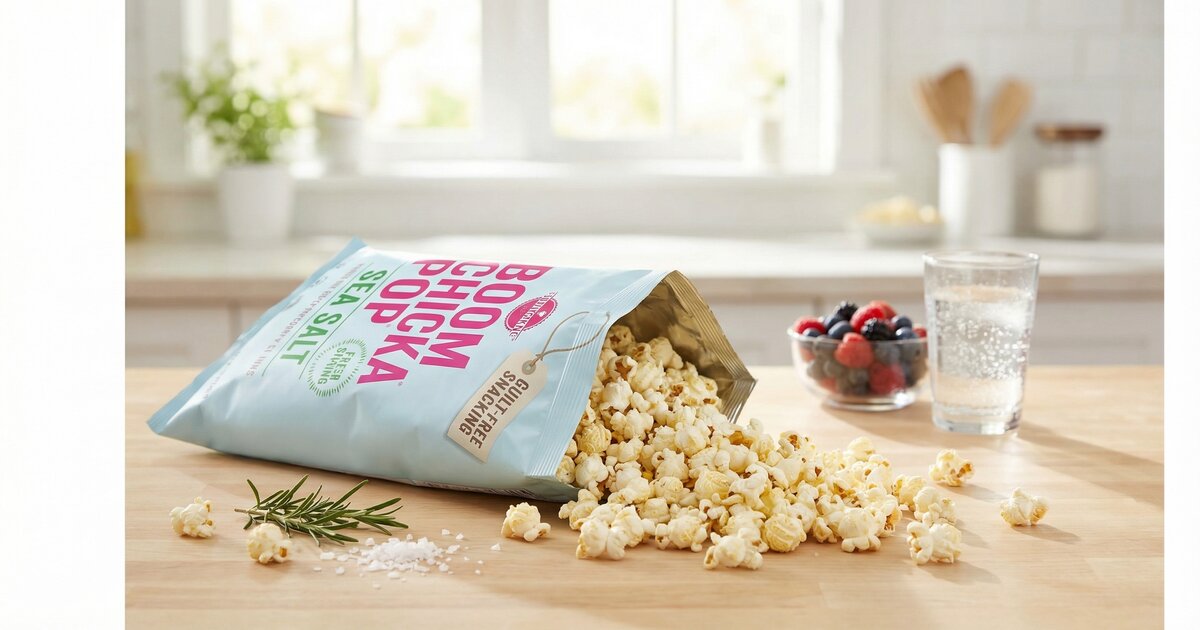
Angie’s BOOMCHICKAPOP (yes, it’s all caps) started in a small Minnesota kitchen and grew into one of America’s favorite better-for-you popcorn brands. The playful name and colorful bags belie serious attention to simple ingredients and balanced macros.
For macro trackers, Boom Chicka Pop offers the same advantages as other quality popcorn brands: high volume, whole grain fiber, and relatively low calories. Their kettle corn varieties add sweetness without going overboard on sugar, making them popular for those who want a treat that fits their macros.
This guide covers all Boom Chicka Pop varieties, compares them to competitors, and shows how to incorporate popcorn into your macro tracking.
Boom Chicka Pop Macro Overview
Here’s how the main varieties compare:
| Flavor | Serving | Cal | Protein | Carbs | Fiber | Sugar | Fat |
|---|---|---|---|---|---|---|---|
| Sea Salt | 2.5 cups | 110 | 2g | 13g | 2g | 0g | 6g |
| Sweet & Salty Kettle | 2 cups | 140 | 2g | 18g | 2g | 7g | 7g |
| Light Kettle Corn | 3.75 cups | 130 | 2g | 22g | 2g | 8g | 5g |
| White Cheddar | 2 cups | 130 | 2g | 13g | 2g | 0g | 8g |
| Real Butter | 2.5 cups | 120 | 2g | 13g | 2g | 0g | 7g |
| Cheddar Cheese | 2.5 cups | 130 | 2g | 13g | 2g | <1g | 8g |
| Dark Chocolate Drizzle | 1 cup | 120 | 1g | 15g | 2g | 6g | 6g |
Key insight: Sea Salt has the best macro profile—lowest calories and zero sugar. Kettle corn varieties add sweetness but stay reasonable.
Detailed Breakdown by Variety
Boom Chicka Pop Sea Salt
The flagship healthy option—minimal ingredients, maximum volume.
Per 2.5 cups (28g):
| Macro | Amount | % Daily Value |
|---|---|---|
| Calories | 110 | - |
| Protein | 2g | 4% |
| Total Carbs | 13g | 5% |
| Dietary Fiber | 2g | 7% |
| Sugar | 0g | 0% |
| Fat | 6g | 8% |
| Saturated Fat | 0.5g | 3% |
| Sodium | 190mg | 8% |
Ingredients: Popcorn, Sunflower Oil, Sea Salt
Calorie density: 44 calories per cup—excellent for volume eating.
Boom Chicka Pop Sweet & Salty Kettle Corn
The crowd favorite—balanced sweet and salty.
Per 2 cups (28g):
| Macro | Amount |
|---|---|
| Calories | 140 |
| Protein | 2g |
| Total Carbs | 18g |
| Fiber | 2g |
| Sugar | 7g |
| Fat | 7g |
Note: The 7g sugar is the trade-off for kettle corn sweetness. Still lower than candy or cookies.
Calorie density: 70 calories per cup—higher due to sugar coating.
Boom Chicka Pop Light Kettle Corn
Lower fat version of kettle corn.
Per 3.75 cups (28g):
| Macro | Amount |
|---|---|
| Calories | 130 |
| Protein | 2g |
| Total Carbs | 22g |
| Fiber | 2g |
| Sugar | 8g |
| Fat | 5g |
Trade-off: Less fat means more volume per serving. More sugar than regular kettle corn.
Calorie density: 35 calories per cup—best calorie density of any variety.
Boom Chicka Pop White Cheddar
Cheese flavor without excessive calories.
Per 2 cups (28g):
| Macro | Amount |
|---|---|
| Calories | 130 |
| Protein | 2g |
| Total Carbs | 13g |
| Fiber | 2g |
| Sugar | 0g |
| Fat | 8g |
Note: Higher fat from cheese flavoring. Zero sugar keeps carbs lower.
Boom Chicka Pop Real Butter
Butter flavor using actual butter.
Per 2.5 cups (28g):
| Macro | Amount |
|---|---|
| Calories | 120 |
| Protein | 2g |
| Total Carbs | 13g |
| Fiber | 2g |
| Sugar | 0g |
| Fat | 7g |
Contains: Real butter (milk), unlike some “butter flavor” popcorns. Not vegan.
Boom Chicka Pop Dark Chocolate Drizzle
Dessert popcorn—chocolate drizzled over kettle corn.
Per 1 cup (28g):
| Macro | Amount |
|---|---|
| Calories | 120 |
| Protein | 1g |
| Total Carbs | 15g |
| Fiber | 2g |
| Sugar | 6g |
| Fat | 6g |
Serving size reality: Only 1 cup per serving. Easy to overeat—be careful with this one.
Boom Chicka Pop Avocado Oil Sea Salt
Made with avocado oil instead of sunflower.
Per 2.5 cups (28g):
| Macro | Amount |
|---|---|
| Calories | 120 |
| Protein | 2g |
| Total Carbs | 13g |
| Fiber | 2g |
| Sugar | 0g |
| Fat | 7g |
Difference: Slightly more fat from avocado oil. Some prefer the oil’s nutrition profile.
Boom Chicka Pop vs Competitors
Boom Chicka Pop vs Skinny Pop
| Metric | Boom Chicka Pop Sea Salt | Skinny Pop Original |
|---|---|---|
| Serving | 2.5 cups | 3.5 cups |
| Calories | 110 | 150 |
| Cal per cup | 44 | 43 |
| Protein | 2g | 2g |
| Fat | 6g | 10g |
| Fiber | 2g | 3g |
Winner: Near tie. Per-cup calories are nearly identical. Skinny Pop has more fiber; Boom Chicka Pop has less fat per serving.
See our Skinny Pop macros guide for the full comparison.
Boom Chicka Pop vs Smartfood
| Metric | Boom Chicka Pop | Smartfood White Cheddar |
|---|---|---|
| Calories (per oz) | 130-140 | 160 |
| Fat | 6-8g | 10g |
| Sodium | 190mg | 220mg |
| Ingredients | Simple | More additives |
Winner: Boom Chicka Pop—lower calories, cleaner ingredients.
Boom Chicka Pop vs Popcorn, Indiana
| Metric | Boom Chicka Pop Kettle | Popcorn Indiana Kettle |
|---|---|---|
| Calories | 140/2 cups | 130/2 cups |
| Sugar | 7g | 7g |
| Fat | 7g | 5g |
Winner: Tie—very similar products.
Where to Buy Boom Chicka Pop
Boom Chicka Pop is widely available:
Best prices:
- Costco: Multi-packs at best per-ounce rates
- Target: Regular sales with Circle
- Walmart: Everyday low pricing
- Amazon: Subscribe & Save for regulars
Flavors vary by retailer: Costco typically carries Sea Salt and Kettle Corn; specialty flavors may require grocery stores or Amazon.
Diet Compatibility
Keto Diet
Verdict: Marginal Sea Salt has ~11g net carbs per serving—possible on liberal keto but challenging. Kettle corn varieties (16g+ net carbs) don’t work.
Low-Carb
Verdict: Acceptable Sea Salt at 13g carbs fits moderate low-carb. Avoid sweet varieties.
Low-Calorie/Weight Loss
Verdict: Excellent High-volume snacking at its best. 2.5 cups for 110 calories is outstanding.
Use our macro calculator to see how popcorn fits your daily targets.
Diabetic Diets
Verdict: Sea Salt yes, Kettle Corn carefully Zero-sugar varieties work well. Kettle corn’s 7-8g sugar requires blood sugar monitoring.
Gluten-Free
Verdict: Yes All Boom Chicka Pop varieties are gluten-free. Corn is naturally GF.
Vegan
Verdict: Most varieties Sea Salt, Kettle Corn varieties are vegan. White Cheddar, Real Butter contain dairy.
How to Fit Boom Chicka Pop in Your Macros
1,600 calorie cut:
- Sea Salt serving = 110 cal, 6.8% of budget
- Massive volume for the calorie cost
- Satisfies craving for crunchy snacks
2,000 calorie maintenance:
- Room for kettle corn (140 cal) as a treat
- 7% of daily budget for satisfying snack
Watch the bag size:
- Family-size bags are dangerous
- 5oz bag = 500+ calories if finished
- Use single-serve bags or pre-portion
Best Boom Chicka Pop by Goal
Lowest Calorie per Cup: Light Kettle Corn (35 cal/cup)
Lowest Total Calories: Sea Salt (110 cal/serving)
Best for Sweet Craving: Sweet & Salty Kettle Corn
Best Clean Ingredients: Sea Salt (3 ingredients)
Best for Volume Eating: Light Kettle Corn (3.75 cups/serving)
Snacking Strategies
For volume eating:
- Choose Sea Salt or Light Kettle Corn
- Pre-measure into bowls
- Eat slowly—popcorn takes time to chew
For sweet cravings:
- Sweet & Salty Kettle Corn satisfies without going overboard
- 7g sugar is less than most candy
- Pair with tea or sparkling water
Portion control:
- Buy single-serve bags when possible
- Never eat from the bag
- Pre-portion large bags immediately after opening
Popcorn pairings:
- Boom Chicka Pop + string cheese = protein addition
- Boom Chicka Pop + dark chocolate squares = dessert
- Boom Chicka Pop + nuts = balanced snack
The Bottom Line
Boom Chicka Pop delivers quality popcorn with simple ingredients and macro-friendly profiles. The Sea Salt variety is excellent for volume snacking on a cut, while kettle corn options satisfy sweet cravings without destroying your macros.
Choose Boom Chicka Pop when:
- You want high-volume, low-calorie snacking
- Clean ingredients matter
- You enjoy kettle corn sweetness
- Portion control is available
Watch out for:
- Large bags and overeating
- Kettle corn varieties when limiting sugar
- Strict keto (too many carbs)
For more snacking strategies, see our guide on how to hit your macros and understand why fiber matters in our macronutrients guide.
Nutrition information sourced from Angie’s BOOMCHICKAPOP official website and USDA FoodData Central. Values may vary by production batch. Always check packaging for the most accurate information.
Related Articles
Dragonfruit Macros: Complete Nutrition Guide for Pitaya
Complete macro breakdown of dragonfruit (pitaya). Learn the calories, protein, carbs, and...
Read guide →
Bulgur Macros: Complete Nutritional Guide & Health Benefits
Discover bulgur's complete macro breakdown, nutritional benefits, and how to incorporate...
Read guide →
Radish Macros: Nutrition Facts and Health Benefits
Complete guide to radish macros and nutrition. Learn calories, protein, carbs, and health...
Read guide →Note: Nutrition values are approximate and may vary based on preparation method and source.