Cantaloupe Macros: Complete Nutrition Guide & Calorie Breakdown
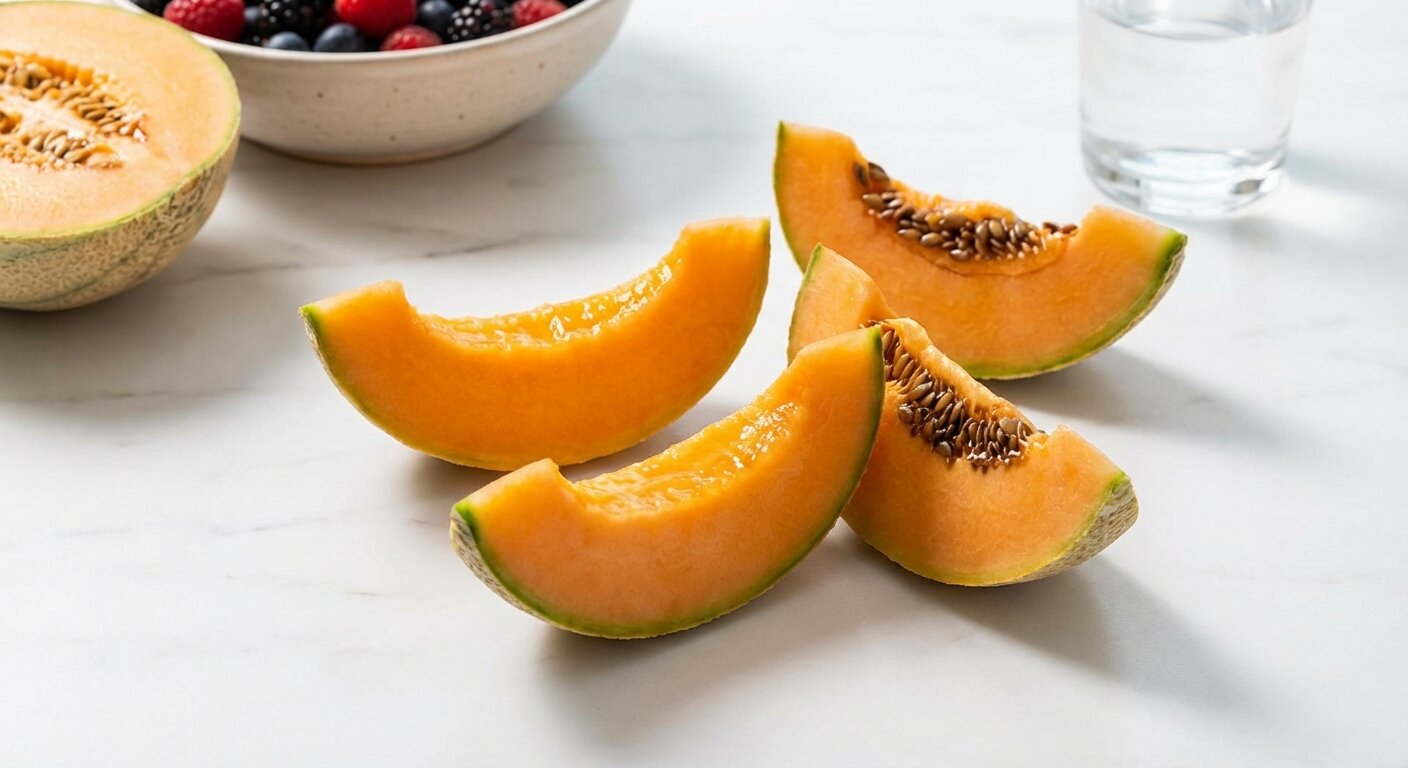
Cantaloupe delivers impressive nutrition with minimal calories—one cup provides over 100% of your daily vitamin C and nearly 300% of vitamin A for just 54 calories. This vibrant orange melon is 90% water, making it one of the most hydrating fruits while offering natural sweetness that satisfies cravings without derailing your macro targets. Whether you’re cutting, maintaining, or bulking, cantaloupe fits seamlessly into any diet strategy.
Most people underestimate how cantaloupe fits their macros. The high water content means you can enjoy generous portions without consuming excessive calories, while the fiber helps with satiety and blood sugar management. The natural sugars digest slower than refined sugars thanks to the fiber matrix, making this an ideal fruit for pre-workout energy or post-workout recovery when paired with protein.
Ready to dial in your cantaloupe portions and overall macro targets? Use our free macro calculator to get personalized daily targets based on your goals, activity level, and body composition. Let’s break down exactly how cantaloupe fits your nutrition plan.
Cantaloupe Macros Breakdown
Per Cup (Diced, 160g)
| Nutrient | Amount | % Daily Value |
|---|---|---|
| Calories | 54 kcal | 3% |
| Protein | 1.3g | 3% |
| Carbohydrates | 13g | 4% |
| • Fiber | 1.4g | 5% |
| • Sugar | 12g | — |
| Fat | 0.3g | <1% |
| • Saturated | 0.1g | <1% |
| • Monounsaturated | 0g | — |
| • Polyunsaturated | 0.1g | — |
Per 100g
| Nutrient | Amount |
|---|---|
| Calories | 34 kcal |
| Protein | 0.8g |
| Carbohydrates | 8.2g |
| Fiber | 0.9g |
| Fat | 0.2g |
Common Serving Sizes
| Serving | Weight | Calories | Protein | Carbs | Fat |
|---|---|---|---|---|---|
| 1/2 cup diced | 80g | 27 | 0.7g | 6.5g | 0.2g |
| 1 cup diced | 160g | 54 | 1.3g | 13g | 0.3g |
| 1 wedge (1/8 melon) | 69g | 23 | 0.6g | 5.6g | 0.1g |
| 1/2 medium melon | 275g | 94 | 2.2g | 22g | 0.6g |
| 1 whole medium melon | 550g | 186 | 4.5g | 45g | 1g |
Key Macro Insights:
- Carb-dominant: 96% of calories from carbs, mostly natural sugars
- Minimal protein/fat: Not a significant source of either macronutrient
- High water content: 90% water by weight, extremely low calorie density
- Low glycemic load: Despite moderate GI, the fiber and water dilute the glycemic impact
- Volume advantage: Largest serving size per calorie among common fruits
Complete Nutritional Profile
Beyond macros, cantaloupe delivers exceptional micronutrient density.
Vitamins (per 1 cup/160g)
| Vitamin | Amount | % Daily Value |
|---|---|---|
| Vitamin A | 5,411 IU | 270% |
| Vitamin C | 65mg | 108% |
| Folate (B9) | 34 μg | 9% |
| Vitamin B6 | 0.1mg | 7% |
| Vitamin K | 4 μg | 4% |
| Niacin (B3) | 1.2mg | 6% |
| Thiamin (B1) | 0.1mg | 5% |
Vitamin Highlights:
- Vitamin A (as beta-carotene): Nearly 3 days worth per cup—critical for vision, immune function, and skin health
- Vitamin C: More than a full day’s needs—powerful antioxidant supporting immune function and collagen synthesis
- B vitamins: Support energy metabolism and cellular function
Minerals (per 1 cup/160g)
| Mineral | Amount | % Daily Value |
|---|---|---|
| Potassium | 473mg | 13% |
| Magnesium | 19mg | 5% |
| Calcium | 14mg | 1% |
| Iron | 0.3mg | 2% |
| Phosphorus | 24mg | 2% |
| Zinc | 0.3mg | 2% |
Mineral Highlights:
- Potassium: Critical electrolyte for hydration, muscle function, and blood pressure regulation
- Magnesium: Supports over 300 enzymatic reactions, muscle relaxation, and sleep quality
Antioxidants & Bioactive Compounds
Cantaloupe contains several powerful phytonutrients:
- Beta-carotene: Orange pigment that converts to vitamin A, powerful antioxidant
- Lutein & zeaxanthin: Protect eye health and reduce macular degeneration risk
- Caffeic acid: Anti-inflammatory compound
- Cucurbitacin E: Anti-cancer properties (preliminary research)
- Adenosine: May have blood-thinning properties (relevant for those on anticoagulants)
How Cantaloupe Fits Different Macro Goals
Cutting / Fat Loss (High Protein, Low Calorie)
Daily Macros Example: 1,800 calories | 150g protein | 150g carbs | 50g fat
Cantaloupe Strategy:
- Portion: 1 cup diced (54 cal, 13g carbs)
- Best timing: Post-workout when insulin sensitivity is high, or as a snack with protein to control hunger
- Pairing: Combine with 1 cup low-fat cottage cheese (163 cal, 28g protein, 6g carbs, 2.3g fat) for a balanced snack totaling 217 calories, 28g protein, 19g carbs, 2.6g fat
- Volume advantage: Large serving size provides satiety and hydration for minimal calorie cost
- Craving management: Natural sweetness satisfies sweet tooth without refined sugars
Why it works: Cantaloupe’s water content creates fullness while barely denting your calorie budget. The vitamin C supports fat oxidation, and pairing with protein prevents blood sugar crashes.
Maintaining (Balanced Macros)
Daily Macros Example: 2,200 calories | 140g protein | 220g carbs | 75g fat
Cantaloupe Strategy:
- Portion: 1-2 cups daily (54-108 cal, 13-26g carbs)
- Best timing: Breakfast fruit salad, pre-workout carb source, or dessert replacement
- Pairing: Mix with Greek yogurt (17g protein per cup), berries, and granola for balanced breakfast bowl
- Hydration boost: Excellent for active individuals who need consistent hydration
- Nutrient insurance: High vitamin A/C content supports recovery and immune function
Why it works: You have carb budget to enjoy cantaloupe freely without macro juggling. It’s an easy way to hit micronutrient targets while staying within calorie limits.
Bulking / Muscle Gain (High Calorie, High Carb)
Daily Macros Example: 3,200 calories | 180g protein | 400g carbs | 100g fat
Cantaloupe Strategy:
- Portion: 2-3 cups daily (108-162 cal, 26-39g carbs)
- Best timing: Pre-workout simple carbs for quick energy, intra-workout hydration, post-workout glycogen replenishment
- Pairing: Blend into smoothies with whey protein, oats, peanut butter for calorie-dense shakes
- Calorie challenge: Cantaloupe is low-calorie, so it’s a supporting player rather than calorie driver—use it for nutrients/hydration, not bulk calories
- Electrolyte support: Potassium aids muscle contractions during high-volume training
Why it works: While not calorie-dense enough to be a bulk staple, cantaloupe provides quick-digesting carbs for workout fuel and essential vitamins for recovery without excessive fullness.
Keto / Low-Carb (Very Low Carb, High Fat)
Daily Macros Example: 1,800 calories | 100g protein | 25g carbs | 140g fat
Cantaloupe Strategy:
- Portion: 1/2 cup maximum (27 cal, 6.5g carbs) to stay under carb limits
- Best timing: Post-workout as one of your only carb sources
- Pairing: Combine with full-fat whipped cream or mascarpone cheese to add fat and slow carb absorption
- Reality check: Cantaloupe doesn’t fit strict keto well—6.5g net carbs in 1/2 cup consumes 25% of daily carb budget
- Better alternatives: Berries like raspberries or strawberries have lower net carbs per serving
Why it works (with caution): If you choose to include cantaloupe, limit to very small portions and pair with high-fat foods to minimize insulin response. Most keto dieters skip it entirely.
Cantaloupe vs Other Melons & Fruits
Melon Comparison (per 1 cup diced)
| Melon | Calories | Protein | Carbs | Fiber | Sugar | Vitamin C | Vitamin A |
|---|---|---|---|---|---|---|---|
| Cantaloupe | 54 | 1.3g | 13g | 1.4g | 12g | 108% DV | 270% DV |
| Watermelon | 46 | 0.9g | 12g | 0.6g | 9g | 21% DV | 18% DV |
| Honeydew | 64 | 1g | 16g | 1.4g | 14g | 53% DV | 2% DV |
Winner for cutting: Watermelon (lowest calories), but cantaloupe offers superior vitamin A/C Winner for nutrients: Cantaloupe (by far the most vitamin A/C) Winner for sweetness: Honeydew (highest sugar), though cantaloupe is close
Popular Fruits Comparison (per 1 cup)
| Fruit | Calories | Carbs | Fiber | Sugar | Key Nutrient Advantage |
|---|---|---|---|---|---|
| Cantaloupe | 54 | 13g | 1.4g | 12g | Vitamin A/C |
| Strawberries | 49 | 12g | 3g | 7g | Fiber, vitamin C |
| Blueberries | 84 | 21g | 3.6g | 15g | Antioxidants |
| Apple (sliced) | 57 | 15g | 2.6g | 11g | Fiber |
| Banana (sliced) | 134 | 34g | 3.9g | 18g | Potassium |
| Grapes | 104 | 27g | 1.4g | 23g | Resveratrol |
Cantaloupe advantages:
- Lower calories than most fruits except berries
- Highest vitamin A content by massive margin
- Excellent vitamin C (second only to strawberries)
- High water content for hydration
Cantaloupe disadvantages:
- Lower fiber than berries and apples
- Higher sugar than strawberries
- Not particularly filling despite volume (low fiber/protein)
Best Times to Eat Cantaloupe for Macro Goals
Pre-Workout (30-60 Minutes Before)
Goal: Quick-digesting carbs for energy without stomach heaviness
Portion: 1 cup cantaloupe (13g carbs)
Why it works:
- High water content prevents dehydration
- Natural sugars provide rapid energy without refined sugar crash
- Low fiber means fast gastric emptying—won’t sit heavy in stomach
- Potassium supports muscle contractions
Pairing: Add 1 scoop whey protein (25g protein) for amino acid availability during training
Post-Workout (Within 2 Hours)
Goal: Replenish glycogen, support recovery, deliver nutrients
Portion: 1-2 cups cantaloupe (13-26g carbs)
Why it works:
- Fast-digesting carbs spike insulin, driving nutrients into muscles
- Vitamin C supports collagen synthesis for tissue repair
- Potassium replaces electrolytes lost through sweat
- Hydration aids recovery
Pairing: Combine with 20-30g protein (chicken, fish, or protein shake) for optimal muscle protein synthesis
Morning / Breakfast
Goal: Hydration after overnight fast, nutrient kickstart, natural energy
Portion: 1-2 cups cantaloupe
Why it works:
- Rehydrates after 8+ hours without water
- Vitamin C boosts immune function
- Natural sugars provide steady energy without blood sugar crash (especially when paired with protein/fat)
- Low-prep, portable breakfast addition
Pairing: Greek yogurt parfait with cantaloupe, berries, and granola (balanced macros)
Evening / Dessert Replacement
Goal: Satisfy sweet cravings without calorie bomb
Portion: 1 cup cantaloupe (54 calories)
Why it works:
- Natural sweetness replaces ice cream/baked goods
- Low calorie density prevents late-night calorie surplus
- Hydration before bed (though high water content may increase nighttime bathroom trips)
Pairing: Top with 2 tbsp whipped cream (16 cal, 1.7g fat) for creamy texture, total 70 calories
Timing to avoid: Some people experience digestive discomfort eating fruit immediately before bed due to sugar fermentation. Experiment to see how your body responds.
How to Track Cantaloupe Macros Accurately
Measuring Methods
Most Accurate: Food Scale
- Place empty bowl on scale, tare to zero
- Add diced cantaloupe until desired weight
- Log exact grams in tracking app
- Pro tip: 100g cantaloupe = 34 calories, easy to calculate any portion
Medium Accuracy: Measuring Cups
- Dice cantaloupe into uniform cubes
- Fill measuring cup without packing or pressing down
- Level off top with knife
- Log as “1 cup diced cantaloupe” (160g assumed)
- Caution: Depending on dice size, actual weight can vary ±20g
Least Accurate: Visual Estimation
- 1/8 of medium melon ≈ 1 cup diced
- Baseball-sized portion ≈ 1 cup
- Error margin: Can be off by 30-50% depending on melon size
Tracking Apps Comparison
| App | Cantaloupe Entry | Accuracy | Notes |
|---|---|---|---|
| MyFitnessPal | ”Cantaloupe, raw” | High | USDA database, multiple serving options |
| Cronometer | ”Cantaloupe (melon), raw” | Highest | Most detailed micronutrient breakdown |
| MacroFactor | ”Cantaloupe, raw” | High | Clean database, minimal duplicate entries |
| Lose It! | ”Cantaloupe - Raw” | Medium | Verified entries exist, but many user submissions |
Pro tracking tip: Create a “cantaloupe, 100g” custom food entry with exact macros (34 cal, 0.8g protein, 8.2g carbs, 0.2g fat). Then you can easily calculate any portion by weight.
Common Measuring Mistakes
❌ Logging “1 cup” when you eyeballed a bowl full → Could be 2-3 cups (100-150 extra calories)
❌ Not accounting for removed rind/seeds → Whole melon weight ≠ edible portion weight
❌ Using generic “melon” entries → Different melons have different macros (honeydew has 20% more carbs than cantaloupe)
❌ Forgetting to tare the bowl → Adding bowl weight inflates serving size
✅ Weigh after removing rind and seeds → Only weigh edible orange flesh
✅ Log immediately after measuring → Don’t rely on memory hours later
✅ Use consistent entries → Stick to one verified database entry (USDA preferred)
Cantaloupe Macro-Friendly Recipe Ideas
1. High-Protein Cantaloupe Breakfast Bowl
Macros per serving: 285 cal | 28g protein | 32g carbs | 5g fat
Ingredients:
- 1 cup diced cantaloupe (54 cal, 1.3g P, 13g C, 0.3g F)
- 1 cup low-fat cottage cheese (163 cal, 28g P, 6g C, 2.3g F)
- 1/4 cup blueberries (21 cal, 0.3g P, 5g C, 0.2g F)
- 1 tbsp sliced almonds (35 cal, 1.3g P, 1.2g C, 3g F)
- Pinch of cinnamon
Instructions: Combine cottage cheese and cantaloupe, top with blueberries and almonds, sprinkle cinnamon.
Why it works: Cottage cheese provides casein protein for sustained satiety, cantaloupe adds volume and sweetness, almonds contribute healthy fats and crunch.
2. Pre-Workout Cantaloupe Smoothie
Macros per serving: 221 cal | 25g protein | 26g carbs | 2g fat
Ingredients:
- 1 cup diced cantaloupe (54 cal, 1.3g P, 13g C, 0.3g F)
- 1 scoop vanilla whey protein (120 cal, 24g P, 3g C, 1.5g F)
- 1/2 cup unsweetened almond milk (15 cal, 0.6g P, 0.6g C, 1.3g F)
- 1/2 cup ice
- Optional: 5g creatine monohydrate (0 calories)
Instructions: Blend all ingredients until smooth.
Why it works: Fast-digesting carbs from cantaloupe + whey protein = optimal pre-workout fuel. Low fat prevents sluggish digestion during training.
3. Cantaloupe Prosciutto Bites (Savory Snack)
Macros per serving (4 bites): 98 cal | 6g protein | 10g carbs | 3g fat
Ingredients:
- 8 cantaloupe cubes (1 cup total: 54 cal, 1.3g P, 13g C, 0.3g F)
- 2 slices prosciutto, halved (44 cal, 6g P, 0g C, 2.5g F)
- Fresh basil leaves
- Balsamic glaze drizzle (optional, 5 cal per 1/2 tsp)
Instructions: Wrap each cantaloupe cube with prosciutto, secure with toothpick, add basil leaf.
Why it works: Sweet-salty combo satisfies complex cravings. Prosciutto adds protein without heavy calories. Perfect appetizer or portable snack.
4. Post-Workout Cantaloupe Protein Bowl
Macros per serving: 342 cal | 35g protein | 36g carbs | 6g fat
Ingredients:
- 1.5 cups diced cantaloupe (81 cal, 2g P, 19.5g C, 0.5g F)
- 6 oz grilled chicken breast, diced (186 cal, 35g P, 0g C, 4g F)
- 1/4 cup cucumber, diced (4 cal, 0.2g P, 0.9g C, 0g F)
- 1 tbsp lime juice (4 cal)
- 1 tbsp fresh mint, chopped
- Pinch of sea salt
- Optional: chili powder for kick
Instructions: Combine all ingredients, toss gently, chill for 15 minutes.
Why it works: Chicken provides complete protein for muscle repair, cantaloupe replenishes glycogen and electrolytes, refreshing combination perfect for hot summer training days.
5. Cantaloupe “Ice Cream” (Cutting Dessert)
Macros per serving: 54 cal | 1.3g protein | 13g carbs | 0.3g fat
Ingredients:
- 2 cups frozen cantaloupe cubes (blend of frozen cantaloupe)
- Optional: 1/2 tsp vanilla extract
- Optional: 1-2 drops liquid stevia
Instructions: Freeze diced cantaloupe overnight. Blend in food processor until creamy soft-serve texture. Serve immediately.
Why it works: Identical macros to fresh cantaloupe but mimics ice cream texture. Zero added sugar, massive volume for minimal calories. Satisfies ice cream cravings during aggressive cuts.
Common Questions About Cantaloupe & Macros
Is cantaloupe good for diabetics?
Short answer: Yes, in moderation.
The details:
- Glycemic Index (GI): 65 (medium)
- Glycemic Load (GL): 4 per 100g serving (low)
- Why GL matters more: GL accounts for portion size and fiber content. Cantaloupe’s high water content dilutes the glycemic impact.
Blood sugar management tips for diabetics:
- Pair with protein/fat: Eat cantaloupe with nuts, cheese, or Greek yogurt to slow carb absorption
- Monitor portion sizes: Stick to 1 cup or less per sitting
- Time strategically: Consume post-exercise when insulin sensitivity is highest
- Test your response: Use glucometer 1-2 hours after eating to see individual impact
- Avoid juice form: Whole fruit retains fiber; juicing removes it and concentrates sugars
Compared to other fruits for diabetics:
- Better than: Watermelon (GI 72), pineapple (GI 66), banana (GI 51 but higher GL)
- Similar to: Grapes (GI 59), mango (GI 60)
- Worse than: Berries (GI 25-40), apples (GI 36), pears (GI 38)
Will cantaloupe kick me out of ketosis?
Short answer: Likely yes, if you eat more than a tiny portion.
The math:
- 1 cup cantaloupe = 13g total carbs - 1.4g fiber = 11.6g net carbs
- Most keto diets allow 20-50g net carbs per day
- 1 cup = 23-58% of daily carb budget
Keto-friendly alternatives:
- 1/2 cup cantaloupe = 6g net carbs (more manageable)
- Raspberries: 1 cup = 7g net carbs with double the fiber
- Strawberries: 1 cup = 9g net carbs
- Blackberries: 1 cup = 6g net carbs
If you choose to include cantaloupe on keto:
- Limit to 1/4 - 1/2 cup maximum
- Eat post-workout when carbs are more likely to replenish glycogen rather than disrupt ketosis
- Pair with high-fat foods (macadamia nuts, full-fat cheese)
- Track ketones with blood meter to verify you stay in ketosis
Does cantaloupe cause bloating?
For most people: No, but individual responses vary.
Possible causes of cantaloupe-related bloating:
-
FODMAPs: Cantaloupe contains moderate FODMAPs (fermentable sugars) that can cause gas/bloating in people with IBS or SIBO
- Fructose: Some people have difficulty absorbing excess fructose
- Sorbitol: Sugar alcohol naturally present in melons
-
Overeating: Consuming large quantities (3+ cups) may overwhelm digestive capacity due to high water content
-
Food combining: Eating fruit after heavy meals may cause fermentation as fruit digests faster than protein/fat
Solutions if you experience bloating:
- Reduce portion size to 1/2 cup
- Eat cantaloupe alone on empty stomach, wait 30 minutes before other foods
- Choose low-FODMAP fruits: bananas, blueberries, oranges, strawberries
- Consider digestive enzymes specifically for fructose/sugar alcohols
- Keep food diary to identify patterns
Can I eat cantaloupe every day?
Short answer: Yes, for most people.
Benefits of daily cantaloupe:
- Consistent vitamin A/C intake supports immune function and skin health
- Daily hydration boost (especially beneficial in hot climates or for active individuals)
- Regular fiber intake supports digestive regularity
- Antioxidants combat oxidative stress from training/daily life
Potential concerns with daily consumption:
-
Excess vitamin A: While rare from food sources, consuming 2+ cups daily could approach upper limits (10,000 IU/day). Cantaloupe provides 5,400 IU per cup.
- Reality check: You’d need to eat 4+ cups daily long-term to risk toxicity
-
Carb budget: If cutting aggressively, daily cantaloupe might not fit macros every single day
-
Nutrient variety: Eating only cantaloupe as your fruit source means missing nutrients from berries, citrus, etc.
Optimal approach:
- Rotate fruits: Cantaloupe 3-4x per week, berries 2-3x per week, other fruits as desired
- Listen to your body: If you crave cantaloupe daily and it fits your macros, enjoy it
- Quality matters: Choose ripe, fresh cantaloupe; avoid if smells fermented or shows mold (risk of bacterial contamination)
How do I pick a ripe cantaloupe?
Choosing ripe cantaloupe ensures optimal sweetness and nutrition.
Visual cues:
- Color: Golden/cream background color (not green)
- Netting: Thick, raised, cork-like texture covering surface
- Stem end: Smooth, slightly indented (not attached to stem)
Touch/smell tests:
- Pressure test: Gently press blossom end (opposite stem)—should yield slightly but not be mushy
- Weight: Heavy for its size indicates high water content and juiciness
- Smell: Sweet, musky aroma at stem end (no smell = underripe, fermented smell = overripe)
Avoid:
- Soft spots, bruises, or mold (entry points for bacteria like listeria)
- Attached stem (indicates picked too early)
- Sloshing sound when shaken (indicates overripe, separating flesh)
Storage tips:
- Uncut cantaloupe: Room temperature until ripe, then refrigerate up to 5 days
- Cut cantaloupe: Refrigerate in airtight container up to 3-4 days
- Frozen cantaloupe: Lasts 6-8 months (texture changes, best for smoothies)
Frequently Asked Questions
What are the macros in cantaloupe?
One cup of diced cantaloupe (160g) contains approximately 54 calories with 13g carbohydrates, 1.3g protein, and 0.3g fat. The carbs are primarily natural sugars (about 12g) with 1.4g of fiber. This makes cantaloupe a carb-dominant fruit with minimal protein and fat.
The macro breakdown shows that roughly 96% of calories come from carbohydrates, with the remaining 4% split between protein and trace amounts of fat. While not a significant source of protein or fat, cantaloupe excels as a low-calorie, nutrient-dense carbohydrate source that provides exceptional vitamin A and C content—270% and 108% of daily values respectively per cup.
For macro tracking purposes, cantaloupe is best categorized as a “free” food on cutting diets due to its low calorie density (only 34 calories per 100g), though the carb content should still be logged if you’re following low-carb or keto protocols.
Is cantaloupe good for weight loss?
Yes, cantaloupe is excellent for weight loss due to its exceptionally low calorie density and high water content. At 90% water by weight, cantaloupe provides substantial volume and hydration for minimal calories—only 54 calories per cup compared to 150+ calories for the same volume of most other foods.
The combination of natural sweetness and fiber helps satisfy cravings for sweets without the calorie bomb of desserts or refined sugars. One cup of cantaloupe contains about the same sugar as 1.5 Oreo cookies (12g), but delivers it with fiber, water, vitamins, and minerals that slow absorption and provide nutritional value, while Oreos offer empty calories with added fats.
For weight loss, cantaloupe works best when paired with protein sources like cottage cheese or Greek yogurt. This combination maximizes satiety while keeping calories low. The high vitamin C content (108% DV per cup) may also support fat oxidation during exercise, though the effect is modest. Track your portions accurately—while low-calorie, eating an entire melon (186 calories) could displace other more nutrient-dense foods in a restricted diet.
How much sugar is in cantaloupe?
One cup of cantaloupe contains approximately 12-13g of natural sugar, primarily in the form of fructose, glucose, and sucrose. While this might seem high compared to the 25g daily added sugar limit recommended by health organizations, it’s important to understand that naturally occurring fruit sugars behave differently in your body than refined sugars.
The fiber content (1.4g per cup) slows the absorption of these sugars into your bloodstream, preventing the rapid blood sugar spikes you’d experience from consuming 12g of pure table sugar. Additionally, the 90% water content dilutes the sugar concentration, giving cantaloupe a relatively low glycemic load of 4 per 100g serving despite having a moderate glycemic index of 65.
For context on sugar content, here’s how cantaloupe compares to other foods per cup:
- Cantaloupe: 12g sugar
- Strawberries: 7g sugar (lower)
- Grapes: 23g sugar (nearly double)
- Coca-Cola (8 oz): 27g sugar (refined, no fiber)
- Vanilla ice cream: 28g sugar (plus 14g fat)
If you’re tracking sugar intake for diabetes management, general health, or low-carb dieting, count cantaloupe’s sugars toward your daily carbohydrate budget, but recognize that it comes packaged with beneficial nutrients unlike processed sweets.
Can diabetics eat cantaloupe?
Yes, diabetics can safely enjoy cantaloupe in moderation with proper portion control and strategic timing. While cantaloupe has a moderate glycemic index of 65, its glycemic load is only 4 per 100g serving, meaning it has a relatively minor impact on blood sugar when consumed in reasonable portions.
The key for diabetics is to follow these guidelines:
Portion control: Limit servings to 1 cup or less at a time. This provides 13g carbohydrates, which fits into most diabetic meal plans when properly accounted for.
Pair with protein or fat: Combining cantaloupe with foods like nuts, cheese, or Greek yogurt significantly slows carbohydrate absorption. For example, 1 cup cantaloupe + 1/4 cup almonds creates a balanced snack that minimizes blood sugar spikes.
Timing matters: Consume cantaloupe after exercise when insulin sensitivity is highest and muscles are primed to absorb glucose for glycogen replenishment rather than elevating blood sugar.
Monitor your individual response: Every diabetic responds differently to specific foods. Use a glucometer to test blood sugar 1-2 hours after eating cantaloupe to understand your personal reaction. Some diabetics tolerate it well, while others may need to limit portions further or choose lower-GI fruits like berries.
Compared to other fruits, cantaloupe sits in the middle ground—better than watermelon (GI 72) and pineapple (GI 66), but not as diabetic-friendly as berries (GI 25-40), apples (GI 36), or pears (GI 38). If blood sugar control is a significant challenge, prioritize those lower-GI options and treat cantaloupe as an occasional choice rather than a daily staple.
What vitamins are in cantaloupe?
Cantaloupe is exceptionally rich in vitamins, particularly vitamin A and vitamin C, which it provides in extraordinary amounts that far exceed daily requirements. One cup of diced cantaloupe delivers the following impressive vitamin profile:
Vitamin A: 5,411 IU (270% of Daily Value)—nearly three full days’ worth in a single cup. This comes primarily from beta-carotene, the orange pigment that gives cantaloupe its vibrant color. Vitamin A is critical for vision health (especially night vision), immune function, skin health, and cellular communication. The high dose supports everything from reducing infection risk to maintaining healthy mucous membranes.
Vitamin C: 65mg (108% of Daily Value)—more than a full day’s requirement. This powerful antioxidant supports immune function, collagen synthesis for skin and connective tissue health, iron absorption, and wound healing. Athletes benefit particularly from vitamin C’s role in reducing oxidative stress from training and supporting faster recovery.
B-Complex Vitamins: Cantaloupe also provides modest amounts of several B vitamins:
- Folate (B9): 34 μg (9% DV)—important for DNA synthesis and red blood cell formation
- Niacin (B3): 1.2mg (6% DV)—supports energy metabolism
- Vitamin B6: 0.1mg (7% DV)—involved in amino acid metabolism and neurotransmitter synthesis
- Thiamin (B1): 0.1mg (5% DV)—crucial for converting carbohydrates to energy
Vitamin K: 4 μg (4% DV)—plays a role in blood clotting and bone metabolism.
The standout feature of cantaloupe’s vitamin profile is the massive vitamin A and C content, which makes it one of the most micronutrient-dense fruits available relative to its calorie cost. For macro counters prioritizing nutrient density during cuts or diets, cantaloupe delivers exceptional vitamin ROI—you’d need to eat 500+ calories of chicken breast to match the vitamin A in one cup of cantaloupe (54 calories).
How many calories in a whole cantaloupe?
A medium whole cantaloupe contains approximately 186 calories. This assumes a melon roughly 5 inches in diameter with an edible portion weighing about 550g after removing the rind and seeds. The complete macro breakdown for an entire medium cantaloupe is:
- Calories: 186 kcal
- Protein: 4.5g
- Carbohydrates: 45g
- Fiber: 5g
- Fat: 1g
- Sugar: ~42g
It’s important to understand that cantaloupe size varies significantly based on growing conditions and variety. Here’s how calories scale with different sizes:
- Small cantaloupe (4” diameter, ~400g edible): 136 calories, 33g carbs
- Medium cantaloupe (5” diameter, ~550g edible): 186 calories, 45g carbs
- Large cantaloupe (6” diameter, ~750g edible): 255 calories, 61g carbs
Practical consideration: Most people don’t eat an entire cantaloupe in one sitting. A more common serving is 1/4 to 1/2 of a medium melon:
- 1/4 medium cantaloupe: 47 calories, 11g carbs
- 1/2 medium cantaloupe: 93 calories, 22g carbs
Why whole melon calories matter for macro tracking: If you’re cutting or following strict macros, knowing that half a cantaloupe is ~93 calories helps you plan meals accurately. On a 1,500-calorie cut, that’s 6% of your daily budget—significant enough to track, but low enough to fit easily.
Accuracy tip: Weigh your cantaloupe after removing rind and seeds, then calculate at 34 calories per 100g for precise tracking rather than assuming “medium” size.
Is cantaloupe high in carbs?
Cantaloupe is moderate in carbs—neither particularly high nor low compared to other fruits. One cup contains 13g of carbohydrates (11.6g net carbs after subtracting 1.4g fiber), which places it in the middle of the fruit carb spectrum.
Carb comparison to other fruits (per 1 cup):
Lower carb than cantaloupe:
- Strawberries: 12g total, 9g net (lower)
- Watermelon: 12g total, 11g net (similar)
- Raspberries: 15g total, 7g net (much lower net due to high fiber)
Similar carbs to cantaloupe:
- Honeydew melon: 16g total, 14g net
- Peaches: 15g total, 13g net
Higher carb than cantaloupe:
- Banana: 27g total, 24g net (more than double)
- Grapes: 27g total, 26g net
- Mango: 25g total, 22g net
- Apple: 25g total, 21g net
Does cantaloupe fit low-carb or keto diets?
For general low-carb diets (50-100g carbs per day): Yes, cantaloupe fits easily. One cup represents 13-26% of daily carb budget.
For keto diets (20-50g net carbs per day): Cantaloupe is challenging. One cup consumes 23-58% of your daily carb allowance, making it difficult to fit without sacrificing other carb sources. Most keto dieters limit to 1/2 cup maximum or skip it entirely in favor of berries.
For flexible dieting or IIFYM: Cantaloupe is perfectly reasonable. The carbs are easy to fit into balanced macros, and the high water content provides satiety.
Bottom line: Cantaloupe isn’t “high carb” in absolute terms—it’s relatively low compared to starches like rice (45g per cup) or even many other fruits. However, for very low-carb protocols, it requires careful portioning.
Does cantaloupe have protein?
Cantaloupe contains minimal protein—only 1.3g per cup (160g serving), which represents less than 3% of the recommended daily intake for most adults. This makes it one of the lower-protein fruits, though fruits in general are never significant protein sources.
Protein comparison among fruits (per 1 cup):
- Guava: 4.2g (highest common fruit)
- Avocado: 3g (though technically a fruit, usually eaten as fat source)
- Jackfruit: 2.8g
- Blackberries: 2g
- Cantaloupe: 1.3g
- Banana: 1.3g
- Strawberries: 1g
- Watermelon: 0.9g (lowest)
Why cantaloupe’s low protein doesn’t matter:
Nobody eats fruit as a protein source. The value of cantaloupe lies in its exceptional vitamin A/C content, hydration, and low-calorie volume—not macronutrient balance. The tiny amount of protein present is essentially negligible for macro tracking purposes.
How to add protein to cantaloupe-based meals:
If you want to create a balanced macro meal featuring cantaloupe, pair it with high-protein foods:
- Cantaloupe + cottage cheese: 1 cup cantaloupe (1.3g protein) + 1 cup low-fat cottage cheese (28g protein) = 29.3g protein total
- Cantaloupe smoothie: 1 cup cantaloupe (1.3g protein) + 1 scoop whey protein (24g protein) + almond milk (1g protein) = 26.3g protein total
- Cantaloupe prosciutto wraps: 1 cup cantaloupe (1.3g protein) + 3 oz prosciutto (21g protein) = 22.3g protein total
Bottom line: Track cantaloupe as a carbohydrate source that provides vitamins and hydration. Don’t expect it to contribute meaningfully to your daily protein goals. If hitting protein targets is a priority (cutting, building muscle, satiety), combine cantaloupe with dedicated protein sources in the same meal or snack.
Conclusion
Cantaloupe delivers exceptional nutrition for minimal calorie cost, making it a versatile addition to virtually any macro-based diet. With only 54 calories per cup but over 100% of your daily vitamin C and nearly 300% of vitamin A, it’s one of the most nutrient-dense fruits available. The high water content (90%) provides hydration and volume that supports satiety during cuts, while the natural sugars offer quick energy for workouts without refined sugar drawbacks.
Key takeaways for macro tracking:
- Cutting: Cantaloupe is a cutting MVP—massive volume for minimal calories, satisfies sweet cravings, pairs perfectly with high-protein foods
- Maintaining: Easy to fit 1-2 cups daily, excellent nutrient insurance
- Bulking: Use as pre/post-workout carb source and vitamin/electrolyte support, but not a calorie driver
- Keto: Challenging to fit—limit to 1/2 cup maximum or skip entirely
Action steps:
- Calculate your personalized macros with our free macro calculator to see exactly how cantaloupe fits your goals
- Weigh your portions for the first week to calibrate visual estimates
- Pair strategically with protein sources to create balanced meals that hit your targets
- Track consistently in your preferred app using verified USDA database entries
Whether you’re enjoying cantaloupe in a cottage cheese breakfast bowl, blending it into pre-workout smoothies, or simply eating it fresh as a hydrating snack, you now have the complete macro breakdown to make it work seamlessly within your nutrition plan. Track it, enjoy it, and let the vitamins and hydration support your training and recovery goals.
Related Articles
Dragonfruit Macros: Complete Nutrition Guide for Pitaya
Complete macro breakdown of dragonfruit (pitaya). Learn the calories, protein, carbs, and...
Read guide →
Bulgur Macros: Complete Nutritional Guide & Health Benefits
Discover bulgur's complete macro breakdown, nutritional benefits, and how to incorporate...
Read guide →
Radish Macros: Nutrition Facts and Health Benefits
Complete guide to radish macros and nutrition. Learn calories, protein, carbs, and health...
Read guide →Note: Nutrition values are approximate and may vary based on preparation method and source.