Couscous Macros: Complete Nutrition Guide for Meal Planning
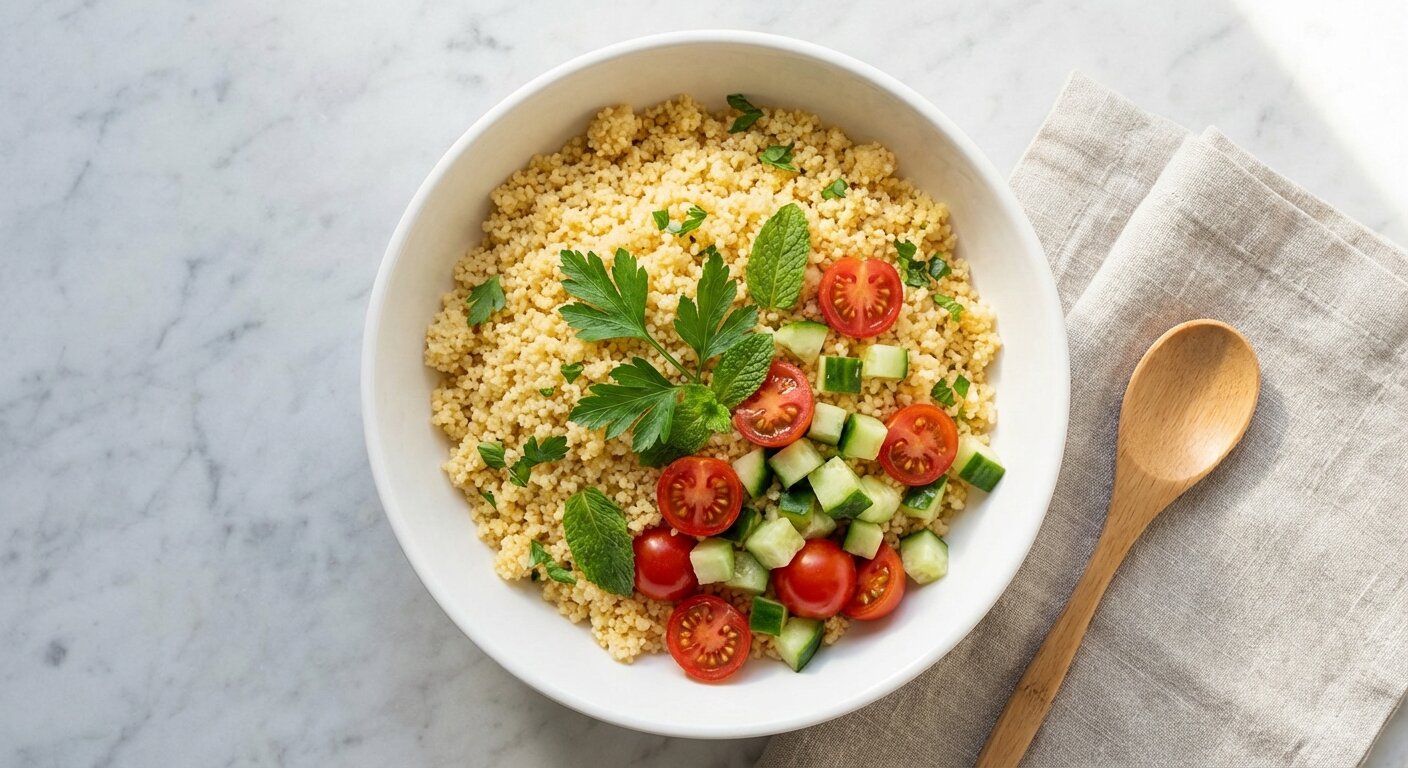
Couscous is a versatile North African staple that’s become popular worldwide for its quick cooking time and mild, fluffy texture. Made from semolina wheat, couscous works equally well in Mediterranean salads, as a side dish, or as the base for protein-rich bowls. But if you’re tracking macros for weight loss, muscle building, or general health, understanding couscous nutrition is essential for accurate meal planning.
This guide breaks down the complete macros for couscous across different varieties (plain, whole wheat, Israeli), preparation methods, and serving sizes. Whether you’re meal prepping for the week or just curious about how couscous fits your daily targets, you’ll find everything you need here.
Want to calculate your personalized macro targets? Try our macro calculator to determine your ideal daily protein, carbs, and fat based on your goals.
Related: Learn more about what macros are and how they impact your diet.
What Is Couscous?
Couscous is often mistaken for a grain, but it’s actually a type of pasta made from semolina flour (durum wheat) that’s been rolled into tiny granules. Traditional couscous is steamed over stew or broth, but the instant couscous found in most grocery stores only requires boiling water and a few minutes of rest.
There are three main types you’ll encounter:
Moroccan (regular) couscous is the smallest variety, with granules about the size of breadcrumbs. It cooks in 5 minutes and has a light, fluffy texture. This is the most common type found in supermarkets.
Israeli (pearl) couscous features larger, pearl-sized granules that are toasted before cooking. It has a chewier texture and nuttier flavor than regular couscous, with cooking times of 8-10 minutes.
Whole wheat couscous is made from whole grain semolina, retaining the wheat bran and germ. It offers more fiber, protein, and micronutrients than refined couscous, with a slightly nuttier taste and firmer texture.
All three types have similar base macros, with variations mainly in fiber content and micronutrient profiles.
Couscous Macros by Serving Size
Plain Couscous (Cooked)
Per 1 cup (157g):
- Calories: 176
- Protein: 6g
- Carbs: 36g
- Fat: 0.3g
- Fiber: 2g
- Net Carbs: 34g
Per 1/2 cup (78g):
- Calories: 88
- Protein: 3g
- Carbs: 18g
- Fat: 0.2g
- Fiber: 1g
- Net Carbs: 17g
Per 100g:
- Calories: 112
- Protein: 3.8g
- Carbs: 23g
- Fat: 0.2g
- Fiber: 1.4g
- Net Carbs: 21.6g
Whole Wheat Couscous (Cooked)
Per 1 cup (157g):
- Calories: 190
- Protein: 7g
- Carbs: 39g
- Fat: 0.7g
- Fiber: 5g
- Net Carbs: 34g
The extra fiber in whole wheat couscous makes it more satiating and better for blood sugar control, despite having slightly more total calories.
Israeli (Pearl) Couscous (Cooked)
Per 1 cup (180g):
- Calories: 220
- Protein: 8g
- Carbs: 44g
- Fat: 1g
- Fiber: 2g
- Net Carbs: 42g
Israeli couscous is denser and larger, so a cup weighs more than regular couscous, resulting in higher total calories and macros per volume measurement.
Dry vs. Cooked Couscous
Dry couscous (1/4 cup / 45g):
- Calories: 160
- Protein: 5g
- Carbs: 33g
- Fat: 0.3g
- Fiber: 2g
Important: Dry couscous approximately triples in volume when cooked with water. A 1/4 cup dry portion yields roughly 3/4 to 1 cup cooked. When tracking macros, use the dry weight for accuracy if measuring before cooking.
Couscous Macro Breakdown
Carbohydrates in Couscous
Couscous is predominantly a carbohydrate source, with about 82% of its calories coming from carbs. The carbohydrates are primarily starch, with minimal sugar (less than 1g per cup).
Glycemic Index: Couscous has a moderate to high glycemic index (65), meaning it can cause relatively quick rises in blood sugar when eaten alone. Pairing couscous with protein, healthy fats, and fiber-rich vegetables significantly lowers the overall glycemic response of the meal.
Fiber content: Regular couscous contains only 2g of fiber per cup, which is relatively low compared to whole grains like brown rice (4g) or quinoa (5g). Whole wheat couscous provides 5g fiber per cup, making it a better choice for digestive health and satiety.
For low-carb diets (under 50g daily), couscous typically doesn’t fit well. However, for moderate-carb approaches (100-150g daily), a half-cup serving can work when balanced with protein and vegetables.
Protein in Couscous
With 6g of protein per cup, couscous offers moderate protein for a grain-based food—more than white rice (4g) but less than quinoa (8g).
Protein quality: Couscous is made from wheat, which contains gluten proteins (gliadin and glutenin). Wheat protein is incomplete, meaning it doesn’t provide all nine essential amino acids in optimal ratios. It’s particularly low in lysine, an essential amino acid important for muscle protein synthesis and recovery.
For muscle building: Couscous alone won’t meet high protein needs (1.6-2.2g per kg bodyweight for athletes). Use it as a carbohydrate base and add complete protein sources like:
- Grilled chicken breast (31g protein per 4oz)
- Chickpeas (15g protein per cup)
- Feta cheese (14g protein per 1/2 cup)
- Greek yogurt dressing (10g protein per 1/2 cup)
For plant-based diets: Combine couscous with legumes (chickpeas, lentils, beans) to create a complete amino acid profile. The lysine in legumes complements the amino acids in couscous.
Fat in Couscous
Couscous is virtually fat-free, with only 0.3g per cup. This makes it an excellent choice for low-fat diets or when you need to allocate fat macros to other meal components.
Why this matters: Without added fats, couscous won’t keep you full for long. Fat slows gastric emptying and increases satiety. Add healthy fats through:
- Olive oil (5g fat per teaspoon)
- Tahini (8g fat per tablespoon)
- Nuts and seeds (5-7g fat per tablespoon)
- Avocado (5g fat per 1/4 fruit)
These additions create more balanced macros and significantly improve meal satisfaction.
Couscous vs. Other Grains and Alternatives
Understanding how couscous stacks up against other popular carbohydrate sources helps you make informed choices for your macro targets.
Couscous vs. Quinoa
Couscous (1 cup cooked):
- Calories: 176 | Protein: 6g | Carbs: 36g | Fat: 0.3g | Fiber: 2g
Quinoa (1 cup cooked):
- Calories: 222 | Protein: 8g | Carbs: 39g | Fat: 4g | Fiber: 5g
Winner for: Quinoa wins for protein quantity and quality (complete protein), fiber, and micronutrients (higher in iron, magnesium, and B vitamins). Couscous wins for lower calories and faster cooking time.
Couscous vs. Rice
Couscous (1 cup cooked):
- Calories: 176 | Protein: 6g | Carbs: 36g | Fat: 0.3g | Fiber: 2g
White Rice (1 cup cooked):
- Calories: 205 | Protein: 4g | Carbs: 45g | Fat: 0.4g | Fiber: 0.6g
Brown Rice (1 cup cooked):
- Calories: 218 | Protein: 5g | Carbs: 45g | Fat: 2g | Fiber: 4g
Winner for: Couscous has fewer calories and more protein than white rice, making it more macro-efficient for weight loss or muscle building. Brown rice offers more fiber and micronutrients. For quick meals, couscous wins on cooking time (5 minutes vs. 15-45 minutes for rice).
Couscous vs. Orzo
Couscous (1 cup cooked):
- Calories: 176 | Protein: 6g | Carbs: 36g | Fat: 0.3g | Fiber: 2g
Orzo (1 cup cooked):
- Calories: 200 | Protein: 7g | Carbs: 42g | Fat: 1g | Fiber: 2g
Winner for: These are very similar—both are wheat-based pastas. Couscous has slightly fewer calories, while orzo has marginally more protein. The choice comes down to texture preference and recipe requirements.
Couscous vs. Bulgur
Couscous (1 cup cooked):
- Calories: 176 | Protein: 6g | Carbs: 36g | Fat: 0.3g | Fiber: 2g
Bulgur (1 cup cooked):
- Calories: 151 | Protein: 6g | Carbs: 34g | Fat: 0.4g | Fiber: 8g
Winner for: Bulgur is the clear winner for fiber (8g vs. 2g) and slightly lower calories. However, couscous cooks faster and has a milder flavor that works in more dishes.
Couscous vs. Cauliflower Rice (Low-Carb Alternative)
Couscous (1 cup cooked):
- Calories: 176 | Protein: 6g | Carbs: 36g | Fat: 0.3g | Fiber: 2g
Cauliflower Rice (1 cup raw):
- Calories: 25 | Protein: 2g | Carbs: 5g | Fat: 0.3g | Fiber: 2g
Winner for: Cauliflower rice is unbeatable for low-calorie, low-carb diets. However, it doesn’t provide the same energy or satiety as real couscous. Use cauliflower rice when cutting carbs aggressively; use couscous when you need sustained energy and aren’t severely restricting carbs.
How to Fit Couscous Into Your Macros
For Weight Loss (Calorie Deficit)
Portion control is key. At 176 calories per cup, couscous can fit into most weight loss plans, but portion sizes matter:
3/4 cup cooked couscous:
- Calories: 132
- Protein: 4.5g
- Carbs: 27g
- Fat: 0.2g
This smaller portion leaves more calorie room for protein and vegetables, creating a more balanced, filling meal.
Sample weight loss meal (500 calories):
- 3/4 cup cooked couscous (132 cal)
- 4oz grilled chicken breast (165 cal)
- 2 cups roasted vegetables with 1 tsp olive oil (120 cal)
- Lemon-herb seasoning (5 cal)
- Fresh parsley (10 cal)
Macros: 500 calories | 42g protein | 40g carbs | 14g fat
Tips for maximizing satiety:
- Choose whole wheat couscous for extra fiber
- Add volume with vegetables (zucchini, tomatoes, bell peppers, cucumber)
- Include lean protein to boost protein percentage
- Use broth instead of water for cooking to add flavor without calories
For Muscle Building (Calorie Surplus)
Couscous is an excellent carbohydrate source for muscle building due to its easy digestibility and quick cooking time.
Sample muscle building meal (750 calories):
- 1.5 cups cooked couscous (264 cal)
- 6oz grilled salmon (280 cal)
- 1/2 cup chickpeas (135 cal)
- 1/4 avocado (60 cal)
- Mixed greens with tahini dressing (40 cal)
Macros: 750 calories | 52g protein | 60g carbs | 28g fat
Tips for muscle building:
- Use larger portions (1-1.5 cups) for sufficient carbohydrate intake
- Pair with complete proteins for muscle protein synthesis
- Add healthy fats (olive oil, nuts, seeds) to increase calorie density
- Time couscous meals post-workout to replenish glycogen stores
For Maintenance (Balanced Macros)
Sample maintenance meal (600 calories):
- 1 cup cooked couscous (176 cal)
- 5oz grilled chicken (206 cal)
- 1 cup roasted vegetables (80 cal)
- 2 tbsp feta cheese (50 cal)
- 1 tsp olive oil (40 cal)
- Lemon juice and herbs (10 cal)
Macros: 600 calories | 48g protein | 45g carbs | 18g fat
This provides balanced macros for maintaining weight with adequate protein for muscle preservation.
For Low-Carb Diets
Standard couscous is difficult to fit into ketogenic diets (under 20g net carbs daily) or very low-carb approaches (under 50g daily). However, you can:
1. Use tiny portions as a garnish (1/4 cup cooked):
- Calories: 44
- Carbs: 9g
- Net Carbs: 8.5g
2. Choose cauliflower couscous instead: Some brands make riced cauliflower in couscous-sized granules with only 5g carbs per cup.
3. Save couscous for higher-carb refeed days if cycling carbohydrates.
For moderate-carb diets (100-150g daily), a standard 1-cup portion fits comfortably when balanced with low-carb meals throughout the day.
Couscous Preparation and Cooking Methods
How you prepare couscous can significantly impact its final macro content, especially when adding oils, broths, or mix-ins.
Basic Couscous (Water Method)
Recipe: 1 cup dry couscous + 1.5 cups boiling water Yield: 3 cups cooked Macros per 1 cup serving:
- Calories: 176
- Protein: 6g
- Carbs: 36g
- Fat: 0.3g
This is the baseline macro profile. Couscous cooked in plain water absorbs minimal additional calories.
Couscous Cooked in Broth
Recipe: 1 cup dry couscous + 1.5 cups chicken/vegetable broth Additional per cup: +5-15 calories depending on broth type
Most broths add minimal calories (5-10 per cup), primarily from protein and sodium. This method significantly improves flavor without meaningfully affecting macros.
Couscous with Olive Oil
Recipe: 1 cup dry couscous + 1.5 cups water + 1 tbsp olive oil Additional per cup: +40 calories, +4.5g fat (assuming 3 cups yield)
Adding oil during cooking creates fluffier, less sticky couscous but increases calorie density. If tracking strictly, measure oil carefully and divide by total yield.
Flavored Couscous Mixes (Boxed)
Pre-seasoned couscous mixes often contain added oils, salt, and flavor packets.
Typical macros per cup (prepared with water only):
- Calories: 190-220
- Protein: 6-7g
- Carbs: 38-42g
- Fat: 1-3g
- Sodium: 400-600mg
The extra calories come from added fats in the seasoning blend. Check nutrition labels, as these can vary significantly by brand.
Couscous Salad (Mediterranean Style)
A common couscous preparation includes vegetables, protein, and dressing.
Sample recipe (1 serving):
- 1 cup cooked couscous (176 cal)
- 1/2 cup cherry tomatoes (15 cal)
- 1/2 cup cucumber (8 cal)
- 1/4 cup chickpeas (68 cal)
- 2 tbsp feta cheese (50 cal)
- 1 tbsp olive oil (120 cal)
- Lemon juice, parsley, mint (10 cal)
Total: 447 calories | 12g protein | 48g carbs | 21g fat
This is a more complete meal with better macro balance than plain couscous alone.
Best High-Protein Couscous Combinations
Since couscous is relatively low in protein, pairing it with protein-rich foods creates more macro-balanced meals.
Chicken and Couscous Bowl
1 cup couscous + 6oz grilled chicken breast:
- Total Calories: 455
- Protein: 53g
- Carbs: 36g
- Fat: 5g
Protein percentage: 47% of calories from protein—excellent for muscle building or weight loss.
Chickpea Couscous (Vegan)
1 cup couscous + 1 cup chickpeas:
- Total Calories: 445
- Protein: 21g
- Carbs: 81g
- Fat: 5g
Protein percentage: 19% from protein—moderate, with complete amino acid profile when combined.
Greek Couscous Bowl
1 cup couscous + 1/2 cup Greek yogurt + 1/4 cup feta:
- Total Calories: 406
- Protein: 26g
- Carbs: 45g
- Fat: 10g
Protein percentage: 26% from protein—good balance for maintenance or muscle building.
Salmon and Couscous
1 cup couscous + 5oz grilled salmon:
- Total Calories: 409
- Protein: 38g
- Carbs: 36g
- Fat: 10g
Protein percentage: 37% from protein—excellent fatty acid profile with omega-3s from salmon.
Lentil Couscous (Vegan)
1 cup couscous + 1 cup cooked lentils:
- Total Calories: 406
- Protein: 24g
- Carbs: 72g
- Fat: 1g
Protein percentage: 24% from protein—high fiber (18g total), good for plant-based diets.
Couscous for Different Dietary Goals
For Endurance Athletes
Couscous offers easily digestible carbohydrates that can fuel training and aid recovery.
Pre-workout meal (2 hours before):
- 1 cup couscous with 3oz chicken and vegetables
- Provides 36g carbs for glycogen stores
- Minimal fat for faster digestion
Post-workout meal (within 60 minutes):
- 1.5 cups couscous with 6oz lean protein
- 54g carbs to replenish glycogen
- 40g+ protein for muscle recovery
The moderate glycemic index of couscous makes it suitable for steady energy release during longer activities.
For Diabetes Management
Couscous has a moderate to high glycemic index (65), which means it can raise blood sugar relatively quickly when eaten alone.
Strategies to lower glycemic response:
- Choose whole wheat couscous (higher fiber slows carbohydrate absorption)
- Pair with protein and healthy fats (chicken, fish, olive oil, nuts)
- Add non-starchy vegetables (doubles meal volume with minimal carb impact)
- Limit portion to 3/4 cup or less
- Include vinegar-based dressing (acetic acid may improve insulin sensitivity)
Sample diabetes-friendly meal:
- 3/4 cup whole wheat couscous (143 cal, 29g carbs)
- 5oz grilled chicken (206 cal, 0g carbs)
- 2 cups mixed vegetables (80 cal, 16g carbs)
- 1 tbsp olive oil (120 cal, 0g carbs)
Total: 549 calories | 45g carbs | 43g protein | 15g fat
The high protein and fiber content creates a more gradual blood sugar response than couscous alone.
For Gluten-Free Diets
Traditional couscous is made from wheat semolina and contains gluten. However, there are alternatives:
Gluten-free couscous substitutes:
-
Rice couscous (made from rice flour)
- Similar macros to regular couscous
- Slightly stickier texture
-
Quinoa (naturally gluten-free grain)
- Higher protein and fiber
- Nuttier flavor
-
Millet couscous (coarsely ground millet)
- Similar cooking method
- Mild, slightly sweet flavor
-
Cauliflower “couscous” (riced cauliflower)
- 90% fewer carbs
- Much lower calories
Always check labels, as some “gluten-free couscous” products are made from corn or rice but still marketed as couscous due to their similar size and texture.
For Plant-Based Diets
Couscous works well in vegan and vegetarian meal plans as a carbohydrate base, but protein combining is important.
Complete protein vegan meals:
Couscous + Chickpeas + Tahini
- Provides all essential amino acids
- High fiber for digestive health
- Good healthy fat content from tahini
Couscous + Lentils + Nutritional Yeast
- Complete amino acid profile
- B-vitamin fortified (from nutritional yeast)
- Very economical protein source
Couscous + Edamame + Sesame Oil
- Soy provides complete protein
- Sesame oil adds healthy fats
- Quick cooking time
These combinations ensure adequate protein quality for muscle maintenance and overall health on plant-based diets.
Common Couscous Macro Tracking Mistakes
Mistake #1: Not Measuring Dry Weight
The problem: Couscous triples in volume when cooked. A cup of cooked couscous weighs about 157g, but a cup of dry couscous weighs 180g and will yield roughly 3 cups cooked.
The fix: Weigh couscous dry before cooking for accuracy. If you’re tracking post-cooking, use the “cooked” entries in nutrition databases.
Example:
- 1/4 cup dry couscous = 160 calories
- 1 cup cooked couscous = 176 calories
- These are similar because 1/4 cup dry yields roughly 3/4-1 cup cooked
Mistake #2: Ignoring Added Fats During Cooking
The problem: Many recipes call for cooking couscous with butter or olive oil, which significantly increases calorie and fat content.
The fix: If following a recipe with added fats, include those in your macro tracking. One tablespoon of olive oil adds 120 calories and 14g fat to the entire batch.
Example:
- Plain couscous (1 cup): 176 cal, 0.3g fat
- Couscous with 1 tbsp butter per 3 cups: 216 cal per cup, 4.6g fat per cup
Mistake #3: Forgetting Mix-In Ingredients
The problem: Couscous is rarely eaten plain. Vegetables, dried fruits, nuts, cheese, and dressings all add calories and macros.
The fix: Track every ingredient separately, or use a recipe builder tool to calculate total macros and divide by servings.
Example couscous salad (1 cup):
- Couscous: 176 cal
- Chickpeas (1/4 cup): 68 cal
- Dried cranberries (2 tbsp): 65 cal
- Almonds (1 tbsp): 55 cal
- Olive oil dressing (1 tbsp): 120 cal
- Total: 484 calories—nearly 3x the plain couscous macros
Mistake #4: Using Volume Instead of Weight
The problem: Couscous fluffs differently depending on cooking method, making cup measurements inconsistent.
The fix: Use a food scale whenever possible. One cup of lightly packed couscous may weigh 140g, while one cup of fluffy couscous may weigh 160g.
Mistake #5: Assuming All Couscous Is the Same
The problem: Israeli couscous, whole wheat couscous, and flavored varieties have different macro profiles.
The fix: Check nutrition labels and use the specific entry in your tracking app. Don’t default to “couscous” without specifying the type.
Frequently Asked Questions
Is couscous healthier than pasta?
Couscous and pasta are both wheat-based products with similar macronutrient profiles. Couscous has slightly fewer calories per cup (176 vs. 200) but similar protein content. The main difference is texture and cooking time—couscous cooks in 5 minutes versus 8-12 minutes for most pasta. From a pure nutrition standpoint, whole wheat versions of either are healthier than refined versions, offering more fiber and micronutrients.
Can I eat couscous every day?
Yes, couscous can be part of a daily diet if it fits your macro targets and you’re not sensitive to gluten. However, variety is important for micronutrient intake. Rotating couscous with other whole grains like quinoa, brown rice, farro, and bulgur ensures you get a broader spectrum of vitamins, minerals, and antioxidants. For gut health and microbiome diversity, eating 30+ different plant foods per week (including varied grains) is beneficial.
Does couscous cause bloating?
Some people experience bloating from couscous, particularly if they have gluten sensitivity, wheat intolerance, or irritable bowel syndrome (IBS). Couscous contains FODMAPs (fermentable carbohydrates) that can cause digestive issues in sensitive individuals. If you experience consistent bloating after eating couscous, try: 1) switching to whole wheat couscous for more fiber, 2) reducing portion sizes, 3) pairing with digestive-friendly foods like ginger or fennel, or 4) trying gluten-free alternatives like quinoa or rice.
Is couscous good for meal prep?
Yes, couscous is excellent for meal prep due to its quick cooking time and ability to absorb flavors well. Cooked couscous stores in the refrigerator for 3-5 days in an airtight container. It can be eaten cold in salads or reheated in the microwave with a splash of water or broth to restore moisture. For best texture, slightly undercook couscous intended for meal prep, as it will continue to soften during storage. Israeli couscous holds up better than regular couscous for reheating.
How much couscous should I eat per meal?
This depends on your total daily macro targets and activity level. For most people:
- Weight loss: 1/2 to 3/4 cup cooked (88-132 calories, 18-27g carbs)
- Maintenance: 3/4 to 1 cup cooked (132-176 calories, 27-36g carbs)
- Muscle building / High activity: 1 to 1.5 cups cooked (176-264 calories, 36-54g carbs)
These portions assume couscous is the primary carbohydrate source in the meal and is balanced with protein and vegetables.
Can I freeze cooked couscous?
Yes, cooked couscous freezes well for up to 3 months. To freeze: spread cooled couscous on a baking sheet to freeze individually, then transfer to freezer bags to prevent clumping. To reheat: microwave from frozen with a splash of water, or thaw overnight in the refrigerator and reheat on the stovetop with broth. Texture may be slightly softer after freezing, so Israeli couscous generally freezes better than regular couscous.
Does rinsing couscous change the macros?
No, rinsing couscous after cooking doesn’t significantly change its macros. Unlike pasta, couscous doesn’t release much starch into cooking water, so rinsing primarily affects texture rather than calorie content. Rinsing with cold water stops the cooking process and can make couscous fluffier and less sticky—ideal for cold salads. For hot dishes, skip rinsing to maintain moisture and cohesiveness.
What’s the best couscous for weight loss?
Whole wheat couscous is the best choice for weight loss because of its higher fiber content (5g vs. 2g per cup). Fiber increases satiety, slows digestion, and helps regulate blood sugar—all factors that support sustainable weight loss. The extra 14 calories per cup (190 vs. 176) is negligible compared to the satiety benefits. Pair whole wheat couscous with lean protein and plenty of vegetables to create filling, nutrient-dense meals under 500 calories.
Is couscous keto-friendly?
No, couscous is not keto-friendly. With 36g of carbs per cup (34g net carbs), a single serving exceeds the typical daily carb limit for ketogenic diets (20-50g net carbs). Even a 1/2 cup serving contains 18g net carbs, making it difficult to fit into keto macros. For low-carb or keto diets, use cauliflower rice as a substitute, which provides similar texture with only 5g carbs per cup.
Can couscous help with muscle recovery?
Yes, couscous can support muscle recovery as a carbohydrate source when paired with adequate protein. Post-workout, your muscles need carbohydrates to replenish glycogen stores and protein to repair and build muscle tissue. A meal with 1-1.5 cups couscous (36-54g carbs) and 25-40g protein (from chicken, fish, eggs, or plant sources) creates an ideal recovery environment. The moderate glycemic index of couscous allows for steady carbohydrate absorption, refueling muscles efficiently without causing blood sugar crashes.
How does couscous fit into a Mediterranean diet?
Couscous is a traditional staple in Mediterranean and North African cuisines and fits perfectly into a Mediterranean diet pattern. It’s typically prepared with olive oil, paired with vegetables, legumes, fish, or lean meats, and seasoned with herbs and spices rather than heavy sauces. In this context, couscous serves as the carbohydrate base for balanced meals rich in fiber, healthy fats, and lean protein—exactly the macronutrient balance promoted by the Mediterranean diet. Choose whole wheat couscous for maximum nutritional benefit and prepare it with plenty of vegetables, olive oil, and lean proteins.
Conclusion
Couscous offers a quick-cooking, versatile carbohydrate source with moderate macros that fit into most dietary approaches. With 176 calories and 36g carbs per cup, it’s comparable to rice but with slightly more protein and faster prep time.
Key takeaways:
- Portion control matters: 1 cup is standard, but adjust based on your macro targets
- Choose whole wheat for 2.5x more fiber and better satiety
- Always add protein to create balanced meals—couscous alone won’t keep you full
- Track accurately by weighing dry couscous before cooking
- Pair strategically with vegetables, lean proteins, and healthy fats
Whether you’re cutting weight, building muscle, or maintaining your current physique, couscous can fit your plan when portioned and paired thoughtfully. Use it as a carbohydrate vehicle for protein-rich ingredients, not as the star of the meal.
Ready to calculate your ideal daily macros? Try our macro calculator to determine personalized protein, carb, and fat targets based on your goals, activity level, and preferences.
Related Articles
Dragonfruit Macros: Complete Nutrition Guide for Pitaya
Complete macro breakdown of dragonfruit (pitaya). Learn the calories, protein, carbs, and...
Read guide →
Bulgur Macros: Complete Nutritional Guide & Health Benefits
Discover bulgur's complete macro breakdown, nutritional benefits, and how to incorporate...
Read guide →
Radish Macros: Nutrition Facts and Health Benefits
Complete guide to radish macros and nutrition. Learn calories, protein, carbs, and health...
Read guide →Note: Nutrition values are approximate and may vary based on preparation method and source.