Crackers Macros: Complete Nutrition Guide
Reviewed by Dr. Michael Torres, PhD
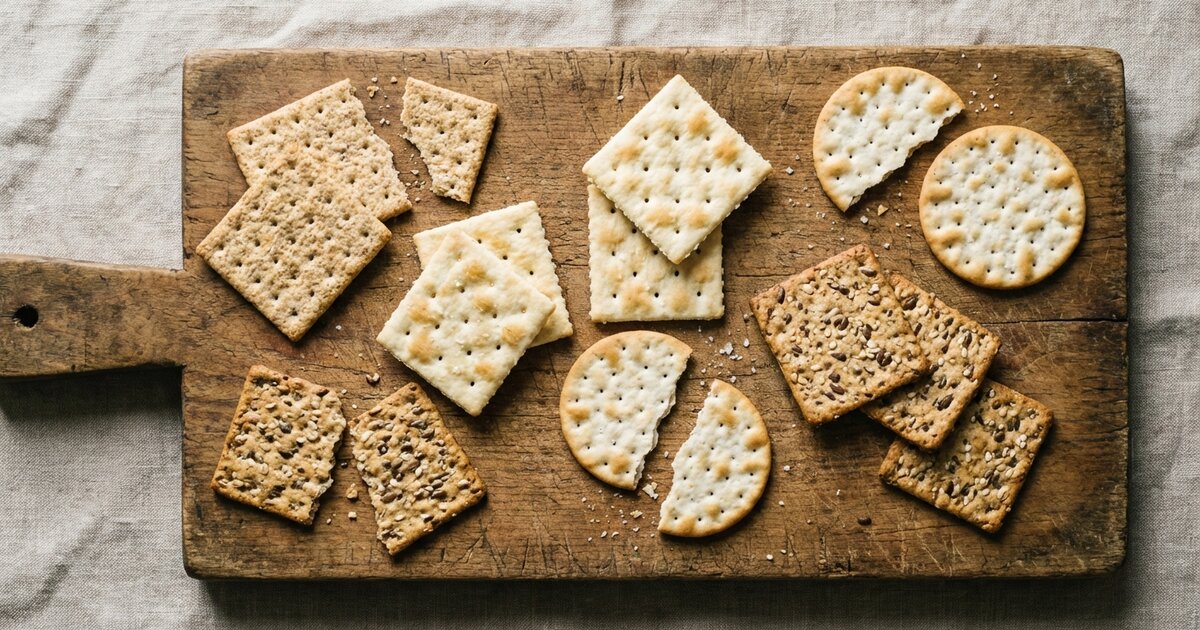
Crackers are one of those snacks people eat mindlessly—and that’s exactly the problem for macro tracking. A handful here, a handful there, and suddenly you’ve eaten 400 calories of refined carbs without realizing it.
But crackers aren’t diet villains. They’re just food with macros like everything else. The key is understanding what you’re eating, because “a few crackers” means different things depending on the type, and that small serving size on the box isn’t how most people actually eat.
This guide breaks down cracker macros across all the popular types, so you can snack smarter.
Crackers Macros: Quick Reference
Here’s what you’re looking at with common cracker types.
Per Serving (Typical Package Serving)
| Cracker Type | Serving | Calories | Carbs | Fat | Protein | Fiber |
|---|---|---|---|---|---|---|
| Saltines | 5 crackers | 62 | 10g | 1.5g | 1g | 0g |
| Ritz Original | 5 crackers | 79 | 10g | 3.5g | 1g | 0g |
| Triscuit | 6 crackers | 120 | 20g | 4g | 3g | 3g |
| Wheat Thins | 16 crackers | 140 | 22g | 5g | 2g | 1g |
| Goldfish | 55 pieces | 140 | 20g | 5g | 3g | 1g |
| Cheez-Its | 27 crackers | 150 | 17g | 8g | 3g | 1g |
| Club Crackers | 4 crackers | 70 | 9g | 3g | 1g | 0g |
| Graham Crackers | 2 sheets | 130 | 24g | 3g | 2g | 1g |
| Ryvita/Wasa | 2 crackers | 60 | 14g | 0g | 2g | 4g |
| Rice Cakes | 2 cakes | 70 | 14g | 0.5g | 2g | 0g |
Per 100g (Standardized)
| Cracker Type | Calories | Carbs | Fat | Protein |
|---|---|---|---|---|
| Saltines | 421 | 72g | 9g | 9g |
| Ritz Original | 500 | 61g | 25g | 6g |
| Triscuit | 428 | 71g | 14g | 10g |
| Wheat Thins | 467 | 73g | 17g | 7g |
| Cheez-Its | 500 | 57g | 27g | 10g |
Key insight: Crackers average about 450-500 calories per 100g—similar to chips and other snack foods. They just seem healthier because serving sizes are small.
Crackers Macros by Brand
Salty/Savory Crackers
| Brand/Type | Serving | Calories | Carbs | Fat | Protein |
|---|---|---|---|---|---|
| Ritz Original | 5 (16g) | 79 | 10g | 3.5g | 1g |
| Ritz Whole Wheat | 5 (15g) | 70 | 10g | 3g | 1g |
| Premium Saltines | 5 (15g) | 60 | 11g | 1.5g | 1g |
| Club Original | 4 (14g) | 70 | 9g | 3g | 1g |
| Townhouse | 5 (16g) | 80 | 10g | 4g | 1g |
| Keebler Toasted | 5 (15g) | 80 | 10g | 4g | 1g |
| Carr’s Table Water | 5 (15g) | 70 | 13g | 1.5g | 1g |
| Ak-Mak | 5 (28g) | 116 | 19g | 2g | 5g |
Cheese Crackers
| Brand/Type | Serving | Calories | Carbs | Fat | Protein |
|---|---|---|---|---|---|
| Cheez-Its Original | 27 (30g) | 150 | 17g | 8g | 3g |
| Cheez-Its Reduced Fat | 25 (30g) | 130 | 19g | 5g | 3g |
| Goldfish | 55 (30g) | 140 | 20g | 5g | 3g |
| Goldfish Whole Grain | 55 (30g) | 140 | 20g | 5g | 4g |
| Better Cheddars | 22 (30g) | 150 | 17g | 8g | 3g |
| Cheese Nips | 29 (30g) | 150 | 18g | 7g | 2g |
| Annie’s Cheddar Bunnies | 50 (30g) | 140 | 19g | 6g | 3g |
Whole Grain/Fiber Crackers
| Brand/Type | Serving | Calories | Carbs | Fat | Protein | Fiber |
|---|---|---|---|---|---|---|
| Triscuit Original | 6 (28g) | 120 | 20g | 4g | 3g | 3g |
| Triscuit Thin Crisps | 15 (30g) | 130 | 21g | 4g | 3g | 3g |
| Wheat Thins Original | 16 (31g) | 140 | 22g | 5g | 2g | 1g |
| Wasa Crispbread | 2 (26g) | 60 | 14g | 0g | 2g | 4g |
| Ryvita | 2 (23g) | 70 | 15g | 0.5g | 2g | 4g |
| Finn Crisp | 4 (40g) | 140 | 30g | 0.5g | 4g | 6g |
| Mary’s Gone Crackers | 13 (30g) | 140 | 21g | 5g | 3g | 3g |
Graham Crackers
| Brand/Type | Serving | Calories | Carbs | Fat | Protein | Sugar |
|---|---|---|---|---|---|---|
| Honey Maid | 2 sheets | 130 | 24g | 3g | 2g | 8g |
| Honey Maid Low Fat | 2 sheets | 120 | 25g | 2g | 2g | 8g |
| Annie’s Honey | 2 sheets | 130 | 22g | 3.5g | 2g | 7g |
| Keebler | 2 sheets | 130 | 24g | 3g | 2g | 8g |
Understanding Cracker Serving Sizes
The serving size issue is crucial for crackers.
Serving Size Reality Check
| Cracker | Package Serving | What People Actually Eat |
|---|---|---|
| Ritz | 5 crackers | 10-15 crackers |
| Cheez-Its | 27 crackers | 50+ crackers |
| Triscuit | 6 crackers | 12-18 crackers |
| Goldfish | 55 pieces | 100+ pieces |
| Saltines | 5 crackers | 10-20 crackers |
Multiply accordingly. If you typically eat 15 Ritz crackers, that’s 3 servings = 237 calories, 30g carbs.
Visual Portion Guide
| Amount | Crackers | Approximate Calories |
|---|---|---|
| Small handful | 5-8 | 60-100 |
| Modest snack | 10-15 | 120-200 |
| ”Serving with cheese” | 15-20 | 180-260 |
| Mindless eating | 30+ | 360+ |
The Cheese and Cracker Combo
What actually happens when you have “crackers and cheese”:
Typical reality:
- 15 crackers: ~240 calories
- 2 oz cheese: ~220 calories
- Total: 460 calories
That “light snack” is basically a small meal.
Crackers for Different Diet Goals
Crackers for Weight Loss
The challenge: Crackers are easy to overeat and don’t provide much satiety for the calories.
Best cracker choices for weight loss:
- High-fiber options: Wasa, Ryvita, Finn Crisp (more filling)
- Lower calorie density: Rice cakes, saltines
- Portion-controlled packs: 100-calorie snack packs
Strategies:
- Pre-portion crackers instead of eating from the box
- Pair with protein (cheese, hummus, nut butter) for satiety
- Choose crackers with 3+ grams fiber per serving
- Avoid eating crackers while distracted
Use our Macro Calculator to see how crackers fit your daily targets.
Crackers for Muscle Building
The reality: Crackers aren’t ideal for muscle building—they’re low in protein and the carbs are mostly refined.
When crackers work:
- Quick energy source before workout
- Easy carbs for hard gainers
- Vehicle for protein (cheese, nut butter, tuna)
Better alternatives: Bread, rice, oats, whole grains with more nutritional value.
Crackers on Keto
Standard crackers don’t work for keto. Even a small serving has 10-22g carbs.
Keto-friendly alternatives:
| Product | Serving | Net Carbs |
|---|---|---|
| Flackers (flax) | 8 crackers | 1g |
| Whisps (cheese) | 23 crisps | 1g |
| Pork rinds | 1 oz | 0g |
| Fat Snax crackers | 10 crackers | 2g |
| Hu Kitchen crackers | 10 crackers | 3g |
| Almond flour crackers (homemade) | 10 crackers | 2-3g |
Crackers for IIFYM/Flexible Dieting
Crackers fit flexible dieting fine—just track them accurately.
Keys to success:
- Weigh or count crackers precisely
- Account for what you actually eat, not the serving size
- Balance with nutrient-dense foods the rest of the day
- Don’t let crackers become a daily calorie sink
Learn more in our Flexible Dieting Guide.
Crackers vs Other Snacks
How do crackers compare to alternatives?
| Snack (30g) | Calories | Carbs | Fat | Protein | Fiber |
|---|---|---|---|---|---|
| Ritz crackers | 148 | 19g | 7g | 2g | 0g |
| Cheez-Its | 150 | 17g | 8g | 3g | 1g |
| Potato chips | 160 | 15g | 10g | 2g | 1g |
| Pretzels | 108 | 23g | 1g | 3g | 1g |
| Popcorn (air-popped) | 93 | 19g | 1g | 3g | 4g |
| Mixed nuts | 173 | 6g | 15g | 5g | 2g |
| Baby carrots | 10 | 2g | 0g | 0g | 1g |
| Apple slices | 16 | 4g | 0g | 0g | 1g |
Observations:
- Crackers are comparable to chips in calories and fat
- Pretzels are lower fat but similar carbs
- Popcorn provides more volume for fewer calories
- Whole foods (carrots, fruit) are dramatically lower calorie
Compare with Popcorn Macros for a detailed breakdown.
What to Pair with Crackers
Strategic pairing improves cracker nutrition and satiety.
High-Protein Pairings
| Pairing (per 2 tbsp or 1 oz) | Calories | Protein | Notes |
|---|---|---|---|
| Cottage cheese | 28 | 4g | Low-cal, high protein |
| Hummus | 50 | 2g | Adds fiber |
| Greek yogurt dip | 30 | 3g | Low fat option |
| Turkey slices | 30 | 6g | Lean protein |
| Tuna salad | 90 | 10g | Very filling |
| String cheese | 80 | 7g | Convenient |
Higher Fat Pairings
| Pairing (per 2 tbsp or 1 oz) | Calories | Fat | Notes |
|---|---|---|---|
| Cheddar cheese | 110 | 9g | Classic combo |
| Cream cheese | 100 | 10g | High calorie |
| Peanut butter | 188 | 16g | Calorie dense |
| Almond butter | 196 | 18g | Healthy fats |
| Brie | 95 | 8g | Indulgent |
| Guacamole | 50 | 4g | Good fats |
Balanced Snack Combos
200-calorie snack:
- 5 Triscuits (60 cal) + 1 oz cheese (110 cal)
- Total: 170 cal, 9g protein, 10g carbs
150-calorie snack:
- 3 Wasa crackers (90 cal) + 2 tbsp hummus (50 cal)
- Total: 140 cal, 4g protein, 4g fiber
High-protein snack:
- 8 crackers (130 cal) + 1/4 cup cottage cheese (55 cal)
- Total: 185 cal, 10g protein
How to Track Crackers Accurately
Method 1: Count Individual Crackers
Most accurate for standard crackers. The serving size tells you how many crackers = 1 serving.
Method 2: Weigh in Grams
More accurate for irregular crackers or when you’ve broken some.
Common weights:
- Ritz: ~3g per cracker
- Saltine: ~3g per cracker
- Triscuit: ~5g per cracker
- Cheez-It: ~1g per cracker
Method 3: Measure by Volume
Least accurate but useful for small crackers:
- 1/4 cup Goldfish ≈ 27 pieces
- 1/4 cup Cheez-Its ≈ 14 pieces
The Pre-Portion Method
The best approach for accurate tracking:
- Count out your serving
- Put it in a bowl or bag
- Put the box away
- Eat what you portioned
Do not eat from the box. Ever.
Healthier Cracker Alternatives
If you want crackers but better nutrition:
Vegetable-Based Options
| Option | Per Serving | Calories | Carbs | Fiber |
|---|---|---|---|---|
| Cucumber slices | 1 cup | 16 | 4g | 0.5g |
| Bell pepper strips | 1 cup | 30 | 6g | 2g |
| Celery | 1 cup | 14 | 3g | 2g |
| Jicama sticks | 1 cup | 46 | 11g | 6g |
Better Cracker Options
| Cracker | Why It’s Better |
|---|---|
| Wasa/Ryvita | High fiber, low fat |
| Mary’s Gone Crackers | Whole grain, gluten-free |
| Flackers | Low carb, high omega-3 |
| Doctor in the Kitchen | Seed-based, keto-friendly |
| Ak-Mak | Whole wheat, minimal processing |
DIY Crackers
Seed crackers (per serving):
- 2 tbsp mixed seeds
- Water, salt, herbs
- Bake until crispy
Result: ~120 cal, 5g protein, 4g net carbs, 9g fat, 4g fiber
Better macros than commercial options.
Common Cracker Tracking Mistakes
Mistake 1: Eating from the Box
This is the #1 reason crackers derail diets. You’ll eat 3-4 servings without realizing it.
Solution: Pre-portion every time.
Mistake 2: Ignoring Toppings
Tracking the crackers but forgetting the cheese, spreads, or dips you put on them.
Mistake 3: Using Volume Measures
“A handful” varies person to person. Count or weigh instead.
Mistake 4: Confusing “Whole Wheat” with “Healthy”
Many “whole wheat” crackers:
- Are mostly refined flour with some whole wheat
- Have similar calories to regular crackers
- May have added sugar
- Contain minimal fiber
Check the label. First ingredient should be “whole wheat flour” and fiber should be 3+ grams per serving.
Mistake 5: The “Just a Few More” Trap
You tracked 5 crackers, then had 3 more. Then 2 more. Now you’ve eaten 10 but logged 5.
Track in real-time or use the pre-portion method.
The Bottom Line on Cracker Macros
The facts:
- Crackers are primarily refined carbohydrates with added fat
- A serving size is small (5-8 crackers)—most people eat 2-3x more
- Calories range from 60-150 per serving depending on type
- Whole grain options offer more fiber but similar calories
- Crackers paired with toppings quickly become high-calorie snacks
Best practices:
- Always pre-portion—never eat from the box
- Choose high-fiber options (3+ grams) for better satiety
- Pair with protein for a more balanced snack
- Track accurately, including all toppings
- Be honest about how many you actually eat
The bigger picture: Crackers can fit into any diet—they’re just not particularly nutritious or filling for the calories. If you enjoy them, account for them. If you’re trying to lose weight, there are more satiating options for the same calories.
For understanding how snacks like crackers fit your overall nutrition strategy, read What Are Macronutrients.
Related Articles
Dragonfruit Macros: Complete Nutrition Guide for Pitaya
Complete macro breakdown of dragonfruit (pitaya). Learn the calories, protein, carbs, and...
Read guide →
Bulgur Macros: Complete Nutritional Guide & Health Benefits
Discover bulgur's complete macro breakdown, nutritional benefits, and how to incorporate...
Read guide →
Radish Macros: Nutrition Facts and Health Benefits
Complete guide to radish macros and nutrition. Learn calories, protein, carbs, and health...
Read guide →Note: Nutrition values are approximate and may vary based on preparation method and source.