Cucumber Macros: Complete Nutrition Guide
Reviewed by Dr. Michael Torres, PhD
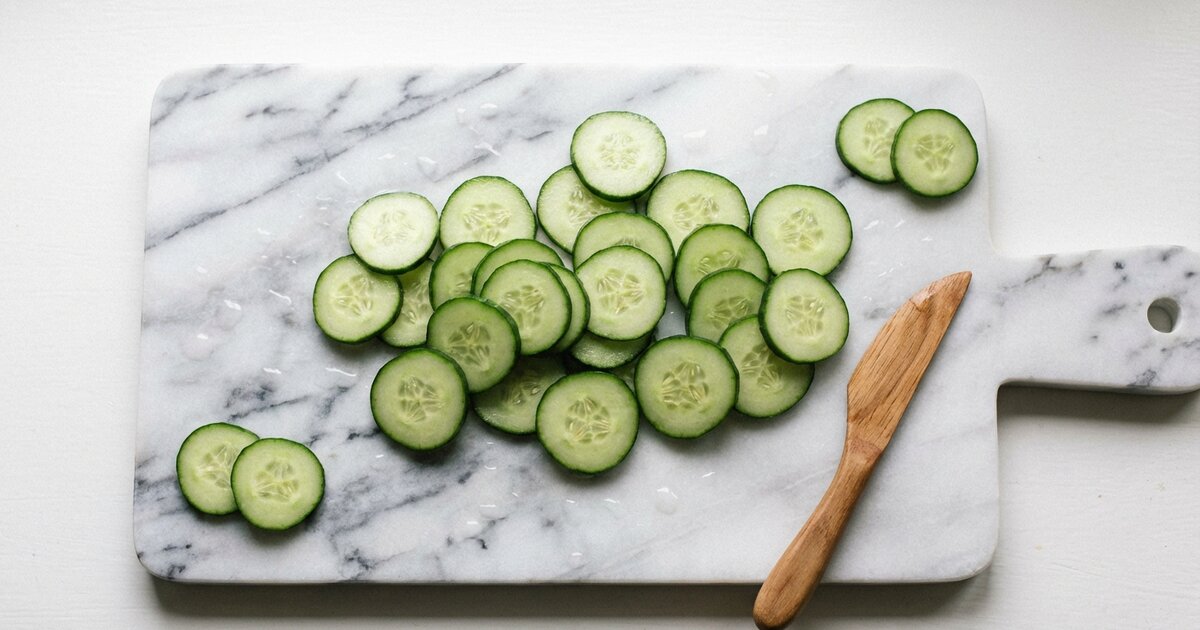
Cucumbers are the ultimate volume food. At 16 calories per cup and 95% water, they’re essentially calorie-free while still providing crunch, freshness, and hydration. For anyone watching their weight, cucumbers are the closest thing to a “free food” that exists.
But calling cucumbers “just water” undersells them. They provide some nutrients, help you stay hydrated, and play a valuable role in meal composition. Understanding their (minimal) macros helps you use them strategically.
This guide covers everything about cucumber nutrition—which admittedly doesn’t take long, because cucumbers are beautifully simple.
Cucumber Macros: Quick Reference
Here’s the full breakdown for cucumbers.
Per Cup Sliced (104g, with peel)
| Nutrient | Amount | % Daily Value |
|---|---|---|
| Calories | 16 | <1% |
| Protein | 0.7g | 1% |
| Total Carbs | 3.8g | 1% |
| Fiber | 0.5g | 2% |
| Net Carbs | 3.3g | - |
| Fat | 0.1g | 0% |
| Sugar | 1.7g | - |
| Vitamin K | 17mcg | 19% |
| Vitamin C | 2.8mg | 3% |
| Potassium | 152mg | 3% |
| Water | 99g | - |
Per Whole Cucumber (Medium, 8 inches)
| Nutrient | Amount |
|---|---|
| Calories | 45 |
| Protein | 2g |
| Total Carbs | 11g |
| Fiber | 1.5g |
| Net Carbs | 9.5g |
| Fat | 0.3g |
| Water | 287g |
Per 100g (with peel)
| Nutrient | Amount |
|---|---|
| Calories | 15 |
| Protein | 0.65g |
| Carbs | 3.6g |
| Fiber | 0.5g |
| Fat | 0.1g |
Key insight: Cucumbers are 95-96% water. The remaining 4-5% is mostly fiber and a tiny amount of natural sugars.
Cucumber Types Compared
Regular (Slicing) Cucumber
| Per Whole | Amount |
|---|---|
| Calories | 45 |
| Weight | ~300g |
| Carbs | 11g |
Standard supermarket cucumber. Thicker skin, contains seeds.
English (Hothouse/Seedless) Cucumber
| Per Whole | Amount |
|---|---|
| Calories | 34 |
| Weight | ~250g |
| Carbs | 8g |
Longer, thinner skin, no seeds. Slightly less dense.
Persian (Mini) Cucumbers
| Per Cucumber | Amount |
|---|---|
| Calories | 8-10 |
| Weight | ~55g |
| Carbs | 2g |
Smaller, crunchier, thinner skin. Perfect for snacking.
Kirby (Pickling) Cucumbers
| Per Cucumber | Amount |
|---|---|
| Calories | 15 |
| Weight | ~100g |
| Carbs | 4g |
Bumpy texture, firm flesh. Used for pickles.
Bottom line: All cucumber types have nearly identical macros per weight. Choose based on texture preference and use case.
Why Cucumbers Are Valuable for Macro Tracking
Volume Without Calories
Cucumbers let you eat more food without more calories.
Example:
- 2 cups cucumber salad: 32 calories
- 2 cups Caesar salad: 400+ calories
Adding cucumbers to any meal increases volume and satisfaction at almost no caloric cost.
Hydration
Cucumbers are 95% water. Eating them contributes to daily fluid intake—useful for:
- People who don’t drink enough water
- Hot weather
- Exercise recovery
- Feeling full on fewer calories
Crunch Satisfaction
The mechanical satisfaction of crunching contributes to satiety. Cucumbers provide this without the calories of chips, crackers, or other crunchy snacks.
Cucumbers for Different Diet Goals
Cucumbers for Weight Loss
Verdict: Perfect weight loss food.
How to use cucumbers for weight loss:
- Add to every salad (more volume)
- Snack on instead of chips/crackers
- Add to sandwiches and wraps
- Make cucumber “chips” with seasoning
- Use as dippers instead of bread/crackers
Calorie substitution:
- 1 oz potato chips: 152 calories
- 1 cup cucumber slices: 16 calories
- Savings: 136 calories for similar crunch volume
Use our Macro Calculator to plan your daily intake.
Cucumbers on Keto
Verdict: Perfect keto food.
Per cup: Only 3.3g net carbs
Cucumbers are one of the lowest-carb vegetables available. Eat freely on any low-carb or keto diet.
Keto uses:
- Dip vehicle for high-fat dips
- Salad base instead of higher-carb vegetables
- Snacking with cheese or deli meat
- Cucumber “boats” filled with tuna salad
Cucumbers for Flexible Dieting
For IIFYM, cucumbers are essentially a “free” food. Track them for completeness, but they won’t impact your macros meaningfully.
When to track cucumbers:
- If eating massive quantities (3+ cups)
- For precise calorie counting
- For complete food diary
When to skip tracking:
- As minor salad ingredient
- As garnish
- For rough macro counting
Learn more in our Flexible Dieting Guide.
Cucumber vs Other Low-Calorie Vegetables
How do cucumbers compare to other “volume” vegetables?
| Vegetable (1 cup raw) | Calories | Carbs | Fiber | Water % |
|---|---|---|---|---|
| Cucumber | 16 | 3.8g | 0.5g | 95% |
| Celery | 14 | 3g | 1.6g | 95% |
| Lettuce (iceberg) | 10 | 2g | 1g | 96% |
| Zucchini | 21 | 4g | 1.2g | 95% |
| Tomato | 32 | 7g | 2g | 94% |
| Bell pepper | 30 | 6g | 2g | 92% |
| Radishes | 19 | 4g | 2g | 95% |
| Spinach | 7 | 1g | 0.7g | 91% |
Cucumbers rank among the lowest calorie options alongside celery and lettuce.
See also: Zucchini Macros | Kale Macros
How to Use Cucumbers in Meals
As a Base
Cucumber noodles: Use a spiralizer to make cucumber “zoodles”
- Zero cooking required
- Lower carb than zucchini noodles
- Fresh, light alternative to pasta
Cucumber salad base: Replace some lettuce with sliced cucumbers for variety and crunch
As a Dipper
Replace chips, crackers, and bread with cucumber slices:
- Hummus: 50 cal + 16 cal cucumber vs 50 cal + 150 cal pita
- Guacamole: Same swap, major calorie savings
- Deli meat rollups: Meat + cheese + cucumber instead of bread
As a Hydration Tool
Cucumber water: Infuse water with sliced cucumber for subtle flavor
- Encourages more water consumption
- Zero calories
- Light, refreshing taste
Smoothie addition: Add cucumber to green smoothies
- Adds liquid volume
- Minimal flavor impact
- Reduces need for ice
In Meals
Greek salad: Cucumber + tomato + feta + olives + olive oil
- Per serving: ~200 cal, refreshing and filling
Tzatziki: Greek yogurt + grated cucumber + garlic + dill
- Per 2 tbsp: ~15 cal
- Great for protein boost (from yogurt)
Gazpacho: Cold cucumber soup
- Incredibly low calorie
- Refreshing in summer
Asian cucumber salad: Cucumber + rice vinegar + sesame + soy
- Per cup: ~25 cal
- Great side dish
Cucumber Snack Ideas
Simple Snacks (Under 50 Calories)
| Snack | Calories |
|---|---|
| 1 cup cucumber slices | 16 |
| Cucumber with salt and pepper | 16 |
| Cucumber with lime juice + tajin | 20 |
| Cucumber with rice vinegar | 16 |
Paired Snacks (Under 150 Calories)
| Snack | Calories |
|---|---|
| 1 cup cucumber + 2 tbsp hummus | 66 |
| Cucumber + 1 oz cheese | 126 |
| Cucumber + 2 tbsp Greek yogurt dip | 36 |
| Cucumber + 1 tbsp nut butter | 110 |
Cucumber “Sandwiches”
Use cucumber slices as “bread”:
- Cucumber + cream cheese + smoked salmon: ~80 cal per “sandwich”
- Cucumber + tuna salad: ~60 cal
- Cucumber + turkey + mustard: ~40 cal
Nutrition Beyond Macros
While cucumbers are mostly water, they do provide some nutrients:
Vitamin K
One cup provides 19% of daily vitamin K needs, important for:
- Blood clotting
- Bone health
- Heart health
Antioxidants
Cucumbers contain:
- Vitamin C (small amount)
- Beta-carotene
- Flavonoids
- Tannins
Concentrated mostly in the skin.
Hydration
A medium cucumber contains about 287g of water—roughly a cup. This contributes to:
- Daily fluid requirements
- Skin health
- Digestive function
- Temperature regulation
Peel On vs Peel Off
With Peel
| Per Cup | Amount |
|---|---|
| Calories | 16 |
| Fiber | 0.5g |
| Vitamin K | 19% DV |
More fiber, more nutrients, may have pesticides if not organic.
Without Peel
| Per Cup | Amount |
|---|---|
| Calories | 14 |
| Fiber | 0.2g |
| Vitamin K | 6% DV |
Less fiber, fewer nutrients, no pesticide concerns.
Recommendation: Eat with peel when possible. If using conventional cucumbers, wash thoroughly under running water.
Common Cucumber Questions
Do Cucumbers Have Any Protein?
Technically yes—about 0.7g per cup. But this is nutritionally insignificant. Don’t count cucumbers toward protein goals.
Are Cucumbers Negative Calories?
No food is truly “negative calorie.” However, cucumbers are so low in calories (16 per cup) that the difference between “virtually zero” and “actually zero” is meaningless for practical purposes.
Can I Eat Too Many Cucumbers?
Practically, no. You’d need to eat enormous quantities for any negative effects. Some considerations:
- Very high cucumber intake may cause bloating (fiber + water volume)
- Cucumbers can interact with blood thinners (vitamin K)
- Otherwise, eat freely
Are Pickles the Same as Cucumbers?
Pickles are cucumbers preserved in brine. Nutritionally:
| Per Cup | Cucumber | Dill Pickle |
|---|---|---|
| Calories | 16 | 17 |
| Sodium | 2mg | 1,251mg |
Key difference: Pickles are extremely high in sodium. Otherwise similar.
Why Are My Cucumbers Bitter?
Bitterness comes from cucurbitacins, compounds that increase with:
- Plant stress (inconsistent watering)
- Temperature extremes
- Overly mature cucumbers
To reduce: Cut off ends (where bitterness concentrates) and peel if necessary.
Storing Cucumbers
Refrigerator Storage
- Whole: 7-10 days in crisper drawer
- Cut: 3-4 days in sealed container
- Sliced: 1-2 days (gets watery)
Prep Tips
- Don’t slice until ready to use
- If pre-slicing, pat dry before storing
- Cold cucumbers are crispest
- Room temperature cucumbers have more flavor
The Bottom Line on Cucumber Macros
The facts:
- 16 calories per cup—virtually nothing
- 95% water—excellent for hydration
- 3.3g net carbs per cup—keto-friendly
- Negligible protein and fat
- Some vitamin K and minor nutrients
Best uses:
- Volume food for weight loss
- Crunch substitute for chips/crackers
- Salad and meal extender
- Hydration support
- Low-carb snacking vehicle
- Dip delivery system
Bottom line: Cucumbers are a “free food” for practical macro tracking. They provide volume, crunch, and hydration with essentially no caloric cost. If you’re trying to lose weight, adding cucumbers to meals and snacks is one of the simplest strategies that actually works.
There’s no need to overthink cucumbers. Eat them freely, enjoy the crunch, and appreciate having a food that lets you eat more while consuming less.
For understanding how cucumbers fit into your overall nutrition picture, read What Are Macronutrients.
Related Articles
Dragonfruit Macros: Complete Nutrition Guide for Pitaya
Complete macro breakdown of dragonfruit (pitaya). Learn the calories, protein, carbs, and...
Read guide →
Bulgur Macros: Complete Nutritional Guide & Health Benefits
Discover bulgur's complete macro breakdown, nutritional benefits, and how to incorporate...
Read guide →
Radish Macros: Nutrition Facts and Health Benefits
Complete guide to radish macros and nutrition. Learn calories, protein, carbs, and health...
Read guide →Note: Nutrition values are approximate and may vary based on preparation method and source.