Eggplant Macros: Complete Nutrition Guide + Calorie Breakdown
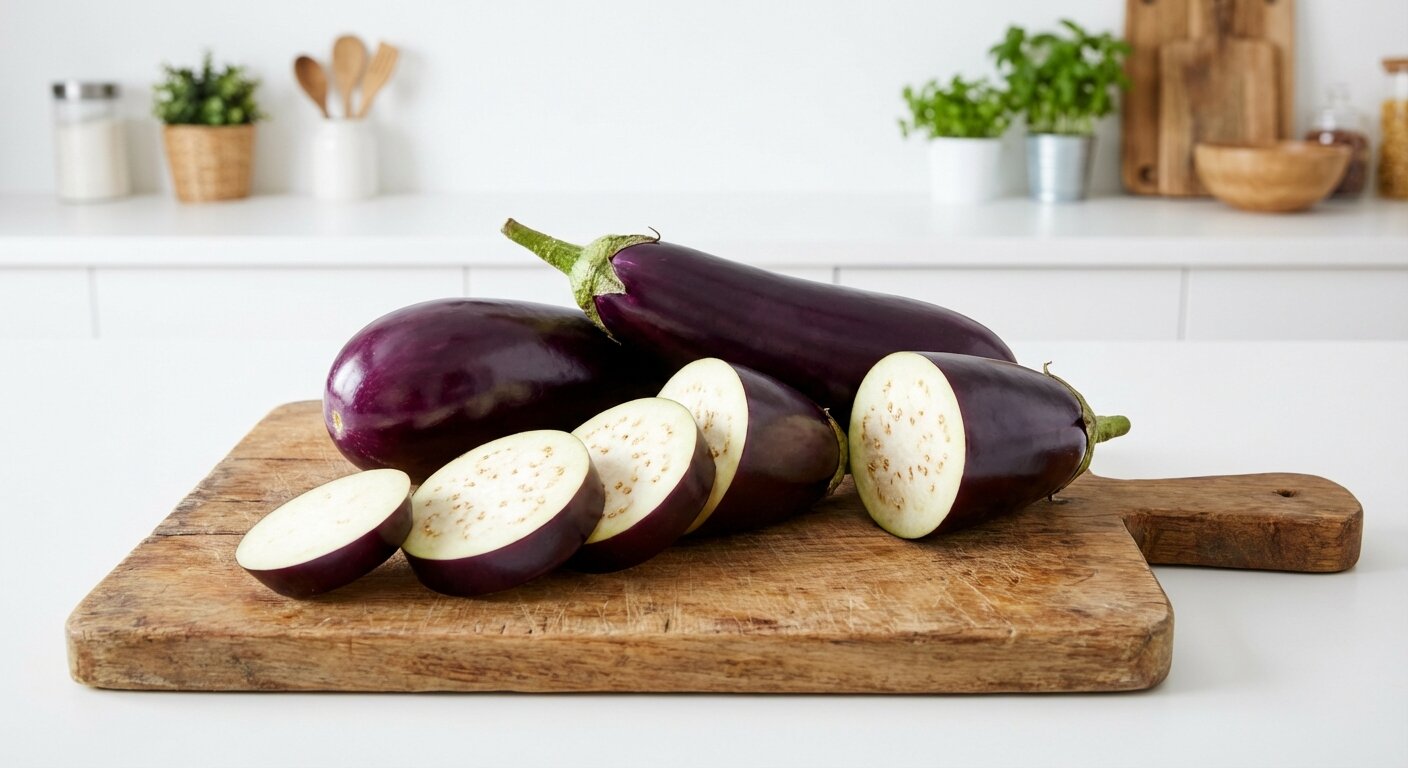
Eggplant is one of the most versatile, low-calorie vegetables you can add to your macro plan. With just 20 calories per cup and virtually zero fat, it’s a volume eater’s dream—you can fill your plate without blowing your calorie budget.
But here’s the catch: eggplant is a sponge. Cooking methods matter massively. Grill it, and you’ve got a 25-calorie side dish. Fry it in oil, and you’re suddenly looking at 200+ calories per cup. That’s a 10x difference from the same vegetable.
In this guide, we’ll break down eggplant macros for every variety and cooking method, compare raw vs cooked nutrition, and show you exactly how to prep eggplant to hit your protein, carb, and fat targets without guesswork.
Need to calculate your daily macros? Use our free macro calculator to get personalized targets based on your goals, activity level, and preferences. Takes 60 seconds.
Related: Learn more about what macros are and how they impact your diet.
Eggplant Macros: Raw vs Cooked Breakdown
Raw Eggplant Macros (Per Cup, Cubed - 99g)
| Nutrient | Amount |
|---|---|
| Calories | 20 |
| Protein | 0.8g |
| Carbohydrates | 4.8g |
| - Fiber | 2.5g |
| - Net Carbs | 2.3g |
| Fat | 0.1g |
Cooked Eggplant Macros (Per Cup, Boiled/Drained - 99g)
| Nutrient | Amount |
|---|---|
| Calories | 28 |
| Protein | 0.8g |
| Carbohydrates | 6.6g |
| - Fiber | 2.5g |
| - Net Carbs | 4.1g |
| Fat | 0.2g |
Key Differences:
- Boiling concentrates carbs slightly (water loss)
- Protein and fiber remain nearly identical
- Fat increases minimally (0.1g difference)
- Calories increase by 40% but still remain very low
Bottom line: Raw or cooked, eggplant is an ultra-low-calorie, low-carb vegetable. The difference is negligible—unless you add oil.
Eggplant Macros by Variety
Not all eggplants are nutritionally identical. Here’s how the most common varieties compare:
Globe Eggplant (Standard Purple)
- Size: 1 medium (548g)
- Calories: 110
- Protein: 4.5g
- Carbs: 26g
- Fat: 0.8g
- Notes: The classic grocery store variety. Mild, slightly bitter flavor.
Japanese Eggplant
- Size: 1 medium (230g)
- Calories: 46
- Protein: 1.8g
- Carbs: 11g
- Fat: 0.3g
- Notes: Thinner skin, sweeter flesh. Less bitter than globe eggplant.
Italian Eggplant
- Size: 1 medium (450g)
- Calories: 90
- Protein: 3.7g
- Carbs: 21g
- Fat: 0.7g
- Notes: Similar to globe but slightly smaller. Great for grilling.
Chinese Eggplant
- Size: 1 medium (200g)
- Calories: 40
- Protein: 1.6g
- Carbs: 9.6g
- Fat: 0.3g
- Notes: Long, slender, very tender. Almost no bitterness.
White Eggplant
- Size: 1 medium (300g)
- Calories: 60
- Protein: 2.4g
- Carbs: 14.4g
- Fat: 0.4g
- Notes: Firmer texture, milder flavor than purple varieties.
Macro differences are minimal across varieties. Your choice should be based on cooking method and flavor preference, not nutrition.
How Cooking Methods Change Eggplant Macros
This is where eggplant nutrition gets tricky. Eggplant has a porous, sponge-like texture that absorbs whatever you cook it in.
Eggplant Macros by Cooking Method (Per 1 Cup)
| Method | Calories | Protein | Carbs | Fat | Notes |
|---|---|---|---|---|---|
| Raw | 20 | 0.8g | 5g | 0.1g | Rarely eaten this way |
| Boiled/Steamed | 28 | 0.8g | 7g | 0.2g | Minimal calorie increase |
| Grilled (no oil) | 25 | 0.8g | 6g | 0.2g | Best for low-calorie macro control |
| Roasted (1 tsp oil) | 65 | 0.8g | 7g | 4g | Moderate fat increase |
| Sautéed (1 tbsp oil) | 105 | 0.8g | 7g | 8g | Oil absorption triples calories |
| Fried (deep fried) | 200-300 | 1g | 10g | 20g+ | Eggplant soaks up frying oil like crazy |
The Big Takeaway: Cooking method changes eggplant calories by 10-15x. If you’re tracking macros, how you cook eggplant matters way more than which variety you choose.
Best Low-Calorie Cooking Methods
1. Grilling: Slice 1/2” thick, brush lightly with oil spray, grill 3-4 minutes per side. ~25 calories per cup.
2. Roasting (controlled oil): Cube eggplant, toss with 1-2 tsp olive oil, roast at 400°F for 25 minutes. ~65 calories per cup.
3. Air Frying: Cube eggplant, spray with oil, air fry at 380°F for 15 minutes. ~30 calories per cup.
4. Microwaving: Cube eggplant, add 2 tbsp water, microwave covered for 5 minutes. ~20 calories per cup (same as raw).
Eggplant Macros: Portion Size Guide
How much eggplant should you eat to hit your macro targets? Here’s a practical breakdown:
Small Portion (1/2 cup cooked)
- Calories: 14
- Protein: 0.4g
- Carbs: 3.3g
- Fat: 0.1g
- When to use: Side dish, adding volume to a stir-fry
Medium Portion (1 cup cooked)
- Calories: 28
- Protein: 0.8g
- Carbs: 6.6g
- Fat: 0.2g
- When to use: Main vegetable component of a meal
Large Portion (2 cups cooked)
- Calories: 56
- Protein: 1.6g
- Carbs: 13.2g
- Fat: 0.4g
- When to use: Volume eating, low-calorie bulking for satiety
Full Eggplant (1 medium globe, ~2.5 cups cooked)
- Calories: 70
- Protein: 2g
- Carbs: 16.5g
- Fat: 0.5g
- When to use: Meal prep base (eggplant parmesan, baba ganoush)
Pro tip: Eggplant is 92% water, so it’s incredibly filling relative to calories. If you’re cutting and hungry, you can easily eat 2-3 cups of grilled eggplant for under 100 calories.
Eggplant for Different Macro Goals
Eggplant for Weight Loss
Why it works:
- Ultra-low calorie density (20 cal/cup raw)
- High water content (92%) = extreme satiety
- Fiber slows digestion, keeping you full longer
- Versatile enough to replace higher-calorie foods (lasagna noodles, pizza crust)
Macro-friendly weight loss recipe:
- Eggplant “Lasagna”: Slice eggplant into 1/4” planks, grill, layer with marinara, part-skim mozzarella, and ground turkey. ~250 calories per serving vs 450+ for traditional lasagna.
Eggplant for Muscle Building
The challenge: Eggplant has almost zero protein (0.8g per cup). You cannot rely on eggplant for muscle-building macros.
How to use it:
- Add eggplant as a low-calorie vegetable base to pair with high-protein foods
- Grill eggplant and top with grilled chicken, tofu, or ground beef
- Use eggplant in stir-fries with lean protein sources
Example muscle-building plate:
- 6 oz grilled chicken breast (280 cal, 54g protein)
- 2 cups grilled eggplant (50 cal, 1.6g protein)
- 1/2 cup quinoa (110 cal, 4g protein)
- Total: 440 calories, 59.6g protein, low fat
Eggplant for Keto
Is eggplant keto-friendly? Yes. With only 3g net carbs per cup (5g total - 2.5g fiber), eggplant fits easily into a 20-50g daily carb limit.
Keto-friendly eggplant dishes:
- Baba ganoush (roasted eggplant dip with tahini)
- Eggplant “pizza” (slice lengthwise, top with cheese and pepperoni)
- Eggplant “fries” (air fried with parmesan coating)
- Moussaka (Greek eggplant casserole with ground lamb)
Keto macro tip: Pair eggplant with high-fat ingredients like olive oil, tahini, or cheese to hit your fat macros without adding many carbs.
Eggplant for Low-Carb Diets
Net carbs per cup: 2.3g raw, 4.1g cooked
Eggplant is one of the lowest-carb vegetables available. Even on strict low-carb plans (under 100g/day), you can eat multiple servings without issue.
Low-carb meal idea:
- Grilled eggplant “steaks” (1.5 cups = 6g net carbs)
- Topped with 4 oz salmon (0g carbs)
- Side of sautéed spinach (1g net carbs)
- Total: 7g net carbs, 35g protein
Micronutrients in Eggplant (Beyond Macros)
While eggplant is low in macros, it’s rich in vitamins, minerals, and antioxidants:
Vitamins Per Cup (Cooked)
- Vitamin K: 3.5 mcg (4% DV) - bone health, blood clotting
- Vitamin C: 1.3 mg (1% DV) - immune function, collagen synthesis
- Vitamin B6: 0.1 mg (4% DV) - protein metabolism, brain health
- Folate: 14 mcg (4% DV) - cell division, DNA synthesis
Minerals Per Cup (Cooked)
- Potassium: 122 mg (3% DV) - electrolyte balance, heart health
- Manganese: 0.1 mg (6% DV) - bone formation, antioxidant function
- Magnesium: 11 mg (3% DV) - muscle function, energy production
- Copper: 0.04 mg (4% DV) - iron absorption, collagen formation
Antioxidants
- Nasunin: A powerful anthocyanin found in eggplant skin that protects cell membranes from oxidative damage
- Chlorogenic acid: Antioxidant with potential anti-cancer and cholesterol-lowering properties
Bottom line: Eggplant won’t fill your protein or carb targets, but it adds valuable micronutrients and antioxidants to your diet without adding many calories.
Common Eggplant Dishes: Macro Breakdown
Here’s how popular eggplant recipes stack up:
Baba Ganoush (1/4 cup)
- Calories: 80
- Protein: 2g
- Carbs: 5g
- Fat: 6g
- Notes: Tahini adds healthy fats and protein
Eggplant Parmesan (1 cup, breaded & fried)
- Calories: 345
- Protein: 12g
- Carbs: 28g
- Fat: 21g
- Notes: Breading and frying add significant calories
Eggplant Parmesan (1 cup, grilled, no breading)
- Calories: 180
- Protein: 10g
- Carbs: 12g
- Fat: 10g
- Notes: Healthier version cuts calories in half
Ratatouille (1 cup)
- Calories: 85
- Protein: 2g
- Carbs: 12g
- Fat: 4g
- Notes: Mixed vegetable stew, moderate oil
Moussaka (1 cup)
- Calories: 280
- Protein: 18g
- Carbs: 15g
- Fat: 16g
- Notes: Greek casserole with ground lamb/beef
Grilled Eggplant (1 cup, plain)
- Calories: 25
- Protein: 0.8g
- Carbs: 6g
- Fat: 0.2g
- Notes: Lowest-calorie preparation
How to Reduce Bitterness in Eggplant
Eggplant can be bitter, especially older or larger varieties. Here’s how to fix it:
Salting Method
- Slice or cube eggplant
- Sprinkle with 1-2 tsp salt
- Let sit for 30 minutes
- Rinse thoroughly and pat dry
Why it works: Salt draws out bitter compounds and excess moisture, improving texture and flavor. This also prevents eggplant from absorbing too much oil during cooking.
Choosing Less Bitter Varieties
- Japanese eggplant: Naturally sweeter, thinner skin
- Chinese eggplant: Almost no bitterness
- Young globe eggplant: Less bitter than large, mature ones
Pro tip: Bitterness is concentrated in the seeds. If you’re ultra-sensitive, scoop out seeds after cutting eggplant in half.
Eggplant Meal Prep Ideas
Eggplant is fantastic for meal prep because it reheats well and absorbs flavors during storage.
Grilled Eggplant Steaks (Meal Prep for 4)
Ingredients:
- 2 large globe eggplants, sliced into 1/2” rounds
- 2 tsp olive oil
- 1 tsp garlic powder
- Salt and pepper
Instructions:
- Slice eggplant, salt for 30 minutes, rinse
- Brush lightly with olive oil, season
- Grill 3-4 minutes per side
- Store in airtight containers for up to 5 days
Macros per serving (1/4 recipe):
- Calories: 55
- Protein: 1.5g
- Carbs: 10g
- Fat: 2g
Roasted Eggplant Cubes (Batch Prep)
Ingredients:
- 3 medium eggplants, cubed
- 1 tbsp olive oil
- 1 tsp cumin
- 1 tsp smoked paprika
Instructions:
- Cube eggplant, salt, rinse
- Toss with olive oil and spices
- Roast at 400°F for 25 minutes
- Use in salads, grain bowls, or wraps all week
Macros per 1 cup serving:
- Calories: 65
- Protein: 0.8g
- Carbs: 7g
- Fat: 4g
Eggplant “Meat” Sauce (Freezer-Friendly)
Ingredients:
- 2 large eggplants, finely diced
- 1 lb ground turkey
- 28 oz crushed tomatoes
- Garlic, onion, Italian seasoning
Instructions:
- Sauté diced eggplant until soft
- Add ground turkey, cook through
- Add tomatoes and simmer 20 minutes
- Freeze in 1-cup portions
Macros per 1 cup:
- Calories: 145
- Protein: 15g
- Carbs: 10g
- Fat: 5g
Frequently Asked Questions
Can I eat eggplant raw?
Technically yes, but it’s not recommended. Raw eggplant contains solanine, a compound that can cause digestive upset in large amounts. Cooking breaks down solanine and makes eggplant much more palatable. The texture and flavor of raw eggplant are also quite bitter and unpleasant. If you want to try it, use very young, fresh eggplant and slice thinly for salads.
Does eggplant cause inflammation?
Eggplant is part of the nightshade family (along with tomatoes, peppers, and potatoes). Some people with autoimmune conditions report inflammation from nightshades, but scientific evidence is limited. For most people, eggplant is anti-inflammatory due to its antioxidant content. If you have concerns, try an elimination diet to see if removing eggplant improves your symptoms.
Is eggplant high in fiber?
Moderately. One cup of cooked eggplant provides 2.5g of fiber (10% DV). That’s decent but not exceptional compared to beans (15g per cup) or raspberries (8g per cup). However, because eggplant is so low in calories, it’s an efficient way to add fiber without blowing your carb budget.
Can I eat eggplant on a low-FODMAP diet?
It depends on portion size. Eggplant contains moderate FODMAPs (fermentable carbohydrates that can trigger IBS symptoms). The Monash University FODMAP app lists 1/2 cup (75g) of eggplant as low-FODMAP, but larger portions may cause issues. If you’re FODMAP-sensitive, stick to smaller servings and monitor your response.
How long does cooked eggplant last in the fridge?
Cooked eggplant lasts 3-5 days in an airtight container in the fridge. Grilled or roasted eggplant tends to last longer than sautéed or fried versions due to lower moisture content. For meal prep, freeze cooked eggplant in portions for up to 3 months. Thaw overnight in the fridge before reheating.
Why does my eggplant turn brown after cutting?
Eggplant oxidizes (turns brown) when exposed to air, similar to apples. To prevent browning, soak cut eggplant in water with a squeeze of lemon juice for 10 minutes before cooking. This doesn’t affect nutrition, but it keeps eggplant looking fresh. Salting eggplant before cooking also slows browning.
Is eggplant safe for dogs?
Yes, cooked eggplant is safe for dogs in small amounts. Raw eggplant should be avoided due to solanine content. Remove the skin for easier digestion. However, eggplant offers minimal nutritional benefit for dogs—it’s not harmful, just unnecessary. If your dog has nightshade sensitivity, skip eggplant entirely.
Can I freeze raw eggplant?
Not recommended. Raw eggplant has high water content and becomes mushy when frozen. For best results, cook eggplant first (grilling, roasting, or sautéing), then freeze in airtight containers or freezer bags. Blanching raw eggplant for 4 minutes before freezing improves texture but is still inferior to freezing cooked eggplant.
Bottom Line: Should Eggplant Be Part of Your Macro Plan?
Yes—if you’re looking for:
- Extremely low-calorie vegetable volume
- Fiber without many carbs
- Keto or low-carb-friendly foods
- Versatile meal prep ingredients
No—if you’re relying on it for:
- Protein (almost zero)
- Significant micronutrients (moderate vitamins/minerals)
- Standalone meals (needs pairing with protein/fat sources)
Eggplant’s superpower is its calorie-to-volume ratio. You can eat a massive amount without impacting your daily macros. That makes it perfect for cutting, volume eating, or adding bulk to meals.
Just remember: cooking method is everything. Grill or roast eggplant, and you’ve got a 25-calorie superfood. Fry it in oil, and you’ve turned a diet food into a calorie bomb.
Want personalized macro targets? Use our free macro calculator to find your ideal protein, carb, and fat intake based on your goals. Then build meals around eggplant as your low-calorie vegetable base.
Related Articles
Dragonfruit Macros: Complete Nutrition Guide for Pitaya
Complete macro breakdown of dragonfruit (pitaya). Learn the calories, protein, carbs, and...
Read guide →
Bulgur Macros: Complete Nutritional Guide & Health Benefits
Discover bulgur's complete macro breakdown, nutritional benefits, and how to incorporate...
Read guide →
Radish Macros: Nutrition Facts and Health Benefits
Complete guide to radish macros and nutrition. Learn calories, protein, carbs, and health...
Read guide →Note: Nutrition values are approximate and may vary based on preparation method and source.