Grape Juice Macros: Complete Nutrition Guide for Smart Tracking
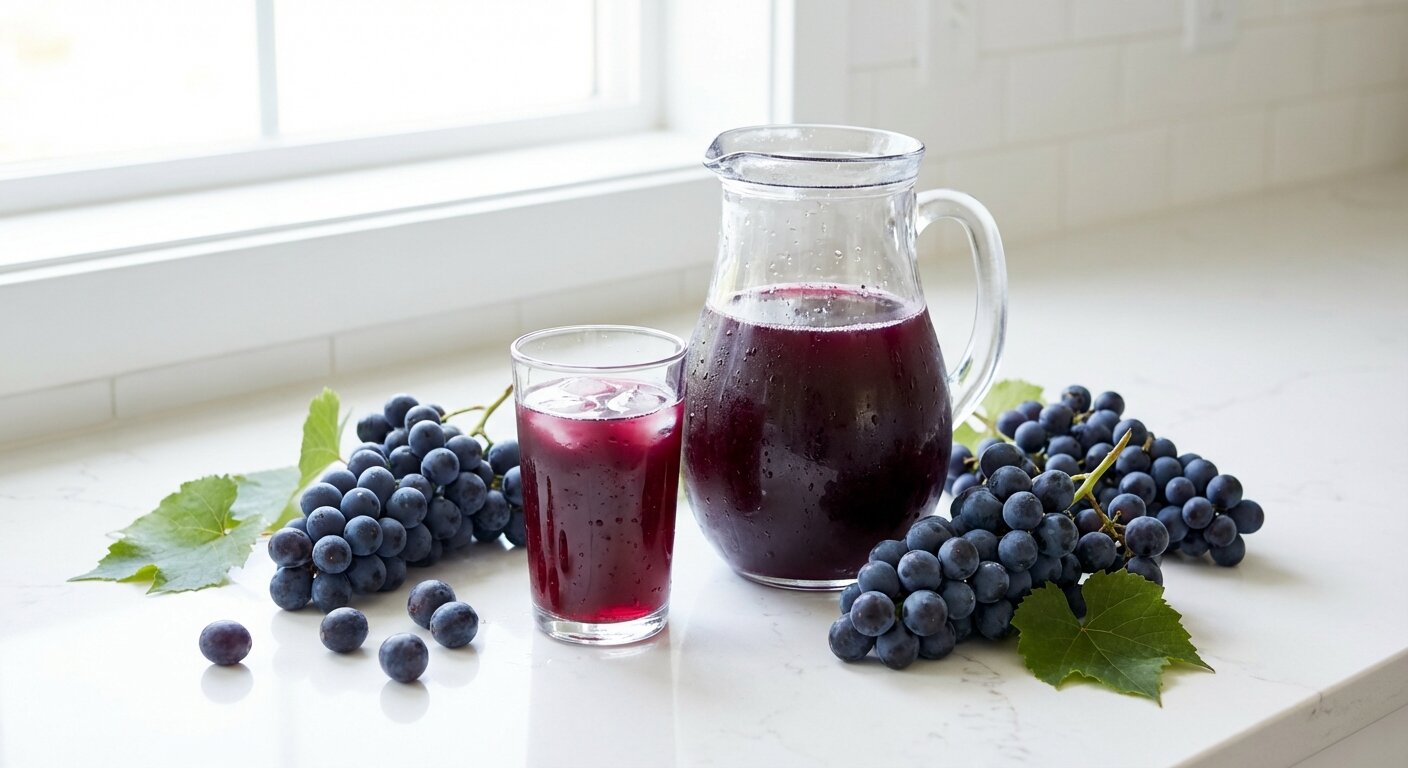
Grape juice is a popular beverage choice, whether as a morning breakfast drink, a mixer, or a sweet treat. But if you’re tracking macros for weight loss, muscle gain, or general health, understanding grape juice macros is essential. Many people assume fruit juice is “healthy” and drink it freely, but grape juice is surprisingly calorie-dense and sugar-heavy—almost identical to soda in carbohydrate content.
In this comprehensive guide, you’ll learn the complete macro breakdown of grape juice (100% juice vs. grape drinks), how different brands compare, and smart strategies to fit grape juice into your macro goals without sabotaging your progress. Whether you’re drinking Welch’s, Ocean Spray, or fresh-pressed juice, we’ll break down exactly what you’re consuming.
Want to see if grape juice fits your daily macros? Use our free Macro Calculator to get personalized protein, carb, and fat targets based on your goals.
Related: Learn more about what macros are and how they impact your diet.
Grape Juice Macros: The Complete Breakdown
The macros in grape juice vary based on whether you’re drinking 100% juice, juice from concentrate, or “grape drinks” with added sugar. Here’s the standard nutritional profile:
Standard 100% Grape Juice (8 oz / 240ml)
| Nutrient | Amount |
|---|---|
| Calories | 152 |
| Protein | 0.5g |
| Carbohydrates | 37g |
| Fiber | 0.2g |
| Sugar | 32-35g |
| Fat | 0.2g |
| Vitamin C | 100% DV |
| Potassium | 334mg (7% DV) |
Key observation: Grape juice is 97% carbohydrates by calorie, making it one of the most carb-dense beverages available. The natural sugar content rivals soda, and unlike whole grapes, there’s virtually no fiber to slow absorption.
Serving Size Variations
| Serving Size | Calories | Protein | Carbs | Sugar | Fat |
|---|---|---|---|---|---|
| 4 oz (120ml) | 76 | 0.2g | 18.5g | 16g | 0.1g |
| 8 oz (240ml) | 152 | 0.5g | 37g | 32g | 0.2g |
| 12 oz (360ml) | 228 | 0.7g | 55.5g | 48g | 0.3g |
| 16 oz (480ml) | 304 | 1g | 74g | 64g | 0.4g |
Reality check: Most restaurant or store-bought servings are 12-16 oz, not the standard 8 oz. A large glass at brunch could deliver 300+ calories of pure sugar.
100% Grape Juice vs. Grape Drinks: What’s the Difference?
Not all grape juice is created equal. Understanding the distinction can save you from hidden sugars and empty calories.
100% Grape Juice
- Contains: Only pressed grape juice (from concentrate or not from concentrate)
- Sugar source: All naturally occurring fruit sugars
- Nutrients: Contains polyphenols, antioxidants, vitamin C, potassium
- Macros (8 oz): 152 calories, 37g carbs, 32g natural sugar
Grape Drinks / Grape Cocktail
- Contains: 10-40% grape juice + added sugar, water, artificial flavors, colors
- Sugar source: Combination of natural + added refined sugars
- Nutrients: Minimal; typically fortified with synthetic vitamin C
- Macros (8 oz): 140-170 calories, 35-42g carbs, 35-40g added sugar
Bottom line: If the label says “grape drink,” “grape cocktail,” or “grape beverage,” it’s not 100% juice. Always check the ingredients—100% juice should list only “grape juice” or “grape juice from concentrate.”
Label Reading Tips
Look for:
- “100% juice” on the front label
- Ingredients: “grape juice” (period—nothing else)
- No “added sugar” or “high fructose corn syrup” in ingredients
Avoid:
- “Grape drink” or “grape beverage”
- Ingredients listing water, sugar, flavors before grape juice
- Claims like “real fruit juice” (could be only 10%)
Popular Grape Juice Brands: Macro Comparison
Different brands have slightly different macros based on grape variety, concentration, and processing. Here’s how popular brands stack up:
Welch’s 100% Grape Juice (8 oz)
- Calories: 140
- Protein: 0g
- Carbs: 36g
- Sugar: 36g
- Fat: 0g
- Notes: Made from Concord grapes; slightly lower calorie than generic brands due to concentration ratio
Ocean Spray 100% Grape Juice (8 oz)
- Calories: 160
- Protein: 0g
- Carbs: 39g
- Sugar: 38g
- Fat: 0g
- Notes: Often blended with other juices (check label); pure grape is higher in sugar
Trader Joe’s 100% Grape Juice (8 oz)
- Calories: 150
- Protein: 1g
- Carbs: 37g
- Sugar: 36g
- Fat: 0g
- Notes: Not from concentrate; slightly more protein due to grape sediment
Kirkland (Costco) Signature Grape Juice (8 oz)
- Calories: 150
- Protein: 0g
- Carbs: 37g
- Sugar: 37g
- Fat: 0g
- Notes: Bulk option; from concentrate; virtually identical to Welch’s
Store Brand “Grape Cocktail” (8 oz)
- Calories: 160-180
- Protein: 0g
- Carbs: 40-45g
- Sugar: 38-42g (includes added sugar)
- Fat: 0g
- Notes: Not 100% juice; contains added sugars, flavors, colors
Key finding: Brand-to-brand macro differences are minimal (±10 calories per 8 oz) for 100% juice. The major difference is 100% juice vs. grape drinks—avoid the latter.
White vs. Purple Grape Juice: Does It Matter?
Grape juice color impacts antioxidant content but not macros significantly.
Purple/Red Grape Juice (8 oz)
- Calories: 152
- Carbs: 37g
- Sugar: 32g
- Antioxidants: HIGH—contains resveratrol, anthocyanins, polyphenols from grape skins
- Best for: Heart health, antioxidant benefits
White Grape Juice (8 oz)
- Calories: 148
- Carbs: 36g
- Sugar: 31g
- Antioxidants: LOW—minimal skin contact during processing
- Best for: Milder flavor, slightly lower sugar
Verdict: Macros are nearly identical. If you’re drinking grape juice for health benefits, choose purple for the antioxidant boost. For macro tracking purposes, treat them as interchangeable.
Grape Juice vs. Whole Grapes: The Fiber Factor
One of the biggest nutritional differences between grape juice and whole grapes is fiber content.
1 Cup Whole Grapes (~92g)
- Calories: 62
- Protein: 0.6g
- Carbs: 16g
- Fiber: 0.8g
- Sugar: 15g
- Fat: 0.3g
8 oz Grape Juice (240ml)
- Calories: 152
- Protein: 0.5g
- Carbs: 37g
- Fiber: 0.2g
- Sugar: 32g
- Fat: 0.2g
Analysis:
- Grape juice has 2.4x more calories than the same volume of whole grapes
- Grape juice has 2.1x more sugar than whole grapes
- Whole grapes have 4x more fiber, which slows sugar absorption
- Juicing removes fiber and concentrates sugar, leading to faster blood sugar spikes
Recommendation: If satiety and blood sugar control matter, eat whole grapes. If convenience and liquid carbs are your goal (e.g., pre-workout), juice works.
How to Fit Grape Juice Into Your Macros
Grape juice can fit into a balanced diet if you account for its high sugar content. Here’s how to make it work:
For Weight Loss
- Limit serving size: Stick to 4 oz (half a glass) to keep calories under control
- Dilute with water: 50/50 grape juice and sparkling water cuts calories by half
- Track accurately: Measure portions—it’s easy to pour 12 oz instead of 8 oz
- Avoid daily consumption: Treat grape juice as an occasional beverage, not a staple
For Muscle Gain / Bulking
- Leverage the sugar: Grape juice is a quick carb source post-workout for glycogen replenishment
- Pair with protein: Blend grape juice with protein powder for a high-calorie shake
- Use as a mixer: Combine with Greek yogurt, oats, and nut butter for a mass-gain smoothie
- Drink around workouts: Time high-sugar foods when insulin sensitivity is highest
For Maintenance
- Budget the carbs: An 8 oz glass uses up 37g of your daily carb budget
- Balance with protein/fats: Don’t drink grape juice on an empty stomach; pair with eggs, nuts, or cheese
- Choose strategic timing: Morning with breakfast or post-workout for energy
- Swap for whole fruit occasionally: Rotate between juice and whole grapes for variety and fiber
For Low-Carb / Keto Diets
- Skip it entirely: 37g of carbs per glass exceeds most low-carb thresholds
- Try unsweetened cranberry juice: Much lower in sugar (5-10g per 8 oz)
- Flavor water with lemon/lime: Zero-carb alternative for flavor
- Save carbs for whole foods: Prioritize nutrient-dense carbs like vegetables
Common Mistakes When Tracking Grape Juice Macros
Even experienced macro trackers make these mistakes with grape juice:
Mistake 1: Not Measuring Serving Size
The problem: Eyeballing pours leads to consuming 12-16 oz instead of the standard 8 oz.
The fix: Use a measuring cup or mark your glass at 8 oz.
Mistake 2: Assuming “Fruit Juice” Is Healthy and Unlimited
The problem: Grape juice has as much sugar as soda (37g vs. 39g for Coke).
The fix: Treat grape juice like a dessert—measure, log, and limit.
Mistake 3: Not Checking If It’s 100% Juice
The problem: Grape drinks have added sugar on top of natural sugars.
The fix: Only buy products labeled “100% grape juice” with juice as the sole ingredient.
Mistake 4: Drinking Grape Juice on an Empty Stomach
The problem: High sugar content without fiber causes rapid blood sugar spikes and crashes.
The fix: Always pair grape juice with protein, fat, or fiber (e.g., eggs, nuts, oatmeal).
Mistake 5: Forgetting to Log It
The problem: Liquid calories are easy to forget, but 8 oz = 152 calories.
The fix: Log grape juice immediately in your tracking app—treat it like food, not water.
Grape Juice Macro-Friendly Recipes
Here are creative ways to enjoy grape juice while staying on track:
1. Grape Juice Protein Smoothie (High-Protein, Moderate Carb)
Ingredients:
- 4 oz grape juice (76 cal, 18.5g carbs)
- 1 scoop vanilla protein powder (120 cal, 24g protein, 3g carbs)
- 1/2 cup frozen blueberries (40 cal, 10g carbs)
- 1/2 cup unsweetened almond milk (15 cal, 0.5g carbs)
Macros: 251 calories, 24g protein, 32g carbs, 1g fat
2. Grape Juice Spritzer (Low-Calorie Refreshment)
Ingredients:
- 3 oz grape juice (57 cal, 14g carbs)
- 5 oz sparkling water (0 cal)
- Fresh mint leaves
- Ice
Macros: 57 calories, 0g protein, 14g carbs, 0g fat
3. Grape Juice Greek Yogurt Bowl (Balanced Breakfast)
Ingredients:
- 2 oz grape juice (38 cal, 9g carbs)
- 1 cup non-fat Greek yogurt (100 cal, 17g protein, 7g carbs)
- 1/4 cup granola (120 cal, 3g protein, 20g carbs, 3g fat)
- 1/4 cup fresh grapes (31 cal, 8g carbs)
Macros: 289 calories, 20g protein, 44g carbs, 3g fat
4. Post-Workout Grape Juice Carb Reload
Ingredients:
- 8 oz grape juice (152 cal, 37g carbs)
- 1 scoop whey isolate (100 cal, 25g protein, 1g carbs)
- Shake and drink immediately post-workout
Macros: 252 calories, 25g protein, 38g carbs, 0.5g fat
Health Benefits of Grape Juice (Beyond Macros)
While grape juice is high in sugar, it does offer some nutritional benefits:
Antioxidants
Purple grape juice is rich in resveratrol and anthocyanins, which have been studied for:
- Cardiovascular health support
- Anti-inflammatory properties
- Potential cognitive benefits
Vitamin C
One 8 oz serving provides 100% of your daily vitamin C needs, supporting:
- Immune function
- Collagen production
- Iron absorption
Potassium
334mg per serving (7% DV) helps:
- Regulate blood pressure
- Support muscle function
- Balance electrolytes
Important caveat: These benefits come at the cost of high sugar intake. You can get the same antioxidants from whole grapes, berries, or red wine (in moderation) with less sugar impact.
Grape Juice Macro Alternatives
If you love grape flavor but want better macros, consider these swaps:
Lower-Calorie Alternatives
| Beverage | Calories (8 oz) | Carbs | Sugar | Notes |
|---|---|---|---|---|
| Grape juice | 152 | 37g | 32g | Baseline |
| Diluted grape juice (50/50 water) | 76 | 18.5g | 16g | Half the calories |
| Unsweetened cranberry juice | 30 | 7g | 5g | Tart; needs dilution |
| Grape-flavored water enhancer (MiO, Crystal Light) | 0 | 0g | 0g | Zero calories; artificial sweeteners |
| Whole grapes (1 cup) | 62 | 16g | 15g | More fiber, more satiety |
| Sparkling water with frozen grapes | 5 | 1g | 1g | Adds flavor without calories |
Best swap for macro tracking: Dilute 4 oz grape juice with 4 oz sparkling water for half the calories and sugar while maintaining grape flavor.
When Is Grape Juice Worth the Carbs?
Despite the high sugar content, there are scenarios where grape juice makes sense:
1. Pre-Workout Energy
- Fast-digesting carbs for quick fuel
- Ideal 30-60 minutes before training
- Pairs well with a small protein snack
2. Post-Workout Glycogen Replenishment
- Rapid carb absorption to refill muscle glycogen
- Combine with fast-digesting protein (whey isolate)
- Especially useful after intense resistance training
3. Bulking Phase
- Easy way to add 150+ calories without filling up
- Convenient liquid carbs for hard gainers
- Can be blended into high-calorie shakes
4. Occasional Treat
- Natural alternative to soda for celebrations
- Better micronutrient profile than soft drinks
- Satisfies sweet cravings without artificial ingredients
When to skip it:
- Cutting phase (too calorie-dense)
- Low-carb or keto diets (too high in carbs)
- Diabetes or insulin resistance (spikes blood sugar)
- Before bed (high sugar may disrupt sleep)
Frequently Asked Questions
What are the macros in 8 oz of grape juice?
An 8 oz (240ml) serving of 100% grape juice contains approximately 152 calories, 0.5g protein, 37g carbohydrates (including 32-35g of natural sugars), 0.2g fat, and virtually no fiber. The macros are almost entirely carbohydrates from naturally occurring grape sugars, making it a pure carb source with negligible protein or fat. Brands vary slightly (±10 calories), but all 100% grape juice falls within this range. Grape drinks with added sugar can have 10-20% more calories and carbs.
Tracking tip: Always measure your serving size. Most people pour 12-16 oz without realizing it, which doubles the carb and calorie count. Use a measuring cup or mark your glass at 8 oz to stay accurate.
Is grape juice high in sugar?
Yes, grape juice is very high in sugar. An 8 oz serving contains 32-35g of sugar—comparable to a can of Coke (39g). While the sugar is naturally occurring from grapes (fructose and glucose) rather than added refined sugar, it still impacts your blood sugar and insulin levels similarly. The key difference from whole grapes is the absence of fiber in juice, which would normally slow sugar absorption and prevent blood sugar spikes.
For context:
- 8 oz grape juice = 32g sugar (8 teaspoons)
- 8 oz Coca-Cola = 39g sugar
- 1 cup whole grapes = 15g sugar + 0.8g fiber
If you’re tracking sugar intake for weight loss or metabolic health, treat grape juice like a dessert—measure portions and limit frequency. Diluting with water (50/50 mix) cuts sugar by half while maintaining flavor.
Does grape juice have any protein or fat?
Grape juice contains negligible amounts of both protein and fat. An 8 oz serving has approximately 0.5g of protein (1% of daily needs) and 0.2g of fat (less than 1% of daily needs). This makes grape juice almost exclusively a carbohydrate source—97% of its calories come from sugar.
Why so little protein/fat? Grapes themselves are low in protein and fat, and the juicing process concentrates only the liquid sugars while removing the minimal protein and fat that exist in grape skins and seeds. If you’re using grape juice as part of a meal or snack, you’ll need to pair it with protein and fat sources (eggs, nuts, cheese, yogurt) to create a balanced macro profile.
Comparison:
- Grape juice: 0.5g protein, 0.2g fat per 8 oz
- Cow’s milk: 8g protein, 8g fat per 8 oz
- Almond milk: 1g protein, 2.5g fat per 8 oz
For a protein-rich beverage, blend grape juice with protein powder or Greek yogurt.
Can I drink grape juice on a low-carb diet?
No, grape juice is not suitable for low-carb or ketogenic diets. A single 8 oz serving contains 37g of carbohydrates—which exceeds the entire daily carb limit on strict keto (20-25g net carbs) and uses up 75% of a moderate low-carb allowance (50g per day). Even a small 4 oz serving (18.5g carbs) is too high for most low-carb protocols.
Why grape juice doesn’t work on low-carb:
- Pure sugar with no fiber to offset net carbs
- Rapid blood sugar spike triggers insulin response
- Liquid carbs digest faster than solid food carbs
- No protein or fat to slow absorption
Low-carb alternatives:
- Unsweetened cranberry juice: 5-10g carbs per 8 oz
- Lemon/lime water: 0g carbs
- Unsweetened iced tea: 0g carbs
- Sparkling water with lemon: 0g carbs
If you’re on a low-carb diet, save your carb budget for nutrient-dense vegetables, berries, and small amounts of whole fruit—not juice.
Is 100% grape juice better than grape drinks?
Yes, 100% grape juice is significantly better than grape drinks or grape cocktails. The key difference is that 100% juice contains only naturally occurring sugars from grapes, while grape drinks contain added refined sugars, artificial flavors, colors, and typically only 10-40% real juice.
Nutritional comparison (8 oz):
100% Grape Juice:
- Ingredients: Grape juice (period)
- Sugar: 32g (all natural)
- Antioxidants: High (resveratrol, polyphenols)
- Vitamin C: 100% DV (naturally occurring)
Grape Drink/Cocktail:
- Ingredients: Water, sugar/HFCS, grape juice from concentrate (10-40%), natural and artificial flavors, colors
- Sugar: 38-42g (natural + added refined sugar)
- Antioxidants: Minimal
- Vitamin C: Often fortified (synthetic)
How to identify 100% juice:
- Front label must say “100% juice”
- Ingredients list only “grape juice” or “grape juice from concentrate”
- No added sugars, water, or flavors
Even though both are high in sugar, 100% juice provides beneficial plant compounds that grape drinks lack. However, for macro tracking and blood sugar control, neither should be consumed frequently—whole grapes are always the better choice.
What’s the difference between white and purple grape juice macros?
The macro differences between white and purple grape juice are minimal. Both contain approximately 150-160 calories and 36-38g of carbohydrates per 8 oz serving. The major distinction is not in macros but in antioxidant content.
Purple/Red Grape Juice:
- Calories: 152 per 8 oz
- Carbs: 37g
- Antioxidants: HIGH (resveratrol, anthocyanins from grape skins)
- Color: Deep purple/red
- Flavor: Richer, more complex
White Grape Juice:
- Calories: 148 per 8 oz
- Carbs: 36g
- Antioxidants: LOW (skins removed before pressing)
- Color: Light yellow/clear
- Flavor: Milder, sweeter
Why the antioxidant difference? Purple grape juice is made from red/purple grapes with skins included during pressing, which releases resveratrol and anthocyanins—potent antioxidants linked to cardiovascular benefits. White grape juice is made by removing skins before pressing, resulting in a lighter color and lower antioxidant content.
Bottom line for macro tracking: Treat them as interchangeable (same calories, carbs, sugar). If you’re drinking grape juice for health benefits beyond macros, choose purple for the antioxidant boost.
How many calories are in a cup of grape juice?
One cup (8 oz / 240ml) of 100% grape juice contains approximately 152 calories. This is the standard serving size used on nutrition labels. However, many people unknowingly drink larger portions, which significantly increases calorie intake.
Common serving sizes and their calories:
- 4 oz (half cup): 76 calories
- 8 oz (1 cup): 152 calories
- 12 oz (1.5 cups): 228 calories
- 16 oz (2 cups): 304 calories
Real-world scenarios:
- Restaurant juice glass: Often 10-12 oz = 190-228 calories
- Store-bought single-serve bottle: Typically 15.2 oz = 289 calories
- Large at-home pour: Easily 12-16 oz = 228-304 calories
Why this matters for macro tracking: Liquid calories are notoriously easy to underestimate. If you pour what you think is “a glass” of grape juice without measuring, you might be consuming 250+ calories instead of the 152 calories you logged. This is one reason people plateau in weight loss despite “tracking everything.”
Tracking tip: Measure your typical glassware once to see how much it holds. Mark the 8 oz line with a piece of tape or a permanent marker on the back of the glass. This creates a visual reference for accurate portion control without needing to measure every time.
Final Thoughts: Should You Track Grape Juice Macros?
Yes—if you drink grape juice, you must track it. While it’s “natural” and contains some beneficial nutrients, grape juice is calorically equivalent to soda and delivers a massive carb hit with minimal protein, fat, or fiber.
Key takeaways:
- 8 oz grape juice = 152 calories, 37g carbs, 32g sugar
- Choose 100% juice over grape drinks for better nutrition
- Measure serving sizes—most people pour 12-16 oz instead of 8 oz
- Dilute with water or sparkling water to cut calories by 50%
- Pair with protein/fat to slow sugar absorption
- Best used around workouts or during bulking phases
- Not suitable for low-carb or weight loss diets without careful budgeting
If you’re serious about hitting your macro goals, treat grape juice like candy—log it, measure it, and enjoy it strategically rather than drinking it freely. For most people, eating whole grapes provides better satiety, more fiber, and lower sugar impact.
Ready to see how grape juice fits your macro targets? Calculate your personalized protein, carb, and fat goals with our Free Macro Calculator.
Related Articles
Dragonfruit Macros: Complete Nutrition Guide for Pitaya
Complete macro breakdown of dragonfruit (pitaya). Learn the calories, protein, carbs, and...
Read guide →
Bulgur Macros: Complete Nutritional Guide & Health Benefits
Discover bulgur's complete macro breakdown, nutritional benefits, and how to incorporate...
Read guide →
Radish Macros: Nutrition Facts and Health Benefits
Complete guide to radish macros and nutrition. Learn calories, protein, carbs, and health...
Read guide →Note: Nutrition values are approximate and may vary based on preparation method and source.