Hazelnuts Macros: Nutritional Breakdown and Benefits
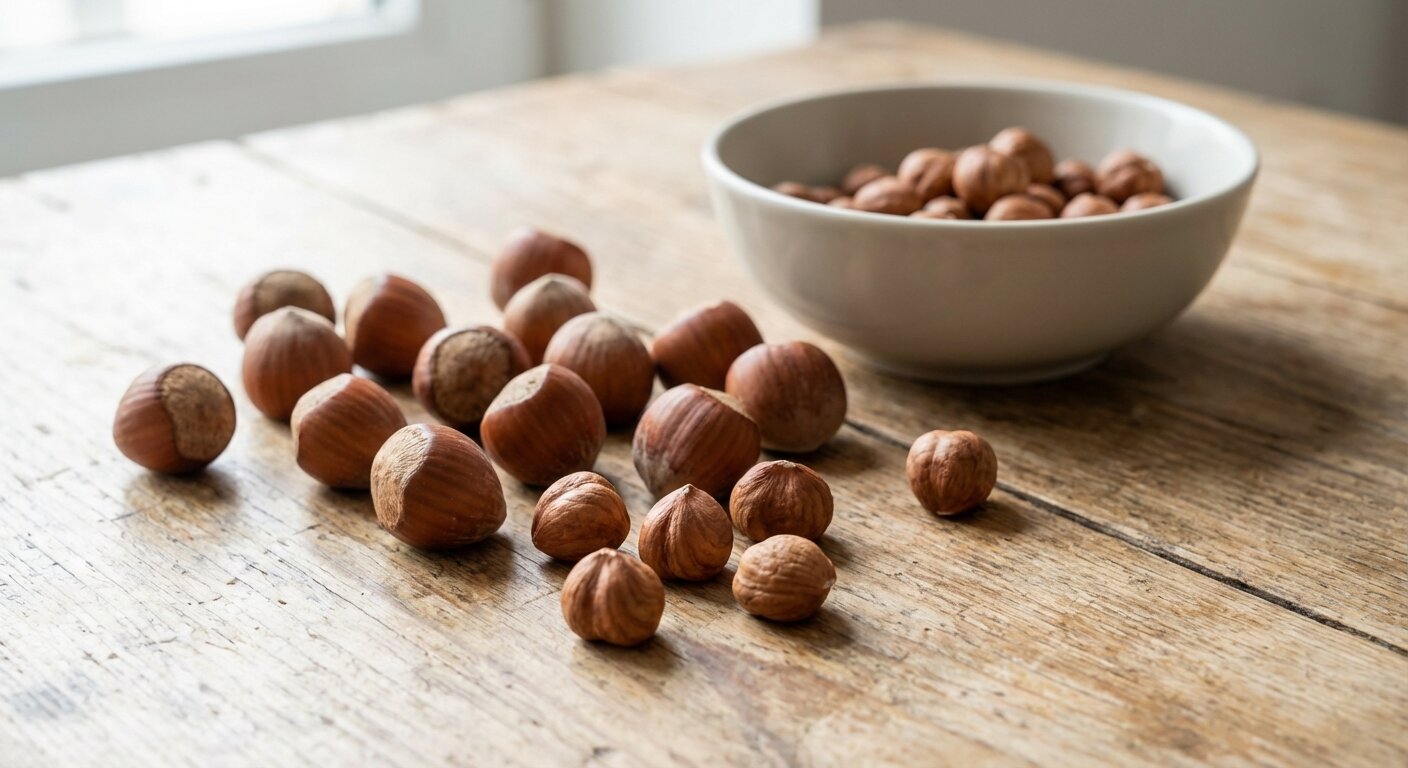
Hazelnuts (also called filberts) are nutrient-dense tree nuts packed with healthy fats, essential vitamins, and minerals. Whether you’re tracking macros for weight management, muscle building, or overall health, understanding hazelnut nutrition helps you incorporate these versatile nuts into your daily eating plan.
This comprehensive guide breaks down hazelnut macros per serving, explores their health benefits, compares them to other popular nuts, and provides practical tips for adding them to your diet. If you’re wondering how hazelnuts fit your macro goals, you’ll find everything you need right here.
Ready to calculate your personalized macro targets? Try our free Macro Calculator to determine your ideal protein, carb, and fat intake based on your goals.
Related: Learn more about what macros are and how they impact your diet.
Macros in Hazelnuts (Per 1 oz / 28g)
Here’s the complete macronutrient breakdown for one ounce of raw hazelnuts (approximately 20-22 whole nuts):
| Nutrient | Amount | % Daily Value* |
|---|---|---|
| Calories | 178 | 9% |
| Protein | 4.2g | 8% |
| Carbohydrates | 4.7g | 2% |
| Fiber | 2.8g | 10% |
| Net Carbs | 1.9g | - |
| Fat (Total) | 17g | 22% |
| Saturated Fat | 1.3g | 7% |
| Monounsaturated Fat | 12.9g | - |
| Polyunsaturated Fat | 2.2g | - |
*Based on a 2,000 calorie diet
Key Macro Insights:
- Fat-dominant profile: 86% of calories from fat (primarily heart-healthy monounsaturated)
- Low net carbs: Only 1.9g net carbs per serving (great for keto/low-carb diets)
- Moderate protein: 4.2g per ounce contributes to daily protein needs
- High fiber: Nearly 3g fiber supports digestive health and satiety
Hazelnut Serving Size Comparison
Different portion sizes for various dietary needs:
| Serving Size | Calories | Protein | Carbs | Fiber | Fat |
|---|---|---|---|---|---|
| 10 hazelnuts (~14g) | 89 | 2.1g | 2.4g | 1.4g | 8.5g |
| 1 oz / 28g (20-22 nuts) | 178 | 4.2g | 4.7g | 2.8g | 17g |
| 1/4 cup (~34g) | 214 | 5g | 5.7g | 3.4g | 20.4g |
| 1/2 cup (~68g) | 428 | 10.1g | 11.4g | 6.8g | 40.8g |
| 100g | 628 | 15g | 16.7g | 9.7g | 60.8g |
Hazelnut Macros: Raw vs Roasted
Roasting slightly alters the nutritional profile:
| Type | Calories | Protein | Carbs | Fat |
|---|---|---|---|---|
| Raw hazelnuts (1 oz) | 178 | 4.2g | 4.7g | 17g |
| Dry roasted (1 oz) | 183 | 4.3g | 5g | 17.7g |
| Oil roasted (1 oz) | 187 | 4.1g | 5.4g | 18.1g |
Roasting considerations:
- Minimal macro differences between raw and roasted
- Roasting enhances flavor and makes skins easier to remove
- Oil roasting adds extra calories from oil
- Some antioxidants may decrease with roasting, but differences are small
Macros in Common Hazelnut Products
Hazelnut Butter
Per 2 tablespoons (32g):
- Calories: 180
- Protein: 4g
- Carbs: 5g
- Fat: 17g
Smooth, spreadable alternative to peanut or almond butter with similar macros.
Hazelnut Flour
Per 1/4 cup (28g):
- Calories: 180
- Protein: 4.5g
- Carbs: 8g (5g fiber)
- Fat: 16g
Gluten-free, low-carb flour alternative for baking.
Chocolate Hazelnut Spread (Commercial)
Per 2 tablespoons (37g):
- Calories: 200
- Protein: 2g
- Carbs: 21g (including ~20g added sugar)
- Fat: 11g
⚠️ Note: Commercial chocolate hazelnut spreads are primarily sugar and palm oil with minimal actual hazelnuts. Not comparable to whole hazelnuts nutritionally.
Hazelnut Milk (Unsweetened)
Per 1 cup (240ml):
- Calories: 25-40
- Protein: 0.5-1g
- Carbs: 1-2g
- Fat: 2-3.5g
Much lower in calories and fat than whole hazelnuts due to dilution and straining.
Complete Vitamin and Mineral Profile
Beyond macros, hazelnuts are exceptionally nutrient-dense:
Key Vitamins (per 1 oz)
- Vitamin E: 4.3mg (21% DV) - powerful antioxidant
- Thiamin (B1): 0.18mg (12% DV)
- Folate: 32mcg (8% DV)
- Vitamin K: 4mcg (5% DV)
Essential Minerals (per 1 oz)
- Magnesium: 46mg (11% DV)
- Copper: 0.49mg (24% DV)
- Manganese: 1.7mg (74% DV)
- Iron: 1.3mg (7% DV)
- Calcium: 32mg (3% DV)
- Phosphorus: 82mg (8% DV)
Standout nutrients:
- Manganese: Nearly 75% DV in just one ounce
- Copper: 24% DV, essential for iron metabolism
- Vitamin E: One of the richest nut sources of this antioxidant
Health Benefits of Hazelnuts
1. Heart Health
Hazelnuts’ high monounsaturated fat content (similar to olive oil) supports cardiovascular health. Studies show:
- Reduces LDL (“bad”) cholesterol
- Increases HDL (“good”) cholesterol
- Lowers inflammation markers
- Improves blood vessel function
A 2013 study found that eating hazelnuts reduced total cholesterol by 3.9% and LDL cholesterol by 4.9% compared to control diets.
2. Antioxidant Protection
Exceptionally high in vitamin E and phenolic compounds, hazelnuts:
- Combat oxidative stress
- Protect cells from free radical damage
- May reduce chronic disease risk
- Support skin health and aging
The skin contains the highest concentration of antioxidants—choose skin-on hazelnuts when possible.
3. Blood Sugar Control
Despite being calorie-dense, hazelnuts may improve metabolic health:
- Low glycemic index (won’t spike blood sugar)
- High in fiber (slows glucose absorption)
- Monounsaturated fats improve insulin sensitivity
- Studies show improved glucose metabolism with regular nut consumption
A 2015 study found that hazelnut consumption improved insulin sensitivity in type 2 diabetics.
4. Weight Management
Counter-intuitively, regular nut consumption is associated with:
- Lower body weight
- Reduced obesity risk
- Better long-term weight maintenance
Why? Hazelnuts promote satiety, reduce overall calorie intake, and increase fat oxidation despite being energy-dense.
5. Brain Health
Rich in nutrients that support cognitive function:
- Vitamin E: Protects brain cells from oxidative damage
- Healthy fats: Support brain structure and neurotransmitter function
- Magnesium: Essential for nerve transmission
- May reduce cognitive decline with aging
6. Anti-Inflammatory Effects
Chronic inflammation underlies many diseases. Hazelnuts provide:
- Omega-3 fatty acids (though in smaller amounts than walnuts)
- Antioxidants that reduce inflammatory markers
- Studies show reduced inflammation biomarkers after hazelnut consumption
Hazelnuts vs Other Popular Nuts: Macro Comparison
How hazelnuts stack up against other common nuts (per 1 oz):
| Nut | Calories | Protein | Carbs | Fiber | Fat |
|---|---|---|---|---|---|
| Hazelnuts | 178 | 4.2g | 4.7g | 2.8g | 17g |
| Almonds | 164 | 6g | 6g | 3.5g | 14g |
| Walnuts | 185 | 4.3g | 3.9g | 1.9g | 18.5g |
| Cashews | 157 | 5.2g | 8.6g | 0.9g | 12.4g |
| Pecans | 196 | 2.6g | 3.9g | 2.7g | 20.4g |
| Pistachios | 159 | 5.7g | 7.7g | 3g | 12.8g |
| Brazil nuts | 186 | 4.1g | 3.5g | 2.1g | 18.8g |
| Macadamias | 204 | 2.2g | 3.9g | 2.4g | 21.5g |
Key comparisons:
- Highest protein: Almonds, pistachios, cashews
- Lowest carbs: Walnuts, Brazil nuts, pecans
- Highest fat: Macadamias, pecans
- Best fiber: Almonds, pistachios
- Hazelnuts’ position: Middle range for most macros, exceptionally high in vitamin E and manganese
Choose based on your specific macro needs—hazelnuts excel in micronutrient density and heart-healthy fats.
How to Fit Hazelnuts Into Your Macros
For Weight Loss
Strategy: Use hazelnuts as a satiating snack between meals
- Portion: Stick to 1 oz (20-22 nuts) or pre-portion into small containers
- Timing: Mid-morning or afternoon to prevent overeating at meals
- Pairing: Combine with protein (Greek yogurt) to balance macros
- Tracking: Log immediately—easy to overeat when snacking from the bag
Sample weight loss snack:
- 1 oz hazelnuts (178 cal)
- 1/2 cup Greek yogurt (65 cal, 11g protein)
- Total: 243 calories, 15g protein, 9g carbs, 17g fat
For Muscle Building
Strategy: Add hazelnuts to meals for extra calories and healthy fats
- Portion: 1-2 oz per day depending on calorie needs
- Timing: Post-workout smoothies, with breakfast, or as an additional snack
- Pairing: Combine with high-protein foods to optimize muscle protein synthesis
- Benefit: Calorie-dense way to meet surplus needs without excessive volume
Sample bulking meal addition:
- Overnight oats with 2 oz chopped hazelnuts
- Adds 356 calories, 8g protein, 34g healthy fats
For Keto/Low-Carb
Strategy: Hazelnuts are keto-friendly with only 1.9g net carbs per ounce
- Portion: 1-2 oz fits easily into 20-50g daily carb limits
- Benefit: Provides satisfying crunch and healthy fats
- Pairing: Great with cheese, dark chocolate, or as a salad topper
- Avoid: Commercial hazelnut spreads (high sugar)
Sample keto snack:
- 1 oz hazelnuts
- 1 oz sharp cheddar cheese
- Total: 2g net carbs, 48% fat macros
For Plant-Based Diets
Strategy: Use hazelnuts as a nutrient-dense protein and fat source
- Portion: 1-2 oz daily contributes to protein goals
- Benefit: Excellent source of vitamin E, copper, manganese often lower in plant diets
- Pairing: Combine with legumes for complete amino acid profile
- Versatility: Whole, butter, milk, or flour forms for variety
Best Ways to Use Hazelnuts
Whole Hazelnuts
- Snacking: Pre-portioned 1 oz servings
- Salad topper: Adds crunch and healthy fats
- Trail mix: Combine with dried fruit and dark chocolate
- Yogurt parfait: Mix into Greek yogurt with berries
Chopped Hazelnuts
- Oatmeal topping: Adds texture and nutrition
- Baking: Brownies, cookies, muffins
- Coating: Crust for fish or chicken (crush finely)
- Vegetable dishes: Roasted Brussels sprouts or green beans
Hazelnut Butter
- Spread: On whole grain toast or rice cakes
- Smoothies: 1-2 tablespoons for creaminess
- Dipping: With apple slices or celery
- Baking: Substitute for other nut butters in recipes
Hazelnut Flour
- Gluten-free baking: Replaces 25-30% of wheat flour
- Breading: Low-carb coating for proteins
- Pancakes: Mix with almond flour for nutty flavor
- Thickener: For soups or sauces
Hazelnut Milk
- Cereal: Low-calorie alternative to dairy
- Coffee: Adds subtle nutty flavor
- Smoothies: Lower calorie than whole nuts
- Baking: Substitute for dairy milk in recipes
Storage and Shelf Life
Proper storage maximizes freshness:
Whole Hazelnuts (in shell)
- Room temperature: 3-4 months in cool, dry place
- Refrigerator: 6-9 months
- Freezer: Up to 1 year
Shelled Hazelnuts
- Room temperature: 1-2 months (airtight container)
- Refrigerator: 4-6 months
- Freezer: 8-12 months
Hazelnut Butter
- Pantry: 2-3 months (unopened)
- Refrigerator: 3-6 months (opened)
- Check for oil separation (normal—stir before use)
Signs of spoilage:
- Rancid, bitter, or paint-like smell
- Shriveled, discolored appearance
- Moldy spots
- Off taste
High fat content makes nuts prone to oxidation—refrigeration or freezing preserves quality.
Common Questions About Hazelnuts
Can you eat hazelnuts every day?
Yes, eating hazelnuts daily is safe and beneficial for most people. A 1 oz serving provides significant nutrients without excessive calories. Research supports daily nut consumption for heart health, weight management, and longevity.
Do hazelnuts cause weight gain?
Not necessarily. While calorie-dense, studies show regular nut consumption doesn’t cause weight gain and may support weight loss. The key is portion control—measure servings rather than eating from the bag.
Are hazelnut skins edible?
Yes, hazelnut skins are edible and contain concentrated antioxidants. However, they can taste slightly bitter. Many prefer to remove skins after roasting by rubbing in a clean kitchen towel.
How do you remove hazelnut skins?
Roast hazelnuts at 350°F (175°C) for 10-15 minutes. Wrap in a clean kitchen towel and rub vigorously—most skins will flake off. Some stubborn skins are fine to leave on.
Are hazelnuts good for cholesterol?
Yes, hazelnuts can improve cholesterol profiles. Studies show they reduce LDL (“bad”) cholesterol and increase HDL (“good”) cholesterol thanks to high monounsaturated fat content and plant sterols.
Can I eat hazelnuts on a nut-free diet?
No—despite the name, a “tree nut allergy” includes hazelnuts. Anyone with tree nut allergies should avoid hazelnuts completely. Always check labels for cross-contamination warnings.
How many hazelnuts is 100 calories?
Approximately 11-12 hazelnuts equal 100 calories (about 16g).
What’s the best time to eat hazelnuts?
Anytime works—hazelnuts make an excellent snack between meals, addition to breakfast, or post-workout fuel. Some prefer morning/afternoon for sustained energy before main meals.
Frequently Asked Questions
What are the macros in hazelnuts?
One ounce (28g, approximately 20-22 whole hazelnuts) contains:
- Calories: 178
- Protein: 4.2g
- Carbohydrates: 4.7g (2.8g fiber, 1.9g net carbs)
- Fat: 17g (12.9g monounsaturated, 2.2g polyunsaturated, 1.3g saturated)
Hazelnuts are predominantly fat (86% of calories), with most being heart-healthy monounsaturated fat similar to olive oil. They’re relatively low in carbohydrates (especially net carbs after fiber) and moderate in protein compared to other nuts like almonds or peanuts.
The fat profile is particularly beneficial—rich in oleic acid, which supports cardiovascular health and may reduce inflammation. The moderate protein content (4.2g per ounce) contributes to daily needs, though hazelnuts shouldn’t be relied upon as a primary protein source.
Fiber content (2.8g per ounce) supports digestive health and satiety, making hazelnuts filling despite their small serving size. This combination of macros makes them suitable for various dietary approaches, from ketogenic to Mediterranean diets.
Are hazelnuts good for weight loss?
Yes, hazelnuts can be an effective addition to a weight loss diet when consumed in appropriate portions. Despite being calorie-dense (178 calories per ounce), research consistently shows that regular nut consumption is associated with lower body weight and reduced obesity risk.
Several mechanisms explain this seemingly paradoxical finding:
Satiety and appetite control: The combination of healthy fats, protein, and fiber in hazelnuts promotes fullness and reduces hunger between meals. Studies show that people who eat nuts as snacks naturally compensate by eating less at subsequent meals, leading to no net increase in total daily calories.
Incomplete calorie absorption: Not all calories from nuts are fully absorbed. Research suggests that 5-15% of calories from nuts pass through the digestive system unabsorbed due to the rigid cell walls that resist complete breakdown during digestion.
Increased energy expenditure: Some studies indicate that nut consumption slightly increases metabolic rate and fat oxidation, meaning your body burns more calories and preferentially uses fat for fuel.
Substitution effect: When people add nuts to their diet, they often naturally replace less nutritious, processed snacks, improving overall diet quality without increasing total calorie intake.
Key strategies for weight loss:
- Portion control is critical: Stick to 1 oz (20-22 nuts) per serving
- Pre-portion servings: Don’t eat directly from the bag
- Track calories: Log hazelnuts in your food diary immediately
- Time strategically: Use as a planned snack between meals, not mindless eating
- Pair with protein: Combine with Greek yogurt or cheese for better satiety
A 2019 meta-analysis of 55 studies found that nut consumption led to modest weight loss (approximately 1.4 pounds) and reduced waist circumference, even when nuts were added to the diet without deliberately reducing other foods.
How many hazelnuts should I eat per day?
The recommended serving size is 1 ounce (28g), which equals approximately 20-22 whole hazelnuts. This provides around 178 calories and significant nutritional benefits including heart-healthy fats, vitamin E, magnesium, and manganese.
This recommendation aligns with dietary guidelines and research on nut consumption:
Daily intake guidelines:
- General health: 1 oz per day (one serving)
- Active individuals/athletes: 1-2 oz per day depending on total calorie needs
- Weight loss: 0.5-1 oz per day to control calories
- Weight gain/bulking: 2-3 oz per day for additional calories and healthy fats
The American Heart Association recommends about 1.5 ounces (42g) of nuts per day for cardiovascular health, which could be divided among different nut types or consumed entirely as hazelnuts.
Factors that influence optimal intake:
Total calorie needs: Someone requiring 3,000 calories can accommodate more hazelnuts than someone on a 1,500-calorie diet. Calculate your needs with our Macro Calculator.
Macro distribution: If you’re following a high-fat diet (ketogenic, Mediterranean), you might include 1.5-2 oz daily. High-protein diets might emphasize other protein sources and limit nuts to 0.5-1 oz.
Other fat sources: If your diet includes significant olive oil, avocados, fatty fish, or other nuts, reduce hazelnut portion accordingly to avoid excessive fat intake.
Individual goals: Athletes in heavy training can handle more; sedentary individuals should stick to smaller portions.
Signs you’re eating too many:
- Weight gain (track for 2-3 weeks)
- Digestive discomfort (nuts are fiber-rich)
- Difficulty fitting into daily calorie budget
- Crowding out other important foods (fruits, vegetables, lean proteins)
Start with 1 oz daily and adjust based on your results, hunger levels, and overall macro targets. Hazelnuts are nutrient-dense, so more isn’t necessarily better—focus on consistent, moderate intake.
What are the health benefits of eating hazelnuts?
Hazelnuts provide numerous evidence-based health benefits beyond basic nutrition:
1. Cardiovascular health
Hazelnuts are among the best nuts for heart health thanks to their exceptional monounsaturated fat content (76% of total fat). Multiple studies demonstrate cardiovascular benefits:
- A 2013 randomized controlled trial found that hazelnut consumption reduced total cholesterol by 3.9%, LDL cholesterol by 4.9%, and improved HDL cholesterol ratios compared to control diets
- Reduces inflammation markers associated with heart disease, including C-reactive protein
- Improves endothelial function (blood vessel flexibility and health)
- Lowers blood pressure in some studies
- Rich in plant sterols that block cholesterol absorption
The FDA approved a qualified health claim stating that eating 1.5 oz of most nuts daily may reduce heart disease risk as part of a diet low in saturated fat and cholesterol.
2. Antioxidant protection
Hazelnuts are exceptionally rich in antioxidants, particularly vitamin E and phenolic compounds:
- One ounce provides 21% of daily vitamin E needs (alpha-tocopherol form)
- Hazelnut skins contain concentrated polyphenols with powerful antioxidant activity
- Protects cells from oxidative stress and free radical damage
- May reduce chronic disease risk including cancer, diabetes, and neurodegenerative diseases
- Supports skin health and may slow visible aging
A study comparing antioxidant capacity of tree nuts found hazelnuts ranked second only to walnuts in total antioxidant content.
3. Blood sugar control and diabetes prevention
Despite being calorie-dense, hazelnuts positively affect glucose metabolism:
- Very low glycemic index (won’t spike blood sugar)
- High fiber content slows carbohydrate absorption
- Monounsaturated fats improve insulin sensitivity
- A 2015 study in people with type 2 diabetes found that hazelnut consumption improved insulin sensitivity and reduced fasting glucose
- Magnesium content (11% DV per ounce) plays a crucial role in glucose metabolism
Regular nut consumption is associated with 20-30% reduced risk of developing type 2 diabetes in large prospective studies.
4. Brain health and cognitive function
Nutrients in hazelnuts support brain structure and function:
- Vitamin E protects brain cells from oxidative damage; higher intake associated with slower cognitive decline in aging
- Healthy fats support brain cell membranes and neurotransmitter function
- Magnesium essential for nerve transmission and synaptic plasticity
- Folate supports neurotransmitter synthesis
- May reduce risk of neurodegenerative diseases like Alzheimer’s
Some research suggests that regular nut consumption is associated with better memory, processing speed, and overall cognitive performance in older adults.
5. Anti-inflammatory effects
Chronic inflammation underlies many diseases. Hazelnuts provide anti-inflammatory compounds:
- Alpha-linolenic acid (omega-3 fatty acid)
- Antioxidants that neutralize inflammatory molecules
- Studies show reduced inflammatory markers (IL-6, TNF-alpha) after hazelnut consumption
- May help manage inflammatory conditions like arthritis
A 4-week intervention study found that eating hazelnuts significantly reduced inflammatory markers compared to a control diet.
6. Weight management
Counter-intuitively, regular hazelnut consumption supports healthy weight:
- Increases satiety and reduces hunger between meals
- Not all calories fully absorbed (5-15% pass through undigested)
- May increase metabolic rate slightly
- Associated with lower BMI and waist circumference in observational studies
7. Nutrient density
Beyond macros, hazelnuts provide exceptional micronutrients:
- Manganese: 74% DV (bone health, metabolism, antioxidant function)
- Copper: 24% DV (iron metabolism, immune function, nerve health)
- Magnesium: 11% DV (muscle/nerve function, blood pressure, bone health)
- Vitamin B6: Supports neurotransmitter synthesis
- Folate: DNA synthesis and cell division
This nutrient profile makes hazelnuts particularly valuable for filling common dietary gaps.
Are hazelnuts high in protein?
No, hazelnuts are moderate in protein compared to other nuts and not considered a high-protein food overall. One ounce (28g) of hazelnuts provides 4.2g of protein, which is:
Comparison to other nuts (per 1 oz):
- Peanuts: 7g protein (67% more)
- Almonds: 6g protein (43% more)
- Pistachios: 5.7g protein (36% more)
- Cashews: 5.2g protein (24% more)
- Hazelnuts: 4.2g protein (middle tier)
- Walnuts: 4.3g protein (similar)
- Brazil nuts: 4.1g protein (similar)
- Pecans: 2.6g protein (38% less)
- Macadamias: 2.2g protein (48% less)
Comparison to high-protein foods (per oz):
- Chicken breast: 8g protein
- Lean beef: 7-8g protein
- Tofu: 2-3g protein (but denser serving)
- Greek yogurt: 3-4g protein per oz
- Protein powder: 20-25g per scoop
Key points about hazelnut protein:
Contribution to daily needs: The recommended dietary allowance (RDA) for protein is 0.36g per pound of body weight (or 0.8g per kg). For a 150-pound person, that’s 54g daily. One ounce of hazelnuts provides about 8% of this minimum requirement.
Active individuals and athletes need significantly more—0.7-1g per pound (1.6-2.2g per kg) of body weight. For a 150-pound athlete requiring 105-150g daily, hazelnuts contribute just 3-4% per ounce.
Protein quality: Hazelnuts provide incomplete protein, meaning they don’t contain all essential amino acids in optimal proportions. They’re particularly low in lysine and methionine. Combining with complementary proteins (legumes, grains, or animal products) creates a complete amino acid profile.
Primary nutritional value: Hazelnuts are better valued for their healthy monounsaturated fats (12.9g per oz), vitamin E (21% DV), and minerals (manganese, copper, magnesium) rather than protein content.
When to choose hazelnuts for protein:
- As part of a varied plant-based diet (combined with other protein sources)
- To add some protein while primarily seeking healthy fats
- When variety in nut consumption is desired
- For specific vitamins/minerals abundant in hazelnuts
Better high-protein nut choices: If protein is your primary goal, consider:
- Peanuts or peanut butter (7g per oz)
- Almonds (6g per oz)
- Pistachios (5.7g per oz)
- Cashews (5.2g per oz)
Bottom line: Hazelnuts can contribute to daily protein needs as part of a balanced diet, but shouldn’t be relied upon as a primary protein source. Their strength lies in healthy fats, antioxidants, and micronutrients.
Can diabetics eat hazelnuts?
Yes, hazelnuts are an excellent choice for people with diabetes and may actually help improve blood sugar control. Multiple factors make them particularly suitable for diabetic diets:
1. Very low glycemic index and glycemic load
Hazelnuts have a minimal impact on blood glucose:
- Glycemic index (GI): <15 (very low; below 55 is considered low)
- Glycemic load per serving: <1 (negligible impact)
- Contain minimal carbohydrates (only 1.9g net carbs per ounce)
- High fat and fiber content slow any glucose absorption
This means eating hazelnuts causes virtually no blood sugar spike, making them safe for diabetics and useful for stabilizing blood glucose between meals.
2. Improved insulin sensitivity
Research demonstrates metabolic benefits from hazelnut consumption:
A 2015 randomized controlled trial published in the American Journal of Clinical Nutrition found that participants with type 2 diabetes who consumed hazelnuts daily experienced:
- Significant improvement in insulin sensitivity
- Reduced fasting blood glucose levels
- Better HbA1c (long-term blood sugar control marker)
- Improved lipid profiles
The mechanism appears related to the high monounsaturated fat content, which enhances insulin receptor function and glucose uptake by cells.
3. Cardiovascular protection
Diabetes significantly increases cardiovascular disease risk. Hazelnuts provide protective effects:
- Reduce LDL cholesterol (diabetics often have dyslipidemia)
- Increase HDL cholesterol
- Lower inflammation markers
- Improve endothelial function (blood vessel health)
- Reduce blood pressure in some studies
Since heart disease is the leading cause of death in diabetics, these cardiovascular benefits are particularly valuable.
4. Weight management support
Many type 2 diabetics benefit from weight loss, which improves insulin sensitivity. Despite being calorie-dense, hazelnuts:
- Promote satiety and reduce overall calorie intake
- Associated with better weight management in studies
- Provide satisfying, nutrient-dense snack option
5. Nutrient density
Diabetics have increased needs for certain nutrients that hazelnuts provide:
- Magnesium (11% DV): Crucial for glucose metabolism; diabetics often deficient
- Vitamin E (21% DV): Antioxidant that may reduce oxidative stress from elevated blood sugar
- Fiber (2.8g): Improves glycemic control and digestive health
Practical recommendations for diabetics:
Portion size: Stick to 1 oz (20-22 hazelnuts) per serving to control calories. Measure portions rather than eating from the bag.
Timing: Excellent as a snack between meals to prevent blood sugar dips, or paired with meals to blunt glycemic response from higher-carb foods.
Pairing: Combine with protein (cheese, Greek yogurt) or pair with carbohydrates (apple slices) to further stabilize blood sugar.
Form: Whole hazelnuts or hazelnut butter are best. Avoid commercial chocolate hazelnut spreads, which are loaded with sugar.
Monitoring: Track blood glucose response individually—while research shows benefits for most diabetics, individual responses can vary. Test blood sugar 1-2 hours after eating hazelnuts initially to confirm your personal response.
Medical supervision: Always consult with your healthcare provider or certified diabetes educator before making significant dietary changes, especially if you’re on blood sugar medications that might need adjustment.
Precautions:
The only diabetics who should avoid hazelnuts are those with:
- Tree nut allergies
- Significant digestive issues that worsen with nuts
- Medical advice to restrict fats for other health reasons
Overall, hazelnuts are not just “allowed” for diabetics—they’re actively beneficial and should be considered a valuable component of a diabetes-friendly diet.
What’s the difference between hazelnuts and filberts?
Hazelnuts and filberts are essentially the same nut with negligible nutritional differences. The terms are often used interchangeably, though they technically refer to slightly different species within the same genus (Corylus).
Botanical distinctions:
- Hazelnut typically refers to Corylus avellana, the European or common hazelnut
- Filbert can refer to Corylus maxima (also European) or sometimes used for Corylus avellana as well
- Both species produce edible nuts that are virtually identical in taste, nutrition, and culinary use
The main botanical difference is that true filberts (Corylus maxima) have a longer husk that completely covers and extends beyond the nut, while common hazelnuts (Corylus avellana) have a shorter husk that partially covers the nut. However, this distinction has become blurred through cultivation and crossbreeding.
Geographic naming conventions:
The terminology varies by region:
- “Hazelnut” is more commonly used in Europe, Asia, and increasingly in the United States
- “Filbert” was traditionally preferred in the United States, particularly in Oregon (which produces 99% of US hazelnuts), but has declined in use
- Modern marketing increasingly favors “hazelnut” as it’s more internationally recognizable
The Oregon hazelnut industry officially shifted from “filbert” to “hazelnut” in the 1980s to align with global terminology and improve marketing.
Nutritional comparison:
There are no meaningful nutritional differences between hazelnuts and filberts. Both provide (per 1 oz):
- ~178 calories
- ~4.2g protein
- ~4.7g carbs
- ~17g fat (predominantly monounsaturated)
- Excellent vitamin E, manganese, copper
Any minor variations are due to individual nut size, growing conditions, and harvest maturity rather than species differences.
Culinary use:
Hazelnuts and filberts are completely interchangeable in recipes:
- Both roast the same way
- Identical flavor profiles (rich, buttery, slightly sweet)
- Same applications: snacking, baking, butter, flour, milk
- Skins removed using the same method (roast and rub)
Bottom line:
If you see “filberts” at the grocery store or farmers market, they’re the same as hazelnuts. Choose based on price, freshness, and quality rather than the name. The terms are interchangeable for all practical purposes—nutritional, culinary, and otherwise.
Some specialty producers may use “filbert” for marketing heritage varieties or regional identity, but the nuts themselves are essentially identical to what’s labeled “hazelnut.”
Should I eat raw or roasted hazelnuts?
Both raw and roasted hazelnuts are nutritious choices with minimal differences in macro content and health benefits. The decision comes down to personal preference, digestibility, and specific nutritional priorities.
Nutritional comparison (per 1 oz):
| Nutrient | Raw | Dry Roasted | Oil Roasted |
|---|---|---|---|
| Calories | 178 | 183 | 187 |
| Protein | 4.2g | 4.3g | 4.1g |
| Carbs | 4.7g | 5g | 5.4g |
| Fat | 17g | 17.7g | 18.1g |
| Fiber | 2.8g | 2.8g | 2.7g |
The differences are minimal—roasting adds negligible calories unless oil is used.
Raw hazelnuts: Pros and cons
Advantages:
- Maximum nutrient retention: Heat-sensitive vitamins (especially thiamin, folate) remain fully intact
- Higher antioxidant content: Some antioxidants degrade with heat exposure
- No added ingredients: Pure, unprocessed nut
- Versatile: Can roast at home to control temperature and added ingredients
Disadvantages:
- Harder to digest: Raw nuts contain enzyme inhibitors and phytic acid that can interfere with nutrient absorption and cause digestive discomfort in some people
- Skin remains bitter: Raw hazelnut skins can taste astringent
- Shorter shelf life: More prone to rancidity without roasting
- Possible bacteria: Very low risk, but raw nuts occasionally harbor salmonella or E. coli
Roasted hazelnuts: Pros and cons
Advantages:
- Enhanced flavor: Roasting develops rich, nutty, slightly sweet flavor through Maillard reaction
- Better digestibility: Heat neutralizes enzyme inhibitors and reduces phytic acid, improving mineral absorption
- Easy skin removal: Roasting loosens skins, which can be rubbed off easily
- Longer shelf life: Roasting reduces moisture content, slowing rancidity
- Food safety: Heat kills potential bacteria
Disadvantages:
- Slight nutrient loss: Minimal reduction in heat-sensitive vitamins (studies show losses of 5-15% for most nutrients)
- Reduced antioxidants: Some antioxidant compounds (particularly in the skin) degrade with heat
- Possible added ingredients: Commercial roasted nuts may include oil, salt, or other additives (check labels)
Impact on specific nutrients:
Research on roasted vs. raw nuts shows:
- Vitamin E: Minimal loss (5-10%) with moderate roasting temperatures
- Antioxidants: Roasting at temperatures above 300°F (150°C) can reduce total antioxidant capacity by 10-30%, but benefits still remain substantial
- Healthy fats: Stable during roasting; minimal oxidation if roasted properly
- Minerals: Unaffected by heat (manganese, copper, magnesium remain constant)
- Protein: Unaffected by roasting
Which should you choose?
Choose raw if:
- You want maximum nutrient preservation
- You prefer to roast at home to control temperature
- You’re making hazelnut milk or butter (raw blends smoother)
- You don’t have digestive issues with raw nuts
Choose roasted if:
- You prefer richer, more developed flavor
- You experience digestive discomfort with raw nuts
- You want to easily remove skins
- You value convenience and shelf stability
Best roasting method (if doing at home):
- Spread raw hazelnuts on a baking sheet in a single layer
- Roast at 350°F (175°C) for 10-15 minutes, shaking pan halfway through
- Check for golden color and nutty aroma
- Wrap immediately in a clean kitchen towel and rub to remove skins
- Cool completely before storing
This moderate temperature preserves nutrients better than commercial high-temperature roasting.
Bottom line:
The nutritional differences between raw and roasted hazelnuts are small enough that personal preference should guide your choice. Both offer substantial health benefits including heart-healthy fats, vitamin E, and essential minerals.
If you enjoy the flavor of roasted hazelnuts and don’t have specific concerns about nutrient loss, there’s no health reason to force yourself to eat raw. Conversely, if you prefer raw nuts or want to maximize certain vitamins and antioxidants, raw hazelnuts are an excellent choice.
The most important factors are:
- Portion control (1 oz servings)
- Regular consumption (daily or several times weekly)
- Proper storage (refrigerate or freeze to prevent rancidity)
- Overall diet quality (nuts complement, not replace, other nutritious foods)
Conclusion
Hazelnuts are a nutrient-dense food providing heart-healthy monounsaturated fats, moderate protein, low net carbs, and exceptional levels of vitamin E, manganese, and copper. With only 178 calories and 1.9g net carbs per ounce, they fit well into various dietary approaches from keto to Mediterranean diets.
The science supports regular hazelnut consumption for cardiovascular health, blood sugar control, weight management, brain function, and antioxidant protection. While not the highest-protein nut, hazelnuts excel in overall nutrient density and beneficial fat profile.
Key takeaways:
- Standard serving: 1 oz (20-22 nuts) = 178 calories, 4.2g protein, 17g fat, 1.9g net carbs
- Best for: Heart health, antioxidant protection, vitamin E, low-carb/keto diets
- Portion control matters: Pre-measure servings to avoid overconsumption
- Versatile use: Whole, butter, flour, or milk forms for variety
Ready to determine your personalized macro targets and see exactly how hazelnuts fit your nutrition plan? Use our free Macro Calculator to calculate your ideal daily protein, carbs, and fats based on your goals, activity level, and preferences.
Looking for more information on specific foods and macro-friendly nutrition? Explore our comprehensive guides:
- Walnut Macros - Compare another heart-healthy nut
- Almond Macros - Higher protein nut option
- Pecan Macros - Similar fat profile
- Cashew Macros - Lower fat, higher carb nut
- Macadamia Nut Macros - Highest fat nut
- Best Macro Ratio for Fat Loss - Learn how to set macros for weight loss
Track your hazelnuts, hit your macros, and enjoy the journey to better health.
Related Articles

Dragonfruit Macros: Complete Nutrition Guide for Pitaya
Complete macro breakdown of dragonfruit (pitaya). Learn the calories, protein, carbs, and...
Read guide →
Bulgur Macros: Complete Nutritional Guide & Health Benefits
Discover bulgur's complete macro breakdown, nutritional benefits, and how to incorporate...
Read guide →
Radish Macros: Nutrition Facts and Health Benefits
Complete guide to radish macros and nutrition. Learn calories, protein, carbs, and health...
Read guide →Note: Nutrition values are approximate and may vary based on preparation method and source.