Honey Macros: Complete Nutrition Facts and Guide
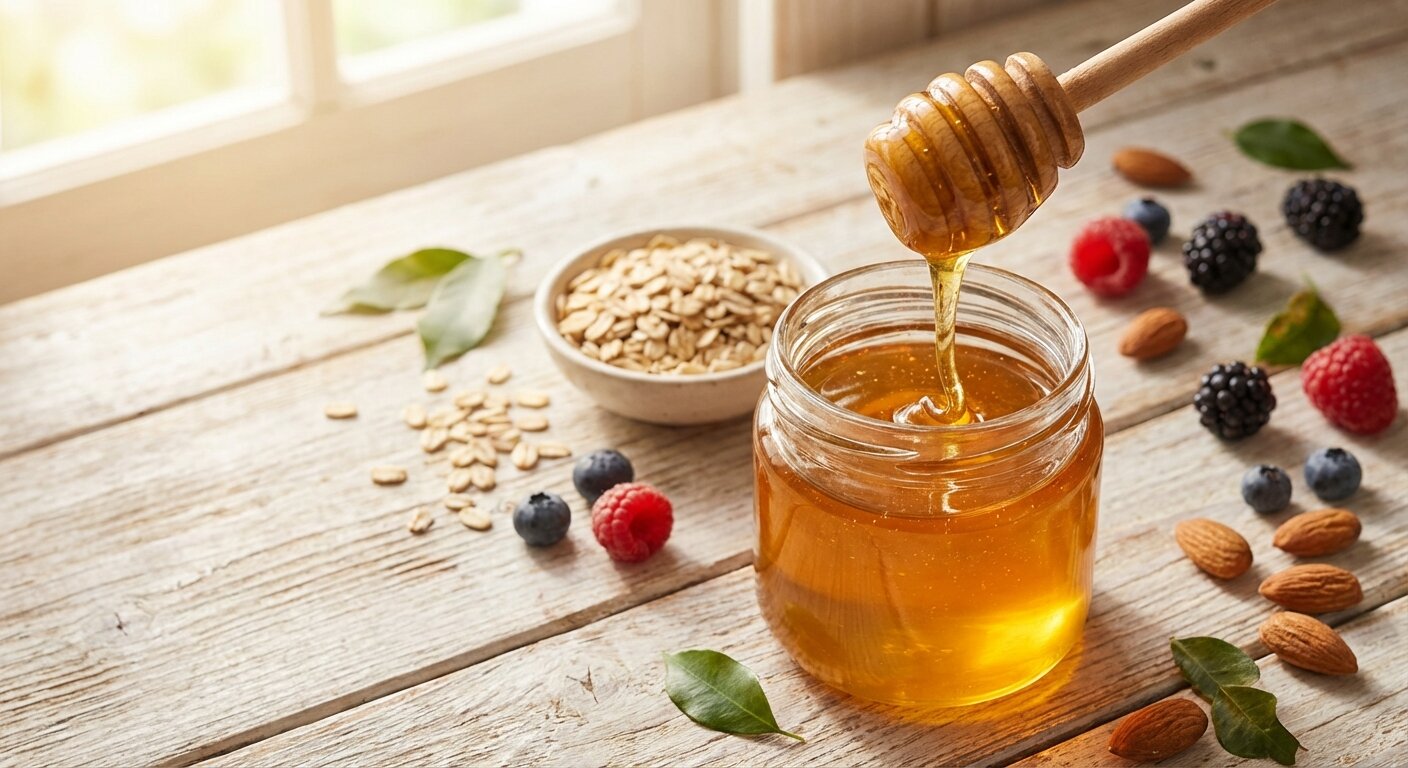
Honey is one of nature’s oldest sweeteners, prized for its distinct flavor and potential health benefits. But when you’re tracking macros, understanding honey’s nutritional profile is essential for making informed dietary decisions.
This guide covers everything you need to know about honey macros—from calories and carbohydrates to how different types compare. Whether you’re using honey as a natural sweetener, pre-workout fuel, or exploring its potential health benefits, you’ll learn exactly how to fit it into your macro targets.
Ready to calculate your personalized macro needs? Use our macro calculator to get started.
Honey Macros Breakdown
Understanding honey’s macronutrient profile is straightforward—it’s almost entirely carbohydrates with minimal protein and zero fat.
Per Tablespoon (21g)
- Calories: 64
- Protein: 0.1g
- Carbohydrates: 17.3g
- Sugars: 17.2g
- Fiber: 0g
- Fat: 0g
Per 100g
- Calories: 304
- Protein: 0.3g
- Carbohydrates: 82.4g
- Sugars: 82.1g
- Fiber: 0.2g
- Fat: 0g
Key Takeaways
- Pure carbohydrate source: 99% of calories come from sugars (fructose and glucose)
- No protein or fat: Don’t count on honey for balanced macros
- No fiber: Unlike whole fruits, honey contains virtually no dietary fiber
- Calorie-dense: Small serving sizes pack significant calories
Honey is best viewed as a concentrated carbohydrate source. If you’re tracking macros, account for every tablespoon in your daily carb totals.
Micronutrients in Honey
While honey is primarily a carbohydrate source, it does contain trace amounts of vitamins and minerals—though not enough to rely on as a significant nutrient source.
Vitamins and Minerals (per 100g)
- Vitamin C: 0.5mg (1% DV)
- Riboflavin (B2): 0.04mg (3% DV)
- Niacin (B3): 0.1mg (1% DV)
- Vitamin B6: 0.02mg (1% DV)
- Folate: 2mcg (1% DV)
- Calcium: 6mg (1% DV)
- Iron: 0.4mg (2% DV)
- Magnesium: 2mg (1% DV)
- Phosphorus: 4mg (0% DV)
- Potassium: 52mg (1% DV)
- Zinc: 0.2mg (2% DV)
Antioxidants
Honey contains phenolic compounds, flavonoids, and enzymes with antioxidant properties. Darker honeys (like buckwheat or manuka) generally contain higher antioxidant levels than lighter varieties.
However, the amounts are still relatively small compared to antioxidant-rich foods like berries, dark chocolate, or green tea. Think of honey’s micronutrients as a bonus, not the main reason to consume it.
Types of Honey and Their Macros
Different honey varieties have nearly identical macro profiles—the primary differences lie in flavor, color, and antioxidant content.
Common Honey Types
| Type | Calories (per tbsp) | Carbs (g) | Protein (g) | Fat (g) | Notes |
|---|---|---|---|---|---|
| Raw Honey | 64 | 17.3 | 0.1 | 0 | Unfiltered, unpasteurized; retains enzymes and pollen |
| Regular Honey | 64 | 17.3 | 0.1 | 0 | Filtered, pasteurized; smoother texture |
| Manuka Honey | 64 | 17.3 | 0.1 | 0 | From New Zealand; higher antibacterial properties (MGO rating) |
| Clover Honey | 64 | 17.3 | 0.1 | 0 | Most common variety; mild, sweet flavor |
| Buckwheat Honey | 64 | 17.3 | 0.1 | 0 | Dark, robust flavor; higher antioxidants |
| Acacia Honey | 64 | 17.3 | 0.1 | 0 | Light color; stays liquid longer due to higher fructose |
| Wildflower Honey | 64 | 17.3 | 0.1 | 0 | Flavor varies by region and season |
Key Insights
- Macros are consistent: All honey types have roughly the same calorie and carbohydrate content
- Raw vs. processed: Raw honey retains more enzymes and antioxidants, but macros remain identical
- Darker = more antioxidants: Generally, darker honeys contain higher phenolic content
- Flavor varies widely: Choose based on taste preference and intended use
From a macro-tracking perspective, all honey is essentially the same. Choose based on flavor, quality, and intended use rather than nutritional differences.
Honey vs. Other Sweeteners
How does honey compare to other common sweeteners from a macro and nutrition standpoint?
| Sweetener | Calories (per tbsp) | Carbs (g) | Protein (g) | Fat (g) | Glycemic Index |
|---|---|---|---|---|---|
| Honey | 64 | 17.3 | 0.1 | 0 | 58 |
| Table Sugar | 49 | 12.6 | 0 | 0 | 65 |
| Maple Syrup | 52 | 13.4 | 0 | 0 | 54 |
| Agave Nectar | 60 | 16 | 0 | 0 | 15 |
| Brown Sugar | 52 | 13.5 | 0 | 0 | 64 |
| Molasses | 58 | 15 | 0 | 0 | 55 |
Comparing Honey to Sugar
Similarities:
- Both are primarily simple carbohydrates (glucose and fructose)
- Both contribute calories from sugar
- Both should be limited in a balanced diet
Differences:
- Honey contains trace minerals and antioxidants; refined sugar has none
- Honey has a slightly lower glycemic index (58 vs. 65)
- Honey is sweeter per gram, so you may use less
- Honey contains enzymes and pollen (in raw form)
The bottom line: Honey offers marginal nutritional advantages over table sugar, but both are concentrated carbohydrate sources. Use honey for flavor and variety, but don’t consider it a “health food” just because it’s natural.
Honey and Glycemic Index
The glycemic index (GI) measures how quickly a food raises blood sugar levels. Understanding honey’s GI helps you make informed decisions about timing and portion sizes.
Honey’s Glycemic Index
- Average GI: 58 (medium)
- Range: 32-87 (varies by floral source and fructose-to-glucose ratio)
- Table sugar GI: 65
Factors Affecting Honey’s GI
- Floral source: Acacia honey (higher fructose) has a lower GI; clover honey (higher glucose) has a higher GI
- Fructose-to-glucose ratio: More fructose = lower GI
- Processing: Raw vs. pasteurized doesn’t significantly change GI
Practical Implications
- Medium GI food: Honey raises blood sugar more slowly than table sugar but faster than low-GI foods like berries or whole grains
- Pre-workout use: The mix of fructose and glucose provides both quick and sustained energy
- Post-workout use: Can replenish glycogen stores effectively
- For diabetics: Still counts as added sugar; monitor portions and blood glucose response
If you’re managing blood sugar, honey isn’t a free pass—it still impacts glucose levels. Pair honey with protein, fat, or fiber to slow absorption and minimize blood sugar spikes.
Best Uses for Honey in Your Diet
Honey can fit into a macro-focused diet when used strategically. Here are the most effective ways to incorporate honey:
1. Pre-Workout Energy
Why it works:
- Fast-digesting carbohydrates for immediate energy
- Mix of glucose (quick energy) and fructose (sustained energy)
- Easy to digest before exercise
How to use:
- 1 tablespoon with oatmeal or yogurt 30-60 minutes pre-workout
- Mixed into a smoothie with protein powder
- On whole-grain toast with nut butter
2. Post-Workout Recovery
Why it works:
- Replenishes muscle glycogen quickly
- Pairs well with protein for recovery
How to use:
- Mixed into a protein shake
- Drizzled over Greek yogurt with fruit
- Combined with cottage cheese and berries
3. Natural Sweetener
Why it works:
- More flavorful than sugar, so you may use less
- Adds trace nutrients and antioxidants
- Works in both hot and cold preparations
How to use:
- In tea or coffee (replace sugar 1:1, but start with less)
- In homemade salad dressings
- In marinades and glazes
- In baked goods (reduce liquid slightly)
4. Immune Support (Raw Honey)
Why it works:
- Contains enzymes, antioxidants, and antimicrobial compounds
- May soothe sore throats and coughs
How to use:
- 1 teaspoon straight or in warm (not boiling) water
- Mixed with lemon and ginger tea
- Not a replacement for medical treatment
Avoid These Uses
- Cooking at high heat: Destroys beneficial enzymes and creates harmful compounds
- As a primary carb source: Lacks fiber and satiety compared to whole foods
- Unlimited consumption: Still counts as added sugar in your macros
How to Track Honey in Your Macros
Accurately tracking honey ensures it fits within your daily carbohydrate targets without derailing progress.
Tracking by Weight (Most Accurate)
Best method: Use a food scale for precision.
- 1 tablespoon = 21g = 17.3g carbs
- 1 teaspoon = 7g = 5.8g carbs
Honey’s density varies slightly by type and temperature, so weighing is more reliable than volume measurements.
Tracking by Volume (Convenient)
If you don’t have a scale:
- 1 tablespoon = ~64 calories, 17g carbs
- 1 teaspoon = ~21 calories, 6g carbs
Level off measuring spoons for consistency—honey piled above the rim adds extra calories.
Tips for Accurate Tracking
- Log immediately: Don’t estimate honey added to tea or recipes
- Account for every teaspoon: Small amounts add up quickly
- Choose a tracking app: MyFitnessPal, Cronometer, or MacroFactor all have accurate honey entries
- Use generic “honey” entries: No need to track specific varieties (macros are nearly identical)
Common Mistakes
- Underestimating portions: A “drizzle” can easily be 2-3 tablespoons (200+ calories)
- Forgetting liquid additions: Honey in tea, coffee, or smoothies often goes untracked
- Not adjusting for baked goods: Honey in recipes must be divided by servings
If you’re serious about hitting macro targets, honey deserves the same tracking attention as any other carbohydrate source.
Health Benefits and Considerations
While honey is primarily a carbohydrate source, it does offer some potential health benefits beyond basic nutrition.
Potential Benefits
1. Antioxidant Properties
- Contains phenolic acids and flavonoids that combat oxidative stress
- Darker honeys (buckwheat, manuka) have higher antioxidant levels
- May reduce inflammation and support heart health
2. Antimicrobial Activity
- Raw honey contains hydrogen peroxide and other compounds with antibacterial properties
- Manuka honey has unique methylglyoxal (MGO) with documented antimicrobial effects
- Traditional use for wound healing and sore throat relief
3. Cough Suppressant
- Studies show honey (especially buckwheat) can reduce nighttime coughing in children
- As effective as some over-the-counter cough suppressants
- Not suitable for infants under 12 months (botulism risk)
4. Prebiotic Effects
- Contains oligosaccharides that may support beneficial gut bacteria
- Effects are modest compared to dedicated prebiotic foods (garlic, onions, asparagus)
Health Considerations
1. Still Added Sugar
- The American Heart Association recommends limiting added sugars to 25-36g daily
- 2 tablespoons of honey = 34g carbs, nearly your entire daily added sugar limit
- Don’t let “natural” fool you—your body processes honey similarly to table sugar
2. Calorie Dense
- Easy to overconsume in sauces, marinades, and beverages
- Can hinder fat loss goals if not tracked accurately
3. Not Suitable for Infants
- Honey can contain botulism spores dangerous to babies under 12 months
- Never give honey to infants
4. Blood Sugar Impact
- Despite slightly lower GI than sugar, honey still raises blood glucose
- Not a “diabetic-friendly” sweetener without portion control
5. Dental Health
- Sugars in honey feed cavity-causing bacteria
- Rinse mouth or brush teeth after consuming sticky honey
The Bottom Line
Honey offers minor advantages over refined sugar, but it’s not a health food. Use it for flavor and enjoyment, track it accurately in your macros, and don’t rely on it as a primary nutrient source.
Sample Meal Ideas with Honey
Here are balanced meal ideas that incorporate honey while keeping macros in check:
Breakfast Ideas
1. Greek Yogurt Power Bowl
- 1 cup plain Greek yogurt (170 cal, 17g protein, 10g carbs, 5g fat)
- 1 tablespoon honey (64 cal, 0g protein, 17g carbs, 0g fat)
- 1/4 cup granola (120 cal, 3g protein, 22g carbs, 3g fat)
- 1/2 cup blueberries (40 cal, 0g protein, 10g carbs, 0g fat)
- Total: 394 cal, 20g protein, 59g carbs, 8g fat
2. Honey Oatmeal with Almonds
- 1/2 cup dry oats (150 cal, 5g protein, 27g carbs, 3g fat)
- 1 tablespoon honey (64 cal, 0g protein, 17g carbs, 0g fat)
- 1 tablespoon almond butter (98 cal, 3g protein, 3g carbs, 9g fat)
- 1/2 banana (50 cal, 1g protein, 13g carbs, 0g fat)
- Total: 362 cal, 9g protein, 60g carbs, 12g fat
Pre-Workout Snacks
3. Honey Toast with Peanut Butter
- 1 slice whole wheat toast (80 cal, 4g protein, 15g carbs, 1g fat)
- 1 tablespoon peanut butter (95 cal, 4g protein, 3g carbs, 8g fat)
- 1 teaspoon honey (21 cal, 0g protein, 6g carbs, 0g fat)
- Total: 196 cal, 8g protein, 24g carbs, 9g fat
4. Honey Energy Smoothie
- 1 scoop whey protein (120 cal, 25g protein, 3g carbs, 1g fat)
- 1 banana (105 cal, 1g protein, 27g carbs, 0g fat)
- 1 tablespoon honey (64 cal, 0g protein, 17g carbs, 0g fat)
- 1 cup unsweetened almond milk (30 cal, 1g protein, 1g carbs, 2.5g fat)
- Total: 319 cal, 27g protein, 48g carbs, 3.5g fat
Post-Workout Meals
5. Cottage Cheese Berry Bowl
- 1 cup low-fat cottage cheese (180 cal, 28g protein, 8g carbs, 2.5g fat)
- 1 cup mixed berries (70 cal, 1g protein, 17g carbs, 0g fat)
- 1 tablespoon honey (64 cal, 0g protein, 17g carbs, 0g fat)
- Total: 314 cal, 29g protein, 42g carbs, 2.5g fat
6. Honey Glazed Salmon
- 6 oz grilled salmon (367 cal, 39g protein, 0g carbs, 22g fat)
- 1 tablespoon honey (64 cal, 0g protein, 17g carbs, 0g fat)
- 1 tablespoon soy sauce (10 cal, 1g protein, 1g carbs, 0g fat)
- 1 cup steamed broccoli (55 cal, 4g protein, 11g carbs, 0g fat)
- 1/2 cup brown rice (108 cal, 2g protein, 22g carbs, 1g fat)
- Total: 604 cal, 46g protein, 51g carbs, 23g fat
These meals demonstrate how honey can enhance flavor while still fitting balanced macro targets. Adjust portions based on your specific needs.
Common Mistakes When Using Honey
Even experienced macro trackers make these honey-related errors:
1. Not Tracking “A Little Drizzle”
The mistake: Eyeballing honey without measuring.
The reality: An unmeasured drizzle can easily be 2-3 tablespoons (34-51g carbs, 128-192 calories).
The fix: Always measure with a spoon or scale, especially when adding to beverages or recipes.
2. Assuming “Natural” Means Calorie-Free
The mistake: Treating honey as a health food you can eat unlimited amounts of.
The reality: Honey has the same calorie density as sugar and similar effects on blood sugar.
The fix: Track honey like any other carbohydrate source. Natural ≠ low-calorie or unrestricted.
3. Cooking Raw Honey at High Heat
The mistake: Adding raw honey to boiling water or baking at high temperatures.
The reality: Heat destroys beneficial enzymes and can create potentially harmful compounds.
The fix: Add honey to warm (not boiling) liquids, or use regular honey for cooking and raw honey for no-heat applications.
4. Giving Honey to Infants
The mistake: Using honey as a natural sweetener for babies.
The reality: Honey can contain botulism spores that infants’ immune systems can’t handle.
The fix: Never give honey to babies under 12 months old. Use other sweeteners if needed, or better yet, avoid added sugars entirely for infants.
5. Replacing Entire Meals with Honey
The mistake: Using honey as a primary carb source (like in “honey water cleanses”).
The reality: Honey lacks protein, fat, fiber, and most essential nutrients. It’s a supplement to balanced meals, not a replacement.
The fix: Use honey in small amounts alongside complete meals with adequate protein, healthy fats, and vegetables.
6. Not Adjusting for Honey’s Sweetness
The mistake: Using a 1:1 ratio when substituting honey for sugar in recipes.
The reality: Honey is sweeter than sugar, so you can often use 25% less.
The fix: Start with 3/4 cup honey for every 1 cup sugar called for in recipes, and reduce liquid by 1/4 cup.
7. Ignoring Storage Guidelines
The mistake: Refrigerating honey or storing it in direct sunlight.
The reality: Refrigeration causes crystallization; sunlight degrades quality.
The fix: Store honey in a sealed container at room temperature in a dark cupboard. It lasts indefinitely when stored properly.
Avoiding these mistakes helps you enjoy honey’s benefits while staying on track with your macro goals.
Frequently Asked Questions
Does honey break a fast?
Yes, honey breaks a fast. It contains 64 calories per tablespoon, all from sugar, which triggers an insulin response and interrupts metabolic fasting. If you’re doing intermittent fasting, avoid honey during your fasting window—even a teaspoon in tea will technically break the fast.
Some people use minimal honey (1/4 teaspoon or less) without significantly impacting their results, but purists avoid all caloric intake during fasting periods. If your goal is autophagy or maximum fat oxidation, skip the honey until your eating window opens.
Can I use honey on keto?
Honey is not keto-friendly. A single tablespoon contains 17g carbohydrates, which is 34-68% of the typical keto daily carb limit (20-50g). Most keto dieters strictly avoid honey to stay in ketosis.
If you’re looking for keto-friendly sweeteners, consider:
- Erythritol: 0g net carbs, minimal blood sugar impact
- Stevia: 0 calories, plant-based
- Monk fruit: 0 calories, natural sweetener
- Allulose: Minimal calorie and blood sugar impact
These alternatives provide sweetness without the carb load that kicks you out of ketosis.
Is honey vegan?
No, honey is not considered vegan. Veganism excludes all animal products, and honey is produced by bees. Some people debate whether honey production harms bees, but strict vegans avoid it.
Vegan honey alternatives include:
- Maple syrup: Similar consistency and sweetness
- Agave nectar: Similar flavor profile
- Date syrup: Natural sweetness from dates
- Coconut nectar: Low glycemic option
- Brown rice syrup: Mild sweetness
These plant-based options have similar macro profiles to honey and work in most recipes.
Does honey expire?
No, honey does not expire when stored properly. Archaeologists have found 3,000-year-old honey in Egyptian tombs that’s still edible. Honey’s low moisture content and acidic pH prevent bacterial growth.
Why honey lasts forever:
- Low water activity (bees evaporate most moisture)
- Acidic pH (3.2-4.5)
- Natural hydrogen peroxide production
- High sugar concentration creates hostile environment for microbes
Storage tips:
- Keep in a sealed container to prevent moisture absorption
- Store at room temperature in a dark cupboard
- Don’t refrigerate (causes crystallization)
- If crystallized, gently warm in hot water (not microwave) to reliquefy
Over time, honey may darken or crystallize, but these changes don’t indicate spoilage—just natural processes.
Can diabetics eat honey?
Diabetics can eat honey in moderation, but it’s not a “healthier sugar” alternative. Honey raises blood glucose similarly to table sugar, despite having a slightly lower glycemic index (58 vs. 65).
If you have diabetes and want to use honey:
- Track carbohydrates carefully: Count honey’s 17g carbs per tablespoon toward your daily total
- Monitor blood glucose response: Test before and 1-2 hours after consuming honey
- Limit portions: Stick to 1 teaspoon or less at a time
- Pair with protein or fat: Slows absorption and minimizes blood sugar spikes
- Choose darker varieties: May have slightly more beneficial compounds
Better alternatives for diabetics:
- Non-nutritive sweeteners (stevia, erythritol, monk fruit) don’t raise blood sugar
- Whole fruits provide fiber that slows sugar absorption
Consult your doctor or dietitian for personalized advice on including honey in your diabetic meal plan.
Is raw honey better than regular honey?
Raw honey offers minor advantages over processed honey, but the macro profile is identical:
Raw Honey:
- Unfiltered and unpasteurized
- Retains enzymes (like diastase and invertase)
- Contains bee pollen, propolis, and beeswax traces
- Higher antioxidant content
- May crystallize faster
- Can have a cloudier appearance
Regular (Processed) Honey:
- Filtered to remove pollen and impurities
- Pasteurized to prevent crystallization and extend shelf life
- Smoother, clearer appearance
- Longer liquid shelf life
- Same calories and macros as raw
The verdict: If you can afford it and enjoy the richer flavor, raw honey provides marginally more nutrients and enzymes. However, both are nearly 100% sugar from a macro perspective. Don’t expect dramatic health differences—choose based on preference and budget.
Important: Never give raw honey to infants under 12 months due to botulism risk. Pasteurized honey is safer for babies (though still not recommended for those under 1 year).
How do I substitute honey for sugar in recipes?
Honey is sweeter and wetter than sugar, so direct 1:1 substitution doesn’t work. Use this conversion guide:
General Rule:
- Use 3/4 cup honey for every 1 cup sugar
- Reduce liquid in recipe by 1/4 cup for every cup of honey used
- Lower oven temperature by 25°F (honey browns faster than sugar)
Example Conversion: Original recipe calls for:
- 1 cup sugar
- 1 cup milk
Substitute with:
- 3/4 cup honey
- 3/4 cup milk (reduced by 1/4 cup)
- Reduce oven temp from 350°F to 325°F
Additional tips:
- Add 1/4 teaspoon baking soda per cup of honey (neutralizes acidity)
- Don’t substitute honey in recipes requiring creaming butter and sugar
- Best for muffins, quick breads, marinades, and glazes
- May alter texture in cookies and cakes (chewier, denser results)
Macro impact: Honey is slightly higher in calories than sugar per cup (1,031 calories vs. 774), so adjust your tracking accordingly.
Does honey help with allergies?
The claim that local honey reduces seasonal allergies lacks strong scientific evidence, but many people report anecdotal benefits.
The theory:
- Local honey contains trace pollen from nearby plants
- Consuming small amounts might build tolerance (like allergy immunotherapy)
- Over time, your immune system may become less reactive to environmental pollen
The evidence:
- Most studies show no significant difference between honey and placebo for allergy relief
- Honey contains flower pollen, but most allergies are triggered by wind-pollinated trees, grasses, and weeds
- The pollen in honey is likely not the same pollen causing your symptoms
If you want to try it:
- Use raw, local honey (within 50 miles of your home)
- Start with 1 teaspoon daily a few months before allergy season
- Track symptoms to see if you notice improvement
Don’t rely on honey as primary allergy treatment. Use antihistamines, nasal sprays, or see an allergist for evidence-based approaches. If honey helps you, consider it a pleasant bonus rather than a cure.
Can I heat honey in the microwave?
You can microwave honey, but it’s not ideal—especially for raw honey.
Why avoid high heat:
- Destroys beneficial enzymes (diastase, invertase)
- Degrades antioxidants and phenolic compounds
- Can create hydroxymethylfurfural (HMF), a compound that accumulates with heat (potentially toxic in very high amounts)
- Alters flavor profile
If you must microwave honey:
- Use low power (30-50%)
- Heat in 10-second intervals
- Stir between heating
- Don’t let it boil
Better method for crystallized honey:
- Place jar in bowl of hot (not boiling) water
- Let sit for 15-20 minutes
- Gently stir to help crystals dissolve
- Repeat if needed
This preserves honey’s beneficial properties while restoring smooth texture.
How many calories are in a teaspoon of honey?
A teaspoon of honey contains approximately 21 calories, all from carbohydrates:
- Carbohydrates: 5.8g
- Protein: 0g
- Fat: 0g
This assumes a level teaspoon (about 7g). If you heap the teaspoon, you could be consuming 30-35 calories instead.
For accurate tracking:
- Use a food scale (7g = 1 teaspoon)
- Level off measuring spoons
- Log every teaspoon in your tracking app
Those 21 calories might seem insignificant, but 3 teaspoons in your morning tea add up to 63 calories (16g carbs)—nearly the same as a full tablespoon. Small amounts matter when tracking macros precisely.
Conclusion
Honey is a natural sweetener with a simple macro profile: nearly 100% carbohydrates, zero protein, zero fat, and 64 calories per tablespoon. While it offers trace minerals and antioxidants not found in refined sugar, the nutritional differences are marginal.
Key takeaways:
- Track honey accurately: Use a food scale or measure carefully—small portions add up quickly
- Count it as carbs: Include honey’s 17g carbohydrates per tablespoon in your daily macro totals
- Use strategically: Pre-workout for quick energy, post-workout for glycogen replenishment, or as a flavor enhancer in moderation
- Choose raw when possible: Slightly higher enzymes and antioxidants, but macros are identical to processed honey
- Don’t overdo it: Limit added sugars (including honey) to 25-36g daily per AHA guidelines
- It’s still sugar: “Natural” doesn’t mean unlimited or calorie-free—track like any other sweetener
Honey can absolutely fit into a macro-focused diet when you account for it properly. Enjoy its unique flavor and minor health benefits, but remember: it’s a carbohydrate source first, not a health food.
Ready to dial in your complete macro plan? Use our macro calculator to set personalized targets based on your goals, and check out our guides on best macro ratio for fat loss or macros for muscle gain for more detailed strategies.
Track your honey, hit your targets, and enjoy the sweetness—in moderation.
Related Articles
Dragonfruit Macros: Complete Nutrition Guide for Pitaya
Complete macro breakdown of dragonfruit (pitaya). Learn the calories, protein, carbs, and...
Read guide →
Bulgur Macros: Complete Nutritional Guide & Health Benefits
Discover bulgur's complete macro breakdown, nutritional benefits, and how to incorporate...
Read guide →
Radish Macros: Nutrition Facts and Health Benefits
Complete guide to radish macros and nutrition. Learn calories, protein, carbs, and health...
Read guide →Note: Nutrition values are approximate and may vary based on preparation method and source.