Honeydew Macros: Complete Nutrition Breakdown & Health Benefits
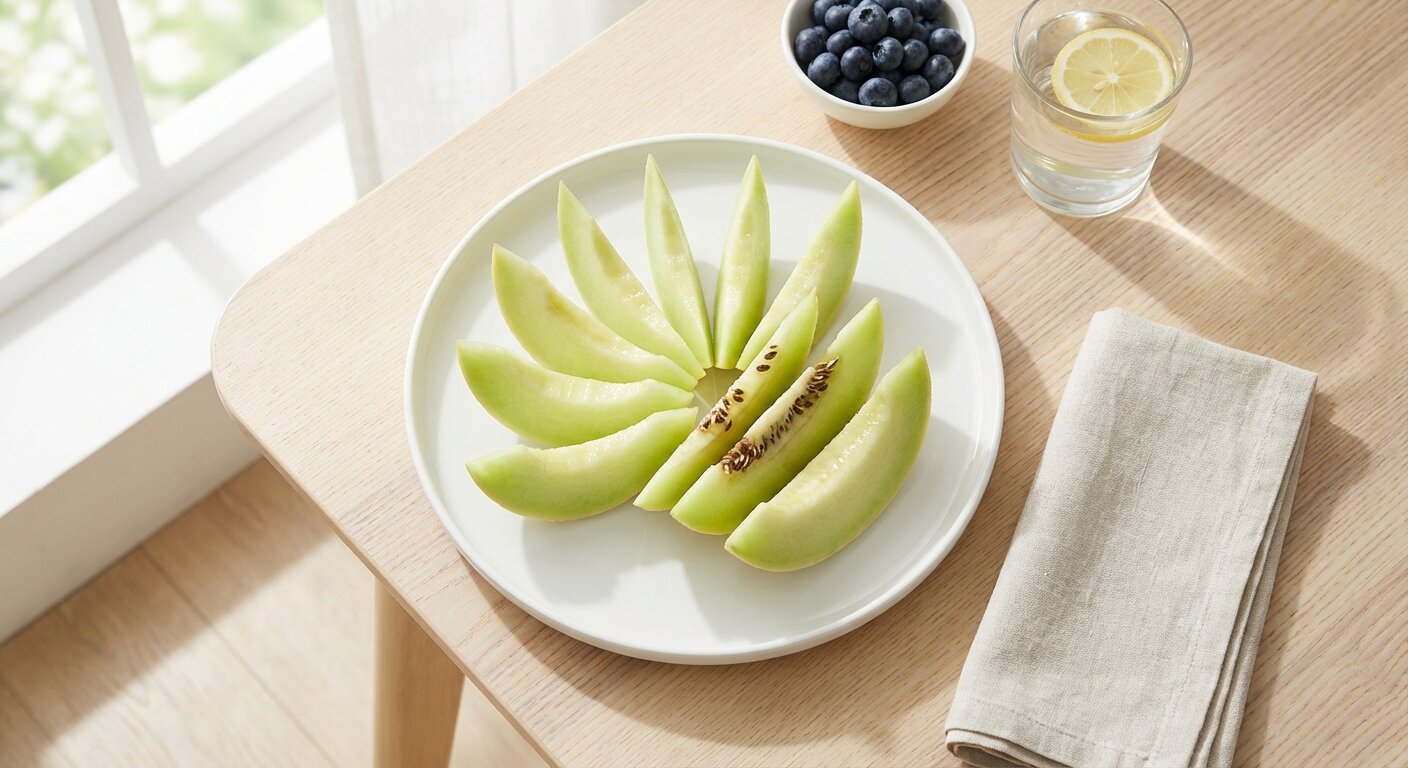
Honeydew melon is one of the most refreshing fruits you can eat—sweet, hydrating, and surprisingly nutritious for something that tastes like summer in fruit form. If you’re tracking macros or just curious about what’s in that pale green slice on your plate, you’ve come to the right place.
Whether you’re cutting, bulking, or maintaining, understanding honeydew’s macro breakdown helps you fit this delicious melon into your nutrition plan without guessing. Let’s break down everything from calories to vitamins, plus practical tips for incorporating honeydew into your diet goals.
Want a complete picture of your daily nutrition? Use our macro calculator to determine exactly how honeydew fits into your personalized macro targets based on your goals, activity level, and preferences.
Honeydew Macros: The Complete Breakdown
Let’s start with the numbers. Here’s the complete macro and calorie profile for honeydew melon:
Per 1 Cup (170g) Diced Honeydew:
- Calories: 61 kcal
- Protein: 0.9g
- Carbohydrates: 15.5g
- Fiber: 1.4g
- Sugars: 13.8g
- Net carbs: 14.1g
- Fat: 0.2g
- Saturated: 0.1g
- Monounsaturated: 0g
- Polyunsaturated: 0.1g
Per Medium Wedge (200g):
- Calories: 72 kcal
- Protein: 1.1g
- Carbohydrates: 18.2g
- Fat: 0.2g
Per 100g (Reference Portion):
- Calories: 36 kcal
- Protein: 0.5g
- Carbohydrates: 9.1g
- Fat: 0.1g
What this means: Honeydew is primarily a carbohydrate source with virtually no protein or fat. It’s extremely low in calories relative to its volume, making it an excellent choice for volume eating, hydration, and satisfying sweet cravings without derailing your macros.
Macro Distribution: Where the Calories Come From
Understanding how honeydew’s calories break down by macronutrient helps you see exactly what role it plays in your diet:
For 1 cup (170g) of honeydew:
- Carbohydrates: 62 calories (93% of total)
- Protein: 4 calories (6% of total)
- Fat: 2 calories (3% of total)
Honeydew is almost entirely carbs—specifically, natural sugars and a modest amount of fiber. The tiny amounts of protein and fat are nutritionally insignificant, so when you eat honeydew, you’re essentially eating hydrating carbohydrates with vitamins and minerals.
Comparing Honeydew to Other Popular Fruits
How does honeydew stack up against other common fruits? Here’s a side-by-side comparison per 100g:
| Fruit | Calories | Protein | Carbs | Fiber | Sugar | Fat |
|---|---|---|---|---|---|---|
| Honeydew | 36 | 0.5g | 9.1g | 0.8g | 8.1g | 0.1g |
| Cantaloupe | 34 | 0.8g | 8.2g | 0.9g | 7.9g | 0.2g |
| Watermelon | 30 | 0.6g | 7.6g | 0.4g | 6.2g | 0.2g |
| Pineapple | 50 | 0.5g | 13.1g | 1.4g | 9.9g | 0.1g |
| Strawberries | 32 | 0.7g | 7.7g | 2.0g | 4.9g | 0.3g |
| Grapes | 69 | 0.7g | 18.1g | 0.9g | 15.5g | 0.2g |
Key insights:
- Honeydew has similar macros to cantaloupe and watermelon
- Lower in calories and sugar than grapes or pineapple
- Less fiber than berries, but still hydrating and low-calorie
- Excellent choice for refreshing, sweet fruit with minimal caloric impact
Micronutrients: Vitamins and Minerals in Honeydew
Beyond macros, honeydew provides several important vitamins and minerals:
Per 1 Cup (170g):
- Vitamin C: 30.6mg (34% DV) - antioxidant, immune support
- Potassium: 388mg (11% DV) - blood pressure, muscle function
- Vitamin B6: 0.1mg (8% DV) - brain health, metabolism
- Folate: 34mcg (9% DV) - DNA synthesis, red blood cell formation
- Vitamin K: 4.4mcg (5% DV) - blood clotting, bone health
- Magnesium: 17mg (4% DV) - muscle and nerve function
- Copper: 0.07mg (8% DV) - iron absorption, energy production
- Thiamine (B1): 0.06mg (5% DV) - energy metabolism
Standout micronutrients:
- Vitamin C: One cup provides over a third of your daily needs, supporting immune function and collagen production
- Potassium: Important for hydration, heart health, and blood pressure regulation
- Copper: Often overlooked, but essential for iron absorption and connective tissue health
Water Content: Why Honeydew Is So Hydrating
One of honeydew’s most impressive features isn’t even a macronutrient—it’s water. Honeydew is approximately 90% water by weight, making it one of the most hydrating fruits you can eat.
What this means practically:
- 1 cup of honeydew provides about 153ml (5 oz) of water
- Helps you stay hydrated, especially in hot weather or after workouts
- Contributes to your daily fluid intake
- Provides volume and satiety with minimal calories
This high water content is why honeydew feels so refreshing and why you can eat a generous portion without consuming many calories. It’s also why honeydew is an excellent post-workout snack—it replenishes fluids while providing quick-digesting carbs to restore glycogen.
Honeydew and Blood Sugar: Glycemic Index & Load
Understanding how honeydew affects blood sugar is important for anyone managing diabetes, insulin sensitivity, or energy levels:
- Glycemic Index (GI): 65 (medium)
- Glycemic Load (GL): 6 per cup (low)
What this means:
- Honeydew has a medium GI, meaning it raises blood sugar moderately fast when eaten alone
- However, its low GL means the total impact on blood sugar is small because the serving size doesn’t contain massive amounts of carbs
- The high water and fiber content help slow sugar absorption compared to pure sugar
Practical tips for blood sugar management:
- Pair honeydew with protein or fat (like Greek yogurt or nuts) to slow digestion
- Eat honeydew as part of a balanced meal rather than alone on an empty stomach
- Monitor your individual response if you have diabetes or prediabetes
- Avoid drinking honeydew juice, which removes fiber and concentrates sugar
Honeydew for Different Diet Goals
Cutting / Fat Loss
Honeydew is excellent for cutting:
- Very low calorie density (36 cal/100g)
- High volume and water content promote fullness
- Satisfies sweet cravings without derailing your deficit
- 1-2 cups provide sweetness and hydration for only 60-120 calories
Tips:
- Use honeydew as a dessert replacement
- Freeze chunks for a low-calorie “ice cream” alternative
- Add to protein shakes for volume and natural sweetness
- Snack on it before meals to reduce overall calorie intake
Bulking / Muscle Gain
Honeydew is moderately useful for bulking:
- Provides quick-digesting carbs for glycogen replenishment
- Very low calorie density means you need large quantities for significant calories
- Better as a micronutrient/hydration source than a primary carb source
Tips:
- Pair with calorie-dense foods (peanut butter, Greek yogurt, granola)
- Use post-workout for hydration and quick carbs
- Blend into high-calorie smoothies with protein, oats, and nut butter
- Don’t rely on honeydew as a primary carb source—it’s too low in calories
Low-Carb / Keto
Honeydew is challenging for strict keto:
- 15g carbs per cup may exceed daily limits (typically under 20g net carbs)
- Almost entirely carbohydrate with no fat or protein
Tips for low-carb diets:
- Limit portions to ¼-½ cup if you have carb budget available
- Save for special occasions or higher-carb days
- Consider lower-carb alternatives like berries (raspberries, strawberries)
- Track carefully if attempting to fit into daily macros
Maintenance / Balanced Nutrition
Honeydew is ideal for maintenance:
- Low-calorie, nutrient-dense, hydrating
- Easy to fit into balanced meal plans
- Provides variety and natural sweetness
- 1-2 cups daily fits most maintenance plans
Tips:
- Include as part of your daily fruit servings (2 cups recommended)
- Rotate with other fruits for micronutrient diversity
- Enjoy freely as a snack without tracking (if you’re not in a deficit)
Practical Serving Sizes and Scenarios
Pre-Workout (30-60 minutes before):
- 1 cup honeydew (61 cal, 15g carbs)
- Quick-digesting carbs for energy
- Hydration without heaviness
- Pair with a small protein source for sustained energy
Post-Workout (within 2 hours):
- 1-2 cups honeydew (60-120 cal, 15-30g carbs)
- Replenishes fluids and glycogen
- Vitamin C supports recovery and immune function
- Pair with protein for optimal recovery
Snack:
- 1 cup honeydew (61 cal, 15g carbs)
- Low-calorie, satisfying, hydrating
- Curbs sweet cravings naturally
- Pair with cottage cheese or Greek yogurt for balanced macros
Dessert Replacement:
- 1.5 cups frozen honeydew chunks (90 cal, 23g carbs)
- Freeze and eat like sorbet
- Blend frozen chunks for a slushie-style treat
- Top with a small amount of whipped cream or dark chocolate chips
Tips for Selecting and Storing Honeydew
How to Pick a Ripe Honeydew:
- Check the color: Look for a creamy yellow or pale ivory color, not bright white or green
- Press the blossom end: It should yield slightly to gentle pressure
- Smell it: Ripe honeydew has a subtle sweet, floral aroma at the stem end
- Shake it: You shouldn’t hear seeds rattling—that indicates overripeness
Storage:
- Whole, unripe honeydew: Room temperature until ripe (2-4 days)
- Whole, ripe honeydew: Refrigerate up to 5-7 days
- Cut honeydew: Store in airtight container in fridge for 3-5 days
- Frozen honeydew: Dice and freeze in a single layer, then transfer to freezer bags (up to 6 months)
Prep Tips:
- Wash the exterior thoroughly before cutting (bacteria can transfer from rind to flesh)
- Cut in half, scoop out seeds, then slice or dice
- Use a melon baller for uniform pieces
- Toss diced honeydew with lime juice to prevent browning and add flavor
Creative Ways to Use Honeydew in Your Diet
1. Honeydew Protein Smoothie
- 1 cup honeydew chunks
- 1 scoop vanilla protein powder
- ½ cup Greek yogurt
- Ice and water to blend
- Macros: ~250 cal, 30g protein, 25g carbs, 3g fat
2. Honeydew & Prosciutto (Sweet + Salty)
- Wrap honeydew slices in prosciutto
- Drizzle with balsamic glaze
- Macros per serving: ~120 cal, 8g protein, 12g carbs, 4g fat
3. Honeydew Salsa
- Diced honeydew, jalapeño, red onion, cilantro, lime juice
- Serve with grilled chicken or fish
- Macros per ½ cup: ~35 cal, 0.5g protein, 9g carbs, 0g fat
4. Frozen Honeydew “Ice Cream”
- Freeze honeydew chunks overnight
- Blend until smooth and creamy
- Optional: add vanilla extract or a touch of honey
- Macros per cup: ~61 cal, 0.9g protein, 15g carbs, 0.2g fat
5. Honeydew & Mint Agua Fresca
- Blend honeydew with water, lime juice, and fresh mint
- Strain and serve over ice
- Macros per cup: ~30 cal, 0.5g protein, 8g carbs, 0g fat
Frequently Asked Questions
What are the macros in honeydew melon?
One cup (170g) of honeydew contains approximately 61 calories, 15g carbohydrates, 0.9g protein, and 0.2g fat. Honeydew is almost entirely carbohydrate-based, with the vast majority coming from natural sugars (about 14g per cup). The protein and fat content are negligible, making honeydew essentially a pure carb source with exceptional hydration benefits.
The carbohydrates in honeydew come primarily from simple sugars like fructose and glucose, along with a small amount of fiber (1.4g per cup). This composition makes honeydew a quick-digesting carb source, ideal for pre- or post-workout nutrition when you need rapid energy or glycogen replenishment.
What sets honeydew apart from more calorie-dense carb sources is its 90% water content, which means you can eat a large, satisfying portion for relatively few calories. This makes it particularly valuable for anyone tracking macros while trying to stay full and hydrated.
Is honeydew high in sugar?
Honeydew contains about 14g of natural sugar per cup, which places it in the moderate sugar category for fruits. For comparison:
- Lower sugar fruits: strawberries (7g per cup), raspberries (5g per cup)
- Similar sugar fruits: cantaloupe (13g per cup), watermelon (9g per cup)
- Higher sugar fruits: grapes (23g per cup), mango (23g per cup)
However, the sugar in honeydew is natural fruit sugar (primarily fructose), not added sugar. This comes packaged with water, fiber, vitamins, and minerals—unlike candy or soda where sugar is isolated and provides empty calories.
Additionally, honeydew has a low glycemic load (6 per cup), meaning the actual impact on your blood sugar is relatively small. The high water content and fiber slow the absorption of sugar, preventing the dramatic blood sugar spikes you’d get from pure sugar or fruit juice.
Bottom line: If you’re concerned about sugar intake, honeydew is a reasonable choice compared to higher-sugar fruits or processed sweets. If you’re on a very low-carb diet, you’ll need to portion carefully, but for most people, 1-2 cups daily fits well within a balanced diet.
Is honeydew good for weight loss?
Yes, honeydew is excellent for weight loss for several reasons:
1. Very low calorie density: At only 36 calories per 100g, honeydew provides substantial volume with minimal calories. You can eat an entire cup (170g) for just 61 calories—fewer than a single tablespoon of peanut butter or a small handful of chips.
2. High water content (90%): The water in honeydew physically fills your stomach, triggering satiety signals without adding calories. This makes it easier to feel full and satisfied while maintaining a calorie deficit.
3. Satisfies sweet cravings: Honeydew provides natural sweetness that can replace higher-calorie desserts like ice cream, cookies, or candy. Swapping a 300-calorie dessert for a cup of honeydew saves 240 calories while still satisfying your sweet tooth.
4. Provides hydration: Dehydration can sometimes masquerade as hunger. Honeydew’s high water content helps keep you hydrated, potentially reducing unnecessary snacking.
5. Nutrient-dense: Unlike “empty calorie” foods, honeydew provides vitamins (especially vitamin C), minerals (potassium), and antioxidants that support overall health during a calorie deficit.
Practical weight loss tips:
- Eat honeydew as a pre-meal appetizer to reduce overall calorie intake
- Use frozen honeydew chunks as a low-calorie dessert replacement
- Pair honeydew with protein (Greek yogurt, cottage cheese) for a balanced, filling snack
- Track your portions if you’re on a strict macro plan, but don’t fear honeydew—it’s one of the most diet-friendly foods available
Can I eat honeydew on a low-carb diet?
Honeydew’s feasibility on a low-carb diet depends on how strict your carb limit is:
Strict keto (under 20g net carbs/day):
- 1 cup honeydew = 14g net carbs (after subtracting fiber)
- This would consume 70% of your daily carb budget in a single serving
- Verdict: Very difficult to fit in; save for special occasions or skip entirely
Moderate low-carb (50-100g carbs/day):
- 1 cup honeydew = 14g net carbs
- Verdict: Manageable if you plan your other meals carefully and prioritize protein and fat
Liberal low-carb (100-150g carbs/day):
- 1 cup honeydew = 14g net carbs
- Verdict: Easily fits; enjoy 1-2 cups daily as part of a balanced plan
Alternatives for stricter low-carb diets:
- Berries: Raspberries (3g net carbs per ½ cup), strawberries (6g net carbs per ½ cup)
- Avocado: 2g net carbs per ½ avocado, high in healthy fats
- Cantaloupe: Slightly lower carbs than honeydew (7g net carbs per ½ cup)
Bottom line: Honeydew isn’t ideal for strict keto, but it can fit into moderate low-carb approaches with careful planning. If you love honeydew and can spare the carbs, enjoy a smaller portion (½ cup = 7g net carbs) to get the flavor and benefits without derailing your macros.
What vitamins and minerals are in honeydew?
Honeydew is a surprisingly solid source of several essential vitamins and minerals, especially for such a low-calorie food:
Vitamin C (34% DV per cup):
- Powerful antioxidant that protects cells from damage
- Supports immune system function
- Essential for collagen production (skin, joints, connective tissue)
- Enhances iron absorption from plant-based foods
Potassium (11% DV per cup):
- Critical for heart health and blood pressure regulation
- Supports muscle contraction and nerve signaling
- Helps balance fluids and electrolytes (especially important after sweating)
- May reduce risk of kidney stones and bone loss
Vitamin B6 (8% DV per cup):
- Involved in over 100 enzyme reactions in the body
- Supports brain development and neurotransmitter production
- Helps metabolize proteins, fats, and carbohydrates
- Important for immune function and red blood cell formation
Folate (9% DV per cup):
- Crucial for DNA synthesis and cell division
- Especially important during pregnancy for fetal development
- Supports red blood cell formation and prevents anemia
- May reduce risk of certain birth defects
Copper (8% DV per cup):
- Helps your body absorb and utilize iron
- Supports energy production in mitochondria
- Important for nervous system health and immune function
- Contributes to collagen formation and bone health
Other notable micronutrients:
- Vitamin K (blood clotting, bone health)
- Magnesium (muscle function, energy metabolism)
- Thiamine (B1) (energy production from carbs)
- Pantothenic acid (B5) (hormone and cholesterol synthesis)
Bottom line: While honeydew isn’t a “superfood,” it provides meaningful amounts of several vitamins and minerals that support overall health—making it far more valuable nutritionally than its low calorie count might suggest.
Is honeydew better than cantaloupe nutritionally?
Honeydew and cantaloupe are very similar nutritionally, with a few minor differences:
Macros (per 100g):
- Honeydew: 36 cal, 9.1g carbs, 0.5g protein, 0.1g fat
- Cantaloupe: 34 cal, 8.2g carbs, 0.8g protein, 0.2g fat
- Winner: Essentially tied (cantaloupe has slightly more protein, but both are negligible)
Micronutrients:
- Vitamin A: Cantaloupe wins decisively (68% DV vs 1% DV per cup) due to its orange flesh (beta-carotene)
- Vitamin C: Honeydew slightly higher (34% DV vs 29% DV per cup)
- Potassium: Honeydew slightly higher (11% DV vs 9% DV per cup)
- Folate: Honeydew higher (9% DV vs 5% DV per cup)
Key takeaway:
- Cantaloupe is superior for vitamin A and eye health (beta-carotene)
- Honeydew is slightly better for vitamin C and potassium
- Both are excellent hydrating, low-calorie fruits with similar overall nutritional profiles
Choose cantaloupe if:
- You need more vitamin A in your diet
- You prefer a slightly sweeter, more aromatic flavor
- You want more beta-carotene for skin and immune health
Choose honeydew if:
- You prefer a milder, more subtle sweetness
- You want slightly more potassium for hydration and muscle function
- You like the crisp, refreshing texture of pale green melon
Bottom line: Both are nutritionally excellent choices. The “better” option depends on your specific micronutrient needs and taste preferences. There’s no wrong answer—eat whichever you enjoy more, or rotate between both for variety.
How much honeydew should I eat per day?
Most adults can safely and beneficially eat 1-2 cups of honeydew per day as part of a balanced diet. This amount provides:
1 cup (170g):
- 61 calories
- 15g carbohydrates
- 34% of your daily vitamin C
- 11% of your daily potassium
- Substantial hydration (about 5 oz of water)
2 cups (340g):
- 122 calories
- 30g carbohydrates
- 68% of your daily vitamin C
- 22% of your daily potassium
- Even more hydration
Dietary guidelines:
- The USDA recommends 2 cups of fruit per day for adults
- 1-2 cups of honeydew would count as your entire daily fruit serving (or half if eating 1 cup)
- This fits comfortably within general nutritional recommendations
Considerations for eating more:
- Digestive comfort: Some people experience bloating or gas from large quantities of fruit due to the fructose and fiber
- Blood sugar: If you have diabetes or insulin resistance, monitor your response to larger portions
- Dietary balance: Don’t let honeydew crowd out other important foods (protein, healthy fats, vegetables, whole grains)
When you might eat more (3+ cups):
- Hot summer days when you need extra hydration
- After intense workouts to replenish fluids and glycogen
- During special occasions (picnics, BBQs)
- When cutting and needing high-volume, low-calorie foods
When you might eat less (½-1 cup):
- Strict low-carb or keto diets
- Very low-calorie cutting phases where you need more protein and less carbs
- Digestive sensitivity to fruit sugar
Bottom line: 1-2 cups daily is a sweet spot for most people—enough to enjoy the benefits and flavor without overdoing sugar, carbs, or causing digestive issues. Listen to your body and adjust based on your goals, activity level, and how you feel.
Final Thoughts: Should You Add Honeydew to Your Diet?
Honeydew is one of the most underrated fruits for people tracking macros. With only 61 calories per cup, 90% water content, and a solid vitamin and mineral profile, it checks nearly every box for a diet-friendly, hydrating, and refreshing food.
Add honeydew to your diet if:
- You want a low-calorie way to satisfy sweet cravings
- You’re cutting and need high-volume foods to stay full
- You need hydration and natural electrolytes (potassium)
- You’re looking for a pre- or post-workout carb source
- You enjoy light, refreshing flavors
Limit honeydew if:
- You’re on a strict keto or very low-carb diet
- You’re bulking and need more calorie-dense carb sources
- You have digestive issues with fructose
- You’re diabetic and need to carefully manage blood sugar (though honeydew’s low GL makes it relatively safe in moderation)
Ready to see exactly how honeydew fits into your personalized nutrition plan? Use our macro calculator to determine your ideal daily protein, carbs, and fats based on your goals, activity level, and preferences. Then you’ll know exactly how much honeydew (and everything else) you can enjoy while staying on track.
Related guides:
Related Articles
Dragonfruit Macros: Complete Nutrition Guide for Pitaya
Complete macro breakdown of dragonfruit (pitaya). Learn the calories, protein, carbs, and...
Read guide →
Bulgur Macros: Complete Nutritional Guide & Health Benefits
Discover bulgur's complete macro breakdown, nutritional benefits, and how to incorporate...
Read guide →
Radish Macros: Nutrition Facts and Health Benefits
Complete guide to radish macros and nutrition. Learn calories, protein, carbs, and health...
Read guide →Note: Nutrition values are approximate and may vary based on preparation method and source.