Ice Cream Macros: Complete Nutrition Guide
Reviewed by Dr. Michael Torres, PhD
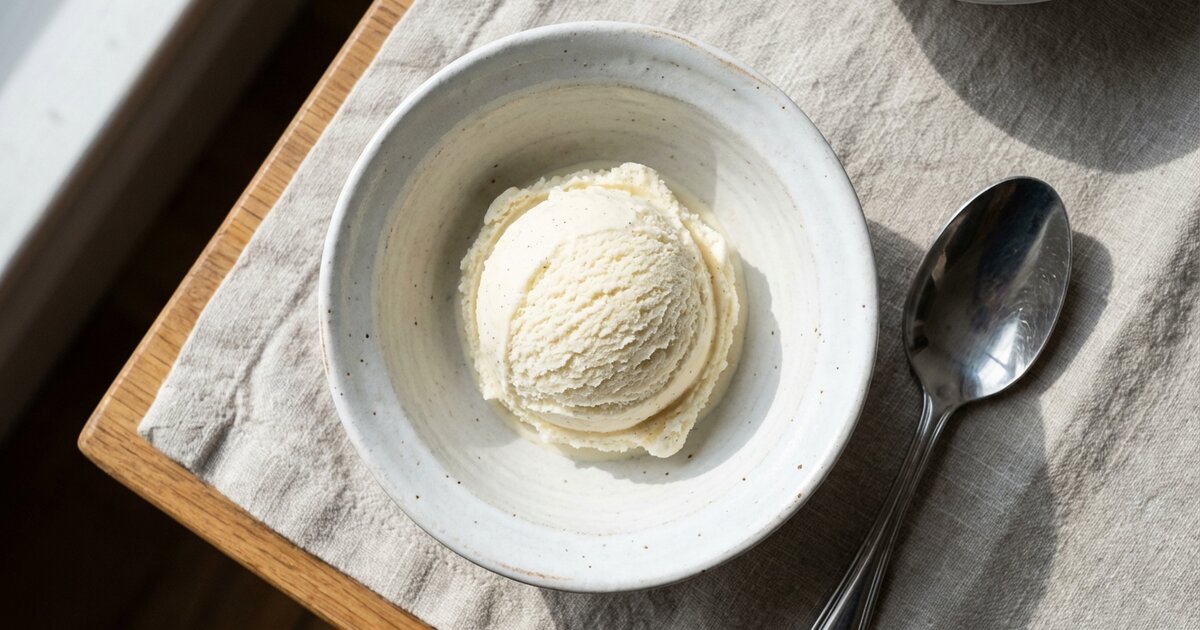
Ice cream is one of those foods people assume they can’t eat while tracking macros. Good news: you absolutely can. Ice cream has macros just like everything else—the key is understanding what you’re eating and making it fit.
The ice cream market has also exploded with options. Beyond classic Breyers and Ben & Jerry’s, you’ve got protein ice cream, keto ice cream, low-calorie ice cream, and everything in between. Some of these are legitimately useful for macro tracking; others are marketing gimmicks.
This guide covers it all: standard ice cream macros, how different brands compare, and strategies for enjoying ice cream without derailing your diet.
Ice Cream Macros: Quick Reference
Let’s start with vanilla ice cream—the baseline for understanding all ice cream nutrition.
Regular Vanilla Ice Cream (per 1/2 cup serving)
| Nutrient | Amount | % Daily Value |
|---|---|---|
| Calories | 137 | 7% |
| Total Fat | 7.3g | 9% |
| Saturated Fat | 4.5g | 23% |
| Carbohydrates | 14g | 5% |
| Sugar | 12g | - |
| Protein | 2.3g | 5% |
| Sodium | 53mg | 2% |
Per 100g (standardized)
| Nutrient | Amount |
|---|---|
| Calories | 207 |
| Fat | 11g |
| Carbs | 24g |
| Sugar | 21g |
| Protein | 3.5g |
Key insight: Ice cream is primarily fat and sugar with minimal protein. A serving delivers about 48% of calories from fat, 41% from carbs (mostly sugar), and only 7% from protein.
Ice Cream Macros by Flavor
Different flavors have different macros. Here’s how popular flavors compare (per 1/2 cup):
| Flavor | Calories | Fat | Carbs | Sugar | Protein |
|---|---|---|---|---|---|
| Vanilla | 137 | 7g | 14g | 12g | 2g |
| Chocolate | 143 | 7g | 17g | 14g | 3g |
| Strawberry | 127 | 6g | 15g | 13g | 2g |
| Cookies & Cream | 160 | 8g | 19g | 15g | 2g |
| Mint Chip | 170 | 10g | 18g | 16g | 3g |
| Cookie Dough | 180 | 9g | 22g | 18g | 3g |
| Butter Pecan | 165 | 11g | 14g | 12g | 3g |
| Rocky Road | 175 | 9g | 21g | 17g | 3g |
| Dulce de Leche | 170 | 8g | 22g | 19g | 3g |
| Peanut Butter | 185 | 12g | 16g | 14g | 5g |
Lower calorie options: Strawberry, vanilla, and simple fruit flavors Higher calorie options: Anything with candy, cookies, or nuts mixed in
Ice Cream Macros by Brand
Brand differences are significant—here’s how major players compare for vanilla (per 1/2 cup):
Regular/Premium Ice Cream
| Brand | Calories | Fat | Carbs | Sugar | Protein |
|---|---|---|---|---|---|
| Breyers Natural Vanilla | 130 | 7g | 14g | 14g | 2g |
| Turkey Hill | 140 | 8g | 16g | 13g | 2g |
| Blue Bunny | 130 | 7g | 15g | 12g | 2g |
| Dreyer’s/Edy’s | 130 | 7g | 15g | 13g | 2g |
| Häagen-Dazs | 250 | 17g | 20g | 19g | 4g |
| Ben & Jerry’s | 230 | 14g | 21g | 18g | 4g |
| Tillamook | 220 | 13g | 20g | 18g | 4g |
| Graeter’s | 280 | 18g | 24g | 22g | 5g |
Key observation: Premium brands (Häagen-Dazs, Ben & Jerry’s) have roughly double the calories of standard brands. The richness comes from more cream (fat) and often more sugar.
Light/Low-Calorie Ice Cream
| Brand | Calories | Fat | Carbs | Sugar | Protein |
|---|---|---|---|---|---|
| Halo Top (vanilla) | 70 | 2g | 14g | 5g | 5g |
| Enlightened | 80 | 2g | 14g | 4g | 6g |
| Yasso bars | 100 | 2g | 17g | 9g | 5g |
| So Delicious (dairy-free) | 130 | 5g | 20g | 14g | 1g |
| Arctic Zero | 35 | 0g | 8g | 2g | 2g |
| Breyers Delights | 90 | 3g | 14g | 4g | 5g |
| Nick’s | 90 | 6g | 13g | 0g | 4g |
The tradeoff: Low-calorie ice creams sacrifice fat for lower calories but often use sugar alcohols that can cause digestive issues for some people.
Protein Ice Cream
| Brand | Calories | Fat | Carbs | Protein | Per Pint |
|---|---|---|---|---|---|
| Halo Top | 280-360 | 8-20g | 52-64g | 20g | Full pint |
| Enlightened | 280-400 | 8-18g | 56-68g | 24g | Full pint |
| Rebel | 480-560 | 40-48g | 20-32g | 24g | Full pint (keto) |
| Nick’s | 320-480 | 24-36g | 48-64g | 16g | Full pint |
Per-pint stats matter for these brands since many people eat the whole container.
Understanding Ice Cream Serving Sizes
The “1/2 cup serving” on ice cream labels is notoriously unrealistic.
What’s Actually in That Pint?
A pint is 2 cups = 4 servings. But who eats 1/4 of a pint?
Realistic portions:
- “A few spoonfuls” = about 1/2 cup (1 serving)
- “A normal bowl” = about 1 cup (2 servings)
- “Eating from the pint” = easily 1-2 cups (2-4 servings)
- “The whole pint” = 4 servings worth
Ice Cream Shop Scoops
Ice cream shop scoops are larger than home servings:
- Small/kid scoop: ~3/4 cup = 1.5 servings
- Regular scoop: ~1 cup = 2 servings
- Large scoop: ~1.5 cups = 3 servings
That “one scoop” cone might be 400+ calories with premium ice cream.
How to Measure Accurately
- Use a kitchen scale: Weigh in grams for precision
- Use an actual measuring cup: Fill it, level it, that’s your portion
- Pre-portion containers: Scoop into small bowls before eating
- Choose bars/pops: Pre-portioned = no guesswork
Ice Cream for Different Diet Goals
Ice Cream for Weight Loss
Can you eat ice cream and lose weight? Yes—if you control portions and account for the calories.
Strategies:
- Budget for it: If you want ice cream after dinner, save 200-300 calories for it
- Choose lower-calorie options: Halo Top, Enlightened, etc.
- Pre-portion: Never eat from the container
- Pair strategically: Have fruit alongside for more volume
Sample day with ice cream (1,500 calorie budget):
- Breakfast: 400 cal
- Lunch: 400 cal
- Dinner: 500 cal
- Ice cream: 200 cal (1/2 cup premium or 1 cup light)
Works perfectly within a weight loss calorie target.
Use our Macro Calculator to determine your daily calorie needs.
Ice Cream for Muscle Building
Ice cream works for bulking—easy calories, some protein, enjoyable.
Bulking considerations:
- Premium ice cream is calorie-dense (good for hard gainers)
- Add protein powder to make a shake
- Combine with other nutrients for a complete meal
Post-workout ice cream shake:
- 1 cup ice cream: 274 cal, 4g protein
- 1 scoop whey protein: 120 cal, 24g protein
- 1 cup milk: 150 cal, 8g protein
- Total: 544 cal, 36g protein
High calorie, decent protein, delicious.
Ice Cream on Keto
Traditional ice cream won’t work on keto—too many carbs from sugar.
Keto-friendly ice cream options:
| Brand | Net Carbs | Fat | Notes |
|---|---|---|---|
| Rebel | 5-8g | 12-15g | Best taste for keto |
| Keto Pint | 4-6g | 14g | Very low carb |
| Enlightened Keto | 5g | 15g | Good variety |
| Halo Top Keto | 5-7g | 10g | Lighter texture |
These use sugar alcohols (erythritol, monk fruit) instead of sugar. Be aware that sugar alcohols can cause digestive upset in some people.
Ice Cream for Flexible Dieting/IIFYM
Ice cream is an IIFYM staple—the point is that anything can fit if you track it.
IIFYM approach:
- Track exactly what you eat
- Make room by eating lean/clean the rest of the day
- Don’t go overboard daily
- Enjoy without guilt when it fits
Learn more in our Flexible Dieting Guide.
Ice Cream vs Alternatives
Ice Cream vs Frozen Yogurt
| Per 1/2 Cup | Ice Cream | Frozen Yogurt |
|---|---|---|
| Calories | 137 | 110 |
| Fat | 7g | 3g |
| Carbs | 14g | 19g |
| Sugar | 12g | 17g |
| Protein | 2g | 3g |
The truth: Frozen yogurt trades fat for sugar. Total calories are similar. It’s not significantly “healthier”—just a different macro split.
Ice Cream vs Sorbet
| Per 1/2 Cup | Ice Cream | Sorbet |
|---|---|---|
| Calories | 137 | 120 |
| Fat | 7g | 0g |
| Carbs | 14g | 30g |
| Sugar | 12g | 28g |
| Protein | 2g | 0g |
Sorbet is fat-free but sugar-loaded. Lower calories, but almost entirely from simple carbs. Not inherently better.
Ice Cream vs Gelato
| Per 1/2 Cup | Ice Cream | Gelato |
|---|---|---|
| Calories | 137 | 160 |
| Fat | 7g | 5g |
| Carbs | 14g | 22g |
| Sugar | 12g | 18g |
| Protein | 2g | 4g |
Gelato is denser (less air incorporated) so you get more substance per volume—but also more sugar typically.
Ice Cream vs Nice Cream (Banana)
| Per 1/2 Cup | Ice Cream | Nice Cream |
|---|---|---|
| Calories | 137 | 89 |
| Fat | 7g | 0g |
| Carbs | 14g | 23g |
| Sugar | 12g | 12g |
| Protein | 2g | 1g |
| Fiber | 0g | 3g |
Nice cream (frozen blended bananas) is lower calorie with fiber, but it’s not really ice cream—it’s frozen fruit. Good option if you like it.
Low-Calorie Ice Cream: Worth It?
The “healthy ice cream” category exploded after Halo Top’s success. Here’s the honest assessment.
Pros
- Lower calories: Eat more for fewer calories (or a whole pint guilt-free)
- Higher protein: 5-7g per serving vs 2-3g regular
- Built-in portion control: You can eat more without going overboard
Cons
- Taste compromise: Most don’t taste as good as premium ice cream
- Texture: Often icier, less creamy
- Sugar alcohols: Can cause bloating, gas, or digestive discomfort
- Price: Often more expensive than regular ice cream
- Psychological: May trigger overeating (“it’s healthy so I can have more”)
Best Low-Calorie Options
- Halo Top - Good flavor variety, widely available
- Enlightened - Slightly better texture than Halo Top
- Nick’s - Swedish brand, excellent for being low-cal
- Yasso bars - Portion-controlled, good taste
When to Use Low-Calorie Ice Cream
- When you want ice cream but calories are tight
- When you tend to overeat regular ice cream
- When you want to eat more volume
When to Use Regular Ice Cream
- When you can control portions
- When you want maximum satisfaction from a smaller amount
- When quality matters more than quantity
How to Fit Ice Cream Into Your Macros
The Small Treat Approach
Have a little every day (or most days) rather than bingeing occasionally.
Daily ice cream budget example:
- 1/2 cup (137 cal) before bed
- Accounted for in daily calories
- Satisfies the craving
- Prevents deprivation-triggered binges
The Planned Indulgence Approach
Save it for specific occasions but enjoy fully when you do.
Special occasion strategy:
- Skip ice cream most days
- Once weekly, have a generous serving
- Don’t feel guilty about 400-500 calories on that occasion
- Average intake still low
The Substitution Approach
Replace other desserts with ice cream when it fits better.
Swaps that might improve your macros:
- Ice cream instead of cake (usually fewer calories)
- Ice cream instead of cookies (often more satisfying)
- Ice cream bar instead of candy bar (similar calories, more filling)
The Integration Approach
Use ice cream as part of a nutritious dessert:
Protein-boosted ice cream bowl:
- 1/2 cup vanilla ice cream
- 2 tbsp peanut butter
- 1 tbsp chocolate chips
- 1/2 banana
- Total: 400 cal, 10g protein
Fruit and ice cream:
- 1/2 cup ice cream
- 1 cup strawberries
- Drizzle of chocolate sauce
- Total: 200 cal, adds vitamins and fiber
Ice Cream Hacks for Better Macros
The Pre-Portion Trick
When you buy a pint, immediately portion it into small containers. You’ll eat what you planned, not what you feel like in the moment.
The Frozen Banana Base
Blend frozen banana with a small scoop of real ice cream. You get more volume for fewer calories, and it still tastes like ice cream.
The Protein Powder Mix-In
Add unflavored or vanilla protein powder to your ice cream. Per 1/2 scoop:
- Adds: 60 cal, 12g protein
- Changes texture slightly (thicker)
- Turns treat into quasi-meal
The Fruit Volume Extender
Top ice cream with lots of berries. You eat more food, stay fuller longer, and add nutrients.
The Air Factor
Let ice cream soften for 5-10 minutes before eating. It tastes richer and you’ll be satisfied with less.
Common Ice Cream Tracking Mistakes
Mistake 1: Using the Wrong Serving Size
That “1/2 cup” you eyeballed is probably 3/4-1 cup. Measure until you can eyeball accurately.
Mistake 2: Ignoring Toppings
- Hot fudge: 140 cal per 2 tbsp
- Whipped cream: 25 cal per 2 tbsp
- Sprinkles: 70 cal per 2 tbsp
- Caramel sauce: 120 cal per 2 tbsp
Your “one scoop with toppings” might be 500+ calories.
Mistake 3: Forgetting the Cone
- Sugar cone: 50 calories
- Waffle cone: 120-200 calories
- Chocolate-dipped waffle cone: 250+ calories
A waffle cone can be more calories than the ice cream itself.
Mistake 4: Averaging Brands
Ben & Jerry’s and Halo Top are not interchangeable for tracking. Use the specific brand’s nutrition information.
The Bottom Line on Ice Cream Macros
The facts:
- Ice cream is mostly fat and sugar with minimal protein
- A reasonable portion (1/2 cup) is 130-250 calories depending on brand
- Premium brands have roughly double the calories of regular
- Low-calorie alternatives are legitimate options but have tradeoffs
Best practices:
- Measure portions—never eat from the container
- Account for the calories in your daily budget
- Choose the ice cream you’ll actually enjoy eating
- Don’t vilify ice cream—it’s food with macros like anything else
- If you can’t control portions, buy bars or pre-portioned cups
The flexible dieting truth: Ice cream can fit into virtually any diet if you want it to. The question isn’t whether you can eat ice cream—it’s whether you’re willing to trade those macros for something else. Sometimes the answer is yes, and that’s perfectly fine.
For understanding how treats like ice cream fit into your overall nutrition, read What Are Macronutrients.
Related Articles
Dragonfruit Macros: Complete Nutrition Guide for Pitaya
Complete macro breakdown of dragonfruit (pitaya). Learn the calories, protein, carbs, and...
Read guide →
Bulgur Macros: Complete Nutritional Guide & Health Benefits
Discover bulgur's complete macro breakdown, nutritional benefits, and how to incorporate...
Read guide →
Radish Macros: Nutrition Facts and Health Benefits
Complete guide to radish macros and nutrition. Learn calories, protein, carbs, and health...
Read guide →Note: Nutrition values are approximate and may vary based on preparation method and source.