Kale Macros: Complete Nutrition Guide
Reviewed by Dr. Michael Torres, PhD
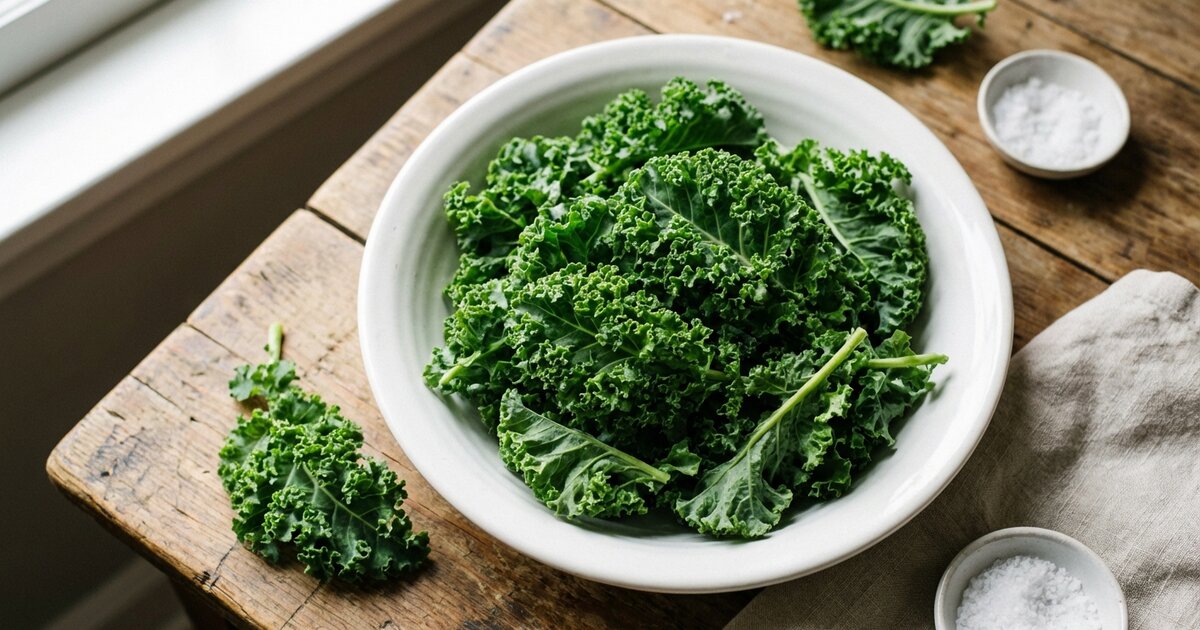
Kale earned its superfood reputation. Among leafy greens, it stands out for exceptional nutrient density—packed with vitamins, minerals, and fiber while being almost negligibly low in calories.
For macro trackers, kale is nearly a “free” food that happens to provide significant nutritional value. You can eat large quantities without impacting your calorie budget while getting vitamins you’d otherwise need supplements for.
This guide covers kale’s macros in detail, plus how to actually enjoy eating it (because raw kale straight from the bag isn’t winning any taste tests).
Kale Macros: Quick Reference
Here’s the complete breakdown for kale.
Per Cup Raw, Chopped (67g)
| Nutrient | Amount | % Daily Value |
|---|---|---|
| Calories | 33 | 2% |
| Protein | 2.9g | 6% |
| Total Carbs | 6.7g | 2% |
| Fiber | 2.4g | 9% |
| Net Carbs | 4.3g | - |
| Fat | 0.5g | 1% |
| Vitamin K | 547mcg | 684% |
| Vitamin A | 10,302 IU | 206% |
| Vitamin C | 80mg | 134% |
| Manganese | 0.5mg | 26% |
| Calcium | 90mg | 9% |
Per Cup Cooked, Boiled (130g)
| Nutrient | Amount | % Daily Value |
|---|---|---|
| Calories | 36 | 2% |
| Protein | 2.5g | 5% |
| Total Carbs | 7.3g | 3% |
| Fiber | 2.6g | 9% |
| Net Carbs | 4.7g | - |
| Fat | 0.5g | 1% |
| Vitamin K | 1,062mcg | 1,328% |
| Vitamin A | 17,707 IU | 354% |
| Vitamin C | 53mg | 89% |
Per 100g (Raw)
| Nutrient | Amount |
|---|---|
| Calories | 49 |
| Protein | 4.3g |
| Carbs | 10g |
| Fiber | 3.6g |
| Fat | 0.9g |
Key insight: Cooking kale concentrates nutrients (more vitamins per cup) because the volume shrinks dramatically. One cup raw becomes about 1/2 cup cooked.
Kale Types Compared
Curly Kale
| Per Cup Raw | Amount |
|---|---|
| Calories | 33 |
| Texture | Ruffly, crunchy |
| Best for | Salads, chips |
Most common variety. Sturdy leaves, slightly bitter.
Lacinato (Dinosaur/Tuscan) Kale
| Per Cup Raw | Amount |
|---|---|
| Calories | 33 |
| Texture | Flat, bumpy |
| Best for | Cooking, soups |
Darker leaves, more tender, slightly sweeter. Often preferred for cooking.
Red/Purple Kale
| Per Cup Raw | Amount |
|---|---|
| Calories | 33 |
| Texture | Similar to curly |
| Best for | Salads (color) |
Beautiful color, similar nutrition. Contains additional anthocyanin antioxidants.
Baby Kale
| Per Cup Raw | Amount |
|---|---|
| Calories | 20 |
| Texture | Tender, mild |
| Best for | Salads, smoothies |
Young leaves harvested early. More tender, less bitter, easier to eat raw.
Nutritionally nearly identical—choose based on texture preference and use case.
Kale vs Other Leafy Greens
How does kale compare to other popular greens?
| Green (1 cup raw) | Calories | Protein | Fiber | Vit K | Vit A | Vit C |
|---|---|---|---|---|---|---|
| Kale | 33 | 2.9g | 2.4g | 684% | 206% | 134% |
| Spinach | 7 | 0.9g | 0.7g | 181% | 56% | 14% |
| Swiss chard | 7 | 0.6g | 0.6g | 374% | 44% | 18% |
| Romaine | 8 | 0.6g | 1g | 48% | 82% | 4% |
| Arugula | 5 | 0.5g | 0.3g | 27% | 9% | 5% |
| Collard greens | 11 | 1g | 1.4g | 230% | 48% | 21% |
Kale wins decisively on most nutrients, especially vitamins K, A, and C. It also has more protein than other leafy greens.
See also: Spinach Macros | Broccoli Macros
The Nutrient Density of Kale
Kale ranks among the most nutrient-dense foods on earth. Per calorie, very few foods deliver more nutrition.
Standout Nutrients (Per Cup Raw)
| Nutrient | Amount | Context |
|---|---|---|
| Vitamin K | 684% DV | One of the highest sources |
| Vitamin A | 206% DV | From beta-carotene |
| Vitamin C | 134% DV | More than an orange |
| Manganese | 26% DV | Important mineral |
| Copper | 10% DV | Trace mineral |
Why This Matters
These nutrients support:
- Vitamin K: Blood clotting, bone health
- Vitamin A: Vision, immune function, skin
- Vitamin C: Collagen, immunity, antioxidant
- Manganese: Bone health, metabolism
- Antioxidants: Cell protection, anti-inflammatory
One cup of kale provides your entire day’s vitamin K needs and then some.
Kale for Different Diet Goals
Kale for Weight Loss
Verdict: Excellent weight loss food.
Why kale works for weight loss:
- Extremely low calorie density (33 cal/cup)
- High volume fills your stomach
- Fiber (2.4g/cup) increases satiety
- Nutrient-dense—prevents deficiencies during cutting
Weight loss strategy:
- Start meals with a large kale salad (50-100 cal)
- Add kale to smoothies for volume
- Use as side dish instead of starchy foods
- Eat kale chips instead of regular chips
Calorie comparison:
- 3 cups kale salad with dressing: ~200 cal
- Caesar salad with croutons: ~400+ cal
Use our Macro Calculator to plan your daily intake.
Kale on Keto
Verdict: Perfect keto food.
Per cup raw: Only 4.3g net carbs
Kale is one of the lowest-carb vegetables. Eat freely on any low-carb or keto diet.
Keto kale uses:
- Salad base
- Sautéed in olive oil/butter
- Chips for crunchy snacking
- Smoothie base (use sparingly—adds up)
Kale for Muscle Building
Verdict: Supportive but not a primary food.
Kale provides:
- Some protein (2.9g/cup raw)
- Volume for meal satisfaction
- Nutrients that support recovery
Use kale in muscle-building meals:
- Side dish with protein mains
- Salads topped with chicken/steak
- Smoothies with protein powder
Kale for IIFYM/Flexible Dieting
Kale is essentially a “free” food for flexible dieters. Track it for completeness, but it won’t significantly impact your macros.
Learn more in our Flexible Dieting Guide.
How to Actually Enjoy Eating Kale
Let’s be honest: raw kale straight from the bag isn’t pleasant. Here’s how to make it genuinely enjoyable.
Massage Your Kale (Really)
For raw kale salads:
- Remove stems, chop leaves
- Add salt and olive oil
- Massage with hands for 2-3 minutes
- Kale becomes softer, less bitter, more palatable
This breaks down the cell structure and makes raw kale actually enjoyable.
Kale Salad (Massaged)
- 2 cups kale, massaged: 66 cal
- Lemon juice: 5 cal
- 1 tbsp olive oil: 120 cal
- Parmesan (1 tbsp): 22 cal
- Pine nuts (1 tbsp): 57 cal
- Total: 270 cal, nutrient-packed meal base
Add protein to make it a complete meal.
Kale Chips
- Tear kale into chip-sized pieces
- Toss with 1 tsp olive oil and salt
- Bake at 275°F for 20-25 minutes until crispy
- Season with nutritional yeast, garlic powder, etc.
Per serving: ~50 cal Satisfies: Chip cravings without the calories
Sautéed Kale
- Heat olive oil in pan
- Add garlic, sauté 30 seconds
- Add kale, cook 3-5 minutes until wilted
- Season with salt, pepper, lemon juice
Per cup cooked: ~70 cal (including oil) Best for: Side dish with any protein
Smoothie Addition
Add 1 cup kale to any fruit smoothie:
- Nearly undetectable in flavor
- Adds nutrients
- Adds fiber
- Adds volume
Green smoothie base:
- 1 cup kale: 33 cal
- 1 banana: 105 cal
- 1 cup almond milk: 30 cal
- Protein powder: ~120 cal
- Total: 288 cal, extremely nutritious
Soup Addition
Add chopped kale to any soup in the last 5 minutes of cooking. It wilts quickly and adds nutrition to:
- Chicken soup
- Minestrone
- Lentil soup
- Bean soup
Raw vs Cooked Kale
Raw Kale Benefits
- Preserves vitamin C (heat-sensitive)
- Preserves certain enzymes
- Crunchier texture
- No added cooking fats needed
Cooked Kale Benefits
- Reduces volume dramatically (easier to eat more)
- Deactivates goitrogens (thyroid concern)
- May increase mineral absorption
- Milder flavor
- Better for some digestive systems
The Verdict
Eat both. Raw in salads and smoothies, cooked as sides and in soups. Variety provides the benefits of each.
Health Considerations
Vitamin K and Blood Thinners
Kale is extremely high in vitamin K. If you take blood thinners (warfarin/Coumadin):
- Don’t avoid kale entirely
- Maintain consistent intake
- Don’t dramatically increase/decrease consumption
- Work with your doctor
Thyroid Concerns
Kale contains goitrogens—compounds that may interfere with thyroid function in large amounts.
For most people: Not a concern with normal consumption
For those with thyroid issues:
- Cooking reduces goitrogens
- Moderate raw kale intake
- Discuss with your doctor
Oxalates
Kale contains oxalates, which can contribute to kidney stones in susceptible people.
For most people: Not a concern
For kidney stone history: Moderate consumption, stay hydrated
Kale Meal Ideas
Breakfast
Green eggs scramble:
- 2 eggs: 180 cal, 12g protein
- 1 cup sautéed kale: 50 cal
- Feta cheese (1 oz): 75 cal
- Total: 305 cal, 17g protein
Lunch
Kale Caesar salad:
- 3 cups massaged kale: 99 cal
- Caesar dressing (2 tbsp): 170 cal
- Grilled chicken (4 oz): 180 cal
- Parmesan: 40 cal
- Total: 489 cal, 40g protein
Dinner Side
Garlic sautéed kale:
- 2 cups kale: 66 cal
- 1 tbsp olive oil: 120 cal
- Garlic, lemon, salt: 5 cal
- Total: 191 cal, pairs with any protein
Snack
Kale chips:
- 3 cups kale: 99 cal
- 1 tsp olive oil: 40 cal
- Seasonings: 0 cal
- Total: ~140 cal after baking (water loss)
Compare with Cucumber Macros and Zucchini Macros for other low-calorie vegetables.
Common Kale Questions
Does Kale Have Complete Protein?
No. Like all plant foods, kale doesn’t have complete protein. However, eating varied foods throughout the day provides all essential amino acids.
Is Bagged Pre-Washed Kale Good?
Yes, nutritionally similar to fresh bunches. Convenience is a valid reason to choose it. Just check for freshness and use before expiration.
Can I Freeze Kale?
Yes:
- Blanch briefly (2 minutes)
- Ice bath to stop cooking
- Dry thoroughly
- Freeze in portions
Good for smoothies; texture won’t work for salads after freezing.
Why Is My Kale Bitter?
Bitterness comes from:
- Mature leaves (younger is milder)
- Growing conditions
- Variety (curly tends to be more bitter)
Solutions: Massage with salt/oil, cook it, or choose baby kale.
The Bottom Line on Kale Macros
The facts:
- 33 calories per cup raw—nearly negligible
- 2.9g protein—high for a leafy green
- 4.3g net carbs—very low
- Extraordinary vitamin K, A, and C content
- Good source of fiber and antioxidants
Best uses:
- Weight loss (volume with minimal calories)
- Nutrient boost in any diet
- Salads (massaged for palatability)
- Smoothies (hidden nutrition)
- Chips (healthy snack substitute)
- Sautéed sides
Bottom line: Kale genuinely deserves its superfood status. It delivers exceptional nutrition for virtually no caloric cost. The key is preparing it well—massaged salads, crispy chips, or quick sautés—rather than suffering through bitter raw leaves.
If you’re not eating kale, you’re missing one of the easiest ways to increase nutrient density while cutting calories.
For understanding how kale fits into your overall nutrition picture, read What Are Macronutrients.
Related Articles
Dragonfruit Macros: Complete Nutrition Guide for Pitaya
Complete macro breakdown of dragonfruit (pitaya). Learn the calories, protein, carbs, and...
Read guide →
Bulgur Macros: Complete Nutritional Guide & Health Benefits
Discover bulgur's complete macro breakdown, nutritional benefits, and how to incorporate...
Read guide →
Radish Macros: Nutrition Facts and Health Benefits
Complete guide to radish macros and nutrition. Learn calories, protein, carbs, and health...
Read guide →Note: Nutrition values are approximate and may vary based on preparation method and source.