Kiwi Macros: Complete Nutritional Breakdown & Tracking Guide
Introduction
Kiwi fruit is one of nature’s most nutrient-dense offerings, packing an impressive vitamin C content (more than oranges) into a small, low-calorie package. Whether you’re tracking macros for weight loss, muscle gain, or general health optimization, understanding kiwi’s nutritional profile helps you incorporate this vibrant green fruit strategically into your meal plan.
This comprehensive guide breaks down kiwi macros in detail, compares different varieties, provides practical tracking strategies, and shows you how to maximize kiwi’s nutritional benefits while staying aligned with your macro targets. From raw kiwi to dried versions and everything in between, you’ll learn exactly how this fuzzy fruit fits into your nutrition goals.
Ready to dial in your kiwi intake? Start with our macro calculator to determine your personalized macro targets, then use this guide to incorporate kiwi strategically throughout your day.
Complete Kiwi Macro Breakdown
Fresh Green Kiwi (Standard)
Per Medium Kiwi (69g):
- Calories: 42
- Protein: 0.8g
- Carbohydrates: 10g
- Fiber: 2g
- Sugars: 6g
- Net Carbs: 8g
- Fat: 0.4g
- Saturated: 0g
- Monounsaturated: 0g
- Polyunsaturated: 0.2g
Per 100g:
- Calories: 61
- Protein: 1.1g
- Carbohydrates: 15g
- Fiber: 3g
- Sugars: 9g
- Net Carbs: 12g
- Fat: 0.5g
Golden Kiwi
Per Medium Kiwi (75g):
- Calories: 56
- Protein: 1.0g
- Carbohydrates: 13g
- Fiber: 2g
- Sugars: 10g
- Net Carbs: 11g
- Fat: 0.5g
Golden kiwi tends to be slightly sweeter and larger than green kiwi, resulting in marginally higher calorie and carbohydrate content.
Dried Kiwi
Per 40g serving (about 5-6 pieces):
- Calories: 140
- Protein: 2.0g
- Carbohydrates: 33g
- Fiber: 3g
- Sugars: 28g
- Net Carbs: 30g
- Fat: 1.0g
The dehydration process concentrates both nutrients and calories, making dried kiwi approximately 3-4x more calorie-dense than fresh kiwi. Watch portions carefully when tracking macros.
Key Nutritional Highlights
Micronutrients
Beyond macros, kiwi delivers exceptional micronutrient density:
Vitamin C: One medium kiwi provides 64mg of vitamin C - 71% of the Daily Value. This exceeds the vitamin C content of a medium orange (51mg), making kiwi one of the top vitamin C sources among common fruits.
Vitamin K: Kiwi contains 28mcg of vitamin K per fruit (23% DV), supporting blood clotting and bone health.
Vitamin E: With 1mg per fruit (7% DV), kiwi provides valuable antioxidant protection.
Potassium: Each kiwi delivers 215mg potassium (5% DV), supporting heart health and blood pressure regulation.
Folate: Kiwi provides 17mcg folate per fruit (4% DV), important for cell division and DNA synthesis.
Fiber Content
The 2g of fiber per kiwi (8% DV) consists of both soluble and insoluble fiber. Soluble fiber helps regulate blood sugar and cholesterol levels, while insoluble fiber supports digestive health and regularity. The fiber-to-carb ratio of approximately 1:5 makes kiwi a smart carbohydrate choice for those managing blood sugar.
Antioxidants
Kiwi contains powerful antioxidants including:
- Actinidin: A unique enzyme that aids protein digestion
- Polyphenols: Plant compounds with anti-inflammatory properties
- Carotenoids: Including lutein and zeaxanthin for eye health
- Chlorophyll: The green pigment with detoxifying properties
These compounds work synergistically to reduce oxidative stress, support immune function, and protect against chronic disease.
Kiwi Varieties and Macro Differences
Green Kiwi (Hayward)
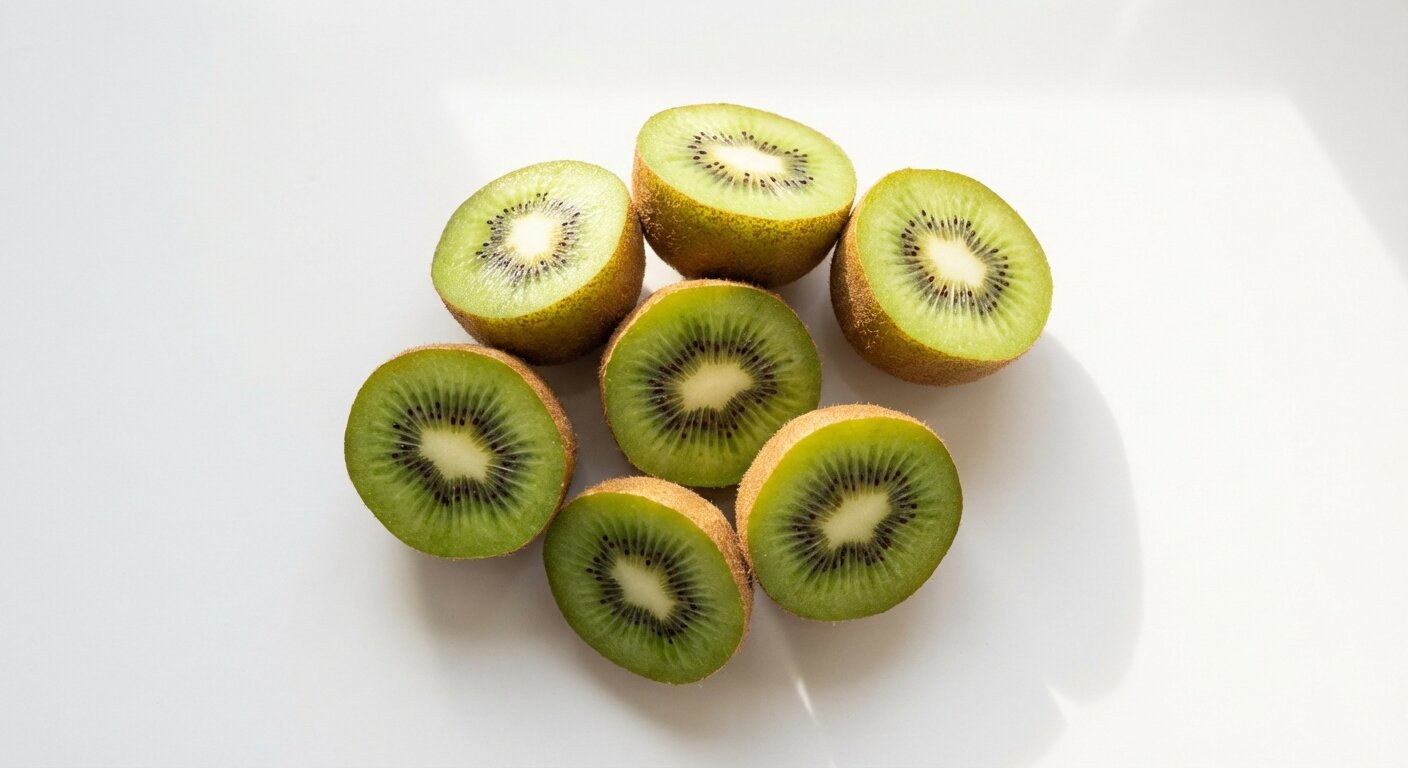
The most common variety worldwide, green kiwi has fuzzy brown skin, bright green flesh, and small black seeds arranged in a star pattern. It offers a tart-sweet flavor balance and contains slightly less sugar than golden varieties.
Best for: Lower sugar intake, traditional kiwi flavor, higher vitamin C content
Golden Kiwi (Zespri SunGold)
Smooth, bronze skin with yellow-gold flesh and a sweeter, tropical flavor profile. Golden kiwi contains about 40% more vitamin C than green kiwi and has a lower acidity level.
Best for: Those sensitive to acidic foods, sweeter fruit preferences, maximum vitamin C intake
Baby Kiwi (Kiwi Berries)
Grape-sized, smooth-skinned kiwi that can be eaten whole. Similar macro profile to green kiwi but in a smaller package (approximately 10-15 calories per berry).
Best for: Convenient snacking, kids’ lunches, portion control
Red Kiwi
A specialty variety with red-purple flesh and sweet berry flavor. Slightly higher in anthocyanins (antioxidants) but similar macro profile to green kiwi.
Best for: Variety, additional antioxidants, visual appeal in fruit salads
How to Track Kiwi Macros Accurately
Weighing Methods
With Skin (Recommended for Accuracy):
- Weigh the whole kiwi
- Use the “per 100g” macro values
- Account for skin waste (approximately 15-20% of total weight)
- More accurate for larger or smaller kiwi
Without Skin (Simplest):
- Peel the kiwi
- Weigh the flesh only
- Use “per 100g” values directly
- Most accurate but requires extra prep time
By Count (Quick Estimate):
- Use “medium kiwi” values (42 calories)
- Adjust for obviously larger or smaller fruit
- Good for meal prep and planning
- Less precise but convenient
Common Portion Sizes
1 Medium Kiwi (69g): 42 calories - Ideal for snacks, fruit salads, or adding to breakfast
2 Medium Kiwis (138g): 84 calories - Common serving size for smoothies or post-workout
3 Medium Kiwis (207g): 126 calories - Full fruit serving for those with higher calorie targets
100g Kiwi (approximately 1.5 medium): 61 calories - Standard nutrition label serving
Tracking Apps
MyFitnessPal: Search “Kiwi fruit, fresh” or scan barcode on packaged kiwi. Verify entry shows approximately 42 calories per medium fruit.
Cronometer: Database includes detailed micronutrient data. Use “Kiwifruit, green, raw” for most accurate tracking.
LoseIt: Search “Kiwi, raw” and select USDA entry for standardized values.
MacroFactor: Automatically adjusts recommendations based on your kiwi intake and overall macro trends.
Kiwi for Different Macro Goals
Weight Loss (Calorie Deficit)
Kiwi excels in weight loss scenarios due to its high satiety-to-calorie ratio. The 2g fiber per 42 calories provides substantial fullness, while the high water content (83%) adds volume without adding calories.
Strategies:
- Eat kiwi as a pre-meal appetizer to reduce overall meal calorie intake
- Use frozen kiwi chunks in protein shakes to add volume and sweetness without excessive calories
- Replace higher-calorie desserts with 2-3 sliced kiwis topped with a dollop of Greek yogurt (under 150 calories total)
- Freeze kiwi slices for a naturally sweet, low-calorie frozen treat
Sample Day (1,500 calorie target):
- Breakfast: 2 kiwis with Greek yogurt (165 calories, 15g protein)
- Lunch: Grilled chicken salad with kiwi slices (380 calories)
- Snack: 1 kiwi (42 calories)
- Dinner: Salmon with vegetables (650 calories)
- Evening: Protein shake (263 calories)
Total kiwi: 3 fruits = 126 calories (8% of daily intake)
Muscle Gain (Calorie Surplus)
While kiwi provides minimal protein, it offers valuable micronutrients that support muscle recovery and immune function during intensive training phases.
Strategies:
- Pair kiwi with protein sources (cottage cheese, Greek yogurt, protein shakes) for balanced post-workout meals
- Use kiwi’s natural sugars for pre-workout quick energy (consume 1-2 kiwis 30-60 minutes before training)
- Add kiwi to mass gainer smoothies for additional vitamins without excessive calories
- Blend frozen kiwi into overnight oats with protein powder for nutrient-dense breakfasts
Sample Day (3,000 calorie target):
- Breakfast: Oatmeal with banana, kiwi, and protein powder (650 calories)
- Snack: 2 kiwis with almond butter (180 calories)
- Lunch: Rice bowl with chicken and vegetables (850 calories)
- Pre-workout: Kiwi smoothie (250 calories)
- Post-workout: Protein shake (300 calories)
- Dinner: Pasta with meat sauce (770 calories)
Total kiwi: 4-5 fruits = 168-210 calories (6-7% of daily intake)
Maintenance (Balanced Macros)
For those maintaining weight, kiwi provides flexible macro-friendly nutrition that fits various dietary patterns.
Strategies:
- Include 1-2 kiwis daily as part of your fruit servings
- Use kiwi to add variety to your carbohydrate sources
- Rotate between kiwi and other fruits based on seasonality and preference
- Incorporate kiwi into both sweet and savory dishes for nutritional diversity
Sample Day (2,000 calorie target):
- Breakfast: Smoothie bowl with kiwi topping (380 calories)
- Lunch: Turkey sandwich with side salad (520 calories)
- Snack: 2 kiwis (84 calories)
- Dinner: Stir-fry with rice (780 calories)
- Evening: Dark chocolate (236 calories)
Total kiwi: 3 fruits = 126 calories (6% of daily intake)
Low-Carb and Ketogenic Diets
Kiwi presents challenges for very low-carb approaches but can fit into moderate low-carb diets (50-100g carbs daily).
Carb Counts:
- 1 kiwi = 8g net carbs
- 2 kiwis = 16g net carbs
- 3 kiwis = 24g net carbs
Strategies for Low-Carb:
- Limit to 1 kiwi daily to preserve carb budget for other foods
- Choose berries (lower net carbs) when total carbs must stay under 30g daily
- Save kiwi for post-workout when insulin sensitivity is highest
- Consider skipping kiwi entirely on strict keto (under 20g net carbs daily)
Strict Keto (20-25g net carbs): Kiwi is generally too carb-dense. One small kiwi uses 40% of your daily carb budget.
Moderate Keto (25-50g net carbs): One kiwi daily is manageable. Time it strategically around workouts.
Liberal Low-Carb (50-100g net carbs): 1-2 kiwis fit comfortably into daily carb allowance.
Best Times to Eat Kiwi for Macro Optimization
Pre-Workout (30-60 Minutes Before)
The 10g carbs per kiwi provide quick-digesting energy for training sessions. The low fat content ensures rapid gastric emptying, minimizing digestive discomfort during exercise.
Ideal for: Morning workouts, endurance training, moderate-intensity cardio
Avoid: Immediately before high-intensity interval training (wait 60-90 minutes for complete digestion)
Post-Workout (Within 2 Hours)
Kiwi’s carbohydrates help replenish glycogen stores, while vitamin C supports collagen synthesis for tissue repair. Pair with protein for optimal recovery.
Combinations:
- Kiwi + Greek yogurt = Complete recovery meal
- Kiwi + protein shake = Quick absorption
- Kiwi + cottage cheese = Sustained amino acid release
With Breakfast
Morning consumption takes advantage of higher insulin sensitivity after the overnight fast, allowing for better nutrient partitioning.
Breakfast Ideas:
- Kiwi sliced over oatmeal with protein powder
- Kiwi smoothie bowl with granola and nut butter
- Kiwi parfait with Greek yogurt and berries
- Sliced kiwi alongside eggs and whole grain toast
Evening Snack
Despite its sugar content, kiwi’s fiber and micronutrients make it a superior evening snack compared to processed foods. Some research suggests kiwi may support sleep quality due to its serotonin content.
Evening Options:
- 2 kiwis with herbal tea (under 100 calories)
- Kiwi with a small handful of nuts (balanced snack)
- Frozen kiwi “nice cream” (blend frozen kiwi chunks until smooth)
Common Kiwi Tracking Mistakes to Avoid
Forgetting the Skin Weight
Whole kiwi weight includes the inedible skin (15-20% of total weight). When using generic “1 medium kiwi” entries, this is already accounted for. When weighing whole kiwi and using “per 100g” values, you’ll slightly overestimate calories unless you subtract skin weight.
Solution: Either weigh only the flesh after peeling, or use the “medium kiwi” entry which already accounts for skin waste.
Not Adjusting for Kiwi Size Variation
“Medium” kiwi ranges from 60-80g. A large kiwi (100g) contains 61 calories - 45% more than a small kiwi (50g) at 31 calories.
Solution: Weigh individual kiwis at least once to understand your typical size, then adjust generic entries accordingly.
Overlooking Added Ingredients
Kiwi in fruit salads, yogurt parfaits, or smoothies often comes with added sugars, honey, sweetened yogurt, or juice that significantly increase total macros.
Solution: Track all components separately. A “fruit salad” entry may have 200+ calories from added sugar syrup that you didn’t account for.
Miscounting Dried Kiwi Portions
Dried kiwi is 3-4x more calorie-dense than fresh. A 40g serving (5-6 pieces) contains 140 calories - more than 3 fresh kiwis.
Solution: Weigh dried fruit rather than counting pieces. Pre-portion into snack bags to prevent overeating.
Assuming All Varieties Are Equal
Golden kiwi contains approximately 30% more calories and carbs than green kiwi of the same size.
Solution: Select the correct variety in your tracking app, or default to the higher-calorie option when uncertain.
Creative Kiwi Recipes for Macro Tracking
High-Protein Kiwi Parfait
Macros (per serving):
- Calories: 245
- Protein: 28g
- Carbs: 25g
- Fat: 4g
Ingredients:
- 1 cup plain Greek yogurt (170g)
- 2 medium kiwis, diced
- 1 tbsp honey
- 2 tbsp low-fat granola
Preparation:
- Layer Greek yogurt in a glass or bowl
- Add diced kiwi on top
- Drizzle with honey
- Top with granola
- Serve immediately or refrigerate up to 4 hours
Kiwi Green Smoothie
Macros (per serving):
- Calories: 295
- Protein: 27g
- Carbs: 42g
- Fat: 3g
Ingredients:
- 2 medium kiwis, peeled
- 1 cup spinach
- 1 banana
- 1 scoop vanilla protein powder
- 1 cup unsweetened almond milk
- 1/2 cup ice
Preparation:
- Combine all ingredients in blender
- Blend until smooth and creamy
- Add more liquid if too thick
- Pour into glass and serve immediately
Kiwi Salsa (Low-Calorie Side)
Macros (per 1/2 cup serving):
- Calories: 65
- Protein: 1g
- Carbs: 15g
- Fat: 0g
Ingredients:
- 3 medium kiwis, diced small
- 1/4 red onion, finely chopped
- 1 jalapeño, seeded and minced
- Juice of 1 lime
- 2 tbsp fresh cilantro, chopped
- Pinch of salt
Preparation:
- Combine all ingredients in a bowl
- Refrigerate for 30 minutes to allow flavors to meld
- Serve with grilled fish, chicken, or whole grain crackers
Pairing suggestions: This salsa adds just 65 calories to grilled proteins while providing vitamin C and fiber.
Frozen Kiwi Popsicles
Macros (per popsicle):
- Calories: 52
- Protein: 0.8g
- Carbs: 12g
- Fat: 0.4g
Ingredients:
- 4 medium kiwis, peeled and blended
- 1/4 cup water or coconut water
- 1 tsp honey (optional)
Preparation:
- Blend kiwis with liquid until smooth
- Pour into popsicle molds
- Freeze for 4-6 hours
- Run mold under warm water briefly to release
Perfect for: Low-calorie dessert alternative, post-workout treat, kids’ snacks
Kiwi Overnight Oats
Macros (per serving):
- Calories: 385
- Protein: 20g
- Carbs: 58g
- Fat: 8g
Ingredients:
- 1/2 cup rolled oats
- 3/4 cup unsweetened almond milk
- 1 scoop vanilla protein powder
- 2 medium kiwis, diced
- 1 tbsp chia seeds
- 1 tsp honey
Preparation:
- Mix oats, almond milk, and protein powder in a jar
- Stir in chia seeds
- Refrigerate overnight (6-12 hours)
- Top with fresh kiwi and honey before serving
Meal prep tip: Prepare 4-5 jars at once for grab-and-go breakfasts throughout the week. Add fresh kiwi each morning for best texture.
Kiwi vs. Other Fruits: Macro Comparison
Kiwi vs. Banana
Per 100g:
- Kiwi: 61 cal | 1.1g protein | 15g carbs | 0.5g fat
- Banana: 89 cal | 1.1g protein | 23g carbs | 0.3g fat
Winner for weight loss: Kiwi (31% fewer calories) Winner for pre-workout carbs: Banana (53% more carbs) Winner for vitamin C: Kiwi (154mg vs 9mg)
Kiwi vs. Strawberries
Per 100g:
- Kiwi: 61 cal | 1.1g protein | 15g carbs | 0.5g fat
- Strawberries: 32 cal | 0.7g protein | 8g carbs | 0.3g fat
Winner for weight loss: Strawberries (47% fewer calories) Winner for fiber: Tie (3g each) Winner for vitamin C: Tie (both excellent sources)
Kiwi vs. Orange
Per 100g:
- Kiwi: 61 cal | 1.1g protein | 15g carbs | 0.5g fat
- Orange: 47 cal | 0.9g protein | 12g carbs | 0.1g fat
Winner for weight loss: Orange (23% fewer calories) Winner for vitamin C: Kiwi (92mg vs 53mg) Winner for fiber: Orange (2.4g vs 3g - nearly tied)
Kiwi vs. Apple
Per 100g:
- Kiwi: 61 cal | 1.1g protein | 15g carbs | 0.5g fat
- Apple: 52 cal | 0.3g protein | 14g carbs | 0.2g fat
Winner for weight loss: Apple (17% fewer calories) Winner for protein: Kiwi (267% more protein) Winner for vitamin C: Kiwi (92mg vs 5mg)
When to Choose Kiwi Over Other Fruits
Choose kiwi when:
- You need maximum vitamin C intake
- You want a unique, tropical flavor profile
- You’re looking for digestive enzyme benefits (actinidin)
- You prefer higher protein content (among fruits)
Choose other fruits when:
- Calories must be minimal (choose berries)
- You need quick pre-workout carbs (choose banana)
- You want the lowest cost option (choose apples or bananas)
- You need very low net carbs (choose berries)
Special Dietary Considerations
Diabetes and Blood Sugar Management
Kiwi has a glycemic index (GI) of 52, classified as low-GI, meaning it causes a gradual rise in blood sugar rather than sharp spikes. The 2g fiber per fruit further slows glucose absorption.
Recommendations:
- Pair kiwi with protein or healthy fats to further reduce glycemic impact
- Monitor individual blood glucose response (varies by person)
- Consider eating kiwi with meals rather than alone
- Stick to 1-2 kiwis at a time to manage total carb load
Digestive Issues and IBS
Kiwi’s enzyme actinidin aids protein digestion and may help alleviate constipation. Some research suggests 2 kiwis daily improves bowel movements in people with IBS-C (constipation-predominant).
Cautions:
- Some individuals with IBS-D (diarrhea-predominant) may experience increased symptoms due to kiwi’s high fructose content
- FODMAPs: Kiwi is considered low-FODMAP in servings of 2 fruit or less
- Start with 1 kiwi and assess tolerance before increasing
Allergies and Intolerances
Kiwi allergy affects approximately 1-2% of the population. Symptoms range from oral allergy syndrome (tingling/itching in the mouth) to severe anaphylaxis.
Cross-reactivities:
- Latex allergy (up to 80% cross-reactivity with kiwi)
- Birch pollen allergy
- Other fruits: banana, avocado, papaya
Solution: If you experience any allergic symptoms after eating kiwi, discontinue consumption and consult an allergist.
Kidney Health
Kiwi’s moderate potassium content (215mg per fruit, 5% DV) is generally safe for those with healthy kidneys but may need monitoring for individuals with chronic kidney disease (CKD) on potassium-restricted diets.
Recommendations for CKD:
- Consult your nephrologist or renal dietitian before adding kiwi
- Consider lower-potassium fruits like apples, berries, or grapes
- Track total daily potassium intake carefully
Kiwi Storage and Shelf Life
Ripening
Unripe kiwi is hard and tart. Ripe kiwi yields slightly to gentle pressure and has a sweet, aromatic smell near the stem end.
To ripen faster:
- Store at room temperature in a paper bag with an apple or banana (ethylene gas accelerates ripening)
- Check daily - kiwi can go from unripe to overripe quickly
To slow ripening:
- Refrigerate unripe kiwi (slows process significantly)
- Store away from ethylene-producing fruits
Storage Guidelines
Unripe kiwi: Room temperature for 3-5 days or refrigerator for up to 1 month
Ripe kiwi: Refrigerator for 5-7 days
Cut kiwi: Airtight container in refrigerator for 2-3 days (oxidation causes browning but doesn’t affect safety)
Frozen kiwi: Freezer bag for up to 10-12 months (best used in smoothies or cooked applications)
Freezing for Meal Prep
Frozen kiwi maintains most nutritional value and works perfectly in smoothies or protein shakes.
Method:
- Peel and slice kiwi into rounds or dice into chunks
- Spread on a parchment-lined baking sheet
- Freeze for 2-3 hours until solid
- Transfer to freezer bags, removing excess air
- Store for up to 1 year
Macro note: Frozen kiwi has identical macros to fresh kiwi (no calories lost or gained during freezing).
Frequently Asked Questions
How many macros are in one kiwi?
One medium kiwi (69g) contains approximately 42 calories with the following macro breakdown: 0.8g protein, 10g carbohydrates (including 2g fiber and 6g natural sugars), and 0.4g fat. The majority of calories come from carbohydrates, making kiwi a low-calorie, nutrient-dense fruit choice that provides substantial vitamin C (71% DV) and fiber.
The 2-gram fiber content represents 8% of the daily recommended intake and helps slow the absorption of the 6 grams of natural fruit sugars. This fiber-to-sugar ratio of approximately 1:3 is favorable compared to many processed snacks and even some other fruits. The minimal protein and fat content mean kiwi works best when paired with protein sources like Greek yogurt or cottage cheese for a more balanced macro profile.
Net carbs (total carbs minus fiber) equal 8 grams per kiwi, making it a moderate choice for low-carb diets but potentially too high for strict ketogenic approaches that limit carbs to 20 grams daily. The low calorie density (42 calories per fruit) makes kiwi an excellent choice for volume eating strategies during weight loss phases.
Is kiwi good for weight loss?
Yes, kiwi is excellent for weight loss due to its low calorie density (42 calories per medium fruit), high water content (83%), and substantial fiber (2g per fruit). The combination of volume, fiber, and nutrients creates high satiety relative to calorie content, meaning you feel fuller longer without consuming many calories.
Research shows that eating whole fruits like kiwi, rather than drinking fruit juice, leads to greater satiety and better weight management outcomes. The act of chewing whole fruit and the intact fiber structure both contribute to increased fullness signals. Two medium kiwis contain just 84 calories but provide 4 grams of fiber (16% DV) and occupy significant stomach volume, helping reduce overall meal calorie intake.
The high vitamin C content (one kiwi provides 71% DV) supports weight loss indirectly. Studies suggest adequate vitamin C intake is associated with better fat oxidation during exercise and improved metabolic health markers. Additionally, the minimal fat and protein content means nearly all calories come from carbohydrates with fiber, allowing for larger portions compared to calorie-dense nuts or dried fruits.
Practical strategies include eating 1-2 kiwis before larger meals to reduce appetite, blending frozen kiwi into protein shakes for volume and sweetness without excessive calories, and replacing higher-calorie desserts like ice cream (250+ calories per serving) with fresh kiwi (42-84 calories for 1-2 fruits). The natural sweetness satisfies cravings while the fiber promotes digestive health and regular bowel movements, both beneficial during calorie restriction.
How much protein is in kiwi?
Kiwi contains 0.8 grams of protein per medium fruit (69g) or 1.1 grams per 100g. While this is higher than many fruits (apples contain just 0.3g per 100g), kiwi is not a significant protein source and should not be relied upon to meet daily protein requirements.
For context, most adults need 0.8-1.0g of protein per kilogram of body weight daily (56-70g for a 70kg person), with higher amounts (1.6-2.2g/kg) recommended for those building muscle or in calorie deficits. You would need to eat approximately 50-70 kiwis to meet baseline protein needs - clearly impractical and nutritionally unbalanced.
However, kiwi’s minimal protein content doesn’t diminish its nutritional value. The fruit excels in providing vitamin C, vitamin K, potassium, fiber, and unique enzymes like actinidin. The strategy for incorporating kiwi into a macro-balanced diet involves pairing it with substantial protein sources:
Effective Combinations:
- 2 kiwis + 1 cup Greek yogurt = 18g protein total
- Kiwi smoothie with protein powder = 25-30g protein
- Sliced kiwi over cottage cheese = 15-20g protein
- Kiwi alongside eggs = 12-18g protein
These combinations create complete, balanced meals or snacks that leverage kiwi’s vitamins and fiber while ensuring adequate protein intake. The lack of protein in kiwi is actually advantageous when you need to increase carbohydrate intake (pre-workout energy, post-workout glycogen replenishment) without adding protein that might slow digestion or displace other protein sources.
What is the carb count in kiwi?
One medium kiwi (69g) contains 10 grams of total carbohydrates, broken down as follows: 2 grams of dietary fiber, 6 grams of natural sugars (primarily glucose and fructose), and approximately 2 grams of other carbohydrates (starch and other fiber types). When calculating net carbs (total carbs minus fiber), one kiwi provides 8 grams of net carbs.
The carbohydrate composition is favorable from both a blood sugar and satiety perspective. The 2:1 ratio of net carbs to fiber is better than many processed carbohydrate sources like white bread (35:1 ratio) or white rice (40:1 ratio). This fiber content helps slow the absorption of the 6 grams of sugar, preventing blood sugar spikes and promoting stable energy levels.
Per 100 grams, kiwi contains 15 grams of total carbohydrates and 12 grams of net carbs. This makes it a moderate-carb fruit - not as low as berries (strawberries have 8g total carbs per 100g) but lower than bananas (23g total carbs per 100g) or grapes (18g total carbs per 100g).
For different dietary approaches:
- Standard diet (225-325g carbs daily): 1-3 kiwis represent just 3-9% of daily carb intake
- Moderate carb (100-150g daily): 1-2 kiwis = 7-16% of daily carbs - easily manageable
- Low carb (50-100g daily): 1 kiwi = 8-16% of budget - requires planning
- Ketogenic (20-50g daily): 1 kiwi = 16-40% of budget - often too high for strict keto
The takeaway: Kiwi fits comfortably into most eating patterns but requires portion awareness on very low-carb diets.
Can I eat kiwi on a low-carb diet?
Yes, kiwi can fit into a moderate low-carb diet (50-100g carbs daily) with one medium fruit providing 8g net carbs. However, kiwi presents challenges for strict ketogenic diets (under 20g net carbs daily) where a single kiwi consumes 40% of your daily carbohydrate budget.
For standard low-carb approaches (not ketogenic), incorporate kiwi strategically:
Best practices:
- Time kiwi consumption around workouts when muscles are more insulin-sensitive and carbs are preferentially stored as glycogen rather than fat
- Pair kiwi with fat and protein to further blunt blood sugar response (e.g., kiwi with cheese or nuts)
- Choose kiwi as your designated fruit serving rather than consuming multiple fruit types in one day
- Track precisely - weigh your kiwi rather than estimating to ensure you’re not exceeding your carb limit
Alternatives if kiwi doesn’t fit:
- Berries (raspberries: 5g net carbs per 100g, blackberries: 5g, strawberries: 6g)
- Avocado (technically a fruit: 2g net carbs per 100g)
- Tomatoes (3g net carbs per 100g)
For true ketogenic dieters maintaining ketosis below 20-25g net carbs daily, kiwi is generally not recommended. The 8g net carbs from one kiwi leave minimal room for carbs from vegetables, nuts, and trace amounts in other foods. In this context, berries are a better choice when fruit cravings hit, as you can eat a larger volume (100g of raspberries vs. 69g of kiwi) for the same or fewer net carbs.
The vitamin C argument for including kiwi on keto is less compelling since many low-carb vegetables like bell peppers (80mg per 100g) and broccoli (89mg per 100g) provide similar or greater vitamin C content with fewer net carbs.
Does kiwi have healthy fats?
Kiwi contains minimal fat (0.4g per medium fruit, 0.5g per 100g), so it should not be considered a significant source of dietary fat. However, the small amount of fat present is primarily polyunsaturated fatty acids (PUFAs), including trace amounts of omega-3 alpha-linolenic acid (ALA).
Per 100g of kiwi, the fat breakdown is approximately:
- Saturated fat: 0.03g (negligible)
- Monounsaturated fat: 0.05g (minimal)
- Polyunsaturated fat: 0.25g (includes omega-3 and omega-6)
While these amounts are nutritionally insignificant compared to fat-dense foods like nuts, seeds, fatty fish, or avocados, the absence of saturated fat and presence of unsaturated fats fits the definition of “healthy fats” from a fatty acid profile perspective.
For meeting daily fat requirements (44-77g for a 2,000 calorie diet with 20-35% calories from fat), you would need to eat approximately 88-154 kiwis - clearly impossible. Kiwi’s value lies in its micronutrients, fiber, and antioxidants, not its fat content.
Practical implications:
- Kiwi won’t help you meet fat macros or absorb fat-soluble vitamins (A, D, E, K) efficiently on its own
- Pair kiwi with fat sources for better nutrient absorption: nuts, nut butter, full-fat yogurt, cheese, coconut
- The minimal fat content makes kiwi ideal for low-fat diets or situations where you need carbs without fat (pre-workout snacks)
- Golden kiwi contains slightly more fat (0.6g per 100g) than green kiwi but still negligible
For those tracking macros carefully, kiwi’s 0.4g fat per fruit is so small that rounding error in other foods throughout the day likely exceeds it. You can effectively treat kiwi as a fat-free food for practical tracking purposes.
How many kiwis should I eat per day?
Most people can safely consume 1-3 kiwis daily as part of a balanced diet, providing 42-126 calories, 10-30g carbohydrates, and 2-6g fiber. Individual needs vary based on activity level, total calorie targets, weight goals, and overall macro distribution.
Guidelines by goal:
Weight loss (1,200-1,800 calories daily):
- 1-2 kiwis per day = 42-84 calories
- Represents 2-7% of daily calorie intake
- Provides 4-8% of daily fiber needs
- Allows room for other vegetables, protein, and essential fats
Maintenance (1,800-2,400 calories daily):
- 2-3 kiwis per day = 84-126 calories
- Represents 3-7% of daily calorie intake
- Contributes to your 2-3 daily fruit servings
- Pairs well with balanced meals across the day
Muscle gain (2,500-3,500 calories daily):
- 3-4 kiwis per day = 126-168 calories
- Represents 3-6% of daily calorie intake
- Provides quick-digesting carbs for pre/post-workout
- Still leaves substantial calorie room for protein and calorie-dense foods
Upper limit considerations:
While kiwi is nutritious, consuming excessive amounts (5+ kiwis daily, 200+ calories) can:
- Displace other important foods (vegetables, proteins, healthy fats)
- Provide too much natural sugar for those managing blood glucose
- Cause digestive discomfort in sensitive individuals (the fiber and actinidin enzyme can have a laxative effect in large quantities)
- Lead to excessive vitamin C intake (though toxicity is rare as excess is typically excreted)
Special circumstances:
Athletes with very high carbohydrate needs (400-600g daily) may consume 4-6 kiwis (40-60g carbs) as part of their fueling strategy, particularly around training sessions. This is appropriate given their elevated calorie and carbohydrate requirements.
For most people, 1-2 kiwis daily as part of 2-3 total fruit servings creates optimal nutritional variety while meeting vitamin, mineral, and fiber needs without excessive sugar or calorie intake.
Is kiwi high in sugar?
Kiwi contains 6 grams of natural fruit sugars per medium fruit (9g per 100g), which is moderate compared to other common fruits. For context, this is less than banana (12g per 100g), grapes (16g per 100g), or mango (14g per 100g), but more than berries like strawberries (5g per 100g) or raspberries (4g per 100g).
However, the “high sugar” question requires context beyond absolute sugar content:
Glycemic Index (GI): Kiwi has a low GI of 52, meaning it causes a gradual, steady rise in blood sugar rather than sharp spikes. The 2g of fiber per fruit slows the absorption of the 6g of sugar, preventing the blood sugar roller coaster associated with high-sugar processed foods.
Glycemic Load (GL): With a GL of 7 per fruit, kiwi is classified as low glycemic load (GL under 10), indicating minimal impact on blood sugar when consumed in typical portions.
Fiber-to-sugar ratio: Kiwi provides 1g of fiber for every 3g of sugar (1:3 ratio). This is favorable compared to:
- Watermelon: 1:16 ratio (minimal fiber relative to sugar)
- Apple: 1:4 ratio (similar to kiwi)
- Blueberries: 1:2 ratio (better than kiwi)
Total sugar context: Six grams of sugar equals about 1.5 teaspoons. The American Heart Association recommends limiting added sugars to 25g (6 teaspoons) daily for women and 36g (9 teaspoons) for men. Since kiwi’s sugar is natural (not added) and comes packaged with fiber, vitamins, and minerals, it doesn’t count toward these limits in most dietary guidance.
Comparison to processed foods:
- 1 kiwi (6g sugar) vs. 1 can of soda (39g sugar)
- 2 kiwis (12g sugar) vs. 1 glazed donut (12g sugar)
The kiwi option provides substantially more nutrients, fiber, and hydration with better blood sugar control.
For most people: Kiwi is not “high sugar” in a concerning way. The natural sugars are accompanied by beneficial nutrients that processed sugary foods lack.
For diabetics or those strictly limiting carbs: Monitor individual blood glucose response and consider kiwi a moderate-carb choice that requires portion awareness. Pairing with protein or fat (like nut butter or Greek yogurt) further reduces glycemic impact.
The bottom line: Kiwi’s sugar content is moderate, and the presence of fiber, low glycemic index, and rich micronutrient profile make it a smart choice that’s distinctly different from “high sugar” processed foods.
Conclusion
Kiwi delivers impressive nutritional value in a low-calorie, macro-friendly package. With just 42 calories and 10g carbs per medium fruit, plus exceptional vitamin C content (71% DV) and digestive-supporting enzymes, kiwi easily fits into weight loss, muscle gain, and maintenance plans alike.
The key to maximizing kiwi’s benefits while hitting your macro targets is strategic incorporation: pair with protein sources for balanced meals, time consumption around workouts for optimal carb utilization, and track portions accurately - especially if you’re on a lower-carb approach. Whether you choose green or golden varieties, fresh or frozen, kiwi provides versatility, flavor, and nutrients that enhance any nutrition plan.
Ready to optimize your macro tracking? Use our macro calculator to determine your personalized targets, then experiment with the kiwi recipes and timing strategies in this guide to find what works best for your goals. For more fruit-focused macro breakdowns, explore our guides on banana macros, strawberry macros, and watermelon macros.
Track consistently, adjust as needed, and enjoy the sweet satisfaction of hitting your macros while nourishing your body with nutrient-dense foods like kiwi.
Related Articles
Dragonfruit Macros: Complete Nutrition Guide for Pitaya
Complete macro breakdown of dragonfruit (pitaya). Learn the calories, protein, carbs, and...
Read guide →
Bulgur Macros: Complete Nutritional Guide & Health Benefits
Discover bulgur's complete macro breakdown, nutritional benefits, and how to incorporate...
Read guide →
Radish Macros: Nutrition Facts and Health Benefits
Complete guide to radish macros and nutrition. Learn calories, protein, carbs, and health...
Read guide →Note: Nutrition values are approximate and may vary based on preparation method and source.