Lentils Macros: Complete Nutrition Guide
Reviewed by Dr. Michael Torres, PhD
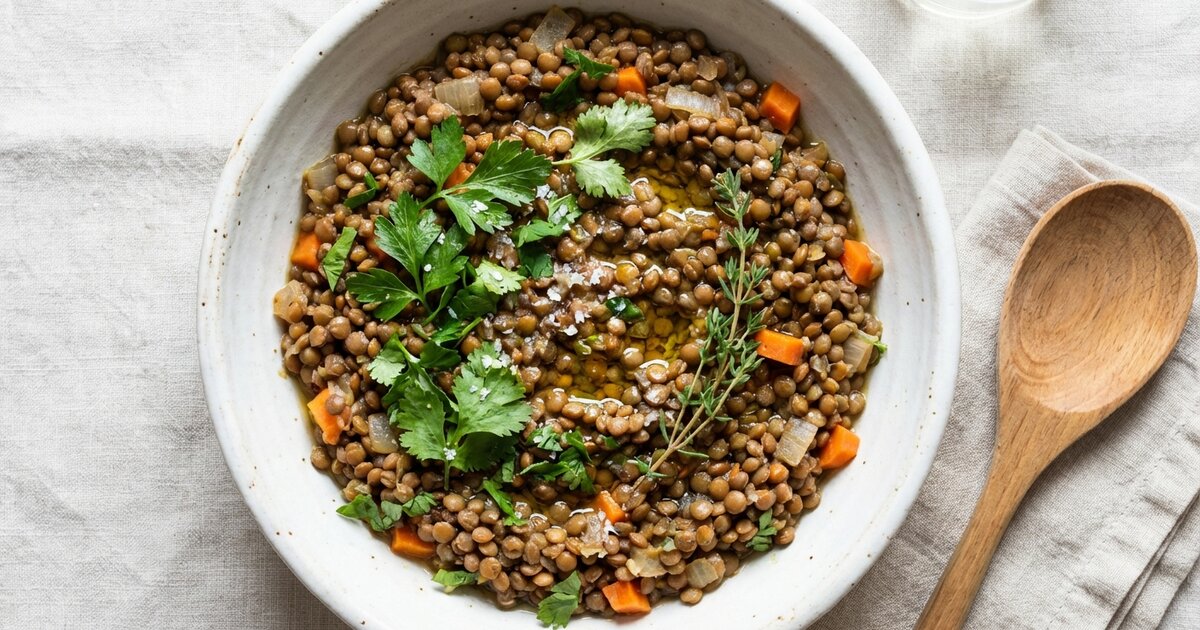
Lentils are a plant-based protein powerhouse. They’re cheap, versatile, and pack more protein per calorie than almost any other non-meat food. For vegetarians, vegans, and anyone trying to eat less meat without sacrificing protein, lentils are essential.
But lentils are also high in carbohydrates, which confuses some macro trackers. The key is understanding that lentil carbs are fundamentally different from bread or pasta carbs—most of those carbs are fiber that your body can’t digest for energy.
This guide breaks down lentil macros completely, so you can use them strategically in your diet.
Lentils Macros: Quick Reference
Here’s what cooked lentils deliver nutritionally.
Per Cup (Cooked, 198g)
| Nutrient | Amount | % Daily Value |
|---|---|---|
| Calories | 230 | 12% |
| Protein | 18g | 36% |
| Total Carbs | 40g | 15% |
| Fiber | 16g | 57% |
| Net Carbs | 24g | - |
| Fat | 0.8g | 1% |
| Iron | 6.6mg | 37% |
| Folate | 358mcg | 90% |
| Potassium | 731mg | 16% |
Per 100g (Cooked)
| Nutrient | Amount |
|---|---|
| Calories | 116 |
| Protein | 9g |
| Total Carbs | 20g |
| Fiber | 8g |
| Net Carbs | 12g |
| Fat | 0.4g |
Raw vs Cooked Comparison
| Measure | Dry Lentils | Cooked Lentils |
|---|---|---|
| Weight | 100g | ~250g (when cooked) |
| Calories | 353 | 290 (total from 100g dry) |
| Protein | 25g | 22g |
| Carbs | 60g | 50g |
Important: Lentils roughly double to triple in volume when cooked. 1 cup dry = 2-2.5 cups cooked.
Lentils by Type
Different lentil varieties have nearly identical macros but different cooking properties.
Brown Lentils
| Per Cup Cooked | Amount |
|---|---|
| Calories | 230 |
| Protein | 18g |
| Carbs | 40g |
| Fiber | 16g |
| Fat | 1g |
Best for: Soups, stews, general cooking. Holds shape moderately well.
Green Lentils (Including French Puy)
| Per Cup Cooked | Amount |
|---|---|
| Calories | 230 |
| Protein | 18g |
| Carbs | 40g |
| Fiber | 16g |
| Fat | 1g |
Best for: Salads, side dishes. Holds shape best after cooking.
Red/Orange Lentils
| Per Cup Cooked | Amount |
|---|---|
| Calories | 230 |
| Protein | 18g |
| Carbs | 40g |
| Fiber | 15g |
| Fat | 1g |
Best for: Dal, curries, soups. Cooks fastest, breaks down into creamy texture.
Black Lentils (Beluga)
| Per Cup Cooked | Amount |
|---|---|
| Calories | 230 |
| Protein | 18g |
| Carbs | 40g |
| Fiber | 16g |
| Fat | 1g |
Best for: Salads, elegant dishes. Small, firm, holds shape excellently.
Bottom line: Choose your lentil type based on texture preference and recipe needs—the macros are essentially identical.
Lentils vs Other Protein Sources
How do lentils compare to common protein sources?
Protein Comparison (Per ~20g Protein)
| Food | Amount Needed | Calories | Carbs | Fat |
|---|---|---|---|---|
| Lentils | 1.1 cups cooked | 253 | 44g | 1g |
| Chicken breast | 3 oz | 128 | 0g | 3g |
| Ground beef (90%) | 3 oz | 184 | 0g | 10g |
| Eggs | 3 large | 234 | 2g | 15g |
| Tofu | 10 oz | 226 | 6g | 12g |
| Black beans | 1.3 cups | 299 | 54g | 1g |
| Greek yogurt | 1.5 cups | 200 | 12g | 1g |
Observations:
- Lentils require more calories and carbs than meat for equivalent protein
- Lentils are leaner than most animal proteins (very low fat)
- Among plant proteins, lentils are highly efficient
- Lentils are significantly cheaper per gram of protein
Cost Comparison (Per 20g Protein)
| Food | Approximate Cost |
|---|---|
| Lentils (dry) | $0.25 |
| Chicken breast | $1.50 |
| Ground beef | $2.00 |
| Eggs | $0.75 |
| Tofu | $0.80 |
| Greek yogurt | $1.25 |
Lentils win on cost by a significant margin.
Compare with Chicken Breast Macros and Eggs Macros for animal protein comparisons.
Lentils vs Other Legumes
How do lentils stack up against beans and other legumes?
| Legume (1 cup cooked) | Calories | Protein | Carbs | Fiber | Fat |
|---|---|---|---|---|---|
| Lentils | 230 | 18g | 40g | 16g | 0.8g |
| Black beans | 227 | 15g | 41g | 15g | 0.9g |
| Chickpeas | 269 | 15g | 45g | 12g | 4.2g |
| Kidney beans | 225 | 15g | 40g | 11g | 0.9g |
| Pinto beans | 245 | 15g | 45g | 15g | 1.1g |
| Navy beans | 255 | 15g | 47g | 19g | 1.1g |
| Edamame | 188 | 18g | 14g | 8g | 8g |
Lentils advantages:
- Highest protein among common legumes
- No soaking required (faster cooking)
- Easiest to digest for most people
- Neutral flavor that works in many dishes
See also: Black Beans Macros | Chickpeas Macros
Understanding Lentil Carbohydrates
The high carb count scares some people away from lentils. Here’s the full picture.
Total Carbs vs Net Carbs
Per cup cooked lentils:
- Total carbs: 40g
- Fiber: 16g
- Net carbs: 24g
That 16g of fiber doesn’t raise blood sugar or provide calories in the traditional sense. Your body can’t digest it for energy.
Glycemic Index
Lentils have a low glycemic index (GI):
- Green/brown lentils: GI ~30
- Red lentils: GI ~26
For comparison:
- White rice: GI ~73
- White bread: GI ~75
- Oatmeal: GI ~55
What this means: Lentils release glucose slowly, providing sustained energy without blood sugar spikes.
Fiber Benefits
That 16g of fiber per cup provides:
- 57% of daily fiber needs in one serving
- Gut health support (feeds beneficial bacteria)
- Cholesterol reduction
- Extended satiety (keeps you full)
- Digestive regularity
Lentils for Different Diet Goals
Lentils for Weight Loss
Verdict: Excellent choice for weight loss.
Why lentils work:
- High fiber creates satiety
- Protein prevents muscle loss
- Low fat keeps calories moderate
- Complex carbs provide lasting energy
- Very affordable
Sample weight-loss meal with lentils:
- 1/2 cup lentils: 115 cal, 9g protein, 8g fiber
- 2 cups vegetables: 60 cal
- 1 tbsp olive oil: 120 cal
- Spices: negligible
- Total: 295 cal, 12g protein, 10g fiber
That’s a filling meal under 300 calories.
Use our Macro Calculator to see how lentils fit your daily targets.
Lentils for Muscle Building
Verdict: Good plant-based option, but not optimal as sole protein source.
Challenges:
- Need more volume for equivalent protein vs meat
- Not a complete protein (low in methionine)
- High fiber can limit total food intake
Solutions:
- Combine with grains (rice, bread) for complete protein
- Use as part of protein rotation, not sole source
- Great for plant-based bulking
Muscle-building lentil bowl:
- 1 cup lentils: 230 cal, 18g protein
- 1 cup rice: 205 cal, 4g protein
- 1 tbsp olive oil: 120 cal
- Vegetables: 50 cal
- Total: 605 cal, 22g protein (complete amino acids)
Lentils for Plant-Based Diets
Verdict: Essential food for vegetarians and vegans.
Role in plant-based eating:
- Primary protein source alongside beans and tofu
- Provides iron (37% DV per cup)
- Excellent folate source (90% DV per cup)
- Budget-friendly protein
Daily plant-based protein plan with lentils:
- Breakfast: Tofu scramble (15g protein)
- Lunch: Lentil soup (18g protein)
- Dinner: Chickpea curry (15g protein)
- Snacks: Nuts, seeds (10g protein)
- Total: 58g protein, all plant-based
Lentils on Keto
Verdict: Too high in carbs for strict keto.
The math:
- 1 cup lentils = 24g net carbs
- Strict keto limit = 20-25g net carbs/day
- One serving would use entire carb budget
If you really want lentils on low-carb:
- Limit to 1/4-1/2 cup serving
- Fit into liberal low-carb (50-100g carbs/day)
- Use as occasional treat, not staple
Keto alternatives for similar texture/dishes:
- Lupini beans (much lower carb)
- Black soybeans
- Mushrooms for texture
Lentils for IIFYM/Flexible Dieting
Lentils fit flexible dieting perfectly—track the macros, hit your targets.
IIFYM considerations:
- Account for net carbs vs total carbs based on your preference
- Great for hitting fiber goals
- Good protein contribution without excess fat
Learn more in our Flexible Dieting Guide.
How to Cook Lentils
Basic Stovetop Method
Ratio: 1 cup dry lentils : 3 cups water
Steps:
- Rinse lentils under cold water
- Bring water to boil with lentils
- Reduce heat, simmer uncovered
- Cook until tender:
- Red/orange: 15-20 minutes
- Green/brown: 25-30 minutes
- Black: 25-30 minutes
No soaking required (unlike most beans).
Instant Pot Method
- 1 cup dry lentils + 2.5 cups water
- Pressure cook: 8-12 minutes depending on type
- Natural release 10 minutes
Batch Cooking for Meal Prep
Cook 2-3 cups dry lentils at once:
- Yields 6-8 cups cooked
- Refrigerate up to 5 days
- Freeze up to 3 months
Lentil Meal Ideas
Quick Lentil Meals
Lentil soup (per serving):
- 1 cup cooked lentils: 230 cal, 18g protein
- Vegetables, broth, spices: ~50 cal
- Total: ~280 cal, 18g protein
Mediterranean lentil salad:
- 1 cup green lentils: 230 cal
- Cucumbers, tomatoes, red onion: 30 cal
- 2 tbsp feta: 50 cal
- 1 tbsp olive oil + lemon: 120 cal
- Total: 430 cal, 20g protein
Red lentil dal:
- 1 cup red lentils: 230 cal
- Coconut milk (1/4 cup): 115 cal
- Spices, ginger, garlic: ~10 cal
- Serve over rice (1/2 cup): 100 cal
- Total: 455 cal, 20g protein
Lentil Meal Prep Recipes
Lentil bolognese (4 servings):
- 2 cups cooked lentils
- 1 can crushed tomatoes
- Onion, garlic, Italian herbs
- Per serving over pasta: 450 cal, 18g protein
Stuffed peppers with lentils (4 servings):
- 2 cups cooked lentils
- 1 cup cooked rice
- 4 bell peppers
- Cheese topping (optional)
- Per pepper: 280 cal, 12g protein
Check out more ideas in our Macro-Friendly Meals guide.
Canned vs Dry Lentils
Macros Comparison (Per Cup)
| Type | Calories | Protein | Carbs | Sodium |
|---|---|---|---|---|
| Dry (cooked) | 230 | 18g | 40g | 4mg |
| Canned (drained) | 230 | 18g | 40g | 480mg |
Macros are identical. The difference is sodium—canned lentils have significant added salt.
When to Choose Each
Choose dry lentils when:
- Cost is a priority (cheaper)
- Controlling sodium matters
- Batch cooking for the week
- You want better texture
Choose canned lentils when:
- Time is limited (no cooking)
- Making a quick meal
- You have access to low-sodium versions
- Convenience trumps cost
Tip: Rinse canned lentils under water for 1 minute to reduce sodium by ~40%.
Common Lentil Questions
Do Lentils Cause Gas?
They can, especially when you first start eating them. Lentils contain oligosaccharides that ferment in the gut.
To reduce gas:
- Start with small portions (1/4-1/2 cup)
- Increase gradually over weeks
- Rinse thoroughly before cooking
- Cook with digestive spices (cumin, ginger, turmeric)
- Drain canned lentils well
Your gut adapts—most people experience less gas after 2-3 weeks of regular consumption.
Are Lentils a Complete Protein?
No. Lentils are low in methionine (an essential amino acid).
Solution: Combine with grains (rice, bread, quinoa) at some point during the day. You don’t need to eat them together at the same meal—just within the same day.
Do Lentils Lose Nutrients When Cooked?
Some vitamin C and B vitamins reduce with cooking, but protein, fiber, and minerals remain stable. Cooking also improves protein digestibility and reduces anti-nutrients.
The Bottom Line on Lentils Macros
The facts:
- One cup cooked lentils: 230 calories, 18g protein, 16g fiber
- Highest protein common legume
- Net carbs are 24g after subtracting fiber
- Low glycemic index—won’t spike blood sugar
- Extremely affordable protein source
Best uses:
- Plant-based diets as primary protein source
- Weight loss (high satiety for calories)
- Budget meal planning
- Adding fiber and nutrients to any diet
- Meat substitute in many recipes
Limitations:
- Not ideal for strict keto/very low carb
- Not a complete protein alone
- Can cause digestive adjustment initially
- Requires some cooking time (though less than beans)
The bottom line: Lentils are one of the most nutritionally efficient foods available—high protein, high fiber, low fat, low cost. If you’re not eating them, you’re missing out on an easy way to hit protein and fiber targets.
For understanding how lentils fit your overall nutrition picture, read What Are Macronutrients.
Related Articles

Dragonfruit Macros: Complete Nutrition Guide for Pitaya
Complete macro breakdown of dragonfruit (pitaya). Learn the calories, protein, carbs, and...
Read guide →
Bulgur Macros: Complete Nutritional Guide & Health Benefits
Discover bulgur's complete macro breakdown, nutritional benefits, and how to incorporate...
Read guide →
Radish Macros: Nutrition Facts and Health Benefits
Complete guide to radish macros and nutrition. Learn calories, protein, carbs, and health...
Read guide →Note: Nutrition values are approximate and may vary based on preparation method and source.