Macadamia Nuts Macros: Complete Nutrition Breakdown & Tracking Guide
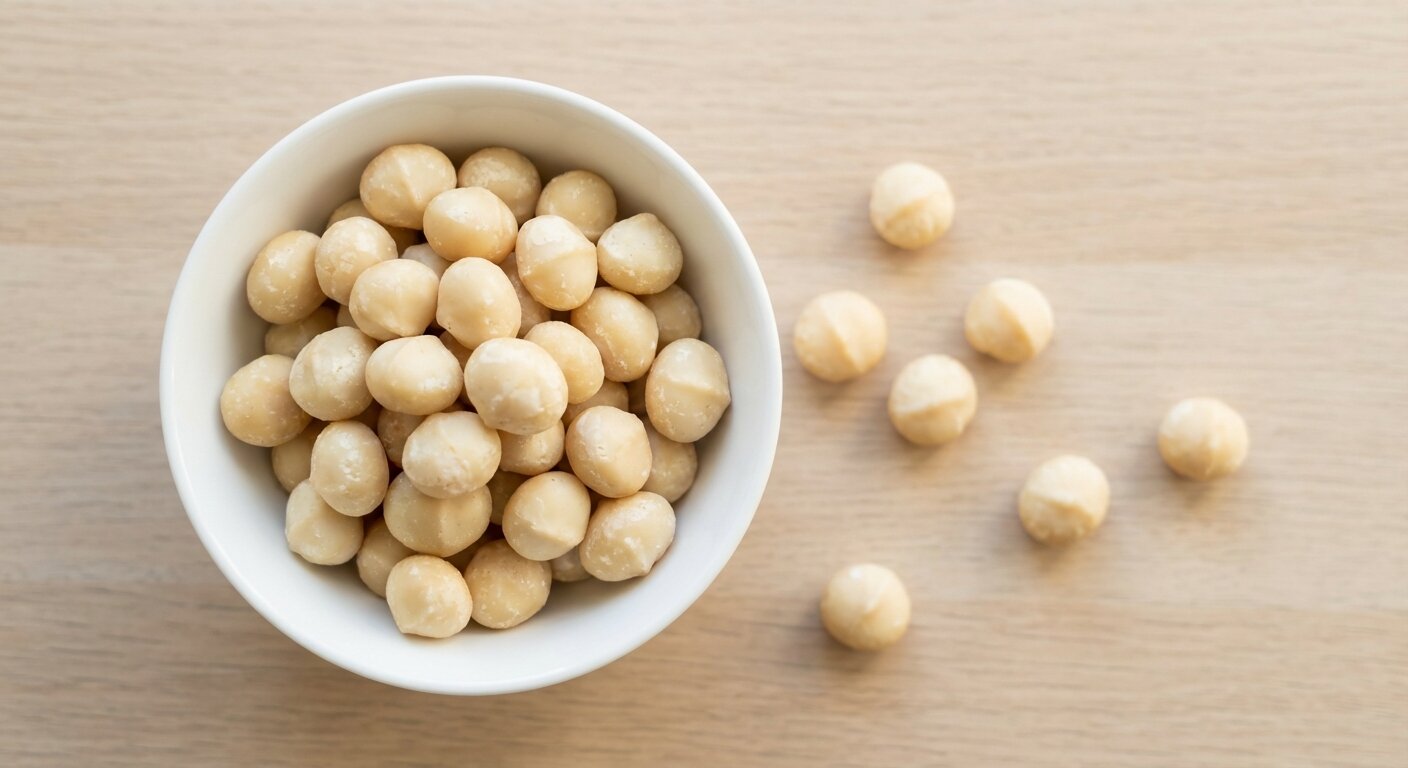
Macadamia nuts are among the most indulgent nuts nutritionally—rich, buttery, and exceptionally high in healthy fats. Whether you’re tracking macros for keto, building muscle, or managing weight, understanding the macro breakdown of macadamia nuts helps you incorporate them strategically into your diet.
This guide provides a complete nutritional analysis of macadamia nuts, including serving sizes, macro ratios, health benefits, and practical tracking tips.
Need to calculate your personalized macro targets? Use our free macro calculator to get started.
Related: Learn more about what macros are and how they impact your diet.
Macadamia Nuts Nutrition Facts
Standard Serving: 1 ounce (28g) - approximately 10-12 whole nuts
| Nutrient | Amount | % Daily Value* |
|---|---|---|
| Calories | 204 kcal | 10% |
| Protein | 2g | 4% |
| Total Carbohydrates | 4g | 1% |
| Dietary Fiber | 2g | 8% |
| Net Carbs | 2g | - |
| Total Fat | 21g | 32% |
| Saturated Fat | 3g | 15% |
| Monounsaturated Fat | 17g | - |
| Polyunsaturated Fat | 0.4g | - |
| Omega-6 | 360mg | - |
| Omega-3 | 60mg | - |
*Based on a 2,000 calorie diet
Micronutrients per 1 oz (28g)
| Vitamin/Mineral | Amount | % DV |
|---|---|---|
| Thiamin (B1) | 0.3mg | 25% |
| Manganese | 1.0mg | 50% |
| Copper | 0.2mg | 10% |
| Magnesium | 37mg | 9% |
| Iron | 1.0mg | 6% |
| Vitamin B6 | 0.1mg | 5% |
Macronutrient Breakdown by Serving Size
Understanding portion sizes helps you hit your daily macro targets accurately.
Whole Nuts
| Serving | Weight | Calories | Protein | Carbs | Net Carbs | Fat |
|---|---|---|---|---|---|---|
| 10 nuts | ~28g | 204 | 2g | 4g | 2g | 21g |
| 15 nuts | ~42g | 306 | 3g | 6g | 3g | 32g |
| 20 nuts | ~56g | 408 | 4g | 8g | 4g | 42g |
| 1/4 cup | ~34g | 247 | 2.4g | 4.8g | 2.4g | 25.5g |
| 1/2 cup | ~68g | 494 | 4.8g | 9.6g | 4.8g | 51g |
Chopped/Ground
| Form | Weight | Calories | Protein | Carbs | Net Carbs | Fat |
|---|---|---|---|---|---|---|
| 1 Tbsp chopped | ~9g | 65 | 0.6g | 1.3g | 0.6g | 6.7g |
| 1/4 cup chopped | ~36g | 263 | 2.6g | 5.2g | 2.6g | 27g |
| 1 Tbsp ground | ~6g | 43 | 0.4g | 0.9g | 0.4g | 4.5g |
Macadamia Nut Products
| Product | Serving | Calories | Protein | Carbs | Net Carbs | Fat |
|---|---|---|---|---|---|---|
| Macadamia butter | 2 Tbsp | 230 | 2g | 5g | 3g | 24g |
| Dry roasted | 1 oz | 203 | 2g | 4g | 2g | 21g |
| Oil roasted | 1 oz | 204 | 2g | 4g | 2g | 22g |
| Salted | 1 oz | 204 | 2g | 4g | 2g | 21g |
| Macadamia milk (unsweetened) | 1 cup | 50 | 1g | 1g | 0g | 5g |
Macro Ratios: Where Calories Come From
Understanding the macro ratio helps you see how macadamia nuts fit your dietary approach.
Standard 1 oz serving (204 calories):
- Fat: 189 calories (78%)
- Carbs: 16 calories (18%)
- Protein: 8 calories (4%)
Fat Profile Breakdown
Macadamia nuts have the highest monounsaturated fat content of any nut:
- Monounsaturated fat: 17g (81% of total fat) - primarily oleic acid
- Saturated fat: 3g (14% of total fat)
- Polyunsaturated fat: 0.4g (2% of total fat)
- Omega-6: 360mg
- Omega-3: 60mg
- Omega-6:Omega-3 ratio: 6:1 (favorable)
This makes macadamia nuts similar to olive oil in terms of heart-healthy fat composition.
How Macadamia Nuts Fit Different Diets
Keto Diet (70% fat, 25% protein, 5% carbs)
Rating: ⭐⭐⭐⭐⭐ Excellent
Macadamia nuts are among the best nuts for keto:
- Only 2g net carbs per serving
- 78% calories from fat (mostly monounsaturated)
- Energy-dense for meeting high fat requirements
- Won’t kick you out of ketosis
Keto usage: 2-3 oz daily as snacks, in fat bombs, or macadamia butter on celery
Low-Carb Diet (<100g carbs/day)
Rating: ⭐⭐⭐⭐⭐ Excellent
Perfect for carb-restricted diets:
- Minimal impact on blood sugar
- High satiety from fat content
- Nutrient-dense calories
Usage: 1-2 oz daily without concern for carb limits
High-Protein Diet (30%+ protein)
Rating: ⭐⭐ Poor
Not ideal as a protein source:
- Only 2g protein per serving (4% of calories)
- Would need 10+ oz to get meaningful protein
- Better combined with actual protein sources
Usage: Add as a fat source to protein-rich meals, not as protein itself
Weight Loss (Caloric Deficit)
Rating: ⭐⭐⭐ Moderate
Can work with careful portioning:
- Very calorie-dense (204 cal per ounce)
- High satiety factor helps control appetite
- Easy to overeat if not pre-portioned
- Research shows nuts don’t cause weight gain despite calories
Strategy: Pre-portion 1 oz servings, pair with protein to increase fullness
Muscle Building (Caloric Surplus)
Rating: ⭐⭐⭐⭐ Good
Excellent for clean bulking:
- Dense calories support surplus needs
- Healthy fat supports hormone production
- Easy to add 200-600 calories without excess volume
- Minimal preparation required
Usage: 2-4 oz daily between meals to hit calorie targets
Mediterranean Diet
Rating: ⭐⭐⭐⭐⭐ Excellent
Perfectly aligned:
- High in heart-healthy monounsaturated fats
- Whole food, minimally processed
- Rich in antioxidants and minerals
- Similar fat profile to olive oil
Usage: 1-2 oz daily as snacks or added to salads, grain bowls
Vegan/Vegetarian
Rating: ⭐⭐⭐⭐ Good
Great plant-based fat source:
- No animal products
- Provides calories and nutrients
- Low protein means pair with legumes/tofu
- Good source of plant-based manganese, thiamin
Usage: 1-2 oz daily, combine with higher-protein plant foods
Paleo/Whole30
Rating: ⭐⭐⭐⭐⭐ Excellent (for Paleo)
Paleo: Fully compliant - whole food, nutrient-dense, ancestral food source
Whole30: ❌ Not allowed - nuts are restricted during the initial 30-day reset, though nutritionally compliant
Intermittent Fasting
Rating: ⭐⭐⭐⭐ Good
- During fasting window: Breaks fast (contains calories)
- During eating window: Excellent - calorie-dense for shorter eating periods, helps hit calorie targets without excessive volume
Usage: 2-3 oz during eating window to efficiently meet calorie needs
Health Benefits Beyond Macros
While macros matter for body composition, macadamia nuts offer additional benefits:
Heart Health
- 80%+ monounsaturated fat reduces LDL cholesterol
- Similar cardiovascular benefits to olive oil
- May reduce inflammation markers
- Supports healthy blood pressure
Blood Sugar Control
- Low glycemic index
- Minimal impact on insulin
- May improve insulin sensitivity
- Suitable for diabetics in moderation
Nutrient Density
- 50% DV manganese (bone health, metabolism)
- 25% DV thiamin (energy production)
- Good copper, magnesium, iron
- Antioxidants including tocotrienols
Brain Health
- Oleic acid supports cognitive function
- Thiamin essential for nerve function
- May reduce oxidative stress
Satiety
- High fat content promotes fullness
- Fiber aids digestion
- Research shows nuts help control appetite
- Can reduce overall calorie intake despite density
Tracking Macadamia Nuts in Your Macros
Weighing vs. Counting
Most accurate: Weigh on a food scale
- 28g = 1 serving = 204 calories
- Removes guesswork
- Accounts for size variation
Quick method: Count whole nuts
- 10-12 nuts ≈ 1 oz
- Less accurate but practical
- Best for maintenance, not cutting
Volume measurement: Use measuring cups for chopped
- 1/4 cup ≈ 34g
- Okay for cooking, less precise for tracking
Logging Tips
In MyFitnessPal or similar apps:
- Search “Macadamia nuts, raw” (USDA database)
- Log by weight in grams for accuracy
- For roasted/salted, check labels (similar macros, added sodium)
- Save as “frequent food” if you eat them regularly
Pre-portioning strategy:
- Buy in bulk
- Divide into 1 oz portions in small bags/containers
- Label with macros
- Grab-and-go convenience prevents overeating
Common Mistakes
❌ Eyeballing portions - Very easy to eat 2-3 oz thinking it’s 1 oz ❌ Ignoring macadamia butter - 230 calories in just 2 tablespoons ❌ Not accounting for coatings - Honey roasted, chocolate covered add significant carbs/sugar ❌ Using “cup” measurements - Whole nuts have air space, cups are inconsistent
Macadamia Nuts vs. Other Nuts (Per 1 oz)
| Nut Type | Calories | Protein | Carbs | Net Carbs | Fat | Fiber |
|---|---|---|---|---|---|---|
| Macadamia | 204 | 2g | 4g | 2g | 21g | 2g |
| Pecans | 196 | 3g | 4g | 1g | 20g | 3g |
| Walnuts | 185 | 4g | 4g | 2g | 18g | 2g |
| Almonds | 164 | 6g | 6g | 3g | 14g | 3g |
| Cashews | 157 | 5g | 9g | 8g | 12g | 1g |
| Pistachios | 159 | 6g | 8g | 6g | 13g | 3g |
| Peanuts | 161 | 7g | 5g | 3g | 14g | 2g |
Key takeaways:
- Macadamia nuts have the highest fat content of any nut
- Lowest protein content among common nuts
- Lowest net carbs (tied with pecans)
- Most calories per ounce
- Best for keto/low-carb, worst for high-protein diets
Recipe Ideas & Meal Prep
Quick Macro-Friendly Ways to Use Macadamia Nuts
As a Snack:
- 1 oz with apple slices (adds protein with Greek yogurt)
- Paired with cheese for balanced macros
- Mixed with lower-calorie nuts (almonds) to reduce fat ratio
In Meals:
- Chopped over salads (add crunch + healthy fats)
- Blended into smoothies for calories/creaminess
- Macadamia-crusted fish or chicken (replace breadcrumbs)
- Stir-fried vegetables with macadamia oil
Macro-Tracked Recipes:
Keto Fat Bombs (Makes 12)
- 1 cup macadamia nuts, chopped
- 1/2 cup coconut oil
- 2 Tbsp cocoa powder
- Stevia to taste Per bomb: 150 cal | 1g protein | 2g carbs | 15g fat
High-Calorie Smoothie (Post-workout bulk)
- 1 oz macadamia nuts
- 1 banana
- 1 scoop protein powder
- 1 cup almond milk
- 1 Tbsp macadamia butter Total: 550 cal | 30g protein | 45g carbs | 30g fat
Mediterranean Macadamia Pesto (Makes 8 servings)
- 1 cup macadamia nuts
- 2 cups basil
- 1/2 cup olive oil
- 3 cloves garlic
- 1/4 cup parmesan Per 2 Tbsp: 180 cal | 3g protein | 3g carbs | 18g fat
Buying & Storage Tips
Best Forms for Macro Tracking
Raw, unsalted:
- Most versatile
- No added oils or sodium
- Consistent macros
- Best for precise tracking
Dry roasted:
- Similar macros to raw
- Enhanced flavor
- Check labels for added oils
Avoid for macro accuracy:
- Honey roasted (added sugars increase carbs)
- Chocolate covered (macros vary widely)
- Mixed nut blends (harder to weigh individual nuts)
Storage
Shelf life:
- Unopened: 6-12 months in cool, dark place
- Opened: 3-6 months in airtight container
- Refrigerated: Up to 1 year
- Frozen: Up to 2 years
Why proper storage matters:
- High fat content means prone to rancidity
- Off smell/taste indicates spoilage
- Rancid nuts lose nutritional value
Frequently Asked Questions
How many calories are in 1 macadamia nut?
A single whole macadamia nut contains approximately 17-20 calories, depending on size. A standard serving of 10-12 nuts provides 204 calories. For precise macro tracking, weighing is more accurate than counting individual nuts due to size variation.
Can I eat macadamia nuts every day?
Yes, consuming 1-2 ounces (10-24 nuts) daily can be part of a healthy diet for most people. Daily consumption may support heart health through monounsaturated fats, provide essential minerals like manganese and thiamin, and help control appetite. However, pre-portion your servings since they’re calorie-dense—it’s easy to overeat when snacking directly from a container.
Are macadamia nuts high in protein?
No, macadamia nuts are very low in protein compared to other nuts. One ounce provides only 2g protein (4% of calories), making them the lowest protein nut commonly consumed. Compare this to almonds (6g), peanuts (7g), or pistachios (6g) per ounce. If you need protein, pair macadamia nuts with Greek yogurt, cheese, or use them alongside higher-protein nuts rather than as your primary protein source.
What’s the difference between raw and roasted macadamia nuts for macros?
The macronutrient content is nearly identical whether macadamia nuts are raw or dry roasted—both contain approximately 204 calories, 21g fat, 4g carbs, and 2g protein per ounce. The main differences are:
- Dry roasted: No oil added, enhanced flavor from roasting
- Oil roasted: May have slightly more fat (1-2g) if oil was added during roasting
- Salted versions: Same macros but significantly more sodium (up to 200mg vs 0mg)
Always check nutrition labels on roasted varieties, as some brands add oils or coatings that change the macro profile.
How do macadamia nuts compare to almonds for weight loss?
Both can support weight loss when consumed in moderation, but they have different macro profiles:
Macadamia nuts (1 oz):
- 204 calories, 21g fat, 2g protein, 2g net carbs
- Higher in calories and fat
- Lower in protein
- Better for keto/very low-carb diets
- Higher satiety from fat content
Almonds (1 oz):
- 164 calories, 14g fat, 6g protein, 3g net carbs
- 40 fewer calories per ounce
- 3x more protein
- Better for high-protein diets
- More fiber for satiety
For weight loss: Almonds may have a slight edge due to lower calories and higher protein, which supports muscle retention and satiety. However, macadamia nuts can work equally well if you prefer them—the key is accurate portioning and fitting them into your total calorie target.
Do macadamia nuts spike blood sugar?
No, macadamia nuts have minimal impact on blood sugar due to their very low carbohydrate content (4g total, 2g net carbs per ounce) and high fat content. They have a low glycemic index and don’t cause significant insulin spikes. In fact, some research suggests regular nut consumption may improve insulin sensitivity and glucose control, making them suitable for people with diabetes or those managing blood sugar levels.
Are salted macadamia nuts bad for you?
Salted macadamia nuts have the same macronutrient profile as unsalted (204 calories, 21g fat, 4g carbs, 2g protein per ounce), but contain significantly more sodium—typically 75-200mg per serving compared to 1-2mg in unsalted. For macro tracking purposes, they’re equivalent. However:
Consider unsalted if:
- You’re watching sodium intake
- You have high blood pressure
- You’re on a sodium-restricted diet
Salted is fine if:
- You have normal blood pressure
- You don’t eat a lot of processed foods (most sodium comes from processed foods, not nuts)
- You prefer the taste and it helps you stick to portions
The health benefits of the monounsaturated fats and nutrients remain the same regardless of salt content.
Can I eat macadamia nuts on a calorie deficit?
Yes, you can include macadamia nuts in a calorie deficit, but careful portioning is critical. At 204 calories per ounce, they’re extremely calorie-dense—eating 3 ounces without realizing it adds 600+ calories to your day, which can wipe out your deficit.
Best practices for cutting:
- Pre-portion 1 oz servings in small containers
- Weigh on a food scale rather than estimating
- Pair with protein (Greek yogurt, cheese) to increase satiety
- Consider them a “fat source” in your meal, not a free snack
- Track immediately after weighing, before eating
Despite being high-calorie, research shows nuts can support weight loss due to their satiety effects and the fact that not all calories from nuts are absorbed. The key is deliberate, measured consumption—not mindless snacking.
How should I track macadamia butter for macros?
Macadamia butter is very calorie-dense—2 tablespoons contain approximately 230 calories, 24g fat, 5g carbs (3g net carbs), and 2g protein. This is about 12% more calories than the same amount of peanut butter.
Tracking tips:
- Weigh it: Use a food scale for accuracy. A serving is typically 32g (2 Tbsp), but measuring with spoons can vary by 20-30%
- Log before eating: Put your bread/celery on the scale, zero it, add macadamia butter, note the grams
- Search correctly: Look for “Macadamia Nut Butter” in your app (not just “macadamia nuts”)
- Check labels: Commercial brands may add oils, sugar, or salt that change macros from pure macadamia butter
Easy to overshoot: Two heaping tablespoons can easily be 3+ servings (700+ calories). If you’re trying to lose weight, pre-measure or buy individual squeeze packs.
Are macadamia nuts worth the price for the macros they provide?
Macadamia nuts are typically 2-4x more expensive than almonds, cashews, or peanuts ($15-25/lb vs $6-12/lb for other nuts). Whether they’re “worth it” depends on your goals:
They’re worth it if:
- You follow a keto diet (lowest net carbs, highest fat)
- You value taste/texture highly (buttery, creamy, unique)
- You need calorie-dense foods (bulking, underweight, high metabolism)
- You want the highest monounsaturated fat nut (heart health priority)
Consider cheaper alternatives if:
- You need protein (almonds, peanuts have 3-4x more)
- You’re on a tight budget (peanuts deliver similar calories for 1/3 the price)
- You’re cutting calories (almonds provide more volume for fewer calories)
Budget strategy: Mix macadamia nuts with almonds or cashews—you get some macadamia flavor while improving the protein-to-cost ratio.
Conclusion
Macadamia nuts are a premium nutritional choice for specific macro goals—especially keto, low-carb, and Mediterranean diets. With 204 calories, 21g fat, 4g carbs (2g net), and 2g protein per ounce, they deliver healthy monounsaturated fats similar to olive oil, along with important minerals like manganese and thiamin.
Best suited for: Ketogenic diets, low-carb eating, clean bulking, heart health, and calorie-dense snacking.
Less ideal for: High-protein diets, aggressive calorie deficits (without careful portioning), or budget-conscious macro plans.
The key to successfully incorporating macadamia nuts into your macro tracking is precise measurement—weigh servings on a food scale, pre-portion for grab-and-go convenience, and log before eating. Their rich, satisfying nature means a small portion goes a long way.
Ready to build a personalized nutrition plan that includes macadamia nuts? Use our macro calculator to determine your ideal daily targets, then strategically incorporate macadamia nuts as a healthy fat source that fits your lifestyle and goals.
Related guides:
Related Articles

Dragonfruit Macros: Complete Nutrition Guide for Pitaya
Complete macro breakdown of dragonfruit (pitaya). Learn the calories, protein, carbs, and...
Read guide →
Bulgur Macros: Complete Nutritional Guide & Health Benefits
Discover bulgur's complete macro breakdown, nutritional benefits, and how to incorporate...
Read guide →
Radish Macros: Nutrition Facts and Health Benefits
Complete guide to radish macros and nutrition. Learn calories, protein, carbs, and health...
Read guide →Note: Nutrition values are approximate and may vary based on preparation method and source.