Mushroom Macros: Nutrition Facts & Health Benefits
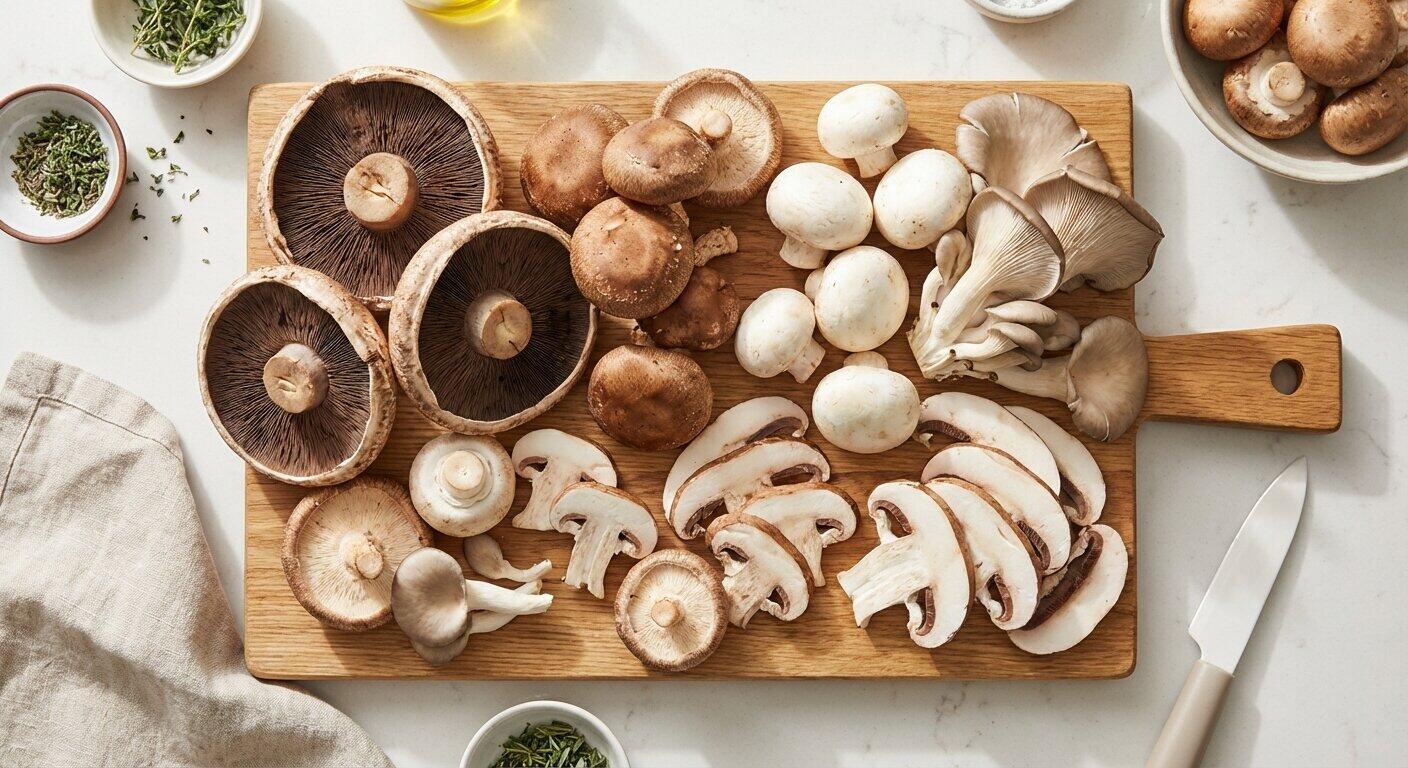
Mushrooms are one of nature’s most underrated nutritional powerhouses—incredibly low in calories yet packed with protein, fiber, and essential micronutrients like B vitamins, selenium, and vitamin D. Whether you’re tracking macros for weight loss, building a plant-based meal plan, or simply looking to add nutrient-dense foods to your diet, understanding mushroom macros helps you make the most of this versatile ingredient.
This guide breaks down the complete nutritional profile of mushrooms across popular varieties, compares raw versus cooked macros, and shows you exactly how to incorporate mushrooms into your macro goals. You’ll discover why mushrooms are a dieting secret weapon and how their unique umami flavor can make healthy eating more satisfying.
Want to calculate your daily macro needs? Use our free macro calculator to get personalized targets for your goals.
Related: Learn more about what macros are and how they impact your diet.
Mushroom Macros: Complete Nutritional Breakdown
Raw White Button Mushrooms (1 cup, 96g)
| Nutrient | Amount |
|---|---|
| Calories | 21 |
| Protein | 3g |
| Carbs | 3g |
| Fiber | 1g |
| Net Carbs | 2g |
| Fat | 0.3g |
| Saturated Fat | 0g |
Cooked White Button Mushrooms (1 cup, 156g)
| Nutrient | Amount |
|---|---|
| Calories | 44 |
| Protein | 3.4g |
| Carbs | 8g |
| Fiber | 3.4g |
| Net Carbs | 4.6g |
| Fat | 0.5g |
| Saturated Fat | 0.1g |
Key insight: Cooking mushrooms doesn’t change their nutritional content—it simply concentrates the nutrients as water evaporates. You’re consuming more mushrooms per cup when cooked versus raw.
Portobello Mushroom (1 medium cap, 84g)
| Nutrient | Amount |
|---|---|
| Calories | 18 |
| Protein | 2.5g |
| Carbs | 3g |
| Fiber | 1.3g |
| Net Carbs | 1.7g |
| Fat | 0.3g |
Shiitake Mushrooms (1 cup raw, 145g)
| Nutrient | Amount |
|---|---|
| Calories | 81 |
| Protein | 2.2g |
| Carbs | 21g |
| Fiber | 3g |
| Net Carbs | 18g |
| Fat | 0.3g |
Note: Shiitake mushrooms have higher carbs than button mushrooms due to their denser structure. Still low-calorie, but worth noting for strict keto diets.
Oyster Mushrooms (1 cup raw, 86g)
| Nutrient | Amount |
|---|---|
| Calories | 37 |
| Protein | 3.3g |
| Carbs | 6g |
| Fiber | 2g |
| Net Carbs | 4g |
| Fat | 0.4g |
Cremini Mushrooms (1 cup raw, 96g)
| Nutrient | Amount |
|---|---|
| Calories | 19 |
| Protein | 2.5g |
| Carbs | 4g |
| Fiber | 0.6g |
| Net Carbs | 3.4g |
| Fat | 0.1g |
Fun fact: Cremini mushrooms are actually young portobello mushrooms—same species, different maturity. They have nearly identical macros.
Why Mushroom Macros Make Them Perfect for Dieting
1. Extremely Low Calorie Density
At only 21 calories per cup, mushrooms are one of the lowest-calorie whole foods available. You can eat large volumes without impacting your daily calorie budget—critical for satiety during fat loss phases.
Practical example: Replacing 4 oz ground beef (285 calories) with 2 cups sautéed mushrooms (88 calories) in pasta sauce saves nearly 200 calories while maintaining meaty texture and umami flavor.
2. Modest Protein for a Vegetable
While not a complete protein source, mushrooms provide more protein than most vegetables at 3g per cup. This contributes to your daily protein target, especially valuable in plant-based diets when combined with legumes and grains.
3. High Water Content and Fiber
Mushrooms are approximately 92% water with added fiber, creating significant stomach volume relative to calories. This physical fullness triggers satiety signals that help reduce overall calorie intake.
4. Very Low Fat
With less than 0.5g fat per serving, mushrooms are essentially fat-free. This makes room in your daily fat macro budget for more calorie-dense fats like nuts, avocados, and oils.
5. Keto and Low-Carb Friendly
Most mushroom varieties contain only 2-4g net carbs per cup, fitting easily into ketogenic diets (typically under 20-50g net carbs daily). Portobello caps even work as burger buns or pizza crusts in keto recipes.
Micronutrient Benefits Beyond Macros
Mushrooms provide exceptional micronutrient value that macros alone don’t capture:
- B Vitamins: Rich in riboflavin (B2), niacin (B3), and pantothenic acid (B5) for energy metabolism
- Selenium: A powerful antioxidant mineral that supports immune function
- Copper: Important for red blood cell formation and iron absorption
- Potassium: Supports healthy blood pressure (318mg per cup)
- Vitamin D: Mushrooms exposed to UV light can provide significant vitamin D (rare in plant foods)
- Antioxidants: Ergothioneine and glutathione protect cells from oxidative stress
Pro tip: Buy UV-exposed mushrooms (labeled “vitamin D mushrooms”) or place regular mushrooms in sunlight for 15-30 minutes to dramatically increase their vitamin D content naturally.
How to Track Mushroom Macros Accurately
Raw vs. Cooked: Which to Log?
Best practice: Log the cooked weight if you’re eating them cooked. Mushrooms lose significant water during cooking, concentrating nutrients per gram.
Example calculation:
- 100g raw mushrooms → approximately 50-60g cooked (varies by cooking method)
- Raw: 22 calories, 3.1g protein, 3.3g carbs
- Cooked equivalent: ~44 calories, 6.2g protein, 6.6g carbs (doubled concentration)
Quick rule: If you don’t weigh after cooking, double the raw macros as a reasonable estimate.
Common Serving Sizes
- 1 cup raw sliced = 96g (standard for recipes)
- 1 medium whole = 18g (about one button mushroom)
- 1 large portobello cap = 84-100g (burger substitute)
- 4 oz cooked = 113g (typical restaurant side)
Cooking Methods and Macro Impact
Most cooking methods don’t significantly alter macros, but watch for added fats:
- Sautéed in oil: Add 120 calories per tablespoon of oil used
- Roasted: Minimal macro change if no oil
- Grilled: No macro change
- Butter-sautéed: Add 100 calories per tablespoon butter
Fat-saving tip: Sauté mushrooms in vegetable broth or water instead of oil to keep them virtually fat-free while developing golden-brown color.
Best Mushroom Varieties for Different Macro Goals
For Weight Loss: Button or Cremini Mushrooms
- Lowest calories per cup (19-21 calories)
- Mild flavor works in most dishes
- Inexpensive and widely available
- High volume for minimal calories
For Protein: Oyster Mushrooms
- Slightly higher protein at 3.3g per cup
- Delicate texture and subtle seafood-like flavor
- Good in stir-fries and soups
For Keto: Portobello Mushrooms
- Only 1.7g net carbs per cap
- Meaty texture replaces bread/buns
- Impressive presentation
- Naturally fat-free (room for added fats)
For Flavor: Shiitake Mushrooms
- Rich, earthy umami flavor
- Higher carbs (18g per cup) but still moderate
- Dense texture adds satisfaction
- Excellent in Asian-inspired dishes
For Nutrient Density: Maitake Mushrooms
- Higher in beta-glucans (immune support)
- Similar macros to other varieties
- Strong medicinal properties
- More expensive but worth it for health goals
Sample Mushroom Meal Ideas by Macro Goal
High-Protein, Low-Calorie (Fat Loss)
Mushroom & Egg White Scramble
- 2 cups mushrooms (44 cal, 3g protein)
- 6 egg whites (102 cal, 21g protein)
- Spinach and tomatoes (25 cal, 2g protein)
- Total: 171 calories, 26g protein, 8g carbs, 1g fat
Low-Carb, Moderate-Protein (Keto)
Portobello Burger
- 1 large portobello cap as bun (18 cal, 2.5g protein)
- 4 oz grass-fed beef patty (285 cal, 21g protein)
- Avocado and cheese (180 cal, 5g protein)
- Total: 483 calories, 28.5g protein, 4g carbs, 38g fat
Balanced Macros (Maintenance)
Mushroom Fried Rice
- 2 cups mushrooms (44 cal, 3g protein)
- 1 cup cooked brown rice (216 cal, 5g protein)
- 2 eggs (140 cal, 12g protein)
- 1 tbsp sesame oil (120 cal, 0g protein)
- Mixed vegetables (50 cal, 2g protein)
- Total: 570 calories, 22g protein, 52g carbs, 18g fat
Plant-Based Protein
Mushroom Lentil Bolognese
- 3 cups mushrooms (66 cal, 5g protein)
- 1 cup cooked lentils (230 cal, 18g protein)
- Tomato sauce (80 cal, 2g protein)
- 2 oz whole wheat pasta (200 cal, 7g protein)
- Total: 576 calories, 32g protein, 88g carbs, 3g fat
Common Questions About Mushroom Macros
Do canned mushrooms have different macros?
Canned mushrooms have virtually identical macros to fresh, though sodium content is significantly higher (up to 400mg per serving). Rinse canned mushrooms to reduce sodium by about 40%.
Are dried mushrooms more calorie-dense?
Yes—dried mushrooms are about 10x more concentrated by weight. One ounce (28g) dried shiitake contains approximately 81 calories versus 8 calories for the same weight fresh. Rehydrate before tracking for accurate macros.
Can you eat raw mushrooms?
While most mushrooms are safe to eat raw, cooking breaks down cell walls and makes nutrients more bioavailable. Cooking also develops flavor and improves texture. For maximum nutrition and enjoyment, cook your mushrooms.
Do magic mushrooms have different macros?
Psilocybin mushrooms (magic mushrooms) have similar macros to regular mushrooms—primarily water with minimal calories, protein, and carbs. However, this guide focuses on culinary mushrooms for nutritional purposes.
How do mushroom macros compare to meat?
Mushrooms have far fewer calories and protein than meat but similar umami flavor. A 4 oz portion: chicken breast (187 cal, 35g protein) vs. mushrooms (25 cal, 4g protein). Mushrooms work as texture additions or partial meat replacements rather than protein equivalents.
Are there any mushrooms to avoid for macro tracking?
Avoid prepared mushrooms with heavy sauces, batters, or deep-frying. “Breaded mushrooms” can have 300+ calories per serving from added flour and oil versus 21 calories for plain mushrooms. Always check labels on pre-marinated varieties.
How to Fit Mushrooms Into Your Daily Macros
If Your Goal is Fat Loss
Add mushrooms to increase meal volume without adding significant calories:
- Replace half the meat in recipes with mushrooms
- Use mushrooms as pizza topping instead of pepperoni (save 100+ calories)
- Bulk up omelets and scrambles with sautéed mushrooms
- Add to salads for texture without dressing calories
Target: 2-4 cups cooked mushrooms daily (88-176 calories, negligible macros impact)
If Your Goal is Muscle Building
Use mushrooms as meal volume with protein sources:
- Pair with high-protein foods (chicken, fish, eggs, tofu)
- Include in post-workout meals for micronutrients
- Add to protein-rich grain bowls
- Don’t rely on mushrooms for protein—use as a nutrient-dense filler
Target: 1-2 cups daily as part of vegetable intake (not protein source)
If Your Goal is Keto/Low-Carb
Mushrooms are naturally keto-friendly:
- Use large portobello caps as burger buns (2g net carbs vs. 30g in bread)
- Stuff mushrooms with cheese and meat for appetizers
- Add to eggs for breakfast volume
- Create mushroom “steaks” as main course
Target: Unlimited within your 20-50g daily net carb budget (mushrooms barely register)
If Your Goal is Plant-Based Eating
Mushrooms add umami and texture to plant-based meals:
- Combine with legumes for complete protein profiles
- Use as “meaty” base in vegan dishes
- Boost B vitamin intake (often low in vegan diets)
- Add to grain bowls for satiety
Target: 1-3 cups daily as part of diverse vegetable intake
Frequently Asked Questions
What are the macros in mushrooms?
One cup (96g) of raw white button mushrooms contains approximately 21 calories, 3g protein, 3g carbohydrates, 0.3g fat, and 1g fiber. This makes mushrooms one of the lowest-calorie whole foods available while providing modest protein and excellent micronutrients including B vitamins, selenium, copper, and vitamin D. Cooked mushrooms have roughly double the macros per cup due to water loss during cooking, but the actual nutritional content remains the same—you’re simply consuming more mushrooms per volume when cooked.
Different varieties have slightly different macros: portobello mushrooms are lowest at 18 calories per medium cap, shiitake mushrooms are higher in carbs at 21g per cup, and oyster mushrooms provide the most protein at 3.3g per cup. However, all common culinary mushrooms share similar characteristics: very low calories, minimal fat, low carbs, and modest protein content.
Are mushrooms high in protein?
Mushrooms contain moderate protein for a vegetable—about 3g per cup for most varieties—but they’re not considered a high-protein food compared to animal products or legumes. For comparison, chicken breast provides 35g protein per 4 oz serving versus 4g in the same weight of mushrooms. However, mushrooms offer more protein than most vegetables (lettuce has 0.5g per cup, tomatoes have 1g), making them valuable contributors to plant-based protein intake.
The protein in mushrooms is incomplete, lacking sufficient amounts of all essential amino acids. To get complete protein, combine mushrooms with complementary plant proteins like beans, lentils, quinoa, or whole grains. While you shouldn’t rely on mushrooms as a primary protein source, their protein content is a bonus alongside their exceptional micronutrient profile and very low calorie count.
Oyster mushrooms provide slightly more protein (3.3g per cup) than button or portobello varieties, but the difference is minimal enough that you should choose based on taste preference rather than protein content.
Can you eat mushrooms on a low-carb diet?
Yes, mushrooms are excellent for low-carb and ketogenic diets with only 2-4g net carbs per cup depending on variety. White button and cremini mushrooms are lowest at 2g net carbs per cup, making them essentially “free” carbs in most low-carb meal plans. Even shiitake mushrooms, which are higher in carbs, contain only 18g per cup—moderate enough to fit into flexible low-carb diets allowing 50-100g daily carbs.
Portobello mushroom caps are particularly popular in keto recipes as low-carb replacements for bread products. A large portobello cap contains only 1.7g net carbs compared to 30g+ in a typical burger bun, and the meaty texture makes it a satisfying substitute. Many keto dieters also use mushrooms as pizza crusts, taco shells, or simply as volume additions to meals without worrying about carb impact.
The high water content and fiber in mushrooms provide substantial satiety despite minimal carbs, helping manage hunger on calorie-restricted low-carb diets. Combined with their rich umami flavor, mushrooms are one of the most valuable vegetables for anyone reducing carbohydrate intake.
Do cooked mushrooms have different macros than raw?
Cooked mushrooms don’t have fundamentally different nutritional content than raw mushrooms—cooking simply concentrates the nutrients as water evaporates. Raw mushrooms are approximately 92% water, and cooking can reduce water content by 50% or more, making cooked mushrooms more dense and concentrated per cup.
Practical difference: 1 cup raw button mushrooms (21 calories, 3g protein, 3g carbs) becomes approximately 1/2 cup when cooked with the same macros, or if you fill a cup with cooked mushrooms, you’ll have roughly double the macros (44 calories, 6g protein, 6g carbs) because you’re consuming twice as many mushrooms.
For accurate tracking, weigh or measure mushrooms after cooking if possible. If you can’t, a reasonable estimate is to double the raw macros. The actual cooking method (sautéing, roasting, grilling) doesn’t change the mushroom macros themselves, but any added fats like oil or butter will increase calories significantly—one tablespoon of olive oil adds 120 calories.
Cooking also improves nutrient bioavailability by breaking down cell walls, making vitamins and minerals easier to absorb. While raw mushrooms are safe to eat, cooked mushrooms provide better nutrition absorption and more developed flavor.
Which mushroom variety has the most protein?
Oyster mushrooms provide the most protein among common culinary varieties at approximately 3.3g per cup raw, followed closely by white button mushrooms at 3.1g per cup. Portobello, cremini, and shiitake mushrooms all contain 2.2-2.5g protein per cup. However, these differences are small enough—less than 1g protein difference—that choosing mushrooms based on protein content alone doesn’t make practical sense.
All mushroom varieties are relatively low in protein compared to traditional protein sources. To put this in perspective: a 4 oz chicken breast provides 35g protein, a cup of cooked lentils provides 18g, while even the highest-protein mushrooms provide only 3.3g per cup. You would need to eat 10+ cups of mushrooms to match the protein in one chicken breast.
The value of mushrooms lies not in their protein content but in their extremely low calories combined with high fiber, water content, and exceptional micronutrients including B vitamins, selenium, and vitamin D. If you want to maximize protein from mushrooms, choose oyster varieties and combine them with complete protein sources like eggs, fish, tofu, or legumes in mixed dishes.
Are mushrooms good for weight loss?
Mushrooms are exceptional for weight loss due to their combination of extremely low calories (21 per cup), high water content (92%), and dietary fiber that promotes satiety. You can eat large volumes of mushrooms—2-3 cups—for under 100 calories, creating the physical stomach fullness that triggers satiety signals and reduces overall calorie intake throughout the day.
The umami flavor in mushrooms (from glutamate compounds) enhances satisfaction in meals without adding calories, making healthy eating more enjoyable during calorie restriction. Research shows that substituting mushrooms for higher-calorie ingredients like ground beef can reduce meal calories by 400+ without sacrificing taste or texture satisfaction. One study found participants who replaced meat with mushrooms lost an average of 7 pounds over 12 weeks while reporting high meal satisfaction.
Mushrooms’ meaty texture makes them an effective meat replacement or extender in recipes. Replace half the ground beef in tacos, pasta sauce, or burgers with finely chopped mushrooms to cut calories while maintaining protein intake from the remaining meat. Use portobello caps as burger buns (save 170 calories vs. regular buns) or pizza crusts (save 300+ calories vs. traditional dough).
The micronutrient density of mushrooms—B vitamins, selenium, copper, vitamin D—supports metabolic health during weight loss when nutrient intake may be compromised by calorie restriction. Include 2-4 cups of cooked mushrooms daily as part of a balanced, calorie-controlled diet for optimal weight loss results.
Do mushrooms count as a vegetable for macros?
While mushrooms are technically fungi (not plants), they are nutritionally categorized with non-starchy vegetables in dietary guidelines and for macro tracking purposes. The USDA MyPlate recommends counting mushrooms toward your daily vegetable intake, and most nutrition tracking apps classify mushrooms in the vegetable category due to their similar nutritional profile: low calories, high water content, dietary fiber, and minimal fat.
For macro tracking, treat mushrooms as non-starchy vegetables with negligible impact on your daily macro targets. They provide small amounts of protein (3g per cup) and carbs (3g per cup) with virtually no fat, similar to leafy greens, tomatoes, and peppers. Unlike starchy vegetables (potatoes, corn, peas) that must be carefully tracked for carb content, mushrooms have such minimal macros that they function as “free” foods in most meal plans.
From a meal planning perspective, mushrooms serve the same role as vegetables: adding volume, nutrients, and satiety to meals without significantly impacting calorie or macro budgets. Include them in your daily vegetable intake goal (2-3 cups per day recommended), and track their macros if you’re eating large quantities (3+ cups) or strictly counting every gram, but for most purposes their macro impact is negligible.
How many calories in a portobello mushroom?
A medium portobello mushroom cap (approximately 84g or 3-4 inches diameter) contains about 18 calories with 2.5g protein, 3g carbohydrates, and 0.3g fat. This makes portobello caps one of the most popular low-calorie meat and bread substitutes in healthy cooking. A large portobello cap (100g or 4-5 inches diameter) contains approximately 22 calories.
The portobello’s substantial size and meaty texture allow it to replace significantly higher-calorie foods: a typical hamburger bun contains 170 calories versus 18 calories for a portobello cap used as the bun (save 152 calories per burger). When used as a pizza crust, a large portobello replaces 250-300 calories of traditional dough while providing additional B vitamins and selenium.
Portobello macros don’t change with cooking method, but added ingredients do: grilling or roasting adds no calories, but brushing with olive oil adds 120 calories per tablespoon. For maximum calorie savings, marinate portobellos in balsamic vinegar, soy sauce, or vegetable broth rather than oil. Stuffed portobellos (common restaurant preparation) can range from 100-400+ calories depending on filling—cheese and sausage stuffing adds significant calories while vegetable and quinoa stuffing keeps them lower.
For weight loss meal planning, count on 18-25 calories per portobello cap depending on size and preparation. The minimal calorie impact makes them an ideal daily food for anyone tracking calories strictly.
Conclusion: Why Mushroom Macros Matter
Mushrooms represent one of the most underutilized nutritional tools for anyone tracking macros. With only 21 calories per cup, negligible fat, and modest protein and carbs, they fit seamlessly into virtually any macro ratio—from keto to high-carb, from fat loss to muscle building.
Key takeaways:
- Mushrooms provide maximum volume for minimum calories (critical for satiety during fat loss)
- All varieties have similar low-calorie profiles (choose based on taste, not macros)
- Cooking concentrates nutrients but doesn’t change nutritional value
- Combine with protein sources for complete nutrition
- Use as meat replacements or extenders to reduce meal calories without sacrificing satisfaction
Action steps:
- Add 1-2 cups mushrooms to meals 4-5 days per week
- Experiment with portobello caps as low-carb bread replacements
- Replace half the meat in one recipe per week with mushrooms
- Track cooked weight for accuracy if eating large quantities
- Choose UV-exposed varieties for bonus vitamin D
Calculate your complete macro targets with our free macro calculator to see exactly how mushrooms fit into your personalized nutrition plan.
For more macro breakdowns of popular foods, explore our guides on tomato macros, chicken macros, and rice macros. Looking for more plant-based options? Check out our complete guide to vegetarian macros.
Related Articles
Dragonfruit Macros: Complete Nutrition Guide for Pitaya
Complete macro breakdown of dragonfruit (pitaya). Learn the calories, protein, carbs, and...
Read guide →
Bulgur Macros: Complete Nutritional Guide & Health Benefits
Discover bulgur's complete macro breakdown, nutritional benefits, and how to incorporate...
Read guide →
Radish Macros: Nutrition Facts and Health Benefits
Complete guide to radish macros and nutrition. Learn calories, protein, carbs, and health...
Read guide →Note: Nutrition values are approximate and may vary based on preparation method and source.