Onion Macros: Complete Nutrition Guide with Calculator
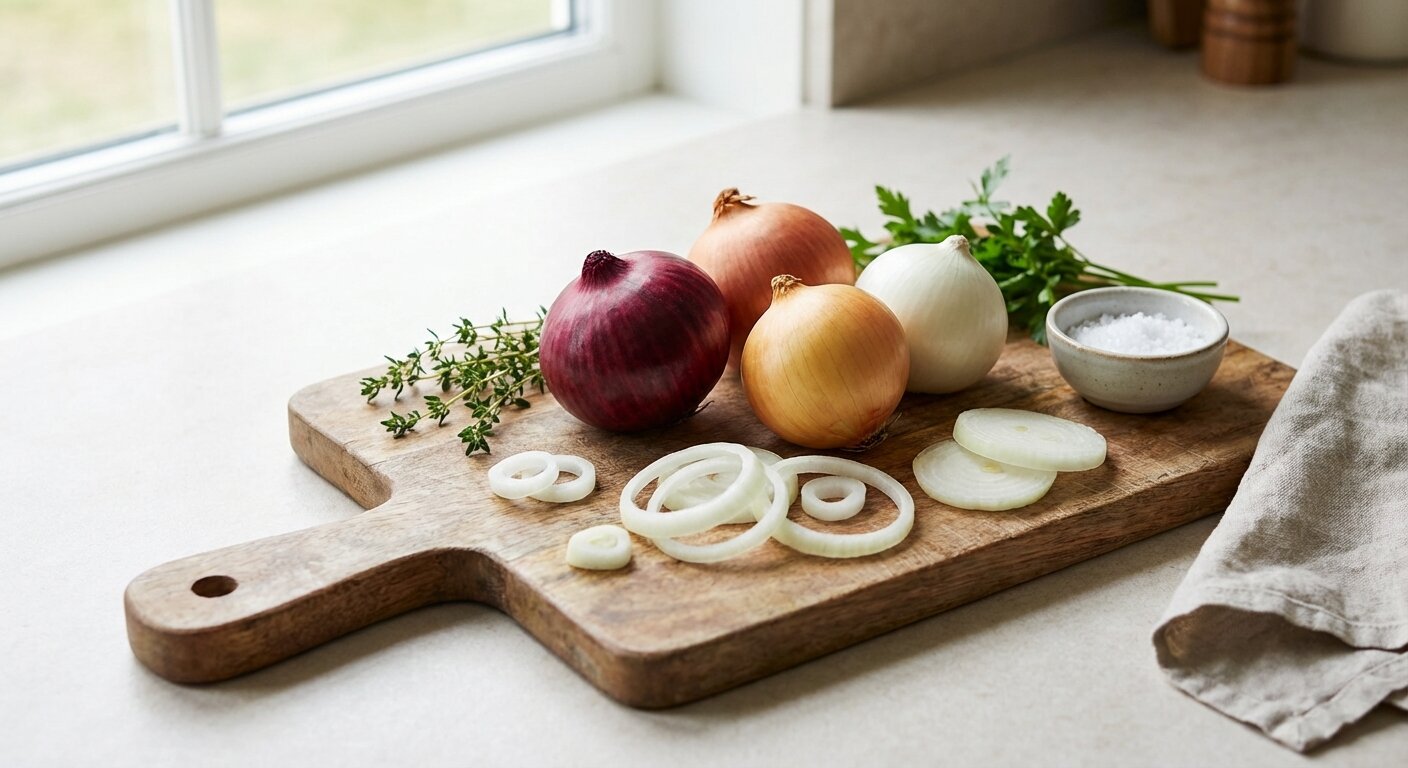
Related: Learn more about what macros are and how they impact your diet.
Onion Macros: Everything You Need to Know
Onions are one of the most versatile ingredients in cooking, forming the flavor foundation for countless dishes worldwide. But what exactly are the macros in onions, and how do they impact your nutrition goals?
Whether you’re counting macros for weight loss, muscle building, or general health, understanding onion macronutrients helps you track accurately and make informed choices. Raw onions are relatively low in calories while providing fiber, vitamins, and powerful antioxidants like quercetin. Their unique combination of flavor compounds means you can use small amounts to dramatically enhance meals without derailing your macro targets.
In this guide, we’ll break down the complete macro profile for every type of onion—from raw red, yellow, and white onions to cooked, sautéed, and caramelized preparations. You’ll learn how cooking methods affect their nutrition, how to track them accurately in different recipes, and whether onions fit into keto, low-carb, or calorie-restricted diets.
Ready to calculate the exact macros for your serving? Use our free macro calculator to get personalized macro targets based on your goals, then come back to see exactly how onions fit into your plan.
Complete Onion Macro Breakdown
Raw Onion Macros (Per 100g)
| Nutrient | Amount |
|---|---|
| Calories | 40 kcal |
| Protein | 1.1g |
| Carbohydrates | 9.3g |
| Fiber | 1.7g |
| Net Carbs | 7.6g |
| Sugars | 4.2g |
| Fat | 0.1g |
| Water | 89.1g |
Common Serving Sizes
Medium Onion (110g)
- Calories: 44
- Protein: 1.2g
- Carbs: 10.2g (8.3g net)
- Fat: 0.1g
Large Onion (150g)
- Calories: 60
- Protein: 1.7g
- Carbs: 14.0g (11.5g net)
- Fat: 0.2g
Small Onion (70g)
- Calories: 28
- Protein: 0.8g
- Carbs: 6.5g (5.3g net)
- Fat: 0.1g
1 Cup Chopped Raw (160g)
- Calories: 64
- Protein: 1.8g
- Carbs: 14.9g (12.2g net)
- Fat: 0.2g
1/2 Cup Chopped Raw (80g)
- Calories: 32
- Protein: 0.9g
- Carbs: 7.4g (6.1g net)
- Fat: 0.1g
1/4 Cup Chopped Raw (40g)
- Calories: 16
- Protein: 0.4g
- Carbs: 3.7g (3.0g net)
- Fat: 0g
Onion Varieties: Macro Comparison
Red Onions (Per 100g)
| Nutrient | Amount |
|---|---|
| Calories | 40 kcal |
| Protein | 1.1g |
| Carbs | 9.3g (7.6g net) |
| Fat | 0.1g |
Best for: Salads, raw applications, grilling, pickling. Red onions have the highest antioxidant content (especially anthocyanins) and a slightly milder, sweeter flavor when raw.
Yellow Onions (Per 100g)
| Nutrient | Amount |
|---|---|
| Calories | 40 kcal |
| Protein | 1.1g |
| Carbs | 9.3g (7.6g net) |
| Fat | 0.1g |
Best for: Cooking, caramelizing, soup bases, general purpose. Yellow onions have the most robust flavor and become sweeter when cooked. They’re the most common variety for cooked dishes.
White Onions (Per 100g)
| Nutrient | Amount |
|---|---|
| Calories | 39 kcal |
| Protein | 1.0g |
| Carbs | 9.2g (7.5g net) |
| Fat | 0.1g |
Best for: Mexican cuisine, salsas, milder raw applications. White onions have a sharper, cleaner flavor when raw and a milder taste when cooked.
Sweet Onions - Vidalia, Walla Walla (Per 100g)
| Nutrient | Amount |
|---|---|
| Calories | 42 kcal |
| Protein | 0.8g |
| Carbs | 10.1g (8.4g net) |
| Fat | 0.1g |
| Sugars | 6.8g |
Best for: Raw eating, sandwiches, burgers, light sautéing. Sweet onions have higher sugar content and lower sulfur compounds, making them milder and sweeter.
Shallots (Per 100g)
| Nutrient | Amount |
|---|---|
| Calories | 72 kcal |
| Protein | 2.5g |
| Carbs | 16.8g (13.5g net) |
| Fat | 0.1g |
Best for: Refined French cooking, vinaigrettes, sauces. Shallots are more carb-dense but have a delicate, complex flavor between onions and garlic.
Green Onions/Scallions (Per 100g)
| Nutrient | Amount |
|---|---|
| Calories | 32 kcal |
| Protein | 1.8g |
| Carbs | 7.3g (4.7g net) |
| Fat | 0.2g |
Best for: Garnishes, Asian cuisine, raw applications. Green onions are lower in calories and carbs than bulb onions and provide more vitamin K and vitamin C.
How Cooking Affects Onion Macros
Raw vs. Cooked Comparison (Per 100g)
| Type | Calories | Protein | Carbs | Fiber | Fat |
|---|---|---|---|---|---|
| Raw Onion | 40 | 1.1g | 9.3g | 1.7g | 0.1g |
| Sautéed Onion | 46 | 1.2g | 10.7g | 1.7g | 0.2g |
| Caramelized Onion | 80 | 1.8g | 18.3g | 2.2g | 0.3g |
| Boiled Onion | 42 | 1.4g | 9.7g | 1.4g | 0.2g |
| Grilled Onion | 44 | 1.3g | 10.0g | 1.8g | 0.2g |
Why Caramelized Onions Have More Carbs
Caramelized onions appear to have “more” carbs because water evaporates during long cooking, concentrating the sugars and nutrients. You’re not adding carbs—you’re removing water.
Example:
- 200g raw onions = 80 calories, 18.6g carbs
- After caramelizing → reduces to ~100g = 80 calories, 18.3g carbs
The total carbs remain the same, but per 100g appears doubled because you’ve lost half the weight in water. This is critical for accurate tracking: always track by raw weight before cooking, or use specific “caramelized” entries if weighing after.
Cooking Method Impact
Sautéing (5-7 minutes): Minimal macro changes. Slight water loss, small increase in carb density. If using oil, track the oil separately (120 calories per tablespoon).
Caramelizing (30-45 minutes): Significant water loss (40-50%), concentrated sugars, browning reactions. Track by raw weight or use caramelized entries and reduce quantity.
Boiling: Some water-soluble nutrients leach into water, slight softening. Macros remain nearly identical to raw.
Grilling/Roasting: Similar to sautéing with moderate water loss and concentrated flavor.
Onions for Different Diet Goals
Onions for Weight Loss
Onions are excellent for weight loss:
✅ Low calorie density: 40 calories per 100g makes them very filling for minimal calories
✅ High fiber content: 1.7g fiber per 100g supports satiety and digestive health
✅ Prebiotic fiber: Feeds beneficial gut bacteria linked to better weight management
✅ Volume without calories: Adds bulk to meals (soups, stir-fries, salads) without high energy density
✅ Flavor enhancement: Strong taste means a little goes far, unlike calorie-dense flavor boosters
Tip: Use onions as a base for low-calorie, high-volume meals. A cup of caramelized onions (80 calories) can transform a simple protein and vegetable dish.
Onions on Keto
Onions can work on keto with careful measurement:
Medium onion (110g): 8.3g net carbs
1/4 cup chopped (40g): 3.0g net carbs
2 tbsp chopped (20g): 1.5g net carbs
Keto Strategy:
- Use onions as a flavor base, not the main ingredient
- Measure portions carefully—track by weight, not “one onion”
- Prioritize green onions (4.7g net carbs per 100g) over bulb onions
- Use shallots sparingly (13.5g net carbs per 100g)
- Caramelized onions are carb-dense; use tiny amounts for flavor
Best keto approach: 1/4 to 1/2 onion spread across an entire recipe serving 4-6 people = 1-2g net carbs per serving.
Onions for Low-Carb Diets
For low-carb diets (50-100g carbs/day), onions are more flexible:
- 1 medium onion = 8.3g net carbs (manageable in one meal)
- 1 cup chopped = 12.2g net carbs (still reasonable as a vegetable serving)
Onions fit easily into low-carb meal plans, especially when balanced with lower-carb vegetables like leafy greens, zucchini, and cauliflower.
Onions for Muscle Building
Onions aren’t a protein source (only 1.1g per 100g), but they support muscle building indirectly:
✅ Quercetin content: May reduce inflammation and support recovery
✅ Antioxidants: Combat oxidative stress from intense training
✅ Gut health: Prebiotic fiber improves nutrient absorption
✅ Flavor: Makes lean proteins more enjoyable and sustainable long-term
Tip: Pair onions with high-protein foods like grilled chicken, lean beef, eggs, or tofu for a complete muscle-building meal.
Nutritional Benefits Beyond Macros
Vitamins and Minerals
Vitamin C: 7.4mg per 100g (12% DV) – supports immune function and collagen production
Vitamin B6: 0.12mg (7% DV) – important for protein metabolism
Folate: 19mcg (5% DV) – essential for cell division and DNA synthesis
Potassium: 146mg (4% DV) – supports heart health and fluid balance
Manganese: 0.13mg (6% DV) – aids bone health and metabolism
Powerful Antioxidants
Quercetin: One of the richest dietary sources. May reduce inflammation, support heart health, and have anti-cancer properties.
Anthocyanins: Found in red onions, these give the purple color and provide cardiovascular benefits.
Sulfur compounds: Responsible for onion’s pungent smell when cut. May support heart health and have antimicrobial properties.
Prebiotic Fiber
Onions contain inulin and fructooligosaccharides (FOS), prebiotic fibers that feed beneficial gut bacteria. This supports:
- Improved digestion
- Better nutrient absorption
- Enhanced immune function
- Possible mood and mental health benefits
How to Track Onions Accurately
Weighing Raw vs. Cooked
Best practice: Track onions raw before cooking.
- Weigh whole onions or chopped onions before adding to the pan
- Use “onions, raw” in your tracking app
- Cooking methods vary in water loss, making “cooked” entries unreliable
If weighing cooked:
- Use specific entries: “onions, sautéed,” “onions, caramelized”
- Recognize that caramelized entries show ~2x the carbs per 100g due to water loss
- When possible, calculate back to raw weight for accuracy
Measuring by Volume
Volume measurements (cups, tablespoons) are less accurate but acceptable:
- 1 cup chopped = ~160g raw
- 1/2 cup chopped = ~80g raw
- 1/4 cup chopped = ~40g raw
- 1 tbsp chopped = ~10g raw
For best results, weigh onions on a food scale. A $15 kitchen scale dramatically improves macro tracking accuracy.
Common Tracking Mistakes
❌ Using “1 medium onion” without weighing: Onion sizes vary wildly (70g to 150g)
❌ Not accounting for cooking oil: Sautéed onions often add 1-2 tbsp oil (120-240 calories)
❌ Tracking caramelized onions by volume: Condensed onions pack more densely
❌ Ignoring onions in recipes: “Just a little onion” in soup can add 50-100 calories
Solution: Weigh ingredients before cooking, track each component separately (onions + oil), and include all ingredients even if they seem minor.
Onion Meal Ideas by Macro Goal
Low-Calorie, High-Volume Meals
French Onion Soup (without bread/cheese topping)
- Base: 3 cups caramelized onions (240 cal)
- Beef broth: 4 cups (40 cal)
- Total: 280 calories for a huge, filling bowl
Onion and Vegetable Stir-Fry
- 1 cup onions (64 cal)
- 2 cups bell peppers (60 cal)
- 2 cups zucchini (40 cal)
- 200g chicken breast (220 cal)
- Total: 384 calories, high volume, very filling
Keto-Friendly Recipes
Keto Burger with Onions
- 1/4 onion raw, sliced (11 cal, 2.1g net carbs)
- 6oz 80/20 ground beef (420 cal, 0g carbs)
- Lettuce wrap (5 cal, 0.5g net carbs)
- Total: 436 cal, 2.6g net carbs
Steak with Caramelized Onion Topping
- 2 tbsp caramelized onions (16 cal, 3.7g net carbs)
- 8oz ribeye (560 cal, 0g carbs)
- Steamed asparagus (30 cal, 2g net carbs)
- Total: 606 cal, 5.7g net carbs
High-Protein, Moderate-Carb Meals
Chicken Fajita Bowl
- 1 cup sautéed onions and peppers (80 cal, 12g carbs)
- 8oz grilled chicken (320 cal, 60g protein)
- 1/2 cup black beans (110 cal, 8g protein, 20g carbs)
- Salsa and Greek yogurt (50 cal, 5g protein)
- Total: 560 cal, 73g protein, 32g carbs
Onion and Egg Scramble
- 1/2 cup sautéed onions (32 cal, 6g net carbs)
- 3 whole eggs (210 cal, 18g protein)
- 1 cup spinach (7 cal)
- 1 oz cheese (110 cal, 7g protein)
- Total: 359 cal, 25g protein, 6g net carbs
Meal Prep and Storage Tips
How to Store Raw Onions
Whole onions:
- Store in a cool, dry, dark place with good air circulation
- Avoid plastic bags (causes moisture buildup and sprouting)
- Keep away from potatoes (they release gases that spoil each other)
- Properly stored onions last 2-3 months
Cut onions:
- Store in an airtight container in the refrigerator
- Use within 7-10 days
- Freezing is not recommended for raw onions (texture degrades)
How to Meal Prep Cooked Onions
Caramelized onions:
- Batch cook 4-6 onions at once (1 hour of caramelizing)
- Portion into ice cube trays or small containers
- Refrigerate up to 1 week, freeze up to 3 months
- Add to eggs, burgers, steaks, pizzas for instant flavor
Sautéed onions:
- Cook in batches with minimal oil
- Store in refrigerator for 4-5 days
- Reheat in microwave or add directly to recipes
Grilled onion slices:
- Grill thick slices (1/2 inch) with light oil spray
- Layer between parchment paper in containers
- Refrigerate up to 5 days
- Add to sandwiches, salads, bowls
Freezing Onions
Raw onions: Dice and freeze in portions. Texture becomes soft (not suitable for raw use), but fine for cooked dishes.
Cooked onions: Freeze caramelized or sautéed onions in ice cube trays or small portions. Use directly from frozen in recipes.
Frequently Asked Questions
What are the macros in one medium onion?
One medium onion (110g) contains 44 calories with 10.2g carbohydrates (8.3g net carbs after subtracting 1.9g fiber), 1.2g protein, and 0.1g fat. The vast majority of an onion’s calories come from carbohydrates, primarily natural sugars like fructose and glucose. Despite being carb-dominant, onions are still considered a low-calorie vegetable because of their high water content (about 89%).
For context, that medium onion represents less than 5% of a typical 2,000-calorie diet, making it easy to incorporate into meals without significantly affecting your daily macro targets. The fiber content, though modest at 1.9g per onion, contributes to digestive health and provides prebiotic benefits that support gut bacteria.
Are onions high in carbs?
Onions are moderately carb-dense compared to other vegetables. At 9.3g total carbs per 100g (7.6g net carbs), they’re higher than leafy greens like spinach (1.4g net carbs) or zucchini (2.1g net carbs), but lower than starchy vegetables like potatoes (15.4g net carbs) or sweet potatoes (17.1g net carbs).
For most people following a standard diet, onions are not considered “high-carb” and can be eaten freely. However, for very low-carb or strict ketogenic dieters targeting under 20-30g net carbs daily, onions need to be measured and used in moderation. A medium onion could represent 25-40% of a keto dieter’s daily carb allowance, so they’re typically used as a flavoring agent rather than a main ingredient.
The carbs in onions are primarily simple sugars (4.2g per 100g) and fiber (1.7g per 100g). The natural sweetness intensifies when cooked, especially during caramelization, as heat breaks down complex sugars into simpler, sweeter forms.
Do onions have protein?
Onions contain minimal protein—only 1.1g per 100g or about 1.2g per medium onion. This makes them an insignificant source of protein in your diet. To put this in perspective, you’d need to eat about 15 medium onions to get the same protein as one chicken breast.
While onions won’t contribute meaningfully to your protein goals, they’re still valuable in a high-protein diet for other reasons. They add flavor, volume, and nutrients to protein-rich meals without adding many calories. Onions also provide quercetin and other antioxidants that may help reduce inflammation from intense training, supporting recovery and overall health.
If you’re focused on building muscle or hitting protein targets, pair onions with genuine protein sources like lean meats, fish, eggs, Greek yogurt, or legumes. Think of onions as a flavor enhancer and nutrient booster, not a protein contributor.
Do cooked onions have more carbs than raw onions?
No, cooking doesn’t add carbohydrates to onions. However, cooked onions—especially caramelized onions—appear to have more carbs per 100g because they’ve lost water weight through evaporation. The total carbohydrate content of the onions remains the same; it’s just concentrated into a smaller volume.
Here’s what happens: 200g of raw onions contain about 18.6g carbs. After 30-45 minutes of caramelizing, those onions reduce to roughly 100g due to water loss. Those 100g still contain the same 18.6g carbs, but now it’s 18.6g per 100g instead of 9.3g per 100g.
For accurate macro tracking, always weigh and log onions before cooking, or use specific “caramelized onion” entries in your tracking app. If you’re making a recipe with 3 medium onions that you’ll caramelize and split into 6 servings, track “0.5 medium onion, raw” per serving, not “1/6 cup caramelized onions” (which could be inaccurate due to varying water loss).
Can I eat onions on keto?
Yes, you can eat onions on keto, but portion control is essential. A medium onion contains 8.3g net carbs, which is significant when your total daily target might be 20-50g net carbs.
The key is using onions as a flavor base rather than a main ingredient. Here are keto-friendly strategies:
- Use 1/4 to 1/2 onion for recipes that serve multiple people (distributes carbs across servings)
- Prioritize green onions/scallions (4.7g net carbs per 100g) over bulb onions
- Measure portions carefully—use a food scale, not estimates
- Avoid caramelized onions or use them as a tiny garnish (they’re carb-dense)
- Consider onion powder for flavor with minimal carbs (1 tsp = 0.5g net carbs)
For example, if you’re making a keto chili for 6 people with 1 medium onion, you’re adding only ~1.4g net carbs per serving. That’s manageable. But if you’re eating a burger topped with 1/2 cup caramelized onions, you’re consuming 12-15g net carbs from onions alone—a significant portion of your daily keto allowance.
What’s the difference between red, yellow, and white onion macros?
The macro differences between onion varieties are minimal. All types contain approximately 40 calories and 9-10g carbs per 100g. The primary differences are in flavor, texture, and specific phytonutrient profiles, not macronutrients.
Red onions: 40 cal, 9.3g carbs per 100g. Highest in anthocyanins (purple pigments) which are powerful antioxidants. Slightly milder and sweeter raw, making them ideal for salads.
Yellow onions: 40 cal, 9.3g carbs per 100g. Most robust flavor, highest sulfur content. Best for cooking and caramelizing as they develop deep, sweet, complex flavors.
White onions: 39 cal, 9.2g carbs per 100g. Sharper, cleaner flavor when raw. Popular in Mexican cuisine and fresh salsas.
Sweet onions (Vidalia, Walla Walla): 42 cal, 10.1g carbs per 100g. Slightly higher in sugars (6.8g vs. 4.2g) and lower in sulfur compounds, making them milder and sweeter. They’re better for raw applications but don’t caramelize as well.
From a macro tracking perspective, you can use the same nutritional values for red, yellow, and white onions. Only sweet onions have a slightly different profile worth noting if you’re being very precise.
Are onions good for weight loss?
Yes, onions are excellent for weight loss for several reasons:
Low calorie density: At 40 calories per 100g, onions provide substantial volume with minimal calories. You can add a full cup of chopped onions to a meal for only 64 calories.
High fiber content: The 1.7g fiber per 100g supports satiety and digestive health, helping you feel fuller longer. Fiber also slows digestion and helps stabilize blood sugar.
Prebiotic benefits: Onions contain inulin and fructooligosaccharides (FOS) that feed beneficial gut bacteria. Emerging research links healthy gut microbiomes to better weight management and metabolism.
Flavor enhancement: Onions add significant flavor to meals without needing calorie-dense sauces or seasonings. This makes healthy, low-calorie foods like lean proteins and vegetables more enjoyable and sustainable long-term.
Versatility: You can use onions in countless dishes—soups, stir-fries, salads, omelets, roasted vegetables—adding variety to a weight loss diet without adding significant calories.
The key is preparation: raw, sautéed with minimal oil, grilled, or boiled onions are great for weight loss. Avoid deep-fried onion rings, onions cooked in excessive butter, or creamy onion dips, which add hundreds of calories from added fats.
How many calories are in a cup of chopped onions?
One cup of chopped raw onion (approximately 160g) contains about 64 calories. This breaks down to 14.9g carbohydrates (12.2g net carbs after 2.7g fiber), 1.8g protein, and 0.2g fat.
This makes onions an incredibly low-calorie way to add volume, flavor, and nutrients to your meals. A full cup of onions is less than 4% of a 2,000-calorie diet, yet it can transform the flavor profile of soups, stews, stir-fries, and sauces.
If you’re using onions in cooked dishes, remember that they reduce significantly in volume. One cup of raw chopped onions might cook down to 1/2 cup or less, depending on the cooking method and time. For sautéed onions with oil, add the calories from the cooking fat separately (typically 1-2 tablespoons = 120-240 additional calories).
For weight loss or calorie-conscious eating, onions are one of the best ingredients to bulk up meals. They provide the satisfying sensation of eating more food without adding many calories to your daily total.
Conclusion
Onions are a nutritional powerhouse that fits into virtually any diet. With only 40 calories and 9.3g carbs per 100g, they provide tremendous flavor, volume, and health benefits with minimal macro impact.
Key takeaways:
- Medium onion: 44 calories, 10.2g carbs (8.3g net), 1.2g protein
- Cooking concentrates carbs through water loss—track by raw weight for accuracy
- Keto-friendly in moderation: Use small amounts as a flavor base
- Excellent for weight loss: Low calories, high fiber, prebiotic benefits
- Variety differences are minimal: Red, yellow, and white onions have nearly identical macros
Whether you’re sautéing onions for a stir-fry, caramelizing them for French onion soup, or adding raw slices to a salad, onions enhance meals without derailing your nutrition goals.
Ready to build your complete macro plan? Use our free macro calculator to get personalized targets for your goals, then track your onion intake accurately. For more guides on tracking whole foods, check out our complete library of food macro guides.
Related guides you might find helpful:
- Garlic Macros - Another aromatic vegetable staple
- Tomato Macros - Common cooking companion to onions
- Bell Pepper Macros - Colorful, low-carb vegetable option
Related Articles

Dragonfruit Macros: Complete Nutrition Guide for Pitaya
Complete macro breakdown of dragonfruit (pitaya). Learn the calories, protein, carbs, and...
Read guide →
Bulgur Macros: Complete Nutritional Guide & Health Benefits
Discover bulgur's complete macro breakdown, nutritional benefits, and how to incorporate...
Read guide →
Radish Macros: Nutrition Facts and Health Benefits
Complete guide to radish macros and nutrition. Learn calories, protein, carbs, and health...
Read guide →Note: Nutrition values are approximate and may vary based on preparation method and source.