Orange Juice Macros: Nutrition Facts, Calories & Sugar Breakdown
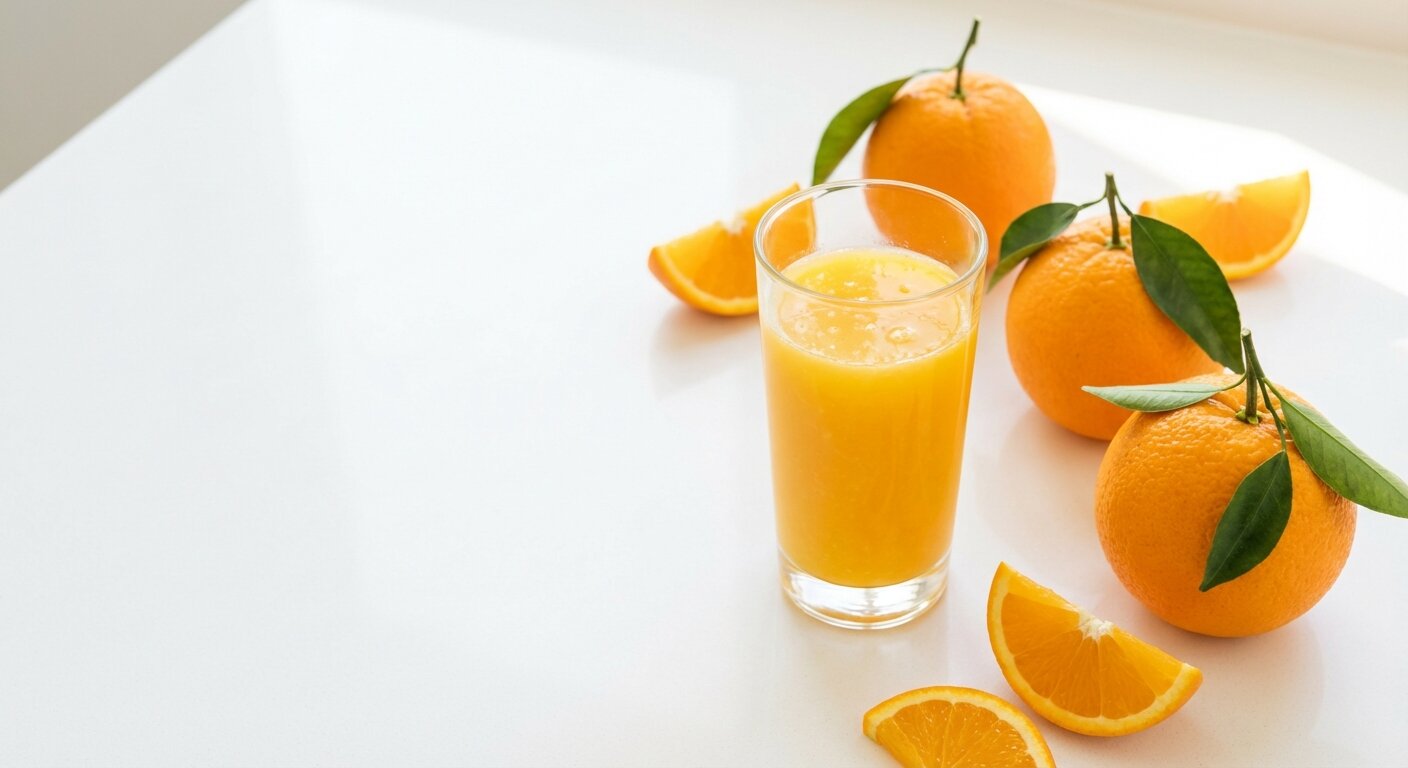
Related: Learn more about what macros are and how they impact your diet.
Orange Juice Macros Overview
Per 8 oz (240ml) serving of 100% orange juice:
- Calories: 110
- Protein: 2g
- Carbs: 26g
- Fat: 0g
- Fiber: 0.5g
- Sugar: 21g
Orange juice is a carbohydrate-rich beverage with virtually no protein or fat. It’s packed with vitamin C (137% DV per serving) but contains significantly less fiber than whole oranges.
The macronutrient profile makes orange juice a quick source of energy and micronutrients, but its high sugar content and low fiber mean it impacts blood sugar more rapidly than eating whole fruit.
Understanding these macros helps you decide how—and when—to include orange juice in your nutrition plan, whether you’re cutting, bulking, or maintaining.
Ready to track your complete macronutrient intake? Use our macro calculator to determine your personalized protein, carb, and fat targets based on your goals.
Complete Macronutrient Breakdown
Standard Serving Size (8 oz / 240ml)
This is the most common serving size for orange juice—what you’d pour into a standard drinking glass.
| Nutrient | Amount | % Daily Value |
|---|---|---|
| Calories | 110 | 6% (2,000 cal diet) |
| Protein | 2g | 4% |
| Carbohydrates | 26g | 9% |
| Fiber | 0.5g | 2% |
| Sugars | 21g | — |
| Fat | 0g | 0% |
| Vitamin C | 124mg | 137% |
| Folate | 45mcg | 11% |
| Potassium | 496mg | 14% |
| Thiamin (B1) | 0.2mg | 18% |
Nutritional data based on USDA FoodData Central for 100% orange juice
Different Serving Sizes
Orange juice servings vary significantly depending on context:
Small Serving (4 oz / 120ml):
- Calories: 55
- Protein: 1g
- Carbs: 13g
- Sugar: 10.5g
Standard Glass (8 oz / 240ml):
- Calories: 110
- Protein: 2g
- Carbs: 26g
- Sugar: 21g
Large Glass (12 oz / 355ml):
- Calories: 165
- Protein: 3g
- Carbs: 39g
- Sugar: 31.5g
Restaurant Serving (16 oz / 473ml):
- Calories: 220
- Protein: 4g
- Carbs: 52g
- Sugar: 42g
Restaurant and fast-food establishments often serve 12-16oz portions, which can contain nearly double the calories and sugar of a standard home serving.
Fresh-Squeezed vs Store-Bought: Macro Comparison
Not all orange juice is created equal. Processing methods significantly impact both macronutrients and micronutrients.
Fresh-Squeezed Orange Juice (Home-Made)
Per 8 oz serving:
- Calories: 85-95
- Protein: 1.5-2g
- Carbs: 20-22g
- Fiber: 0.5-1g
- Sugar: 18-20g (natural)
- Vitamin C retention: 100%
Fresh-squeezed juice retains maximum nutrients and beneficial plant compounds (flavonoids) since there’s no processing or storage time.
100% Orange Juice (Store-Bought, Not From Concentrate)
Per 8 oz serving:
- Calories: 110
- Protein: 2g
- Carbs: 25.5g
- Fiber: 0.5g
- Sugar: 21g (natural)
- Vitamin C retention: ~85%
Commercial processing removes oxygen to extend shelf life but also reduces vitamin C by approximately 15% and folate by up to 27% compared to fresh-squeezed.
Orange Juice From Concentrate
Per 8 oz serving:
- Calories: 110-120
- Protein: 2g
- Carbs: 26-28g
- Fiber: 0-0.5g
- Sugar: 22-24g
Made by removing water from juice, then reconstituting it. Nutritionally similar to not-from-concentrate varieties, though some studies show slightly lower antioxidant activity after storage.
Orange Juice Cocktails/Drinks (Contains Added Sugar)
Per 8 oz serving:
- Calories: 140-180
- Protein: 0-1g
- Carbs: 35-45g
- Fiber: 0g
- Sugar: 30-40g (natural + added)
These products typically contain only 10-60% real juice plus high-fructose corn syrup, artificial flavors, and coloring. Check labels carefully—if it doesn’t say “100% juice,” it contains added sugars.
Key Takeaway: Stick with 100% orange juice (fresh-squeezed or store-bought) to avoid unnecessary added sugars and maximize nutritional value.
Orange Juice vs Whole Oranges: The Fiber Factor
One of the most significant differences between orange juice and whole oranges is fiber content—and it dramatically affects how your body processes the carbohydrates.
One Medium Orange (131g) Contains:
- Calories: 62
- Protein: 1g
- Carbs: 15g
- Fiber: 3g
- Sugar: 12g
8 oz Orange Juice (equivalent to ~2 oranges) Contains:
- Calories: 110
- Protein: 2g
- Carbs: 25.5g
- Fiber: 0.5g
- Sugar: 21g
Why This Matters
Satiety: The 3g of fiber in a whole orange helps you feel full and satisfied. Orange juice’s 0.5g provides almost no satiety, making it easy to consume excess calories without feeling satisfied.
Blood Sugar Impact: Fiber slows the absorption of sugar into your bloodstream. Whole oranges have a glycemic load of 3-6, while orange juice ranges from 10-15—meaning juice raises blood sugar significantly faster.
Calorie Density: You can drink two oranges’ worth of juice in seconds, consuming 110 calories. Eating two whole oranges takes longer, provides more volume, and delivers only 124 calories with 6g of fiber.
Practical Application: If you’re tracking macros for weight loss or blood sugar control, whole oranges are superior. If you need quick energy pre-workout or can’t access whole fruit, orange juice works—but be mindful of portions.
For more guidance on tracking your carbohydrate intake, check out our guide on carbohydrates.
How to Fit Orange Juice Into Your Macros
Orange juice can fit various nutritional strategies when consumed strategically. Here’s how to work it into different macro plans.
For Weight Loss / Cutting
Challenge: High calories and low satiety make OJ risky for weight loss.
Strategies:
- Limit to 4-6 oz daily (55-85 calories) if you include it at all
- Dilute with water (50/50 ratio) to reduce calorie density
- Choose whole oranges instead whenever possible for better satiety
- Time it strategically: Post-workout when your body can utilize quick carbs
- Track carefully: Orange juice calories don’t fill you up, so they compete with more satiating foods
Research shows adults who drink one 8oz serving of 100% fruit juice daily gain an average of 0.5-0.75 pounds over four years. If cutting calories matters, OJ should be low priority.
For Maintenance
Strategy: Moderate intake as part of total carb budget.
Guidelines:
- 8 oz daily maximum (110 calories)
- Count toward fruit servings: Juice should make up no more than half your daily fruit quota (so if you drink 8oz OJ, eat at least one whole fruit)
- Choose 100% juice with pulp for added flavonoids and plant compounds
- Monitor blood sugar response: If you’re insulin sensitive, OJ may cause energy crashes
Orange juice can be a convenient way to meet fruit recommendations, but whole fruit should still dominate your intake.
For Bulking / Muscle Gain
Advantage: Calorie-dense liquid carbs are easy to consume when you need surplus calories.
Strategies:
- 8-16 oz daily (110-220 calories) can help meet carb targets
- Time around workouts: Fast-absorbing carbs pre- or post-training support performance and recovery
- Combine with protein: Pair OJ with a protein source to balance macros (e.g., OJ + protein shake)
- Use as a calorie booster: If you struggle to eat enough, liquid calories like OJ help reach surplus without excessive fullness
While bulking, OJ’s lack of fiber becomes an advantage—you can consume significant carbs and calories without feeling overly full.
For Athletes / Pre-Workout Fuel
Use Case: Quick-digesting carbs before intense training.
Guidelines:
- 4-8 oz 30-60 minutes pre-workout provides 55-110 calories of fast energy
- Low fiber means less GI distress during training
- Pair with simple protein (e.g., whey shake) if your workout is longer than 60 minutes
- Post-workout: 8-12 oz can help replenish glycogen when paired with protein
Orange juice’s rapid sugar absorption, normally a drawback, becomes beneficial when you need immediate fuel.
For personalized macro targets based on your training and goals, try our TDEE calculator to determine your daily calorie needs.
Sugar in Orange Juice: What You Need to Know
Orange juice’s sugar content is one of its most controversial aspects. Let’s break down what you’re actually consuming.
Natural vs Added Sugar
100% Orange Juice Contains ONLY Natural Sugar:
- Fructose (fruit sugar)
- Glucose
- Sucrose
These sugars occur naturally in oranges—there’s nothing added. However, juicing removes the fiber that would normally slow sugar absorption when eating whole fruit.
Orange Juice Drinks/Cocktails Contain Added Sugar:
- High-fructose corn syrup
- Cane sugar
- Other sweeteners
Always check the ingredient list. If anything beyond “oranges” or “orange juice” appears, it contains added sugars.
How Much Sugar is in Orange Juice?
Per 8 oz (240ml) 100% Orange Juice:
- Total Sugar: 21g
- That’s equivalent to approximately 5 teaspoons of sugar
For Context:
- One medium orange: 12g sugar
- One 12oz Coca-Cola: 39g sugar (added)
- One tablespoon of honey: 17g sugar
While orange juice has less sugar than soda, it’s still a concentrated source—especially without the fiber of whole fruit.
Blood Sugar Impact (Glycemic Response)
The glycemic load (GL) measures how quickly and significantly a food raises blood sugar:
- Whole Orange: GL of 3-6 (low)
- Orange Juice: GL of 10-15 (medium)
- Higher GL = faster, more significant blood sugar spike
For people managing diabetes, insulin resistance, or trying to control cravings, this difference matters. The fiber in whole oranges slows sugar absorption; juice hits your bloodstream much faster.
Should You Worry About Orange Juice Sugar?
It Depends:
You Can Consume OJ More Freely If:
- You’re highly active (athletes, heavy training)
- You need quick energy pre/post-workout
- You’re bulking and need calorie surplus
- You have healthy insulin sensitivity
Be More Cautious If:
- You’re trying to lose weight
- You have diabetes or prediabetes
- You’re insulin resistant
- You struggle with energy crashes after sugary foods
The sugar in orange juice isn’t inherently “bad,” but its rapid absorption without fiber makes it more impactful than whole fruit.
Comparing Orange Juice to Other Popular Beverages
How does orange juice stack up against other common drinks?
Orange Juice vs Apple Juice
Orange Juice (8 oz):
- Calories: 110 | Carbs: 26g | Sugar: 21g
- Vitamin C: 137% DV
- Folate: 11% DV
Apple Juice (8 oz):
- Calories: 115 | Carbs: 28g | Sugar: 24g
- Vitamin C: 2% DV
- Potassium: 5% DV
Winner: Orange juice for vitamin C and folate content, though apple juice is slightly higher in calories and sugar.
Orange Juice vs Milk
Orange Juice (8 oz):
- Calories: 110 | Protein: 2g | Carbs: 26g | Fat: 0g
Whole Milk (8 oz):
- Calories: 150 | Protein: 8g | Carbs: 12g | Fat: 8g
Winner: Depends on your goals. Milk provides significantly more protein and healthy fats, making it more balanced. OJ provides more carbs and vitamin C but lacks protein and fat.
Orange Juice vs Sports Drinks (Gatorade)
Orange Juice (8 oz):
- Calories: 110 | Carbs: 26g | Sugar: 21g
- Electrolytes: Moderate potassium (496mg)
Gatorade (8 oz):
- Calories: 50 | Carbs: 14g | Sugar: 14g
- Electrolytes: Sodium (110mg), potassium (30mg)
Winner: Gatorade for hydration during intense exercise (added sodium helps fluid retention). Orange juice for nutrient density and post-workout carb replenishment.
Want to see how Gatorade’s macros compare? Check out our full guide on Gatorade macros.
Orange Juice vs Energy Drinks (Red Bull)
Orange Juice (8 oz):
- Calories: 110 | Carbs: 26g | Sugar: 21g
- Natural vitamins and antioxidants
Red Bull (8.4 oz):
- Calories: 110 | Carbs: 27g | Sugar: 26g
- Added caffeine (80mg), taurine, B-vitamins
Winner: Orange juice for whole-food nutrition. Red Bull for caffeine-driven energy boost (but comes with added sugars and synthetic ingredients).
For a deeper dive into energy drink macros, see our guide on Red Bull macros.
Best Types of Orange Juice for Your Nutrition Goals
Not all orange juice products are created equal. Here’s how to choose the best option for your needs.
Best Overall: Fresh-Squeezed at Home
Why it’s best:
- Maximum vitamin C and antioxidants
- No processing or storage degradation
- Control over pulp content
- No additives or preservatives
Drawback: Time-consuming and requires fresh oranges.
Best Store-Bought: 100% Orange Juice with Pulp
Why it’s good:
- Pulp adds flavonoids and beneficial plant compounds
- No added sugars or artificial ingredients
- Convenient and available year-round
Look for labels that say:
- “100% orange juice”
- “Not from concentrate” (slightly higher nutrient retention)
- “Pulp” or “extra pulp”
Avoid labels with:
- “Cocktail” or “drink”
- Any ingredient other than oranges/orange juice
- “Made with real fruit” (usually only 10-40% real juice)
Best Low-Calorie Option: Diluted Orange Juice
Why it works:
- 50/50 orange juice and water cuts calories in half (55 per 8oz)
- Still provides vitamin C and flavor
- Reduces sugar impact
Best for: Weight loss, blood sugar control, or those who find full-strength OJ too sweet.
Best for Athletes: 100% OJ Not From Concentrate
Why it works:
- Fast-absorbing carbs for pre/post-workout fuel
- Potassium supports muscle function
- Convenient liquid format
Best for: Endurance athletes, lifters needing quick carbs, or anyone who trains intensely.
Worst Option: Orange Juice Drinks/Cocktails
Why to avoid:
- Added sugars (high-fructose corn syrup)
- Artificial colors and flavors
- Minimal real juice (sometimes as low as 10%)
- Higher calories with fewer nutrients
Always read the ingredient list—if it’s more than just “oranges” or “orange juice,” put it back.
Practical Tips for Tracking Orange Juice Macros
Orange juice can be tricky to track accurately because serving sizes vary. Here’s how to do it right.
Measure Carefully
Use a liquid measuring cup—don’t eyeball it. Glasses vary significantly in size:
- Small juice glass: 4-6 oz
- Standard glass: 8 oz
- Large tumbler: 12-16 oz
Pouring “a glass” could mean anywhere from 55-220 calories depending on the actual volume.
Log the Correct Entry
In tracking apps (MyFitnessPal, Cronometer, etc.), search for:
- “Orange juice, 100%” for store-bought
- “Orange juice, raw” for fresh-squeezed
Avoid generic entries like “orange juice” without confirming the serving size and calorie count match.
Account for Pulp
Pulp doesn’t significantly change calories or macros (it adds negligible fiber), but it does add beneficial plant compounds. If you’re choosing between pulp and no-pulp, go with pulp for nutrition—but track them the same way.
Don’t Forget Restaurant Portions
Restaurant and fast-food orange juice is almost always 12-16 oz (sometimes 20 oz), not the 8 oz used in most nutritional databases. Double or triple the macros accordingly:
- 12 oz = 165 calories, 39g carbs
- 16 oz = 220 calories, 52g carbs
Consider Dilution
If you dilute your orange juice with water, adjust your tracking:
- 4 oz OJ + 4 oz water = 55 calories (half the standard serving)
This is a smart strategy for cutting calories while still enjoying the flavor.
Track Consistently
If you drink orange juice regularly, add it as a recurring food in your tracking app to save time and ensure consistency.
For a complete macro tracking guide, check out our article on best macro tracking apps.
Frequently Asked Questions
Is orange juice good for you?
Orange juice can be part of a healthy diet when consumed in moderation—8 oz or less daily. It provides vitamin C, folate, and potassium, but lacks the fiber of whole oranges and contains significant natural sugar. Opt for 100% juice with pulp, and prioritize whole fruit when possible for better satiety and blood sugar control.
Can I drink orange juice on a low-carb diet?
Orange juice is not ideal for low-carb or ketogenic diets. An 8 oz serving contains 26g of carbohydrates, which would use up most or all of a typical keto daily carb limit (20-50g). If you’re following a low-carb plan, choose lower-carb beverages like unsweetened almond milk or water with lemon.
Does orange juice contain protein?
Orange juice is not a significant source of protein—8 oz contains only 2g. If you’re trying to meet protein goals, pair OJ with high-protein foods like eggs, Greek yogurt, or a protein shake. For detailed protein guidance, see our protein guide.
Is orange juice better than soda?
Orange juice is nutritionally superior to soda—it provides vitamins, minerals, and natural sugars rather than empty calories from added sugars. However, both are calorie-dense, sugary beverages that lack fiber. An 8 oz serving of OJ has 21g natural sugar vs. Coca-Cola’s 26g added sugar (per 8oz). Choose OJ over soda, but whole fruit over either.
What’s the healthiest time to drink orange juice?
The best time to drink orange juice depends on your goals. Pre-workout (30-60 minutes before) provides quick energy. Post-workout replenishes glycogen when paired with protein. Morning with breakfast is traditional, but be mindful of blood sugar spikes. Avoid drinking OJ on an empty stomach if you’re prone to energy crashes.
Can orange juice help you lose weight?
Orange juice is generally not recommended for weight loss due to its calorie density and lack of fiber, which means it doesn’t promote satiety. Studies show drinking caloric beverages like juice may lead to weight gain over time. If weight loss is your goal, prioritize whole oranges, which provide more volume and fiber for fewer calories.
How much orange juice is too much?
Health experts recommend limiting fruit juice to no more than 8 oz (240ml) per day, and juice should make up no more than half your daily fruit intake. Drinking more than this increases calorie intake, sugar consumption, and blood sugar fluctuations without providing the benefits of whole fruit. Children should consume even less—4-6 oz maximum daily.
Does orange juice raise blood sugar?
Yes, orange juice raises blood sugar more quickly and significantly than whole oranges due to its lack of fiber. Orange juice has a glycemic load of 10-15 (medium), while whole oranges have a GL of 3-6 (low). If you have diabetes, prediabetes, or insulin resistance, monitor your blood sugar response after drinking OJ and consider choosing whole fruit instead.
Is orange juice good after a workout?
Orange juice can be effective post-workout because it provides fast-digesting carbohydrates that help replenish muscle glycogen. An 8-12 oz serving paired with protein (like whey or a chicken breast) supports recovery. However, for optimal results, combine it with a quality protein source since OJ alone provides minimal protein (only 2g per serving).
What’s the difference between orange juice and orange juice concentrate?
Orange juice concentrate has had most of its water removed, then reconstituted later. Nutritionally, it’s similar to not-from-concentrate juice in terms of calories and macros, but some studies show slightly lower vitamin C and antioxidant levels after storage. Fresh-squeezed juice retains the most nutrients, followed by not-from-concentrate, then from-concentrate varieties.
Final Takeaways: Making Orange Juice Work for Your Macros
Orange juice delivers quick carbohydrates, excellent vitamin C, and convenience—but it lacks the fiber and satiety of whole fruit. Here’s how to include it strategically:
Choose 100% orange juice with pulp to maximize nutrients and avoid added sugars. Fresh-squeezed is ideal, but quality store-bought options work well.
Limit portions to 8 oz daily (or less) to avoid excess calories and blood sugar spikes. Juice should make up no more than half your daily fruit intake—prioritize whole oranges whenever possible.
Time it strategically around workouts for quick energy and glycogen replenishment. Pair with protein post-workout for balanced recovery.
Track carefully—orange juice is calorie-dense and not filling, so accurate measurement matters when cutting or maintaining weight.
Consider your goals: OJ works well for bulking and athletic performance but can sabotage weight loss if not controlled. Whole oranges offer better satiety and blood sugar control for most situations.
Ready to dial in your complete nutrition plan? Use our macro calculator to determine your personalized protein, carb, and fat targets—and see exactly where orange juice fits into your daily totals.
Related Articles
Dragonfruit Macros: Complete Nutrition Guide for Pitaya
Complete macro breakdown of dragonfruit (pitaya). Learn the calories, protein, carbs, and...
Read guide →
Bulgur Macros: Complete Nutritional Guide & Health Benefits
Discover bulgur's complete macro breakdown, nutritional benefits, and how to incorporate...
Read guide →
Radish Macros: Nutrition Facts and Health Benefits
Complete guide to radish macros and nutrition. Learn calories, protein, carbs, and health...
Read guide →Note: Nutrition values are approximate and may vary based on preparation method and source.