Pear Macros: Complete Nutrition Guide for Fresh & Canned Pears
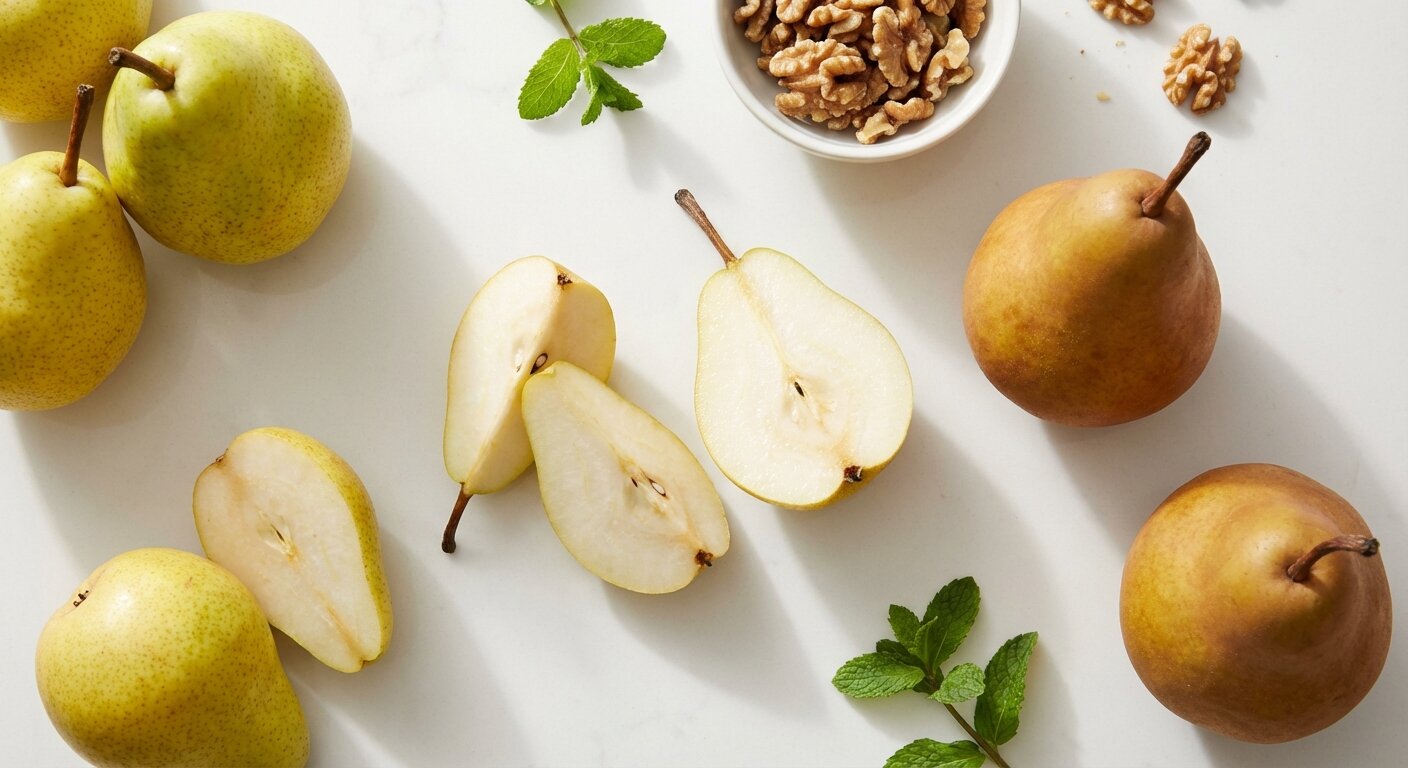
Pears are one of nature’s sweetest treasures—juicy, fragrant, and satisfying. But if you’re tracking your nutrition, you might wonder exactly how pears fit into your macro goals. Whether you’re managing weight, optimizing athletic performance, or simply eating more mindfully, understanding the macro breakdown of pears helps you make informed choices.
This comprehensive guide covers everything you need to know about pear macros: calories, protein, carbohydrates, and fats across different varieties and preparations. We’ll compare fresh versus canned options, explore how pear macros stack up against other fruits, and show you how to incorporate this delicious fruit into various eating plans.
Ready to calculate your perfect macro balance? Try our macro calculator to get personalized nutrition targets based on your specific goals.
Related: Learn more about what macros are and how they impact your diet.
Pear Macros: The Complete Breakdown
Let’s start with the foundational numbers you need to know.
Medium Pear Macros (Fresh, 178g)
A medium-sized fresh pear with skin provides:
- Calories: 101
- Protein: 0.6g
- Carbohydrates: 27g
- Dietary Fiber: 6g
- Sugars: 17g
- Net Carbs: 21g
- Fat: 0.2g
- Water: 150g (84%)
This macro profile makes pears primarily a carbohydrate source, with exceptional fiber content and minimal fat or protein. The high water content contributes to their refreshing quality and helps with hydration and satiety.
Pear Macros by Size
Pears come in various sizes, and the macros scale accordingly:
Small Pear (148g):
- Calories: 84
- Protein: 0.5g
- Carbs: 22g (Fiber: 5g)
- Fat: 0.2g
Medium Pear (178g):
- Calories: 101
- Protein: 0.6g
- Carbs: 27g (Fiber: 6g)
- Fat: 0.2g
Large Pear (230g):
- Calories: 131
- Protein: 0.8g
- Carbs: 35g (Fiber: 8g)
- Fat: 0.3g
When tracking, weigh your pear for accuracy, as sizes can vary significantly even within the same variety.
Pear Macros Per 100g
For precise tracking and recipe calculations, here are the macros per 100 grams of fresh pear with skin:
- Calories: 57
- Protein: 0.4g
- Carbohydrates: 15g
- Fiber: 3.1g
- Sugars: 9.8g
- Fat: 0.1g
This standardized measurement makes it easy to calculate macros for any pear size or recipe quantity.
Asian Pear Macros: How They Compare
Asian pears (also called apple pears or nashi pears) have a distinct round shape and crisp, apple-like texture. Nutritionally, they differ slightly from European pear varieties like Bartlett or Bosc.
Asian Pear Macros (Medium, 275g)
- Calories: 116
- Protein: 1.4g
- Carbohydrates: 29g
- Fiber: 9.9g
- Sugars: 19g
- Fat: 0.6g
Key Differences
Asian pears offer:
- More fiber: 9.9g vs 6g in regular pears (65% more)
- Slightly more protein: 1.4g vs 0.6g
- Lower calorie density: 42 calories per 100g vs 57
- Higher water content: Making them even more hydrating
The extra fiber in Asian pears makes them particularly satiating and beneficial for digestive health. If you can find them at your local market, they’re an excellent choice for macro-conscious eaters.
Canned Pear Macros: What You Need to Know
Canned pears offer convenience and year-round availability, but the macros vary dramatically depending on what they’re packed in.
Canned Pears in Heavy Syrup (1 cup halves, 255g)
- Calories: 197
- Protein: 0.5g
- Carbohydrates: 51g
- Fiber: 4.3g
- Sugars: 44g
- Fat: 0.3g
Heavy syrup nearly doubles the calories and sugar compared to fresh pears, making this option less ideal for weight management or blood sugar control.
Canned Pears in Light Syrup (1 cup halves, 251g)
- Calories: 143
- Protein: 0.5g
- Carbohydrates: 38g
- Fiber: 4g
- Sugars: 32g
- Fat: 0.1g
Light syrup reduces calories by about 27% compared to heavy syrup, but still adds significant sugar.
Canned Pears in Juice (1 cup halves, 248g)
- Calories: 124
- Protein: 0.8g
- Carbohydrates: 32g
- Fiber: 4g
- Sugars: 25g
- Fat: 0.2g
Pears canned in their own juice or natural fruit juice provide a better option with fewer added sugars.
Canned Pears in Water (1 cup halves, 244g)
- Calories: 71
- Protein: 0.5g
- Carbohydrates: 19g
- Fiber: 4g
- Sugars: 13g
- Fat: 0.1g
This is the closest to fresh pears nutritionally and the best canned option for macro tracking.
Fresh vs Canned: The Verdict
For optimal nutrition and macro management:
- Best: Fresh pears (lowest calories, highest nutrients)
- Good: Canned in water or juice
- Moderate: Canned in light syrup
- Avoid for macros: Canned in heavy syrup
Always drain and rinse canned pears to remove excess syrup before eating.
Pear Macros Compared to Other Fruits
How do pears stack up against other popular fruits? Here’s a comparison per 100g:
Pears (100g):
- Calories: 57 | Protein: 0.4g | Carbs: 15g | Fiber: 3.1g | Fat: 0.1g
Apples (100g):
- Calories: 52 | Protein: 0.3g | Carbs: 14g | Fiber: 2.4g | Fat: 0.2g
Bananas (100g):
- Calories: 89 | Protein: 1.1g | Carbs: 23g | Fiber: 2.6g | Fat: 0.3g
Oranges (100g):
- Calories: 47 | Protein: 0.9g | Carbs: 12g | Fiber: 2.4g | Fat: 0.1g
Pineapple (100g):
- Calories: 50 | Protein: 0.5g | Carbs: 13g | Fiber: 1.4g | Fat: 0.1g
Key Takeaways
- Pears have more fiber than most fruits: 3.1g per 100g beats apples, oranges, bananas, and pineapple
- Moderate calorie density: Higher than citrus, lower than bananas
- Similar carb profile to apples: Making them interchangeable in many contexts
- Minimal protein across all fruits: You’ll need other sources for protein goals
The high fiber content is pears’ standout feature, supporting digestive health, satiety, and stable blood sugar levels.
Micronutrients in Pears: Beyond the Macros
While macros tell part of the story, pears also provide valuable vitamins, minerals, and antioxidants.
Vitamins in a Medium Pear
- Vitamin C: 7.7mg (7% DV) - Supports immune function and collagen production
- Vitamin K: 6.2μg (6% DV) - Essential for blood clotting and bone health
- Folate (B9): 12.4μg (3% DV) - Important for cell division and DNA synthesis
- Vitamin B6: 0.05mg (2% DV) - Helps with metabolism and brain development
Minerals in a Medium Pear
- Potassium: 206mg (5% DV) - Regulates fluid balance and blood pressure
- Copper: 0.14mg (7% DV) - Supports iron absorption and nervous system function
- Magnesium: 12.5mg (3% DV) - Involved in 300+ enzymatic reactions
- Phosphorus: 21mg (2% DV) - Critical for bone health and energy production
Antioxidants and Phytonutrients
Pears contain several beneficial plant compounds:
- Anthocyanins: Red-skinned pear varieties provide these anti-inflammatory compounds
- Flavonoids: Including quercetin and kaempferol with antioxidant properties
- Cinnamic acid: Linked to improved heart health
- Chlorogenic acid: May help regulate blood sugar
Pro tip: The peel contains 3-4 times more antioxidants than the flesh, so always eat pears with skin intact (after washing) for maximum nutritional benefit.
How Pears Fit Different Macro Goals
Can pears work for your specific nutrition approach? Let’s explore.
Pears for Weight Loss
Verdict: Excellent choice
Pears support weight loss through several mechanisms:
- High satiety: 6g fiber and 84% water content help you feel full on relatively few calories
- Low energy density: 101 calories in a filling medium pear
- Natural sweetness: Satisfies sweet cravings without processed sugars
- Volume eating: The size and crunch factor slow eating pace
Strategy: Eat a pear 15-20 minutes before meals to reduce overall calorie intake, or use sliced pears as a crunchy, sweet snack between meals.
Pears for Low-Carb/Keto Diets
Verdict: Challenging but possible in moderation
With 27g total carbs (21g net carbs) per medium pear, they’re higher than ideal for strict keto (typically 20-30g total daily carbs). However:
- Moderate low-carb (50-100g daily): A small pear can fit
- Carb cycling: Save pears for higher-carb days
- Post-workout: Time pears after training when carb tolerance is higher
If following strict keto, choose lower-carb fruits like berries instead.
Pears for Muscle Gain/Bulking
Verdict: Useful for clean carbs
When building muscle, pears provide:
- Clean carbohydrate source for glycogen replenishment
- Quick digesting sugars for post-workout recovery
- Micronutrients supporting overall health during caloric surplus
- Digestive support from fiber (crucial when eating high calories)
Strategy: Include 1-2 pears daily alongside protein-rich foods. Pair with Greek yogurt, cottage cheese, or protein shakes for balanced macros.
Pears for Endurance Athletes
Verdict: Good for sustained energy
The carbohydrate profile of pears makes them suitable for:
- Pre-workout fuel: 1-2 hours before exercise
- Recovery: Within 30-60 minutes post-exercise
- Between training sessions: To maintain glycogen stores
The natural sugars provide quick energy while fiber prevents rapid blood sugar spikes.
Pears for Diabetics/Blood Sugar Management
Verdict: Moderate glycemic index, portion control important
Pears have a glycemic index (GI) of 38 (low) and glycemic load (GL) of 4 (low), meaning they cause a relatively slow, steady rise in blood sugar compared to many fruits.
Best practices for blood sugar control:
- Pair with protein or fat: Add almond butter, cheese, or nuts to slow sugar absorption
- Choose smaller pears: Stick to small-medium sizes
- Monitor portions: One pear at a time, spaced throughout the day
- Eat with meals: Rather than standalone snacks
- Track your response: Individual blood sugar responses vary
The fiber content helps moderate blood sugar impact, but those with diabetes should monitor individual response and consult healthcare providers.
Pear Varieties: Do Macros Differ?
Common pear varieties have minimal macro differences, but distinct flavors and textures.
Bartlett Pears (Most Common)
The classic bell-shaped pear, available in yellow and red varieties. Macros are standard (101 calories per medium pear). Soft, juicy texture when ripe.
Bosc Pears
Characterized by brown, russeted skin and elongated shape. Slightly firmer and denser, which may mean marginally higher calories by volume, but differences are negligible for tracking purposes.
Anjou Pears
Round, egg-shaped pears with green or red skin. Similar macro profile to Bartlett pears. Firmer texture that holds shape well when cooked.
Comice Pears
Exceptionally sweet and juicy with a rounded shape. May have slightly higher sugar content (18-19g vs 17g per medium pear), but overall macros remain similar.
Seckel Pears
The smallest pear variety, often called “sugar pears” due to intense sweetness. A small Seckel pear (80g) contains approximately 45 calories and 12g carbs.
Bottom line: For macro tracking purposes, you can use standard pear values for all common varieties. Weigh individual pears if precision is important.
Creative Ways to Include Pears in Your Macro Plan
Pears are incredibly versatile beyond eating them fresh. Here are macro-friendly serving ideas:
Breakfast Ideas
Pear & Greek Yogurt Bowl
- 1 cup nonfat Greek yogurt (130 cal, 23g protein, 9g carbs)
- ½ medium pear, diced (50 cal, 14g carbs, 3g fiber)
- 1 tbsp chopped walnuts (50 cal, 2g protein, 1g carbs, 5g fat)
- Cinnamon to taste
- Total: 230 calories | 25g protein | 24g carbs | 5g fat
Pear Protein Oatmeal
- ½ cup dry oats (150 cal, 5g protein, 27g carbs, 3g fat)
- 1 scoop vanilla protein powder (120 cal, 24g protein, 3g carbs, 1g fat)
- ½ diced pear (50 cal, 14g carbs, 3g fiber)
- Total: 320 calories | 29g protein | 44g carbs | 4g fat
Snack Ideas
Pear & Almond Butter
- 1 medium pear, sliced (101 cal, 27g carbs, 6g fiber)
- 1 tbsp almond butter (98 cal, 3.5g protein, 3g carbs, 9g fat)
- Total: 199 calories | 3.5g protein | 30g carbs | 9g fat
Cottage Cheese Pear Bowl
- 1 cup low-fat cottage cheese (163 cal, 28g protein, 6g carbs, 2g fat)
- ½ medium pear, diced (50 cal, 14g carbs, 3g fiber)
- Total: 213 calories | 28g protein | 20g carbs | 2g fat
Meal Ideas
Grilled Chicken Pear Salad
- 4 oz grilled chicken breast (187 cal, 35g protein, 0g carbs, 4g fat)
- 2 cups mixed greens (18 cal, 1.5g protein, 3g carbs, 0g fat)
- ½ medium pear, sliced (50 cal, 14g carbs, 3g fiber)
- 1 oz crumbled goat cheese (75 cal, 5g protein, 0g carbs, 6g fat)
- 1 tbsp balsamic vinaigrette (45 cal, 0g protein, 3g carbs, 4g fat)
- Total: 375 calories | 41.5g protein | 20g carbs | 14g fat
Post-Workout Recovery
Pear Protein Smoothie
- 1 medium pear, cored (101 cal, 27g carbs, 6g fiber)
- 1 scoop vanilla whey protein (120 cal, 24g protein, 3g carbs, 1g fat)
- 1 cup unsweetened almond milk (30 cal, 1g protein, 1g carbs, 2.5g fat)
- ½ cup ice
- Total: 251 calories | 25g protein | 31g carbs | 3.5g fat
Healthy Desserts
Baked Cinnamon Pears
- 1 medium pear, halved and cored (101 cal, 27g carbs, 6g fiber)
- Cinnamon and nutmeg to taste (negligible calories)
- Bake at 375°F for 25-30 minutes
- Top with 2 tbsp nonfat Greek yogurt (18 cal, 3g protein, 1.5g carbs)
- Total: 119 calories | 3g protein | 28.5g carbs | 0g fat
These recipes demonstrate how pears can fit various meal times while supporting your macro targets.
Shopping and Storage Tips for Optimal Nutrition
Getting the most nutritional value from pears starts with smart selection and storage.
Selecting Pears
At the Store:
- Choose firm pears and ripen them at home (prevents bruising)
- Check for smooth skin without major blemishes
- Slight color variation is normal and doesn’t affect nutrition
- Avoid pears with cuts, soft spots, or mold
Organic vs Conventional:
- Pears consistently rank on the “Dirty Dozen” list for pesticide residues
- Organic pears reduce pesticide exposure
- If buying conventional, wash thoroughly before eating
- The nutritional macro profile is identical for organic and conventional
Ripening Pears
Most pears are sold unripe and need counter ripening:
- Leave at room temperature until they yield to gentle pressure near the stem
- Speed ripening: Place in paper bag with an apple or banana (ethylene gas accelerates ripening)
- Check daily: Pears ripen from the inside out and can overripen quickly
- Refrigerate when ripe: Extends shelf life by 3-5 days
Ripeness test: Gently press near the stem. If it yields slightly, the pear is ready to eat.
Storage
Unripe pears:
- Counter or pantry at room temperature
- 3-7 days until ripe
Ripe pears:
- Refrigerator crisper drawer
- 3-5 days
- Store in plastic bag to prevent moisture loss
Cut pears:
- Airtight container in refrigerator
- 3-4 days
- Brush cut surfaces with lemon juice to prevent browning
Frozen pears:
- Peel, core, and slice pears
- Spread on baking sheet and freeze
- Transfer to freezer bags
- Keeps 10-12 months
- Macros remain essentially unchanged
Preventing Browning
Cut pears oxidize quickly, turning brown (harmless but unappealing):
- Lemon juice: Toss cut pears in lemon juice
- Saltwater bath: Soak in solution of 1/2 tsp salt per cup water for 5 minutes
- Commercial products: Fruit-Fresh or ascorbic acid powder
- Eat quickly: Cut pears just before serving
Tracking Pear Macros: Practical Tips
Accurate tracking ensures pears fit your nutrition goals without surprises.
Weighing vs Estimating
Most accurate: Weigh on digital food scale
- Remove core and stem before weighing
- Log weight of edible portion only
- Core/stem typically represents 10-15% of total weight
Medium accuracy: Use USDA standard sizes
- Small (148g) | Medium (178g) | Large (230g)
- Visual comparison to estimate size
Least accurate: Generic “1 pear” entries
- Can vary by 50-100 calories depending on actual size
- Acceptable for casual tracking, not precision goals
Logging Fresh vs Cooked
Fresh pears: Use raw pear entries in tracking apps
Cooked/baked pears:
- Macros don’t change significantly with cooking
- Water content may reduce slightly through evaporation
- Weigh after cooking if adding ingredients (honey, butter, etc.)
- Log additional ingredients separately
Pear juice vs whole pears:
- Pear juice removes fiber and concentrates sugars
- Not recommended for macro tracking (less satiating, higher calories)
- Whole pears always preferable
Common Tracking Mistakes
Mistake #1: Not accounting for core
- Fix: Weigh edible portion only (remove core first)
Mistake #2: Using canned pear data for fresh pears
- Fix: Verify the entry specifies “fresh” or “canned in water/syrup”
Mistake #3: Ignoring variety differences
- Fix: Asian pears have different macros; select correct type
Mistake #4: Forgetting added ingredients
- Fix: Log peanut butter, yogurt, cheese separately
Mistake #5: Not weighing larger/smaller than average pears
- Fix: When in doubt, weigh it
Frequently Asked Questions
Can I eat pears every day?
Yes, eating a pear daily is generally healthy and safe for most people. The fiber supports digestive health, and the variety of vitamins and antioxidants contribute to overall wellness. However, balance is key—vary your fruit intake to get a broader spectrum of nutrients. If you have specific health conditions like diabetes or IBS, consult a healthcare provider about appropriate portions.
Do pears cause bloating or digestive issues?
Pears contain fructose and sorbitol, naturally occurring sugars that can cause gas, bloating, or digestive discomfort in sensitive individuals, particularly those with irritable bowel syndrome (IBS) or fructose malabsorption. The high fiber content can also cause temporary digestive changes if you’re not used to it. Start with smaller portions (half a pear) and gradually increase as your digestive system adjusts. Drinking plenty of water helps fiber work effectively.
Should I eat pears with or without the skin?
Always eat pears with skin for maximum nutrition. The skin contains 3-4 times more antioxidants than the flesh, plus additional fiber, vitamins, and minerals. Peeling removes significant nutritional value while barely reducing calories (only about 3-5 calories saved). Just wash thoroughly under running water to remove any pesticide residues or dirt. If you must peel for texture preferences, you’re still getting the core macros but losing micronutrient benefits.
Are pears better before or after a workout?
Before workout (1-2 hours): A medium pear provides 27g of easily digestible carbs for sustained energy. The natural sugars and low glycemic index prevent blood sugar crashes during exercise. Pair with a small protein source for balanced pre-workout fuel.
After workout (within 60 minutes): Pears help replenish glycogen stores with quick-acting carbohydrates. Combine with protein (whey shake, Greek yogurt) for optimal recovery. The 4:1 carb-to-protein ratio is ideal for post-workout nutrition.
Choose firmer pears before workouts (easier to digest) and riper, juicier pears after workouts (higher simple sugar content for faster glycogen replenishment).
How do I know if a pear is ripe?
Check ripeness by gently pressing near the stem with your thumb. If it yields to gentle pressure, it’s ripe and ready to eat. The skin color may change (green Bartlett pears turn yellow), but this isn’t always reliable. Pears ripen from the inside out, so checking the stem end is more accurate than checking the bottom. Unripe pears feel hard and won’t yield to pressure. Overripe pears feel mushy, develop soft brown spots, and may have an alcoholic smell from fermentation.
Can I freeze pears for later use?
Yes, pears freeze well for up to 10-12 months. Peel, core, and slice pears, then treat with lemon juice or ascorbic acid solution to prevent browning. Flash freeze on a baking sheet for 2-3 hours, then transfer to freezer bags. Frozen pears work excellently in smoothies, baked goods, or cooked dishes but lose their crisp texture when thawed, making them unsuitable for fresh eating. Macros remain virtually unchanged through freezing.
Do cooking pears change the macros?
Cooking pears does not significantly alter the macro content unless you add ingredients like butter, sugar, or honey. Baking or poaching may slightly concentrate sugars through water evaporation, but the difference is negligible (1-2g carbs per serving). However, cooking breaks down fiber structure, potentially making pears easier to digest and possibly slightly increasing glycemic response. For macro tracking, use the same values for cooked and raw pears, but log any added ingredients separately.
Are brown spots on pears safe to eat?
Small brown spots or russeting on pear skin are cosmetic imperfections that don’t affect safety or nutrition. Many pear varieties (like Bosc) naturally have brown, russeted skin. However, large soft brown areas indicate overripeness or bruising—while not necessarily unsafe, these sections have compromised texture and flavor. Cut away significantly damaged portions and consume the rest promptly. If you see mold (fuzzy growth), discard the entire pear, as mold can penetrate deeper than visible areas.
Conclusion: Making Pears Work for Your Macros
Pears offer an excellent combination of nutrition, flavor, and versatility. With 101 calories and 6g of fiber per medium pear, they provide substantial satisfaction without derailing your macro goals. Whether you’re cutting weight, building muscle, or simply eating more mindfully, pears can fit into virtually any nutrition plan with proper portioning.
Key takeaways for macro tracking:
✅ Weight your pears for accuracy—sizes vary significantly ✅ Choose fresh over canned when possible; if canned, select water-packed varieties ✅ Eat the skin for maximum fiber, antioxidants, and micronutrients ✅ Pair with protein or fat to balance macros and stabilize blood sugar ✅ Time strategically around workouts for optimal performance and recovery ✅ Monitor portions if following low-carb approaches (21g net carbs per medium pear)
The natural sweetness, satisfying crunch, and impressive fiber content make pears a smart choice for health-conscious eaters. From breakfast bowls to post-workout smoothies to simple standalone snacks, pears deserve a regular spot in your meal rotation.
Ready to build a personalized nutrition plan that includes pears and other whole foods? Use our macro calculator to determine your optimal protein, carb, and fat targets based on your unique goals and activity level.
For more fruit nutrition guides, explore our complete breakdowns of apple macros, banana macros, orange macros, and pineapple macros.
Related Articles

Dragonfruit Macros: Complete Nutrition Guide for Pitaya
Complete macro breakdown of dragonfruit (pitaya). Learn the calories, protein, carbs, and...
Read guide →
Bulgur Macros: Complete Nutritional Guide & Health Benefits
Discover bulgur's complete macro breakdown, nutritional benefits, and how to incorporate...
Read guide →
Radish Macros: Nutrition Facts and Health Benefits
Complete guide to radish macros and nutrition. Learn calories, protein, carbs, and health...
Read guide →Note: Nutrition values are approximate and may vary based on preparation method and source.