Potato Chips Macros & Nutrition Facts (Complete Guide)
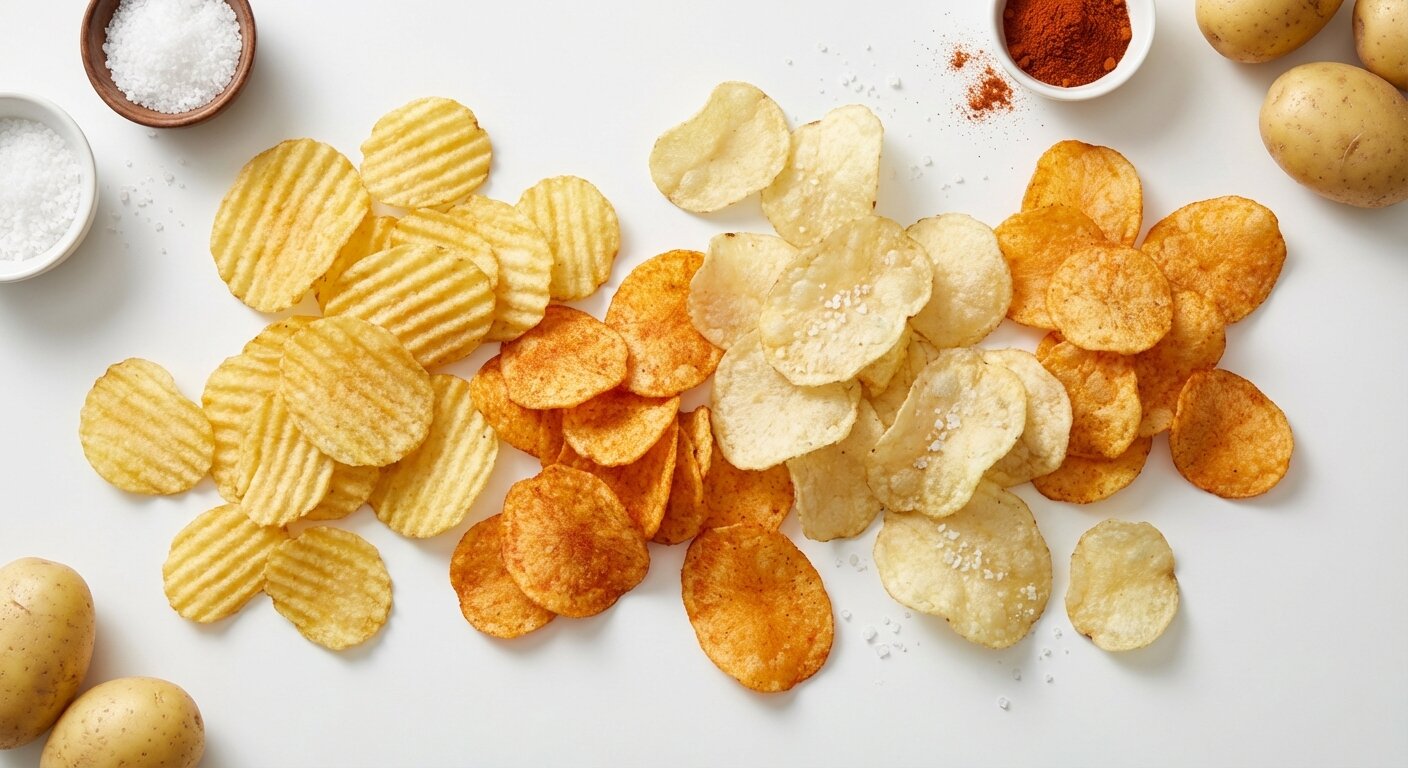
Potato chips are one of the most popular snacks in America—and one of the easiest to overeat. That satisfying crunch and salty flavor make it nearly impossible to stop at “just one,” which is exactly why understanding potato chips macros is critical if you’re tracking your nutrition.
Whether you’re managing weight, building muscle, or just trying to make smarter food choices, knowing how chips fit into your daily macros can help you enjoy them without derailing your goals. In this guide, we’ll break down exactly what’s in that bag of chips, compare different varieties, and show you how to fit them into a balanced diet—or find better alternatives when you need them.
Let’s start with a macro calculator to see how chips fit your specific goals, then dive into the complete breakdown.
[MACRO CALCULATOR CTA]
Potato Chips Nutrition Facts: The Complete Breakdown
Let’s start with the baseline: a standard 1-ounce (28 gram) serving of regular, salted potato chips.
Macros Per 1 Ounce (28g) Serving
| Nutrient | Amount | % Daily Value |
|---|---|---|
| Calories | 152 | 8% |
| Total Fat | 10g | 13% |
| Saturated Fat | 3g | 15% |
| Trans Fat | 0g | — |
| Carbohydrates | 15g | 5% |
| Dietary Fiber | 1g | 4% |
| Sugars | 0.2g | — |
| Protein | 2g | 4% |
| Sodium | 149mg | 6% |
| Potassium | 361mg | 8% |
Calorie Breakdown by Macronutrient
The 152 calories in potato chips come from:
- Fat: 90 calories (59%)
- Carbohydrates: 60 calories (39%)
- Protein: 8 calories (5%)
This makes potato chips predominantly a fat and carb snack with minimal protein. That high fat content is what makes chips so calorie-dense—you’re packing 150+ calories into a single ounce, which is about 10-15 chips depending on thickness.
Understanding Potato Chips Portion Sizes
One of the biggest challenges with chips is portion control. Here’s how serving sizes actually look:
Common Serving Sizes
| Description | Weight | Chips Count | Calories | Fat | Carbs | Protein |
|---|---|---|---|---|---|---|
| Single serving bag | 1 oz (28g) | 10-15 chips | 152 | 10g | 15g | 2g |
| Handful | 1.5 oz (42g) | 15-22 chips | 228 | 15g | 22.5g | 3g |
| Small bowl | 2 oz (56g) | 20-30 chips | 304 | 20g | 30g | 4g |
| ”Sharing” bag | 2.5 oz (71g) | 25-37 chips | 380 | 25g | 37.5g | 5g |
| Full bag consumption | 5 oz (142g) | 50-75 chips | 760 | 50g | 75g | 10g |
Reality check: Most people don’t stop at the official “serving size” of 1 ounce. Studies show the average person consumes 2-3 servings (300-450 calories) when eating directly from a bag.
Visual Serving Guide
To help you visualize portions:
- 1 oz (1 serving): About the size of a cupped handful
- 2 oz: Fills a small cereal bowl
- 3 oz: A large restaurant appetizer portion
- Individual snack bag: Usually 1 oz (check the label!)
- “Family size” bag: Often 10-13 oz (10-13 servings)
Pro tip: Pre-portion chips into small bags or bowls before eating. Never eat directly from a large bag if you’re tracking macros.
Potato Chips vs Other Popular Snacks: Macro Comparison
How do potato chips stack up against other common snacks? Here’s a side-by-side comparison per 1-ounce serving:
| Snack | Calories | Fat | Carbs | Protein | Sodium |
|---|---|---|---|---|---|
| Potato chips (regular) | 152 | 10g | 15g | 2g | 149mg |
| Tortilla chips | 142 | 7g | 19g | 2g | 150mg |
| Baked potato chips | 110 | 1.5g | 23g | 2g | 140mg |
| Pretzels | 108 | 1g | 23g | 3g | 385mg |
| Popcorn (air-popped) | 31 | 0.4g | 6g | 1g | 1mg |
| Peanuts | 166 | 14g | 6g | 7g | 90mg |
| Veggie chips | 140 | 7g | 17g | 1g | 220mg |
| Rice cakes | 35 | 0.3g | 7g | 0.7g | 29mg |
Key observations:
- Potato chips are calorie-dense compared to volume-based snacks like popcorn
- Baked chips cut fat by 85% but increase carbs
- Pretzels have less fat but 2.5x the sodium
- Nuts have similar calories but 3x the protein
- Popcorn gives you 3 cups for the same calories as 15 chips
Different Types of Chips: Macro Variations
Not all chips are created equal. Here’s how different varieties and cooking methods affect macros:
Regular vs Baked vs Kettle-Cooked
| Type | Calories | Fat | Carbs | Protein | Key Difference |
|---|---|---|---|---|---|
| Regular (fried) | 152 | 10g | 15g | 2g | Standard, higher fat |
| Baked | 110 | 1.5g | 23g | 2g | 85% less fat, more carbs |
| Kettle-cooked | 150 | 9g | 16g | 2g | Thicker cut, similar macros |
| Reduced-fat | 140 | 6g | 19g | 2g | 40% less fat than regular |
Why the differences?
- Baked chips are cooked in dry heat instead of oil, dramatically reducing fat
- Kettle-cooked chips are thicker and fried in batches, but macros are similar to regular
- Reduced-fat versions use less oil but often add extra carbs for texture
Popular Chip Flavors: Macro Impact
Flavored chips typically add calories and significantly more sodium:
| Flavor | Calories | Fat | Carbs | Protein | Sodium |
|---|---|---|---|---|---|
| Original/Sea Salt | 152 | 10g | 15g | 2g | 149mg |
| BBQ | 150 | 9g | 15g | 2g | 220mg |
| Sour Cream & Onion | 160 | 10g | 15g | 2g | 200mg |
| Cheddar & Sour Cream | 160 | 10g | 14g | 2g | 210mg |
| Salt & Vinegar | 150 | 10g | 14g | 2g | 380mg |
| Jalapeño | 150 | 10g | 15g | 2g | 230mg |
Flavor takeaway: Most flavored chips add 10-20 extra calories and 30-150% more sodium than plain chips. Salt & vinegar varieties can have 2.5x the sodium of regular chips.
Brand Comparison (Per 1 oz)
Different brands have slight variations:
| Brand | Calories | Fat | Carbs | Protein |
|---|---|---|---|---|
| Lay’s Classic | 160 | 10g | 15g | 2g |
| Ruffles Original | 160 | 10g | 14g | 2g |
| Pringles Original | 150 | 9g | 15g | 1g |
| Kettle Brand Sea Salt | 150 | 9g | 16g | 2g |
| Cape Cod Original | 150 | 8g | 16g | 2g |
| Utz Original | 150 | 10g | 14g | 2g |
Most major brands hover around 150-160 calories per ounce with similar macro profiles.
Can You Eat Potato Chips While Tracking Macros?
Short answer: Yes, but it requires careful planning and portion control.
When Chips Can Fit Your Macros
Potato chips can work in your diet when:
- You pre-portion them: Measure out 1 oz (28g) and put the bag away
- You have fat/carb room: 10g fat + 15g carbs fits your daily targets
- You account for them: Log them BEFORE eating, not after
- They’re occasional: Treat them as a planned snack, not a daily staple
- You balance the rest of your day: Compensate with lean proteins and vegetables
The Problem With “Just a Few Chips”
Here’s why chips are so challenging for macro tracking:
Scenario 1: Unmeasured snacking
- Grab “a few handfuls” from the bag
- Actual consumption: 3 oz (85g)
- Surprise macros: 456 calories, 30g fat, 45g carbs
- You just ate a small meal’s worth of calories with no protein or nutrients
Scenario 2: Measured portions
- Weigh out 1 oz (28g) on a food scale
- Put the bag away before eating
- Actual consumption: 1 oz
- Controlled macros: 152 calories, 10g fat, 15g carbs
- You enjoyed a snack without derailing your day
Making Chips Work: Practical Strategies
If you want to include chips in a macro-friendly diet:
Strategy 1: The Pre-Portioned Approach
- Buy individual 1 oz bags instead of large bags
- Cost: ~$0.50-$1.00 per bag
- Benefit: Built-in portion control
Strategy 2: The Bowl Method
- Pour chips into a small bowl
- Put the bag away before eating
- Weigh the bowl if tracking closely
- Eat slowly and mindfully
Strategy 3: The Meal Pairing
- Pair 0.5 oz chips (75 calories) with a protein-rich sandwich
- Use chips as a side, not the main event
- Balance the meal with 20-30g protein
Strategy 4: The Substitute Swap
- Trade chips for baked chips: Save 40 calories per oz
- Trade for popcorn: Get 3 cups for the same calories
- Trade for veggies + hummus: More volume, more nutrition
Healthier Alternatives to Traditional Potato Chips
If you love the crunch but want better macros, try these alternatives:
Lower-Calorie Chip Options
| Alternative | Serving | Calories | Fat | Carbs | Protein | Why It’s Better |
|---|---|---|---|---|---|---|
| Baked Lay’s | 1 oz | 110 | 1.5g | 23g | 2g | 65% fewer calories from fat |
| Popcorners | 1 oz | 120 | 4g | 20g | 2g | Popped, not fried |
| Snapea Crisps | 3/4 oz | 110 | 4g | 14g | 4g | 2x the protein |
| Seaweed snacks | 0.5 oz | 30 | 2g | 1g | 1g | Ultra low-cal, nutrient-dense |
High-Volume, Low-Calorie Snacks
These give you more food for fewer calories:
| Snack | Calories | Volume | Benefit |
|---|---|---|---|
| Air-popped popcorn | 31 per cup | 3 cups | Huge volume, 1g fiber per cup |
| Rice cakes (plain) | 35 each | 1 large cake | Crunchy, satisfying, minimal calories |
| Kale chips (homemade) | 50 per cup | 2 cups | Nutrient-dense, high volume |
| Roasted chickpeas | 120 per oz | 1/4 cup | 6g protein, 5g fiber |
DIY Chip Alternatives
Make your own healthier versions:
Baked Sweet Potato Chips
- Slice sweet potato thin
- Toss with 1 tsp olive oil + sea salt
- Bake at 400°F for 15-20 min
- Macros per serving: 100 cal, 3g fat, 18g carbs, 2g protein, 3g fiber
Air Fryer Potato Chips
- Slice russet potato thin
- Spray with oil mist
- Air fry at 375°F for 12-15 min
- Macros per serving: 90 cal, 2g fat, 17g carbs, 2g protein
Baked Zucchini Chips
- Slice zucchini thin, salt to draw moisture
- Coat with parmesan + breadcrumbs
- Bake at 425°F until crispy
- Macros per serving: 80 cal, 4g fat, 8g carbs, 4g protein
The Health Impact of Regular Chip Consumption
Beyond macros, here’s what happens when chips become a regular part of your diet:
Nutritional Concerns
What chips lack:
- Protein: Only 2g per serving (4% of daily needs)
- Fiber: Only 1g per serving (4% of daily needs)
- Vitamins: Minimal A, C, or B vitamins
- Minerals: Some potassium, but at a high caloric cost
What chips provide in excess:
- Sodium: 6-8% of daily limit per ounce (can cause bloating and water retention)
- Saturated fat: 15% of daily limit per ounce
- Omega-6 fats: Most vegetable oils used for frying are high in omega-6, which may promote inflammation when consumed in excess
Long-Term Effects of Frequent Consumption
Studies on ultra-processed snacks like chips show:
- Weight gain: Chips are linked to higher calorie intake and weight gain over time
- Blood pressure: High sodium content may elevate blood pressure
- Inflammation: Trans fats and oxidized oils from frying may increase inflammatory markers
- Addiction-like eating patterns: The salt-fat-crunch combination triggers reward centers in the brain, making chips hard to stop eating
Bottom line: Chips are fine as an occasional treat, but they shouldn’t be a dietary staple.
Smart Shopping: How to Choose Better Chips
If you’re buying chips, here’s how to make smarter choices:
Read Labels Carefully
Look for:
- Serving size: Is it 1 oz or 1.5 oz? Adjust your tracking accordingly
- Total servings per container: That “grab bag” might be 2.5 servings
- Sodium content: Aim for <150mg per serving if possible
- Oil type: Avocado, olive, or sunflower oil > partially hydrogenated oils
- Ingredient list: Shorter = better (potatoes, oil, salt should be the main ingredients)
Red Flags to Avoid
- Trans fats: Any amount listed means it’s in there
- “Serving size: about 12 chips”: Imprecise servings make tracking harder
- Long ingredient lists: More additives and preservatives
- “Made with whole grains” on potato chips: Marketing fluff—they’re still fried potato slices
Best Chip Choices for Macro Tracking
If you’re going to buy chips, these are easier to track and slightly better nutritionally:
- Kettle Brand Sea Salt: Simple ingredients, accurate portions
- Lay’s Baked Original: 65% less fat, good for low-fat macros
- Popchips: Popped, not fried—fewer calories, still crunchy
- Lesser Evil Paleo Puffs: Grain-free, lower calorie
- Siete Grain-Free Chips: Higher protein, cleaner ingredients
Frequently Asked Questions
Can I eat potato chips every day and still lose weight?
Technically yes, if they fit your calorie and macro targets—but it’s not recommended. Daily chip consumption crowds out nutrient-dense foods, provides minimal protein and fiber, and makes it harder to feel full on your calorie budget. If you’re eating chips daily, you’re likely under-eating vegetables, lean proteins, and whole grains that support long-term health and satiety. For sustainable weight loss, treat chips as an occasional snack (2-3 times per week max) rather than a daily habit.
Do baked chips have fewer carbs than regular chips?
No—baked chips actually have more carbs than regular fried chips. A 1-ounce serving of baked chips typically has 23g carbs vs. 15g in regular chips. The trade-off is dramatically lower fat (1.5g vs. 10g), which cuts overall calories. If you’re tracking low-carb or keto macros, baked chips are worse. If you’re tracking low-fat or overall calories, baked chips are better. Choose based on your specific macro targets.
What’s the best way to measure chips for accurate macros?
Use a digital food scale and measure in grams (28g per serving). “Chip counts” (e.g., “about 15 chips”) are too variable because chip sizes differ by brand and batch. Weigh your chips in a bowl before eating, subtract the bowl’s weight (tare function), and log the exact grams. This is the only way to get accurate macro tracking with chips. Eyeballing or counting chips will lead to 20-50% tracking errors.
Are kettle-cooked chips healthier than regular chips?
Not really—the macros are nearly identical. Kettle-cooked chips are thicker and fried in smaller batches, giving them a different texture, but they still have ~150 calories, 9-10g fat, and 15-16g carbs per ounce. Some people perceive kettle chips as “healthier” because of marketing and premium pricing, but nutritionally they’re the same as regular chips. If you prefer the thicker crunch, go for it—but don’t expect a health advantage.
Can I fit chips into a high-protein diet?
You can, but chips will take up fat and carb macros without contributing protein. For example, if you’re eating 180g protein, 60g fat, and 150g carbs daily, one 1-ounce serving of chips uses 17% of your fat and 10% of your carbs while adding zero protein. To make it work, pair chips with high-protein foods (e.g., chicken sandwich with a small side of chips) and prioritize protein at every meal. Don’t let chips crowd out protein-rich foods.
Are air-fried potato chips a healthier option?
Homemade air-fried chips are significantly better than store-bought fried chips. Air frying uses 70-80% less oil, bringing calories down to ~90-110 per serving (vs. 150+ for fried) and fat to 2-4g (vs. 10g). You also control the salt level and avoid preservatives. However, store-bought “air-fried” or “popped” chips vary widely—some are nearly as caloric as regular chips. If you have an air fryer, DIY chips are worth making. Otherwise, check labels carefully.
How does the sodium in chips affect my body?
One ounce of chips (150mg sodium) isn’t extreme, but most people eat 2-3 servings (300-450mg sodium), and chips often come on top of an already high-sodium diet. The average American consumes 3,400mg sodium daily vs. the 2,300mg recommended limit. High sodium causes water retention (bloating, puffiness), increases blood pressure, and may strain kidney function over time. If you eat chips regularly, balance your day with low-sodium whole foods and drink plenty of water.
Can I eat chips on a keto diet?
Traditional potato chips are not keto-friendly—15g carbs per ounce is too high for a diet limiting carbs to 20-50g daily. However, keto-specific chip alternatives exist, like pork rinds (0g carbs, high protein), cheese crisps (~1g carbs per serving), and keto-friendly chips made from almond flour or coconut (5-7g net carbs per serving). If you’re strict keto, avoid potato chips entirely. If you’re doing a higher-carb approach (~50g/day), you might fit in a half-serving occasionally.
Summary: The Bottom Line on Potato Chips Macros
Potato chips are a calorie-dense, low-nutrient snack that can fit into a balanced diet with careful portion control and occasional consumption. Here’s what to remember:
Key Takeaways
✅ Macros per 1 oz serving: 152 calories, 10g fat, 15g carbs, 2g protein ✅ Portion control is critical: Most people eat 2-3 servings without realizing it ✅ Use a food scale: “About 15 chips” is too imprecise for accurate tracking ✅ Baked chips cut calories: 40 fewer calories per serving, but more carbs ✅ Flavored chips add sodium: Often 50-150% more sodium than plain varieties ✅ Chips lack protein and fiber: They won’t fill you up or support muscle growth ✅ Treat as occasional, not daily: 2-3 times per week max for best health outcomes
Action Steps
- Calculate your daily macros using our macro calculator to see if chips fit your targets
- Pre-portion chips into 1 oz servings or buy individual bags
- Choose wisely: Plain, baked, or kettle-cooked with simple ingredients
- Balance your day: If you have chips, prioritize lean protein and vegetables at other meals
- Explore alternatives: Baked chips, popcorn, or veggie chips for similar crunch with better macros
Final thought: Chips aren’t “bad” or “off-limits,” but they’re not a nutritional powerhouse either. Enjoy them mindfully, track them accurately, and make sure the rest of your diet is filled with nutrient-dense whole foods that support your goals.
Related Guides:
- How to Track Your Macros — Master your nutrition tracking
- Macros for Weight Loss — Fat loss nutrition strategy
- Healthy Fats — Understanding dietary fats
Better Snack Options:
- Popcorn Macros — Lower-calorie crunchy snack
- Sweet Potato Chips — More nutrient-dense alternative
- Pretzels Macros — Lower-fat salty snack
- All Food Guides — Browse our complete food database
Related Articles
Dragonfruit Macros: Complete Nutrition Guide for Pitaya
Complete macro breakdown of dragonfruit (pitaya). Learn the calories, protein, carbs, and...
Read guide →
Bulgur Macros: Complete Nutritional Guide & Health Benefits
Discover bulgur's complete macro breakdown, nutritional benefits, and how to incorporate...
Read guide →
Radish Macros: Nutrition Facts and Health Benefits
Complete guide to radish macros and nutrition. Learn calories, protein, carbs, and health...
Read guide →Note: Nutrition values are approximate and may vary based on preparation method and source.