Radish Macros: Nutrition Facts and Health Benefits
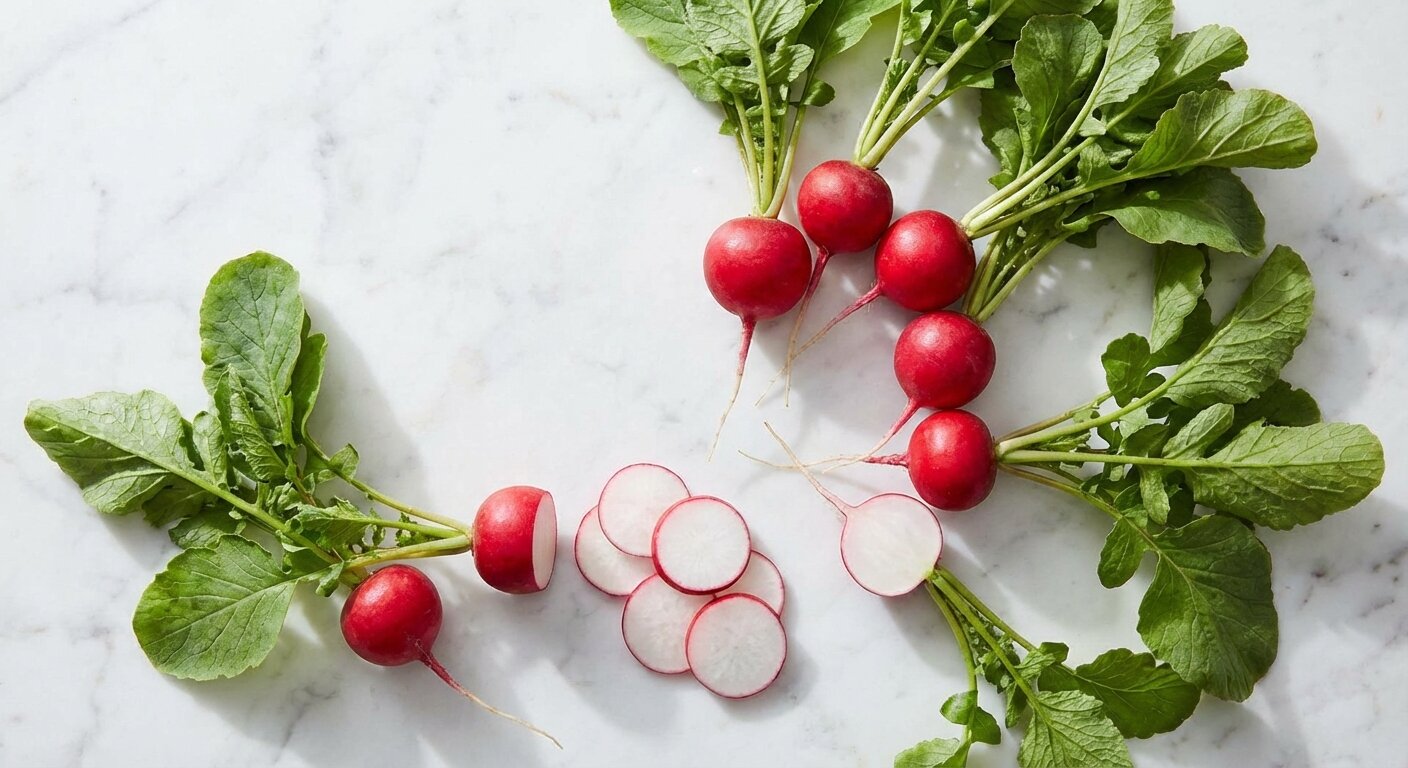
Looking for a crunchy, refreshing vegetable that barely impacts your daily macros? Radishes might be your new best friend. With only 19 calories per cup and a satisfying crunch, these peppery roots deliver maximum flavor with minimal nutritional cost. Whether you’re tracking macros for weight loss, following keto, or just trying to eat more vegetables, understanding radish macros can help you make smarter meal choices.
But radishes aren’t just about low calories. They’re packed with vitamin C, potassium, and unique compounds that support digestion and immune health. Plus, with varieties ranging from classic red to massive daikon to stunning watermelon radishes, there’s a radish for every palate and recipe. Ready to dive into the complete nutritional breakdown?
Let’s explore everything you need to know about radish macros, from basic nutrition facts to tracking tips and creative recipes that make the most of this underrated vegetable.
Radish Macros: Complete Nutritional Breakdown
Red Radish Macros (Per Cup, Sliced)
Serving Size: 1 cup sliced (116g)
- Calories: 19
- Protein: 0.8g
- Carbohydrates: 3.9g
- Fiber: 1.9g
- Net Carbs: 2.0g
- Sugars: 2.2g
- Fat: 0.1g
- Water Content: 95%
Macronutrient Distribution
- Protein: 16% of calories
- Carbohydrates: 80% of calories
- Fat: 4% of calories
Key Micronutrients (Per Cup)
- Vitamin C: 17.2mg (29% DV)
- Folate: 29.0mcg (7% DV)
- Potassium: 270mg (6% DV)
- Calcium: 29mg (2% DV)
- Magnesium: 12mg (3% DV)
The most striking feature of radish macros is their incredibly low calorie density—only 0.16 calories per gram. Compare this to bread (2.5 cal/g) or cheese (4.0 cal/g), and you’ll see why radishes are a volume eater’s dream food.
Different Radish Varieties and Their Macros
Daikon Radish Macros
Serving Size: 1 cup sliced (116g)
- Calories: 18
- Protein: 0.6g
- Carbohydrates: 4.1g
- Fiber: 1.9g
- Fat: 0.1g
Daikon, also called Japanese radish or white radish, is a mild-flavored giant that can grow over a foot long. Its macros are nearly identical to red radishes, making it an excellent substitute in Asian recipes, pickles, and stir-fries. The milder flavor makes it more versatile for people who find red radishes too peppery.
Watermelon Radish Macros
Serving Size: 1 cup sliced (116g)
- Calories: 19
- Protein: 0.7g
- Carbohydrates: 4.0g
- Fiber: 1.8g
- Fat: 0.1g
Despite their stunning pink interior and sweeter taste, watermelon radishes have virtually the same macros as their red cousins. They’re slightly less peppery, making them popular for raw salads and beautiful garnishes. The vibrant color comes from anthocyanins, the same antioxidants found in berries.
Black Radish Macros
Serving Size: 1 cup sliced (116g)
- Calories: 20
- Protein: 0.9g
- Carbohydrates: 4.2g
- Fiber: 2.0g
- Fat: 0.1g
Black radishes (also called Spanish radishes) have a black or dark brown exterior and white interior. They’re the most pungent variety with the highest fiber content. Traditionally used in European folk medicine, they’re now popular in health-conscious cooking for their distinctive flavor.
Radish Greens Macros
Serving Size: 1 cup raw (40g)
- Calories: 9
- Protein: 0.8g
- Carbohydrates: 1.6g
- Fiber: 0.7g
- Fat: 0.1g
- Vitamin C: 23mg (39% DV)
- Calcium: 104mg (10% DV)
Don’t throw away those greens! Radish tops are more nutrient-dense than the roots, containing significantly more vitamin C, calcium, and iron. They have a slightly peppery taste similar to arugula and work beautifully in salads, sautés, or pesto.
Health Benefits of Radishes
1. Weight Loss Support
With 95% water content and only 19 calories per cup, radishes are ideal for high-volume eating. You can eat two cups for under 40 calories while getting nearly 4g of fiber to support satiety. The peppery compounds (glucosinolates) may also slightly boost metabolism.
2. Digestive Health
Radishes contain both soluble and insoluble fiber. The 1.9g of fiber per cup supports:
- Regular bowel movements
- Healthy gut bacteria
- Blood sugar stabilization
- Cholesterol management
Additionally, radishes stimulate bile production, which aids fat digestion and promotes liver health.
3. Immune System Boost
One cup of radishes provides 29% of your daily vitamin C needs. This powerful antioxidant supports:
- Immune cell function
- Collagen production
- Iron absorption
- Antioxidant defense
4. Blood Pressure Regulation
The 270mg of potassium per cup helps balance sodium levels and relax blood vessel walls, potentially lowering blood pressure. Radishes also contain anthocyanins (especially in red and watermelon varieties), which support cardiovascular health.
5. Anti-Cancer Compounds
Radishes belong to the cruciferous family, along with broccoli and cabbage. They contain glucosinolates that break down into isothiocyanates—compounds studied for their potential cancer-fighting properties. These compounds may help detoxify carcinogens and inhibit tumor growth.
6. Blood Sugar Control
Despite containing carbohydrates, radishes have a low glycemic index and high water content, meaning they won’t spike blood sugar. The fiber content further slows glucose absorption, making radishes suitable for diabetics and those managing insulin sensitivity.
How to Track Radish Macros
Measuring Radishes Accurately
By Volume:
- 1 cup sliced = 116g = 19 calories
- 1/2 cup sliced = 58g = 10 calories
By Weight:
- 1 medium radish = 12g = 2 calories
- 100g radishes = 16 calories
- 1 pound (454g) = 73 calories
Pro tip: For meal prep accuracy, weigh radishes after slicing. Whole radishes vary in size, but sliced measurements are more consistent.
Logging Radishes in Tracking Apps
Most macro tracking apps include radishes in their databases:
- MyFitnessPal: Search “radish raw” or scan barcodes on packaged radishes
- Cronometer: Pre-loaded with USDA data for all radish varieties
- MacrosFirst: Search “raw radish” for accurate entries
- Lose It!: Includes both raw and cooked radish options
When logging, specify “raw” versus “cooked” since cooking methods (especially roasting with oil) significantly change the macros.
Common Radish Serving Sizes
- Side salad: 1/2 cup sliced (10 calories)
- Crudité platter: 5-6 whole radishes (12 calories)
- Roasted radishes: 1 cup (25-60 calories depending on oil)
- Pickled radishes: 1/4 cup (15-20 calories with pickling liquid)
Radish Recipe Ideas for Macro-Friendly Meals
1. Roasted Radishes (Keto-Friendly Potato Alternative)
Macros per serving (1 cup):
- Calories: 58
- Protein: 0.8g
- Carbs: 4g (2g net)
- Fat: 4.5g
Instructions: Toss halved radishes with olive oil, garlic, and herbs. Roast at 425°F for 20-25 minutes until tender and slightly caramelized. The peppery flavor mellows dramatically, creating a potato-like texture perfect for keto dieters.
2. Fresh Radish Salad
Macros per serving:
- Calories: 45
- Protein: 1g
- Carbs: 8g (4g net)
- Fat: 1g
Instructions: Thinly slice radishes and combine with cucumber, lime juice, cilantro, and a touch of olive oil. This refreshing salad provides massive volume with minimal calories—perfect for fat loss phases.
3. Pickled Radishes
Macros per 1/4 cup:
- Calories: 15
- Protein: 0.5g
- Carbs: 3g
- Fat: 0g
Instructions: Combine sliced radishes with rice vinegar, a touch of honey, and salt. Let sit for 30 minutes. These tangy pickles add crunch and flavor to tacos, sandwiches, and grain bowls without significant macro impact.
4. Radish Chips
Macros per serving (1 cup chips):
- Calories: 35
- Protein: 0.8g
- Carbs: 4g
- Fat: 1.5g
Instructions: Slice radishes paper-thin using a mandoline. Toss with minimal olive oil spray and sea salt. Bake at 375°F for 15-20 minutes until crispy. A crunchy, low-calorie snack alternative.
5. Radish Top Pesto
Macros per 2 tablespoons:
- Calories: 85
- Protein: 2g
- Carbs: 2g
- Fat: 8g
Instructions: Blend radish greens with garlic, parmesan, pine nuts, and olive oil. This nutrient-dense pesto uses the often-discarded greens for a peppery, flavorful sauce. Use on pasta, sandwiches, or as a veggie dip.
6. Radish and Avocado Toast
Macros per serving:
- Calories: 285
- Protein: 8g
- Carbs: 28g (18g net)
- Fat: 16g
Instructions: Top whole grain toast with mashed avocado, thinly sliced radishes, everything bagel seasoning, and a squeeze of lemon. The radishes add crunch and volume without significantly increasing calories.
Radish Macros Compared to Other Vegetables
Low-Calorie Vegetable Comparison (Per Cup)
| Vegetable | Calories | Protein | Carbs | Fiber | Net Carbs |
|---|---|---|---|---|---|
| Radishes | 19 | 0.8g | 3.9g | 1.9g | 2.0g |
| Cucumbers | 16 | 0.7g | 3.6g | 0.5g | 3.1g |
| Celery | 16 | 0.7g | 3.0g | 1.6g | 1.4g |
| Lettuce | 5 | 0.5g | 1.0g | 0.5g | 0.5g |
| Zucchini | 21 | 1.5g | 3.9g | 1.2g | 2.7g |
| Bell Peppers | 30 | 1.0g | 7.2g | 2.5g | 4.7g |
Radishes sit comfortably in the ultra-low-calorie vegetable category. While not quite as low as lettuce, they provide more substance and fiber than leafy greens, making them more satisfying.
Cruciferous Vegetable Comparison
| Vegetable | Calories | Protein | Carbs | Fiber | Net Carbs |
|---|---|---|---|---|---|
| Radishes | 19 | 0.8g | 3.9g | 1.9g | 2.0g |
| Broccoli | 31 | 2.6g | 6.0g | 2.4g | 3.6g |
| Cauliflower | 25 | 2.0g | 5.0g | 2.0g | 3.0g |
| Brussels Sprouts | 38 | 3.0g | 8.0g | 3.3g | 4.7g |
| Cabbage | 22 | 1.1g | 5.2g | 2.2g | 3.0g |
Among cruciferous vegetables, radishes are the lowest in both calories and net carbs. However, they’re also lowest in protein. For maximum nutritional bang, combine radishes with higher-protein crucifers like broccoli.
Best Practices for Buying and Storing Radishes
Selecting Fresh Radishes
Look for:
- Firm, smooth skin without soft spots
- Bright, crisp greens (if attached)
- Heavy for their size
- No cracks or major blemishes
Avoid:
- Spongy or hollow-feeling radishes
- Yellowed or wilted greens
- Split skin or dark spots
Storage Tips
Short-term (1 week): Remove greens immediately (they draw moisture from roots). Store radishes in a plastic bag with a damp paper towel in the crisper drawer.
Long-term (2-3 weeks): Store radishes in a container of cold water in the fridge, changing water every 2-3 days. This keeps them incredibly crisp and fresh.
Freezing: Radishes don’t freeze well due to their high water content. They become mushy when thawed. If you must freeze, blanch first and plan to use in cooked dishes only.
Radish greens: Use within 2-3 days for best flavor and texture. Store wrapped in damp paper towels in a plastic bag.
Radishes for Different Dietary Goals
For Weight Loss
Radishes excel in calorie restriction due to:
- High volume-to-calorie ratio
- Satisfying crunch
- Water content for hydration
- Fiber for satiety
Strategy: Use radishes to bulk up salads and snacks. Two cups add only 38 calories while significantly increasing meal volume.
For Keto and Low-Carb
With only 2g net carbs per cup, radishes fit easily into ketogenic diets.
Best uses:
- Roasted as a potato substitute
- Raw with high-fat dips
- Pickled for sandwiches and burgers
- In low-carb stir-fries
Some keto dieters report that roasted radishes satisfy potato cravings while keeping carbs minimal.
For High-Protein Diets
Radishes are low in protein (0.8g per cup), so they work best as a vehicle for protein-rich foods:
- Sliced with tuna or chicken salad
- Dipped in Greek yogurt-based dips
- Added to protein-heavy Buddha bowls
- Topped with cottage cheese
For Plant-Based Diets
Radishes provide:
- Vitamin C for iron absorption
- Cruciferous compounds for detoxification
- Hydration from high water content
- Variety in raw food preparation
Combine with: Legumes, nuts, and grains to create complete amino acid profiles.
For High-Volume Eating
Radishes are perfect for volume eaters who want to feel full without consuming excessive calories. Their crunch provides oral satisfaction and eating time, both important factors in satiety.
Volume eating strategies:
- Add 1-2 cups to every salad
- Snack on whole radishes with low-cal dip
- Include in crudité platters
- Slice into sandwiches for added bulk
Frequently Asked Questions
How many calories are in radishes?
One cup of sliced radishes (116g) contains only 19 calories, making them one of the lowest-calorie vegetables available. A single medium radish has approximately 2 calories. This incredibly low calorie density means you can eat radishes freely without worrying about macro limits, whether you’re trying to lose weight, maintain, or simply add more vegetables to your diet.
The calorie content comes primarily from carbohydrates (80%), with minimal protein (16%) and almost no fat (4%). Because radishes are 95% water by weight, they provide volume and satisfaction with very few calories—a concept nutritionists call “calorie dilution.”
Are radishes good for weight loss?
Yes, radishes are excellent for weight loss for several reasons:
First, their extremely low calorie density (0.16 calories per gram) means you can eat substantial portions without consuming many calories. Two cups of radishes provide only 38 calories while delivering nearly 4g of fiber for satiety.
Second, the high water content (95%) promotes hydration and fullness. Water-rich foods trigger stretch receptors in your stomach that signal satiety to your brain, helping you feel satisfied with fewer calories overall.
Third, radishes provide satisfying crunch that requires chewing time. Research shows that foods requiring more chewing promote greater fullness and reduce subsequent food intake. The mechanical act of chewing signals your brain that you’re eating, even though the caloric load is minimal.
Finally, the 1.9g of fiber per cup slows digestion and stabilizes blood sugar, preventing the energy crashes that lead to overeating. Fiber also feeds beneficial gut bacteria, which increasingly appears to play a role in weight regulation.
For maximum weight loss benefit, use radishes to add volume to salads, replace higher-calorie snacks, and bulk up meals without significantly increasing calories.
Do radishes have carbs?
Yes, radishes contain 3.9g of carbohydrates per cup, but 1.9g comes from fiber, resulting in only 2.0g of net carbs. This makes radishes one of the lowest net-carb vegetables available.
The carbohydrate breakdown:
- Total carbs: 3.9g
- Dietary fiber: 1.9g
- Sugars: 2.2g
- Net carbs: 2.0g
Net carbs (total carbs minus fiber) are what affect blood sugar and matter for ketogenic diets. With only 2g net carbs per cup, radishes fit comfortably into even the strictest low-carb eating plans, which typically limit daily carbs to 20-50g.
The sugars in radishes are naturally occurring, not added sugars. Despite containing 2.2g of sugar per cup, radishes have a low glycemic index due to their high water and fiber content, meaning they won’t spike blood sugar levels.
For comparison, the same volume of cooked rice contains about 45g carbs, potatoes contain 30g, and even bell peppers contain 7g—all significantly higher than radishes.
What’s the difference between daikon and regular radishes?
Daikon and regular (red) radishes are both members of the radish family but differ in several ways:
Size and appearance: Daikon radishes are much larger, typically 6-15 inches long, with white skin and flesh. Red radishes are small, round, and typically 1 inch in diameter with red skin and white interior.
Flavor: Daikon has a milder, slightly sweet taste compared to the peppery bite of red radishes. This makes daikon more versatile for people sensitive to the spicy compounds in regular radishes. As daikon ages, it can develop more pungency.
Culinary uses: Daikon is staple in Asian cuisine—pickled for Korean kimchi, grated for Japanese condiments, or stir-fried in Chinese dishes. Red radishes are more common in Western salads and as garnishes.
Nutritional differences: The macros are nearly identical. One cup of daikon contains 18 calories, 0.6g protein, and 4.1g carbs, versus 19 calories, 0.8g protein, and 3.9g carbs for red radishes. Daikon contains slightly more vitamin C and potassium.
Texture when cooked: Both become tender when cooked, but daikon holds its shape better in long-cooked dishes like soups and braises. Many keto dieters prefer roasted daikon as a potato substitute due to its firmer texture.
Both varieties are excellent low-calorie, low-carb options that can be used interchangeably in most recipes, though the flavor intensity differs.
Can you eat radish greens?
Absolutely! Radish greens are not only edible but more nutritious than the roots themselves. They contain higher concentrations of vitamin C, calcium, protein, and iron than the radish bulbs.
Nutritional highlights per cup of raw radish greens:
- Vitamin C: 23mg (39% DV) vs. 17mg in roots
- Calcium: 104mg (10% DV) vs. 29mg in roots
- Protein: 0.8g vs. 0.8g in roots (similar per weight, but greens are lighter)
- Iron: 1.4mg vs. 0.4mg in roots
Flavor and texture: Radish greens have a slightly peppery, bitter taste similar to arugula or mustard greens. Young, tender leaves are milder and work raw in salads. Older, larger leaves benefit from cooking, which mellows the bitterness.
How to use them:
- Raw: Add young leaves to mixed green salads for peppery flavor
- Sautéed: Cook with garlic and olive oil like spinach or kale
- Pesto: Blend with olive oil, parmesan, and nuts for a peppery sauce
- Smoothies: Add a handful for nutrient boost (flavor is mild when blended)
- Stir-fries: Toss into Asian-style vegetable dishes
- Soups: Add to minestrone or vegetable soups in the last few minutes
Preparation tip: Wash radish greens thoroughly, as they tend to collect dirt. Remove any yellowed or damaged leaves. Use within 2-3 days for best texture and flavor.
How many radishes can I eat on keto?
You can eat radishes freely on a ketogenic diet without worrying about carb limits. With only 2g net carbs per cup, radishes are one of the most keto-friendly vegetables available.
Here’s the math:
- Standard keto diet limit: 20-50g net carbs per day
- Radishes per cup: 2g net carbs
- You could theoretically eat 10-25 cups before hitting carb limits (though you’d likely feel full long before then!)
Practical serving sizes on keto:
- Side salad with radishes: 1 cup = 2g net carbs
- Roasted radishes as potato substitute: 1.5 cups = 3g net carbs
- Snack with dip: 0.5 cup = 1g net carbs
- Pickled radishes: 0.25 cup = 0.5g net carbs
For context, this means radishes consume only 4-10% of your daily carb allowance even when eaten in substantial portions—leaving plenty of room for other low-carb vegetables, nuts, and trace carbs in meat and dairy.
Popular keto uses for radishes:
- Roasted radish “potato” salad: The texture mimics potatoes when roasted
- Radish hash browns: Shredded and pan-fried with butter
- Low-carb stir-fry: Adds crunch without carb load
- Keto crudité platter: With high-fat dips like ranch or blue cheese
Many keto dieters report that roasted radishes lose their peppery bite and develop a mild, slightly sweet flavor that satisfies potato cravings—all while contributing minimal carbs.
Are watermelon radishes different nutritionally?
Watermelon radishes have nearly identical macros to regular red radishes, with approximately 19 calories and 4g total carbs per cup. The nutritional profile is virtually the same, so the choice between them comes down to flavor preference and aesthetics rather than nutritional advantages.
Nutritional comparison (per cup):
| Nutrient | Watermelon Radish | Red Radish |
|---|---|---|
| Calories | 19 | 19 |
| Protein | 0.7g | 0.8g |
| Carbs | 4.0g | 3.9g |
| Fiber | 1.8g | 1.9g |
| Net carbs | 2.2g | 2.0g |
Key differences:
Appearance: The most distinctive feature is the stunning pink interior that resembles watermelon flesh, contrasting with white outer layers and green skin. This makes them popular for garnishes, salads, and food photography.
Flavor: Watermelon radishes are milder and slightly sweeter than red radishes, with less peppery bite. This makes them more palatable raw for people who find red radishes too spicy.
Size: They’re typically larger than red radishes, about 2-4 inches in diameter, which makes them ideal for slicing into thin rounds for salads and sandwiches.
Availability: Watermelon radishes are less common in regular grocery stores and often found at farmers markets or specialty stores, typically in fall and winter.
Culinary uses: Their beauty and mild flavor make watermelon radishes perfect for:
- Thin-sliced salads where the pink shows prominently
- Crudité platters as conversation pieces
- Sandwich toppers for color and crunch
- Quick-pickled preparations that preserve color
The anthocyanins responsible for the pink color are antioxidants similar to those in berries, but the concentration is modest compared to deeply colored fruits.
Do radishes have any protein?
Radishes contain 0.8g of protein per cup (116g serving), which is minimal but typical for non-starchy vegetables. To put this in perspective, you’d need to eat about 25 cups of radishes to get the protein in one chicken breast (20g).
Protein comparison per cup:
- Radishes: 0.8g
- Broccoli: 2.6g
- Spinach: 0.9g
- Brussels sprouts: 3.0g
- Edamame: 17g
- Chickpeas: 15g
While radishes won’t contribute significantly to protein goals, they do provide all essential amino acids in small amounts, making them a complete protein technically, just not in practical quantities.
Radish greens contain approximately the same protein per weight but are much lighter, so a cup of greens still only provides about 0.8g protein.
How to pair radishes with protein:
Since radishes are protein-poor, combine them strategically with protein-rich foods:
- Salads: Add radishes to chicken, tuna, or chickpea salads for crunch without diluting protein content
- Dips: Serve radish slices with Greek yogurt-based dips (17g protein per cup)
- Protein bowls: Include radishes in Buddha bowls with quinoa, beans, and tofu
- Sandwiches: Layer radishes with turkey, cheese, or hummus
- Cottage cheese topper: Slice radishes over cottage cheese (25g protein per cup)
The benefit of radishes’ low protein content is that they provide volume, fiber, and nutrients without “diluting” the protein density of meals—helpful when trying to hit protein targets within calorie limits.
For high-protein diets (1.6-2.2g per kg body weight), think of radishes as a vehicle for protein rather than a source itself.
Conclusion
Radishes are one of the most underrated vegetables for anyone tracking macros. With only 19 calories and 2g net carbs per cup, they provide incredible nutritional value without impacting your daily targets. Whether you’re pursuing weight loss, following keto, or simply trying to eat more vegetables, radishes offer versatility, crunch, and satisfaction.
The different varieties—from peppery red radishes to mild daikon to stunning watermelon radishes—ensure there’s an option for every palate and recipe. Don’t forget the often-discarded greens, which pack even more nutrients than the roots themselves.
Key takeaways:
- Radishes contain 19 calories, 0.8g protein, 4g carbs (2g net) per cup
- All radish varieties have similar macros despite flavor differences
- Excellent for weight loss due to high water content and low calories
- Perfect for keto and low-carb diets with only 2g net carbs per cup
- Rich in vitamin C, potassium, and beneficial glucosinolates
- Versatile in both raw and cooked applications
Ready to start tracking your radish intake and optimizing your nutrition? Check out the macro calculator at MacroFirst to set your personalized targets based on your goals, activity level, and dietary preferences.
Looking for more low-carb vegetable options? Explore our guides on similar macro-friendly foods and discover new ways to add volume and nutrition to your meals without breaking your calorie or carb budget.
Related Articles
Dragonfruit Macros: Complete Nutrition Guide for Pitaya
Complete macro breakdown of dragonfruit (pitaya). Learn the calories, protein, carbs, and...
Read guide →
Bulgur Macros: Complete Nutritional Guide & Health Benefits
Discover bulgur's complete macro breakdown, nutritional benefits, and how to incorporate...
Read guide →
Honeydew Macros: Complete Nutrition Breakdown & Health Benefits
Discover honeydew macros: carbs, protein, and fat content. Plus calories, vitamins,...
Read guide →Note: Nutrition values are approximate and may vary based on preparation method and source.