Ramen Noodles Macros: Nutrition Facts, Calories & Health Guide
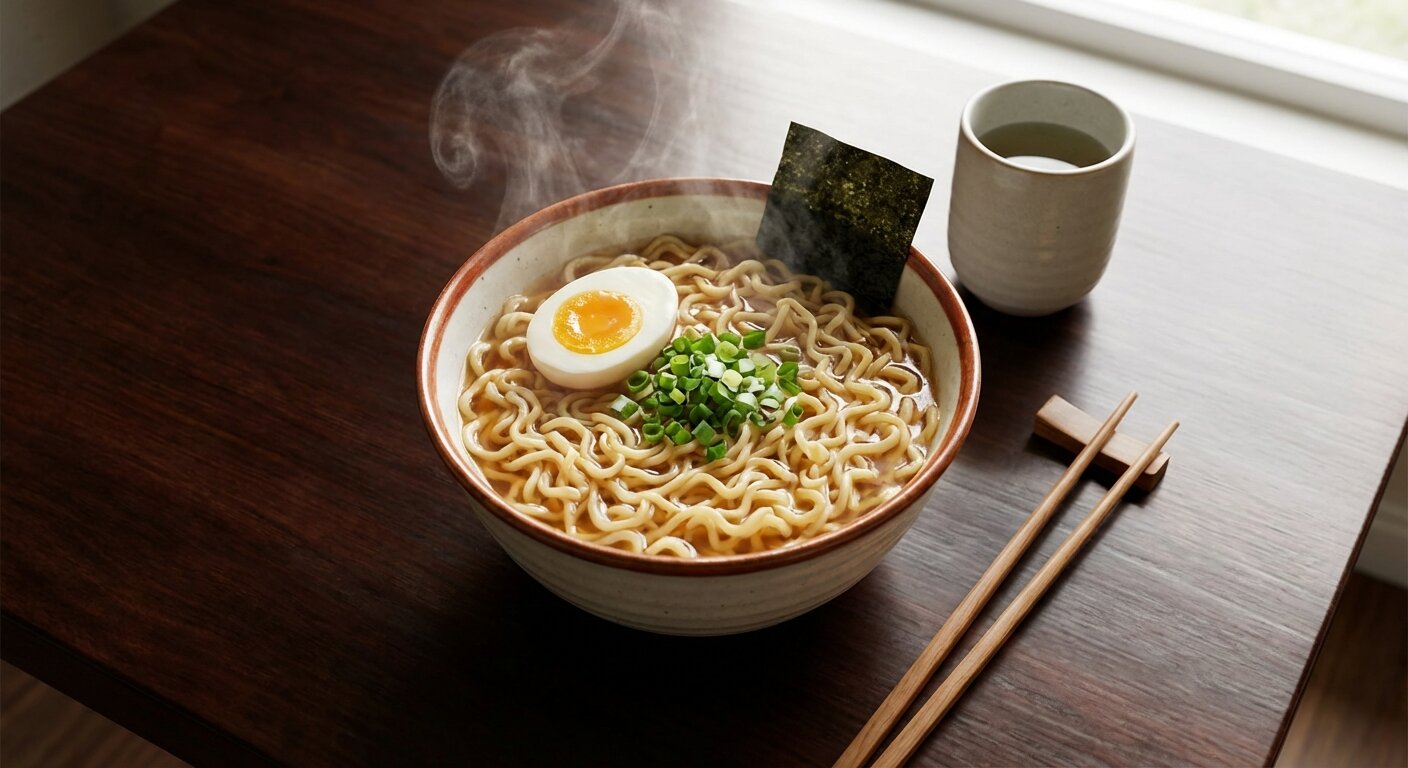
Ramen noodles are a global comfort food staple—cheap, fast, and deeply satisfying. But when you’re tracking macros, you quickly realize that what feels like a simple meal carries some serious nutritional baggage. High sodium, moderate calories, and surprisingly high fat content make ramen a challenging food to fit into most diets.
Whether you’re a college student surviving on a budget, a busy professional grabbing a quick meal, or a fitness enthusiast wondering if ramen has any place in your nutrition plan, this guide breaks down exactly what you’re eating. We’ll compare instant vs. fresh ramen, explore healthier modifications, and show you how to make ramen work for your goals—or when to skip it entirely.
Ready to calculate your perfect macro balance? Use our macro calculator to find your personalized targets, then come back to see if ramen fits your plan.
Related: Learn more about what macros are and how they impact your diet.
Macro Breakdown: What’s Actually in Ramen Noodles?
Let’s start with the standard instant ramen package—the kind you find at convenience stores for $0.50-$1.00. Here’s what you’re getting per single package (85g dry noodles + seasoning packet):
Standard Instant Ramen Macros (1 package):
- Calories: 380
- Protein: 14g
- Carbohydrates: 52g
- Fat: 14g
- Fiber: 2g
- Sodium: 1,500-1,800mg
At first glance, 380 calories doesn’t seem terrible. But the problem becomes clear when you consider what’s missing: virtually no micronutrients, minimal fiber, and an absurd amount of sodium—nearly 75% of your daily recommended limit in a single meal.
The fat content surprises most people. Why is instant ramen so high in fat? Instant noodles are deep-fried during manufacturing to remove moisture and extend shelf life. This process infuses the noodles with palm oil or other vegetable oils, adding 14g of fat per package. While not inherently bad, this fat provides little nutritional value and crowds out more nutrient-dense options.
The carbohydrate content (52g) comes primarily from refined wheat flour—simple carbs that digest quickly, spike blood sugar, and leave you hungry again within 1-2 hours. There’s minimal fiber (2g) to slow digestion or support gut health.
Protein is the only semi-redeeming quality here. At 14g per package, ramen provides moderate protein—not enough for a complete meal if you’re active, but better than many other processed foods. However, this protein is plant-based (from wheat), meaning it lacks the complete amino acid profile of animal proteins.
Key Insight: Instant ramen is calorie-dense but nutrient-poor. It fills your stomach temporarily but fails to provide the vitamins, minerals, fiber, and quality protein your body needs to thrive.
Instant Ramen vs Fresh Ramen: How They Compare
Not all ramen is created equal. The instant ramen you microwave in 3 minutes differs dramatically from the fresh ramen noodles you find at Asian markets or high-quality ramen restaurants. Let’s compare:
Instant Ramen (1 package, 85g dry):
- Calories: 380
- Protein: 14g
- Carbs: 52g
- Fat: 14g (from deep-frying)
- Sodium: 1,500-1,800mg
- Preservatives: TBHQ, sodium tripolyphosphate
- Shelf life: 6-12 months
Fresh Ramen Noodles (120g cooked):
- Calories: 200
- Protein: 7g
- Carbs: 40g
- Fat: 2g (not fried)
- Sodium: 200-400mg
- Preservatives: None or minimal
- Shelf life: 1-2 weeks refrigerated
Winner: Fresh ramen by a landslide.
Fresh noodles contain 50% fewer calories, 85% less fat, and 80% less sodium. They’re not deep-fried, so they lack the heavy oil coating that makes instant ramen so calorie-dense. Fresh noodles also taste significantly better—springy, chewy, and rich instead of the brittle, artificial texture of instant varieties.
Restaurant ramen takes it even further. A high-quality tonkotsu or shoyu ramen bowl typically includes:
- Fresh alkaline noodles
- Slow-cooked broth (bone broth for protein and collagen)
- Marinated soft-boiled egg (6g protein)
- Lean pork or chicken (20-30g protein)
- Vegetables (mushrooms, spinach, green onions)
A restaurant ramen bowl runs 500-700 calories but provides 30-45g protein, valuable micronutrients, and far better ingredient quality. While higher in sodium (1,200-2,000mg from the broth), it’s a complete meal—not empty calories.
Bottom Line: If you love ramen, invest in fresh noodles from an Asian market and build your own bowls at home. The macro improvement is dramatic, and the taste is exponentially better.
Breaking Down the Seasoning Packet: The Real Problem
The instant ramen flavor packet deserves its own section because it’s the single worst component of instant ramen. Here’s what’s inside that little foil pouch:
Typical Seasoning Packet Contents (1 packet, ~25g):
- Sodium: 1,200-1,500mg (75% of daily limit)
- MSG (Monosodium Glutamate): 1-2g
- Sugar: 2-3g
- Artificial flavoring: Chicken/beef/shrimp extracts, yeast extracts
- Preservatives: TBHQ (tert-Butylhydroquinone), BHA/BHT
- Oils: Palm oil, vegetable oil powder
The sodium content is the headline issue. At 1,500mg per packet, you’re consuming 65% of the FDA’s recommended 2,300mg daily limit in a single meal. High sodium intake correlates with:
- Water retention and bloating
- Increased blood pressure
- Higher risk of heart disease and stroke
- Poor kidney function over time
MSG is controversial but generally considered safe by major health organizations. Some people report headaches or flushing after consuming large amounts, but research doesn’t support serious health risks for most individuals.
The preservatives (TBHQ, BHA, BHT) extend shelf life but have raised concerns in animal studies at high doses. While the amounts in ramen are considered safe by regulatory bodies, they provide zero nutritional benefit.
The Fix: Skip the seasoning packet entirely or use only 25-50% of it. Replace with:
- Low-sodium chicken or vegetable broth
- Soy sauce or tamari (1 tbsp = 900mg sodium, but more controllable)
- Miso paste (1 tbsp = 600mg sodium + probiotics)
- Fresh garlic, ginger, chili flakes, sesame oil
By ditching the flavor packet, you reduce sodium by 75% and eliminate preservatives while improving flavor complexity.
Healthier Ramen: How to Make It Work for Your Macros
Ramen doesn’t have to be a nutritional disaster. With strategic modifications, you can transform instant ramen into a more balanced meal that fits your macro targets. Here’s how:
1. Use Half a Package or Half the Noodles
Why it matters: A full package of instant ramen is designed to be cheap and filling, not nutritionally balanced. Cutting the portion in half immediately reduces calories to 190, carbs to 26g, and fat to 7g—making room for better ingredients.
How to do it:
- Cook only half the noodle block
- Use 25-50% of the seasoning packet
- Save the rest for another meal or discard
2. Add Lean Protein
Target: 20-30g additional protein
Ramen’s biggest weakness is inadequate protein. Adding a quality protein source transforms it from a snack into a real meal.
Best protein additions:
- Eggs (2 large): 12g protein, 140 calories
- Soft-boil and add to broth
- Scramble and mix in
- Poach directly in the broth
- Chicken breast (4oz): 26g protein, 120 calories
- Grill, slice, and add on top
- Shred rotisserie chicken
- Tofu (5oz firm): 12g protein, 90 calories
- Pan-fry with soy sauce
- Cube and add raw to hot broth
- Edamame (1 cup): 17g protein, 190 calories
- Frozen edamame, microwaved
- Shrimp (4oz): 24g protein, 120 calories
- Sauté with garlic
- Add frozen cooked shrimp
3. Load Up on Vegetables
Target: 2-3 cups vegetables
Vegetables add volume, fiber, vitamins, and minerals without significantly increasing calories.
Best vegetable additions:
- Spinach (2 cups raw): 2g protein, 14 calories
- Wilts instantly in hot broth
- Mushrooms (1 cup sliced): 3g protein, 15 calories
- Shiitake, oyster, or button
- Bok choy (1 cup): 1g protein, 9 calories
- Separate leaves, add to broth
- Carrots (1 medium, sliced): 1g fiber, 25 calories
- Bean sprouts (1 cup): 3g protein, 30 calories
- Adds crunch and freshness
- Corn kernels (½ cup): 2g protein, 66 calories
4. Use Low-Sodium Broth Instead of Seasoning Packet
Why it matters: The seasoning packet contributes 1,500mg sodium with minimal flavor complexity. Quality broth tastes better and reduces sodium by 60-75%.
Better broth options:
- Low-sodium chicken broth (1 cup): 570mg sodium, 15 calories
- Low-sodium vegetable broth (1 cup): 140mg sodium, 10 calories
- Bone broth (1 cup): 400mg sodium, 40 calories + collagen
- Miso paste (1 tbsp in water): 600mg sodium, 35 calories + probiotics
5. Add Healthy Fats
If you’re using fresh ramen (low fat) instead of instant, adding healthy fats improves satiety and nutrient absorption.
Best fat additions:
- Sesame oil (1 tsp): 5g fat, 40 calories
- Drizzle on top before serving
- Avocado (¼ medium): 5g fat, 60 calories
- Slice and add as garnish
- Soft-boiled egg yolk: 5g fat, 55 calories
- Already covered if you add eggs
Sample “Macro-Friendly” Ramen Bowl
Ingredients:
- ½ package instant ramen noodles (no seasoning packet)
- 1 cup low-sodium chicken broth
- 2 soft-boiled eggs
- 2 cups fresh spinach
- 1 cup sliced shiitake mushrooms
- ½ cup edamame
- 1 tsp sesame oil
- 1 tsp soy sauce
- Green onions, chili flakes, nori (garnish)
Macros:
- Calories: 485
- Protein: 35g
- Carbs: 42g
- Fat: 18g
- Sodium: 1,100mg
- Fiber: 8g
Result: A complete, balanced meal with significantly better macros than standard ramen. Higher protein, more fiber, triple the vegetables, and reduced sodium by 35%.
Ramen for Specific Diets: Does It Fit Your Goals?
Let’s address how ramen fits (or doesn’t fit) into common diet strategies.
Ramen for Weight Loss (Cutting)
Verdict: Proceed with extreme caution.
Instant ramen’s problems on a cut:
- High calorie density: 380 calories for a meal that doesn’t keep you full
- Low protein: 14g won’t preserve muscle or satisfy appetite
- High sodium: Causes water retention, masking fat loss on the scale
- Blood sugar spikes: Refined carbs lead to crashes and cravings
If you must eat ramen while cutting:
- Use only ½ package of noodles
- Skip the seasoning packet entirely
- Add 25-30g protein (chicken, eggs, tofu)
- Add 3+ cups of low-calorie vegetables
- Limit to once per week maximum
Better alternatives for cutting:
- Shirataki noodles (0 calories, pure fiber)
- Zucchini noodles with chicken and marinara
- Cauliflower rice stir-fry with lean protein
Ramen for Muscle Gain (Bulking)
Verdict: Acceptable as a carb source with heavy modifications.
Ramen can work on a bulk if you need cheap, fast calories and aren’t overly concerned with food quality.
How to bulk with ramen:
- Use 1-2 full packages of noodles
- Add 40-50g protein (double chicken breast, 3-4 eggs)
- Include calorie-dense additions (peanut butter, avocado, extra eggs)
- Pair with a protein shake post-meal
- Limit to 2-3 times per week
Sample bulk ramen bowl:
- 2 packages instant ramen
- 8oz grilled chicken breast
- 2 eggs
- 1 tbsp peanut butter mixed into broth
- Veggies (optional for micronutrients)
Macros: ~900 calories, 75g protein, 80g carbs, 28g fat
Better alternatives for bulking:
- Whole grain pasta with ground turkey
- Rice bowls with salmon and avocado
- Homemade burritos with beans, rice, chicken
Ramen for Keto
Verdict: Absolutely not.
Ramen noodles contain 52g carbs per package—far exceeding the 20-30g daily limit for ketosis. There’s no way to modify instant ramen to fit keto macros.
Keto alternatives:
- Shirataki noodles (0g net carbs)
- Kelp noodles (1g net carbs per serving)
- Zucchini noodles (4g net carbs per cup)
- Make keto “ramen” with bone broth, protein, and veggie noodles
Ramen for Maintenance/General Health
Verdict: Once a week max, heavily modified.
If you’re not pursuing specific body composition goals and just want to eat reasonably healthy, ramen can fit into a balanced diet occasionally.
Guidelines:
- Limit to 1-2 servings per week
- Always modify with protein and vegetables
- Use minimal seasoning packet (25% max)
- Prioritize fresh ramen over instant when possible
- Never eat instant ramen as-is from the package
The Sodium Problem: Why It Matters More Than You Think
We’ve mentioned sodium repeatedly, but let’s dive deeper into why the 1,500-1,800mg in instant ramen is genuinely concerning.
Daily Sodium Recommendations:
- FDA recommended limit: 2,300mg/day
- American Heart Association optimal: 1,500mg/day
- Average American intake: 3,400mg/day
One instant ramen package provides 65-78% of the FDA limit and potentially exceeds the AHA’s optimal intake in a single meal.
Short-term effects of high sodium:
- Water retention: Your body holds 2-3 extra pounds of water to dilute excess sodium
- Bloating: Puffiness in face, hands, ankles
- Thirst: Persistent dry mouth even after drinking water
- Blood pressure spike: Temporary elevation lasting 2-4 hours
Long-term effects of chronic high sodium:
- Hypertension: High blood pressure becomes chronic
- Cardiovascular disease: Increased risk of heart attack and stroke
- Kidney damage: Kidneys work overtime filtering excess sodium
- Osteoporosis: High sodium increases calcium excretion
- Stomach cancer: Linked to high salt intake in some studies
Who’s most at risk:
- People with existing hypertension
- Individuals with kidney disease
- African Americans (genetically more salt-sensitive)
- Older adults (50+)
The fix: If you eat instant ramen, ditching the flavor packet cuts sodium by 75%. Use low-sodium broth, soy sauce, or miso paste in controlled amounts to season instead.
Ramen Myths: Debunked
Let’s clear up common misconceptions about ramen noodles.
Myth 1: “Ramen noodles take weeks to digest and coat your stomach”
False. This myth stems from a viral video showing a camera pill traveling through the digestive system, comparing ramen to homemade noodles. While ramen digests slightly slower due to preservatives and processed ingredients, it doesn’t “coat your stomach” or take weeks to break down. Digestion time: 2-4 hours, similar to most carb-heavy meals.
Myth 2: “MSG in ramen causes brain damage”
Mostly false. MSG (monosodium glutamate) is generally recognized as safe by the FDA, WHO, and major health organizations. While some people report sensitivity (headaches, flushing), there’s no credible evidence of brain damage or serious harm at normal consumption levels. That said, the amounts in instant ramen aren’t beneficial either—it’s just there to enhance flavor artificially.
Myth 3: “Instant ramen is fine if you add vegetables”
Partially true. Adding vegetables improves the meal’s fiber, vitamin, and mineral content, but it doesn’t negate the core problems: excessive sodium, refined carbs, deep-fried noodles, and preservatives. Vegetables make ramen better, but not good.
Myth 4: “Fresh ramen is just as bad as instant”
False. Fresh ramen noodles contain 50% fewer calories, 85% less fat, and 80% less sodium than instant varieties. While still a refined carb, fresh ramen lacks the deep-frying, preservatives, and excessive sodium that make instant ramen problematic.
Myth 5: “Ramen is a good protein source”
False. At 14g protein per package, ramen provides moderate protein—not terrible, but far from ideal. You’d need to eat 2-3 packages to meet protein needs for an active individual, which would also deliver 1,000+ calories and 4,000+ mg sodium. Better protein sources: chicken, fish, eggs, Greek yogurt, tofu.
Frequently Asked Questions
Can I eat ramen every day?
Eating instant ramen daily is strongly discouraged. Chronic consumption leads to excessive sodium intake (3,000-4,000mg daily), inadequate protein and micronutrients, blood sugar instability, and increased risk of metabolic syndrome. Studies have linked frequent instant noodle consumption to increased rates of heart disease, diabetes, and metabolic syndrome—particularly in women. If you love ramen, limit to 1-2 times per week and heavily modify with protein and vegetables.
Is ramen worse than other instant noodles?
Ramen is similar to other instant noodle varieties (cup noodles, instant pho, instant udon) in nutritional profile. All are deep-fried, high-sodium, low-nutrient options. However, instant udon and soba sometimes use better ingredients and less aggressive frying, making them marginally better. Ultimately, all instant noodles should be consumed sparingly.
Does draining and rinsing ramen reduce sodium?
Draining the cooking water removes some sodium, but not as much as you’d hope. Studies show rinsing can reduce sodium by 15-25%, but since most sodium is embedded in the noodles and seasoning, you still consume 1,200+ mg. For significant sodium reduction, skip the flavor packet entirely.
Can I eat ramen before a workout?
Ramen provides quick-digesting carbs, making it a viable pre-workout option for some people—but not ideal. The high sodium can cause bloating, and the low protein content won’t support muscle synthesis. Better pre-workout options: oatmeal with protein powder, rice with chicken, banana with peanut butter, or a dedicated pre-workout meal 90-120 minutes before training.
Is “organic” or “healthy” ramen actually better?
Premium instant ramen brands (like Lotus Foods, Mike’s Mighty Good, or Immi) use better ingredients: non-fried noodles, less sodium (400-600mg), no preservatives, and sometimes added protein or fiber. These are genuinely better options—still processed, but far closer to real food than standard instant ramen. Expect to pay $2-4 per package instead of $0.50-1.00.
What’s the best instant ramen brand for macros?
Immi Ramen (low-carb, high-protein): 9g net carbs, 21g protein, 390 calories, 990mg sodium. Uses konjac and wheat protein isolate instead of traditional wheat flour.
Lotus Foods Organic Millet & Brown Rice Ramen: 190 calories, 4g protein, 40g carbs, 1.5g fat, 570mg sodium. Not fried, no preservatives, organic grains.
Mike’s Mighty Good Craft Ramen: 200-260 calories, 8g protein, 40-48g carbs, 2-8g fat, 700-900mg sodium. Air-dried instead of fried, better flavor.
Can kids eat ramen?
Occasional consumption (once a month) is fine for kids, but frequent ramen consumption poses risks: excessive sodium affects developing kidneys, refined carbs contribute to poor eating habits, and low nutrient density displaces healthier foods. Always modify with protein and vegetables if serving to children. Better kid-friendly alternatives: whole wheat pasta with marinara, chicken and rice, homemade mac and cheese with added veggies.
Is ramen okay for diabetics?
Ramen is problematic for diabetics due to its high glycemic index—refined wheat flour causes rapid blood sugar spikes. If a diabetic must eat ramen, modifications are critical: use only half a package, add significant protein (25-30g) and fiber (vegetables, beans), and pair with a fat source to slow digestion. Monitor blood glucose closely. Shirataki noodles or kelp noodles are better alternatives with minimal impact on blood sugar.
Conclusion: The Verdict on Ramen Noodles
Instant ramen noodles are cheap, convenient, and comforting—but nutritionally bankrupt. A standard package delivers 380 calories, 14g protein, 52g refined carbs, 14g fat from deep-frying, and a shocking 1,500-1,800mg sodium. It’s calorie-dense, nutrient-poor, and designed to be cheap and filling, not healthy.
The bottom line:
- Instant ramen as-is: Avoid or limit to once a month
- Modified instant ramen: Acceptable 1-2x/week with heavy modifications (protein, veggies, no seasoning packet)
- Fresh ramen: Significantly better option if you love ramen; use quality broth and lean protein
- Restaurant ramen: Occasional treat; higher quality but still very high in sodium
Ramen isn’t a villain, but it’s not health food either. If you’re tracking macros, prioritize nutrient-dense whole foods 90% of the time. Save ramen for convenience meals when you modify it heavily, or enjoy high-quality restaurant ramen as an occasional indulgence.
Your move: Want to see exactly how much protein, carbs, and fat you need daily? Use our macro calculator to get personalized targets. Then plan meals around those numbers—with or without ramen.
For more macro-friendly food guides, check out:
Related Articles
Dragonfruit Macros: Complete Nutrition Guide for Pitaya
Complete macro breakdown of dragonfruit (pitaya). Learn the calories, protein, carbs, and...
Read guide →
Bulgur Macros: Complete Nutritional Guide & Health Benefits
Discover bulgur's complete macro breakdown, nutritional benefits, and how to incorporate...
Read guide →
Radish Macros: Nutrition Facts and Health Benefits
Complete guide to radish macros and nutrition. Learn calories, protein, carbs, and health...
Read guide →Note: Nutrition values are approximate and may vary based on preparation method and source.