Silk Almond Milk Macros: Complete Nutrition Facts by Variety
Reviewed by Dr. Michael Torres, PhD
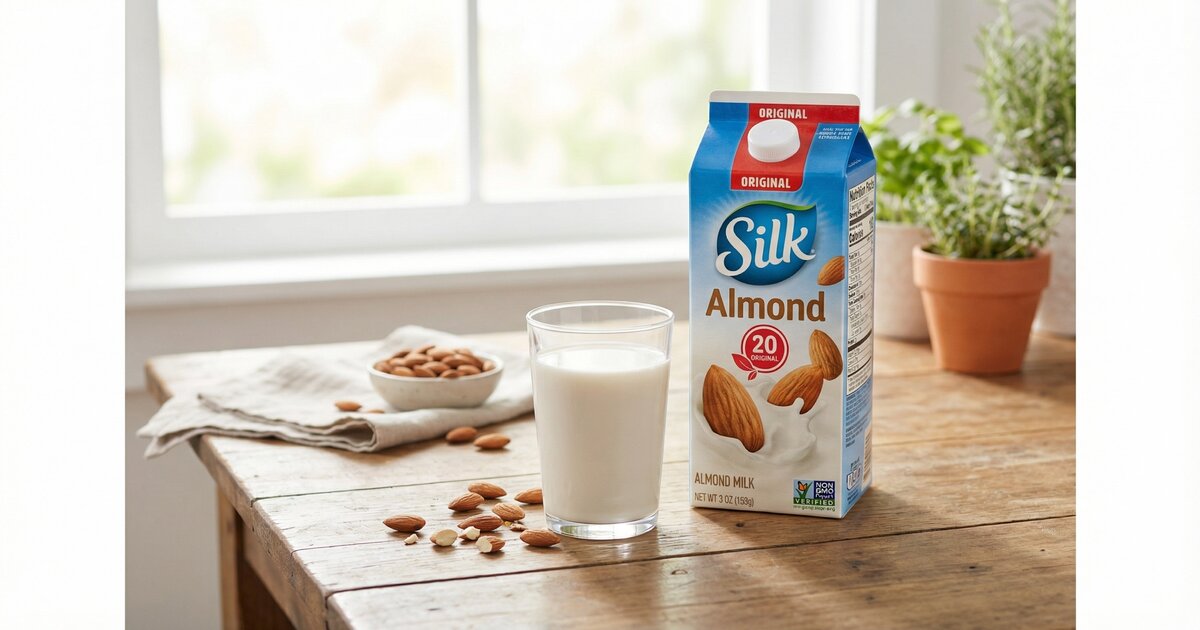
Silk pioneered plant-based milk in America, and their almond milk remains the category leader. For macro trackers, Silk Almond Milk offers something valuable: a nearly calorie-free liquid that works anywhere milk does—coffee, smoothies, cereal—without the macro impact of dairy.
The key is choosing the right variety. Silk offers options from 30-calorie unsweetened to 80-calorie protein-enhanced. Understanding the differences helps you pick the version that fits your goals.
This guide covers every Silk Almond Milk variety, compares them to dairy and other plant milks, and shows how to use almond milk effectively in your macro tracking.
Related: Understand what macros are and why they matter for your nutrition goals.
Silk Almond Milk Macro Overview
Here’s how Silk’s almond milk lineup compares:
| Variety | Serving | Cal | Protein | Carbs | Sugar | Fat |
|---|---|---|---|---|---|---|
| Unsweetened | 1 cup | 30 | 1g | 1g | 0g | 2.5g |
| Unsweetened Vanilla | 1 cup | 30 | 1g | 1g | 0g | 2.5g |
| Original | 1 cup | 60 | 1g | 8g | 7g | 2.5g |
| Vanilla | 1 cup | 80 | 1g | 13g | 12g | 2.5g |
| Dark Chocolate | 1 cup | 100 | 1g | 17g | 15g | 2.5g |
| Protein | 1 cup | 80 | 10g | 4g | 0g | 4g |
| Extra Creamy | 1 cup | 60 | 1g | 4g | 2g | 4g |
Key insight: Unsweetened versions have just 30 calories—making them essentially “free” for macro tracking. Sweetened versions add 30-70 calories from sugar.
Detailed Breakdown by Variety
Silk Unsweetened Almond Milk
The macro tracker’s choice—minimal calories, minimal carbs.
Per 1 cup (240ml):
| Macro | Amount | % Daily Value |
|---|---|---|
| Calories | 30 | - |
| Protein | 1g | 2% |
| Total Carbs | 1g | <1% |
| Sugar | 0g | 0% |
| Added Sugar | 0g | 0% |
| Fat | 2.5g | 3% |
| Saturated Fat | 0g | 0% |
| Calcium | 450mg | 35% |
| Vitamin D | 2.5mcg | 15% |
| Vitamin E | 7.2mg | 50% |
| Vitamin B12 | 1.2mcg | 50% |
Fortification matters: The calcium (450mg) exceeds dairy milk (300mg). Vitamins D, E, and B12 are also added. This is flavored, fortified water—but nutritious flavored water.
Silk Unsweetened Vanilla Almond Milk
Same macros as regular unsweetened with vanilla flavor.
Per 1 cup (240ml):
| Macro | Amount |
|---|---|
| Calories | 30 |
| Protein | 1g |
| Carbs | 1g |
| Sugar | 0g |
| Fat | 2.5g |
Best use: Smoothies, coffee, anywhere vanilla complements the recipe.
Silk Original Almond Milk
Lightly sweetened for better standalone taste.
Per 1 cup (240ml):
| Macro | Amount |
|---|---|
| Calories | 60 |
| Protein | 1g |
| Carbs | 8g |
| Sugar | 7g |
| Fat | 2.5g |
Note: The 7g added sugar doubles the calories. For macro tracking, unsweetened is almost always better.
Silk Vanilla Almond Milk (Sweetened)
Sweetened vanilla—the sweetest common variety.
Per 1 cup (240ml):
| Macro | Amount |
|---|---|
| Calories | 80 |
| Protein | 1g |
| Carbs | 13g |
| Sugar | 12g |
| Fat | 2.5g |
Warning: 12g sugar per cup adds up quickly. Two cups = 24g sugar just from milk. Use unsweetened vanilla instead.
Silk Dark Chocolate Almond Milk
Dessert-flavored almond milk.
Per 1 cup (240ml):
| Macro | Amount |
|---|---|
| Calories | 100 |
| Protein | 1g |
| Carbs | 17g |
| Sugar | 15g |
| Fat | 2.5g |
Use sparingly: Essentially chocolate-flavored sugar water. Fine as an occasional treat, not daily consumption.
Silk Protein Almond Milk
Almond milk with added pea protein—addresses the protein gap.
Per 1 cup (240ml):
| Macro | Amount |
|---|---|
| Calories | 80 |
| Protein | 10g |
| Carbs | 4g |
| Sugar | 0g |
| Fat | 4g |
Game changer: 10g protein transforms almond milk from “flavored water” to actual nutrition. Only 80 calories—excellent for smoothies and protein goals.
Silk Extra Creamy Almond Milk
Higher fat content for creamier texture.
Per 1 cup (240ml):
| Macro | Amount |
|---|---|
| Calories | 60 |
| Protein | 1g |
| Carbs | 4g |
| Sugar | 2g |
| Fat | 4g |
Best for: Coffee, where creamier texture matters. Slightly more calories but better mouthfeel.
Silk Almond Milk vs Dairy Milk
The comparison that drives most purchasing decisions:
Silk Unsweetened vs Whole Milk
| Metric (per cup) | Silk Unsweetened | Whole Milk |
|---|---|---|
| Calories | 30 | 149 |
| Protein | 1g | 8g |
| Carbs | 1g | 12g |
| Sugar | 0g | 12g (lactose) |
| Fat | 2.5g | 8g |
| Calcium | 450mg | 276mg |
Silk wins: Far fewer calories, zero sugar, more calcium (fortified) Dairy wins: 8x more protein, naturally nutritious without fortification
Silk Unsweetened vs Skim Milk
| Metric (per cup) | Silk Unsweetened | Skim Milk |
|---|---|---|
| Calories | 30 | 83 |
| Protein | 1g | 8g |
| Carbs | 1g | 12g |
| Fat | 2.5g | 0.2g |
Bottom line: Silk saves ~50 calories per cup vs skim, but loses 7g protein. For pure calorie cutting, Silk wins. For nutrition, dairy wins.
For more milk comparisons, see our almond milk vs regular milk macros guide.
Silk vs Other Almond Milk Brands
Silk vs Almond Breeze
| Metric (per cup unsweetened) | Silk | Almond Breeze |
|---|---|---|
| Calories | 30 | 30 |
| Protein | 1g | 1g |
| Carbs | 1g | 1g |
| Fat | 2.5g | 2.5g |
| Calcium | 450mg | 450mg |
Verdict: Virtually identical. Choose based on taste preference and price.
Silk vs Califia Farms
| Metric (per cup unsweetened) | Silk | Califia |
|---|---|---|
| Calories | 30 | 35 |
| Protein | 1g | 1g |
| Carbs | 1g | 1g |
| Fat | 2.5g | 3g |
Verdict: Nearly identical. Califia has slightly higher fat. Both are excellent.
Silk vs Oatly (Oat Milk)
| Metric (per cup) | Silk Almond | Oatly Original |
|---|---|---|
| Calories | 30 | 120 |
| Protein | 1g | 3g |
| Carbs | 1g | 16g |
| Fat | 2.5g | 5g |
Winner: Silk for low-calorie/low-carb. Oatly has more protein and creamier texture but 4x the calories.
See our Oatly macros guide for full comparison.
Where to Buy Silk Almond Milk
Silk is the most widely available plant milk:
Everywhere:
- Walmart, Target, Kroger, Safeway
- Costco (large multipacks)
- Whole Foods, Trader Joe’s
- Most convenience stores
Price: ~$3-4 per half gallon, often on sale
Shelf-stable vs refrigerated: Both available. Shelf-stable stores longer unopened; refrigerated may taste fresher. Macros are identical.
Diet Compatibility
Keto Diet
Verdict: Excellent Unsweetened Silk has just 1g net carbs per cup. Perfect for keto coffee, smoothies, and cooking.
Low-Carb
Verdict: Excellent 1g carbs per cup is negligible. Use freely on any low-carb plan.
Low-Calorie/Weight Loss
Verdict: Excellent 30 calories per cup makes it nearly “free” calorically. Saves 50-120 calories vs dairy per cup—adds up in smoothies and cooking.
Use our macro calculator to see the impact on your daily targets.
High-Protein
Verdict: Use Protein version Regular Silk (1g protein) doesn’t contribute to protein goals. Silk Protein (10g) is much better for high-protein eating.
Diabetic Diets
Verdict: Excellent (unsweetened) Zero sugar, minimal carbs. Far better than dairy milk for blood sugar management.
Vegan
Verdict: Yes 100% plant-based. Core use case for almond milk.
Whole30
Verdict: Check ingredients Some Silk varieties contain carrageenan or other additives that aren’t Whole30 compliant. Read labels carefully.
Nut Allergies
Verdict: Not compatible Almond milk is made from almonds (tree nuts). Severe reactions possible. Choose oat or soy milk instead.
How to Fit Silk Almond Milk in Your Macros
1,600 calorie cut:
- Silk Unsweetened in coffee = 30 cal
- vs dairy creamer = 50-100+ cal
- Saves 20-70+ calories per cup of coffee
Smoothie comparison:
- 1 cup dairy milk = 149 cal, 8g protein
- 1 cup Silk Unsweetened + scoop protein powder = 150 cal, 25g protein
- Same calories, 3x the protein
Cereal math:
- 1 cup Silk Unsweetened = 30 cal
- 1 cup skim milk = 83 cal
- Savings: 53 calories per bowl
Best Silk Almond Milk by Goal
Lowest Calorie: Unsweetened, Unsweetened Vanilla (30 cal)
Highest Protein: Protein Almond Milk (10g)
Lowest Carbs: Unsweetened (1g)
Creamiest: Extra Creamy (better for coffee)
Avoid: Vanilla (sweetened) and Dark Chocolate (high sugar)
Usage Tips for Macro Tracking
For coffee:
- Use Extra Creamy or Unsweetened
- Froths poorly compared to oat milk
- Add protein powder if morning protein matters
For smoothies:
- Unsweetened vanilla is ideal base
- Pair with protein powder for complete nutrition
- Frozen banana adds natural sweetness
For cooking:
- Works in most recipes calling for milk
- May thin sauces slightly (less fat than dairy)
- Great in oatmeal, baked goods, soups
For cereal:
- Unsweetened original recommended
- Vanilla can clash with cereal flavors
- Significant calorie savings vs dairy
The Bottom Line
Silk Almond Milk excels at one thing: providing milk-like liquid with minimal calories. The 30-calorie unsweetened version is essentially free for macro tracking, making it perfect for coffee, smoothies, and cooking.
Just remember what it isn’t: a protein source. Regular Silk has 1g protein vs dairy’s 8g. If protein matters, use Silk Protein (10g) or supplement with protein powder.
Choose Silk Almond Milk when:
- Calorie reduction is priority
- You’re avoiding dairy
- You need keto-friendly milk
- Coffee or smoothies need low-cal base
Skip Silk Almond Milk when:
- Protein intake matters (without supplementing)
- You have nut allergies
- You want naturally nutritious milk (vs fortified)
For more on plant-based options, see our oat milk macros guide and understand the trade-offs in our almond milk vs regular milk comparison.
Nutrition information sourced from Silk’s official website and USDA FoodData Central. Values may vary by production batch. Always check packaging for the most accurate information.
Related Articles

Dragonfruit Macros: Complete Nutrition Guide for Pitaya
Complete macro breakdown of dragonfruit (pitaya). Learn the calories, protein, carbs, and...
Read guide →
Bulgur Macros: Complete Nutritional Guide & Health Benefits
Discover bulgur's complete macro breakdown, nutritional benefits, and how to incorporate...
Read guide →
Radish Macros: Nutrition Facts and Health Benefits
Complete guide to radish macros and nutrition. Learn calories, protein, carbs, and health...
Read guide →Note: Nutrition values are approximate and may vary based on preparation method and source.