Sour Cream Macros: Nutrition Facts & Health Benefits
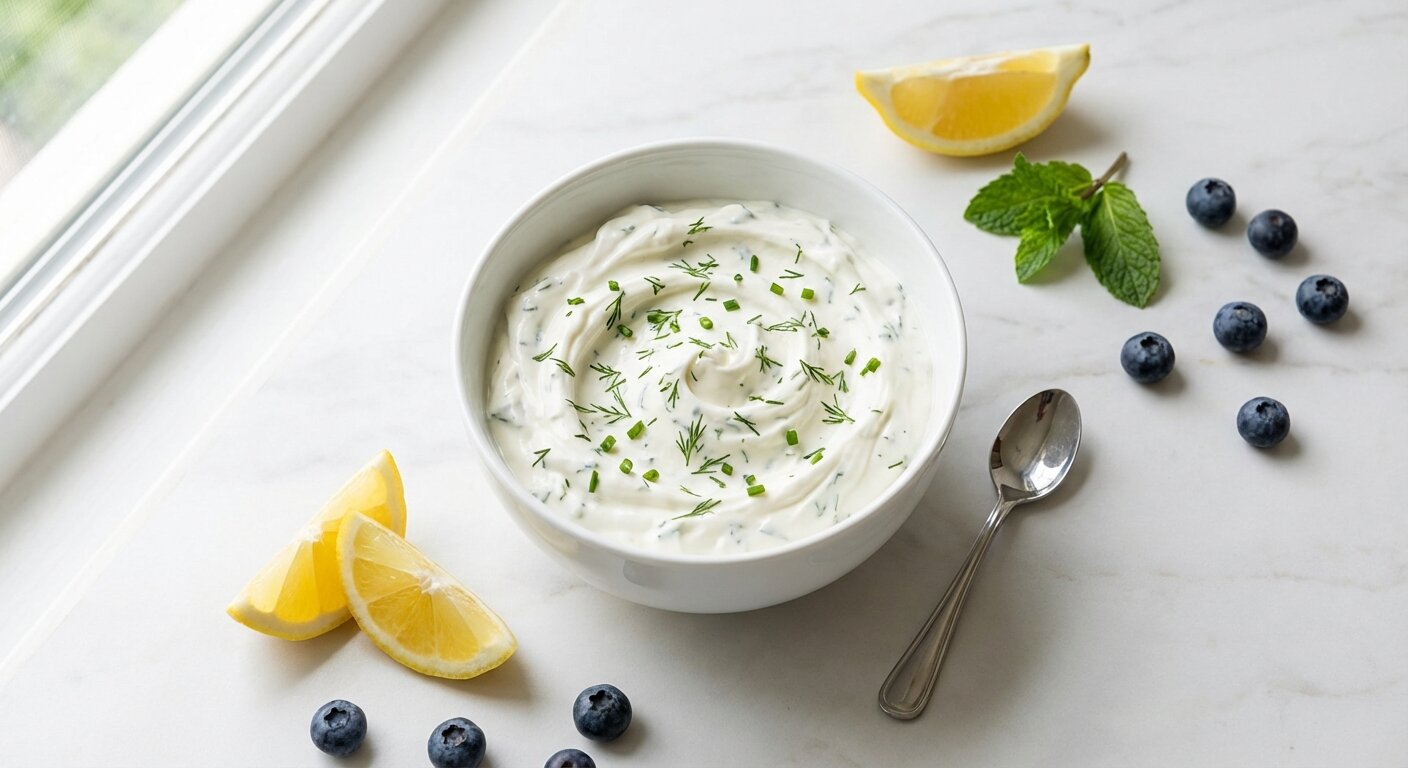
Sour cream is a tangy, creamy dairy staple that appears in everything from tacos and baked potatoes to dips and desserts. Whether you’re dolloping it on nachos or folding it into cake batter, understanding the nutritional profile of sour cream can help you make informed choices about how it fits into your daily macros.
While sour cream adds rich flavor and creamy texture to countless dishes, it’s primarily a source of fat with minimal protein and carbohydrates. The macro breakdown varies significantly between full-fat, reduced-fat, and fat-free versions, making it important to know which type aligns with your dietary goals. Whether you’re tracking macros for weight loss, muscle gain, or maintaining a ketogenic diet, this comprehensive guide will break down everything you need to know about sour cream nutrition.
Ready to see how sour cream fits into your meal plan? Use our macro calculator to get personalized daily targets based on your goals, then read on to learn exactly how this cultured dairy product stacks up nutritionally.
Related: Learn more about what macros are and how they impact your diet.
Sour Cream Macros: Complete Breakdown
Understanding the macronutrient profile of sour cream is essential for accurate meal tracking. The nutrition facts vary considerably depending on the fat content, so let’s examine each variety in detail.
Regular (Full-Fat) Sour Cream Macros
Regular sour cream is the most common variety you’ll find at the grocery store, typically containing around 18-20% milkfat. Here’s the detailed macro breakdown:
Per 1 tablespoon (12g):
- Calories: 23
- Protein: 0.4g
- Carbohydrates: 0.5g
- Fat: 2.3g (1.4g saturated, 0.7g monounsaturated, 0.1g polyunsaturated)
- Fiber: 0g
- Sugar: 0.4g
Per 2 tablespoons (24g) - typical serving:
- Calories: 46
- Protein: 0.8g
- Carbohydrates: 1g
- Fat: 4.6g
- Fiber: 0g
- Sugar: 0.8g
Per 100g:
- Calories: 193
- Protein: 2.4g
- Carbohydrates: 4.6g
- Fat: 19.4g
- Fiber: 0g
- Sugar: 3.2g
Per 1 cup (230g):
- Calories: 444
- Protein: 5.5g
- Carbohydrates: 10.6g
- Fat: 44.6g
- Fiber: 0g
- Sugar: 7.4g
Full-fat sour cream derives approximately 90% of its calories from fat, 8% from carbohydrates, and just 2% from protein. The high fat content makes it particularly satiating, but calories can accumulate quickly if you’re not measuring portions carefully.
Reduced-Fat Sour Cream Macros
Reduced-fat sour cream typically contains around 40% less fat than regular sour cream, but manufacturers often add stabilizers, thickeners, and sometimes extra carbohydrates to maintain the creamy texture.
Per 1 tablespoon (15g):
- Calories: 12
- Protein: 0.6g
- Carbohydrates: 1.1g
- Fat: 0.9g (0.5g saturated, 0.2g monounsaturated, 0g polyunsaturated)
- Fiber: 0g
- Sugar: 0.5g
Per 2 tablespoons (30g):
- Calories: 24
- Protein: 1.2g
- Carbohydrates: 2.2g
- Fat: 1.8g
- Fiber: 0g
- Sugar: 1g
Per 100g:
- Calories: 80
- Protein: 4g
- Carbohydrates: 7.3g
- Fat: 6g
- Fiber: 0g
- Sugar: 3.3g
While reduced-fat sour cream cuts calories roughly in half, it also nearly doubles the carbohydrate content per serving. This trade-off makes it less ideal for ketogenic diets but potentially better for those following moderate-fat, higher-carb approaches.
Fat-Free Sour Cream Macros
Fat-free sour cream removes virtually all fat and relies heavily on thickeners, gums, and modified food starches to mimic the texture of regular sour cream. The result is a significantly different nutritional profile:
Per 2 tablespoons (32g):
- Calories: 24
- Protein: 1g
- Carbohydrates: 5g
- Fat: 0g
- Fiber: 0g
- Sugar: 2g
Per 100g:
- Calories: 75
- Protein: 3.1g
- Carbohydrates: 15.6g
- Fat: 0g
- Fiber: 0g
- Sugar: 6.3g
Fat-free sour cream has the highest carbohydrate content of all varieties—more than triple that of regular sour cream per serving. While it saves on calories and fat, the texture is noticeably different, and the increased carb content makes it unsuitable for low-carb or ketogenic diets.
Macro Comparison Table
Here’s a side-by-side comparison of all three varieties based on a standard 2-tablespoon serving:
| Type | Calories | Protein | Carbs | Fat | % Calories from Fat |
|---|---|---|---|---|---|
| Regular (full-fat) | 46 | 0.8g | 1g | 4.6g | 90% |
| Reduced-fat | 24 | 1.2g | 2.2g | 1.8g | 68% |
| Fat-free | 24 | 1g | 5g | 0g | 0% |
The dramatic differences in macro distribution make it clear that “sour cream” isn’t a single nutritional entity—the type you choose significantly impacts how it fits into your daily macros.
Micronutrients in Sour Cream
Beyond macronutrients, sour cream provides several important vitamins and minerals, though not in particularly high amounts. Here’s what you’ll find in a 2-tablespoon (24g) serving of regular sour cream:
Vitamins
Vitamin A: 108 IU (2% DV)
- Important for vision, immune function, and skin health
- Sour cream provides the fat-soluble form (retinol) from dairy
Vitamin B12: 0.1 mcg (2% DV)
- Essential for nerve function and red blood cell formation
- Only found naturally in animal products
Riboflavin (B2): 0.04 mg (2% DV)
- Supports energy production and cellular function
- Helps metabolize fats, proteins, and carbohydrates
Phosphorus: 18 mg (2% DV)
- Critical for bone health and energy metabolism
- Works alongside calcium in bone structure
Minerals
Calcium: 14 mg (1% DV)
- While sour cream contains some calcium, it’s not a significant source
- Milk and Greek yogurt provide much more per serving
Sodium: 6 mg (0% DV)
- Naturally low in sodium unless salt is added during processing
- Check labels as some brands add salt for flavor
Potassium: 17 mg (0% DV)
- Minimal contribution to daily potassium needs
The Micronutrient Reality
While sour cream does contain these nutrients, the amounts are relatively small compared to other dairy products. For example, Greek yogurt provides significantly more calcium, protein, and B vitamins per serving. If you’re eating sour cream, it should be for flavor and texture rather than nutritional benefits—any micronutrients you get are simply a bonus.
The fat content in full-fat sour cream does help with the absorption of fat-soluble vitamins (A, D, E, and K) from other foods in your meal, which is one small nutritional advantage of choosing the full-fat version over fat-free alternatives.
How Sour Cream Is Made
Understanding the production process of sour cream helps explain its nutritional profile and why it differs from other dairy products like yogurt or butter.
Traditional Fermentation Process
Authentic sour cream is made through bacterial fermentation, similar to yogurt production:
- Cream separation: Fresh milk is separated to isolate the cream, which naturally contains about 18-20% milkfat
- Pasteurization: The cream is heated to kill harmful bacteria and extend shelf life
- Inoculation: Lactic acid bacteria cultures (primarily Lactococcus lactis subspecies) are added to the cooled cream
- Fermentation: The bacteria consume lactose (milk sugar) and produce lactic acid, which causes the cream to thicken and develop its characteristic tangy flavor
- Cooling and packaging: Once the desired acidity and thickness are reached (typically after 12-24 hours), the sour cream is cooled to stop fermentation
This process is why sour cream has slightly lower lactose content than fresh cream—some of the milk sugar is converted to lactic acid during fermentation. However, unlike yogurt, most commercial sour cream is pasteurized after fermentation, which kills the beneficial probiotic bacteria.
Modern Commercial Production
Most store-bought sour cream today includes additional ingredients beyond cream and bacterial cultures:
Common additives include:
- Stabilizers: Gelatin, carrageenan, or guar gum to maintain texture and prevent separation
- Modified food starch: Especially in reduced-fat and fat-free versions to mimic the thickness of full-fat cream
- Enzymes: Rennet to help with coagulation and texture
- Vitamin A palmitate: Often added to reduced-fat versions to replace naturally occurring vitamin A lost when fat is removed
These additives don’t significantly change the macro profile but can affect digestibility for people sensitive to certain thickeners or stabilizers. Always check ingredient labels if you prefer a cleaner product—some brands offer organic sour cream with just cream and live active cultures.
Sour Cream vs. Crème Fraîche
Crème fraîche is sour cream’s French cousin, made with similar bacterial fermentation but with higher-fat cream (around 30% milkfat). The result is a richer, less tangy product that’s more stable when heated. Crème fraîche contains about 28 calories and 2.8g fat per tablespoon compared to sour cream’s 23 calories and 2.3g fat, making it slightly more calorie-dense but with a smoother, more luxurious texture.
Sour Cream for Different Diet Goals
How sour cream fits into your meal plan depends entirely on your dietary approach and macro targets. Let’s examine how this tangy dairy product works across various popular eating styles.
Weight Loss Diets
For those cutting calories to lose weight, sour cream presents both opportunities and challenges:
Pros:
- High fat content provides satiety, potentially reducing overall food intake
- Small portions (1-2 tablespoons) add significant flavor without excessive calories
- Can make vegetables and lean proteins more palatable, increasing diet adherence
Cons:
- Calorie-dense at 23 calories per tablespoon—easy to overconsume
- Minimal protein means it doesn’t support muscle preservation during weight loss
- Often paired with high-calorie foods (chips, fried foods, loaded potatoes)
Best practices for weight loss:
- Use a measuring spoon rather than eyeballing portions
- Choose reduced-fat versions if you need larger portions for volume
- Pair with high-protein, high-fiber foods rather than refined carbs
- Track every dollop in your food diary—small amounts add up throughout the day
For example, using 2 tablespoons of regular sour cream on a baked potato adds 46 calories. That’s reasonable. But if you’re mindlessly dipping chips in sour cream-based dip and consuming ¼ cup (4 tablespoons), you’ve added 92 calories that might not even register in your satiety signals.
Ketogenic and Low-Carb Diets
Full-fat sour cream is an excellent fit for ketogenic and low-carb eating styles:
Why it works:
- Very low carbohydrate content: only 0.5g net carbs per tablespoon
- High fat content helps meet daily fat targets (typically 70-80% of calories on keto)
- Can replace higher-carb condiments and sauces
- Adds richness to otherwise plain keto meals (cauliflower, zucchini, meat)
Keto-friendly ways to use sour cream:
- Base for low-carb dips (mixed with herbs, cheese, and seasonings)
- Topping for low-carb chili or taco bowls (without the tortilla)
- Added to scrambled eggs or omelets for extra richness
- Mixed into keto baked goods for moisture and tanginess
- Fat bombs (frozen sour cream mixed with sugar-free flavorings)
Important caveat: While regular sour cream is keto-friendly, reduced-fat and fat-free versions are not. The reduced-fat variety has more than double the carbs per tablespoon (1.1g vs 0.5g), and fat-free versions have 5× the carbs (2.5g per tablespoon). On a strict ketogenic diet limiting carbs to 20-30g daily, these differences matter.
High-Protein Diets
For bodybuilders, athletes, and anyone prioritizing protein intake, sour cream is a poor choice:
The protein problem:
- Only 0.4g protein per tablespoon (0.8g per typical 2-tablespoon serving)
- Would need to eat more than 1 cup to get just 5.5g protein—along with 444 calories
- Protein-to-calorie ratio of approximately 1g protein per 80 calories (very inefficient)
Better alternatives for high-protein diets:
- Greek yogurt: 10g protein per 100g (4× more than sour cream)
- Cottage cheese: 11g protein per 100g with similar creamy texture
- Plain skyr (Icelandic yogurt): 11g protein per 100g with tangy flavor
- Low-fat sour cream mixed with protein powder for dips (though texture may suffer)
That said, if you love sour cream and it makes your high-protein meals more enjoyable, using small amounts (1-2 tablespoons) is fine—just don’t count on it contributing meaningfully to your protein goals. Focus your protein on lean meats, fish, eggs, and high-protein dairy like Greek yogurt, and use sour cream purely as a flavorful condiment.
Lactose Intolerance and Dairy Sensitivities
Sour cream falls into an interesting middle ground for people with lactose intolerance:
Why it might be tolerable:
- Lower in lactose than fresh milk due to bacterial fermentation
- Contains approximately 2-3g lactose per 100g (compared to 5g in whole milk)
- The fermentation process pre-digests some of the milk sugar
- Higher fat content slows digestion, potentially reducing symptoms
Why it might still cause issues:
- Still contains lactose—not a lactose-free product
- Sensitivity thresholds vary widely between individuals
- May contain added milk solids (check labels) that increase lactose content
- People with severe lactose intolerance may still react
Better options for lactose intolerance:
- Lactose-free sour cream (now available from several brands)
- Coconut cream-based sour cream alternatives (dairy-free)
- Cashew cream soured with lemon juice or vinegar
- Small amounts of regular sour cream with lactase enzyme pills
For people with milk protein allergies (casein or whey), sour cream is not safe—the fermentation process doesn’t remove proteins. These individuals should seek plant-based sour cream alternatives made from coconut, cashews, or soy.
Plant-Based and Vegan Diets
Conventional sour cream is not suitable for vegans, but several plant-based alternatives now exist with surprisingly similar texture and flavor:
Common vegan sour cream bases:
- Coconut cream (highest fat, most authentic mouthfeel)
- Cashews (blended smooth, requires soaking)
- Tofu (silken varieties blend smooth, neutral flavor)
- Soy cream (commercial products, often fortified)
Macro comparison: Vegan vs. dairy sour cream (per 2 tablespoons):
- Coconut-based: ~50 calories, 0g protein, 1g carbs, 5g fat
- Cashew-based: ~40 calories, 1g protein, 2g carbs, 3g fat
- Tofu-based: ~20 calories, 1g protein, 1g carbs, 1.5g fat
Most plant-based versions have similar or slightly lower calories than dairy sour cream, with comparable fat content (especially coconut-based versions) but often more protein from nuts or soy. The carb content varies depending on additives and stabilizers.
Many vegans prefer homemade versions using soaked raw cashews blended with lemon juice, apple cider vinegar, and salt—this allows complete control over ingredients and avoids the gums and stabilizers found in commercial products.
Cooking and Baking with Sour Cream
Beyond its role as a condiment, sour cream is a versatile ingredient in both savory and sweet preparations. Understanding how it behaves in cooking helps you incorporate it strategically while managing your macros.
Why Sour Cream Works in Recipes
Sour cream’s unique properties make it valuable in the kitchen:
In baking:
- Moisture: The high fat and water content keeps cakes, muffins, and quick breads moist
- Tenderness: Lactic acid tenderizes gluten, resulting in softer baked goods
- Leavening boost: Acidity reacts with baking soda to create extra lift
- Richness: Fat content contributes to luxurious texture and mouthfeel
In savory dishes:
- Creaminess without heaviness: Adds body to sauces without the thickness of heavy cream
- Tangy flavor: Brightens rich, fatty dishes and cuts through savory flavors
- Emulsification: Helps bind ingredients together in dips and dressings
- Finishing touch: A dollop adds visual appeal and flavor contrast
Heat Sensitivity: The Curdling Problem
Unlike crème fraîche or heavy cream, sour cream curdles easily when exposed to high heat or acidic ingredients. The milk proteins denature and separate, creating an unappealing grainy texture.
How to prevent curdling:
- Temper first: Bring sour cream to room temperature before adding to hot dishes
- Add at the end: Stir into soups, sauces, and stews after removing from heat
- Low heat only: If heating is necessary, keep temperatures below 180°F (82°C)
- Stabilize with flour or cornstarch: Mix 1 tablespoon flour per cup of sour cream to stabilize proteins
- Use full-fat: Higher fat content is more stable than reduced-fat or fat-free versions
For dishes that require longer cooking times or higher temperatures, crème fraîche or Mexican crema are more reliable—both have higher fat content and lower protein, making them heat-stable.
Macro-Friendly Recipe Modifications
If you love recipes that call for sour cream but want to adjust the macros, here are effective substitutions:
To reduce fat and calories:
- Replace half the sour cream with plain Greek yogurt (adds protein, cuts fat)
- Use full-fat cottage cheese blended smooth (higher protein, similar texture)
- Mix sour cream with puréed silken tofu (lowers calories, maintains creaminess)
- Use reduced-fat sour cream (acceptable trade-off for baked goods)
To increase protein:
- Blend sour cream with unflavored protein powder for dips (1 scoop per cup)
- Substitute Greek yogurt entirely (works in most cold applications)
- Mix with cottage cheese for higher-protein dips and spreads
To reduce carbs (for keto):
- Always use full-fat sour cream (never reduced-fat or fat-free)
- Replace buttermilk in recipes with sour cream thinned with water (buttermilk has more carbs)
- Use sour cream instead of milk in scrambled eggs or pancakes
To make dairy-free:
- Coconut cream mixed with lemon juice (1 tablespoon per cup)
- Soaked cashews blended with water and vinegar
- Commercial vegan sour cream (check macros—vary by brand)
Portion Control Strategies
Because sour cream is calorie-dense, portions matter significantly. Here are practical ways to enjoy it without derailing your macros:
Measurement tricks:
- Use a cookie scoop for consistent portions (standard 1-tablespoon size)
- Pre-portion into small containers for grab-and-go convenience
- Dilute with plain Greek yogurt to increase volume without doubling calories
- Use a squeeze bottle for controlled, minimal application
Plating strategies:
- Place dollop on the side rather than mixing throughout (easier to control)
- Use a piping bag for precise, Instagram-worthy portions
- Drizzle thinned sour cream (mixed with water or milk) for coverage with fewer calories
- Provide individual serving cups at gatherings rather than communal bowls
Mindful consumption:
- Track before eating, not after—it’s easy to underestimate portions
- Taste as you add to dishes rather than dumping and hoping
- Choose foods where sour cream is an accent, not the main ingredient
- Save it for meals you truly enjoy rather than adding it habitually
For example, if you’re making tacos, you might budget for 2 tablespoons (46 calories) rather than mindlessly adding 4-6 tablespoons (92-138 calories) because the container was sitting out. These small decisions accumulate over days and weeks, significantly impacting your results.
Sour Cream Compared to Other Dairy Products
Understanding how sour cream stacks up against alternatives helps you make strategic swaps based on your macro priorities.
Sour Cream vs. Greek Yogurt
This is perhaps the most common comparison, and for good reason—both are cultured dairy products with tangy flavors, but their nutritional profiles differ dramatically.
Macro comparison per 100g:
| Product | Calories | Protein | Carbs | Fat |
|---|---|---|---|---|
| Sour cream (full-fat) | 193 | 2.4g | 4.6g | 19.4g |
| Greek yogurt (full-fat) | 97 | 9g | 3.6g | 5g |
| Greek yogurt (nonfat) | 59 | 10.2g | 3.6g | 0.4g |
When to choose sour cream:
- Following a ketogenic or very low-carb diet
- Need to increase fat intake
- Prefer richer, creamier texture
- Using as a condiment where small portions suffice
When to choose Greek yogurt:
- Prioritizing protein for muscle maintenance or growth
- Want to feel fuller on fewer calories
- Prefer living probiotic cultures (if choosing yogurt with active cultures)
- Need a larger portion for similar calories
Many people find success using Greek yogurt in recipes while reserving real sour cream for applications where its distinctive tangy richness truly shines—on chili, in Mexican dishes, or as a topping for baked potatoes.
Sour Cream vs. Cream Cheese
Both are thick, creamy dairy products, but their textures, flavors, and macro profiles differ:
Macro comparison per 2 tablespoons (28g):
| Product | Calories | Protein | Carbs | Fat |
|---|---|---|---|---|
| Sour cream | 46 | 0.8g | 1g | 4.6g |
| Cream cheese (full-fat) | 100 | 2g | 2g | 10g |
| Cream cheese (reduced-fat) | 70 | 3g | 2g | 5.5g |
Cream cheese is significantly more calorie-dense than sour cream—more than double per serving. However, it also provides more protein. The texture is thicker and less pourable, making cream cheese better for spreads and cheese-based dips, while sour cream excels as a topping and in thinner applications.
Best uses for each:
- Sour cream: Topping, dolloping, thinning sauces, lighter dips, baking
- Cream cheese: Frosting, cheesecake, bagel spread, thick dips (like spinach-artichoke), cheese balls
For macro-conscious eaters, reduced-fat cream cheese often provides a better protein-to-fat ratio than sour cream if you’re looking for a thick, spreadable option.
Sour Cream vs. Mayonnaise
Both are common condiments with creamy textures, but their sources and nutrition differ substantially:
Macro comparison per 1 tablespoon:
| Product | Calories | Protein | Carbs | Fat |
|---|---|---|---|---|
| Sour cream | 23 | 0.4g | 0.5g | 2.3g |
| Mayonnaise (regular) | 94 | 0.1g | 0.1g | 10.3g |
| Mayonnaise (light) | 35 | 0g | 2.5g | 3.5g |
Regular mayonnaise has more than 4× the calories and fat of sour cream per tablespoon. While this makes mayo excellent for ketogenic diets, it’s problematic for those watching calories. Interestingly, light mayo has significantly more carbs than both regular mayo and sour cream.
Flavor profiles:
- Sour cream: Tangy, slightly sour, distinctly dairy
- Mayonnaise: Rich, subtle tang, eggy undertones
When to swap:
- Use sour cream in place of mayo in chicken salad (saves 70+ calories per tablespoon)
- Mix half sour cream, half mayo for dips (cuts calories while maintaining richness)
- Use mayo for sandwiches where sour cream’s tanginess might be too pronounced
- Choose mayo for keto if you need maximum fat with minimal protein and carbs
Sour Cream vs. Heavy Cream
Heavy cream (also called heavy whipping cream) is not fermented and contains significantly more fat:
Macro comparison per 1 tablespoon:
| Product | Calories | Protein | Carbs | Fat |
|---|---|---|---|---|
| Sour cream | 23 | 0.4g | 0.5g | 2.3g |
| Heavy cream | 52 | 0.4g | 0.4g | 5.5g |
Heavy cream has more than double the calories and fat per tablespoon but similar protein and carb content. The key difference is flavor—heavy cream is sweet and mild, while sour cream is tangy and sharp.
When to use each:
- Sour cream: Mexican food, Eastern European dishes, tangy dips, baked goods needing acidity
- Heavy cream: Coffee, Alfredo sauce, whipped cream, French sauces, creamy soups
From a macro perspective, heavy cream is more efficient for adding fat on keto diets, while sour cream provides more flavor impact per calorie in savory applications.
Sour Cream vs. Buttermilk
Both are cultured dairy products with tangy flavors, but their consistencies differ dramatically:
Macro comparison per 100ml:
| Product | Calories | Protein | Carbs | Fat |
|---|---|---|---|---|
| Sour cream | 193 | 2.4g | 4.6g | 19.4g |
| Buttermilk (low-fat) | 40 | 3.3g | 4.8g | 1g |
Buttermilk is essentially the liquid left after churning butter, or more commonly today, cultured low-fat milk. It has drastically fewer calories and fat but more protein per 100ml. However, you can’t directly substitute them in most recipes due to the viscosity difference.
Best applications:
- Sour cream: Thick applications, topping, where richness is desired
- Buttermilk: Pancakes, biscuits, marinades (tenderizes meat), ranch dressing
For baking, you can thin sour cream with water to approximate buttermilk’s consistency, though the fat content will still be much higher.
Common Myths About Sour Cream
Let’s address several persistent misconceptions about sour cream and its nutritional profile:
Myth 1: “Sour cream is bad for you”
Reality: Sour cream is neither inherently “good” nor “bad”—it’s a tool in your dietary toolkit. The full-fat version provides primarily fat with minimal protein and carbs, making it appropriate for certain diets (keto, low-carb) and unsuitable for others (high-protein, very low-fat).
The saturated fat in sour cream was once demonized, but current research shows saturated fat from dairy may have neutral or even beneficial effects on cardiovascular health when consumed as part of a balanced diet. The key is context: if you’re eating sour cream alongside vegetables, lean proteins, and whole grains while staying within your calorie targets, it’s perfectly compatible with healthy eating.
The real issue is portion control—sour cream is calorie-dense, so unmeasured use can easily contribute excess calories that impede weight management goals.
Myth 2: “Reduced-fat sour cream is always healthier”
Reality: “Healthier” depends entirely on your goals. Reduced-fat sour cream has fewer calories and less saturated fat, which may benefit those on calorie-restricted or low-fat diets. However, it also:
- Contains more carbohydrates (often double that of full-fat versions)
- Includes more additives and stabilizers to mimic full-fat texture
- Provides less satiety per serving due to lower fat content
- Offers worse taste and texture according to most consumers
For someone on a ketogenic diet, reduced-fat sour cream is objectively worse due to the higher carb content. For someone trying to maximize volume while minimizing calories, it might be a reasonable choice. “Healthier” is contextual, not absolute.
Myth 3: “Sour cream is loaded with probiotics”
Reality: While sour cream is made through bacterial fermentation with lactic acid bacteria, most commercial products are pasteurized after fermentation. This heat treatment kills the beneficial live cultures, meaning the finished product contains little to no viable probiotics.
Some artisanal or specialty brands leave cultures alive and label their products with “live active cultures,” similar to yogurt. These products do provide probiotic benefits. However, standard grocery store sour cream should not be relied upon as a probiotic source.
For gut health benefits, Greek yogurt with live active cultures or fermented foods like kefir, sauerkraut, and kimchi are far superior choices.
Myth 4: “Sour cream causes high cholesterol”
Reality: The relationship between dietary cholesterol, saturated fat, and blood cholesterol is far more nuanced than once believed. While sour cream does contain saturated fat (about 1.4g per tablespoon), dietary saturated fat has a relatively modest effect on blood cholesterol for most people, and its impact varies significantly based on individual genetics and overall diet pattern.
Moreover, recent research shows that dairy fat may have neutral or even protective effects on cardiovascular health. A 2020 meta-analysis published in the European Journal of Epidemiology found that dairy fat intake was not associated with increased cardiovascular disease risk.
That said, individuals with familial hypercholesterolemia or those specifically advised by their physicians to limit saturated fat should be mindful of sour cream intake. For most people eating balanced diets, moderate sour cream consumption (1-2 tablespoons per day) is unlikely to negatively impact cholesterol levels.
Myth 5: “You can’t eat sour cream on a diet”
Reality: You can eat any food on a diet as long as it fits your macro and calorie targets—sour cream included. Restrictive thinking (“I can never have sour cream”) often leads to feelings of deprivation, which can trigger binges or abandonment of dietary goals.
The key is portion control and strategic use. Two tablespoons of sour cream (46 calories) on your taco bowl is perfectly reasonable in most diets. Half a cup (444 calories) mindlessly eaten with chips is not. The food isn’t the problem; the portion and context are.
Successful dieters learn to incorporate foods they enjoy in appropriate quantities rather than creating arbitrary “forbidden food” lists that are unsustainable long-term.
Myth 6: “Low-fat sour cream is basically the same thing”
Reality: The texture, taste, and mouthfeel of reduced-fat and fat-free sour cream differ substantially from full-fat versions. Fat carries flavor and creates the luxurious mouthfeel that makes sour cream satisfying. When fat is removed, that richness disappears.
Manufacturers attempt to compensate with stabilizers, gums, and thickeners, but the result is often described as “watery,” “gummy,” or “artificial” compared to regular sour cream. In baking, these textural differences can affect the final product.
From a pure pleasure and satisfaction standpoint, many people find that using a smaller amount of full-fat sour cream provides more satisfaction than a larger amount of reduced-fat or fat-free versions. If taste and texture matter to you, the full-fat version in controlled portions may actually support diet adherence better than low-fat alternatives.
Shopping Guide: Choosing the Best Sour Cream
Not all sour cream is created equal. Here’s what to look for when standing in the dairy aisle:
Reading the Label
Ingredient quality: The best sour cream has a short ingredient list:
- Ideal: Cultured cream, milk, enzymes (and possibly salt)
- Acceptable: Above plus one or two stabilizers (carrageenan, guar gum, gelatin)
- Avoid if possible: Modified food starch, artificial flavors, excessive sodium, maltodextrin
Organic and grass-fed options often (but not always) have cleaner ingredient lists and may provide a better omega-3 to omega-6 fatty acid ratio.
Macros to verify:
- Serving size: Most list 2 tablespoons (30g), but some use 1 tablespoon—always check
- Milkfat percentage: Look for 18-20% for regular, 9-10% for reduced-fat
- Carbohydrates: Full-fat should have 1g or less per 2 tablespoons; if it’s significantly higher, check for added sugars or starches
- Sodium: Should be minimal (10-20mg per serving) unless salt is added for flavor
Live cultures: If you want probiotic benefits, specifically look for labels stating “contains live active cultures” or “not heat-treated after fermentation.” These are rare in conventional sour cream but more common in organic or specialty brands.
Brand Comparisons
While specific brands vary by region, here are general categories and what they typically offer:
Budget/conventional brands (e.g., store brands):
- Pros: Lowest price, widely available
- Cons: Often include more stabilizers and additives, may taste less rich
- Best for: Baking, cooking applications where flavor is less critical
Mid-tier brands (e.g., Daisy, Breakstone’s):
- Pros: Good balance of price and quality, cleaner ingredient lists
- Cons: Not usually grass-fed or organic
- Best for: Everyday use, general cooking and topping
Premium/organic brands (e.g., Organic Valley, Nancy’s, Straus):
- Pros: Grass-fed options, organic certification, often simpler ingredients, sometimes contains live cultures
- Cons: 2-3× the price of conventional brands
- Best for: Those prioritizing ingredient quality, organic eating, or gut health (if live cultures present)
Mexican/Latin brands (e.g., Cacique, Supremo Crema Mexicana):
- Pros: Authentic flavor for Mexican cuisine, often thinner consistency that’s easier to drizzle
- Cons: May have different macro profiles, sometimes higher in salt
- Best for: Tacos, enchiladas, authentic Mexican recipes
Storage and Shelf Life
Proper storage extends sour cream’s usability and maintains quality:
Unopened:
- Store in coldest part of refrigerator (usually back, not door)
- Lasts until “best by” date, often 2-3 weeks from purchase
- Never freeze unopened containers—texture will break down
Opened:
- Use within 7-10 days for best quality
- Always use clean utensils to avoid contamination
- Keep container tightly sealed to prevent absorption of refrigerator odors
- Store upside-down (serious tip: this creates an airtight seal and prevents mold)
Signs of spoilage:
- Visible mold (green, black, or pink spots)
- Yellow or watery liquid separating excessively (small amounts are normal)
- Off smell (sour is normal, but rancid or ammonia-like is not)
- Change in color from white to yellow or beige
Can you freeze sour cream? Technically yes, but practically no. Freezing causes the fat and liquid to separate, resulting in a grainy, watery texture when thawed. If you must freeze it (perhaps in a pinned recipe), it’s only suitable for baking after thawing—never for topping or dips where texture matters.
Cost Analysis
Is premium sour cream worth the extra cost? Here’s a breakdown:
Average prices (USD, 16 oz container, 2024):
- Budget/store brand: $2.50-3.50
- Mid-tier conventional: $3.50-4.50
- Premium/organic: $5.00-7.00
Cost per serving (2 tablespoons):
- Budget: $0.20-0.28
- Mid-tier: $0.28-0.36
- Premium: $0.40-0.56
If you’re using sour cream daily as a condiment (2-4 tablespoons per day), the premium option adds about $6-12 per month to your grocery bill compared to budget options. Whether that’s worth it depends on your priorities around ingredient quality, organic certification, and taste.
For most people, a reasonable approach is:
- Use premium for applications where you’ll taste the difference (topping, dips, cold uses)
- Use budget for baking and cooking where other flavors dominate
Frequently Asked Questions
What makes sour cream “sour”?
Sour cream gets its characteristic tangy flavor from lactic acid bacteria that ferment the lactose (milk sugar) in cream. During fermentation, these bacteria consume lactose and produce lactic acid, which lowers the pH, causes the cream to thicken, and creates the distinctive sour taste. The specific bacterial strains used (typically Lactococcus lactis subspecies) are similar to those used in buttermilk and some cheeses, giving these products their related tangy flavors.
The sourness level depends on how long fermentation continues before the product is cooled and packaged. Longer fermentation creates more lactic acid and a more pronounced sour flavor. Most commercial sour cream is standardized to have a specific acidity level that consumers find palatable—typically around 0.5-0.6% acidity.
Is sour cream keto-friendly?
Yes, full-fat sour cream is very keto-friendly due to its high fat content and low carbohydrates. A standard 2-tablespoon serving contains only 1g of net carbs, 4.6g of fat, and 46 calories—fitting perfectly into a ketogenic macronutrient distribution of 70-80% fat, 15-25% protein, and 5-10% carbohydrates.
However, reduced-fat and fat-free versions are NOT keto-friendly. Reduced-fat sour cream has more than double the carbs per serving (2.2g per 2 tablespoons), and fat-free versions have 5× the carbs (5g per 2 tablespoons). When following a strict ketogenic diet that limits carbs to 20-30g per day, these differences can easily push you out of ketosis.
For keto dieters, use full-fat sour cream liberally as a condiment, mix it into scrambled eggs for extra fat, or use it as a base for low-carb dips and dressings. Just remember to measure portions—while the carbs are low, calories can accumulate quickly if you’re not tracking.
Can I substitute Greek yogurt for sour cream in recipes?
Yes, in many applications you can substitute Greek yogurt for sour cream, but there are important caveats:
Works well:
- Cold applications: dips, dressings, toppings, marinades
- Baking: cakes, muffins, quick breads (provides similar moisture and tanginess)
- Thick sauces: stroganoff, creamy pasta sauces (add at the end, off heat)
Works with modifications:
- Heating: Greek yogurt can curdle when exposed to high heat, just like sour cream. Use the same precautions: temper first, add at the end, keep heat low
- Baking with baking soda: Since Greek yogurt is acidic like sour cream, it will react with baking soda to provide leavening
Doesn’t work well:
- Applications where the specific tangy richness of sour cream is the star (like on tacos where it’s a primary flavor)
- Recipes where the higher protein content of Greek yogurt might affect texture negatively
From a macro perspective, Greek yogurt is superior if you’re prioritizing protein (10g per 100g vs. 2.4g for sour cream). If you’re following a ketogenic diet, full-fat sour cream is better due to higher fat and lower carbs. For general health and weight management, Greek yogurt usually wins due to better protein and satiety per calorie.
A popular compromise is mixing half Greek yogurt and half sour cream—you get better macros than sour cream alone while maintaining some of that distinctive tangy richness.
How long does sour cream last after opening?
Once opened, sour cream typically lasts 7-10 days when stored properly in the refrigerator at 40°F (4°C) or below. However, several factors affect shelf life:
Factors that extend life:
- Keeping the container tightly sealed after each use
- Using clean utensils (never double-dipping)
- Storing in the coldest part of the fridge (back, not door)
- Storing the container upside-down (creates better seal, prevents mold)
Factors that shorten life:
- Contamination from dirty spoons or fingers
- Temperature fluctuations (leaving out during meals, storing in fridge door)
- Exposure to air
- Already near “best by” date when opened
How to tell if it’s gone bad:
- Visible mold (any color—discard entire container, don’t scoop it out)
- Excessive liquid separation with yellow or pinkish tint
- Off smell (rancid, ammonia-like, or unusually strong)
- Change in color from white to yellow or beige
Some liquid separation and slight souring of flavor over time is normal and doesn’t indicate spoilage—simply stir the liquid back in. However, if you’re ever uncertain, err on the side of caution and discard it. Dairy products can harbor harmful bacteria even when they don’t show obvious signs of spoilage.
Does sour cream have protein?
Yes, but not much. Sour cream contains only 0.4g of protein per tablespoon or 2.4g per 100g, making it one of the poorest protein sources among dairy products.
To put this in perspective:
- Greek yogurt: 10g protein per 100g (4× more)
- Cottage cheese: 11g protein per 100g (4.5× more)
- Milk: 3.4g protein per 100g (still more than sour cream)
- Cheese: 20-25g protein per 100g (8-10× more)
If you’re trying to hit a protein target of 100-150g per day, sour cream contributes almost nothing. You would need to eat more than 4 cups of sour cream to get even 25g of protein—along with a staggering 1,776 calories and 178g of fat.
Use sour cream for flavor, texture, and fat (especially on keto diets), but never count on it for protein. If you want a dairy condiment with more protein, substitute Greek yogurt or blend cottage cheese smooth.
Is sour cream good for gut health?
Traditional sour cream is made with lactic acid bacteria that can provide probiotic benefits similar to yogurt. However, most commercial sour cream sold in grocery stores is pasteurized after fermentation, which kills the beneficial live cultures. This means the finished product contains little to no viable probiotics.
To get probiotic benefits from sour cream:
- Look for labels stating “contains live active cultures” or “not heat-treated after fermentation”
- Choose organic or specialty brands that specifically highlight probiotic content
- Consider making your own sour cream at home (cream + starter culture, fermented without post-pasteurization)
- Alternatively, choose Greek yogurt with live active cultures for guaranteed probiotic content
That said, even pasteurized sour cream retains some benefits from the fermentation process:
- Lower lactose content than fresh cream (partially digested by bacteria)
- Presence of fermentation metabolites that may have health benefits
- Easier to digest for some people with mild lactose sensitivity
For dedicated gut health support, fermented foods like kefir, sauerkraut, kimchi, kombucha, and yogurt with live cultures are far superior choices. Treat sour cream primarily as a flavorful condiment, with any gut health benefits being a minor bonus rather than the main reason to consume it.
Can I make sour cream at home?
Absolutely! Homemade sour cream is surprisingly easy to make and allows you to control ingredients and fermentation time for flavor customization.
Basic homemade sour cream recipe:
Ingredients:
- 2 cups heavy cream (not ultra-pasteurized, which doesn’t ferment well)
- 2 tablespoons cultured buttermilk, plain yogurt with live cultures, or sour cream with live cultures
Instructions:
- Mix heavy cream and starter culture in a clean glass jar
- Cover loosely with cheesecloth or coffee filter (allows airflow)
- Let sit at room temperature (70-75°F) for 12-24 hours
- Check consistency: it should be thick and tangy
- Stir, cover tightly, and refrigerate
- It will thicken more as it chills
Factors affecting homemade sour cream:
- Temperature: Warmer temperatures ferment faster but can create uneven texture
- Time: Longer fermentation = more tanginess
- Starter quality: Fresh, active cultures are essential
- Cream type: Avoid ultra-pasteurized cream, which doesn’t culture well
Macro comparison (homemade vs. store-bought): Homemade sour cream macros will be nearly identical to store-bought full-fat versions since it’s simply cultured cream. The main difference is that homemade versions contain live active cultures (probiotics) unless you pasteurize after fermentation.
Benefits of homemade:
- Know exactly what’s in it (just cream and culture)
- Contains live probiotic cultures
- Customize tang level by fermentation time
- Generally less expensive than premium brands
Downsides of homemade:
- Requires planning ahead (12-24 hour fermentation)
- Shorter shelf life than commercial (5-7 days vs. 10-14)
- Slightly less consistent texture from batch to batch
For those serious about ingredient quality and gut health, homemade sour cream is an excellent option. For convenience and longer shelf life, quality store-bought brands work perfectly fine.
What’s healthier: sour cream or mayonnaise?
Neither is inherently “healthier”—they serve different purposes and have different nutritional profiles. The better choice depends on your specific dietary goals.
Macro comparison per tablespoon:
| Product | Calories | Protein | Carbs | Fat |
|---|---|---|---|---|
| Sour cream | 23 | 0.4g | 0.5g | 2.3g |
| Mayonnaise | 94 | 0.1g | 0.1g | 10.3g |
Choose sour cream when:
- You’re watching calories (saves 70+ calories per tablespoon)
- You want tangy flavor appropriate for Mexican, Eastern European, or potato-based dishes
- You’re getting adequate fat from other sources
- You prefer dairy-based products
Choose mayonnaise when:
- Following a ketogenic diet and need maximum fat with minimal carbs and protein
- Making foods where mayo’s mild, eggy richness is appropriate (sandwiches, chicken/tuna salad, coleslaw)
- You need an emulsifier for dressings and sauces
- You avoid dairy products
Health considerations:
- Traditional mayonnaise is made with eggs and oil (often soybean, which is high in omega-6 fatty acids)
- Sour cream is a dairy product, providing some calcium and vitamin A that mayo lacks
- Avocado oil or olive oil mayonnaise provides healthier fats than standard soybean oil mayo
- Both are calorie-dense and should be measured carefully
Many people find success using sour cream in place of mayo in recipes like chicken salad or tuna salad—you save significant calories while adding a pleasant tangy flavor. However, for sandwiches and applications where mayo’s flavor is expected, sour cream isn’t an ideal substitute.
A practical approach: use sour cream for most applications to save calories, and reserve mayonnaise (ideally made with healthier oils) for specific uses where its flavor and emulsification properties are essential.
Conclusion: Making Sour Cream Work for Your Macros
Sour cream is a versatile, flavorful dairy product that can absolutely fit into a healthy, macro-conscious eating plan—when used strategically and in appropriate portions.
Key takeaways:
-
Macro profile: Full-fat sour cream is 90% fat by calories, with minimal protein (0.4g per tablespoon) and carbohydrates (0.5g per tablespoon). It’s calorie-dense at 23 calories per tablespoon, so portions matter.
-
Diet compatibility: Excellent for ketogenic and low-carb diets due to high fat and low carbs. Poor choice for high-protein diets due to negligible protein content. Can work for weight loss if carefully measured and tracked.
-
Not all sour cream is equal: Full-fat, reduced-fat, and fat-free versions have dramatically different macro profiles. Reduced-fat has double the carbs, and fat-free has 5× the carbs of full-fat. Choose based on your specific macro targets.
-
Better alternatives exist: Greek yogurt provides 4× the protein with fewer calories. Cottage cheese blended smooth offers similar texture with far better macros for muscle building. Consider your priorities before defaulting to sour cream.
-
Measure, don’t eyeball: The difference between 1 tablespoon (23 calories) and 3 tablespoons (69 calories) is significant over days and weeks. Use measuring spoons or a kitchen scale for accuracy.
-
Quality matters for some: If you value ingredient purity, organic/grass-fed options with live active cultures provide cleaner ingredients and potential probiotic benefits. For baking and cooking, budget brands work fine.
-
Portion control strategies: Pre-portion into small containers, dilute with Greek yogurt to increase volume, use squeeze bottles for controlled application, and always track before eating.
The bottom line: Sour cream is a tool, not a health food or a diet villain. Used thoughtfully in appropriate portions, it adds flavor, richness, and satisfaction to meals without derailing your macro targets. The key is awareness—know what you’re eating, measure it accurately, and make conscious choices about when the calories are worth it.
Ready to see exactly how sour cream fits into your personalized macro targets? Use our macro calculator to determine your optimal daily protein, carbs, and fat based on your goals, activity level, and preferences.
For more information on dairy products and how they compare nutritionally, explore these related guides:
- Milk Macros - Complete breakdown of whole, skim, and plant-based milk
- Greek Yogurt Macros - Why this protein powerhouse beats sour cream for most goals
- Cottage Cheese Macros - Another high-protein alternative to sour cream
- Butter Macros - Pure fat source for comparison
- Cheese Macros - Protein and fat from dairy in solid form
- Ice Cream Macros - How this sweet treat compares nutritionally
Whether you’re topping tacos, enriching baked goods, or creating creamy dips, sour cream can be part of a balanced, macro-friendly eating plan. The secret is understanding its nutritional profile and using it intentionally rather than habitually. Measure your portions, track accurately, and enjoy this tangy dairy staple as part of your flexible approach to nutrition.
Related Articles

Dragonfruit Macros: Complete Nutrition Guide for Pitaya
Complete macro breakdown of dragonfruit (pitaya). Learn the calories, protein, carbs, and...
Read guide →
Bulgur Macros: Complete Nutritional Guide & Health Benefits
Discover bulgur's complete macro breakdown, nutritional benefits, and how to incorporate...
Read guide →
Radish Macros: Nutrition Facts and Health Benefits
Complete guide to radish macros and nutrition. Learn calories, protein, carbs, and health...
Read guide →Note: Nutrition values are approximate and may vary based on preparation method and source.