Sushi Macros: Complete Nutrition Guide
Reviewed by Dr. Michael Torres, PhD
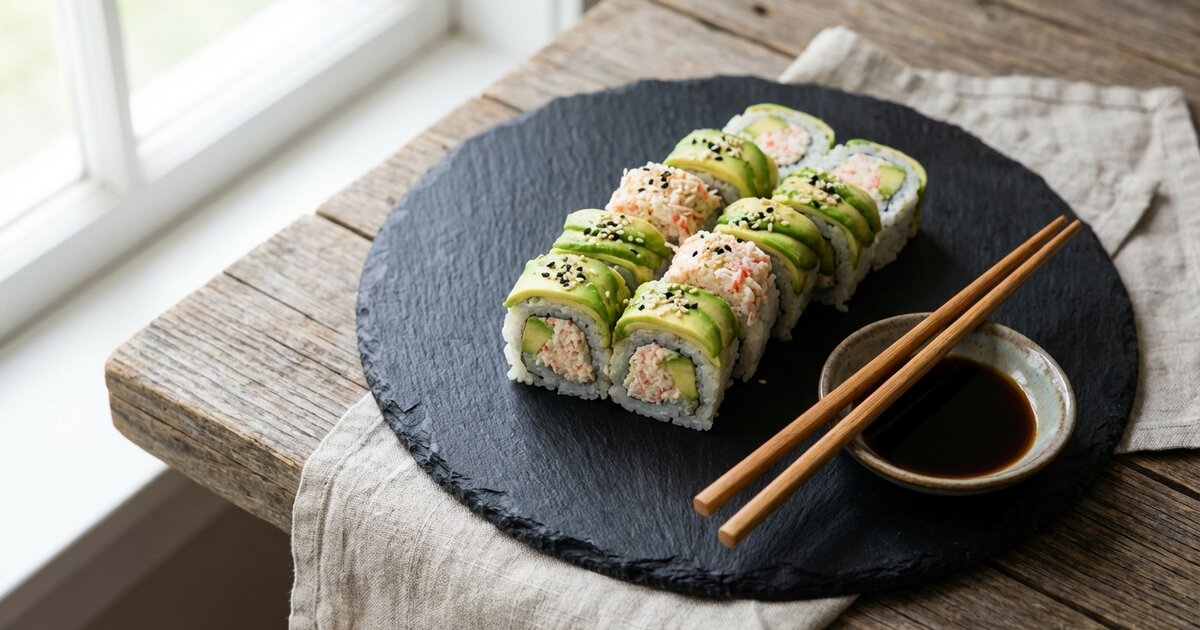
Sushi seems like a healthy choice—and it can be. Fish, vegetables, seaweed, small portions. But sushi can also be a caloric minefield when you factor in rice, sauces, and those specialty rolls that are more cream cheese than fish.
Understanding sushi macros helps you navigate the menu strategically. You can enjoy sushi for dinner without accidentally eating 1,500 calories of rice and mayonnaise-based sauces.
This guide covers everything from basic California rolls to sashimi platters, so you know exactly what you’re ordering.
Sushi Macros: Quick Reference
Let’s start with the most common sushi options.
California Roll (8 pieces)
| Nutrient | Amount |
|---|---|
| Calories | 255 |
| Protein | 9g |
| Carbs | 38g |
| Fiber | 2g |
| Fat | 7g |
| Sodium | 330mg |
Per piece: ~32 calories, 5g carbs, 1g protein
Popular Rolls Comparison (per 6-8 piece roll)
| Roll Type | Calories | Protein | Carbs | Fat |
|---|---|---|---|---|
| California | 255 | 9g | 38g | 7g |
| Spicy Tuna | 290 | 11g | 26g | 11g |
| Salmon Avocado | 304 | 13g | 31g | 11g |
| Philadelphia (cream cheese) | 320 | 10g | 32g | 14g |
| Shrimp Tempura | 430 | 14g | 56g | 17g |
| Dragon Roll | 450 | 15g | 47g | 20g |
| Rainbow Roll | 395 | 17g | 38g | 16g |
| Cucumber Roll | 135 | 3g | 28g | 0.5g |
| Tuna Roll | 184 | 12g | 27g | 1g |
| Salmon Roll | 231 | 12g | 27g | 6g |
| Eel (Unagi) Roll | 372 | 14g | 44g | 12g |
Key insight: Simple rolls (cucumber, tuna, salmon) run 130-250 calories. Specialty rolls with sauces and tempura jump to 400-600+.
Understanding Sushi Components
Sushi’s macros come from four sources:
1. Rice
Sushi rice is the primary carb source—and most of the calories.
| Per Cup (cooked) | Amount |
|---|---|
| Calories | 240 |
| Carbs | 53g |
| Protein | 4g |
| Fat | 0.4g |
Important: Sushi rice contains added sugar and rice vinegar for flavor, making it slightly higher calorie than plain rice.
Rice per roll: About 1/2 to 3/4 cup, contributing 120-180 calories and 25-40g carbs per roll.
2. Fish/Seafood
The protein source—and what most people think of as “sushi.”
| Fish (per 1 oz) | Calories | Protein | Fat |
|---|---|---|---|
| Salmon | 58 | 6g | 3.5g |
| Tuna | 41 | 9g | 0.5g |
| Yellowtail | 52 | 8g | 2g |
| Shrimp | 30 | 6g | 0.5g |
| Crab (imitation) | 26 | 4g | 0.3g |
| Crab (real) | 28 | 6g | 0.3g |
| Eel (unagi) | 59 | 6g | 3.5g |
| Octopus | 47 | 9g | 0.6g |
3. Nori (Seaweed)
Minimal calories—about 5-10 per sheet. Adds some fiber and minerals.
4. Additions and Sauces
This is where rolls get calorie-dense:
| Addition (per serving) | Calories | Notes |
|---|---|---|
| Avocado (1/4) | 60 | Healthy fat |
| Cream cheese (1 oz) | 100 | Adds fat |
| Spicy mayo (1 tbsp) | 100 | High calorie |
| Eel sauce (1 tbsp) | 40 | Sugar-heavy |
| Soy sauce (1 tbsp) | 10 | High sodium |
| Tempura crunch | 50-100 | Adds fat/carbs |
| Masago/tobiko (1 tbsp) | 20 | Fish roe |
Sushi Types Explained (with Macros)
Sashimi (Fish Only)
| Per Piece (1 oz) | Calories | Protein | Carbs | Fat |
|---|---|---|---|---|
| Salmon | 58 | 6g | 0g | 3.5g |
| Tuna | 41 | 9g | 0g | 0.5g |
| Yellowtail | 52 | 8g | 0g | 2g |
Best for: Low-carb eating, maximum protein, weight loss. Essentially pure protein with no rice.
Nigiri (Fish on Rice)
| Per Piece | Calories | Protein | Carbs | Fat |
|---|---|---|---|---|
| Salmon nigiri | 68 | 5g | 6g | 2g |
| Tuna nigiri | 55 | 6g | 6g | 0.5g |
| Shrimp nigiri | 45 | 4g | 6g | 0.3g |
| Eel nigiri | 75 | 5g | 7g | 3g |
Middle ground: Less rice than rolls, good protein, moderate carbs.
Maki Rolls (Seaweed-Wrapped)
Standard rolls with rice inside, seaweed outside.
| Basic Maki (6 pieces) | Calories | Protein | Carbs | Fat |
|---|---|---|---|---|
| Cucumber roll | 135 | 3g | 28g | 0.5g |
| Avocado roll | 140 | 2g | 28g | 3g |
| Tuna roll | 184 | 12g | 27g | 1g |
| Salmon roll | 231 | 12g | 27g | 6g |
Specialty/American Rolls
Where things get interesting—and calorie-dense.
| Specialty Roll (8 pieces) | Calories | Protein | Carbs | Fat |
|---|---|---|---|---|
| California Roll | 255 | 9g | 38g | 7g |
| Spicy Tuna Roll | 290 | 11g | 26g | 11g |
| Philadelphia Roll | 320 | 10g | 32g | 14g |
| Shrimp Tempura Roll | 430 | 14g | 56g | 17g |
| Spider Roll (soft shell crab) | 395 | 13g | 48g | 17g |
| Dragon Roll | 450 | 15g | 47g | 20g |
| Rainbow Roll | 395 | 17g | 38g | 16g |
| Volcano Roll | 530 | 16g | 46g | 28g |
| Crunch Roll | 480 | 11g | 58g | 22g |
| Caterpillar Roll | 420 | 14g | 42g | 18g |
What drives specialty roll calories: Tempura (deep frying), cream cheese, spicy mayo, eel sauce, and multiple layers of fish.
How to Order Sushi for Different Goals
Sushi for Weight Loss
Best choices:
- Sashimi (pure protein, no rice)
- Nigiri (controlled rice portions)
- Simple rolls (cucumber, tuna)
- Edamame as appetizer
Avoid or limit:
- Anything “crunchy,” “crispy,” or “tempura”
- Rolls with cream cheese
- Heavy sauces (spicy mayo, eel sauce)
- All-you-can-eat (encourages overeating)
Sample weight-loss sushi order:
- Edamame (190 cal, 17g protein)
- 5 pieces salmon sashimi (290 cal, 30g protein)
- 1 tuna roll (184 cal, 12g protein)
- Total: 664 cal, 59g protein
That’s a filling dinner under 700 calories with nearly 60g protein.
Use our Macro Calculator to see how sushi fits your goals.
Sushi for Muscle Building
Best choices:
- Rolls with extra fish
- Rainbow rolls (multiple fish types)
- Chirashi bowl (sashimi over rice)
- Add extra protein (side of salmon, etc.)
Sample bulking sushi order:
- Rainbow roll (395 cal, 17g protein)
- Salmon avocado roll (304 cal, 13g protein)
- 4 pieces salmon nigiri (272 cal, 20g protein)
- Miso soup (35 cal, 2g protein)
- Total: 1,006 cal, 52g protein
Solid post-workout meal with carbs for glycogen and protein for recovery.
Sushi on Keto
Challenge: Traditional sushi is rice-heavy. But you have options.
Keto-friendly sushi orders:
- Sashimi platter (zero carbs)
- Naruto rolls (cucumber-wrapped instead of rice)
- Order any roll “no rice”
- Edamame (5g net carbs per serving)
What to avoid:
- All standard rolls (rice = 25-40g carbs each)
- Eel sauce (contains sugar)
- Anything breaded
Sample keto sushi order:
- Sashimi sampler (10 pieces): 450 cal, 60g protein, 0g carbs
- Side salad with ginger dressing: 50 cal, 3g carbs
- Total: 500 cal, minimal carbs
Sushi for Flexible Dieting
If it fits your macros, it fits your plate.
IIFYM approach:
- Track each roll accurately
- Balance specialty rolls with simpler options
- Save carb budget if ordering rice-heavy
- Enjoy without guilt when it fits
Learn more in our Flexible Dieting Guide.
Restaurant vs Grocery Store Sushi
Restaurant Sushi
Pros: Fresh, customizable, higher quality Cons: Hard to track exactly, typically larger portions
Average restaurant portions:
- Roll: 6-8 pieces (larger than packaged)
- Nigiri: standard 1 oz fish per piece
- Sashimi: 4-8 pieces per order
Grocery Store Sushi
Pros: Exact nutrition labels, portion controlled, cheaper Cons: Less fresh, limited variety
Typical grocery sushi macros (check labels):
- 8-piece California roll: 250-300 cal
- Spicy tuna roll: 280-320 cal
- Sashimi pack: 150-250 cal
Tracking tip: Grocery store sushi is easier to track accurately due to labels.
The Sodium Question
Sushi can be surprisingly high in sodium, especially with soy sauce.
Sodium in Sushi Components
| Component | Sodium |
|---|---|
| California roll (no soy) | 330mg |
| Soy sauce (1 tbsp) | 920mg |
| Low-sodium soy (1 tbsp) | 550mg |
| Miso soup | 630mg |
| Edamame (salted) | 500mg |
One dip of soy sauce adds about 300-500mg sodium to each piece.
Managing Sodium
- Use low-sodium soy sauce
- Dip fish side down (less soy absorbed)
- Use sparingly—or skip entirely
- Ask for sauce on the side
- Choose unsalted edamame
Sushi Meal Building Guide
Light Meal (500-600 calories)
- 1 simple roll (tuna or salmon): 200 cal
- 4 pieces sashimi: 180 cal
- Miso soup: 35 cal
- Edamame (half order): 95 cal
- Total: ~510 cal, 40g protein
Moderate Meal (700-900 calories)
- 1 California roll: 255 cal
- 1 salmon avocado roll: 304 cal
- 2 pieces salmon nigiri: 136 cal
- Miso soup: 35 cal
- Total: ~730 cal, 38g protein
Hearty Meal (1,000-1,200 calories)
- 1 rainbow roll: 395 cal
- 1 spicy tuna roll: 290 cal
- 4 pieces sashimi: 180 cal
- Edamame: 190 cal
- Total: ~1,055 cal, 65g protein
Sushi Rolls to Avoid (for Calorie Control)
Red Flag Menu Words
- “Crunchy” or “Crunch” = tempura flakes (adds 100+ cal)
- “Crispy” = deep fried (doubles calories)
- “Spicy” = usually spicy mayo (100 cal per tbsp)
- “Dynamite” = mayo-based baked topping
- “Volcano” = calorie explosion
- “XXL” or “Monster” = oversized portions
Highest Calorie Common Rolls
- Volcano Roll: 530+ calories
- Fried anything: 500+ calories
- Crunch Roll: 480 calories
- Dragon Roll: 450 calories
- Shrimp Tempura Roll: 430 calories
Compare with our guides on Chicken Breast Macros and Salmon Macros for protein alternatives.
Sushi vs Other Dinner Options
How does sushi compare to other dinner choices?
| Meal | Calories | Protein | Carbs |
|---|---|---|---|
| 2 rolls sushi | ~550 | 20g | 70g |
| Grilled salmon + rice | 550 | 42g | 45g |
| Poke bowl | 600-800 | 35g | 60g |
| Chicken stir-fry | 550 | 45g | 35g |
| Chipotle burrito | 1,070 | 51g | 105g |
| Thai curry | 700 | 30g | 55g |
Sushi’s position: Moderate calories but lower protein than most protein-focused dinners. Heavy on carbs relative to protein.
Common Sushi Tracking Mistakes
Mistake 1: Counting Pieces Wrong
Rolls typically have 6 or 8 pieces. Verify before logging.
Mistake 2: Ignoring Sauces
That drizzle of eel sauce and spicy mayo can add 100-200 calories to a roll.
Mistake 3: Using Wrong Roll Entry
A “spicy tuna roll” at one restaurant may be completely different from another. When in doubt, use component tracking.
Mistake 4: Forgetting Appetizers and Sides
- Tempura appetizer: 300-500 cal
- Fried gyoza (6): 300 cal
- Seaweed salad: 70 cal
- Miso soup: 35 cal
Mistake 5: All-You-Can-Eat Math
AYCE sushi leads to eating 2-3x more than you’d normally order. Track each roll even when unlimited.
DIY Sushi at Home
Homemade sushi gives you complete macro control.
Basic Sushi Rice (for 4 rolls)
- 2 cups sushi rice: 480 cal, 106g carbs
- 2 tbsp rice vinegar
- 1 tbsp sugar
- 1 tsp salt
Simple Tuna Roll (per roll)
- 1/2 cup sushi rice: 120 cal, 27g carbs
- 2 oz tuna: 82 cal, 18g protein
- 1 nori sheet: 5 cal
- Total: ~207 cal, 18g protein, 27g carbs
Salmon Avocado Roll (per roll)
- 1/2 cup sushi rice: 120 cal
- 2 oz salmon: 116 cal, 12g protein
- 1/4 avocado: 60 cal, 3g fat
- 1 nori sheet: 5 cal
- Total: ~301 cal, 12g protein, 27g carbs
Tip: Making sushi at home lets you use less rice and more fish.
The Bottom Line on Sushi Macros
The facts:
- Sushi macros are dominated by rice (carbs) not fish (protein)
- Simple rolls run 130-300 calories; specialty rolls hit 400-600+
- Sashimi is the best option for protein and low-carb
- Sauces and additions dramatically increase calories
- Restaurant portions are often larger than you’d expect
Best practices:
- Choose simple rolls over specialty rolls when watching calories
- Opt for sashimi or nigiri for better protein-to-carb ratios
- Limit or skip mayo-based sauces
- Track each roll individually, not as “sushi dinner”
- Ask for sauce on the side to control portions
The flexible dieting perspective: Sushi isn’t as protein-rich as many assume, but it can absolutely fit into your macros. Order strategically, track accurately, and enjoy it as part of a balanced approach to eating.
For understanding how sushi fits your overall nutrition picture, read What Are Macronutrients.
Related Articles
Dragonfruit Macros: Complete Nutrition Guide for Pitaya
Complete macro breakdown of dragonfruit (pitaya). Learn the calories, protein, carbs, and...
Read guide →
Bulgur Macros: Complete Nutritional Guide & Health Benefits
Discover bulgur's complete macro breakdown, nutritional benefits, and how to incorporate...
Read guide →
Radish Macros: Nutrition Facts and Health Benefits
Complete guide to radish macros and nutrition. Learn calories, protein, carbs, and health...
Read guide →Note: Nutrition values are approximate and may vary based on preparation method and source.