Tortilla Chips Macros: Complete Nutrition Guide
Reviewed by Dr. Michael Torres, PhD
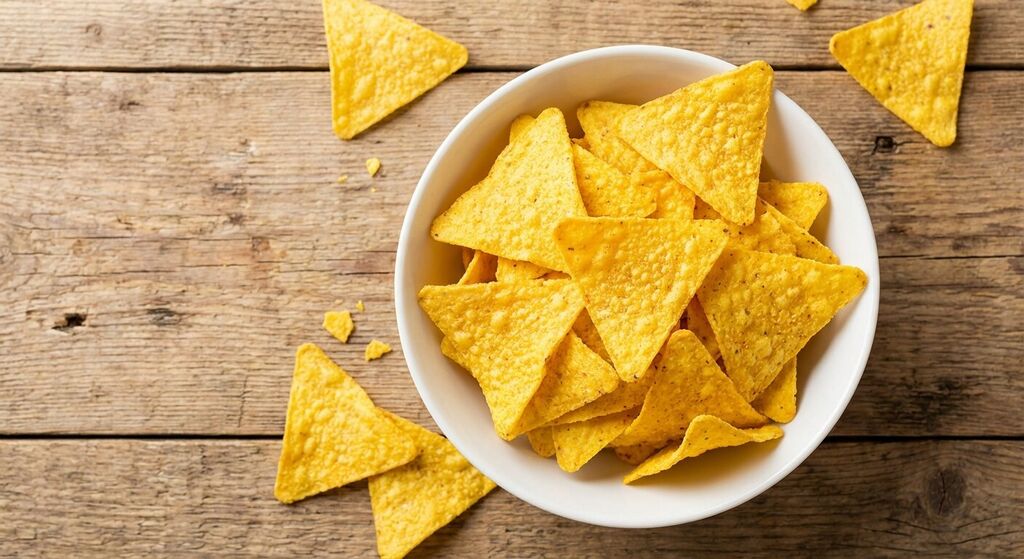
Tortilla chips are the ultimate snack—crunchy, satisfying, and perfect for dips. But when you’re tracking macros, those handful-by-handful servings can quickly derail your targets. A single 28g serving (about 10-12 chips) packs 140 calories, 19g carbs, and 7g fat, while a restaurant basket can deliver 600+ calories before your meal even arrives.
Understanding tortilla chips macros helps you enjoy them strategically without sabotaging your goals. This guide covers every variety—from classic salted to flavored, baked, and high-protein alternatives—so you can make informed choices that fit your macro plan.
Need to calculate your personalized macro targets? Try our free macro calculator to get your custom breakdown for fat loss, muscle building, or maintenance.
Related: Learn more about what macros are and how they impact your diet.
Tortilla Chips Macros: Quick Reference
Here’s the complete macro breakdown for standard tortilla chips and popular varieties:
Classic Tortilla Chips (28g serving / ~10-12 chips)
| Type | Calories | Protein | Carbs | Fat | Fiber |
|---|---|---|---|---|---|
| Traditional Yellow Corn | 140 | 2g | 19g | 7g | 2g |
| Blue Corn | 140 | 3g | 18g | 6g | 2g |
| White Corn | 140 | 2g | 19g | 7g | 2g |
| Restaurant Style | 140 | 2g | 18g | 7g | 1g |
| Baked (Tostitos) | 120 | 2g | 22g | 3g | 2g |
| Multigrain | 140 | 2g | 18g | 7g | 2g |
Key Insights:
- All traditional fried varieties have nearly identical macros
- Baked chips reduce fat by ~50% but increase carbs slightly
- Blue corn offers marginally more protein and antioxidants
- Fiber content is minimal across all types (2g max per serving)
Flavored Tortilla Chips (28g serving)
| Flavor | Calories | Protein | Carbs | Fat | Fiber |
|---|---|---|---|---|---|
| Nacho Cheese | 150 | 2g | 18g | 8g | 1g |
| Cool Ranch | 150 | 2g | 18g | 8g | 1g |
| Spicy/Jalapeño | 140 | 2g | 19g | 7g | 2g |
| Lime | 140 | 2g | 19g | 7g | 2g |
| Salsa Verde | 140 | 2g | 19g | 7g | 2g |
| Queso | 150 | 2g | 18g | 8g | 1g |
Flavor Impact:
- Cheese-flavored varieties add 10-20 calories per serving from added fat
- Spice-based flavors (jalapeño, lime, salsa) maintain base macros
- Coating adds minimal protein despite cheese flavoring
- All flavored chips have similar carb content to plain versions
Understanding Tortilla Chips Serving Sizes
The official serving size for tortilla chips is 28g (1 ounce), but actual consumption patterns look very different:
What 28g Actually Looks Like
Single Serving (28g):
- 10-12 restaurant-style chips
- 12-15 thinner chips (Tostitos Rounds)
- 7-9 thick cantina-style chips
- 140 calories | 2g protein | 19g carbs | 7g fat
Reality Check: Most people don’t stop at one serving. Here’s what typical portions really contain:
Restaurant Portions (The Hidden Macro Bomb)
Small Basket (85g / 3 servings):
- 30-36 chips
- 420 calories | 6g protein | 57g carbs | 21g fat
Large Basket (140g / 5 servings):
- 50-60 chips
- 700 calories | 10g protein | 95g carbs | 35g fat
Table Sharing Bowl (200g / 7+ servings):
- 70-84 chips
- 980 calories | 14g protein | 133g carbs | 49g fat
Pro Tip: A typical Mexican restaurant basket served before your meal contains 500-700 calories—potentially half your daily calorie budget before the entrée arrives.
Bag Portions vs. Servings
Individual Snack Bag (42g / 1.5 servings):
- 210 calories | 3g protein | 28g carbs | 10.5g fat
Family Size Bag (283g / 10 servings):
- 1,400 calories | 20g protein | 190g carbs | 70g fat
- Most people consume 2-3 servings per sitting (280-420 calories)
Accurate Tracking Strategy
- Use a food scale: Count chips only if you don’t have a scale
- Pre-portion servings: Measure 28g portions into small bowls
- Track immediately: Log before eating to stay accountable
- Restaurant estimation: Assume 3-5 servings per basket, track conservatively
Brand Comparison: Popular Tortilla Chips Macros
Different brands have surprisingly consistent macros, but subtle differences matter when you’re tracking precisely:
Major Brands (28g serving)
Tostitos Original Restaurant Style:
- 140 calories | 2g protein | 18g carbs | 7g fat | 1g fiber
- Most popular brand, classic flavor
Tostitos Baked Scoops:
- 120 calories | 2g protein | 22g carbs | 3g fat | 2g fiber
- 50% less fat than fried, slightly more carbs
Doritos Nacho Cheese:
- 150 calories | 2g protein | 18g carbs | 8g fat | 1g fiber
- Higher calories from cheese coating, intense flavor
Mission Restaurant Style:
- 140 calories | 2g protein | 19g carbs | 7g fat | 2g fiber
- Identical macros to Tostitos, often cheaper
Late July Restaurant Style (Organic):
- 140 calories | 2g protein | 17g carbs | 8g fat | 2g fiber
- Slightly lower carbs, organic ingredients, premium price
Garden of Eatin’ Blue Chips:
- 140 calories | 3g protein | 18g carbs | 6g fat | 2g fiber
- Blue corn adds 1g extra protein
Siete Grain Free Tortilla Chips:
- 140 calories | 2g protein | 16g carbs | 8g fat | 2g fiber
- Made from cassava and coconut, similar macros despite “grain-free” claim
Value vs. Macros Analysis
Best for Low-Calorie: Tostitos Baked (120 cal, 3g fat) Best for Protein: Blue corn varieties (3g vs 2g) Best for Low-Carb: Siete Grain Free (16g vs 19g) — marginal difference Best Value Macros: Mission or store brands (identical to premium at lower cost)
Bottom Line: Unless you choose baked varieties, most traditional tortilla chips have virtually identical macros regardless of brand positioning or price. Buy based on taste and value, not macro optimization.
Flavor Varieties: Do Macros Change?
Flavored tortilla chips taste dramatically different, but do the macros shift?
Flavor Category Breakdown
Salt/Spice-Based Flavors (Minimal Impact):
- Lime: 140 cal | 2g protein | 19g carbs | 7g fat
- Jalapeño: 140 cal | 2g protein | 19g carbs | 7g fat
- Salsa Verde: 140 cal | 2g protein | 19g carbs | 7g fat
- Sea Salt: 140 cal | 2g protein | 19g carbs | 7g fat
These flavors use spices, citric acid, and minimal oil—macros remain essentially unchanged.
Cheese-Based Flavors (+10-20 calories):
- Nacho Cheese: 150 cal | 2g protein | 18g carbs | 8g fat
- Cool Ranch: 150 cal | 2g protein | 18g carbs | 8g fat
- Queso: 150 cal | 2g protein | 18g carbs | 8g fat
Cheese powder and buttermilk coatings add 1g extra fat, increasing calories by 7%.
BBQ/Sweet Flavors (+10-30 calories):
- BBQ: 150 cal | 2g protein | 20g carbs | 7g fat
- Sweet Chili: 150 cal | 2g protein | 21g carbs | 7g fat
Sugar-based seasonings add 1-2g extra carbs, increasing calories by 10-20.
Flavor Selection Strategy
For Fat Loss (Lowest Calories): Choose salt/spice-based flavors (lime, jalapeño, salsa) — they’re essentially plain chips with zero-calorie seasonings.
For Moderate Dieting (Occasional Treat): Cheese flavors add only 10 extra calories per serving — negligible impact if you control portions.
Avoid for Aggressive Cutting: Sweet flavors (BBQ, sweet chili) add sugar without satiety benefit. The extra 10-30 calories per serving won’t break your diet, but they don’t offer value either.
Macro-Friendly Tortilla Chip Alternatives
If traditional tortilla chips don’t fit your macros, these alternatives offer better profiles for specific goals:
High-Protein Alternatives
Quest Protein Chips (28g serving):
- 140 calories | 19g protein | 4g net carbs | 5g fat
- Made from whey and milk protein isolate
- Best for: Muscle building, high-protein diets
- Trade-off: Not corn-based, different texture
Wilde Protein Chips (28g serving):
- 100 calories | 10g protein | 8g carbs | 4g fat
- Made from chicken breast and egg whites
- Best for: Protein-first approach, low-calorie snacking
- Trade-off: Meat-based, not vegetarian-friendly
Low-Carb Alternatives
Pork Rinds (28g serving):
- 154 calories | 17g protein | 0g carbs | 9g fat
- Pure protein and fat, zero carbohydrates
- Best for: Keto, carnivore, ultra-low-carb diets
- Trade-off: High in saturated fat, not plant-based
Whisps Cheese Crisps (28g serving):
- 150 calories | 13g protein | 1g carbs | 10g fat
- 100% baked cheese, no flour
- Best for: Keto, low-carb, high-fat diets
- Trade-off: Expensive, very high in sodium
Beanitos Black Bean Chips (28g serving):
- 130 calories | 4g protein | 17g carbs (5g fiber) | 6g fat
- Made from beans instead of corn
- Best for: Higher protein and fiber than traditional
- Trade-off: Still moderately high in carbs
Baked/Lower-Calorie Alternatives
Baked Tostitos (28g serving):
- 120 calories | 2g protein | 22g carbs | 3g fat
- 50% less fat than fried chips
- Best for: Low-fat diets, calorie reduction
- Trade-off: Slightly higher carbs, less satisfying
PopCorners (28g serving):
- 120 calories | 1g protein | 20g carbs | 3.5g fat
- Popped, not fried
- Best for: Slightly lower calories and fat
- Trade-off: Minimal protein, still carb-heavy
SkinnyPop Protein Popcorn (28g serving):
- 140 calories | 6g protein | 15g carbs | 7g fat
- Higher protein than chips, lower carbs
- Best for: Balanced macro alternative
- Trade-off: Not a chip, different eating experience
Veggie-Based Alternatives
Siete Grain-Free Tortilla Chips (28g serving):
- 140 calories | 2g protein | 16g carbs | 8g fat
- Made from cassava, chia, and coconut
- Best for: Grain-free diets, slightly lower carbs
- Trade-off: Macros nearly identical to regular chips
Beanfields Bean Chips (28g serving):
- 130 calories | 4g protein | 17g carbs (5g fiber) | 6g fat
- Made from beans and rice
- Best for: More protein and fiber than corn
- Trade-off: Still relatively high in carbs
When to Choose Alternatives
Choose high-protein alternatives if:
- You struggle to hit 0.8-1g protein per lb bodyweight
- You’re in a cutting phase and need satiety from protein
- You want chips to contribute meaningfully to muscle-building macros
Choose low-carb alternatives if:
- You’re on keto or very low-carb diet (<50g daily)
- You’ve already used your carb budget for the day
- You want crunchy snacks without impacting ketosis
Choose baked/lower-calorie alternatives if:
- You’re in an aggressive calorie deficit (<1,500 calories daily)
- You want higher volume snacking for fewer calories
- Fat intake is your limiting macro
Stick with traditional tortilla chips if:
- They fit your macros and you enjoy them
- You practice portion control effectively
- You don’t need specialized macros (e.g., not keto or high-protein)
How Tortilla Chips Fit Different Macro Goals
Tortilla chips can work for various dieting strategies—if you approach them intentionally:
Fat Loss / Cutting
Typical Macro Targets:
- 1,500-2,000 calories
- 120-150g protein
- 40-60g fat
- 120-180g carbs
Fitting Tortilla Chips In:
- 1 serving (28g): 140 calories, uses 10% of daily carbs (19g), minimal protein contribution
- Strategy: Save tortilla chips for a meal with high-protein dip (bean dip, Greek yogurt-based salsa) to balance macros
- Best Practice: Pre-portion a single 28g serving and put the bag away before eating
- Avoid: Mindless snacking from the bag or restaurant baskets before meals
Verdict: Tortilla chips can fit into cutting phases, but they’re not macro-efficient. They provide carbs and fat without satiety or protein. Use them as a planned treat 1-2x per week, not a daily snack.
Muscle Building / Bulking
Typical Macro Targets:
- 2,500-3,500 calories
- 180-220g protein
- 70-100g fat
- 280-400g carbs
Fitting Tortilla Chips In:
- 2-3 servings (56-84g): 280-420 calories, provides 38-57g carbs for energy
- Strategy: Use tortilla chips as a carb source post-workout with high-protein dips (guacamole + chicken, bean dip, tuna salad)
- Best Practice: Track chips as part of a complete meal to ensure protein targets are met
- Pair With: High-protein foods to balance the low 2g protein per serving
Verdict: Tortilla chips work well for bulking when calories aren’t a constraint. They provide quick carbs for energy and are easy to consume in higher volumes. Just ensure you’re still hitting protein targets.
Keto / Very Low-Carb
Typical Macro Targets:
- 1,800-2,200 calories
- 100-130g protein
- 140-180g fat
- 20-30g carbs (or 10-15g net carbs)
Fitting Tortilla Chips In:
- 1 serving (28g): 19g carbs uses 63-95% of daily carb budget — essentially impossible
- Strategy: Traditional tortilla chips don’t fit keto. Choose zero-carb alternatives (pork rinds, cheese crisps)
- Exception: Very occasional use (1/4 serving = 5g carbs) if you’ve eaten zero carbs otherwise
Verdict: Traditional tortilla chips are incompatible with keto. Switch to pork rinds, Whisps, or Quest chips if you want crunchy snacks.
Balanced Macros / Maintenance
Typical Macro Targets:
- 2,000-2,500 calories
- 140-170g protein
- 60-80g fat
- 200-250g carbs
Fitting Tortilla Chips In:
- 1-2 servings (28-56g): 140-280 calories, uses 8-15% of daily carbs
- Strategy: Include tortilla chips as a side with balanced meals (taco salad, burrito bowl, fajitas)
- Best Practice: Measure portions, log accurately, and ensure the meal includes protein sources
- Frequency: Can be included 3-5x per week without issue if portions are controlled
Verdict: Tortilla chips work great for balanced macro plans. They fit easily into moderate carb targets and can be part of regular eating patterns when portioned properly.
Common Tortilla Chips Macro Tracking Mistakes
Even experienced macro trackers make these errors with tortilla chips:
Mistake #1: Counting Chips Instead of Weighing
The Problem: Chip sizes vary wildly by brand and breakage. “10 chips” can range from 20g to 35g depending on thickness and broken pieces.
The Fix: Always weigh chips on a food scale. A proper serving is 28g, not a chip count.
Impact: Counting chips can lead to 20-40% macro tracking errors (underestimating by 30-50 calories per serving).
Mistake #2: Ignoring Restaurant Portions
The Problem: Restaurant tortilla chip baskets are 3-7 servings (420-980 calories), but people log “1 serving” or don’t track at all.
The Fix: Estimate restaurant portions conservatively: Small basket = 3 servings, Large basket = 5 servings, Shared bowl = 7+ servings.
Impact: Failing to track restaurant chips can add 400-800 unlogged calories to your day.
Mistake #3: Forgetting to Track Dips
The Problem: People track chips but forget salsa, guacamole, queso, or bean dip—each adds 20-100 calories per serving.
The Fix: Log both chips AND dips. Measure dips (2 tablespoons = ~30g) or estimate conservatively.
Common Dip Macros (2 tbsp / 30g):
- Salsa: 10 calories | 0g protein | 2g carbs | 0g fat
- Guacamole: 50 calories | 1g protein | 3g carbs | 4g fat
- Queso: 80 calories | 3g protein | 3g carbs | 6g fat
- Bean dip: 40 calories | 2g protein | 5g carbs | 1g fat
Impact: Forgetting dips can add 50-300 untracked calories depending on consumption.
Mistake #4: Using Baked Chips as a “Free Pass”
The Problem: Baked chips are lower in fat (3g vs 7g) but only save 20 calories per serving. People eat 2-3 servings thinking they’re “healthier.”
The Fix: Baked chips still contain 120 calories and 22g carbs per serving. Portion control matters regardless of “baked” label.
Impact: Eating 3 servings of baked chips (360 calories) defeats the purpose of choosing the lower-calorie option.
Mistake #5: Assuming “Organic” or “Grain-Free” Means Lower Macros
The Problem: Premium organic, grain-free, or “healthy” tortilla chips have nearly identical macros to conventional brands (140 calories, 19g carbs, 7g fat).
The Fix: Always check nutrition labels. Ingredient quality doesn’t change macro content.
Impact: Believing premium chips are “better” for macros leads to overeating without realizing it.
Mistake #6: Eating Straight from the Bag
The Problem: Mindless snacking from family-size bags leads to consuming 3-5 servings (420-700 calories) without realizing it.
The Fix: Pre-portion a single 28g serving into a bowl, reseal the bag, and put it away before eating.
Impact: Bag snacking can easily triple intended consumption (420 calories vs 140 calories).
Frequently Asked Questions
Can tortilla chips be part of a healthy macro diet?
Yes, tortilla chips can fit into a macro-focused diet as long as they’re portioned correctly and tracked accurately. A single 28g serving (140 calories, 19g carbs, 7g fat) can be incorporated into most macro plans. The key is viewing them as a planned carb and fat source, not a protein source, and pairing them with high-protein foods to balance your meal. For fat loss, limit servings to 1-2 per week. For maintenance or bulking, you can include them more frequently as long as they fit within your daily targets.
How do I stop overeating tortilla chips?
Overeating tortilla chips happens due to their combination of salt, fat, and carbs—scientifically engineered to be hyper-palatable. To control portions: (1) Measure out a single 28g serving using a food scale and put it in a bowl; (2) Put the bag away in another room before eating; (3) Pair chips with high-protein, high-fiber dips like bean dip or Greek yogurt-based salsa to increase satiety; (4) Eat chips as part of a complete meal, not as a standalone snack; (5) Track chips BEFORE eating to create accountability. If you consistently overeat despite these strategies, consider eliminating chips temporarily and reintroducing after establishing better portion control habits.
Are tortilla chips better than potato chips for macros?
Tortilla chips and potato chips have nearly identical macros. A 28g serving of regular potato chips contains 150 calories, 2g protein, 15g carbs, and 10g fat—slightly higher fat and lower carbs than tortilla chips (140 cal, 2g protein, 19g carbs, 7g fat). Baked versions of both have similar reductions in fat. Neither is significantly “better” from a macro perspective—choose based on preference and how they fit your targets. If you’re tracking carbs strictly (e.g., low-carb diet), potato chips are marginally better (15g vs 19g carbs). If you’re tracking fat, tortilla chips are marginally better (7g vs 10g fat).
What’s the best time to eat tortilla chips when tracking macros?
Meal timing is far less important than hitting your total daily macros. That said, strategic timing can help with adherence: (1) Pair chips with a high-protein meal (taco salad, burrito bowl) to balance the low protein content; (2) Include chips post-workout when carbs aid recovery and glycogen replenishment; (3) Avoid eating chips late at night when you’re more prone to mindless overeating; (4) Have chips earlier in the day when you have more time to balance macros with subsequent meals. The most important factor is portion control and accurate tracking, regardless of timing.
Do blue corn tortilla chips have better macros than regular?
Blue corn tortilla chips have slightly more protein (3g vs 2g per 28g serving) and contain anthocyanins (antioxidants that give them their blue color), but macros are nearly identical to yellow corn chips—140 calories, 18-19g carbs, 6-7g fat. The extra 1g of protein per serving is negligible for muscle building (you’d need to eat 20+ servings to get 20g protein). Blue corn chips are not meaningfully “healthier” or more macro-friendly than regular tortilla chips. Choose based on taste preference, not perceived macro benefits.
Can I meal prep with tortilla chips?
Tortilla chips are shelf-stable and don’t require meal prep, but you can pre-portion them to improve portion control. Divide a family-size bag into 28g portions using a food scale, seal each portion in small ziplock bags or reusable containers, and store in your pantry. This prevents mindless overeating and makes tracking easier. Pre-portioned chips work great for lunches, road trips, or grab-and-go snacks. Just be aware that chips lose crispness if exposed to humidity or stored improperly—keep sealed until ready to eat. Pair pre-portioned chips with measured dips (30g guacamole, 40g salsa) for complete macro-tracked snack packs.
Are restaurant tortilla chips impossible to track accurately?
Restaurant tortilla chips are challenging to track precisely, but you can estimate conservatively: A small basket typically contains 3 servings (420 calories, 57g carbs), a large basket contains 5 servings (700 calories, 95g carbs), and a shared table bowl contains 7+ servings (980+ calories, 133g carbs). Track based on your actual consumption—if you ate half of a small basket, log 1.5 servings (210 calories). For maximum accuracy, ask for chips on a side plate and weigh them if you carry a portable food scale. If you dine out frequently, develop a consistent estimation method and adjust your tracking based on weekly progress. Overestimating restaurant portions by 10-20% is safer than underestimating.
What should I pair with tortilla chips to balance macros?
Since tortilla chips are low in protein (only 2g per serving), pair them with high-protein dips and toppings to create a more balanced macro profile. Best options: (1) Bean dip (black bean or refried): Adds 5-8g protein per serving; (2) Greek yogurt-based dips: Adds 10-15g protein per serving; (3) Tuna or chicken salad: Adds 15-20g protein per serving; (4) Cottage cheese + salsa: Adds 12-15g protein per serving; (5) Shredded chicken + guacamole: Adds 20-25g protein per serving. These combinations transform chips from a carb-heavy snack into a more balanced meal that supports muscle retention and satiety during fat loss.
The Bottom Line
Tortilla chips deliver 140 calories, 2g protein, 19g carbs, and 7g fat per 28g serving (about 10-12 chips). They’re a low-protein, moderate-carb, moderate-fat snack that can fit into most macro plans when portioned correctly—but they’re not macro-efficient for fat loss or muscle building goals.
Key Takeaways:
- Always weigh chips using a food scale—chip counts are unreliable
- Restaurant portions are 3-7 servings—track conservatively or avoid entirely during aggressive cuts
- Flavors barely change macros—choose what you enjoy, salt-based flavors are lowest
- Baked chips save ~20 calories per serving—helpful but not a game-changer
- Pair with high-protein foods to balance the low protein content (bean dip, Greek yogurt dips, chicken)
- For keto or low-carb: Traditional chips don’t fit—choose pork rinds, cheese crisps, or Quest chips
Strategic Use:
- Fat Loss: 1-2 servings per week max, pre-portioned, paired with protein-rich dips
- Maintenance: 3-5 servings per week, measured and tracked
- Bulking: Daily use acceptable, 2-3 servings as a carb source with balanced meals
- Keto: Avoid traditional chips entirely, use zero-carb alternatives
Tortilla chips aren’t inherently “bad” for macros—they’re just not nutritionally dense. Enjoy them strategically, track them accurately, and pair them with high-protein foods to avoid wasting your macro budget on low-satiety snacks.
Ready to build a macro plan that includes the foods you actually enjoy? Use our free macro calculator to get started with personalized targets for your goals.
Related Articles
Dragonfruit Macros: Complete Nutrition Guide for Pitaya
Complete macro breakdown of dragonfruit (pitaya). Learn the calories, protein, carbs, and...
Read guide →
Bulgur Macros: Complete Nutritional Guide & Health Benefits
Discover bulgur's complete macro breakdown, nutritional benefits, and how to incorporate...
Read guide →
Radish Macros: Nutrition Facts and Health Benefits
Complete guide to radish macros and nutrition. Learn calories, protein, carbs, and health...
Read guide →Note: Nutrition values are approximate and may vary based on preparation method and source.