Venison Macros: Complete Nutrition Guide for Game Meat
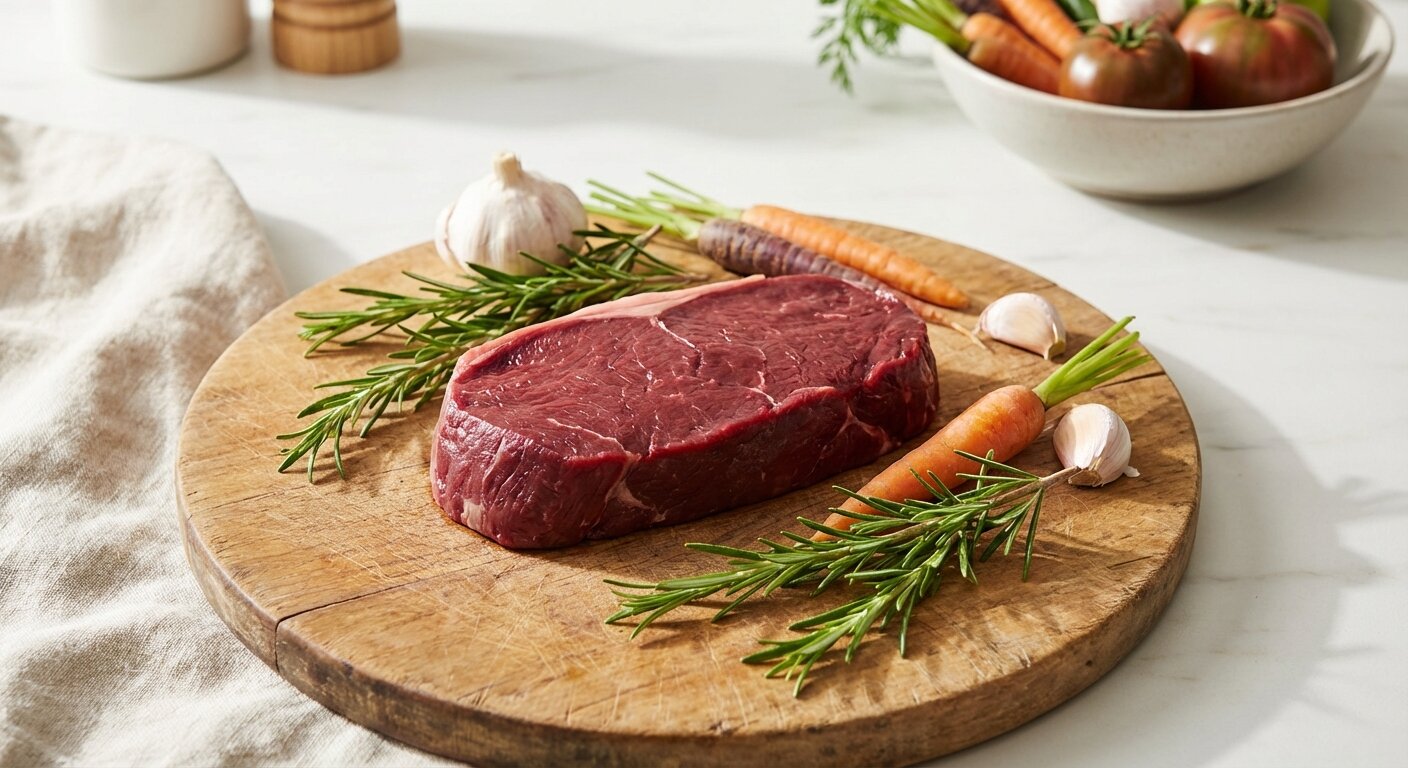
Venison—wild game meat from deer—is one of nature’s most nutrient-dense protein sources. Whether you’re a hunter bringing home your harvest or purchasing farm-raised venison from specialty stores, this lean red meat offers an impressive nutritional profile that rivals and often surpasses conventional beef.
Understanding venison macros can help you optimize your diet for muscle building, weight loss, or simply eating cleaner, more sustainable protein. Unlike grain-fed beef, wild venison comes from animals that forage on natural vegetation, resulting in meat that’s naturally leaner and richer in certain beneficial nutrients.
Ready to calculate your complete daily macros? Use our macro calculator to determine your personalized protein, carb, and fat targets based on your goals.
Related: Learn more about what macros are and how they impact your diet.
Venison Macros Breakdown
Here’s the complete nutritional profile for a standard 3-ounce (85g) serving of cooked venison:
Venison (3 oz / 85g cooked):
- Calories: 134
- Protein: 26g
- Carbohydrates: 0g
- Fat: 3g
- Saturated Fat: 1.2g
- Monounsaturated Fat: 0.7g
- Polyunsaturated Fat: 0.5g
- Cholesterol: 95mg
- Sodium: 46mg
Micronutrients (notable amounts):
- Iron: 3.8mg (21% DV)
- Zinc: 2.3mg (21% DV)
- Vitamin B12: 1.8mcg (75% DV)
- Vitamin B6: 0.4mg (24% DV)
- Niacin: 5.7mg (36% DV)
- Riboflavin: 0.5mg (38% DV)
- Phosphorus: 209mg (17% DV)
- Selenium: 10.5mcg (19% DV)
Venison vs Beef: Macro Comparison
Let’s see how venison stacks up against conventional beef in a direct comparison:
| Per 3 oz (85g) cooked | Venison | 90% Lean Ground Beef | 80% Lean Ground Beef |
|---|---|---|---|
| Calories | 134 | 173 | 230 |
| Protein | 26g | 25g | 22g |
| Fat | 3g | 8g | 15g |
| Saturated Fat | 1.2g | 3.5g | 6g |
| Cholesterol | 95mg | 76mg | 77mg |
| Iron | 3.8mg | 2.2mg | 2.1mg |
Key Takeaways:
- Venison has less than half the fat of 90% lean beef
- Venison provides more protein per calorie than both beef options
- Venison contains 70% more iron than ground beef
- Venison has fewer calories for similar protein content
- Wild venison typically has even less fat than these averages
The nutritional superiority becomes even more pronounced when comparing venison to fattier beef cuts like ribeye or conventional ground beef (80% lean).
Why Venison Is So Lean
The exceptional leanness of venison comes down to three primary factors:
1. Natural Diet
Wild deer consume a varied diet of grasses, forbes, acorns, and other natural vegetation—not grain. This natural feeding pattern results in significantly less intramuscular fat (marbling) compared to grain-finished beef.
2. Active Lifestyle
Wild deer cover extensive territories daily, building lean muscle mass through constant movement. Domesticated cattle, particularly those in feedlots, are far less active, promoting fat deposition.
3. No Artificial Fattening
Conventional beef cattle are often finished on high-calorie grain diets specifically designed to increase marbling and weight. Wild deer reach maturity on their natural diet without artificial intervention.
Farm-raised venison from deer farms typically has slightly more fat than wild venison but still remains significantly leaner than conventional beef due to the animal’s natural physiology.
Venison for Different Dietary Goals
Muscle Building
Venison is outstanding for muscle building:
- High protein density: 26g protein in just 134 calories
- Complete amino acid profile: Contains all essential amino acids for muscle protein synthesis
- Rich in creatine: Wild game naturally contains creatine, which supports strength and power
- High bioavailability: Animal protein is highly digestible and efficiently used by the body
- B vitamins for energy: Supports energy metabolism during intense training
A 6-ounce serving provides 52g of protein with only 6g of fat—an exceptional ratio for building lean mass.
Weight Loss
The macro profile makes venison ideal for cutting:
- High satiety: Protein keeps you full longer than carbs or fats
- Minimal fat calories: Only 27 calories from fat per serving
- Thermic effect: Protein has the highest thermic effect of all macronutrients, meaning you burn more calories digesting it
- Preserves muscle: Adequate protein intake during calorie restriction prevents muscle loss
- Low calorie density: You can eat satisfying portions without exceeding calorie targets
Keto/Low-Carb Diets
Venison fits perfectly into ketogenic and low-carb approaches:
- Zero carbohydrates: No impact on blood sugar or insulin
- Moderate fat: Won’t push you too high on fat macros, leaving room for fattier additions like butter, oils, or cheese
- Clean protein source: No fillers, additives, or hidden carbs
- Nutrient-dense: Provides essential micronutrients often lacking in keto diets
Add high-fat sides like avocado, olive oil, or cheese to meet keto fat requirements while keeping protein high.
Paleo/Whole30
Venison is a cornerstone of ancestral eating patterns:
- Wild food source: Represents the type of game our ancestors consumed
- Minimally processed: Especially wild venison, which requires no industrial processing
- Nutrient density: Rich in bioavailable iron, zinc, and B vitamins
- No additives: Pure meat without preservatives, antibiotics, or hormones (in wild game)
- Grass-fed equivalent: Wild deer consume 100% natural forage
Venison Cuts and Their Macros
Different venison cuts have slightly varying nutritional profiles based on muscle group and fat content:
Venison Loin (Backstrap)
The most prized cut, exceptionally lean:
- Calories: 125-135 per 3 oz
- Protein: 26-27g
- Fat: 2-3g
- Best for: Grilling, pan-searing, roasting
Venison Tenderloin
The most tender cut, similar to loin:
- Calories: 125-135 per 3 oz
- Protein: 25-26g
- Fat: 2-3g
- Best for: Special occasions, quick cooking methods
Venison Shoulder/Roast
Slightly higher in connective tissue, similar macros:
- Calories: 140-150 per 3 oz
- Protein: 25-26g
- Fat: 3-4g
- Best for: Slow cooking, braising, stewing
Ground Venison
Often mixed with fat (beef fat or pork fat) by processors:
- Calories: Varies widely (150-250 per 3 oz depending on fat addition)
- Protein: 22-26g
- Fat: 4-15g (check package labels)
- Best for: Burgers, meatballs, tacos, chili
Important: Ground venison from commercial sources is often mixed with beef or pork fat to improve texture and flavor. Always check labels for actual nutritional content, as it may differ significantly from pure venison cuts.
Venison Ribs
Higher in fat due to the cut:
- Calories: 180-200 per 3 oz
- Protein: 20-22g
- Fat: 8-10g
- Best for: Braising, slow-roasting
Cooking Venison: Preserving Nutritional Value
Proper cooking technique is crucial for venison due to its leanness:
Best Cooking Methods
- Quick, high-heat methods: Pan-searing, grilling, broiling
- Roasting: At moderate temperatures (325-375°F) for larger cuts
- Braising/Slow-cooking: For tougher cuts like shoulder
- Sous vide: Ensures perfect doneness without overcooking
Temperature Guidelines
- Medium-rare: 130-135°F (recommended for tender cuts)
- Medium: 135-145°F (maximum for loin and tenderloin)
- Well-done: Not recommended (meat becomes very dry)
Critical tip: Venison has minimal intramuscular fat, so overcooking results in dry, tough meat. Use a meat thermometer and aim for medium-rare to medium doneness.
Preparation Tips
- Marinate: Helps tenderize and add moisture
- Add fat during cooking: Wrap in bacon, use butter, or cook in oil
- Let rest: Allow meat to rest 5-10 minutes after cooking
- Don’t overcook: This is the #1 mistake with venison
- Remove silverskin: The tough membrane should be trimmed before cooking
Recipe Ideas
- Grilled venison loin: Marinate in olive oil, garlic, and rosemary
- Venison burgers: Mix ground venison with onions, spices, and a touch of Worcestershire
- Venison chili: Use ground venison with beans, tomatoes, and chili spices
- Pan-seared backstrap: Season simply with salt and pepper, cook in butter
- Braised venison shoulder: Slow-cook with root vegetables and red wine
Wild vs Farm-Raised Venison
There are notable differences between wild-harvested and farm-raised venison:
Wild Venison
Pros:
- Leanest possible meat (often <2g fat per serving)
- 100% natural diet (no grains, no additives)
- Free-range lifestyle produces denser muscle
- Higher in certain omega-3 fatty acids
- No antibiotics or hormones
- Often free (if you hunt)
- Most sustainable option
Cons:
- Availability limited to hunting seasons
- Requires hunting license and skill
- Stronger, gamier flavor (some prefer this)
- Can be tougher if from older animals
- Variations in size and quality
Farm-Raised Venison
Pros:
- Consistent availability year-round
- More consistent size and quality
- Slightly milder flavor
- Often more tender
- Can be purchased at specialty stores
- Known nutrition facts on packaging
Cons:
- More expensive ($15-30 per pound)
- Slightly higher fat content than wild
- Less “wild” flavor profile
- Limited availability (specialty stores)
Nutritional differences: Farm-raised venison typically contains 4-6g fat per 3 oz serving compared to 2-3g in wild venison. Both are still significantly leaner than beef.
Where to Get Venison
Wild Venison
- Hunt yourself: Requires hunting license, knowledge, and equipment
- Friends/family who hunt: Many hunters are happy to share
- Game processors: Sometimes sell wild game (check local regulations)
- Wild game donation programs: Some states have programs for hunters to donate excess meat
Farm-Raised Venison
- Specialty meat markets: Look for butchers who source exotic meats
- Online retailers: Broken Arrow Ranch, Fossil Farms, D’Artagnan
- High-end grocery stores: Whole Foods occasionally carries venison
- Farmers markets: Some venison farmers sell direct
Price comparison:
- Wild: Free (if you hunt) or gifted
- Farm-raised: $15-30 per pound depending on cut
- Ground venison: $10-15 per pound
- Premium cuts (loin, tenderloin): $25-35 per pound
Venison Nutrition Beyond Macros
While the macro profile is impressive, venison’s micronutrient content is equally noteworthy:
Iron (3.8mg per 3 oz)
- 21% of daily value
- Heme iron (highly bioavailable from animal sources)
- Critical for oxygen transport and energy production
- Especially important for athletes and menstruating women
Vitamin B12 (1.8mcg per 3 oz)
- 75% of daily value
- Essential for nerve function and red blood cell formation
- Only found in animal foods
- Critical for those following primarily plant-based diets who include occasional meat
Zinc (2.3mg per 3 oz)
- 21% of daily value
- Supports immune function and testosterone production
- Important for wound healing and protein synthesis
- More bioavailable from meat than plant sources
B Vitamins Complex
- Niacin (B3): Energy metabolism, DNA repair
- Vitamin B6: Protein metabolism, neurotransmitter synthesis
- Riboflavin (B2): Energy production, antioxidant activity
- All support optimal energy levels during training and daily activities
Selenium (10.5mcg per 3 oz)
- 19% of daily value
- Powerful antioxidant
- Supports thyroid function
- Important for immune health
Potential Concerns and Considerations
Gamey Flavor
Some people find wild venison has a strong, “gamey” flavor:
- Causes: Diet (acorns can make meat more pungent), age of animal, field dressing technique
- Solutions: Proper field dressing, trimming all fat and silverskin, soaking in milk or buttermilk, marinating with acids
- Farm-raised option: Generally has a milder flavor closer to beef
Chronic Wasting Disease (CWD)
CWD is a prion disease affecting deer populations in some areas:
- Status: No evidence of transmission to humans, but CDC recommends caution
- Recommendation: Test meat from deer harvested in CWD-positive areas
- Prevention: Avoid consuming brain, spinal cord, eyes, spleen, or lymph nodes
- Muscle meat: Considered safe when taken from healthy-appearing animals
Cholesterol Content
At 95mg per serving, venison has moderate cholesterol:
- Similar to other red meats
- For most people, dietary cholesterol has minimal impact on blood cholesterol
- Saturated fat (very low in venison) has more impact than dietary cholesterol
- Consult your doctor if you have specific cholesterol concerns
Sodium Content
Venison is naturally very low in sodium (46mg per serving):
- A significant advantage over processed meats
- Allows control over sodium through seasoning choices
- Ideal for those monitoring sodium intake
Storing and Preparing Venison Safely
Storage Guidelines
Refrigerator:
- Raw venison: 1-2 days
- Cooked venison: 3-4 days
- Ground venison: 1-2 days (more perishable than whole cuts)
Freezer:
- Whole cuts: 6-12 months
- Ground venison: 3-4 months
- Vacuum-sealed: Can extend by several months
- Freezer burn prevention: Wrap tightly in plastic wrap, then aluminum foil
Thawing Safely
- Refrigerator: Safest method, allow 24 hours per pound
- Cold water: Submerge sealed meat in cold water, changing water every 30 minutes
- Never at room temperature: This promotes bacterial growth
- Microwave: Only if cooking immediately after
Food Safety
- Cook to at least 130°F internal temperature (medium-rare minimum)
- Use separate cutting boards for raw meat
- Wash hands thoroughly after handling raw venison
- Don’t cross-contaminate with vegetables or other foods
- When in doubt, cook to 160°F (well-done) for ground venison
Sample Meal Ideas with Venison
High-Protein Breakfast
Venison Breakfast Sausage (4 oz):
- Protein: 35g
- Fat: 5g
- Calories: 180
- Pair with: Eggs and vegetables for complete breakfast
Lunch Bowl
Venison Taco Bowl:
- 5 oz ground venison
- Brown rice (1 cup)
- Black beans (½ cup)
- Salsa, lettuce, minimal cheese
- Totals: ~600 calories, 50g protein, 65g carbs, 12g fat
Dinner
Grilled Venison Loin (6 oz) with Sides:
- Venison: 250 calories, 52g protein, 6g fat
- Roasted sweet potato (1 medium)
- Steamed broccoli
- Side salad with olive oil
- Totals: ~550 calories, 55g protein, 50g carbs, 15g fat
Post-Workout Meal
Venison and Rice:
- 6 oz venison loin: 250 calories, 52g protein, 6g fat
- 1.5 cups white rice: 300 calories, 6g protein, 66g carbs
- Totals: 550 calories, 58g protein, 66g carbs, 6g fat
- Ideal 4:1 carb-to-protein ratio for glycogen replenishment
Venison in Different Eating Styles
Bodybuilding/Physique Sports
Venison is prized by competitive bodybuilders:
- Contest prep: Extremely lean protein for final weeks
- Bulk phases: Can easily add healthy fats to meet calorie needs
- Consistent macros: Easy to track and plan meals
- Digestibility: Well-tolerated even in large portions
CrossFit/Functional Fitness
Ideal for high-intensity training:
- Supports recovery with high-quality protein
- Iron content helps oxygen-carrying capacity
- B vitamins support energy metabolism
- Lean profile allows carb focus for performance
Endurance Sports
Valuable for runners, cyclists, and triathletes:
- High iron prevents anemia common in endurance athletes
- Protein supports recovery from long training sessions
- Low fat won’t interfere with carbohydrate-focused fueling
- B vitamins essential for aerobic energy production
Sustainability and Ethical Considerations
Venison represents one of the most sustainable protein sources:
Wild Venison
- Population control: Hunting helps manage deer populations
- Ecological balance: Prevents overgrazing and habitat destruction
- Zero carbon footprint: No factory farming, transportation, or processing
- Utilization: Uses animal that lived natural life
- No waste: Ethical use of wild game populations
Farm-Raised Venison
- Lower environmental impact than conventional beef
- Efficient feed conversion: Deer convert feed to meat efficiently
- Less methane production than cattle
- Pasture-based systems: Many venison farms use rotational grazing
Compared to Conventional Beef
- 70% less feed required per pound of meat produced
- Significantly lower water usage
- Reduced methane emissions
- No feedlot system for wild game
For those concerned about environmental impact or animal welfare, venison—especially wild game—represents one of the most ethical and sustainable protein choices.
Frequently Asked Questions
What are the macros in venison?
A 3-ounce (85g) serving of cooked venison contains approximately 26 grams of protein, 0 grams of carbohydrates, and 3 grams of fat, totaling about 134 calories. This makes venison one of the leanest red meats available, with a protein-to-fat ratio that far exceeds beef, lamb, or pork.
The lack of carbohydrates makes venison perfect for low-carb, keto, paleo, and Whole30 diets, while the high protein content supports muscle building and weight loss. The minimal fat content means venison provides exceptional protein density—you get 26g of muscle-building protein for only 134 calories.
Wild venison can be even leaner, with some cuts containing as little as 2g of fat per serving, while farm-raised venison typically contains 3-4g of fat—still dramatically less than most beef cuts.
Is venison healthier than beef?
Yes, venison is generally considered healthier than conventional beef for several reasons. Nutritionally, venison contains less than half the fat of 90% lean ground beef (3g vs 8g per 3-ounce serving), significantly less saturated fat (1.2g vs 3.5g), and more protein per calorie. Venison also provides 70% more iron than ground beef and higher levels of B vitamins.
Beyond macros, venison offers health advantages related to the animal’s diet and lifestyle. Wild deer consume a 100% natural diet of grasses, forbes, and other vegetation—never grain or corn—resulting in meat with a better fatty acid profile. Wild game contains higher levels of omega-3 fatty acids compared to grain-fed beef.
Venison is also free from antibiotics and hormones commonly used in conventional cattle farming (especially in wild game). The lean nature of venison means less saturated fat intake, which many health organizations recommend limiting for cardiovascular health.
However, “healthier” depends on individual dietary goals. For someone following a ketogenic diet who needs high fat intake, fattier beef cuts might better meet their macronutrient targets. For most people focused on protein intake, weight management, or overall nutrient density, venison is the superior choice.
Can I eat venison on a high-protein diet?
Absolutely. Venison is one of the best protein sources for high-protein diets, providing approximately 26 grams of protein per 3-ounce serving with minimal fat. This gives venison an exceptional protein-to-calorie ratio, meaning you can easily reach protein targets without excessive calorie intake.
For athletes and bodybuilders following high-protein diets (often 1-1.5g of protein per pound of body weight), venison allows you to hit these targets efficiently. A 6-ounce serving delivers 52g of protein for only 268 calories—dramatically fewer calories than achieving the same protein from fattier meats.
The protein in venison is complete, containing all nine essential amino acids necessary for muscle protein synthesis. It’s also highly bioavailable, meaning your body can efficiently digest and use the amino acids. This makes venison comparable to other top protein sources like chicken breast, turkey, and fish.
Additionally, venison provides iron, zinc, and B vitamins that support the increased metabolic demands of high-protein diets and intense training. The low fat content means you have more room in your daily macros for strategic carbs (for energy and recovery) or healthy fats (for hormone production and satiety).
For variety in your high-protein meal rotation, venison is an excellent alternative to the typical chicken-breast-and-fish routine that can become monotonous.
Does wild venison have different macros than farmed?
Yes, but the differences are relatively minor. Wild venison is typically leaner than farm-raised venison, with wild game often containing 2-3g of fat per 3-ounce serving compared to 3-5g in farm-raised venison. This is because wild deer live more active lifestyles and consume only natural forage, resulting in denser muscle tissue with less intramuscular fat.
The protein content remains similar (25-27g per 3-ounce serving) regardless of source. Where more significant differences occur is in fatty acid composition: wild venison tends to have a higher ratio of omega-3 to omega-6 fatty acids due to the animal’s natural diet of grasses and forbes, similar to the difference between grass-fed and grain-fed beef.
Farm-raised venison comes from deer that may receive supplemental feeding (though still primarily forage-based) and live in enclosed spaces, resulting in slightly more fat deposition. However, even farm-raised venison remains dramatically leaner than conventional beef due to the species’ natural physiology.
Micronutrient content can vary based on the animal’s diet. Wild venison from deer consuming diverse vegetation may contain higher levels of certain vitamins and minerals compared to farm-raised. However, both options are nutrient-dense, high-quality protein sources.
Bottom line: Both wild and farm-raised venison are excellent choices. Wild game is marginally leaner, while farm-raised offers consistent quality and year-round availability. Either option provides superior macros compared to conventional beef.
How should I cook venison to preserve its nutrition?
The best methods for cooking venison while preserving its nutritional value are quick, high-heat methods like grilling, pan-searing, or broiling, and moderate-temperature roasting for larger cuts. The key principle is avoiding overcooking, as venison’s minimal fat content makes it prone to drying out, which can affect both texture and nutrient retention.
Optimal cooking approaches:
-
Pan-searing (steaks, chops, backstrap): Heat a cast-iron skillet to high heat, add fat (butter or oil), sear 2-3 minutes per side for medium-rare. This quick method preserves B vitamins sensitive to prolonged heat exposure.
-
Grilling (steaks, kabobs): Grill over direct high heat, 3-4 minutes per side. The short cooking time minimizes nutrient loss while creating delicious charred flavors.
-
Roasting (roasts, larger cuts): Roast at 325-350°F until internal temperature reaches 130-135°F (medium-rare). Lower temperatures preserve more nutrients than high-temperature roasting.
-
Braising/slow-cooking (shoulder, tougher cuts): While longer cooking times reduce some heat-sensitive vitamins, this method makes tougher cuts tender and digestible. The nutrients leach into the cooking liquid, so consume the braising liquid as gravy or sauce.
-
Sous vide: The most precise method, cooking at exact temperatures (129-135°F) ensures perfect doneness without overcooking. This preserves the maximum amount of heat-sensitive nutrients.
Target internal temperatures:
- Medium-rare: 130-135°F (recommended for tender cuts)
- Medium: 135-145°F (maximum for loin and tenderloin)
- Well-done: Not recommended (meat becomes dry and tough)
Additional tips for preserving nutrition:
- Use a meat thermometer to avoid overcooking
- Add fat during cooking (butter, oil, bacon wrap) to compensate for venison’s leanness
- Don’t puncture meat repeatedly (releases juices and nutrients)
- Let meat rest 5-10 minutes after cooking (redistributes juices)
- Save drippings for sauces (captures leaked nutrients)
Avoid boiling or excessive stewing (unless consuming the liquid), as water-soluble B vitamins and minerals can leach into cooking water. When braising or making stews, incorporate the cooking liquid into your meal.
Is venison good for weight loss?
Yes, venison is exceptional for weight loss due to its combination of high protein, low fat, and low calorie content. With 26g of protein and only 3g of fat per 3-ounce serving (134 calories total), venison provides maximum satiety with minimal calorie intake—a crucial advantage during calorie restriction.
Why venison supports weight loss:
-
High satiety: Protein is the most filling macronutrient. Studies show high-protein meals increase feelings of fullness and reduce overall calorie intake at subsequent meals. The 26g of protein per serving keeps you satisfied far longer than equivalent calories from carbs or fats.
-
Preserves muscle mass: During weight loss, your body can break down muscle for energy if protein intake is inadequate. Consuming high-quality protein like venison helps preserve lean muscle mass, which maintains your metabolic rate (more muscle = more calories burned at rest).
-
Thermic effect: Protein has the highest thermic effect of all macronutrients—meaning your body burns approximately 25-30% of protein calories just digesting it. With 104 calories of protein per venison serving, you’re burning ~26-31 calories through digestion alone.
-
Low calorie density: You can eat satisfying portions of venison without excessive calories. A 6-ounce serving provides 52g of protein for only 268 calories—compare this to 6 ounces of 80% lean ground beef at 460 calories.
-
Minimal fat impact: With only 3g of fat per serving, venison leaves room in your daily macros for healthy fats from sources like avocados, olive oil, nuts, and fatty fish, which support hormone production and nutrient absorption during weight loss.
-
Nutrient density: Weight loss diets often result in micronutrient deficiencies. Venison provides iron, B vitamins, and zinc, supporting energy levels and metabolic function when calories are restricted.
Practical application for weight loss:
For a 1,500-calorie weight loss diet, a 6-ounce venison serving (268 calories, 52g protein) paired with vegetables and a moderate carb portion creates a satisfying, nutrient-dense meal that supports fat loss while preserving muscle. This meal structure helps you stay in a calorie deficit without feeling deprived or hungry.
Venison is also versatile—use it in chili, tacos, burgers, or as a simple grilled steak, preventing diet boredom that often derails weight loss efforts.
What vitamins are in venison?
Venison is remarkably rich in several essential vitamins and minerals that support overall health, energy production, and athletic performance:
B Vitamins (Water-Soluble):
- Vitamin B12 (1.8mcg per 3 oz, 75% DV): Critical for nerve function, red blood cell formation, and DNA synthesis. B12 is only found in animal foods, making venison an excellent source for those who limit animal product intake.
- Niacin/B3 (5.7mg, 36% DV): Essential for energy metabolism, converting food into usable energy. Also supports DNA repair and cell signaling.
- Vitamin B6 (0.4mg, 24% DV): Important for protein metabolism, neurotransmitter synthesis (serotonin, dopamine), and immune function.
- Riboflavin/B2 (0.5mg, 38% DV): Involved in energy production and functions as an antioxidant, protecting cells from oxidative damage.
- Thiamine/B1 (trace amounts): Supports carbohydrate metabolism and nerve function.
Minerals:
- Iron (3.8mg, 21% DV): Heme iron from animal sources is highly bioavailable (better absorbed than plant-based iron). Essential for oxygen transport, energy production, and preventing anemia. Particularly important for athletes and menstruating women.
- Zinc (2.3mg, 21% DV): Supports immune function, testosterone production, wound healing, and protein synthesis. Critical for athletes and those building muscle.
- Selenium (10.5mcg, 19% DV): Powerful antioxidant that protects cells from damage, supports thyroid function, and boosts immune health.
- Phosphorus (209mg, 17% DV): Essential for bone health, energy production (ATP formation), and cell membrane structure.
Other Notable Nutrients:
- Creatine (naturally occurring): Wild game contains natural creatine, which supports strength, power output, and muscle growth.
- Coenzyme Q10 (CoQ10): Found in muscle meats, supports cellular energy production and cardiovascular health.
- Conjugated Linoleic Acid (CLA): Present in small amounts, particularly in wild venison, may have anti-inflammatory and body composition benefits.
Compared to supplements: The vitamins and minerals in venison come in their natural, food-based forms alongside cofactors that enhance absorption and utilization. For example, the heme iron in venison is absorbed 15-35% efficiently compared to just 2-20% for plant-based non-heme iron.
The B vitamin complex in venison works synergistically—these vitamins often function together in metabolic pathways, making whole-food sources more effective than isolated supplements. For anyone following an active lifestyle, training regularly, or simply wanting to optimize nutrition, venison provides a concentrated dose of essential micronutrients in a highly bioavailable form.
Conclusion
Venison stands out as one of the most nutritionally impressive protein sources available. With 26g of protein, 0g carbs, and only 3g of fat per 3-ounce serving, it delivers exceptional macros for virtually any dietary goal—whether you’re building muscle, losing fat, or simply eating cleaner, more sustainable protein.
Beyond the impressive macro profile, venison provides substantial amounts of iron, zinc, B vitamins, and other essential micronutrients that support energy production, immune function, and athletic performance. Its lean nature makes it ideal for high-protein diets, while its zero-carb profile fits perfectly into keto and low-carb approaches.
Whether you hunt your own game or purchase farm-raised venison from specialty sources, incorporating this wild protein into your diet offers nutritional, environmental, and culinary benefits that conventional meats simply can’t match.
Ready to optimize your complete diet? Use our macro calculator to determine your personalized daily protein, carb, and fat targets. Understanding your macros is the first step toward reaching your fitness and body composition goals.
Related guides to explore:
- Macros for Bodybuilders - Optimize protein intake for muscle growth
- High Protein Foods Guide - Best protein sources ranked
- Beef Macros - Compare venison to beef nutrition
- Bison Macros - Another lean red meat alternative
- Duck Macros - Wild game poultry option
Related Articles
Dragonfruit Macros: Complete Nutrition Guide for Pitaya
Complete macro breakdown of dragonfruit (pitaya). Learn the calories, protein, carbs, and...
Read guide →
Bulgur Macros: Complete Nutritional Guide & Health Benefits
Discover bulgur's complete macro breakdown, nutritional benefits, and how to incorporate...
Read guide →
Radish Macros: Nutrition Facts and Health Benefits
Complete guide to radish macros and nutrition. Learn calories, protein, carbs, and health...
Read guide →Note: Nutrition values are approximate and may vary based on preparation method and source.