Walnuts Macros: Complete Nutrition Guide & Calorie Breakdown
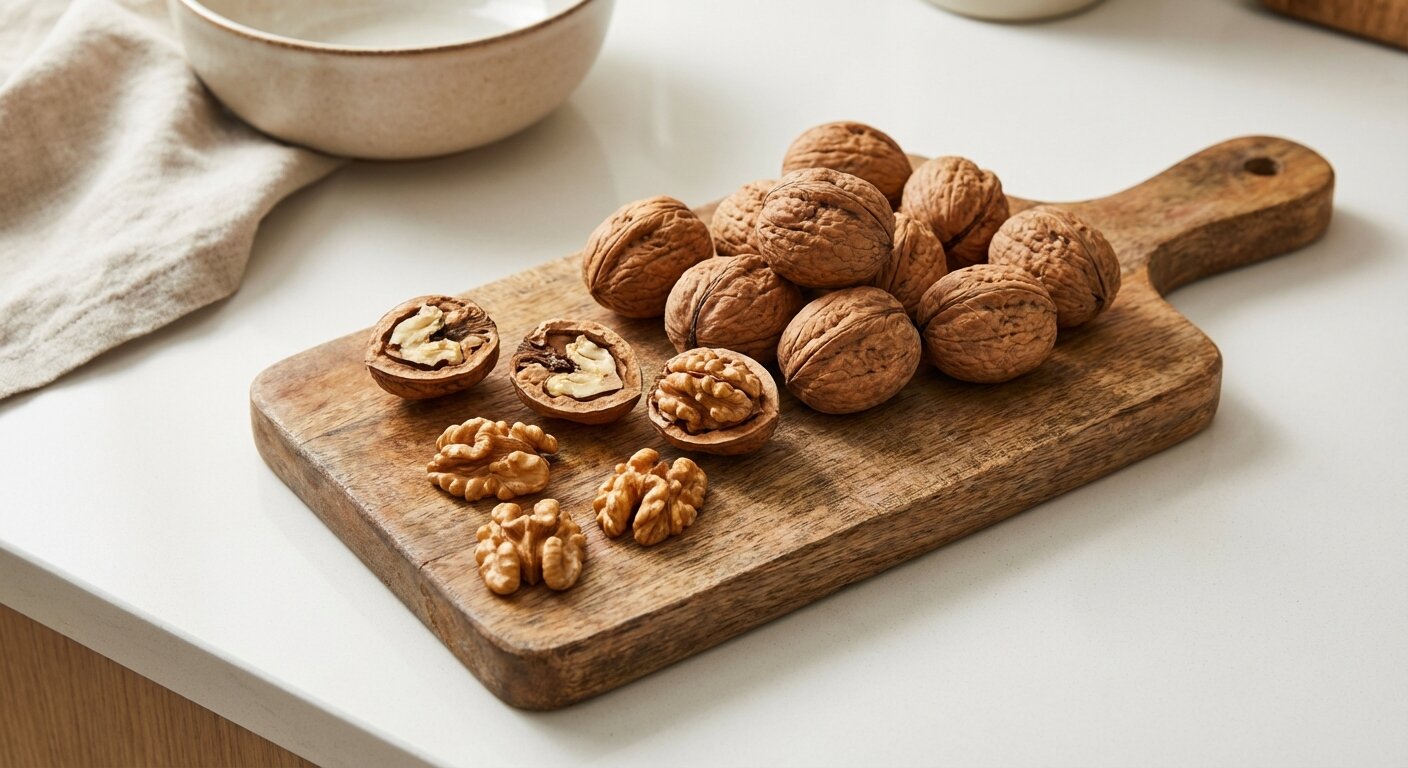
Related: Learn more about what macros are and how they impact your diet.
Introduction
Walnuts are one of the most nutrient-dense tree nuts available, packed with brain-boosting omega-3 fatty acids, plant-based protein, and powerful antioxidants. But with 654 calories per 100g, understanding their macronutrient profile is essential for anyone tracking their nutrition.
Whether you’re following keto, counting macros for muscle building, or simply want to make informed snacking choices, knowing exactly what you’re getting from walnuts helps you stay on track. Their unique nutritional composition—higher in omega-3s than any other nut—makes them a strategic choice for health-conscious eaters.
Ready to see how walnuts fit your macro targets? Use our macro calculator to get personalized recommendations based on your goals, then read on for complete walnut nutrition data, portion guidance, and practical tips.
Walnuts Macros Overview
Here’s the complete macronutrient breakdown for walnuts per 100g (3.5 oz):
| Nutrient | Amount per 100g | % Daily Value |
|---|---|---|
| Calories | 654 kcal | 33% |
| Protein | 15.2g | 30% |
| Total Fat | 65.2g | 100% |
| Saturated Fat | 6.1g | 31% |
| Monounsaturated Fat | 8.9g | — |
| Polyunsaturated Fat | 47.2g | — |
| Omega-3 (ALA) | 9.1g | 568% |
| Omega-6 | 38.1g | — |
| Total Carbohydrates | 13.7g | 5% |
| Dietary Fiber | 6.7g | 24% |
| Net Carbs | 7.0g | — |
| Sugars | 2.6g | — |
| Sodium | 2mg | 0% |
| Potassium | 441mg | 9% |
| Magnesium | 158mg | 38% |
| Calcium | 98mg | 8% |
| Iron | 2.9mg | 16% |
| Zinc | 3.1mg | 28% |
Walnut Macros by Common Serving Sizes
| Serving Size | Calories | Protein | Fat | Net Carbs |
|---|---|---|---|---|
| 1 oz (28g) / ~7 halves | 183 kcal | 4.3g | 18.3g | 2.0g |
| 1/4 cup (25g) | 164 kcal | 3.8g | 16.3g | 1.8g |
| 1/2 cup (50g) | 327 kcal | 7.6g | 32.6g | 3.5g |
| 1 cup (100g) | 654 kcal | 15.2g | 65.2g | 7.0g |
| 1 walnut half (~3.5g) | 23 kcal | 0.5g | 2.3g | 0.2g |
| 10 walnut halves (35g) | 229 kcal | 5.3g | 22.8g | 2.5g |
Most common serving: 1 oz (28g) = 7 walnut halves = 183 calories
Walnut Fat Breakdown: The Omega-3 Powerhouse
Walnuts stand out among nuts for their exceptional fat composition, particularly their omega-3 content:
Fat Composition per 1 oz (28g):
- Total fat: 18.3g (95% of calories from fat)
- Saturated fat: 1.7g (9% of total fat)
- Monounsaturated fat: 2.5g (14% of total fat)
- Polyunsaturated fat: 13.2g (72% of total fat)
- Omega-3 (ALA): 2.5g
- Omega-6: 10.7g
What makes this special:
- Highest omega-3 of any nut: Walnuts contain more than 10x the omega-3 ALA of almonds or cashews
- Brain health: ALA supports cognitive function and may reduce inflammation
- Heart health: Studies show 1.5 oz of walnuts daily can improve cholesterol ratios and arterial function
- Omega-6 to omega-3 ratio: About 4:1, which is better balanced than most Western diets (typically 15:1)
Are Walnut Fats Healthy?
Yes, exceptionally so. Despite being 65% fat by weight, walnuts provide predominantly unsaturated fats:
- 90% of walnut fat is unsaturated (mono + poly)
- Only 9% is saturated fat
- The omega-3 ALA content supports cardiovascular health and reduces systemic inflammation
Research indicates that replacing saturated fats with the unsaturated fats found in walnuts can lower LDL cholesterol and reduce heart disease risk.
Walnut Protein Content: Moderate but Complete
Walnuts provide 15.2g protein per 100g (4.3g per 1 oz serving), making them a moderate protein source among nuts:
Protein Comparison (per 1 oz):
| Nut | Protein |
|---|---|
| Peanuts | 7.3g |
| Almonds | 6.0g |
| Pistachios | 5.7g |
| Cashews | 5.2g |
| Walnuts | 4.3g |
| Pecans | 2.6g |
| Macadamias | 2.2g |
Key protein facts:
- Complete amino acid profile: Contains all 9 essential amino acids, though not in optimal ratios
- Plant-based option: Good for vegetarians/vegans as part of a varied protein intake
- Leucine content: 1.17g per 100g supports muscle protein synthesis
- Not a primary protein source: Best paired with higher-protein foods for muscle-building goals
Bottom line: Walnuts contribute meaningful protein, but you’ll want other protein sources if hitting 100g+ daily protein targets.
Walnut Carbohydrates & Fiber
Walnuts are one of the lowest-carb nuts available:
Carb Breakdown per 100g:
- Total carbs: 13.7g
- Dietary fiber: 6.7g (24% DV)
- Net carbs: 7.0g
- Sugars: 2.6g (all naturally occurring)
Carb Breakdown per 1 oz (28g):
- Total carbs: 3.8g
- Fiber: 1.9g
- Net carbs: 2.0g
- Sugars: 0.7g
What this means:
- Keto-friendly: With only 2g net carbs per ounce, walnuts fit easily into ketogenic diets (typically <20-50g net carbs daily)
- Low glycemic impact: Minimal sugar content and high fiber mean stable blood sugar
- Digestive health: 6.7g fiber per 100g supports gut health and satiety
- Prebiotic benefits: Walnut fiber feeds beneficial gut bacteria
Compared to other nuts (net carbs per 1 oz):
- Pecans: 1.2g ⭐ (lowest)
- Brazil nuts: 1.4g
- Macadamias: 1.5g
- Walnuts: 2.0g ✅
- Almonds: 2.5g
- Pistachios: 5.0g
- Cashews: 7.7g (highest)
Walnuts rank in the top tier for low-carb, high-fat nut options.
Walnuts for Weight Loss: Calorie Density Matters
At 654 calories per 100g, walnuts are calorically dense—but that doesn’t mean they’re off-limits for weight loss.
The Walnut Weight Loss Paradox
Research findings:
- Studies show people who eat nuts regularly tend to weigh less than those who don’t
- Walnut eaters have better diet quality and nutrient intake overall
- The fat and protein content promotes satiety, reducing overall calorie intake
How to use walnuts for weight loss:
-
Portion control is everything
- Stick to 1-1.5 oz (7-14 halves) per serving
- Pre-portion into small containers or bags
- Track in your macro app to avoid mindless munching
-
Strategic timing
- Add to breakfast for sustained morning energy
- Use as a mid-afternoon snack to prevent dinner overeating
- Avoid late-night grazing when portions tend to creep up
-
Meal incorporation
- Chop into salads for texture and satiety
- Blend into smoothies for creamy richness without dairy
- Top Greek yogurt for a protein-fat combo that kills hunger
-
Replacement strategy
- Swap processed snacks (chips, crackers) for measured walnut portions
- Use crushed walnuts instead of breadcrumbs for coating
- Replace some cooking oils with walnut pieces for added nutrition
Calorie-managed serving ideas:
- 150-calorie snack: 23g (about 6 halves) + piece of fruit
- 200-calorie snack: 28g (7 halves) + 100g Greek yogurt
- 300-calorie meal add-on: 42g (14 halves) in a large salad with lean protein
Red flag behaviors:
- ❌ Eating straight from a large bag without measuring
- ❌ Adding walnuts to meals without removing equivalent calories elsewhere
- ❌ Assuming “healthy fat” means unlimited quantities
- ❌ Night-time snacking when hunger signals are weakest
Bottom line: Walnuts can absolutely support weight loss when portioned mindfully and tracked accurately. Their nutrient density makes them more satisfying per calorie than most processed snacks.
Walnuts for Muscle Building & Athletic Performance
While not the highest-protein nut, walnuts offer unique benefits for active individuals:
Muscle Building Support
Protein contribution:
- 1.5 oz serving = 6.5g protein (helps bridge protein gaps between meals)
- Leucine content supports muscle protein synthesis
- Best combined with higher-protein sources (chicken, fish, whey)
Anti-inflammatory benefits:
- Omega-3 ALA reduces exercise-induced inflammation
- Supports faster recovery between training sessions
- May reduce delayed-onset muscle soreness (DOMS)
Energy density:
- 654 kcal per 100g = efficient calorie source for bulking
- Healthy fats support hormone production (including testosterone)
- Easier to hit calorie surplus when cutting food volume is difficult
Pre- and Post-Workout Use
Pre-workout (30-60 minutes before):
- Small portion (0.5-1 oz) for sustained energy without GI distress
- Pair with easily digestible carbs (banana, dates)
- Avoid large portions that may cause bloating
Post-workout:
- Combine with protein source for recovery (e.g., protein shake + 1 oz walnuts)
- Omega-3s support muscle repair and reduce inflammation
- Healthy fats slow protein digestion for sustained amino acid release
Sample Muscle-Building Meal Additions
Breakfast:
- Greek yogurt (200g) + walnuts (28g) + berries (75g) = 35g protein, 425 calories
Lunch:
- Grilled chicken breast (150g) + mixed greens + walnuts (28g) + olive oil = 50g protein, 500 calories
Snack:
- Protein shake (1 scoop) + banana + walnuts (14g) blended = 30g protein, 350 calories
Dinner:
- Salmon (150g) + roasted vegetables + quinoa (100g cooked) + walnuts (14g) = 45g protein, 650 calories
Daily total from walnuts alone: ~70g = 11g protein, 456 calories
Bulk vs. Cut strategies:
- Bulking: 2-3 oz daily (366-549 calories) to hit calorie surplus
- Cutting: 0.5-1 oz daily (92-183 calories) for nutrients without excessive calories
- Maintenance: 1-1.5 oz daily (183-275 calories) for balanced intake
Walnuts and Keto: Perfect Pairing
Walnuts are among the most keto-friendly nuts available:
Keto Macros per 1 oz (28g):
- Net carbs: 2.0g (4-10% of daily keto limit)
- Fat: 18.3g (ideal for 70-80% fat macro targets)
- Protein: 4.3g (moderate, preventing excess gluconeogenesis)
Why walnuts work for keto:
-
Extremely low net carbs
- 2g per ounce fits easily into 20-50g daily keto carb limits
- Can eat 10 servings and still stay under 20g net carbs (though calorie-dense)
-
High healthy fat content
- 65g fat per 100g supports ketone production
- Omega-3 ALA provides anti-inflammatory benefits during keto adaptation
-
Moderate protein
- Won’t kick you out of ketosis through excess protein conversion
- Contributes to daily protein needs without going overboard
-
Nutrient density
- Magnesium (38% DV per 100g) supports electrolyte balance during keto
- Potassium (9% DV) helps prevent “keto flu”
- No added sugars or inflammatory seed oils
Keto Walnut Serving Recommendations
Standard keto day (20g net carbs):
- 1.5-2 oz walnuts (3-4g net carbs) leaves 16-17g for vegetables and other foods
Liberal keto day (50g net carbs):
- 2-3 oz walnuts (4-6g net carbs) leaves ample room for low-carb vegetables
Keto meal ideas:
- Fat bomb: Walnuts + cream cheese + cocoa powder + stevia
- Keto granola: Walnuts + pecans + coconut flakes + erythritol + cinnamon, baked
- Salad topper: Mixed greens + grilled chicken + walnuts + avocado + olive oil
- Keto trail mix: Walnuts + almonds + 85% dark chocolate chips + unsweetened coconut
Keto comparison (net carbs per 1 oz):
| Nut | Net Carbs | Keto Rating |
|---|---|---|
| Pecans | 1.2g | ⭐⭐⭐⭐⭐ |
| Brazil nuts | 1.4g | ⭐⭐⭐⭐⭐ |
| Macadamias | 1.5g | ⭐⭐⭐⭐⭐ |
| Walnuts | 2.0g | ⭐⭐⭐⭐⭐ |
| Almonds | 2.5g | ⭐⭐⭐⭐ |
| Peanuts | 4.0g | ⭐⭐⭐ |
| Cashews | 7.7g | ⭐⭐ |
Bottom line: Walnuts are an excellent keto nut choice, offering brain-boosting omega-3s alongside minimal carbs and maximum healthy fats.
Micronutrients: Beyond the Macros
Walnuts deliver impressive micronutrient density:
Standout Vitamins & Minerals per 100g:
Minerals:
- Magnesium: 158mg (38% DV) — supports muscle function, sleep, and mood
- Phosphorus: 346mg (28% DV) — bone health and energy metabolism
- Zinc: 3.1mg (28% DV) — immune function and testosterone production
- Iron: 2.9mg (16% DV) — oxygen transport and energy
- Potassium: 441mg (9% DV) — heart health and fluid balance
- Calcium: 98mg (8% DV) — bone density and muscle contraction
Vitamins:
- Vitamin B6: 0.54mg (32% DV) — neurotransmitter production and mood regulation
- Folate: 98mcg (25% DV) — DNA synthesis and cell division
- Thiamin (B1): 0.34mg (28% DV) — energy metabolism
- Vitamin E: 0.7mg (5% DV) — antioxidant protection
Antioxidants & Phytonutrients
Polyphenols:
- Walnuts have the highest polyphenol content of any tree nut
- Ellagitannins support gut health by feeding beneficial bacteria
- Pedunculagin and other polyphenols provide anti-inflammatory effects
Melatonin:
- Walnuts are one of the few food sources of bioavailable melatonin
- May support sleep quality when consumed in evening
Omega-3 ALA:
- 9.1g per 100g (568% DV)
- Supports brain health, reduces inflammation, improves heart health markers
What this means for your health:
- Brain function: Omega-3s, B vitamins, and polyphenols support cognitive performance
- Heart health: Potassium, magnesium, and healthy fats improve cardiovascular markers
- Immune support: Zinc, selenium (trace amounts), and antioxidants boost immunity
- Bone health: Calcium, phosphorus, and magnesium support skeletal structure
How to Fit Walnuts Into Your Macros
Step 1: Calculate Your Macro Targets
Use our macro calculator to determine your personalized daily targets based on:
- Your goal (weight loss, muscle gain, maintenance)
- Activity level
- Body composition
Step 2: Determine Your Walnut Serving Size
Match walnut portions to your macro budget:
For weight loss (deficit):
- 0.5-1 oz (14-28g) = 92-183 calories
- Provides omega-3s without excessive calories
- Best as a mid-morning or afternoon snack
For muscle building (surplus):
- 1.5-2.5 oz (42-70g) = 275-458 calories
- Easy way to add quality calories and healthy fats
- Split across 2-3 meals or snacks
For maintenance:
- 1-1.5 oz (28-42g) = 183-275 calories
- Balanced intake for heart health benefits
- Daily habit without weight change
Step 3: Track Accurately
Measuring tips:
- Use a food scale: Most accurate method (grams)
- Count halves: 1 oz ≈ 7 walnut halves (less accurate but convenient)
- Measuring cups: ¼ cup ≈ 1 oz (least accurate due to air gaps)
Logging in macro apps:
- Search “walnuts, raw” or “walnuts, dry roasted”
- Avoid entries with added oils or flavorings unless applicable
- Double-check that calories match ~183 per ounce
Step 4: Strategic Meal Placement
Breakfast:
- Oatmeal topper: Oats + walnuts + berries + cinnamon
- Greek yogurt bowl: Yogurt + walnuts + honey + chia seeds
Lunch:
- Salad addition: Greens + grilled chicken + walnuts + balsamic
- Grain bowl: Quinoa + roasted veg + walnuts + tahini
Snacks:
- Solo: 1 oz walnuts + apple slices
- Trail mix: Walnuts + dark chocolate + dried fruit (measure all components)
Dinner:
- Protein topping: Salmon + walnut crust
- Side dish: Roasted Brussels sprouts + walnuts + maple glaze
- Pasta addition: Whole grain pasta + pesto + walnuts + cherry tomatoes
Step 5: Adjust Based on Results
Not losing weight?
- Reduce walnut portion by 0.5 oz (save 92 calories)
- Check if you’re “eyeballing” portions instead of measuring
- Review total daily calorie intake, not just walnuts
Gaining unwanted weight?
- Cut back to 0.5-1 oz daily
- Track every walnut consumed (even “just a few” adds up)
- Ensure you’re in a calorie deficit overall
Hitting muscle-building targets easily?
- Maintain current walnut intake
- Focus on protein sources to complement walnut’s moderate protein
- Consider walnuts a healthy fat source, not primary protein
Walnuts vs. Other Nuts: Macro Comparison
How do walnuts stack up against other popular nuts?
Complete Nut Comparison (per 1 oz / 28g):
| Nut | Calories | Protein | Fat | Net Carbs | Fiber | Omega-3 |
|---|---|---|---|---|---|---|
| Walnuts | 183 | 4.3g | 18.3g | 2.0g | 1.9g | 2.5g |
| Almonds | 164 | 6.0g | 14.2g | 2.5g | 3.5g | 0.0g |
| Cashews | 157 | 5.2g | 12.4g | 7.7g | 0.9g | 0.0g |
| Pecans | 196 | 2.6g | 20.4g | 1.2g | 2.7g | 0.3g |
| Pistachios | 159 | 5.7g | 12.9g | 5.0g | 3.0g | 0.1g |
| Macadamias | 204 | 2.2g | 21.5g | 1.5g | 2.4g | 0.1g |
| Peanuts | 161 | 7.3g | 14.0g | 4.0g | 2.4g | 0.0g |
| Brazil nuts | 187 | 4.1g | 19.0g | 1.4g | 2.1g | 0.0g |
When to Choose Walnuts Over Other Nuts:
Choose walnuts when you need:
- ✅ Highest omega-3 content (10-25x more than any other nut)
- ✅ Brain health support (cognitive function, neuroprotection)
- ✅ Anti-inflammatory benefits (ALA reduces systemic inflammation)
- ✅ Heart health focus (improves cholesterol ratios and arterial function)
- ✅ Keto-friendly option (2g net carbs per oz)
- ✅ Highest antioxidant levels (polyphenols, ellagitannins)
Choose other nuts when you need:
- More protein: Peanuts (7.3g), almonds (6.0g), pistachios (5.7g)
- Fewer calories: Almonds (164), pistachios (159), cashews (157)
- Lower net carbs: Pecans (1.2g), Brazil nuts (1.4g), macadamias (1.5g)
- More fiber: Almonds (3.5g), pistachios (3.0g), pecans (2.7g)
- Budget-friendly: Peanuts are typically cheapest
Best nut combinations:
- Omega-3 + Protein: Walnuts + almonds trail mix
- Keto fat bombs: Walnuts + macadamias + pecans
- Balanced nutrition: Walnuts + pistachios + almonds
- Budget bulking: Walnuts + peanuts
Bottom line: Walnuts win on omega-3s and antioxidants, but trail on protein and fiber. For complete nutrition, rotate through multiple nut types weekly.
Common Walnut Macro Questions
Does roasting change walnut macros?
Minimal difference:
- Raw walnuts: 654 kcal, 65g fat, 15g protein per 100g
- Dry-roasted walnuts: 654 kcal, 65g fat, 15g protein per 100g (virtually identical)
- Oil-roasted walnuts: 690+ kcal, 69g+ fat (added calories from cooking oil)
What changes:
- Flavor: Roasting intensifies nutty, slightly bitter notes
- Texture: Roasted walnuts are crunchier and less creamy
- Antioxidants: Raw walnuts preserve slightly more polyphenols
- Digestibility: Some people find roasted walnuts easier to digest
Best practices:
- Choose raw or dry-roasted to keep macros consistent
- Avoid honey-roasted, candied, or oil-roasted varieties (added sugars and fats)
- Roast your own: Raw walnuts at 350°F for 8-10 minutes for fresh flavor without added oils
Are raw walnuts better than roasted?
For macros: Identical
For health: Slight edge to raw
- Preserves heat-sensitive antioxidants and polyphenols
- Omega-3 ALA is stable at moderate roasting temps
- Both offer the same heart health and brain benefits
For taste and convenience: Personal preference
- Roasted: Nuttier flavor, longer shelf life, crunchier
- Raw: Milder, creamier, better for blending into smoothies
Bottom line: Choose based on taste preference; both are nutritionally excellent.
Can I eat walnuts every day?
Yes, and there are benefits to daily consumption:
Research-backed daily intake:
- 1-1.5 oz (28-42g) daily is associated with:
- Lower LDL cholesterol (5-15% reduction in studies)
- Improved arterial function (better blood flow)
- Reduced inflammation markers (C-reactive protein)
- Better cognitive performance in older adults
Daily serving guidelines:
- Weight loss: 0.5-1 oz (92-183 calories)
- Maintenance: 1-1.5 oz (183-275 calories)
- Muscle gain: 1.5-2.5 oz (275-458 calories)
Potential issues with excessive intake:
- ❌ Calorie overload: Easy to exceed daily calorie targets if not portioned
- ❌ Digestive distress: Very high fiber intake (10g+ from walnuts alone) may cause bloating
- ❌ Omega-6 imbalance: While walnuts have good omega-3s, they’re also high in omega-6 (though still healthier than most Western diets)
Bottom line: 1-1.5 oz daily is safe, beneficial, and supported by research. More than 2-3 oz daily may provide diminishing returns and excess calories.
Do walnuts spike blood sugar?
No, walnuts have minimal impact on blood sugar:
Glycemic Index (GI): ~15 (very low; below 55 is considered low GI)
Why walnuts don’t spike blood sugar:
- Only 2.6g sugar per 100g (all naturally occurring)
- High fiber content (6.7g per 100g) slows glucose absorption
- 65g fat per 100g delays stomach emptying, blunting glucose spikes
- Moderate protein (15g per 100g) stabilizes blood sugar response
Benefits for blood sugar management:
- Adding walnuts to high-carb meals reduces overall glycemic impact
- Studies show walnut consumption improves insulin sensitivity
- May reduce risk of type 2 diabetes when eaten regularly
Diabetic-friendly serving suggestions:
- Pair with protein and fiber (e.g., Greek yogurt + walnuts + berries)
- Avoid honey-roasted or candied walnuts (added sugars)
- Measure portions to keep total carbs predictable
Bottom line: Walnuts are an excellent choice for blood sugar control and can be safely included in diabetic meal plans.
Are walnut pieces and halves the same macros?
Yes, walnut pieces and halves have identical macros per gram:
Per 100g:
- Halves: 654 kcal, 65g fat, 15g protein, 7g net carbs
- Pieces: 654 kcal, 65g fat, 15g protein, 7g net carbs
Practical differences:
- Halves: Easier to count for rough portioning (7 halves ≈ 1 oz)
- Pieces: Easier to measure by volume (¼ cup ≈ 1 oz), better for baking/cooking
- Halves: May stay fresher longer (less surface area exposed to air)
- Pieces: Often cheaper due to cosmetic imperfection
Best practice:
- Weigh on a food scale for accuracy regardless of halves vs. pieces
- Use pieces for recipes (easier to measure and distribute evenly)
- Use halves for snacking (easier to count and control portions)
Can you eat too many walnuts?
Yes. Possible issues with excessive intake (3+ oz / 85g daily):
-
Calorie overload
- 3 oz = 549 calories (may exceed daily fat macro targets)
- Easy to gain unwanted weight if not tracking total calories
-
Digestive issues
- 20g+ fiber daily from walnuts alone can cause bloating and gas
- Introduce walnuts gradually if you’re not used to high-fiber foods
-
Omega-6 excess
- 3 oz = 32g omega-6 (walnuts are better balanced than most nuts, but still high in absolute terms)
- May contribute to inflammation if overall diet is poor
-
Nutrient displacement
- Filling up on walnuts may crowd out other important foods (vegetables, lean proteins)
-
Cost
- Walnuts are expensive; 3+ oz daily adds up quickly
Safe upper limit:
- 2-3 oz daily (56-85g) for most people appears safe and beneficial
- Track your total daily calories to ensure walnuts fit your energy needs
- Listen to your body: Reduce intake if you experience digestive discomfort
Bottom line: Walnuts are extremely healthy, but like all foods, moderation matters. Stick to 1-2 oz daily for most goals, up to 3 oz if bulking or highly active.
Buying, Storing, and Preparing Walnuts
Buying Tips
What to look for:
- Raw or dry-roasted: Avoid oil-roasted, honey-roasted, or candied varieties
- Unsalted: Keep sodium intake low and control seasoning yourself
- Halves or pieces: Both are fine; pieces are often cheaper, halves stay fresher longer
- Packaging: Vacuum-sealed or airtight containers preserve freshness
Organic vs. conventional:
- Walnuts are not on the EWG’s “Dirty Dozen” (low pesticide residue)
- Organic offers minimal nutritional advantage
- Choose based on budget and personal preference
Where to buy:
- Bulk bins: Often cheapest, but check for freshness (smell for rancidity)
- Pre-packaged: More expensive but guaranteed freshness
- Online: Nuts.com, Amazon, Costco offer good bulk deals
- In-shell: Cheapest option if you’re willing to shell yourself (also freshest)
Storage Guidelines
Shelf life:
- Room temperature: 2-3 months in airtight container (pantry)
- Refrigerator: 6-9 months in airtight container or zip-top bag
- Freezer: 12+ months in airtight container or freezer bag
- In-shell: Lasts 6-12 months at room temperature (natural protection)
Signs of spoilage:
- ❌ Rancid smell: Sour, paint-like odor (omega-3s oxidize over time)
- ❌ Bitter taste: Fresh walnuts taste mildly sweet and earthy; bitterness indicates oxidation
- ❌ Shriveled or discolored: Dark spots or wrinkled appearance means old or improperly stored
- ❌ Mold: Any visible mold = discard immediately
Best storage practices:
- Store in opaque, airtight containers (light accelerates rancidity)
- Keep in cool, dark place (heat and light degrade omega-3s)
- Refrigerate or freeze for long-term storage
- Buy smaller quantities more frequently for maximum freshness
Preparation Ideas
Raw (no prep needed):
- Snack straight from the bag (measure first!)
- Add to salads for crunch
- Blend into smoothies for creamy texture
Toasted (enhances flavor):
- Spread on baking sheet, bake at 350°F for 8-10 minutes
- Stir halfway through for even toasting
- Let cool before storing (moisture causes sogginess)
Chopped (for recipes):
- Pulse in food processor for uniform pieces
- Chop by hand for varied texture
- Use in baking, oatmeal, yogurt, trail mix
Walnut butter:
- Blend 2-3 cups raw walnuts in high-speed blender for 5-10 minutes
- Add pinch of salt if desired
- Store in fridge for 2-3 weeks
- Spread on toast, mix into oatmeal, or use in sauces
Creative uses:
- Walnut pesto: Walnuts + basil + garlic + olive oil + Parmesan
- Walnut crust: Crushed walnuts + breadcrumbs for baked fish or chicken
- Walnut granola: Walnuts + oats + honey + cinnamon, baked
- Walnut energy balls: Dates + walnuts + cocoa powder, blended and rolled
Cooking notes:
- Walnuts can be added to cooked dishes, but high heat may degrade omega-3s
- Best to add near the end of cooking or as a finishing garnish
- Raw or lightly toasted preserves maximum nutritional value
Frequently Asked Questions
What are the macros in 1 oz (28g) of walnuts?
One ounce of walnuts (about 7 walnut halves or 14 pieces) contains:
- 183 calories
- 18.3g fat (1.7g saturated, 2.5g monounsaturated, 13.2g polyunsaturated)
- 4.3g protein
- 3.8g total carbs
- 1.9g fiber
- 2.0g net carbs
This serving size provides an excellent balance of omega-3 fatty acids (2.5g ALA), moderate protein, and minimal carbohydrates, making walnuts suitable for keto, low-carb, and general health-focused diets.
Are walnuts high in protein?
Walnuts provide moderate protein at 15.2g per 100g (4.3g per 1 oz serving). While they do contribute meaningful protein to your diet, they’re not considered a high-protein food compared to:
- Almonds (21g per 100g)
- Peanuts (26g per 100g)
- Chicken breast (31g per 100g)
- Greek yogurt (10g per 100g)
However, walnut protein is complete, containing all nine essential amino acids. For vegetarians and vegans, walnuts can help diversify plant-based protein sources when combined with legumes, grains, and other nuts.
Best practices:
- Don’t rely on walnuts as your primary protein source
- Pair with higher-protein foods (Greek yogurt, chicken, legumes)
- Count walnut protein toward daily totals, but prioritize denser protein sources for muscle-building goals
Can you eat walnuts on a keto diet?
Absolutely. Walnuts are one of the most keto-friendly nuts available. With only 2g net carbs per ounce and 18.3g of healthy fats, they fit perfectly into ketogenic macros:
Keto macro breakdown (per 1 oz):
- 2g net carbs (4-10% of typical 20-50g daily keto limit)
- 18.3g fat (supports ketosis and fat macro targets)
- 4.3g protein (moderate, won’t interfere with ketone production)
Additional keto benefits:
- Omega-3 ALA reduces inflammation during keto adaptation
- Magnesium and potassium help prevent “keto flu”
- Zero added sugars or inflammatory ingredients
- High satiety prevents cravings
Recommended keto serving:
- 1.5-2 oz daily (3-4g net carbs, 275-366 calories)
- Leaves 16-17g net carbs for low-carb vegetables and other foods
Walnuts pair perfectly with keto staples like avocados, full-fat dairy, and leafy greens.
How many calories are in a handful of walnuts?
A typical handful is roughly 1 ounce (28g), which contains approximately 183 calories.
More precise measurements:
- Small handful: ~0.75 oz (21g) = 137 calories
- Average handful: ~1 oz (28g) = 183 calories
- Large handful: ~1.5 oz (42g) = 275 calories
The problem with “handful” as a measurement is that hand size varies significantly:
- Small female hand: May only hold 0.5-0.75 oz
- Large male hand: May hold 1.5-2 oz
For accuracy:
- Use a food scale: Weigh 28g for a standard 1-oz serving
- Count halves: 7 walnut halves = approximately 1 oz
- Measure by volume: ¼ cup ≈ 1 oz (least accurate due to air gaps)
Calorie impact:
- One handful (1 oz) = ~10% of a 2,000-calorie daily budget
- Two handfuls (2 oz) = ~18% of daily calories
- Easy to overconsume if eating directly from a large bag without portioning
Bottom line: Always measure walnuts when tracking macros. “Handfuls” can easily vary by 100-200 calories.
What makes walnuts different from other nuts nutritionally?
Walnuts are unique in three major ways:
-
Highest omega-3 content of any nut
- 9.1g ALA per 100g (2.5g per ounce)
- 10-25x more omega-3 than almonds, cashews, or pistachios
- Supports brain health, heart health, and reduces inflammation
-
Highest antioxidant levels
- More polyphenols than any other tree nut
- Ellagitannins, pedunculagin, and other unique compounds
- Greater antioxidant capacity than even berries and dark chocolate (gram for gram)
-
Better omega-6 to omega-3 ratio
- 4:1 omega-6 to omega-3 (compared to 10-15:1 in most Western diets)
- Helps balance inflammatory pathways
- Most other nuts are heavily omega-6 dominant (almonds, cashews, peanuts)
Additional unique features:
- Melatonin content: One of few foods with bioavailable melatonin (may support sleep)
- Neuroprotective compounds: Pedunculagin has been shown to support brain health in animal studies
- Heart health research: More cardiovascular studies on walnuts than any other nut
Bottom line: If you prioritize brain health, anti-inflammatory benefits, or omega-3 intake, walnuts are the clear winner among nuts.
Should I eat walnuts raw or roasted for better macros?
For macros: Raw and dry-roasted walnuts are virtually identical.
Macro comparison (per 1 oz):
- Raw: 183 kcal, 4.3g protein, 18.3g fat, 2.0g net carbs
- Dry-roasted: 183 kcal, 4.3g protein, 18.3g fat, 2.0g net carbs
- Oil-roasted: 195+ kcal, 4.3g protein, 20g+ fat, 2.0g net carbs (avoid for macro tracking)
For health: Raw has a slight edge
- Preserves heat-sensitive polyphenols and antioxidants
- Omega-3 ALA remains stable at moderate roasting temperatures (350°F)
- Both raw and dry-roasted offer the same heart health and brain benefits in studies
For taste and shelf life: Roasted may be preferable
- Nuttier, richer flavor
- Crunchier texture
- Longer shelf life due to reduced moisture
Best practice:
- Choose raw or dry-roasted based on taste preference
- Avoid oil-roasted, honey-roasted, candied, or flavored varieties (added fats, sugars, and calories)
- If tracking macros closely, stick to one type for consistency
Bottom line: Both raw and dry-roasted walnuts are nutritionally excellent. Choose the one you’ll actually eat regularly.
How many walnuts should I eat per day?
General recommendation: 1-1.5 ounces (28-42g) per day, which is approximately 7-14 walnut halves.
This serving size provides:
- 183-275 calories
- 2.5-3.8g omega-3 ALA (meets or exceeds daily recommendations)
- 4.3-6.5g protein
- 2-3g net carbs
- Significant antioxidants, magnesium, and polyphenols
Adjust based on goals:
Weight loss:
- 0.5-1 oz (14-28g) daily = 92-183 calories
- Provides omega-3 benefits without excessive calories
- Measure carefully and track to avoid overeating
Muscle building:
- 1.5-2.5 oz (42-70g) daily = 275-458 calories
- Easy way to add quality calories and healthy fats
- Split across 2-3 meals for sustained energy
Heart health:
- 1.5 oz (42g) daily is the amount used in most cardiovascular research studies
- Shown to reduce LDL cholesterol by 5-15%
- Improves arterial function and reduces inflammation
Keto:
- 1.5-2 oz (42-56g) daily = 3-4g net carbs
- Fits easily into 20-50g daily keto carb limits
- Provides significant healthy fats to support ketosis
Upper limit:
- Most experts recommend no more than 2-3 oz (56-85g) daily
- Beyond this, calorie density may interfere with other nutrition goals
- Diminishing returns for health benefits above 1.5-2 oz
Bottom line: For most people, 1-1.5 oz daily (7-14 halves) provides maximum health benefits without excess calories.
Do walnuts help with weight loss or muscle building?
Walnuts can support both goals when used strategically.
For weight loss:
Benefits:
- High satiety due to fat, protein, and fiber content
- Studies show nut eaters tend to weigh less than non-nut eaters
- Omega-3s reduce inflammation (chronic inflammation is linked to obesity)
- Nutrient density ensures you’re getting vitamins/minerals during calorie deficit
Best practices:
- Portion strictly: 0.5-1 oz daily (92-183 calories)
- Pre-portion into containers: Avoid eating straight from a large bag
- Track every walnut: Easy to underestimate portions and sabotage deficit
- Use as a replacement: Swap processed snacks for measured walnut servings
Red flags:
- ❌ Eating walnuts without reducing calories elsewhere
- ❌ “Just a few” mindless snacking (can easily add 300+ untracked calories)
- ❌ Assuming “healthy fat” means unlimited quantities
For muscle building:
Benefits:
- Easy way to add calories for bulking (183 calories per ounce)
- Omega-3s reduce exercise-induced inflammation and support recovery
- Moderate protein contributes to daily protein totals
- Healthy fats support testosterone and hormone production
Best practices:
- 1.5-2.5 oz daily (275-458 calories) for bulking
- Pair with high-protein foods: Walnuts + Greek yogurt, chicken salad with walnuts, protein shake with blended walnuts
- Post-workout: Combine with protein for muscle recovery
- Spread across meals: 0.5 oz per meal for sustained energy
Sample muscle-building day (2 oz total):
- Breakfast: Greek yogurt (200g) + 0.5 oz walnuts + berries = 280 calories, 25g protein
- Snack: Protein shake + 0.5 oz walnuts blended = 250 calories, 30g protein
- Lunch: Chicken salad + 0.5 oz walnuts + olive oil = 550 calories, 45g protein
- Dinner: Salmon + veggies + quinoa + 0.5 oz walnuts = 650 calories, 50g protein
- Total from walnuts: 366 calories, 8.6g protein
Bottom line: Walnuts work for both weight loss (when portioned carefully) and muscle building (when paired with sufficient protein). The key difference is portion size and overall calorie context.
Conclusion
Walnuts are one of the most nutritionally impressive nuts you can eat, delivering 654 calories, 65g fat, 15g protein, and 7g net carbs per 100g. Their standout feature—9.1g omega-3 ALA per 100g—makes them the clear winner for brain health, heart health, and anti-inflammatory benefits.
Key takeaways:
- Standard serving: 1 oz (28g) = 183 calories, 18g fat, 4g protein, 2g net carbs
- Keto-friendly: Low net carbs and high healthy fats make walnuts perfect for ketogenic diets
- Heart health: 1.5 oz daily can reduce LDL cholesterol and improve arterial function
- Portion control matters: Calorie-dense (654 kcal per 100g), so measure carefully when tracking macros
- Omega-3 powerhouse: 10-25x more omega-3 than other nuts; unmatched for plant-based ALA intake
Whether you’re cutting, bulking, maintaining, or simply eating for health, walnuts fit into nearly any nutrition plan when portioned appropriately. Track them accurately, enjoy their unique nutritional benefits, and make them a staple in your macro-friendly kitchen.
Ready to see exactly how walnuts fit your personal nutrition goals? Use our macro calculator to get your customized daily targets and start building meals around whole, nutrient-dense foods like walnuts.
Related Articles

Dragonfruit Macros: Complete Nutrition Guide for Pitaya
Complete macro breakdown of dragonfruit (pitaya). Learn the calories, protein, carbs, and...
Read guide →
Bulgur Macros: Complete Nutritional Guide & Health Benefits
Discover bulgur's complete macro breakdown, nutritional benefits, and how to incorporate...
Read guide →
Radish Macros: Nutrition Facts and Health Benefits
Complete guide to radish macros and nutrition. Learn calories, protein, carbs, and health...
Read guide →Note: Nutrition values are approximate and may vary based on preparation method and source.