Watermelon Macros: Complete Nutrition Guide + Summer Hydration Benefits
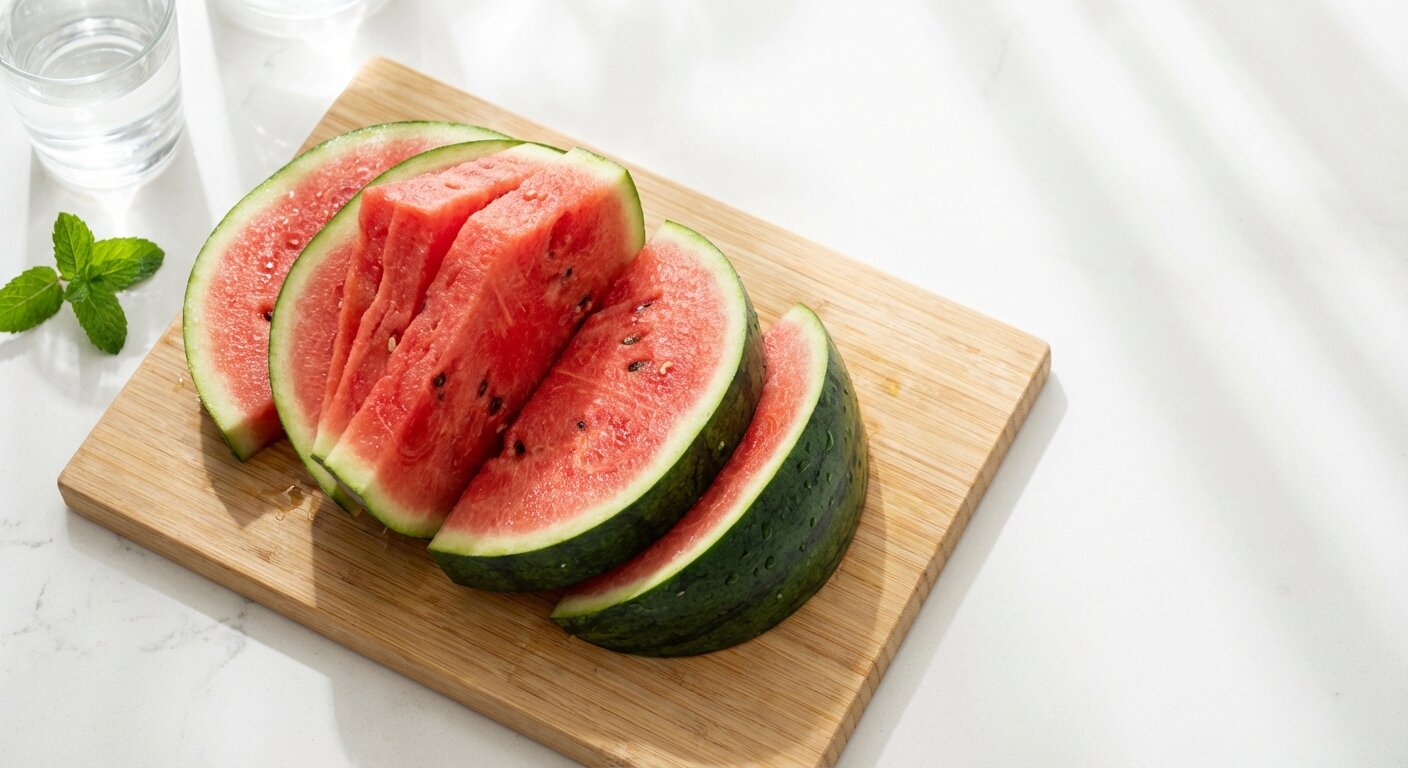
Watermelon is the ultimate summer fruit—refreshing, naturally sweet, and packed with hydration. But if you’re tracking macros, you might wonder: Is watermelon just sugar water, or does it deserve a place in your nutrition plan?
The short answer: Watermelon is a nutrition powerhouse. At 92% water by weight and only 30 calories per 100g, it’s one of the most hydrating, low-calorie foods you can eat. It’s loaded with lycopene (a potent antioxidant), citrulline (for blood flow and recovery), and essential vitamins A and C.
Whether you’re cutting, bulking, or just looking for a guilt-free snack, understanding watermelon’s macros helps you fit it strategically into your diet. Let’s break down the numbers, benefits, and best practices.
Want personalized macro targets? Try our Macro Calculator to dial in your exact needs for your goals.
Watermelon Macros Breakdown
Here’s the complete nutritional profile for common watermelon serving sizes:
Per 1 Cup (154g) Diced Watermelon
- Calories: 46 kcal
- Protein: 0.9g
- Carbohydrates: 11.6g
- Fiber: 0.6g
- Net Carbs: 11.0g
- Fat: 0.2g
- Water Content: 92%
Per 100g Raw Watermelon
- Calories: 30 kcal
- Protein: 0.6g
- Carbohydrates: 7.6g
- Fiber: 0.4g
- Net Carbs: 7.2g
- Fat: 0.2g
Per 2 Cups (308g) Watermelon
- Calories: 92 kcal
- Protein: 1.8g
- Carbohydrates: 23.2g
- Fiber: 1.2g
- Net Carbs: 22.0g
- Fat: 0.4g
Per Medium Wedge (286g)
- Calories: 86 kcal
- Protein: 1.7g
- Carbohydrates: 21.6g
- Fiber: 1.1g
- Net Carbs: 20.5g
- Fat: 0.4g
Key Takeaway: Watermelon is exceptionally low in calories and fat, with carbs coming almost entirely from natural sugars (fructose and glucose). The fiber content is minimal, but the high water content makes it incredibly filling.
Watermelon Nutrition Beyond Macros
Watermelon isn’t just about hitting your carb targets—it’s packed with micronutrients and bioactive compounds that support health and performance.
Vitamins and Minerals (per 1 cup)
- Vitamin C: 12.3mg (21% DV) — immune support, collagen synthesis
- Vitamin A: 865 IU (17% DV) — eye health, skin health
- Potassium: 170mg (5% DV) — electrolyte balance, muscle function
- Magnesium: 15mg (4% DV) — muscle recovery, energy production
- Vitamin B6: 0.07mg (4% DV) — protein metabolism
Antioxidants and Bioactive Compounds
Lycopene:
Watermelon is one of the richest sources of lycopene (even more than tomatoes). Lycopene is a powerful antioxidant linked to reduced inflammation, improved heart health, and lower cancer risk.
Citrulline:
Watermelon contains citrulline, an amino acid that converts to arginine in the body. Citrulline supports nitric oxide production, which improves blood flow, exercise performance, and muscle recovery. Some studies suggest it may reduce muscle soreness post-workout.
Beta-Carotene:
The deep red/pink color comes from beta-carotene, which the body converts to vitamin A. This supports immune function, vision, and skin health.
Choline:
Watermelon provides small amounts of choline, important for brain health, muscle function, and metabolism.
Watermelon for Weight Loss
Watermelon is a weight loss superstar for several reasons:
1. Low Calorie Density
At 30 calories per 100g, watermelon is one of the lowest-calorie foods available. You can eat a large volume without consuming many calories, which helps with satiety and adherence.
2. High Water Content (92%)
The water content creates volume in your stomach, triggering fullness signals. This is why watermelon feels so satisfying despite being low-calorie.
3. Natural Sweetness
Craving something sweet? Watermelon satisfies sugar cravings without the empty calories of processed snacks or desserts.
4. Hydration Support
Dehydration can be mistaken for hunger. Watermelon keeps you hydrated, reducing unnecessary snacking.
5. Minimal Fat
With only 0.2g fat per cup, watermelon fits easily into low-fat diets without impacting your macro ratios.
Pro Tip: Pair watermelon with a protein source (like Greek yogurt or cottage cheese) to balance macros and extend satiety.
Watermelon for Muscle Building and Performance
While watermelon isn’t a protein or calorie powerhouse, it has unique benefits for athletes and active individuals:
1. Citrulline for Muscle Recovery
Research shows that citrulline supplementation can reduce muscle soreness and improve exercise performance. Watermelon delivers citrulline naturally, making it an effective post-workout snack.
2. Quick Carbs for Glycogen Replenishment
The natural sugars in watermelon (fructose and glucose) are absorbed quickly, making it ideal for refueling after intense training.
3. Hydration and Electrolytes
Watermelon provides water, potassium, and magnesium—critical for rehydration and preventing cramping during hot weather or long workouts.
4. Low-Calorie Bulk
If you’re bulking on a tight calorie budget, watermelon adds volume and micronutrients without significantly increasing calorie intake.
Pro Tip: Blend watermelon into a post-workout smoothie with protein powder, spinach, and ice for a hydrating, nutrient-dense recovery shake.
Watermelon and Blood Sugar: Glycemic Index vs. Glycemic Load
Watermelon often gets flagged as high-glycemic, but the full story is more nuanced.
Glycemic Index (GI): 72 (High)
Watermelon has a high glycemic index, meaning the carbs are absorbed quickly.
Glycemic Load (GL): 5 (Low)
Glycemic load accounts for serving size. Because watermelon is mostly water, a typical serving has a low glycemic load—meaning it won’t cause dramatic blood sugar spikes.
Bottom Line:
For most people, watermelon is safe and won’t cause blood sugar crashes. If you’re diabetic or insulin-sensitive, pair it with protein or fat to slow absorption.
Watermelon on Keto and Low-Carb Diets
Watermelon is higher in carbs than most keto-friendly fruits, but it’s not completely off-limits.
Can You Eat Watermelon on Keto?
- Strict keto (20g net carbs/day): Challenging. One cup = 11g net carbs, leaving little room for other carbs.
- Flexible low-carb (50-100g net carbs/day): Absolutely. A small serving fits comfortably.
Keto-Friendly Watermelon Strategies
- Limit portion size: ½ cup = ~5.8g net carbs
- Time it around workouts: Use watermelon post-workout when carb tolerance is higher
- Pair with fat: Add cheese or nuts to balance macros and slow absorption
Keto-Friendly Fruit Alternatives:
If watermelon doesn’t fit your macros, consider strawberries, blackberries, or raspberries (all lower in net carbs).
Best Times to Eat Watermelon
Pre-Workout:
Provides quick-digesting carbs and hydration without weighing you down.
Post-Workout:
Replenishes fluids, delivers natural sugars for glycogen replenishment, and provides citrulline for recovery.
Between Meals:
A low-calorie, hydrating snack that curbs cravings and keeps you full.
Summer Events & Hot Days:
Watermelon’s 92% water content makes it ideal for staying hydrated during outdoor activities.
How to Choose and Store Watermelon
Choosing a Ripe Watermelon
- Look for a yellow spot: The field spot (where it sat on the ground) should be yellow/cream, not white.
- Check for heaviness: A ripe watermelon feels heavy for its size (high water content).
- Tap test: A ripe watermelon sounds deep and hollow when tapped.
- Inspect the rind: Should be dull (not shiny) with no soft spots or bruises.
Storing Watermelon
- Whole: Store at room temperature until cut. Can last 7-10 days.
- Cut: Refrigerate in an airtight container for up to 3-5 days.
- Frozen: Cube and freeze for smoothies or blending (texture changes, but flavor remains).
Creative Ways to Use Watermelon
1. Watermelon Smoothie Bowl
Blend frozen watermelon with Greek yogurt and top with granola, chia seeds, and fresh mint.
2. Watermelon Salad
Combine watermelon cubes with feta cheese, arugula, cucumber, and balsamic glaze.
3. Watermelon Salsa
Dice watermelon with jalapeño, lime juice, cilantro, and red onion. Serve with grilled chicken or fish.
4. Watermelon Ice Pops
Blend watermelon with lime juice, pour into molds, and freeze for a guilt-free summer treat.
5. Watermelon Juice
Blend watermelon chunks and strain for a refreshing, hydrating beverage.
Watermelon vs. Other Summer Fruits
Here’s how watermelon stacks up against other popular fruits:
| Fruit (per 100g) | Calories | Carbs | Fiber | Protein | Fat |
|---|---|---|---|---|---|
| Watermelon | 30 | 7.6g | 0.4g | 0.6g | 0.2g |
| Cantaloupe | 34 | 8.2g | 0.9g | 0.8g | 0.2g |
| Honeydew | 36 | 9.1g | 0.8g | 0.5g | 0.1g |
| Strawberries | 32 | 7.7g | 2.0g | 0.7g | 0.3g |
| Blueberries | 57 | 14.5g | 2.4g | 0.7g | 0.3g |
| Grapes | 69 | 18.1g | 0.9g | 0.7g | 0.2g |
Takeaway: Watermelon is one of the lowest-calorie fruits, tied closely with strawberries. If you want even more fiber, go for strawberries or blueberries. For pure hydration and low calories, watermelon wins.
Common Mistakes When Eating Watermelon
1. Overeating and Ignoring Portions
Watermelon is low-calorie, but 4 cups still equals 184 calories and 46g carbs. If you’re in a deficit, track your portions.
2. Eating Watermelon Alone and Feeling Hungry
Watermelon has minimal protein and fat. Pair it with protein (Greek yogurt, cottage cheese) or fat (nuts, cheese) for lasting satiety.
3. Avoiding Watermelon on Keto Without Reason
If you’re doing flexible low-carb (50-100g net carbs), a small serving of watermelon fits perfectly. Don’t eliminate it unnecessarily.
4. Throwing Away the Rind
Watermelon rind is edible and high in citrulline. Pickle it, juice it, or blend it into smoothies for extra nutrition.
5. Eating Watermelon at Room Temperature
Cold watermelon is more refreshing and satisfying. Refrigerate before serving.
Frequently Asked Questions
What are the macros in watermelon?
One cup (154g) of diced watermelon contains 46 calories, 11.6g carbohydrates, 0.6g fiber, 0.9g protein, and 0.2g fat. The net carb count is 11g, making it a low-calorie, hydrating fruit primarily composed of water (92%) and natural sugars.
Is watermelon good for weight loss?
Yes, watermelon is excellent for weight loss due to its low calorie density (30 calories per 100g), high water content (92%), and ability to satisfy sweet cravings without added sugars. The volume and water content help you feel full while keeping calorie intake minimal. It’s perfect for snacking between meals or as a dessert replacement.
How much protein is in watermelon?
Watermelon contains approximately 0.9g of protein per cup (154g). While this is minimal, watermelon’s value doesn’t come from protein—it comes from hydration, antioxidants like lycopene, citrulline for recovery, and vitamins A and C. For a balanced macro profile, pair watermelon with a protein source like Greek yogurt or cottage cheese.
Can I eat watermelon on keto?
Watermelon is challenging on strict keto (20g net carbs/day) because one cup contains 11g net carbs. However, a smaller serving (½ cup = 5.8g net carbs) can fit into a flexible low-carb or targeted keto approach, especially post-workout when carb tolerance is higher. Pair it with fat (cheese, nuts) to slow absorption.
What makes watermelon healthy besides macros?
Watermelon is rich in lycopene, a powerful antioxidant linked to heart health and reduced inflammation. It also contains citrulline, which supports blood flow and muscle recovery, plus vitamins A and C for immune function and skin health. The 92% water content makes it exceptional for hydration, especially during summer or post-workout.
Does watermelon spike blood sugar?
Watermelon has a high glycemic index (72) but a low glycemic load (5 per serving) due to its high water content. This means the net carb impact per serving is relatively small, minimizing blood sugar spikes. For most people, watermelon is safe. If you’re diabetic or insulin-sensitive, pair it with protein or fat to slow absorption.
How much watermelon should I eat in one sitting?
A standard serving is 1-2 cups (154-308g), which provides 46-92 calories and 11-23g carbs. Active individuals and athletes can consume more due to higher hydration needs. Listen to your body, track your portions if you’re in a calorie deficit, and adjust based on your macro targets.
Is watermelon better before or after a workout?
Both work well, depending on your goals. Pre-workout: watermelon provides quick carbs and hydration without weighing you down. Post-workout: it replenishes fluids, delivers natural sugars for glycogen replenishment, and provides citrulline for muscle recovery. If you’re doing cardio or endurance training, post-workout is ideal.
Can I freeze watermelon?
Yes, frozen watermelon is perfect for smoothies, blended drinks, or as a frozen snack. The texture changes when frozen (becomes softer/mushier when thawed), but the flavor and nutrition remain intact. Cube the watermelon, spread on a baking sheet, freeze, then transfer to an airtight container.
Is watermelon juice as healthy as whole watermelon?
Watermelon juice retains most vitamins, antioxidants, and hydration benefits, but loses fiber. If you’re tracking macros and want satiety, whole watermelon is better. If you need quick hydration or are blending into a smoothie, juice works great. Avoid store-bought watermelon juice with added sugars.
Does watermelon have any side effects?
Watermelon is safe for most people. However, eating excessive amounts (multiple servings) can cause digestive discomfort (bloating, gas) due to high water and fructose content. People with IBS or fructose intolerance may want to limit portions. Otherwise, enjoy freely.
Is seedless watermelon less nutritious?
No significant difference. Seedless watermelon has the same macro and micronutrient profile as seeded varieties. The main difference is convenience—no seeds to spit out. Some people eat watermelon seeds for extra protein and minerals, but the flesh itself is equally nutritious.
Final Thoughts: Should You Eat Watermelon?
Yes—if you want:
- Low-calorie hydration and volume
- A natural way to satisfy sweet cravings
- Post-workout recovery support (citrulline + quick carbs)
- Antioxidants (lycopene) and vitamins (A, C)
- A refreshing summer snack
Maybe adjust if:
- You’re on strict keto (high net carbs per serving)
- You’re bulking and need calorie-dense foods
- You have fructose intolerance or IBS
For most people tracking macros, watermelon is a win. It’s low-calorie, nutrient-dense, and incredibly satisfying. Whether you’re cutting, maintaining, or just enjoying summer, watermelon fits.
Ready to dial in your macros? Use our Macro Calculator to get personalized targets based on your goals.
Related Articles

Dragonfruit Macros: Complete Nutrition Guide for Pitaya
Complete macro breakdown of dragonfruit (pitaya). Learn the calories, protein, carbs, and...
Read guide →
Bulgur Macros: Complete Nutritional Guide & Health Benefits
Discover bulgur's complete macro breakdown, nutritional benefits, and how to incorporate...
Read guide →
Radish Macros: Nutrition Facts and Health Benefits
Complete guide to radish macros and nutrition. Learn calories, protein, carbs, and health...
Read guide →Note: Nutrition values are approximate and may vary based on preparation method and source.