Best Macro Ratio for Fat Loss: Find Your Optimal Split
Reviewed by Dr. Michael Torres, PhD
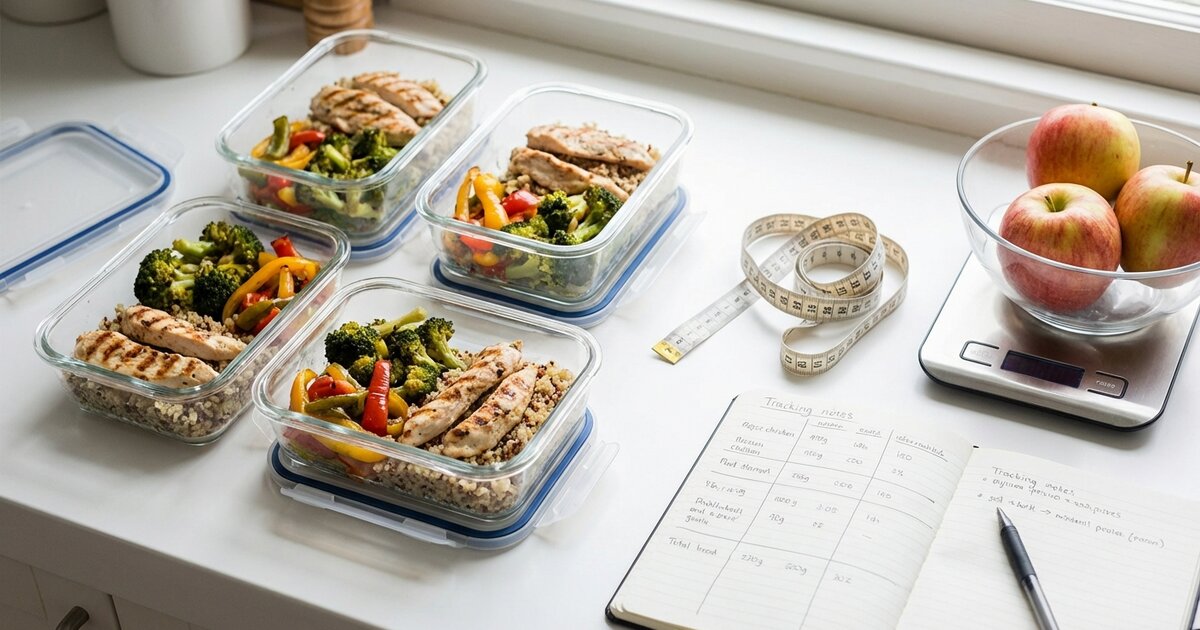
You’ve seen the numbers thrown around: 40/30/30. High protein. Low carb. Keto ratios. Everyone seems to have a different “best” macro split for fat loss—and they all claim theirs is the answer.
So what’s the truth?
Here it is: there’s no single best macro ratio. But there ARE proven principles and ranges that consistently work for fat loss. The “best” ratio for you depends on your activity level, body composition, food preferences, and how you respond to different macro balances.
This guide cuts through the confusion. You’ll get specific, actionable recommendations based on your situation—not vague advice, but actual numbers you can use. By the end, you’ll know exactly how to set up your macros for effective, sustainable fat loss.
Ready to skip ahead? Our Macro Calculator gives you personalized ratios based on your stats and goals.
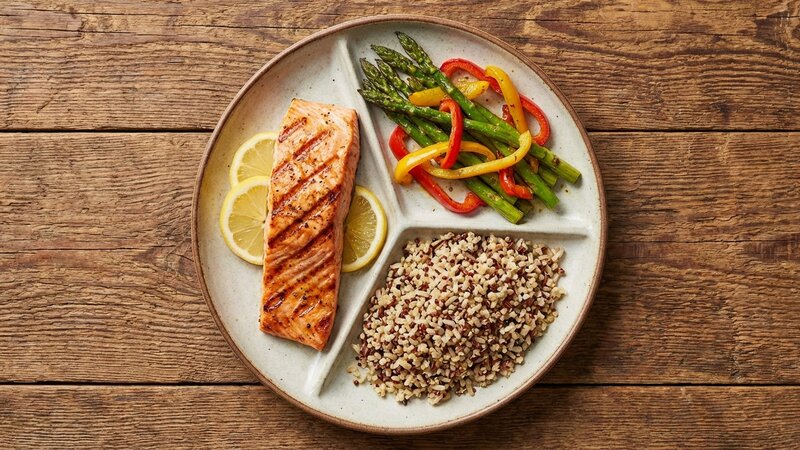
The Truth About Macro Ratios (Before We Get Specific)
Before diving into specific ratios, let’s establish the principles that actually matter. These trump any specific percentage split.
Calories Still Come First
You can have the “perfect” macro ratio and still gain weight if you’re eating too many calories. Macro ratios don’t override thermodynamics.
What macros determine:
- WHAT you lose (fat vs. muscle)
- HOW you feel (energy, hunger, mood)
- How SUSTAINABLE your diet is
What calories determine:
- WHETHER you lose weight at all
Set your calorie deficit first. Then optimize your macros within that calorie target.
Protein is Non-Negotiable
If there’s one macro rule for fat loss, it’s this: prioritize protein.
Protein:
- Preserves muscle mass during a deficit (you want to lose fat, not muscle)
- Keeps you fuller longer than carbs or fat
- Has the highest thermic effect (burns more calories during digestion)
The carbs vs. fats debate is secondary. Whether you go low-carb or low-fat, your protein stays high regardless.
Carbs vs Fats: Mostly Personal Preference
Here’s what research consistently shows: when protein and total calories are matched, the ratio of carbs to fats barely matters for weight loss outcomes.
In study after study, people lose similar amounts of weight on high-carb vs. low-carb diets—as long as protein and calories are equal.
What DOES matter:
- Adherence. The diet you can stick to beats the “perfect” diet you quit after two weeks.
- Activity level. Higher activity needs more carbs for fuel.
- How you feel. Some people thrive on higher carbs; others feel better with more fat.
Your carb/fat ratio should be based on what works for YOUR life, not arbitrary percentages.

The Proven Fat Loss Macro Framework
Instead of giving you one rigid ratio, here’s a framework for building YOUR optimal split.
Step 1: Set Protein First (Most Important)
The Rule: 0.8–1.2g of protein per pound of bodyweight
| Your Situation | Protein Target |
|---|---|
| Standard fat loss | 0.8–1.0g per lb |
| Aggressive deficit (>500 cal) | 1.0–1.2g per lb |
| Very overweight (BMI 30+) | 0.8g per lb of GOAL weight |
| Already lean (getting leaner) | 1.0–1.2g per lb |
| New to lifting | 0.8–1.0g per lb |
| Experienced lifter | 1.0–1.2g per lb |
Why this range:
- Below 0.7g/lb during a deficit = significant muscle loss risk
- Above 1.2g/lb = diminishing returns; the extra protein doesn’t provide additional muscle protection
Example: 160lb person in standard fat loss → Protein target: 128–160g per day
For women-specific considerations on these targets, see our macros for women guide, which covers hormonal adjustments and cycle-based changes.
Step 2: Set Fat Minimum (Hormone Health)
The Rule: At least 0.3g of fat per pound of bodyweight
| Your Situation | Fat Target |
|---|---|
| Minimum (floor for health) | 0.3g per lb |
| Moderate (most people) | 0.35–0.45g per lb |
| Higher fat preference | 0.5g+ per lb |
Why this matters: Fat supports hormone production—testosterone, estrogen, cortisol. Go chronically too low and you risk hormonal disruption, especially in women. The 0.3g floor isn’t arbitrary; it’s a health minimum.
Example: 160lb person → Fat minimum: 48g (0.3g × 160) → Moderate target: 56–72g (0.35–0.45g × 160)
Step 3: Fill Remaining Calories with Carbs
The Math:
- Calculate protein calories (protein grams × 4)
- Calculate fat calories (fat grams × 9)
- Remaining calories = Total target – protein calories – fat calories
- Carb grams = Remaining calories ÷ 4
This approach means: Carbs are the flexible variable. They expand or contract based on your calorie target and activity needs.
Example: 160lb person, 1,800 calorie target
- Protein: 145g × 4 = 580 calories
- Fat: 60g × 9 = 540 calories
- Remaining: 1,800 – 580 – 540 = 680 calories
- Carbs: 680 ÷ 4 = 170g carbs
Final macros: 145g protein / 170g carbs / 60g fat Percentage split: 32% protein / 38% carbs / 30% fat
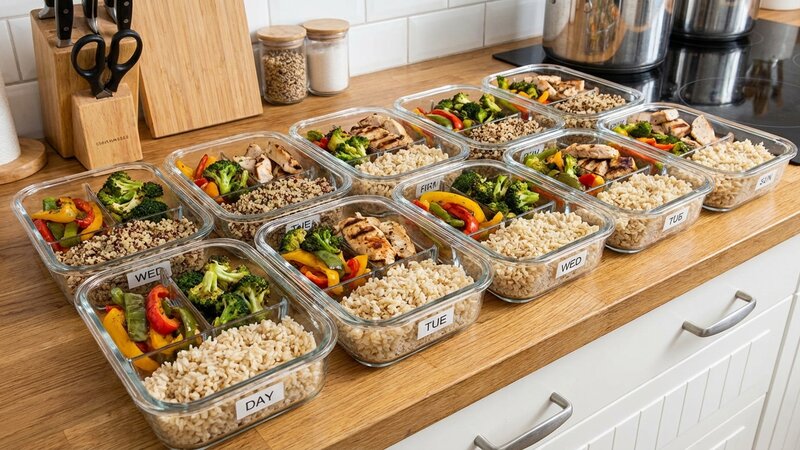
Specific Macro Ratios by Situation
Now let’s get specific. Here are proven ratios for different situations, with concrete numbers you can use.
The “Standard” Fat Loss Ratio
Who it’s for: Most people—moderate activity, general fat loss goal, want balance and flexibility.
The Split:
- Protein: 30–35% of calories
- Carbs: 35–40% of calories
- Fat: 25–30% of calories
In grams (1,600 calorie example):
- Protein: 140g (35%)
- Carbs: 150g (37.5%)
- Fat: 49g (27.5%)
Why it works: This is the sweet spot for most people. Protein is high enough for muscle protection, carbs are sufficient for energy and training, fat is adequate for hormones and satisfaction. It’s sustainable, flexible, and effective.
The “High Protein” Fat Loss Ratio
Who it’s for: Strength trainers, people on aggressive deficits, those prioritizing maximum muscle retention.
The Split:
- Protein: 40% of calories
- Carbs: 30–35% of calories
- Fat: 25–30% of calories
In grams (1,600 calorie example):
- Protein: 160g (40%)
- Carbs: 130g (32.5%)
- Fat: 49g (27.5%)
Why it works: Extra protein provides maximum muscle protection during a deficit. Still enough carbs to fuel resistance training. Best for those who lift regularly and want to preserve every pound of muscle.
The “Low Carb” Fat Loss Ratio
Who it’s for: Sedentary individuals, those who prefer higher-fat foods, people who feel better on fewer carbs.
The Split:
- Protein: 35–40% of calories
- Carbs: 15–25% of calories
- Fat: 40–45% of calories
In grams (1,600 calorie example):
- Protein: 150g (37.5%)
- Carbs: 80g (20%)
- Fat: 76g (42.5%)
Why it works: Lower carbs can reduce appetite for some people (carbs drive hunger in certain individuals). Higher fat increases satiety. Works well for sedentary people who don’t need carb fuel for activity.
Caveat: If you exercise intensely, low carb may hurt performance. Monitor your energy and training quality.
The “Athletic/High Activity” Ratio
Who it’s for: Intense training 5+ days per week, endurance athletes, very high NEAT.
The Split:
- Protein: 25–30% of calories
- Carbs: 45–50% of calories
- Fat: 20–25% of calories
In grams (2,200 calorie example):
- Protein: 165g (30%)
- Carbs: 248g (45%)
- Fat: 61g (25%)
Why it works: More carbs fuel performance and recovery. Higher activity levels justify (and require) more carb intake. Fat can be lower because calorie budget is larger overall.
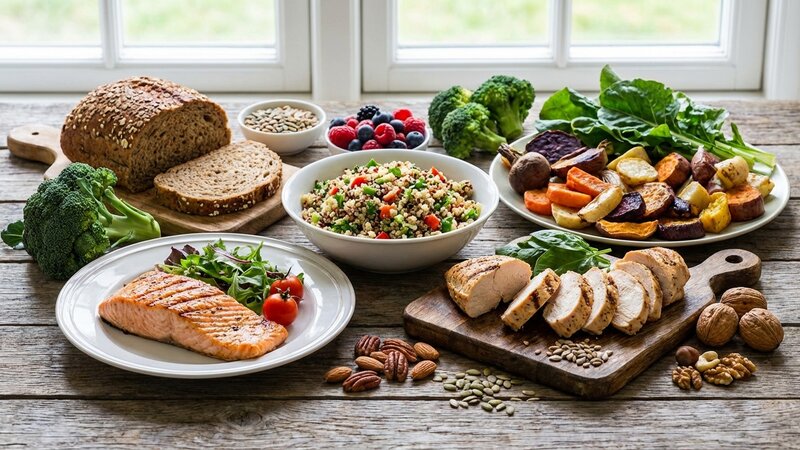
How to Find YOUR Best Ratio
Not sure which approach fits you? Use this framework.
The 3-Question Method
Question 1: How active are you?
| Activity Level | Lean Toward |
|---|---|
| Sedentary (desk job, < 5,000 steps) | Lower carb |
| Moderately active (3-4 workouts/week) | Balanced |
| Very active (5+ intense workouts/week) | Higher carb |
Question 2: What foods do you prefer?
| Food Preferences | Lean Toward |
|---|---|
| Love bread, rice, pasta, fruit | Higher carb (you’ll actually stick to it) |
| Love nuts, cheese, avocado, fatty meats | Higher fat |
| No strong preference | Balanced |
Question 3: How do you feel on different ratios?
| How You Feel | Consider |
|---|---|
| Sluggish on low carb | Higher carb ratio |
| Foggy on high carb | Lower carb ratio |
| Good on either | Personal preference |
The Iteration Process
- Start with the “standard” ratio (or whichever fits your profile)
- Track for 2 weeks—log food, monitor energy, note hunger levels
- Assess:
- Energy good? Keep current ratio
- Constantly tired? Try more carbs
- Always hungry? Try more protein or fat
- Training suffering? Try more carbs
- Adjust carbs/fats while keeping protein stable
- Repeat until you find your sweet spot
Your optimal ratio might take 4-6 weeks of experimentation to dial in. That’s normal.

Common Macro Ratio Mistakes
Mistake #1: Copying Someone Else’s Ratios
What works for a fitness influencer, your gym buddy, or that transformation on Instagram might not work for you. Different bodies, activity levels, metabolic histories, and food preferences require different approaches.
Use ratios as starting frameworks, not rigid prescriptions. Adjust based on YOUR response.
Mistake #2: Cutting Carbs AND Fat Too Low
If protein is 40% and you’re in a calorie deficit, there aren’t many calories left. Cutting both carbs AND fat too low leaves you with a miserable, restrictive diet that’s impossible to sustain.
The rule: One of carbs or fat can be on the lower end. Both cannot.
Mistake #3: Not Adjusting as You Lose Weight
As you get lighter, your calorie needs decrease. If you’re eating the same macros at 150 lbs that you were at 180 lbs, you’ll stall.
Recalculate every 10-15 lbs. Your total calories drop, and your macros adjust proportionally.
Mistake #4: Obsessing Over Exact Percentages
If your target is 35% protein and you hit 33%, you’re fine. The difference is negligible.
What matters:
- Hit protein within 10-20g of target
- Stay within your calorie range
- Be consistent over weeks, not perfect every day
±5% variance in your ratio doesn’t matter. Consistency beats precision.
Mistake #5: Ignoring How You Feel
If you’re exhausted, moody, sleeping poorly, and dreading every meal—something is wrong, regardless of what the numbers say.
Macros should support your life, not make it miserable. Sustainable beats “optimal on paper” every time.
Special Considerations
Macro Ratios for Women
The same principles apply, but with some nuances:
Don’t go too low on fat. Women are more sensitive to hormonal disruption from low fat intake. The 0.3g/lb minimum is even more important—consider 0.35g/lb as your floor.
Carb needs may fluctuate. Energy and hunger can shift with the menstrual cycle. Some women feel better increasing carbs slightly during the luteal phase (week before period).
Slightly lower protein can be sufficient. While 0.8-1.0g/lb is great, many women do fine with 0.7-0.9g/lb if that makes their diet more sustainable.
Macro Ratios If Very Overweight (BMI 30+)
Calculate protein based on GOAL weight, not current weight. A 280lb person aiming for 180lbs doesn’t need 280g of protein—that’s unrealistic and unnecessary.
Example: 280lbs, goal weight 180lbs → Protein target: 144–180g (based on 180lb goal weight)
This makes targets achievable while still providing adequate protein for muscle protection.
Macro Ratios If Already Lean (Getting Leaner)
When you’re already at a healthy body fat and want to get leaner (revealing abs, competition prep, photoshoot), the game changes:
Higher protein becomes critical. Risk of muscle loss increases as you get leaner. Target 1.0-1.2g/lb minimum.
Smaller deficits work better. Aggressive cuts cause more muscle loss when you’re already lean. Stick to 250-350 calorie deficit.
Patience is essential. The last 5-10 lbs are the slowest. This is normal—your body fights harder to hold onto fat as it becomes scarce.
Macro Ratios and Keto
Keto is a specific approach with very different ratios:
- Carbs: Under 50g (often under 20g)
- Protein: Moderate (too high can kick you out of ketosis)
- Fat: Very high (70-80% of calories)
Is keto necessary for fat loss? No. Keto works because it creates a calorie deficit—not because carbs are inherently fattening.
When keto makes sense:
- You’ve tried it and feel great on it
- You prefer high-fat foods
- You’re prepared for the adaptation period
- You don’t mind the dietary restrictions
When keto doesn’t make sense:
- You exercise intensely and need carbs for performance
- You can’t imagine giving up certain foods long-term
- You’ve never succeeded with very restrictive diets
Keto is one tool. It works for some people. But moderate carb approaches work just as well for fat loss if protein and calories are equated.
Sample Macro Setups (Real Examples)
Let’s see the framework in action with three different people.
Example 1: Sarah, 35, Sedentary Office Worker
Stats: 5’4”, 165 lbs, goal: lose 30 lbs Activity: Desk job, walks occasionally, no structured exercise TDEE: ~1,800 calories
Calorie target: 1,400 (400 deficit) Recommended approach: Lower carb (sedentary lifestyle)
Macros:
- Protein: 130g (0.8g/lb × 165) = 520 calories
- Fat: 58g (0.35g/lb × 165) = 522 calories
- Carbs: (1,400 – 520 – 522) ÷ 4 = 89g
Final split: 130g P / 89g C / 58g F Percentage: 37% / 25% / 38%
Why it works: Lower carbs match her low activity. Higher fat keeps her satisfied. Protein protects muscle.
Example 2: Mike, 28, Lifts 4x Per Week
Stats: 5’10”, 195 lbs, goal: lose 20 lbs while keeping muscle Activity: Office job, lifts 4 days/week, 7,000 steps average TDEE: ~2,600 calories
Calorie target: 2,100 (500 deficit) Recommended approach: High protein, balanced carbs (trains regularly)
Macros:
- Protein: 185g (~0.95g/lb × 195) = 740 calories
- Fat: 68g (0.35g/lb × 195) = 612 calories
- Carbs: (2,100 – 740 – 612) ÷ 4 = 187g
Final split: 185g P / 187g C / 68g F Percentage: 35% / 36% / 29%
Why it works: High protein for muscle protection during deficit. Enough carbs to fuel his lifting sessions. Balanced and sustainable.
Example 3: Lisa, 42, Walks Daily + Light Weights
Stats: 5’6”, 155 lbs, goal: lose 15 lbs Activity: Active job (retail), walks 10,000+ steps, light resistance training 3x/week TDEE: ~2,100 calories
Calorie target: 1,700 (400 deficit) Recommended approach: Standard balanced (moderate activity)
Macros:
- Protein: 125g (~0.8g/lb × 155) = 500 calories
- Fat: 57g (0.37g/lb × 155) = 513 calories
- Carbs: (1,700 – 500 – 513) ÷ 4 = 172g
Final split: 125g P / 172g C / 57g F Percentage: 29% / 40% / 31%
Why it works: Balanced approach matches her moderate, consistent activity. Enough carbs for energy through her active days. Sustainable long-term.

Frequently Asked Questions
What is the best macro ratio for fat loss?
The best macro ratio for most people is 30-35% protein, 35-40% carbs, and 25-30% fat. This balanced approach provides high protein for muscle preservation (0.8-1.0g per pound bodyweight), adequate carbs for energy and training fuel, and sufficient fat for hormone production and satiety. However, the “best” ratio depends on your activity level, food preferences, and how your body responds to different macro splits.
Sedentary individuals may do better with lower carbs (15-25%) and higher fat (40-45%), while very active people training intensely often thrive on 45-50% carbs with moderate fat. The key is hitting adequate protein first, meeting minimum fat needs (0.3g per pound minimum), then adjusting carbs based on activity and preference within your calorie deficit.
How much protein should I eat for fat loss?
For effective fat loss, aim for 0.8-1.2g of protein per pound of body weight. A 150-pound person should target 120-180g protein daily. Higher protein intake (toward 1.0-1.2g/lb) is especially important if you’re in an aggressive calorie deficit, training with weights regularly, or already lean and trying to get leaner. Protein is the most important macro during fat loss because it preserves muscle mass, increases satiety, and has the highest thermic effect of all macronutrients.
If you’re significantly overweight (BMI 30+), calculate protein based on your goal weight rather than current weight—a 250lb person targeting 180lbs needs 144-216g protein, not 200-300g. Going below 0.7g per pound during a deficit significantly increases risk of muscle loss. Learn more in our Protein Macronutrient guide.
Should I do low-carb or low-fat for fat loss?
Either approach can work equally well for fat loss when protein and total calories are matched. Research consistently shows similar weight loss outcomes on low-carb versus low-fat diets when these variables are controlled. The choice should be based on your activity level, food preferences, and how you feel. Low-carb (15-25% of calories) works well for sedentary individuals and those who prefer high-fat foods like nuts, cheese, and avocado.
Higher-carb approaches (40-50% of calories) are better for people training intensely 4+ times weekly, those who prefer bread, pasta, rice, and fruit, and athletes who need carbs for performance. Many people do best with a balanced approach (35-40% carbs). The key is adherence—the diet you can stick to consistently beats the “perfect” ratio you abandon after two weeks.
What macro ratio is best for weight lifting and fat loss?
For weight lifters trying to lose fat, aim for 35-40% protein, 30-35% carbs, and 25-30% fat. This high-protein approach (1.0-1.2g per pound bodyweight) maximizes muscle preservation during your calorie deficit, while moderate carbs (120-180g for most people) provide fuel for intense training sessions. This ratio typically translates to protein at 40%, carbs at 32%, and fat at 28% of total calories.
Adequate carbohydrate intake is especially important for strength and muscle retention—going too low-carb while lifting heavy can impair performance, recovery, and muscle protein synthesis. If you notice strength dropping significantly or workouts feeling exhausting, increase carbs by 25-50g and reduce fat proportionally while keeping protein constant. Read our Best Macro Ratio for Fat Loss guide for more detail.
How do I calculate my macro ratio for fat loss?
Calculate your macros using this three-step framework: First, set protein at 0.8-1.0g per pound bodyweight (multiply weight by 0.8-1.0, then by 4 for calories). Second, set fat minimum at 0.3-0.4g per pound (multiply by 9 for calories). Third, subtract protein and fat calories from your total calorie target, then divide remaining calories by 4 to get carb grams.
Example for 160lb person eating 1,800 calories: 140g protein × 4 = 560 calories; 60g fat × 9 = 540 calories; remaining 700 calories ÷ 4 = 175g carbs. Final macros: 140P/175C/60F (31%/39%/30%). Use our Macro Calculator to get personalized calculations based on your stats, activity level, and goals in under 60 seconds.
Does the 40/30/30 macro ratio work for fat loss?
The 40/30/30 ratio (40% carbs, 30% protein, 30% fat) is a reasonable starting point and works well for many people doing moderate activity. For a 1,800-calorie diet, this equals 180g carbs, 135g protein, and 60g fat. This balanced approach provides adequate protein for muscle preservation, moderate carbs for energy, and sufficient fat for hormones. It’s essentially the “Zone Diet” popularized in the 1990s.
However, this ratio isn’t magic—it’s simply one framework that happens to hit reasonable protein and fat minimums while providing moderate carbs. Very active people often do better with 45-50% carbs, while sedentary folks may prefer 30-35% carbs. The specific percentages matter less than hitting adequate protein (0.8g+ per pound), minimum fat (0.3g+ per pound), and staying in a calorie deficit.
Should I adjust my macros on rest days versus training days?
Most people don’t need to adjust macros between training and rest days—consistent daily macros work fine and are simpler to follow. However, carb cycling (higher carbs on training days, lower on rest days) can be beneficial for those training very intensely or preferring this approach. If experimenting with carb cycling, reduce carbs by 25-50g on rest days and add them back on training days, while keeping protein and fat consistent.
Example: Training days 180P/200C/60F; rest days 180P/150C/60F (making up the difference by eating less total calories on rest days). This approach may help some people feel more energized for workouts and less sluggish on rest days. However, the complexity isn’t worth it for most people—focus on consistent daily macros and hitting weekly calorie targets first.
How do I know if my macro ratio is working?
Your macro ratio is working if you’re losing 0.5-1 pound per week consistently, maintaining training performance, not excessively hungry, and feeling energized enough for daily activities. Track your weight weekly (same day, same time, after waking), and assess the 4-week trend rather than daily fluctuations. You should also monitor strength in the gym—if you’re getting significantly weaker week after week, you may need more carbs or less aggressive deficit.
If you’re not losing weight after 3-4 weeks despite consistent tracking, your calories are too high (not your macro ratio). If you’re losing faster than 1-1.5 lbs weekly for extended periods, you risk muscle loss—increase calories slightly. If you’re constantly exhausted, irritable, or struggling to complete workouts, try increasing carbs by 30-50g while reducing fat proportionally. Sustainable adherence and gradual progress beat “optimal” ratios that make you miserable.
Your Action Plan
There’s no universally “best” macro ratio—but there are proven ranges that work:
- Set protein first: 0.8-1.0g per pound bodyweight (higher end if training hard or in aggressive deficit)
- Set fat minimum: 0.3-0.4g per pound bodyweight (don’t go below 0.3g)
- Fill remaining calories with carbs: Adjust based on activity and preference
- Start with a framework, then iterate: The best ratio is the one you can sustain
The “perfect” ratio you quit after two weeks is worse than the “good enough” ratio you follow for six months.
Ready to calculate your personalized macros? Macro Calculator runs the numbers for you in seconds.
For more on putting this into practice:
- How to Track Your Macros — Learn proper tracking methods and avoid common mistakes
- Adjusting Macros at a Plateau — What to do when fat loss stalls
- How to Calculate Macros for Fat Loss — Step-by-step calculation guide
- Macros for Weight Loss — Complete fat loss guide with meal plans
- Counting Macros for Beginners — How to actually track
- TDEE Explained — Understanding your calorie baseline
- What Are Macronutrients — The foundation of it all
Related Articles
Travel Macros: How to Track Nutrition While Traveling
Complete guide to managing macros while traveling. Learn meal planning strategies,...
Read guide →
Macros for Shift Workers: Complete Guide to Nutrition on Rotating Schedules
Master macro tracking on night shifts and rotating schedules. Learn meal timing, sleep...
Read guide →
Macros During Ramadan: Complete Nutrition Guide for Fasting
Learn how to track macros during Ramadan fasting. Expert guide covering meal timing,...
Read guide →Disclaimer: This content is for informational purposes only. Consult a healthcare provider before making changes to your diet.