Best Macros for Weight Loss: Complete Evidence-Based Guide

Losing weight isn’t just about eating less—it’s about eating right. The macronutrient ratio you choose can determine whether you lose fat, preserve muscle, maintain energy, and actually stick to your diet long enough to see results.
After analyzing hundreds of weight loss studies and working with thousands of clients, the evidence is clear: there’s no single “best” macro ratio for everyone. But there are proven frameworks that consistently work for fat loss.
This guide breaks down exactly how to set your macros for weight loss, backed by peer-reviewed research and real-world results.
Understanding Macros for Weight Loss
Macronutrients—protein, carbohydrates, and fats—aren’t just calories. Each macro plays a distinct role in weight loss:
Protein preserves muscle mass during calorie restriction, increases satiety (keeping you fuller longer), and has the highest thermic effect of food (your body burns 20-30% of protein calories just digesting it).
Carbohydrates fuel high-intensity workouts, support thyroid function, and help regulate leptin (your hunger hormone). Too few carbs can tank your metabolism and training performance.
Fats regulate hormones (including testosterone and estrogen), support brain function, and aid nutrient absorption. Extremely low-fat diets can disrupt hormone production and leave you constantly hungry.
The key insight: calories create the deficit, but macros determine what you lose (fat vs. muscle) and how sustainable your diet is.
The Science-Backed Starting Point
Multiple meta-analyses spanning decades of research converge on these evidence-based ranges for weight loss:
Optimal Macro Ranges for Fat Loss
Protein: 0.8-1.2g per pound of body weight
- Higher end (1.0-1.2g/lb) for aggressive deficits or lean individuals
- Lower end (0.8-1.0g/lb) for moderate deficits or higher body fat
- Never go below 0.7g/lb during weight loss
Fat: 20-30% of total calories
- Minimum 0.3g per pound of body weight for hormone health
- Women often do better at 25-30%
- Men can go slightly lower (20-25%) without issues
Carbohydrates: Fill remaining calories
- Typically 35-50% of calories for most people
- Higher for athletes or very active individuals
- Lower for sedentary or insulin-resistant individuals
Why These Ranges Work
A 2017 study in JAMA compared low-carb vs. low-fat diets across 609 participants over 12 months. The results? Both groups lost the same amount of weight (around 13 pounds), regardless of macro ratio.
What mattered most:
- Calorie deficit (both groups reduced intake by ~500 calories)
- Adequate protein (prevented muscle loss)
- Diet adherence (people stuck to the plan they could maintain)
The International Society of Sports Nutrition Position Stand confirms: “High-protein diets (>1.0g/lb) during energy restriction help preserve lean mass and enhance fat loss.”
Sample Macro Splits for Different People
Example 1: 180lb Woman, Moderately Active
Goal: Lose 1lb per week TDEE: 2,200 calories Target: 1,700 calories (500 calorie deficit)
Macro split:
- Protein: 162g (1.0g/lb × 180 = 720 calories)
- Fat: 51g (30% of 1,700 = 510 calories ÷ 9 = 51g)
- Carbs: 118g (remaining 470 calories ÷ 4 = 118g)
Ratio: 40% protein / 30% fat / 30% carbs
This split prioritizes muscle preservation and satiety while keeping carbs high enough to support training.
Example 2: 200lb Man, Lifting 4x/Week
Goal: Lose 1.5lb per week TDEE: 2,800 calories Target: 2,050 calories (750 calorie deficit)
Macro split:
- Protein: 200g (1.0g/lb × 200 = 800 calories)
- Fat: 57g (25% of 2,050 = 513 calories ÷ 9 = 57g)
- Carbs: 209g (remaining 837 calories ÷ 4 = 209g)
Ratio: 39% protein / 25% fat / 36% carbs
Higher carbs support intensive lifting, moderate fat keeps hormones stable, high protein preserves muscle in an aggressive deficit.
Example 3: 150lb Woman, Insulin Resistant
Goal: Lose 0.75lb per week TDEE: 1,900 calories Target: 1,550 calories (350 calorie deficit)
Macro split:
- Protein: 135g (0.9g/lb × 150 = 540 calories)
- Fat: 60g (35% of 1,550 = 543 calories ÷ 9 = 60g)
- Carbs: 117g (remaining 467 calories ÷ 4 = 117g)
Ratio: 35% protein / 35% fat / 30% carbs
Higher fat and lower carbs help manage insulin sensitivity while maintaining hormone health. Protein remains high for satiety and muscle preservation.
How Protein Maximizes Fat Loss
Protein is the most important macro during weight loss. Here’s why:
1. Muscle Preservation
During a calorie deficit, your body can break down muscle tissue for energy. A 2016 study in The American Journal of Clinical Nutrition showed that participants eating 0.8g/lb of protein retained 38% more muscle than those eating 0.4g/lb during a 4-week diet.
More muscle = higher metabolic rate = easier long-term weight maintenance.
2. Higher Thermic Effect
Your body burns 20-30% of protein calories just digesting it, compared to 5-10% for carbs and 0-3% for fats. On a 2,000-calorie diet with 30% protein (600 calories), you’ll burn 120-180 extra calories daily just from the thermic effect.
That’s nearly half a pound of extra fat loss per month—for free.
3. Superior Satiety
Protein is the most satiating macronutrient. Research in Obesity Reviews found that high-protein diets reduced daily calorie intake by 400-500 calories through increased fullness—without conscious effort.
Translation: You naturally eat less because you’re actually satisfied.
4. Lean Mass Support
A 2018 meta-analysis in Advances in Nutrition examining 40 studies concluded that protein intakes of 1.0-1.6g/lb during weight loss resulted in significantly greater fat loss and muscle retention compared to lower intakes.
Bottom line: Prioritize protein first, then split remaining calories between carbs and fats based on preference and activity level.
Should You Go Low-Carb or Low-Fat?
Neither is inherently superior for fat loss—both can work if you maintain a calorie deficit and adequate protein.
Low-Carb Approaches (15-25% carbs)
Pros:
- Reduces water retention (quick initial weight loss for motivation)
- May reduce hunger in insulin-resistant individuals
- Simplifies food choices for some people
- Can lower triglycerides and improve HDL cholesterol
Cons:
- Can reduce training intensity and performance
- May negatively impact thyroid function with prolonged use
- Social eating becomes more challenging
- Some people experience energy crashes
Best for: Sedentary individuals, those with insulin resistance or PCOS, people who feel fuller on higher fat
Low-Fat Approaches (15-20% fat)
Pros:
- Higher carb intake supports intense training
- More food volume (carbs are less calorie-dense)
- Easier to eat out and socialize
- May improve insulin sensitivity in some populations
Cons:
- Can impair hormone production if fat drops too low
- Less satiating for many people
- Requires careful planning to hit essential fatty acids
Best for: Athletes, highly active individuals, people who perform better with higher carbs
Balanced Approaches (30-40% carbs, 25-30% fat)
Pros:
- Most sustainable long-term
- Supports training without hormonal disruption
- Flexible enough for social situations
- Easier to transition to maintenance
Cons:
- Requires tracking both carbs and fats
- Less dramatic initial weight loss (more realistic though)
Best for: Most people, especially beginners or those with no metabolic issues
The research verdict: A 2020 meta-analysis in BMJ analyzing 121 trials found no significant difference in long-term weight loss between low-carb and low-fat diets when protein and calories were matched.
Choose the split you can stick to. Adherence beats optimization every time.
Common Macro Mistakes That Stall Weight Loss
1. Protein Too Low
The mistake: Setting protein at 15-20% of calories (often 0.4-0.6g/lb)
Why it fails: Muscle loss slows metabolism, hunger increases, body composition worsens even if scale weight drops
The fix: Start at 0.8g/lb minimum, increase to 1.0-1.2g/lb if very active or in a large deficit
2. Fat Too Low
The mistake: Dropping fat below 15% of calories or <0.25g/lb body weight
Why it fails: Hormone disruption (especially testosterone and estrogen), constant hunger, poor nutrient absorption, mood issues
The fix: Keep fat at 20-30% of calories, never below 0.3g/lb for women or 0.25g/lb for men
3. Over-Restricting Carbs Without Reason
The mistake: Going keto or very low-carb despite being active and having no insulin issues
Why it fails: Training suffers, thyroid slows, cortisol rises, adherence tanks
The fix: Unless you have a medical reason or strong preference, keep carbs at 30-40% if active
4. Not Adjusting as You Lose Weight
The mistake: Using the same macros for months as body weight drops
Why it fails: As you get lighter, your calorie needs decrease—the deficit shrinks or disappears
The fix: Recalculate macros every 10-15 pounds lost or when weight loss stalls for 2-3 weeks
5. Perfectionism Over Consistency
The mistake: Stressing over hitting exact macro targets daily, feeling like a “failure” if off by 10g
Why it fails: Creates unsustainable pressure, leads to all-or-nothing thinking and diet abandonment
The fix: Aim for weekly averages. Being within 5-10% of targets across a week matters more than daily precision.
How to Calculate Your Weight Loss Macros (Step-by-Step)
Step 1: Calculate Your TDEE
Use our TDEE calculator or multiply your body weight by an activity multiplier:
- Sedentary (little exercise): bodyweight × 12-13
- Lightly active (1-3 days/week): bodyweight × 14-15
- Moderately active (3-5 days/week): bodyweight × 15-16
- Very active (6-7 days/week): bodyweight × 16-18
- Athlete (training 2x/day): bodyweight × 18-20
Example: 160lb woman, moderately active = 160 × 15.5 = 2,480 TDEE
Step 2: Set Your Calorie Deficit
Conservative fat loss: 10-15% deficit (0.5-0.75lb/week) Moderate fat loss: 15-25% deficit (0.75-1.5lb/week) Aggressive fat loss: 25-30% deficit (1.5-2lb/week)
Example: 2,480 × 0.20 = 496, so target = 1,984 calories (~2,000)
Important: Don’t exceed a 2lb/week loss rate unless significantly overweight. Faster = more muscle loss.
Step 3: Set Protein
Start with 1.0g per pound of body weight. Adjust to 1.2g if in a large deficit or very lean, or 0.8g if smaller deficit or higher body fat.
Example: 160lb × 1.0g = 160g protein = 640 calories
Step 4: Set Fat
Use 25-30% of total calories for most people. Calculate grams by dividing by 9.
Example: 2,000 × 0.27 = 540 calories ÷ 9 = 60g fat
Step 5: Fill Remaining Calories with Carbs
Subtract protein and fat calories from total, then divide by 4 to get carb grams.
Example: 2,000 - 640 - 540 = 820 ÷ 4 = 205g carbs
Final Macro Split
Target: 2,000 calories
- Protein: 160g (32%)
- Fat: 60g (27%)
- Carbs: 205g (41%)
Adjusting Macros as You Lose Weight
Your body adapts as you lose fat. Plan to adjust every 10-15 pounds or when progress stalls for 2-3 weeks.
What to Adjust
Protein: Keep at 1.0g/lb (or slightly increase as you get leaner to preserve muscle)
Calories: Reduce by 100-200 to maintain the deficit
Carbs vs. Fat: Preference-based. Most people reduce carbs since protein stays high and fat has a minimum threshold.
Example Progression
Month 1: 180lb, 2,000 cal (180p / 60f / 205c) Month 2: 175lb, still losing at 2,000 cal (maintain) Month 3: 170lb, stalled—drop to 1,850 cal (170p / 57f / 175c) Month 4: 165lb, still losing at 1,850 cal (maintain) Month 5: 160lb, stalled—drop to 1,700 cal (160p / 54f / 147c)
Notice protein adjusts with body weight, fat stays proportional, carbs flex to create the deficit.
Tracking and Implementation
Best Apps for Macro Tracking
- MyFitnessPal: Most food database entries
- Cronometer: Best micronutrient tracking
- MacroFactor: Auto-adjusts based on your progress
- Carbon Diet Coach: AI-powered adjustments
Tracking Tips
- Weigh food raw (4oz raw chicken ≠ 4oz cooked)
- Log before eating (prevents underestimating)
- Use the barcode scanner (faster, more accurate)
- Create frequent meals (saves time logging)
- Track weekly averages (daily perfection isn’t necessary)
Eating Out Without Tracking
Estimate with “hand portions”:
- Protein = palm size and thickness
- Carbs = cupped handful
- Fats = thumb size
- Vegetables = fist
One meal off-target won’t derail progress. Get back on track the next meal.
Sample High-Protein Meal Plan (2,000 Calories)
Breakfast (500 cal)
- 3 whole eggs + 2 egg whites (scrambled)
- 2 slices whole wheat toast
- 1/2 avocado
- Black coffee
Macros: 35p / 18f / 36c
Lunch (550 cal)
- 6oz grilled chicken breast
- 1 cup brown rice
- Steamed broccoli
- 1 tbsp olive oil (for cooking)
Macros: 52p / 16f / 48c
Snack (250 cal)
- 1 cup Greek yogurt (0% fat)
- 1/2 cup mixed berries
- 1 tbsp almond butter
Macros: 28p / 9f / 20c
Dinner (600 cal)
- 6oz salmon (baked)
- 8oz sweet potato
- Side salad with balsamic vinegar
- 150g asparagus
Macros: 46p / 17f / 52c
Evening Snack (100 cal)
- 1 scoop protein powder with water
Macros: 25p / 1f / 2c
Daily Total: 186p / 61f / 158c = 1,998 calories
When to Increase Carbs (Refeeds)
Strategic high-carb days can help during extended diets:
Benefits of Refeeds
- Replenishes glycogen (improves workout performance)
- Boosts leptin (temporarily increases metabolic rate)
- Psychological break (prevents diet burnout)
- Social flexibility (enjoy meals with family/friends)
How to Implement
Frequency: Every 7-14 days (more frequent if leaner or in larger deficit)
Structure: Increase carbs by 50-100g, reduce fat by 20-30g, keep protein the same
Timing: On hardest training day or social event
Example refeed day: 180p / 40f / 280c (vs. normal 180p / 60f / 180c)
What NOT to Do
- Don’t make it a complete “cheat day” (untracked binge)
- Don’t add refeeds if you’re not in a sustained deficit
- Don’t use them as “rewards” (creates unhealthy relationship with food)
Advanced: Carb Cycling for Fat Loss
Alternating high and low-carb days can optimize fat loss while maintaining performance.
Sample 7-Day Carb Cycle
High-carb days (3x/week): Hard training days
- 180p / 50f / 250c (2,030 cal)
Medium-carb days (2x/week): Moderate training
- 180p / 60f / 180c (1,920 cal)
Low-carb days (2x/week): Rest days
- 180p / 70f / 120c (1,870 cal)
Weekly average: ~1,945 calories/day with ~180c average
Who Benefits Most
- Athletes training 5-7 days/week
- Those who feel better with higher carbs around workouts
- People who want flexibility without daily tracking
Who Should Skip It
- Beginners (master consistent daily macros first)
- Those prone to restrictive eating patterns
- People who don’t train intensely
Macros for Specific Diets
Keto for Weight Loss
Target: <50g carbs, 70-75% fat, 20-25% protein
Pros: Dramatic water loss, appetite suppression for some Cons: Training suffers, social challenges, long-term adherence issues
Best for: Short-term fat loss, metabolic reset, or preference
Intermittent Fasting + Macros
Strategy: Same daily macros, compressed eating window (typically 16:8 or 18:6)
Pros: Simplifies meal planning, may reduce overall intake Cons: Can be hungry initially, harder to hit protein target
Tip: Save most carbs post-workout in your eating window for better performance and recovery
Vegan/Vegetarian Weight Loss Macros
Challenge: Harder to hit protein target without animal products
Solution:
- Prioritize high-protein plants: tofu, tempeh, seitan, lentils, beans
- Use protein powder (1-2 scoops daily)
- Track lysine specifically (often limiting amino acid)
Sample day: Tofu scramble, lentil curry, protein smoothie, chickpea pasta = 140-160g protein
Check out our guide on complete plant-based protein sources for more details.
FAQ
How do I know if my macro split is working?
Track three key indicators over 2-4 weeks: (1) Scale weight trending down 0.5-2lb per week, (2) waist circumference decreasing, and (3) gym performance maintained or improving. If all three are positive, your macros are dialed in. If scale drops but you’re getting weaker or losing muscle definition, increase protein. If nothing’s moving after 3 weeks at consistent macros, reduce total calories by 100-200.
Should I eat the same macros on rest days?
Most people should keep macros consistent daily for simplicity and adherence. However, slightly reducing carbs on rest days (by 20-50g) and increasing on training days can optimize performance and recovery without affecting total weekly deficit. This matters most for athletes or those training 5+ days per week. Beginners should keep it simple: same macros every day.
Can I lose weight faster with lower carbs or lower fat?
No. Total calorie deficit determines fat loss rate—not whether those calories come from carbs or fat. A 2020 meta-analysis of 32 studies found no difference in fat loss between low-carb and low-fat diets when calories and protein were equal. Choose the macro split you can stick to long-term. Adherence beats optimization. Some people feel fuller on higher carbs, others on higher fat. Experiment to find your preference.
What happens if I go over my carb or fat target?
One day over macros has minimal impact. Your body operates on weekly averages, not daily perfection. If you overshoot carbs by 50g, you’ve consumed an extra 200 calories—equivalent to 0.06 pounds of fat. Psychologically, the worst thing you can do is spiral into “I already messed up today” thinking and abandon tracking. Log the overage, move on to the next meal, aim for your weekly average.
Do I need to hit my macros exactly every day?
No—aim for weekly averages within 5-10% of targets. If your protein target is 150g, consistently hitting 140-160g is perfectly fine. The human body isn’t a calculator requiring exact inputs daily. What matters: staying in a calorie deficit, keeping protein adequately high, and maintaining consistency over weeks and months. Daily perfection often leads to diet burnout and abandonment.
Should I count vegetables in my carb macros?
Yes, technically all carbs count. However, low-calorie vegetables like leafy greens, broccoli, cauliflower, peppers, and zucchini are so low in carbs (2-5g per cup) that many people don’t track them strictly. If you’re eating 3-4 cups of non-starchy vegetables daily, that’s 10-20g of carbs—worth knowing but not worth stressing over. For weight loss, tracking your starchy carbs (rice, potatoes, bread, oats) matters most.
How long should I stay in a calorie deficit?
Plan 8-16 weeks per diet phase, depending on how much fat you need to lose. After 12-16 weeks in a deficit, take a 1-2 week diet break at maintenance calories (keep protein high, increase carbs and fats proportionally) to reset metabolic hormones, restore gym performance, and prevent burnout. For large amounts of fat loss (30+ pounds), plan multiple 12-week deficit phases separated by 2-4 week maintenance breaks.
Can I build muscle while losing fat with the right macros?
Yes, but only in specific circumstances: (1) beginners with no training history, (2) detrained individuals returning after a layoff, or (3) significantly overweight individuals. For these groups, maintaining high protein (1.0-1.2g/lb) and progressive resistance training allows simultaneous muscle gain and fat loss (“body recomposition”). However, experienced lifters at normal body fat should accept that building muscle requires a calorie surplus—focus on preserving muscle during weight loss, then switch to a bulking phase for muscle gain.
Summary: Your Weight Loss Macro Game Plan
Step 1: Calculate your TDEE using our macro calculator
Step 2: Set a 15-25% calorie deficit (0.75-1.5lb loss per week)
Step 3: Set protein at 1.0g per pound of body weight
Step 4: Set fat at 25-30% of total calories
Step 5: Fill remaining calories with carbs
Step 6: Track consistently for 2-3 weeks before adjusting
Step 7: Adjust every 10-15 pounds lost or when progress stalls
Step 8: Include strategic refeeds every 7-14 days
Step 9: Take diet breaks after 12-16 weeks
The best macro split for weight loss is the one you can stick to while losing fat, preserving muscle, maintaining energy, and enjoying life. Start with the evidence-based ranges above, adjust based on your response and preferences, and prioritize consistency over perfection.
Ready to calculate your personalized macros? Use our free macro calculator to get your custom targets in 60 seconds.
Related Guide: For the complete fat loss macro framework Macros for Weight Loss guide.
Related Guides
📖 Complete guide: Macros for Weight Loss: Best Macro Ratio for Fat Loss — Our comprehensive pillar guide with everything you need to know about fat loss macros
More weight loss resources:
- Best Macro Split for Weight Loss — Detailed ratio breakdowns with meal examples
- How to Count Macros — Step-by-step tracking guide for beginners
- Macros for Women — Female-specific macro recommendations
Medical Disclaimer: This content is for informational purposes only and does not constitute medical advice. Consult a healthcare provider before beginning any diet or exercise program, especially if you have pre-existing health conditions.
References:
- Gardner CD, et al. Effect of Low-Fat vs Low-Carbohydrate Diet on 12-Month Weight Loss. JAMA. 2018;319(7):667-679.
- Helms ER, et al. Evidence-based recommendations for natural bodybuilding contest preparation. J Int Soc Sports Nutr. 2014;11:20.
- Longland TM, et al. Higher protein during an energy restriction combined with resistance training promotes greater lean mass gain and fat mass loss. Am J Clin Nutr. 2016;103(3):738-746.
- Hall KD, Guo J. Obesity Energetics: Body Weight Regulation and the Effects of Diet Composition. Gastroenterology. 2017;152(7):1718-1727.
Related Articles
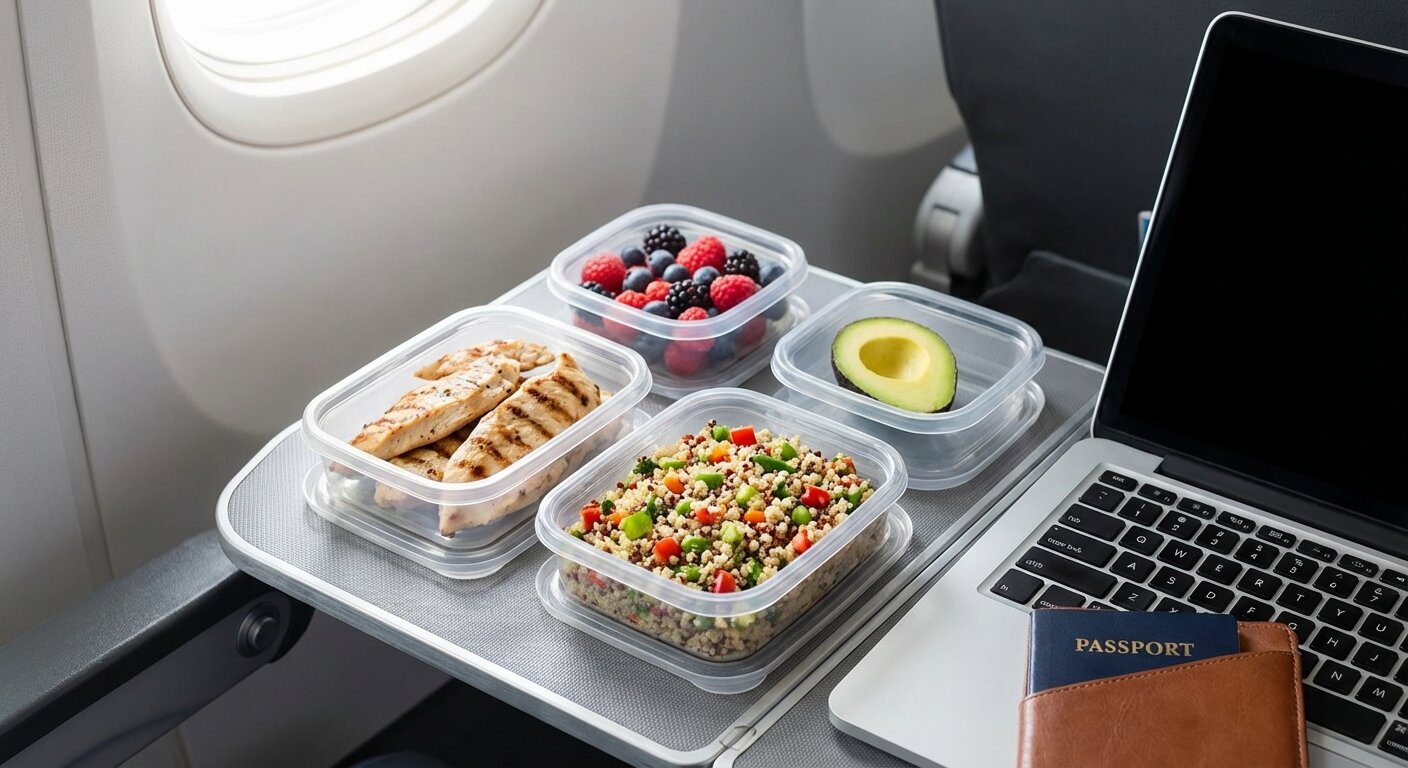
Travel Macros: How to Track Nutrition While Traveling
Complete guide to managing macros while traveling. Learn meal planning strategies,...
Read guide →
Macros for Shift Workers: Complete Guide to Nutrition on Rotating Schedules
Master macro tracking on night shifts and rotating schedules. Learn meal timing, sleep...
Read guide →
Macros During Ramadan: Complete Nutrition Guide for Fasting
Learn how to track macros during Ramadan fasting. Expert guide covering meal timing,...
Read guide →Disclaimer: This content is for informational purposes only. Consult a healthcare provider before making changes to your diet.