Bulking Macros Guide: How to Build Muscle Without Getting Fat
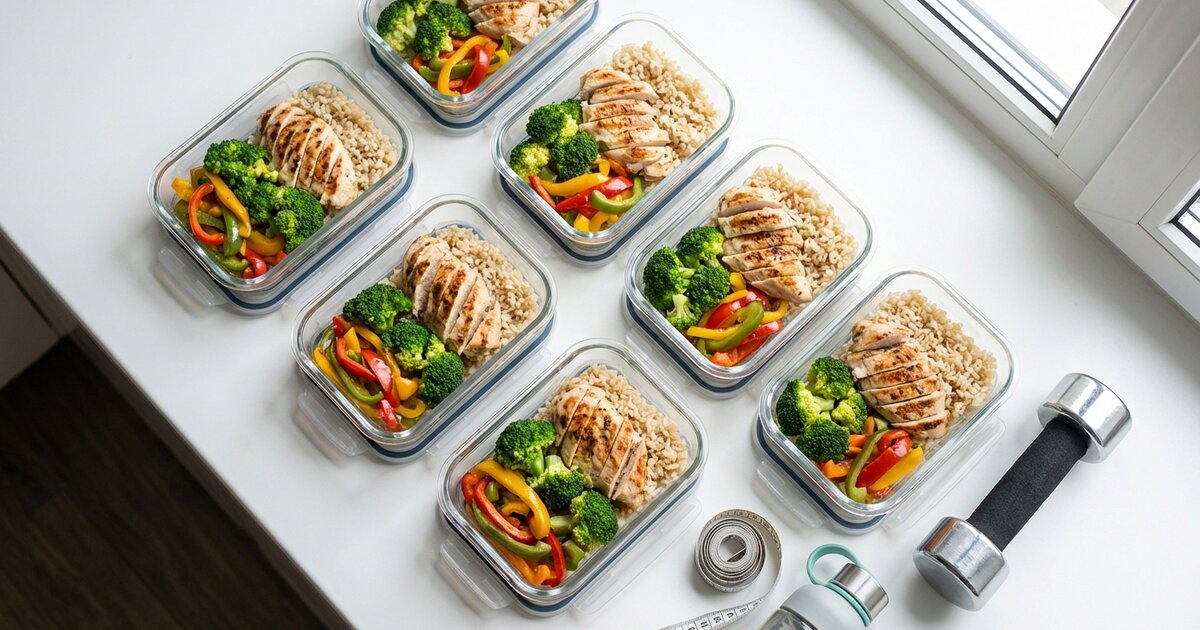
Building muscle requires more than just lifting heavy—you need to eat in a strategic calorie surplus with the right macronutrient split. This guide breaks down exactly how to set your bulking macros to maximize muscle gain while minimizing fat gain.
What Is Bulking?
Bulking is a phase where you intentionally eat in a calorie surplus (above maintenance) to support muscle growth. The goal is to provide your body with enough energy and protein to recover from training and build new muscle tissue.
There are two main approaches:
- Lean bulk (clean bulk): Small surplus (10-20% above maintenance), slower muscle gain, minimal fat gain
- Aggressive bulk (dirty bulk): Large surplus (30-50% above maintenance), faster muscle gain, more fat gain
For most people, a lean bulk is optimal—you’ll gain muscle almost as fast as an aggressive bulk, but you’ll stay leaner and won’t need as long of a cut afterward.
How Many Calories Do You Need to Bulk?
Your calorie target depends on your maintenance calories (TDEE—Total Daily Energy Expenditure).
Step 1: Find Your Maintenance Calories
Use this quick formula:
- Sedentary: Bodyweight (lbs) × 14
- Lightly active (1-3 days/week training): Bodyweight × 15
- Moderately active (4-5 days/week): Bodyweight × 16
- Very active (6-7 days/week + physical job): Bodyweight × 17
Example: 180 lb person training 4 days/week = 180 × 16 = 2,880 calories/day maintenance
For more accuracy, track your current intake and weight for 7-14 days. If your weight stays stable, that’s your maintenance.
Step 2: Add a Calorie Surplus
For a lean bulk, add:
- Beginners (less than 1 year training): +300-400 calories/day
- Intermediate (1-3 years): +250-350 calories/day
- Advanced (3+ years): +200-300 calories/day
Beginners can gain muscle faster, so they can support a slightly larger surplus. Advanced lifters should keep the surplus smaller since muscle gain slows down.
Example: 180 lb intermediate lifter = 2,880 + 300 = 3,180 calories/day
Bulking Macros Breakdown
Once you have your calorie target, split it into protein, carbs, and fat.
Protein: 0.8-1.0g per lb of Bodyweight
Protein is non-negotiable for muscle growth. Research shows 0.7-1.0g per lb is optimal for building muscle (Schoenfeld et al., 2018).
- Lower end (0.8g): If you’re eating in a surplus and getting plenty of total calories
- Higher end (1.0g): If you want extra insurance or are a hard gainer
Example: 180 lb person = 180 × 0.8-1.0 = 144-180g protein/day
Best protein sources:
- Chicken breast: 31g per 4 oz
- Greek yogurt: 17g per 6 oz
- Lean beef: 25g per 4 oz
- Eggs: 6g per egg
- Whey protein: 25g per scoop
- Salmon: 25g per 4 oz
Fat: 0.3-0.5g per lb of Bodyweight
Fat is critical for hormone production (including testosterone) and nutrient absorption. Going too low on fat during a bulk can hurt performance and recovery.
Target: 0.3-0.5g per lb
Example: 180 lb person = 180 × 0.35 = 63g fat/day
Best fat sources:
- Avocado: 15g per half
- Almonds: 14g per oz
- Olive oil: 14g per tbsp
- Salmon: 12g per 4 oz
- Whole eggs: 5g per egg
- Nut butter: 16g per 2 tbsp
Carbs: Fill the Remaining Calories
Carbs are your performance fuel. They replenish glycogen (stored energy in muscles), support hard training, and spare protein from being burned for energy.
Formula:
- Calculate protein calories: protein (g) × 4
- Calculate fat calories: fat (g) × 9
- Subtract from total calories
- Divide by 4 to get carb grams
Example (180 lb, 3,180 calories):
- Protein: 160g × 4 = 640 calories
- Fat: 63g × 9 = 567 calories
- Remaining: 3,180 - 640 - 567 = 1,973 calories
- Carbs: 1,973 ÷ 4 = 493g carbs/day
Best carb sources:
- White rice: 45g per cup
- Oatmeal: 27g per cup
- Sweet potato: 27g per medium
- Pasta: 43g per cup cooked
- Bread: 15g per slice
- Fruit (banana): 27g per medium
Sample Bulking Macro Splits
| Bodyweight | Calories | Protein | Fat | Carbs |
|---|---|---|---|---|
| 150 lbs | 2,550 | 135g | 53g | 393g |
| 170 lbs | 2,890 | 153g | 60g | 445g |
| 190 lbs | 3,230 | 171g | 66g | 498g |
| 210 lbs | 3,570 | 189g | 73g | 550g |
Assumes intermediate lifter, lean bulk (+300 cal), 0.9g protein/lb, 0.35g fat/lb
How Fast Should You Gain Weight?
Your rate of weight gain is the best indicator you’re in the right surplus.
Target weight gain per week:
- Beginners: 0.5-1.0 lb/week
- Intermediate: 0.25-0.5 lb/week
- Advanced: 0.25 lb/week
If you’re gaining faster, you’re likely adding more fat than necessary. If you’re not gaining at all after 2 weeks, add 100-200 calories.
Track weekly averages—daily weight fluctuates due to water, food volume, and stress. Weigh yourself daily at the same time (morning, after bathroom, before eating) and average the week.
Should You Adjust Macros on Rest Days?
No. Your body is still recovering and building muscle on rest days. Muscle protein synthesis stays elevated for 24-48 hours after training (Damas et al., 2016).
Keep your macros consistent every day. This also makes tracking simpler and keeps you in a steady surplus.
If you want to periodize, consider:
- Higher carbs on training days (better performance)
- Slightly lower carbs on rest days (same protein/fat, reduce carbs by 50-100g)
This is optional and mostly comes down to preference.
Clean Bulk vs Dirty Bulk: Which Is Better?
| Clean Bulk | Dirty Bulk | |
|---|---|---|
| Surplus | +200-400 cal | +500-1,000 cal |
| Weight gain/week | 0.25-0.5 lb | 1-2 lb |
| Muscle gain rate | Near maximal | Slightly faster (marginal) |
| Fat gain | Minimal | Significant |
| Cut duration needed | 6-8 weeks | 12-20 weeks |
| Food quality | High | Mixed |
Clean bulk wins for most people. You’ll gain almost as much muscle, stay leaner, and won’t need to spend months cutting afterward.
Dirty bulking made sense in the 1970s when bodybuilders had limited nutrition knowledge. Now we know you can’t force muscle growth beyond your genetic ceiling by eating more—you’ll just get fat.
Common Bulking Mistakes
1. Eating Too Much Too Fast
Problem: Gaining 2-3 lbs/week means you’re adding mostly fat, not muscle.
Fix: Stick to 0.25-0.5 lb/week for intermediates, 0.5-1.0 lb/week for beginners.
2. Not Tracking Macros
Problem: “Eating big” without tracking usually means random surpluses—some days 500 over, some days at maintenance.
Fix: Track everything for at least the first 2-4 weeks until you learn portion sizes.
3. Skipping Protein
Problem: Eating 3,500 calories of bagels and rice won’t build muscle without adequate protein.
Fix: Hit your protein target first, every day, non-negotiable.
4. Bulking Too Long
Problem: Staying in a surplus for 9-12 months leads to excessive fat gain and insulin resistance.
Fix: Bulk for 8-16 weeks (beginners can go longer), then maintain or cut. Most people should stay within 12-15% body fat for men, 20-25% for women.
5. Ignoring Strength Progression
Problem: Eating more without getting stronger means the surplus is going to fat, not muscle.
Fix: Track your lifts. If your squat, bench, and deadlift aren’t increasing over a 4-6 week block, reassess your training program.
Best Foods for Bulking
High-Calorie, Nutrient-Dense Foods
| Food | Calories | Protein | Carbs | Fat |
|---|---|---|---|---|
| Peanut butter (2 tbsp) | 190 | 8g | 7g | 16g |
| Almonds (1 oz) | 160 | 6g | 6g | 14g |
| Salmon (4 oz) | 210 | 25g | 0g | 12g |
| Whole eggs (2 large) | 140 | 12g | 1g | 10g |
| Avocado (half) | 120 | 1g | 6g | 11g |
| Olive oil (1 tbsp) | 120 | 0g | 0g | 14g |
| White rice (1 cup) | 200 | 4g | 45g | 0g |
| Pasta (1 cup cooked) | 220 | 8g | 43g | 1g |
| Oats (1 cup dry) | 300 | 11g | 54g | 5g |
| Bananas (medium) | 105 | 1g | 27g | 0g |
Pro tip: If you’re struggling to hit calories, add calorie-dense foods like nut butter, olive oil, and dried fruit. A tablespoon of olive oil on your rice is an easy +120 calories.
Bulking Meal Plan Example (3,200 Calories)
Macros: 180g protein | 70g fat | 480g carbs
Meal 1: Breakfast (750 cal)
- 3 whole eggs (210 cal, 18g P, 15g F)
- 1 cup oats (300 cal, 11g P, 54g C, 5g F)
- 1 banana (105 cal, 27g C)
- 1 tbsp peanut butter (95 cal, 4g P, 8g F)
Meal 2: Lunch (850 cal)
- 6 oz chicken breast (280 cal, 54g P)
- 1.5 cups white rice (300 cal, 68g C)
- 1 tbsp olive oil (120 cal, 14g F)
- Steamed broccoli (50 cal, 10g C)
Meal 3: Pre-Workout Snack (400 cal)
- Protein shake: 2 scoops whey (240 cal, 50g P)
- 1 medium apple (95 cal, 25g C)
- 1 oz almonds (160 cal, 6g P, 14g F)
Meal 4: Post-Workout Dinner (900 cal)
- 6 oz lean beef (310 cal, 46g P, 12g F)
- 2 cups pasta (440 cal, 86g C)
- Marinara sauce (100 cal, 20g C)
- Side salad with 1 tbsp dressing (50 cal, 5g F)
Meal 5: Evening Snack (300 cal)
- 1 cup Greek yogurt (130 cal, 17g P)
- 1/2 cup granola (150 cal, 25g C, 5g F)
- Berries (20 cal, 5g C)
Total: 3,200 cal | 181g P | 485g C | 70g F
How Long Should You Bulk?
Recommendations:
- Beginners: 12-20 weeks (faster muscle growth)
- Intermediate: 8-12 weeks
- Advanced: 6-10 weeks
When to stop bulking:
- Men: 15-17% body fat
- Women: 24-27% body fat
Beyond these ranges, you’re more likely to gain fat than muscle, and insulin sensitivity decreases.
After your bulk, transition to either:
- Maintenance phase (2-4 weeks to stabilize)
- Cutting phase (if you want to lean out)
Tracking Progress Beyond the Scale
Weight gain is important, but it’s not the only metric.
Track these weekly:
- Body weight (daily average)
- Strength numbers (squat, bench, deadlift, overhead press)
- Waist measurement (at belly button)
- Progress photos (same lighting, same time of day)
If your waist is increasing faster than your weight, you’re gaining too much fat. If your lifts aren’t going up, your training program might need adjustment.
Should You Eat More on Training Days?
This is called calorie cycling or carb cycling. Some people prefer it for:
- Mental break on rest days
- Slightly improved nutrient partitioning
Example calorie cycling:
- Training days: +400 above maintenance
- Rest days: +200 above maintenance
Your weekly average still keeps you in a surplus, but you’re not eating as much on days you’re not training.
Verdict: Optional. Most people find it easier to keep calories consistent. If you like flexibility, try it, but it’s not necessary for muscle gain.
Supplements for Bulking
You don’t need supplements to bulk, but these can help:
| Supplement | Purpose | Dosage |
|---|---|---|
| Whey protein | Hit protein target easily | 1-2 scoops/day |
| Creatine monohydrate | Strength, muscle volume | 5g/day |
| Caffeine | Training performance | 200-400mg pre-workout |
| Carb powder (dextrose) | Post-workout glycogen | 30-50g post-workout |
Creatine is the only supplement with strong evidence for muscle gain. It increases water retention in muscles (good) and supports strength output.
FAQs
How much protein do I really need to bulk?
0.8-1.0g per lb of bodyweight. Research shows no additional muscle gain above 1.0g/lb, even in a surplus. If you’re 180 lbs, 144-180g is optimal.
Can I bulk without getting fat?
Yes, with a lean bulk approach. Keep your surplus to 200-400 calories above maintenance and gain 0.25-0.5 lb/week. You’ll gain some fat (it’s inevitable in a surplus), but it will be minimal.
Should I do cardio while bulking?
Yes, for heart health and conditioning, but keep it moderate. Too much cardio increases your calorie needs and can interfere with recovery. Aim for 2-3 sessions of 20-30 minutes of low-intensity cardio per week.
What if I’m not gaining weight after 2 weeks?
Add 100-200 calories/day (25-50g more carbs). Track for another week. If still no change, add another 100-200 calories. Don’t jump to a huge surplus immediately.
Can beginners do a lean bulk, or should they eat more?
Beginners can gain muscle faster, so a slightly higher surplus (300-400 cal) is fine. You can gain 1-2 lbs of muscle per month as a beginner, compared to 0.5-1 lb for intermediates. But even beginners should avoid dirty bulking.
Should I count calories from vegetables?
Yes, but they’re usually negligible. A cup of broccoli has 55 calories. If you’re eating 3,200 calories/day, 100 calories of vegetables won’t make or break your bulk. Focus on hitting your main macros from calorie-dense foods.
How do I know if I’m gaining muscle or just fat?
Track strength and waist measurements. If your lifts are going up and your waist isn’t increasing faster than your weight, you’re gaining muscle. If your waist is expanding quickly but your lifts are stalling, you’re gaining too much fat.
Can I bulk on a plant-based diet?
Yes. Focus on high-protein plant foods like tofu, tempeh, seitan, lentils, chickpeas, and protein powder. You’ll need to eat higher volume since plant foods are less calorie-dense. Beans, rice, oats, and nut butter are great staples.
Do I need to eat immediately after training?
No. The “anabolic window” is much longer than previously thought—you have 4-6 hours post-workout to eat protein and carbs. What matters is your total daily intake, not precise meal timing.
Should I take a break from bulking?
Yes. After 8-16 weeks of bulking, spend 2-4 weeks at maintenance to let your body stabilize, improve insulin sensitivity, and mentally reset. This is called a maintenance phase or diet break.
Final Takeaways
Building muscle doesn’t require eating everything in sight. A structured, moderate surplus with the right macros will maximize muscle gain and minimize fat gain. The key is maintaining a controlled surplus of 200-400 calories above maintenance while hitting your protein target of 0.8-1.0g per pound of bodyweight every single day.
Quick Action Checklist
- ✅ Eat 200-400 calories above maintenance
- ✅ Hit 0.8-1.0g protein per lb bodyweight
- ✅ Get 0.3-0.5g fat per lb for hormones
- ✅ Fill remaining calories with carbs
- ✅ Gain 0.25-0.5 lb/week (0.5-1.0 for beginners)
- ✅ Track strength, waist, and weight weekly
- ✅ Bulk for 8-16 weeks, then maintain or cut
Your rate of weight gain tells you if you’re on track: aim for 0.25-0.5 pounds per week if you’re an intermediate lifter, or 0.5-1.0 pounds per week if you’re a beginner with faster muscle-building potential. Track your strength progression, waist measurement, and weekly weight averages—not just the scale. If your lifts are increasing and your waist isn’t expanding disproportionately, you’re building muscle, not just gaining fat.
Consistency beats perfection. Hit your macros 80-90% of the time, train hard with progressive overload, sleep well, and the muscle will come. You don’t need to eat perfectly every day—you need to show up consistently over weeks and months.
Related: For a complete overview of muscle building nutrition, including workout timing strategies and advanced protocols, read our comprehensive macros for muscle gain pillar guide.
Related Articles
Travel Macros: How to Track Nutrition While Traveling
Complete guide to managing macros while traveling. Learn meal planning strategies,...
Read guide →
Macros for Shift Workers: Complete Guide to Nutrition on Rotating Schedules
Master macro tracking on night shifts and rotating schedules. Learn meal timing, sleep...
Read guide →
Macros During Ramadan: Complete Nutrition Guide for Fasting
Learn how to track macros during Ramadan fasting. Expert guide covering meal timing,...
Read guide →Disclaimer: This content is for informational purposes only. Consult a healthcare provider before making changes to your diet.