How to Calculate Macros for Muscle Gain: Complete Guide
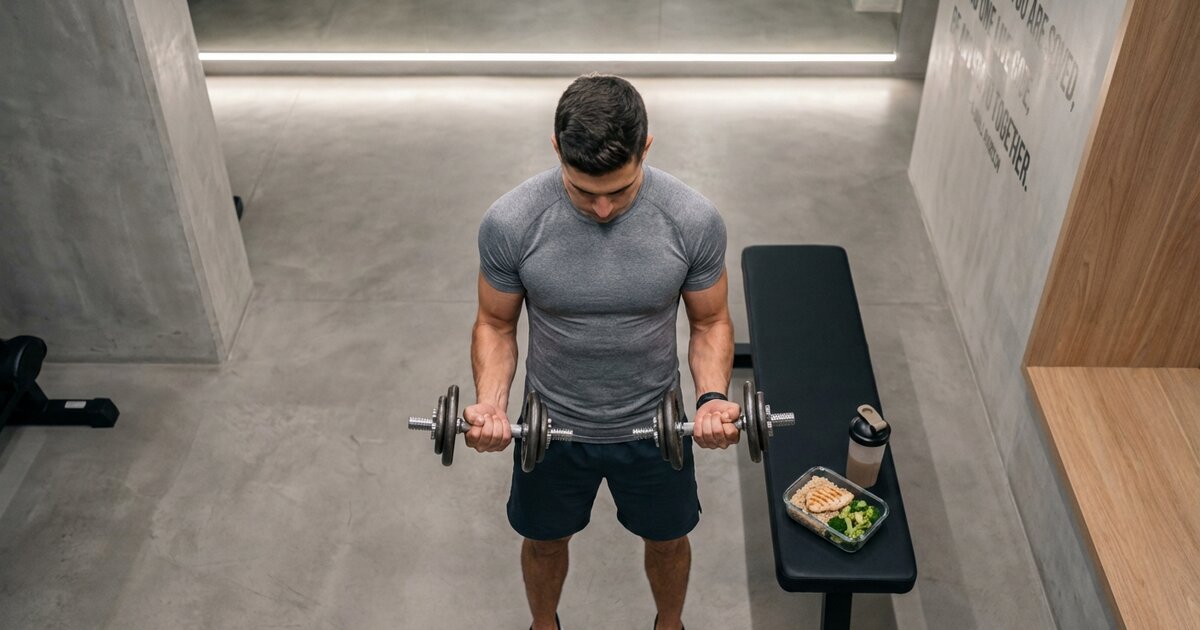
Building muscle requires more than just lifting heavy weights—you need to fuel your body with the right amount of calories and macronutrients. Too little food and you won’t have the energy or raw materials to build new tissue. Too much and you’ll add unnecessary fat alongside muscle.
This guide will teach you exactly how to calculate your macros for optimal muscle gain, based on scientific research and real-world application with thousands of athletes.
Understanding Muscle Gain Fundamentals
Before diving into calculations, you need to understand three key principles:
1. You Need a Calorie Surplus
To build muscle, your body needs extra energy beyond what it burns daily. Research published in the Journal of the International Society of Sports Nutrition shows that a modest calorie surplus of 10-20% above maintenance is optimal for muscle growth while minimizing fat gain.
2. Protein is Non-Negotiable
Protein provides the amino acids your muscles need to repair and grow after training. Studies consistently show that consuming 0.7-1.0 grams of protein per pound of body weight maximizes muscle protein synthesis.
3. Training Creates the Signal, Nutrition Provides the Materials
No amount of perfect nutrition can build muscle without progressive overload in the gym. You need both: training provides the stimulus, nutrition provides the resources.
Step 1: Calculate Your TDEE (Total Daily Energy Expenditure)
Your TDEE represents the total calories you burn each day, including:
- Basal Metabolic Rate (BMR): Calories burned at rest
- Activity Factor: Calories burned through movement and exercise
- Thermic Effect of Food (TEF): Calories burned digesting food
Use the Mifflin-St Jeor Formula
This is the most accurate formula for most people:
For Men: BMR = (10 × weight in kg) + (6.25 × height in cm) - (5 × age) + 5
For Women: BMR = (10 × weight in kg) + (6.25 × height in cm) - (5 × age) - 161
Apply Your Activity Multiplier
Once you have your BMR, multiply by your activity factor:
| Activity Level | Multiplier | Description |
|---|---|---|
| Sedentary | 1.2 | Little to no exercise, desk job |
| Lightly Active | 1.375 | Light exercise 1-3 days/week |
| Moderately Active | 1.55 | Moderate exercise 3-5 days/week |
| Very Active | 1.725 | Hard exercise 6-7 days/week |
| Extremely Active | 1.9 | Physical job + hard training daily |
Example Calculation
Let’s calculate TDEE for a 28-year-old male, 180 pounds (81.6 kg), 6 feet tall (183 cm), training 5 days per week:
Step 1: Calculate BMR
- BMR = (10 × 81.6) + (6.25 × 183) - (5 × 28) + 5
- BMR = 816 + 1,143.75 - 140 + 5
- BMR = 1,825 calories
Step 2: Apply activity multiplier (Very Active = 1.725)
- TDEE = 1,825 × 1.725
- TDEE = 3,148 calories per day
Step 2: Add Your Calorie Surplus
For muscle gain, you need to eat above your TDEE. But how much?
Recommended Surplus by Experience Level
| Experience Level | Surplus | Expected Gain Per Month |
|---|---|---|
| Beginner (0-1 year) | +15-20% | 1.5-2 pounds (0.5-0.75 lbs muscle) |
| Intermediate (1-3 years) | +10-15% | 1-1.5 pounds (0.3-0.5 lbs muscle) |
| Advanced (3+ years) | +5-10% | 0.5-1 pound (0.15-0.3 lbs muscle) |
Why smaller surpluses for advanced lifters?
As you become more experienced, your rate of muscle growth slows. Beginners can build 1.5-2 pounds of muscle per month under optimal conditions. Advanced lifters might only gain 0.25-0.5 pounds per month. A large surplus just adds unnecessary fat.
Example: Calculating Bulking Calories
Using our 180-pound intermediate lifter (TDEE = 3,148):
Moderate surplus (12%):
- 3,148 × 1.12 = 3,526 calories per day
This provides enough energy for muscle growth without excessive fat gain.
Step 3: Calculate Your Protein Target
Protein is the most important macronutrient for muscle building. Here’s what the research shows:
Optimal Protein Intake for Muscle Gain
Multiple meta-analyses have established that 0.7-1.0 grams per pound of body weight (1.6-2.2 g/kg) maximizes muscle protein synthesis.
Recommended targets:
- Beginners: 0.8-1.0 g/lb (want maximum stimulus)
- Intermediate: 0.7-0.9 g/lb (still responding well)
- Advanced: 0.7-0.8 g/lb (slower gains, less needed)
- Higher body fat (25%+): Use lean body mass instead of total weight
Example Protein Calculation
For our 180-pound intermediate lifter:
- Target: 0.8 g/lb
- 180 × 0.8 = 144 grams of protein per day
Since protein contains 4 calories per gram:
- 144g × 4 = 576 calories from protein
Step 4: Calculate Your Fat Target
Dietary fat is essential for hormone production, including testosterone—a key hormone for muscle growth. Too little fat can impair recovery and growth.
Recommended Fat Intake
Research suggests 0.3-0.5 grams per pound of body weight for optimal hormone function during a muscle-building phase.
Guidelines:
- Minimum: 0.3 g/lb (for higher carb approaches)
- Moderate: 0.4 g/lb (balanced approach)
- Higher: 0.5 g/lb (for lower carb preferences)
Example Fat Calculation
For our 180-pound lifter, using moderate approach:
- Target: 0.4 g/lb
- 180 × 0.4 = 72 grams of fat per day
Since fat contains 9 calories per gram:
- 72g × 9 = 648 calories from fat
Step 5: Calculate Your Carbohydrate Target
After setting protein and fat, the remaining calories come from carbohydrates. Carbs are your body’s preferred fuel for high-intensity training and help maximize performance in the gym.
The Carb Calculation
Formula: Carbs (in grams) = (Total Calories - Protein Calories - Fat Calories) ÷ 4
Example Carb Calculation
For our 180-pound lifter (3,526 total calories, 576 from protein, 648 from fat):
- Remaining calories: 3,526 - 576 - 648 = 2,302 calories
- Convert to grams: 2,302 ÷ 4 = 576 grams of carbs per day
Your Complete Macro Plan
Let’s summarize our example 180-pound intermediate lifter:
| Macro | Grams | Calories | Percentage |
|---|---|---|---|
| Protein | 144g | 576 | 16% |
| Fat | 72g | 648 | 18% |
| Carbs | 576g | 2,302 | 66% |
| TOTAL | — | 3,526 | 100% |
This high-carb approach (66%) provides maximum fuel for training intensity and volume—essential for muscle growth.
Adjusting Macros Based on Training Style
Different training approaches benefit from different macro distributions:
Bodybuilding / High Volume Training
Characteristics: 4-6 sets per exercise, 8-12 reps, 45-90 sec rest Optimal Macros:
- Protein: 0.8-1.0 g/lb
- Fat: 0.3-0.4 g/lb
- Carbs: Remaining (typically 60-70% of calories)
Why: High volume training depletes glycogen rapidly. More carbs = better performance and recovery.
Powerlifting / Strength Focus
Characteristics: 3-5 sets, 1-5 reps, 3-5 min rest, heavy loads Optimal Macros:
- Protein: 0.8-0.9 g/lb
- Fat: 0.4-0.5 g/lb
- Carbs: Remaining (typically 50-60% of calories)
Why: Lower volume means less glycogen depletion. Slightly higher fat supports strength and satiety.
CrossFit / Metabolic Conditioning
Characteristics: Mixed modalities, high intensity, varied duration Optimal Macros:
- Protein: 0.8-1.0 g/lb
- Fat: 0.3-0.4 g/lb
- Carbs: Remaining (typically 60-70% of calories)
Why: Glycolytic energy system heavily taxed. Need carbs to fuel workouts and recover.
Meal Timing for Muscle Gain
While total daily macros matter most, strategic meal timing can provide a small additional advantage:
Pre-Workout Nutrition (1-3 hours before)
Goals: Fuel performance, minimize gastric distress Recommended:
- 30-50g protein
- 40-80g carbs
- Minimal fat (5-15g)
Example:
- 6 oz chicken breast
- 1 cup white rice
- 1 cup steamed vegetables
Post-Workout Nutrition (Within 2 hours)
Goals: Replenish glycogen, initiate muscle protein synthesis Recommended:
- 30-50g protein
- 60-100g carbs
- Minimal fat (5-15g)
Example:
- Protein shake with 40g whey protein
- 1 large banana
- 1 cup oats
Remaining Meals
Distribute your remaining macros across 2-4 additional meals throughout the day. Aim for 3-5 total meals to maintain steady amino acid availability for muscle growth.
Tracking and Adjusting Your Macros
Week 1-2: Establish Baseline
Track your weight and body composition:
- Weigh yourself daily at the same time (ideally morning, after bathroom, before eating)
- Calculate weekly average weight
- Take progress photos from front, side, and back
Week 3-4: Assess Progress
Ideal rate of gain:
- Beginners: 0.5-0.75% body weight per week (0.9-1.4 lbs for our 180 lb example)
- Intermediate: 0.25-0.5% body weight per week (0.45-0.9 lbs)
- Advanced: 0.125-0.25% body weight per week (0.23-0.45 lbs)
When to Adjust
Gaining too fast (>1% per week):
- Reduce calories by 100-200 per day
- Check if weight gain is consistent or just a water weight spike
Not gaining (or losing weight):
- Increase calories by 100-200 per day
- Verify you’re tracking accurately (weighing food, accounting for cooking oils)
Gaining at target rate:
- Continue current macros
- Re-assess every 2-4 weeks
Common Mistakes to Avoid
1. Dirty Bulking (Excessive Surplus)
The mistake: Eating 500-1,000 calories above TDEE thinking “more food = more muscle”
The reality: Your body can only build muscle at a finite rate. Excessive calories just become body fat. Research shows that adding more than 15-20% surplus doesn’t increase muscle gain—just fat gain.
The fix: Start with a modest 10-15% surplus. Assess progress and adjust.
2. Neglecting Protein
The mistake: Focusing only on total calories while keeping protein too low (0.5 g/lb or less)
The reality: Without adequate protein, your body lacks the amino acids needed to build new muscle tissue. You’ll gain mostly fat.
The fix: Prioritize protein first (0.7-1.0 g/lb), then fill remaining calories with carbs and fats.
3. Fearing Carbohydrates
The mistake: Keeping carbs unnecessarily low (<150g per day) during a muscle-building phase
The reality: Carbs are muscle-sparing and provide the fuel for high-intensity training. Low-carb bulking often leads to suboptimal performance and slower gains.
The fix: Unless you have a specific medical reason, keep carbs at 50-70% of total calories during a bulk.
4. Not Tracking Consistently
The mistake: “Eating more” without tracking actual intake, or tracking inconsistently (weekdays only)
The reality: It’s easy to overestimate or underestimate intake. Your weekend “cheat days” might wipe out your weekday surplus.
The fix: Track everything for at least 4-6 weeks until you have a strong understanding of portion sizes and your actual intake.
5. Changing Too Much, Too Soon
The mistake: Weight doesn’t change after one week, so you immediately add 500 calories
The reality: Body weight fluctuates daily due to water retention, glycogen storage, and digestive contents. One week isn’t enough data.
The fix: Wait at least 2-3 weeks before making adjustments. Use weekly average weights, not daily snapshots.
Macros for Different Body Types
Ectomorph (Naturally Thin, Fast Metabolism)
Challenges: Difficulty gaining weight, high TDEE Macro Strategy:
- Higher surplus: 15-20% above TDEE
- Higher carb ratio: 60-70% of calories
- Protein: 0.8-1.0 g/lb
- Fat: 0.3-0.4 g/lb
Why: You need more calories to overcome your high metabolic rate. Carbs provide the most calorie-dense, digestible energy source.
Mesomorph (Naturally Muscular, Moderate Metabolism)
Challenges: Moderate fat gain during bulk Macro Strategy:
- Moderate surplus: 10-15% above TDEE
- Balanced macros: 50-60% carbs
- Protein: 0.7-0.9 g/lb
- Fat: 0.4-0.5 g/lb
Why: Your body responds well to training and nutrition. A moderate approach minimizes fat gain while maximizing muscle growth.
Endomorph (Naturally Heavier, Slower Metabolism)
Challenges: Easy fat gain during surplus Macro Strategy:
- Conservative surplus: 5-10% above TDEE
- Moderate carbs: 40-50% of calories
- Protein: 0.8-1.0 g/lb (higher to preserve muscle)
- Fat: 0.4-0.5 g/lb
Why: Your body stores fat easily. A smaller surplus with slightly lower carbs helps you gain muscle while minimizing fat accumulation.
Sample Meal Plan: 3,500 Calories for Muscle Gain
Here’s a practical meal plan hitting our example macros (145g protein, 72g fat, 575g carbs):
Meal 1: Breakfast (800 calories)
- 3 whole eggs (18g protein, 15g fat)
- 1.5 cups oatmeal (15g protein, 9g fat, 90g carbs)
- 1 large banana (1g protein, 27g carbs)
- 1 tbsp almond butter (3g protein, 8g fat, 3g carbs)
Totals: 37g protein, 32g fat, 120g carbs
Meal 2: Pre-Workout (600 calories)
- 6 oz chicken breast (52g protein, 6g fat)
- 1.5 cups white rice (8g protein, 90g carbs)
- 1 cup broccoli (3g protein, 12g carbs)
Totals: 63g protein, 6g fat, 102g carbs
Meal 3: Post-Workout Shake (500 calories)
- 2 scoops whey protein (50g protein, 4g fat)
- 1 large banana (1g protein, 27g carbs)
- 1 cup oats (10g protein, 5g fat, 54g carbs)
- 1 cup almond milk (1g protein, 2g fat, 1g carbs)
Totals: 62g protein, 11g fat, 82g carbs
Meal 4: Lunch/Dinner (900 calories)
- 8 oz lean ground beef 93/7 (56g protein, 16g fat)
- 2 cups pasta (16g protein, 4g fat, 160g carbs)
- 1/2 cup marinara sauce (2g protein, 2g fat, 10g carbs)
- Small side salad with 1 tbsp olive oil (1g fat, 3g carbs)
Totals: 74g protein, 23g fat, 173g carbs
Meal 5: Evening Snack (700 calories)
- Greek yogurt, 2 cups (40g protein, 10g fat, 20g carbs)
- 1/2 cup granola (6g protein, 10g fat, 60g carbs)
- 1 cup mixed berries (1g protein, 18g carbs)
Totals: 47g protein, 20g fat, 98g carbs
Daily Totals
- Protein: 283g (too high—adjust portions down)
- Fat: 92g (slightly high—reduce oils/butter)
- Carbs: 575g (perfect)
- Calories: ~3,500
Note: This is a template. Adjust portion sizes to hit your specific macro targets.
Supplements for Muscle Gain
While whole foods should provide the foundation of your nutrition, these supplements can help you hit your macros and support muscle growth:
Protein Powder
Why: Convenient way to hit protein targets How much: 1-2 scoops per day (20-50g) Best timing: Post-workout or as a snack
Creatine Monohydrate
Why: Increases strength, power output, and muscle mass How much: 5g per day (timing doesn’t matter) Expected benefit: 5-10% strength increase, 2-4 lbs muscle gain over 8-12 weeks
Carbohydrate Powder (Optional)
Why: Helps high-metabolism individuals hit calorie targets How much: 50-100g per shake Best timing: Post-workout to replenish glycogen
Tracking Your Progress Beyond the Scale
Muscle gain isn’t just about the number on the scale. Track these metrics:
Strength Progression
Are your lifts increasing week over week? Progressive overload is the best indicator you’re building muscle.
Key lifts to track:
- Squat
- Deadlift
- Bench press
- Overhead press
Target: 5-10 lbs increase per month on compound lifts (beginners), 2-5 lbs per month (intermediate)
Body Measurements
Track circumference of:
- Arms (flexed)
- Chest
- Waist
- Thighs
Target: Arms/chest/thighs increasing, waist staying relatively stable
Progress Photos
Take photos weekly in consistent lighting and poses. Visual changes often appear before the scale moves significantly.
How Clothing Fits
Are your shirts getting tighter in the chest and arms? Are your pants fitting the same in the waist? These are good signs you’re building muscle without excessive fat gain.
When to Transition to Maintenance or Cutting
You shouldn’t bulk indefinitely. Here’s when to consider switching phases:
Time-Based Approach
Bulk duration: 12-20 weeks Then: 4-8 weeks at maintenance to stabilize, followed by a cutting phase if desired
Body Fat-Based Approach
Men: Bulk until 15-17% body fat, then cut Women: Bulk until 24-27% body fat, then cut
Why: Bulking at higher body fat percentages tends to result in more fat gain relative to muscle gain due to reduced insulin sensitivity.
FAQ
How long does it take to build noticeable muscle?
Most people start seeing visible changes after 8-12 weeks of consistent training and nutrition. Beginners typically gain 12-24 pounds in their first year (about half being muscle), while intermediate lifters might gain 6-12 pounds per year. The rate slows as you become more advanced.
Can I build muscle without tracking macros?
Yes, but tracking dramatically improves results. Studies show that people who track their food intake more consistently achieve their body composition goals compared to those who eyeball portions. You don’t need to track forever—just long enough (8-12 weeks) to develop accurate portion awareness.
Should I eat the same macros on rest days?
Yes, keep your intake consistent. Muscle protein synthesis remains elevated for 24-48 hours after training, so you need adequate nutrition on rest days to support recovery. Some people prefer to slightly reduce carbs on rest days (by 50-100g) while keeping protein and fat constant, but it’s not necessary.
What if I miss my macro targets one day?
One day doesn’t matter. Muscle building happens over weeks and months, not days. If you miss your targets, just return to your plan the next day. Don’t try to “make up” for missed calories by overeating the following day.
How much muscle can I realistically gain per month?
Beginners can gain 1-2 pounds of muscle per month (under optimal conditions). Intermediate lifters might gain 0.5-1 pound per month. Advanced lifters are looking at 0.25-0.5 pounds per month. Remember, total weight gain will be higher due to some fat gain, water retention, and glycogen storage.
Do I need to eat more protein on training days?
No. Total daily protein matters more than timing. Aim for the same protein intake every day (0.7-1.0 g/lb) regardless of whether you train. If you prefer to eat more on training days, slightly increase protein around your workout while keeping the daily total consistent across the week.
Can I build muscle in a calorie deficit?
It’s possible but limited, especially for intermediate and advanced lifters. Beginners and those with higher body fat percentages can build some muscle in a modest deficit (10-15% below maintenance) if protein is high (1.0-1.2 g/lb) and training is optimized. However, a surplus is superior for maximizing muscle growth.
Should I take a diet break during a long bulk?
Taking 1-2 weeks at maintenance every 12-16 weeks can help normalize hormones (especially leptin) and give you a psychological break from constant eating. It won’t harm muscle gain and may improve adherence to your bulk long-term. Simply eat at your current TDEE (not your original TDEE) for 1-2 weeks, then resume your surplus.
Conclusion: Your Action Plan
Building muscle requires patience, consistency, and the right nutritional strategy. Here’s your step-by-step action plan:
- Calculate your TDEE using the Mifflin-St Jeor formula and activity multiplier
- Add a surplus of 10-20% based on your training experience
- Set protein at 0.7-1.0 g/lb of body weight
- Set fat at 0.3-0.5 g/lb of body weight
- Fill remaining calories with carbs to fuel training
- Track everything for at least 4 weeks
- Assess progress every 2-3 weeks and adjust as needed
- Focus on strength gains as your primary progress indicator
- Be patient—muscle building is a marathon, not a sprint
Remember: these calculations provide a starting point. Your actual needs may vary based on genetics, training intensity, stress, sleep quality, and metabolic adaptations. Use the data from your own body to make adjustments.
Ready to calculate your exact macros? Use our free macro calculator to get your personalized muscle-building plan in 30 seconds.
For a complete overview of muscle-building nutrition including meal timing, workout nutrition, and advanced strategies, read our comprehensive macros for muscle gain guide.
Start tracking today, stay consistent for 12 weeks, and watch your physique transform.
Related Articles
Travel Macros: How to Track Nutrition While Traveling
Complete guide to managing macros while traveling. Learn meal planning strategies,...
Read guide →
Macros for Shift Workers: Complete Guide to Nutrition on Rotating Schedules
Master macro tracking on night shifts and rotating schedules. Learn meal timing, sleep...
Read guide →
Macros During Ramadan: Complete Nutrition Guide for Fasting
Learn how to track macros during Ramadan fasting. Expert guide covering meal timing,...
Read guide →Disclaimer: This content is for informational purposes only. Consult a healthcare provider before making changes to your diet.