Cheat Meals and Macros: How to Enjoy Them Without Sabotaging Your Progress
Reviewed by Dr. Michael Torres, PhD
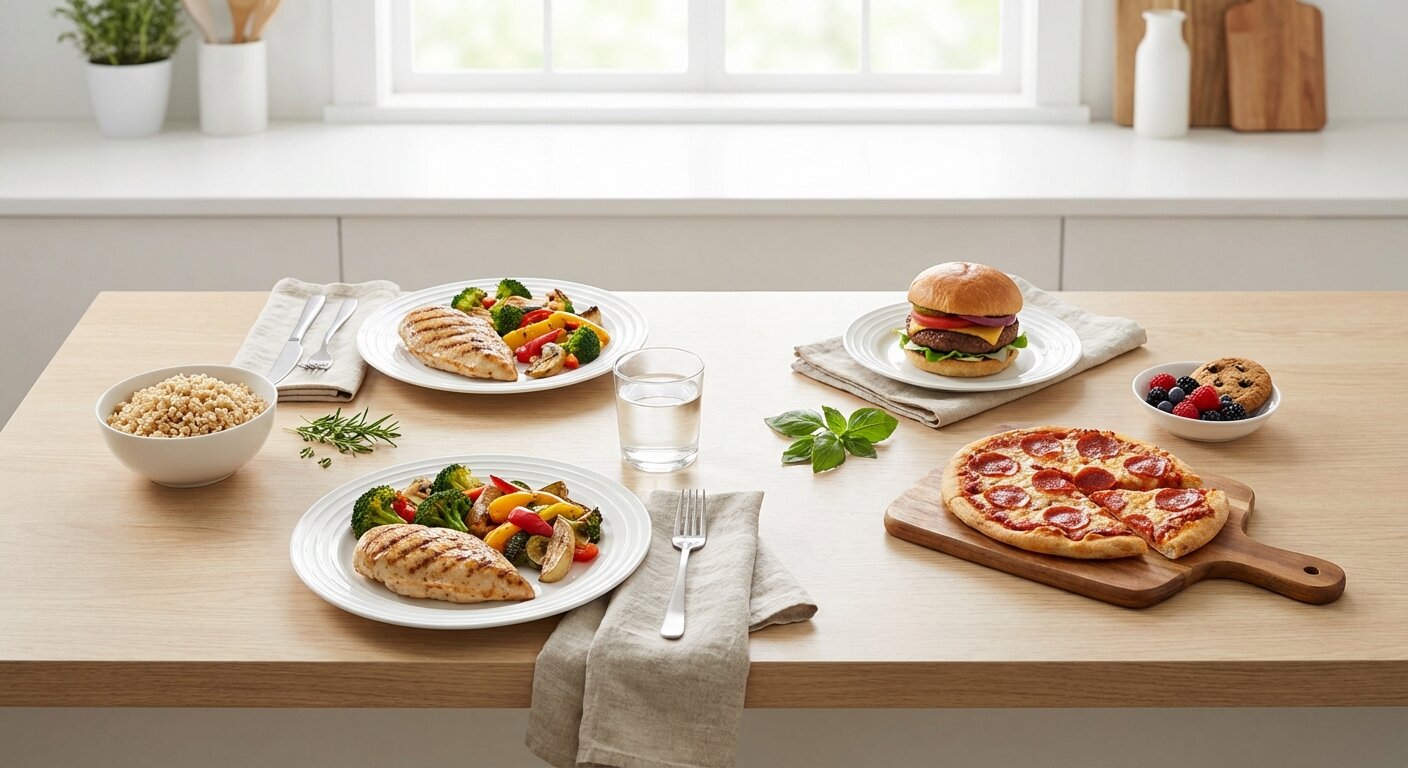
Cheat meals and macro tracking might seem incompatible at first glance. After all, isn’t the whole point of tracking macros to maintain strict control over your nutrition? Not exactly. The beauty of flexible dieting is that it allows you to enjoy your favorite foods—even indulgent ones—without throwing away your progress.
This guide will show you how to strategically incorporate cheat meals into your macro-based nutrition plan, when they can actually help your progress, and how to bounce back quickly when you do indulge. Whether you’re training for a competition or simply trying to lose fat while tracking macros, learning to navigate cheat meals is an essential skill for long-term success.
Ready to learn how to have your cake and hit your macros too? Use our macro calculator to establish your baseline targets, then read on to discover how to build flexibility into your plan.
Understanding Cheat Meals in the Context of Macro Tracking
Before diving into strategies, let’s clarify what we mean by “cheat meals” and why the term itself can be problematic when applied to flexible dieting.
What Defines a Cheat Meal?
A cheat meal typically refers to a meal that:
- Significantly exceeds your planned macro or calorie targets
- Contains foods you’ve been avoiding or restricting
- Is eaten primarily for enjoyment rather than nutritional strategy
- Often occurs during social events, restaurants, or special occasions
The key distinction: A cheat meal is different from simply fitting a cookie or slice of pizza into your daily macros. We’re talking about meals where tracking takes a backseat to enjoyment—think birthday dinners, holiday feasts, or spontaneous nights out.
The Problem with “Cheating”
The word “cheat” implies you’re doing something wrong, breaking rules, or failing. This mindset can lead to:
- Guilt and shame around food choices
- All-or-nothing thinking (“I already cheated, might as well keep going”)
- Binge-restrict cycles that damage your relationship with food
- Unnecessary stress about what should be enjoyable experiences
Better terminology: Consider calling them “flex meals,” “free meals,” or simply “untracked meals.” This subtle shift in language can have a powerful psychological impact.
Cheat Meals vs. Refeeds vs. Diet Breaks
It’s important to distinguish between different types of off-plan eating:
Cheat Meal: Unstructured, primarily for enjoyment, may involve any macronutrient composition
- Example: Pizza, wings, and beer with friends on Friday night
- Purpose: Social connection, mental break, food enjoyment
Refeed: Structured, high-carb meal/day while keeping protein high and fat moderate
- Example: 300g+ carbs from rice, pasta, bread while maintaining 180g protein
- Purpose: Replenish glycogen, boost leptin, improve training performance
Diet Break: 1-2 weeks at maintenance calories with balanced macros
- Example: Two weeks eating at TDEE with normal macro ratios
- Purpose: Restore hormones, reduce diet fatigue, prepare for next fat loss phase
All three have their place. Cheat meals are spontaneous and social. Refeeds are strategic nutrition tools. Diet breaks are planned recovery periods. Understanding the difference helps you use each appropriately.
The Science: How Cheat Meals Affect Your Body
Let’s look at what actually happens physiologically when you have a cheat meal.
Short-Term Effects (24-48 Hours)
Water Retention: The most immediate effect of a high-carb, high-sodium cheat meal is water retention. For every gram of carbohydrate stored as glycogen, your body holds 3-4 grams of water. A meal with 200g+ carbs can cause 2-5 pounds of water weight gain overnight.
Digestive Stress: Large volumes of rich foods can slow digestion, causing bloating, discomfort, and changes in bowel movements. This is temporary and not indicative of fat gain.
Blood Sugar Fluctuations: High-carb, high-fat meals can cause blood sugar spikes and crashes, potentially leading to energy dips and increased hunger several hours later.
Inflammation Markers: Some studies show temporary increases in inflammatory markers after high-calorie meals, particularly those high in saturated fat and refined carbohydrates. This typically normalizes within 24-48 hours.
Medium-Term Effects (3-7 Days)
Glycogen Supercompensation: If you’ve been dieting or training hard, a cheat meal can top off depleted glycogen stores, potentially improving your next few workouts.
Leptin Response: Leptin, the hormone that regulates hunger and metabolism, can get a temporary boost from overfeeding, particularly from carbohydrates. However, a single meal has minimal impact—you need several days of refeeding for significant leptin increases.
Psychological Reset: A well-timed cheat meal can reduce diet-related stress and renew your motivation to stick with your nutrition plan.
Long-Term Impact (Weekly and Beyond)
What Matters: Total weekly calorie and macro intake What Doesn’t Matter: The timing or composition of individual meals
If your weekly target is 14,000 calories (2,000/day × 7 days) and you have a 3,000-calorie cheat meal on Saturday, you’re only 1,000 calories over your weekly target—less than 8% above plan. This will have minimal impact on your progress.
The Real Issue: When one cheat meal becomes a cheat day, then a cheat weekend, then you’re “restarting Monday” every week. That’s when progress stalls.
Strategic Approaches to Cheat Meals
Now for the practical stuff—how to actually incorporate cheat meals without sabotaging your progress.
Strategy 1: Track Everything (Full Transparency)
The approach: Log your cheat meal as accurately as possible, even if it means going significantly over your daily targets.
Pros:
- Complete accountability and awareness
- Helps you identify patterns (do cheat meals trigger overeating the next day?)
- Shows you the actual impact (often less dramatic than feared)
- Builds a comprehensive database for future reference
Cons:
- Can be stressful to see large numbers
- May be difficult to accurately estimate restaurant portions
- Could trigger guilt or shame for some people
Best for: People who find tracking empowering rather than stressful, those early in their flexible dieting journey who need to calibrate their “food sense”
How to do it:
- Before the meal, decide you’ll track it honestly
- Estimate portions using MyFitnessPal’s restaurant database
- When in doubt, overestimate rather than underestimate
- Accept the high numbers without judgment
- Return to normal eating at your next meal
Strategy 2: Macro Banking (Weekly Balance)
The approach: Slightly reduce your daily macros throughout the week, “saving” calories/macros for a planned larger meal.
Example:
- Normal daily target: 2,000 calories
- Reduce Monday-Friday by 200 calories each (1,800/day)
- Saturday: 3,000-calorie meal
- Weekly total: (1,800 × 5) + 3,000 + 2,000 = 14,000 calories (same as 2,000 × 7)
Pros:
- Allows for larger meals without exceeding weekly targets
- Reduces diet fatigue during the week
- Excellent for planned events (date nights, family dinners)
- Teaches you to think about nutrition in weekly rather than daily terms
Cons:
- Requires planning and discipline
- May leave you hungrier on reduced-calorie days
- Can backfire if you overeat beyond your “banked” amount
Best for: People with consistent weekly schedules, those with planned social events, advanced trackers comfortable with week-level planning
How to do it:
- Calculate your weekly macro targets (daily targets × 7)
- Decide which day you’ll have your larger meal
- Reduce other days by 10-15% each
- Track your weekly totals to ensure you stay on target
- Adjust based on how you feel—if too hungry during the week, bank less
Strategy 3: The One-Meal Pass (Untracked Break)
The approach: Completely disconnect from tracking for one meal, enjoy it fully, then return to your normal plan immediately afterward.
Pros:
- Eliminates stress and analysis paralysis
- Allows for genuine spontaneity and social connection
- Prevents food obsession and calculation during special moments
- Can be psychologically liberating
Cons:
- No data on actual intake
- Easier to overeat when not tracking
- May be harder to get back on track for some people
- Can lead to “what the hell” effect if not managed properly
Best for: People with solid intuitive eating skills, those in maintenance phases, anyone who finds tracking at social events stressful or intrusive
How to do it:
- Plan ahead: “Tonight’s dinner is a tracking-free zone”
- Eat mindfully and enjoy without guilt
- Don’t try to estimate or log afterward—that defeats the purpose
- Resume tracking at your very next meal
- Don’t “make up for it” by cutting calories the next day
Strategy 4: Modified Tracking (Protein Priority)
The approach: Track protein accurately, eat to satisfaction with carbs and fats, then loosely estimate those macros afterward.
Pros:
- Maintains the most important macro (protein) for body composition
- More flexible than full tracking
- Easier in social situations
- Still provides some structure and accountability
Cons:
- Less precise data
- Requires good estimation skills
- May not work well for those who need strict boundaries
Best for: People maintaining weight, those with protein-specific goals (muscle building), intermediate trackers looking to transition toward intuitive eating
How to do it:
- Before or during the meal, ensure you hit your protein target (look for meat, fish, eggs)
- Enjoy carbs and fats without overthinking
- Afterward, make a rough estimate: “probably around 100g carbs and 60g fat”
- Log it and move on without perfectionism
- Track the next day normally
Practical Guidelines for Successful Cheat Meals
Beyond choosing a strategy, here are universal principles for making cheat meals work within a macro-focused lifestyle:
Frequency: How Often Can You “Cheat”?
Conservative approach (aggressive fat loss): 1 cheat meal every 7-10 days Moderate approach (steady progress): 1-2 cheat meals per week Liberal approach (maintenance/muscle gain): 2-3 cheat meals per week
The determining factors:
- Your current body fat percentage (leaner people can handle more frequent refeeds)
- Your activity level (highly active individuals burn more and can afford more flexibility)
- Your training intensity (hard trainers benefit from more frequent higher-calorie meals)
- Your goals (aggressive cuts require more discipline; maintenance allows more freedom)
- Your individual response (some people handle cheat meals better than others)
The 80/20 rule: If 80% or more of your meals are on-plan, you’ll make progress. If you’re having 10 tracked meals and 2-3 cheat meals per week, you’re well within the zone.
Timing: When to Schedule Cheat Meals
Strategic timing options:
After intense training: Your muscles are primed to absorb nutrients, making this an ideal time for a higher-carb meal. The calories are more likely to support recovery than storage.
On high-training-volume days: If you train multiple times per day or have a particularly brutal session, a larger meal makes physiological sense.
During social events: The psychological and social benefits often outweigh the minor disruption to your macro tracking.
End of the week: Many people prefer Friday or Saturday night cheat meals, allowing them to enjoy weekends while maintaining weekday discipline.
What to avoid:
- Cheat meals during already-stressful times (they can trigger emotional eating patterns)
- Multiple cheat meals within 24 hours (one rolls into the next)
- Cheat meals when you’re already significantly behind on your weekly targets
Portion Control: How Big Should a Cheat Meal Be?
There’s a difference between a cheat meal and a food challenge. Guidelines:
Reasonable cheat meal: 800-1,500 calories over your normal meal
- Example: Burger, fries, and a dessert (still one restaurant visit)
- Impact: Manageable within weekly targets
Large cheat meal: 1,500-2,500 calories over normal
- Example: Appetizer, large entree, dessert, alcohol
- Impact: Noticeable but recoverable with weekly balancing
Excessive cheat meal: 3,000+ calories in one sitting
- Example: All-you-can-eat buffet, multiple appetizers/entrees/desserts
- Impact: Can wipe out several days of deficit
Rule of thumb: Your cheat meal shouldn’t exceed your entire day’s normal calorie target by more than 50%. If you normally eat 2,000 calories/day, a 3,000-calorie cheat meal is reasonable; a 5,000-calorie binge is not.
Food Choices: What to Eat During Cheat Meals
Foods that are worth it:
- Things you genuinely love and can’t easily fit into daily macros
- High-quality versions of indulgent foods (artisan pizza vs. frozen)
- Foods connected to positive memories or social experiences
- Restaurant dishes that would be difficult to make at home
Foods that aren’t worth it:
- Things you’re eating just because you “can”
- Foods you don’t particularly enjoy but think you “should” eat on a cheat meal
- Excessive amounts of foods you could easily incorporate in smaller portions
- Foods that make you feel physically terrible (if dairy destroys your stomach, why waste a cheat meal on it?)
Pro tip: Make a list of your “absolutely worth it” cheat foods. When you have a cheat meal, choose from that list. This ensures you’re eating things you genuinely love rather than mindlessly consuming anything “forbidden.”
Common Cheat Meal Scenarios and How to Handle Them
Real-life situations require real-life strategies.
Scenario 1: Unplanned Restaurant Invitation
The situation: A friend texts at 3 PM asking if you want to grab dinner at 7 PM. You’ve already eaten most of your daily macros.
Strategy:
- Option A: Eat a light lunch (if you haven’t yet) or skip your afternoon snack, banking those macros for dinner
- Option B: Order strategically—protein-focused entree, ask for sauce on the side, split a dessert if you want one
- Option C: Accept that today will be over target, track it honestly, and resume normal eating tomorrow
What not to do: Skip meals before or after to “compensate” (often leads to overeating)
Scenario 2: Holiday Feast or Special Event
The situation: Thanksgiving, wedding, birthday party—food is central to the celebration.
Strategy:
- Before: Eat normal meals earlier in the day (don’t “save up” and arrive starving)
- During: Fill your plate once with foods you truly want, eat slowly, reassess if you want seconds
- Protein hack: Start with protein sources to satisfy hunger before moving to starches and desserts
- After: Return to your regular eating pattern the next day without restriction
Mindset shift: This is one meal out of 1,095 meals per year (if you eat 3 meals/day). It cannot derail your progress unless you let it.
Scenario 3: Weekend “Cheat Day” Creep
The situation: Your Saturday cheat meal turned into cheat breakfast, cheat lunch, cheat dinner, and Sunday brunch is looking tempting…
Strategy:
- Prevention: Define clear boundaries (e.g., “cheat meal” means one meal, not one day)
- If it happens: Don’t wait until Monday—get back on track with your very next meal
- Long-term fix: Consider whether your daily macros are too restrictive (if you’re constantly hungry and craving cheat days, you may need to eat more)
Red flag: If most weekends turn into multi-day eating sprees, you’re not practicing flexible dieting—you’re cycling between restriction and bingeing. Consider working with a nutrition coach to address this pattern.
Scenario 4: The Morning After
The situation: You had a big cheat meal last night. You’re up 3 pounds on the scale, bloated, and feeling guilty.
Strategy:
- Remember: Most of that weight is water and food volume, not fat
- Do: Drink plenty of water, eat your normal meals today, get back to your routine
- Don’t: Slash calories, do extra cardio, or skip meals to “make up for it”
- Timeline: You’ll likely see the water weight drop within 2-3 days of resuming normal eating
Perspective check: It takes a 3,500-calorie surplus above your maintenance to gain one pound of actual fat. Even a very large cheat meal rarely exceeds a 2,000-calorie surplus, meaning you’ve gained at most half a pound of fat (probably less). Everything else is temporary.
When Cheat Meals Become Problematic
While cheat meals can be part of a healthy, flexible approach to nutrition, there are warning signs that they’re not working for you:
Red Flags to Watch For
Increasing frequency: What started as one cheat meal per week has crept to 3-4, and you’re making excuses to justify them.
Loss of control: You can’t stop at one cheat meal—it triggers overeating for the rest of the day or weekend.
Compensation behaviors: You’re doing extreme things before or after cheat meals (fasting, excessive cardio, purging).
Constant anticipation: You spend most of the week just waiting for your cheat meal, counting down the days.
Guilt spirals: Every cheat meal is followed by intense guilt, shame, or self-criticism that affects your mood for days.
Stalled progress: You’ve been “flexibly dieting” for months but seeing no results because cheat meals keep undoing your weekly deficit.
When to Adjust Your Approach
If you’re experiencing several red flags, consider these alternatives:
Build more flexibility into daily macros: Rather than having very strict days and cheat meals, eat moderate amounts of “fun foods” daily. Maybe you need 2,200 calories instead of 1,800.
Practice true intuitive eating: If tracking creates more problems than it solves, consider taking a break from macros entirely and working on hunger/fullness cues.
Seek professional support: If your relationship with food feels chaotic or distressing, working with a registered dietitian or therapist specializing in disordered eating can be invaluable.
Reassess your goals: Are you pursuing body composition goals that are unrealistic or unsustainable for your lifestyle? Sometimes the issue isn’t your discipline—it’s that your targets don’t align with how you actually want to live.
Advanced Strategies for Optimizing Cheat Meals
Once you’ve mastered the basics, these advanced tactics can help you maximize the benefits of cheat meals:
Glycogen Depletion Training
The concept: Train with high volume and moderate-to-high reps the day before your cheat meal to deplete muscle glycogen. The incoming carbohydrates are then preferentially stored as glycogen rather than fat.
Example:
- Friday: Full-body or leg day with 15-20 reps, 4-5 sets per exercise
- Saturday: High-carb cheat meal
Who benefits: Physique athletes, bodybuilders, anyone interested in optimizing nutrient partitioning
Caveats: This is minor optimization, not magic. Don’t let perfect be the enemy of good.
Carb-Focused Cheats During Diet Phases
The concept: When cheating during a fat loss phase, prioritize carbohydrate-rich foods over fat-rich foods. Carbs provide a more significant metabolic and psychological boost while being less likely to be stored as body fat in the context of a single high-calorie meal.
Example:
- Better cheat: Sushi, pasta with tomato sauce, rice-heavy Chinese food, pancakes
- Less optimal: Steak with butter, alfredo sauce, fried foods, cheese-heavy dishes
Reasoning: Carbs boost leptin more effectively than fat, replenish glycogen, and require more energy for conversion to body fat (de novo lipogenesis is metabolically expensive). Dietary fat, when consumed in excess, is readily stored as body fat.
Caveat: This doesn’t mean you can’t enjoy fat-rich foods—just that if you’re being strategic, carb-rich cheats offer more physiological benefits during dieting phases.
The Intermittent Fasting + Cheat Meal Combo
The concept: Fast or eat very lightly earlier in the day, then have your cheat meal as your primary meal. This allows you to enjoy a large, satisfying meal while potentially staying within or close to your daily calorie target.
Example:
- Morning: Black coffee or tea
- Lunch: Light protein shake or small salad (300-400 calories)
- Dinner: 1,500-2,000 calorie restaurant meal
- Total: 1,800-2,400 calories (manageable for most people)
Pros:
- Psychological satisfaction of a big meal
- Can work well with social dinner plans
- Teaches meal timing flexibility
Cons:
- May not suit people who need morning fuel for training
- Can trigger overeating in some individuals
- Not ideal if you’re trying to optimize muscle protein synthesis throughout the day
Best for: Evening social eaters, those who naturally prefer larger dinners, people in maintenance phases
Frequently Asked Questions
Can I have cheat meals while tracking macros?
Yes, you can absolutely have cheat meals while tracking macros. The key is planning them strategically and either tracking them honestly or adjusting your weekly macros to accommodate them. Flexible dieting is designed to allow for occasional indulgences without derailing progress.
Should I track macros on cheat meals?
Ideally yes, tracking cheat meals helps you understand their impact and maintain accountability. However, if tracking causes stress or ruins the enjoyment, you can simply estimate or take a full diet break for that meal. The most important thing is returning to your normal eating pattern afterward.
How often can I have cheat meals on a macro diet?
Most people can successfully incorporate 1-2 cheat meals per week while still making progress. Active individuals or those with faster metabolisms may handle more frequent cheat meals. The key is ensuring cheat meals don’t exceed 10-20% of your total weekly food intake.
This frequency works because it allows you to maintain a caloric deficit (if fat loss is your goal) or stay on track with muscle gain targets while still enjoying flexibility and social food experiences. If you’re having 21 meals per week and 2 are “cheat meals,” that’s less than 10% of your total meals—plenty of room for the other 19 meals to drive your results.
Will one cheat meal ruin my macros for the week?
No, one cheat meal won’t ruin your weekly progress. Your body responds to patterns over time, not single meals. A 1,000-2,000 calorie surplus from one meal represents only a small fraction of your weekly intake and can often be balanced through slight adjustments on surrounding days.
Consider this math: If your weekly calorie target is 14,000 calories and you eat a 3,000-calorie cheat meal (1,000 calories over your daily target), you’re only 7% above your weekly goal. This small surplus can be offset by a slightly larger deficit on a few other days, or simply accepted as a minor bump that won’t significantly impact long-term progress.
The psychological damage from guilt and “screw it” thinking after a cheat meal is often worse than the actual metabolic impact.
What’s the difference between a cheat meal and a refeed?
A cheat meal is typically unplanned or loosely tracked, focused on enjoyment and satisfaction. A refeed is a strategic, planned increase in carbohydrates (while keeping protein and fat relatively controlled) designed to replenish glycogen stores and support hormonal health during extended dieting phases.
Cheat Meal Example:
- Pizza, wings, beer, dessert
- Mixed macros (high carbs AND high fat)
- 2,500-3,500 calories
- Primary purpose: enjoyment, mental break
Refeed Example:
- Rice, sweet potatoes, pasta, fruit, lean protein sources
- High carbs (300-400g+), moderate-high protein, low-ish fat
- Calculated calorie increase (often to maintenance or 10-20% above)
- Primary purpose: glycogen replenishment, leptin boost, improved training performance
Both have value. Refeeds are more strategic and controlled; cheat meals are more about lifestyle balance and psychological relief.
How do I get back on track after a cheat meal?
Simply return to your normal macro targets at your next meal. Don’t compensate by skipping meals or drastically cutting calories—this often backfires and triggers binge cycles. Drink plenty of water, get good sleep, and resume your regular eating pattern. Consistency beats perfection.
Here’s the exact protocol:
- Next meal: Eat your regular planned meal at your normal macro targets
- Hydration: Drink 100+ oz of water to help flush excess sodium and reduce bloating
- Movement: Light activity (walking, stretching) can improve digestion and mood
- Mindset: Treat it as one data point in a long journey, not a moral failure
- Avoid: Restriction, punishment cardio, food guilt, or “resetting” on Monday
The quicker you return to normal (literally the next meal), the less impact the cheat meal will have on your weekly totals and long-term progress.
Can I save macros from other days for a cheat meal?
Yes, this strategy is called “banking calories” or macro cycling. You can slightly reduce your daily macros by 100-200 calories throughout the week and “spend” those saved macros on a larger meal. This works well for planned events like dining out or social gatherings.
Example banking strategy:
- Normal daily target: 2,000 calories (150P / 200C / 65F)
- Monday-Friday: 1,800 calories each (150P / 165C / 54F)
- Calories banked: 200 × 5 days = 1,000 calories
- Saturday: 3,000 calorie meal (2,000 normal + 1,000 banked)
- Sunday: 2,000 calories (normal)
- Weekly total: 14,000 calories (same as 2,000 × 7)
This allows you to enjoy a substantial cheat meal while maintaining your weekly targets. Just ensure you’re still hitting minimum protein targets daily and not banking so many calories that you’re under-fueling your training or daily energy needs.
Should I exercise before or after a cheat meal?
Training before a cheat meal can be strategic—your muscles are primed to absorb nutrients, and the extra carbohydrates can aid recovery. However, this isn’t necessary. The timing of exercise relative to cheat meals has minimal impact on overall progress compared to weekly consistency with training and nutrition.
Pre-cheat workout benefits:
- Glycogen depletion means incoming carbs go to muscle storage
- Improved insulin sensitivity post-workout
- Psychological “earning” of the meal (if that helps you enjoy it guilt-free)
Post-cheat workout considerations:
- May feel sluggish or too full
- Can provide a psychological “reset” (back to routine)
- No significant metabolic advantage
Best practice: Schedule cheat meals around your life and preferences, not in pursuit of minor metabolic optimization. If you’re training consistently throughout the week and managing your macros overall, the timing of your cheat meal relative to training is largely irrelevant.
Final Thoughts: Making Cheat Meals Work for You, Not Against You
The ultimate goal of flexible dieting and macro tracking isn’t rigid perfection—it’s building a sustainable approach to nutrition that delivers results while fitting into your real life. Cheat meals, when managed strategically, are a valuable tool in that toolbox.
The principles that matter most:
-
Progress is determined by weekly and monthly patterns, not individual meals. One meal cannot make or break your physique.
-
Tracking builds awareness. The more you understand how different foods affect you, the better decisions you can make.
-
Flexibility requires structure. Paradoxically, having clear boundaries (like 80% compliance) makes it easier to enjoy occasional indulgences guilt-free.
-
Your relationship with food matters more than perfect macros. If cheat meals are triggering disordered patterns, step back and reassess.
-
Adaptation is key. What works for you now might not work six months from now. Stay flexible and willing to adjust your approach.
Remember, the best macro plan is the one you can stick to long-term. If that includes enjoying pizza with friends on Friday nights or indulging in birthday cake without guilt, factor that into your strategy from the start. Sustainable progress beats short-term perfection every time.
Ready to establish your baseline macro targets? Use our free macro calculator to get personalized recommendations based on your goals, activity level, and preferences. Then use the strategies in this guide to build in the flexibility you need for long-term success.
For more flexible dieting strategies, check out our complete guide to IIFYM (If It Fits Your Macros) or learn about strategic refeed days for fat loss.
Related Articles
Travel Macros: How to Track Nutrition While Traveling
Complete guide to managing macros while traveling. Learn meal planning strategies,...
Read guide →
Macros for Shift Workers: Complete Guide to Nutrition on Rotating Schedules
Master macro tracking on night shifts and rotating schedules. Learn meal timing, sleep...
Read guide →
Macros During Ramadan: Complete Nutrition Guide for Fasting
Learn how to track macros during Ramadan fasting. Expert guide covering meal timing,...
Read guide →Disclaimer: This content is for informational purposes only. Consult a healthcare provider before making changes to your diet.