High Protein Macros: Complete Guide to High-Protein Diets
If you’re serious about building muscle, losing fat, or improving your body composition, you’ve likely heard that protein matters. But how much protein do you actually need? What does a “high protein” diet really look like? And how do you structure your macros to maximize results?
This comprehensive guide will teach you everything you need to know about high protein macros—from the science behind protein requirements to practical meal plans and calculations you can use today.
What Are High Protein Macros?
High protein macros refer to a macronutrient distribution where protein makes up a significantly larger percentage of your total daily calories compared to standard dietary recommendations.
Standard vs. High Protein Intake
Standard Dietary Guidelines:
- Protein: 10-15% of total calories
- For a 2,000 calorie diet: 50-75g protein per day
- Roughly 0.4g per pound of body weight
High Protein Macros:
- Protein: 30-40% of total calories
- For a 2,000 calorie diet: 150-200g protein per day
- Roughly 1.0-1.2g per pound of body weight
The difference is substantial. While standard recommendations prevent deficiency, high protein macros are designed for optimizing body composition, athletic performance, and metabolic health.
Typical High Protein Macro Ratios
The exact split depends on your goals, but here are three common approaches:
Balanced High Protein (40/30/30):
- 40% protein
- 30% carbohydrates
- 30% fat
- Best for: General fitness, muscle maintenance, moderate activity
High Protein for Muscle Gain (35/40/25):
- 35% protein
- 40% carbohydrates
- 25% fat
- Best for: Bulking, strength training, high training volume
High Protein for Fat Loss (45/25/30):
- 45% protein
- 25% carbohydrates
- 30% fat
- Best for: Cutting, weight loss, muscle preservation
The Science Behind High Protein Diets
Before diving into calculations, let’s understand why high protein macros work so effectively.
1. Increased Satiety and Appetite Control
Protein is the most satiating macronutrient. Research published in the American Journal of Clinical Nutrition shows that high protein diets reduce hunger hormones (ghrelin) and increase satiety hormones (GLP-1, peptide YY).
In practical terms: eating 200g of protein per day makes it much easier to stick to your calorie target because you simply feel less hungry.
2. Higher Thermic Effect of Food (TEF)
Your body burns calories digesting, absorbing, and processing nutrients. Protein has the highest thermic effect:
- Protein: 20-30% of calories burned during digestion
- Carbohydrates: 5-10% burned
- Fat: 0-3% burned
This means if you eat 400 calories from protein, you only net about 280-320 calories after accounting for digestion. This “metabolic advantage” adds up over time.
3. Muscle Protein Synthesis
Protein provides amino acids—the building blocks your muscles need to repair and grow after training. Studies show that optimal muscle protein synthesis occurs at protein intakes of 0.7-1.0g per pound of body weight when combined with resistance training.
Without adequate protein, you cannot build new muscle tissue, regardless of how hard you train.
4. Muscle Preservation During Fat Loss
When you’re in a calorie deficit, your body needs energy. It can get that energy from stored fat, stored carbs (glycogen), or by breaking down muscle tissue. High protein intake signals your body to preserve muscle and preferentially burn fat instead.
Research in The Journal of Nutrition found that dieters consuming 1.0g protein per pound lost more fat and preserved significantly more muscle compared to those eating 0.4g per pound—even with identical calorie deficits.
Benefits of High Protein Macros
For Muscle Building
- Maximizes muscle protein synthesis
- Provides amino acids for recovery
- Supports training performance and volume
- Enables faster recovery between sessions
For Fat Loss
- Reduces hunger and cravings
- Preserves lean muscle mass
- Increases metabolic rate via TEF
- Improves satiety on restricted calories
- Prevents metabolic adaptation
For General Health
- Stabilizes blood sugar levels
- Improves bone density
- Supports immune function
- Enhances wound healing and tissue repair
- May improve cardiovascular markers
For Athletic Performance
- Faster recovery between workouts
- Better adaptation to training stress
- Reduced muscle soreness
- Improved strength and power output
How Much Protein Do You Actually Need?
Protein requirements vary based on body weight, activity level, training goals, and current body composition.
Protein Targets by Goal
Sedentary / Minimal Exercise:
- 0.6-0.8g per pound body weight
- Maintains muscle mass
- Supports basic health
Active / General Fitness:
- 0.8-1.0g per pound body weight
- Supports training recovery
- Enables modest muscle growth
Muscle Building / Bulking:
- 0.8-1.0g per pound body weight
- Maximizes muscle protein synthesis
- Supports high training volume
Fat Loss / Cutting:
- 1.0-1.2g per pound body weight
- Preserves muscle during deficit
- Maximizes satiety
Athletes / High Training Volume:
- 0.9-1.1g per pound body weight
- Supports intense training demands
- Optimizes recovery
Adjusting for Body Fat Percentage
If you’re significantly overweight, using total body weight overestimates protein needs. Instead, calculate based on lean body mass or goal body weight:
Example:
- Current weight: 220 lbs
- Body fat: 30% (66 lbs fat mass)
- Lean body mass: 154 lbs
- Protein target: 154 lbs × 1.0g = 154g protein
Alternatively, use your goal weight:
- Goal weight: 180 lbs
- Protein target: 180g protein per day
How to Calculate Your High Protein Macros
Let’s walk through the step-by-step process to calculate your personalized high protein macros.
Step 1: Determine Your Total Daily Calories
First, calculate your Total Daily Energy Expenditure (TDEE)—the total calories you burn each day.
Mifflin-St Jeor Formula:
Men: BMR = (10 × weight in kg) + (6.25 × height in cm) - (5 × age) + 5
Women: BMR = (10 × weight in kg) + (6.25 × height in cm) - (5 × age) - 161
Activity Multipliers:
- Sedentary (little/no exercise): BMR × 1.2
- Lightly active (1-3 days/week): BMR × 1.375
- Moderately active (3-5 days/week): BMR × 1.55
- Very active (6-7 days/week): BMR × 1.725
- Extremely active (athlete/physical job): BMR × 1.9
Example Calculation (180 lb male, 5’10”, 30 years, moderate activity):
- Weight: 81.6 kg
- Height: 178 cm
- BMR = (10 × 81.6) + (6.25 × 178) - (5 × 30) + 5 = 1,784 calories
- TDEE = 1,784 × 1.55 = 2,765 calories
Step 2: Adjust for Your Goal
Muscle Gain / Bulking: Add 10-20% to TDEE
- Example: 2,765 × 1.15 = 3,180 calories
Maintenance / Recomp: Use TDEE as-is
- Example: 2,765 calories
Fat Loss / Cutting: Subtract 15-25% from TDEE
- Example: 2,765 × 0.80 = 2,212 calories
Step 3: Set Your Protein Target
Choose based on your goal:
- Fat loss: 1.0-1.2g per lb body weight
- Muscle gain: 0.8-1.0g per lb body weight
- Maintenance: 0.8-1.0g per lb body weight
Example (180 lb male, cutting):
- Protein: 180 lbs × 1.1g = 198g protein
- Protein calories: 198g × 4 calories/g = 792 calories
Step 4: Set Your Fat Target
Fat is essential for hormone production, vitamin absorption, and overall health. Don’t go too low.
Recommended fat intake:
- 0.3-0.4g per pound body weight
- Or 25-35% of total calories
Example:
- Fat: 180 lbs × 0.35g = 63g fat
- Fat calories: 63g × 9 calories/g = 567 calories
Step 5: Fill Remaining Calories with Carbs
Carbohydrates fuel high-intensity training, support recovery, and help you feel energized.
Example:
- Total calories: 2,212
- Protein calories: 792
- Fat calories: 567
- Remaining for carbs: 2,212 - 792 - 567 = 853 calories
- Carbs: 853 ÷ 4 = 213g carbohydrates
Final Macro Breakdown Example
180 lb male, cutting (2,212 calories):
- Protein: 198g (36% of calories)
- Carbohydrates: 213g (38% of calories)
- Fat: 63g (26% of calories)
This is a high protein macro split optimized for fat loss while preserving muscle.
Sample High Protein Meal Plans
Let’s look at practical meal plans at different calorie levels.
2,000 Calorie High Protein Plan (40/30/30)
Macros: 200g protein | 150g carbs | 67g fat
Meal 1 (Breakfast):
- 3 whole eggs + 3 egg whites, scrambled
- 1 cup oatmeal with berries
- Black coffee
- Macros: 42g protein, 45g carbs, 18g fat
Meal 2 (Lunch):
- 6 oz grilled chicken breast
- 1 cup quinoa
- Large mixed salad with 1 tbsp olive oil
- Macros: 52g protein, 50g carbs, 16g fat
Meal 3 (Snack):
- 1 cup Greek yogurt (nonfat)
- 1 oz almonds
- Macros: 25g protein, 15g carbs, 15g fat
Meal 4 (Dinner):
- 6 oz salmon
- 1.5 cups roasted vegetables
- 1 medium sweet potato
- Macros: 45g protein, 35g carbs, 16g fat
Meal 5 (Evening Snack):
- 1 scoop protein powder
- 1 cup almond milk
- Macros: 25g protein, 5g carbs, 2g fat
2,500 Calorie High Protein Plan (35/40/25)
Macros: 219g protein | 250g carbs | 69g fat
Meal 1:
- 4 whole eggs + 4 egg whites
- 2 slices whole wheat toast
- 1 banana
- Macros: 48g protein, 55g carbs, 20g fat
Meal 2:
- 8 oz chicken breast
- 1.5 cups white rice
- 1 cup broccoli
- Macros: 60g protein, 70g carbs, 8g fat
Meal 3:
- Protein shake: 2 scoops whey, 1 cup oats, 1 tbsp peanut butter, almond milk
- Macros: 55g protein, 60g carbs, 15g fat
Meal 4:
- 8 oz lean ground beef (93/7)
- Large salad with vegetables
- 1 cup quinoa
- 1 tbsp olive oil
- Macros: 56g protein, 65g carbs, 26g fat
3,000 Calorie High Protein Plan (30/45/25)
Macros: 225g protein | 338g carbs | 83g fat
This plan is ideal for muscle building and high training volume.
Meal 1:
- 4 whole eggs
- 1.5 cups oatmeal
- 2 tbsp peanut butter
- 1 banana
- Macros: 35g protein, 90g carbs, 28g fat
Meal 2:
- 8 oz chicken breast
- 2 cups jasmine rice
- 1 cup mixed vegetables
- Macros: 60g protein, 100g carbs, 8g fat
Meal 3:
- 1.5 cups Greek yogurt
- 1 cup granola
- 1 cup berries
- Macros: 35g protein, 85g carbs, 15g fat
Meal 4 (Pre-Workout):
- 6 oz turkey breast sandwich on whole wheat
- 1 apple
- Macros: 42g protein, 50g carbs, 8g fat
Meal 5 (Post-Workout):
- 2 scoops protein powder
- 1.5 cups white rice
- Macros: 50g protein, 80g carbs, 4g fat
Meal 6:
- 8 oz salmon
- Large salad with avocado
- 1 medium sweet potato
- Macros: 50g protein, 40g carbs, 20g fat
Best High Protein Foods
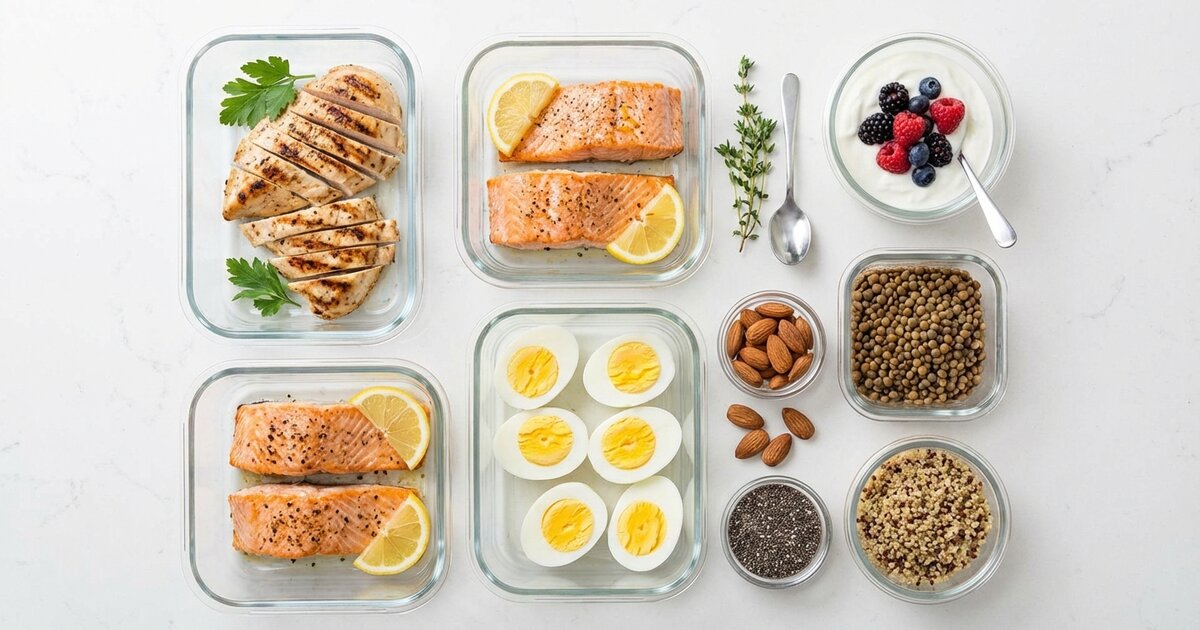
Building high protein macros into your daily diet requires knowing which foods deliver the most protein per calorie.
Complete Protein Sources (Animal-Based)
Chicken Breast:
- 31g protein per 4 oz (cooked)
- Very lean, versatile, affordable
- 165 calories
Turkey Breast:
- 26g protein per 4 oz
- Similar to chicken, great for variety
- 125 calories
Lean Beef (Sirloin, 93/7 Ground):
- 28g protein per 4 oz
- Rich in iron, zinc, B vitamins
- 180-220 calories
Salmon:
- 25g protein per 4 oz
- High in omega-3 fatty acids
- 210 calories
Cod / Tilapia / White Fish:
- 25-28g protein per 4 oz
- Extremely lean
- 110-125 calories
Eggs:
- 6g protein per large egg
- Complete amino acid profile
- 70 calories
Greek Yogurt (Nonfat):
- 17g protein per 6 oz
- High in calcium, probiotics
- 100 calories
Cottage Cheese:
- 14g protein per 1/2 cup
- Slow-digesting casein
- 80 calories
Protein Powder (Whey/Casein):
- 20-25g protein per scoop
- Convenient, fast-absorbing
- 100-120 calories
Plant-Based High Protein Sources
Tofu (Firm):
- 10g protein per 1/2 cup
- Complete protein, versatile
- 90 calories
Tempeh:
- 15g protein per 1/2 cup
- Fermented, gut-friendly
- 160 calories
Seitan:
- 21g protein per 3 oz
- Wheat-based, meat-like texture
- 120 calories
Edamame:
- 17g protein per cup
- Complete protein, fiber-rich
- 190 calories
Lentils:
- 18g protein per cup (cooked)
- High fiber, budget-friendly
- 230 calories
Chickpeas:
- 15g protein per cup
- Versatile, great for snacking
- 270 calories
Pea Protein Powder:
- 20g protein per scoop
- Hypoallergenic alternative
- 100 calories
Quick Protein-Dense Snacks
- Beef jerky: 9g protein per oz
- String cheese: 6-7g protein per stick
- Hard-boiled eggs: 6g protein each
- Protein bars: 15-20g (check labels)
- Tuna packets: 17g protein per 2.5 oz
- Edamame (frozen): 17g per cup
High Protein Low Carb Macros
Many people prefer combining high protein with lower carbohydrate intake for fat loss or metabolic reasons.
Typical High Protein Low Carb Split
Option 1 (Moderate):
- 40% protein
- 25% carbohydrates
- 35% fat
Option 2 (Lower Carb):
- 45% protein
- 15% carbohydrates
- 40% fat
When High Protein Low Carb Works Best
- Fat loss goals with lower activity levels
- Metabolic flexibility training
- Blood sugar management for pre-diabetics
- Sedentary or low-intensity lifestyle
- Preference for fat as energy source
Potential Downsides
- May reduce training performance for high-intensity workouts
- Can impact recovery if carbs drop too low
- More difficult for endurance athletes
- Some people feel low energy without carbs
Bottom line: High protein low carb works well for many people, but if you’re doing intense training 4+ times per week, you likely need more carbohydrates for optimal performance.
Common Mistakes with High Protein Macros
1. Neglecting Fat Too Much
Trying to maximize protein while going too low on fat (<0.25g per lb body weight) can disrupt hormone production and vitamin absorption. Keep fat at minimum 0.3g per lb.
2. Forgetting About Fiber
High protein diets can be low in fiber if you’re not careful. Include vegetables, fruits, whole grains, and legumes to maintain digestive health. Aim for 25-35g fiber daily.
3. Not Spreading Protein Throughout the Day
Eating all your protein in one or two meals is less effective than spreading it across 3-5 meals. Aim for 25-40g protein per meal for optimal muscle protein synthesis.
4. Ignoring Protein Quality
Not all protein is equal. Prioritize complete proteins with all essential amino acids. If eating plant-based, combine complementary protein sources.
5. Overdoing Protein at the Expense of Everything Else
More isn’t always better. Once you hit 1.0-1.2g per lb body weight, additional protein offers minimal benefits and may displace carbs or fats that support training and recovery.
Tracking Your High Protein Macros
Best Apps for Macro Tracking
- MyFitnessPal: Largest food database
- Cronometer: Most accurate nutrient data
- MacroFactor: Smart calorie and macro adjustments
- Carbon Diet Coach: AI-driven coaching
- LoseIt: User-friendly interface
Tips for Accurate Tracking
- Weigh your food using a digital food scale
- Log before you eat to make adjustments if needed
- Focus on protein first each meal
- Use restaurant nutrition data when available
- Think in weekly averages not daily perfection
What to Do If You Miss Your Targets
- Missed protein: Add a protein shake or Greek yogurt
- Over on calories: Adjust tomorrow slightly or add 10 minutes cardio
- Under on calories: Don’t force-feed; aim better tomorrow
- Consistency matters more than perfection
Adjusting Your Macros Over Time
Your macro needs change as you lose weight, gain muscle, or change activity levels.
When to Adjust
Every 2-4 weeks, reassess:
- Current body weight
- Progress toward goals
- Energy levels and performance
- Hunger and satiety
- Recovery and sleep quality
How to Adjust
If weight loss stalls:
- Reduce calories by 100-200 (primarily from carbs or fats)
- Keep protein high to preserve muscle
- Add 10-15 minutes daily cardio
If gaining too much fat while bulking:
- Reduce calorie surplus slightly
- Keep protein constant
- Reduce carbs and/or fats proportionally
If energy is low during workouts:
- Increase carbs by 50g
- Time carbs around training
- Reduce fats slightly to compensate
If constantly hungry on a cut:
- Increase protein slightly (if below 1.2g/lb)
- Add more vegetables for volume
- Consider diet break (eat at maintenance 1-2 weeks)
FAQs About High Protein Macros
Is high protein bad for your kidneys?
No. Multiple studies confirm that high protein intake does not damage healthy kidneys. People with pre-existing kidney disease should consult a doctor, but for healthy individuals, intakes up to 1.4g per lb body weight are safe long-term.
Can you eat too much protein?
Practically speaking, it’s difficult to overeat protein because it’s so satiating. Beyond 1.2g per lb body weight, additional protein offers minimal benefits and may displace other nutrients. Focus on balance.
Do you need protein immediately after workouts?
The “anabolic window” is less critical than once believed. Total daily protein intake matters most. That said, having protein within a few hours post-workout supports optimal recovery.
Can you build muscle on low protein?
It’s much harder. While technically possible with perfect training and genetics, the vast majority of people need 0.7-1.0g per lb body weight to maximize muscle growth.
How long does it take to see results?
Most people notice improved satiety within days. Body composition changes (muscle gain or fat loss) become measurable within 3-4 weeks. Give any macro plan at least 4-6 weeks before making major changes.
Final Thoughts: Making High Protein Macros Work for You
High protein macros are one of the most effective dietary strategies for improving body composition, whether your goal is building muscle, losing fat, or both simultaneously.
Key takeaways:
- Aim for 0.8-1.2g protein per pound body weight depending on goals
- Set fat at 0.3-0.4g per lb to support health and hormones
- Fill remaining calories with carbs based on activity level
- Spread protein across 3-5 meals for optimal results
- Track consistently for at least 4 weeks before adjusting
- Prioritize whole food sources but use protein powder as needed
- Adjust macros every 2-4 weeks based on progress
Remember: the best macro split is the one you can sustain consistently. High protein macros work because protein is satiating, muscle-sparing, and metabolically active—but only if you can stick with the plan long enough to see results.
Start with the calculations in this guide, track your food, and adjust based on your individual response. Your body will tell you what’s working through changes in weight, performance, energy, and body composition.
Related: For a complete overview of muscle-building nutrition including surplus strategies and workout timing, read our macros for muscle gain guide. For personalized targets, use our free macro calculator.
Now get out there and hit those protein targets.
Related Articles
Travel Macros: How to Track Nutrition While Traveling
Complete guide to managing macros while traveling. Learn meal planning strategies,...
Read guide →
Macros for Shift Workers: Complete Guide to Nutrition on Rotating Schedules
Master macro tracking on night shifts and rotating schedules. Learn meal timing, sleep...
Read guide →
Macros During Ramadan: Complete Nutrition Guide for Fasting
Learn how to track macros during Ramadan fasting. Expert guide covering meal timing,...
Read guide →Disclaimer: This content is for informational purposes only. Consult a healthcare provider before making changes to your diet.