IIFYM Guide: If It Fits Your Macros Explained
What Is IIFYM?
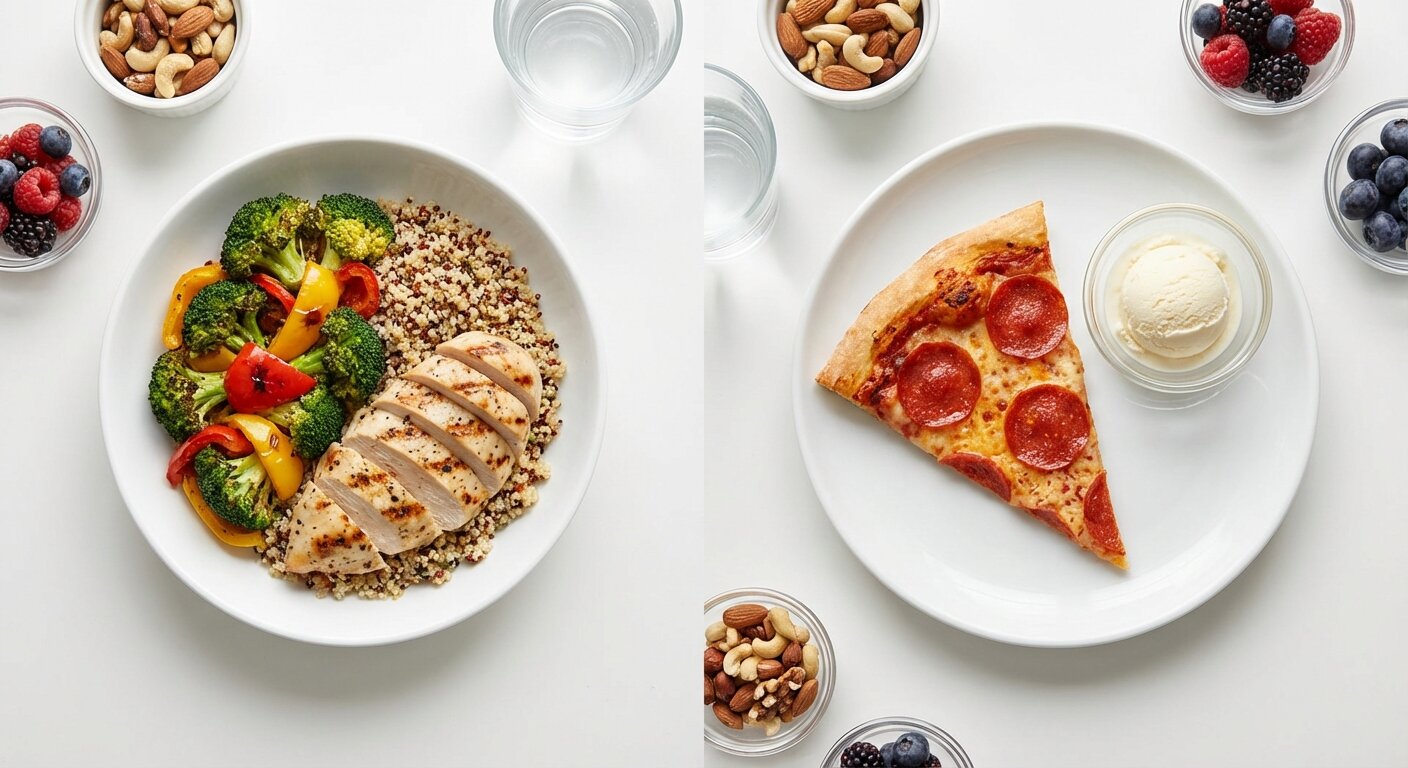
IIFYM (If It Fits Your Macros) is a flexible dieting approach that prioritizes hitting daily macronutrient targets—protein, carbohydrates, and fat—rather than restricting specific foods or food groups.
Unlike traditional diets that label foods as “good” or “bad,” IIFYM operates on the principle that all foods can fit into a healthy diet as long as they align with your macro goals. Want pizza? Ice cream? A burger? If it fits your macros, it’s fair game.
This flexibility makes IIFYM one of the most sustainable nutrition approaches for fat loss, muscle building, or body recomposition. Instead of feeling deprived, you maintain control while enjoying the foods you love. For practical implementation, check out our guides on macro-friendly meals and eating out on macros.
Ready to calculate your personalized macros? Use our Macro Calculator to get started in 60 seconds.
The Science Behind IIFYM
Energy Balance Is King
At its core, weight management boils down to calories in vs. calories out:
- Calorie deficit = weight loss
- Calorie surplus = weight gain
- Maintenance calories = weight stability
IIFYM acknowledges this fundamental truth while adding a critical layer: macro composition matters for body composition, performance, and satiety.
Why Macros Matter
While total calories determine weight change, macronutrient distribution determines what kind of weight you gain or lose:
Protein:
- Preserves lean muscle during fat loss
- Highest thermic effect (20-30% of calories burned during digestion)
- Most satiating macronutrient
Carbohydrates:
- Primary fuel for high-intensity exercise
- Supports performance and recovery
- Spares protein for muscle building
Fats:
- Essential for hormone production (testosterone, estrogen)
- Supports vitamin absorption (A, D, E, K)
- Provides sustained energy
Research shows that two people eating the same calories but different macro ratios will experience different results in muscle retention, performance, and hunger levels.
How to Calculate Your IIFYM Macros
Step 1: Find Your TDEE
Your Total Daily Energy Expenditure (TDEE) is how many calories you burn per day. It accounts for:
- Basal metabolic rate (BMR)
- Activity level
- Exercise
- Non-exercise activity thermogenesis (NEAT)
Use our Macro Calculator to determine your TDEE based on age, weight, height, activity level, and goals.
Step 2: Set Your Calorie Target
Adjust your TDEE based on your goal:
- Fat loss: TDEE - 300 to 500 calories (0.5-1 lb per week)
- Muscle gain: TDEE + 200 to 300 calories (0.25-0.5 lb per week)
- Maintenance/recomp: TDEE (maintain weight while improving body composition)
Step 3: Calculate Protein
Protein should be your first priority.
General guidelines:
- Fat loss: 1.0-1.2g per lb of bodyweight
- Muscle gain: 0.8-1.0g per lb of bodyweight
- Maintenance: 0.8-1.0g per lb of bodyweight
Example: 180 lb person cutting = 180-216g protein per day
Why this range?
- Preserves muscle during a deficit
- Increases satiety
- High thermic effect (burns calories during digestion)
Step 4: Set Your Fat
Fat is essential for hormone production and overall health.
General guidelines:
- Minimum: 0.3g per lb of bodyweight
- Optimal range: 20-35% of total calories
Example: 180 lb person eating 2,200 calories
- Minimum fat: 54g (180 × 0.3)
- 25% of calories: 61g fat (2,200 × 0.25 ÷ 9)
Don’t go too low: Fats below 0.3g per lb can impair hormone production and energy levels.
Step 5: Fill Remaining Calories With Carbs
After setting protein and fat, allocate remaining calories to carbohydrates.
Formula:
- Calculate protein calories: Protein (g) × 4
- Calculate fat calories: Fat (g) × 9
- Subtract from total calorie target
- Divide remaining calories by 4 = carb grams
Example (2,200 calories, 180g protein, 61g fat):
- Protein: 180 × 4 = 720 calories
- Fat: 61 × 9 = 549 calories
- Remaining: 2,200 - 720 - 549 = 931 calories
- Carbs: 931 ÷ 4 = 233g
Final macros: 180g protein | 233g carbs | 61g fat
IIFYM vs. Traditional Diets
| Approach | IIFYM | Clean Eating | Keto |
|---|---|---|---|
| Food restrictions | None | High (processed foods banned) | Extreme (carbs restricted) |
| Flexibility | Very high | Low | Very low |
| Sustainability | High | Moderate | Low |
| Tracking required | Yes | Optional | Yes (carbs) |
| Social situations | Easy | Difficult | Very difficult |
| Micronutrient focus | Moderate | High | Moderate |
IIFYM’s advantage: It combines the structure of tracking with the freedom of eating anything, making it more sustainable long-term than restrictive diets.
Building an IIFYM Meal Plan
The 80/20 Rule
While IIFYM allows any food, prioritize nutrient-dense whole foods (80%) and save treats for the remainder (20%).
Why?
- Whole foods provide vitamins, minerals, and fiber
- Higher satiety (you’ll feel fuller)
- Better performance and recovery
- Long-term health benefits
Sample IIFYM Day (2,200 calories)
Macros: 180g protein | 233g carbs | 61g fat
Breakfast (530 calories):
- 3 whole eggs (18g protein, 15g fat)
- 1 cup oatmeal (6g protein, 54g carbs, 5g fat)
- 1 banana (27g carbs)
- Black coffee
Lunch (620 calories):
- 6 oz grilled chicken breast (54g protein, 3g fat)
- 1.5 cups white rice (67g carbs)
- 1 cup broccoli (5g carbs)
- 1 tbsp olive oil (14g fat)
Snack (300 calories):
- Protein shake (30g protein, 5g carbs)
- 1 medium apple (25g carbs)
Dinner (550 calories):
- 6 oz ground beef (90% lean, 48g protein, 12g fat)
- 1 large sweet potato (37g carbs)
- Side salad (5g carbs, 10g fat from dressing)
Dessert (200 calories):
- 2 scoops ice cream (4g protein, 32g carbs, 11g fat)
Total: 180g protein | 232g carbs | 60g fat | 2,200 calories
Notice: The plan includes ice cream but still prioritizes whole foods and hits all macro targets. For more recipe ideas, check out macro-friendly meals.
Best Foods for IIFYM
High-Protein Foods
- Chicken breast (lean protein)
- Ground turkey (versatile)
- Salmon (protein + omega-3s)
- Greek yogurt (protein + calcium)
- Eggs (complete protein + healthy fats)
- Cottage cheese (casein protein for satiety)
- Whey/casein protein powder (convenient)
- Tofu and tempeh (plant-based)
- Legumes (protein + fiber)
Carbohydrate Sources
- White rice (easy digestion, performance fuel)
- Oatmeal (fiber + sustained energy)
- Sweet potatoes (micronutrients + fiber)
- Quinoa (complete protein + carbs)
- Whole wheat bread (fiber + convenience)
- Pasta (pre-workout fuel)
- Fruits (vitamins + natural sugars)
- Potatoes (filling + versatile)
Healthy Fats
- Avocado (monounsaturated fats)
- Nuts and nut butters (calorie-dense + filling)
- Olive oil (heart-healthy)
- Fatty fish (omega-3s)
- Eggs (complete nutrition)
- Cheese (calcium + fat)
- Dark chocolate (antioxidants + satisfaction)
Tracking Your Macros
Choose a Tracking App
Top options:
- MyFitnessPal: Largest food database, barcode scanner
- Cronometer: Best for micronutrient tracking
- MacrosFirst: Macro-focused interface
- Carbon Diet Coach: AI-driven macro adjustments
Tips for Accurate Tracking
1. Use a food scale Measuring cups are inaccurate. A digital scale ($15 on Amazon) ensures precision.
2. Track everything Cooking oils, condiments, and “small” bites add up. Log everything that enters your mouth.
3. Prioritize protein first Hit your protein target daily. If you’re slightly over or under on carbs/fats, it’s less critical.
4. Prep in advance Batch cook proteins, carbs, and vegetables on Sundays. Pre-tracked meals eliminate guesswork.
5. Use the barcode scanner Apps like MyFitnessPal can scan packaged foods instantly—faster than manual entry.
6. Create custom meals Save frequently eaten meal combinations to speed up daily tracking.
Common IIFYM Mistakes
1. Ignoring Micronutrients
The mistake: Eating only processed foods because “it fits your macros.”
The fix: Follow the 80/20 rule. Prioritize whole foods for vitamins, minerals, and fiber. Save treats for 10-20% of intake.
2. Not Eating Enough Protein
The mistake: Hitting carb and fat targets but falling short on protein.
The fix: Eat protein at every meal. Start with protein, then add carbs and fats around it.
3. Being Too Rigid
The mistake: Stressing over hitting exact macro numbers down to the gram.
The fix: Aim for ±5g on protein and ±10g on carbs/fats. Perfection isn’t required.
4. Not Adjusting Macros
The mistake: Using the same macros for months as weight changes.
The fix: Recalculate every 10-15 lbs of weight loss or gain. TDEE shifts as body composition changes.
5. Neglecting Fiber
The mistake: Hitting macros with low-fiber foods, leading to digestive issues and poor satiety.
The fix: Aim for 25-35g fiber daily from vegetables, fruits, whole grains, and legumes.
6. Drinking Calories
The mistake: Consuming high-calorie beverages (soda, juice, alcohol) without tracking.
The fix: Prioritize water and zero-calorie drinks. If drinking alcohol or sugary drinks, log them and plan accordingly.
IIFYM for Different Goals
Fat Loss
Macro priorities:
- Protein: 1.0-1.2g per lb (preserves muscle)
- Fat: 20-25% of calories (hormone support)
- Carbs: Fill remaining calories (energy for workouts)
Strategy:
- Start with a 300-500 calorie deficit
- Prioritize protein at every meal
- Time carbs around workouts for performance
- Incorporate refeeds (1 day/week at maintenance) to support hormones
Muscle Gain
Macro priorities:
- Protein: 0.8-1.0g per lb (muscle building)
- Carbs: 40-50% of calories (fuel for growth)
- Fat: 25-30% of calories (hormone production)
Strategy:
- 200-300 calorie surplus
- Distribute protein across 4-5 meals
- Eat more carbs on training days
- Monitor weight gain: 0.25-0.5 lb per week is ideal
Body Recomposition
Goal: Lose fat while building muscle simultaneously (best for beginners)
Macro priorities:
- Protein: 1.0-1.2g per lb (crucial for both goals)
- Carbs: Moderate (cycle around training)
- Fat: 25-30% of calories
Strategy:
- Eat at maintenance calories
- High protein intake
- Progressive overload in the gym
- Patience (slower than pure bulk or cut, but sustainable)
IIFYM for Special Diets
Vegetarian/Vegan IIFYM
Protein sources:
- Tofu, tempeh, seitan
- Lentils, chickpeas, black beans
- Quinoa, edamame
- Pea protein, soy protein powder
- Nutritional yeast (11g protein per 2 tbsp)
Challenge: Hitting high protein targets on plant-based diets requires planning.
Solution: Incorporate protein-rich foods at every meal and consider plant-based protein powder.
Keto + IIFYM (Dirty Keto)
Approach: Track macros while keeping carbs under 50g per day.
Macro split:
- 70-75% fat
- 20-25% protein
- 5-10% carbs
Note: This is less flexible than traditional IIFYM due to carb restriction.
Paleo + IIFYM
Approach: Track macros while eating only whole, unprocessed foods (meat, vegetables, fruits, nuts, seeds).
Challenge: More restrictive than standard IIFYM (no grains, dairy, legumes).
Benefit: Forces micronutrient-dense food choices.
When to Adjust Your Macros
Signs You Need to Increase Calories
- Weight loss stalls for 3+ weeks despite compliance
- Severe fatigue, brain fog, or poor workout performance
- Loss of menstrual cycle (women)
- Constant hunger and irritability
- Sleep disturbances
Fix: Increase calories by 100-200 per day (preferably from carbs) and monitor for 2 weeks.
Signs You Need to Decrease Calories
- Weight gain when goal is maintenance or fat loss
- No change in body composition after 3+ weeks
- Feeling lethargic (too many carbs can cause insulin spikes)
Fix: Decrease calories by 100-200 per day and reassess after 2 weeks.
Reverse Dieting After IIFYM Cut
After prolonged dieting, your metabolism adapts (adaptive thermogenesis). Reverse dieting gradually increases calories back to maintenance to restore metabolic rate without rapid fat gain.
Protocol:
- Increase calories by 50-100 per week (primarily from carbs)
- Monitor weight and adjust weekly
- Continue until reaching maintenance calories
- Expect 2-5 lb weight gain (mostly glycogen and water)
IIFYM Success Tips
1. Meal Prep Like a Pro
Batch cook proteins: Grill 5 lbs of chicken, bake salmon, cook ground beef Prep carbs: Cook rice, roast sweet potatoes, portion oatmeal Chop vegetables: Pre-cut broccoli, peppers, spinach for easy additions
Benefit: Removes daily decision fatigue and ensures macro adherence.
2. Plan for Social Events
Strategies:
- Check restaurant menus ahead of time
- Eat higher protein earlier in the day if you know dinner will be carb-heavy
- Don’t skip meals to “save” macros (leads to overeating)
- Estimate portion sizes (use palm of hand for protein, fist for carbs)
Learn more about eating out on macros and managing cheat meals with macros.
3. Use the “Rule of Thumb” Estimations
When you can’t track precisely:
- Protein: Palm-sized portion = ~25-30g
- Carbs: Fist-sized portion = ~30-40g
- Fats: Thumb-sized portion = ~10-15g
4. Prioritize Sleep and Stress Management
Why it matters:
- Poor sleep increases hunger hormones (ghrelin) and decreases satiety hormones (leptin)
- Chronic stress elevates cortisol, which promotes fat storage
- Both impair recovery and performance
Goal: 7-9 hours of quality sleep, stress management techniques (meditation, walks, hobbies)
5. Be Patient and Consistent
Reality check: Sustainable fat loss is 0.5-1% of bodyweight per week. Muscle gain is even slower (0.25-0.5 lb per week for trained individuals).
Focus on process over outcomes:
- Hitting macros 90% of the time
- Progressive overload in the gym
- Consistent sleep and hydration
Is IIFYM Right for You?
IIFYM Works Best If:
✅ You enjoy flexibility and variety in your diet ✅ You’re willing to track food intake (at least initially) ✅ You struggle with restrictive diets that ban foods ✅ You want to build a sustainable long-term approach ✅ You prioritize body composition (muscle retention during fat loss)
IIFYM May Not Be Ideal If:
❌ You have a history of obsessive tracking or disordered eating ❌ You prefer intuitive eating without numbers ❌ You have specific medical conditions requiring stricter protocols ❌ You struggle with portion control when eating treats
Alternative: Consider intuitive eating or working with a dietitian to build food awareness without strict tracking.
Frequently Asked Questions
What does IIFYM mean?
IIFYM stands for “If It Fits Your Macros.” It’s a flexible dieting approach where you track daily protein, carbohydrate, and fat intake to meet specific targets aligned with your goals (fat loss, muscle gain, or maintenance). Unlike restrictive diets, IIFYM doesn’t ban any foods—if a food fits within your macro targets, it’s allowed. This flexibility makes it one of the most sustainable nutrition strategies.
The approach originated in bodybuilding communities but has become mainstream due to its effectiveness and psychological benefits. By focusing on macros rather than “good” vs “bad” foods, IIFYM removes guilt and promotes a healthier relationship with food.
Can you eat junk food on IIFYM?
Yes, IIFYM technically allows any food as long as it fits your macros. You can eat pizza, ice cream, burgers, or candy and still achieve your goals if you track accurately.
However, successful IIFYM practitioners follow the 80/20 rule: 80% of calories from nutrient-dense whole foods (lean proteins, vegetables, fruits, whole grains, healthy fats) and 20% from treats or less nutritious foods. This balance ensures you get adequate micronutrients, fiber, and satiety while enjoying flexibility.
Practical example: If you’re eating 2,000 calories per day, 400 calories (20%) could come from treats—roughly 2 servings of dessert or a small fast-food meal. The remaining 1,600 calories should prioritize whole foods for health, performance, and hunger management.
Why whole foods matter:
- Higher satiety (you’ll feel fuller)
- Better gym performance
- Improved recovery
- Long-term health benefits (vitamins, minerals, antioxidants)
How do I calculate my IIFYM macros?
Step-by-step process:
1. Calculate TDEE (Total Daily Energy Expenditure): Use our Macro Calculator or multiply your bodyweight by an activity factor:
- Sedentary: 12-13 × bodyweight (lbs)
- Lightly active: 13-14 × bodyweight
- Moderately active: 14-16 × bodyweight
- Very active: 16-18 × bodyweight
2. Set calorie target based on goal:
- Fat loss: TDEE - 300 to 500 calories
- Muscle gain: TDEE + 200 to 300 calories
- Maintenance: TDEE
3. Set protein (most important macro):
- Fat loss: 1.0-1.2g per lb bodyweight
- Muscle gain: 0.8-1.0g per lb bodyweight
4. Set fat (essential for hormones):
- Minimum: 0.3g per lb bodyweight
- Optimal: 20-30% of total calories
5. Fill remaining calories with carbs: Formula: (Total calories - Protein calories - Fat calories) ÷ 4
Example (180 lb person cutting at 2,200 calories):
- Protein: 180g (720 calories)
- Fat: 60g (540 calories)
- Carbs: (2,200 - 720 - 540) ÷ 4 = 235g
Use tracking apps like MyFitnessPal or Cronometer to log food and hit these targets daily.
Is IIFYM good for weight loss?
Yes, IIFYM is highly effective for weight loss for several reasons:
1. Creates a sustainable calorie deficit By tracking macros, you ensure you’re in a calorie deficit (eating less than you burn) without restrictive food rules.
2. Preserves muscle mass High protein intake (1.0-1.2g per lb) during a cut prevents muscle loss, ensuring you lose fat, not muscle.
3. Prevents feelings of deprivation Unlike restrictive diets that ban entire food groups, IIFYM allows treats in moderation. This reduces binge eating and improves adherence.
4. Backed by research Studies show that calorie and macro-controlled diets lead to superior body composition compared to untracked diets, even when food choices are flexible.
5. Teaches portion awareness Tracking builds long-term intuition about portion sizes and macro content, making weight maintenance easier after the diet ends.
Key for success: Prioritize protein, stay in a calorie deficit, and follow the 80/20 rule for whole foods vs. treats.
What’s the difference between IIFYM and clean eating?
IIFYM (If It Fits Your Macros):
- Focuses on hitting daily macro targets (protein, carbs, fats)
- No foods are banned—flexibility is encouraged
- Requires tracking (at least initially)
- Psychological flexibility reduces binge eating
- Works for any dietary preference (omnivore, vegetarian, vegan)
Clean Eating:
- Emphasizes whole, unprocessed foods
- Bans or restricts processed foods, sugar, and sometimes entire food groups
- No tracking required (relies on food quality)
- More restrictive, which can lead to feelings of deprivation
- Difficult to maintain in social situations
Key difference: IIFYM is quantitative (how much), while clean eating is qualitative (what type). Both can work, but IIFYM tends to be more sustainable long-term due to flexibility.
Best approach? Combine both: use IIFYM’s tracking structure while prioritizing whole foods (80/20 rule).
Do I need to track macros forever on IIFYM?
No, most people don’t track forever. Tracking is a learning tool to build awareness of portion sizes, macro content, and how different foods affect your body.
Typical timeline:
- Months 1-3: Track everything religiously to learn
- Months 4-6: Track most days, eyeball portions occasionally
- 6+ months: Transition to intuitive eating, track only when needed (e.g., during a cut or if weight creeps up)
Signs you’re ready to stop tracking:
- You can estimate portion sizes accurately
- You know the macro content of your regular foods
- Your weight/body composition is stable without tracking
- Tracking feels more stressful than helpful
When to return to tracking:
- Starting a new goal (fat loss, muscle gain)
- Weight starts trending in the wrong direction
- After a period of less structured eating (holidays, vacations)
Can vegetarians and vegans do IIFYM?
Absolutely. IIFYM works with any dietary preference—you just need to choose foods that fit your ethics and macro targets.
High-protein plant-based foods:
- Tofu (10g protein per 100g)
- Tempeh (19g protein per 100g)
- Seitan (25g protein per 100g)
- Lentils (18g protein per cooked cup)
- Chickpeas (15g protein per cooked cup)
- Black beans (15g protein per cooked cup)
- Edamame (17g protein per cooked cup)
- Quinoa (8g protein per cooked cup)
- Pea protein powder (20-25g per scoop)
- Soy protein powder (20-25g per scoop)
- Nutritional yeast (11g protein per 2 tbsp)
Challenges for vegans:
- Hitting high protein targets (1g+ per lb bodyweight) requires planning
- Plant proteins are often paired with carbs, making it harder to control macro ratios
Solutions:
- Incorporate protein powder into smoothies or oatmeal
- Prioritize high-protein plant foods at every meal
- Use apps like Cronometer to track micronutrients (B12, iron, omega-3s)
What are common IIFYM mistakes?
1. Neglecting micronutrients Eating only processed foods because “it fits your macros” leads to vitamin and mineral deficiencies. Fix: Follow the 80/20 rule.
2. Not eating enough protein Many people prioritize carbs and fats, falling short on protein. Fix: Eat protein first at every meal. Aim for 0.8-1.2g per lb bodyweight.
3. Being too rigid Stressing over hitting exact macro numbers (within 1-2g) creates unnecessary anxiety. Fix: Aim for ±5g on protein, ±10g on carbs/fats. Close enough is good enough.
4. Not adjusting macros as weight changes Your TDEE shifts as you lose or gain weight. Using the same macros for months leads to stalled progress. Fix: Recalculate every 10-15 lbs.
5. Neglecting fiber Hitting macros with low-fiber foods causes digestive issues and poor satiety. Fix: Aim for 25-35g fiber daily from vegetables, fruits, and whole grains.
6. Drinking calories without tracking High-calorie beverages (soda, juice, alcohol, fancy coffee drinks) add up fast. Fix: Prioritize water and log all drinks.
7. Not planning for social events Going into restaurants or parties without a plan leads to overeating or anxiety. Fix: Check menus ahead, estimate portions, and don’t skip meals to “save” macros. See our guide on eating out on macros.
8. Giving up after one bad day One off-track day doesn’t ruin progress. Fix: Get back on track the next meal—don’t let one slip turn into a week-long binge. Learn more about managing alcohol and macros.
Conclusion: Is IIFYM Right for You?
IIFYM is one of the most flexible, sustainable, and effective nutrition approaches for fat loss, muscle gain, and long-term weight management. By focusing on macronutrient targets rather than restrictive food rules, it removes guilt, prevents binge eating, and builds a healthier relationship with food.
Key takeaways:
- IIFYM works because it creates a calorie deficit or surplus while prioritizing protein and macronutrient balance
- Track macros using apps like MyFitnessPal for 2-3 months to build awareness
- Follow the 80/20 rule: prioritize whole foods but allow flexibility for treats
- Adjust macros every 10-15 lbs of weight change
- IIFYM works for any dietary preference (omnivore, vegetarian, vegan, keto, etc.)
Ready to start? Use our Macro Calculator to get your personalized targets in 60 seconds. Then download a tracking app and start building the body you want—without sacrificing the foods you love.
Related guides:
- IIFYM / Flexible Dieting Pillar Guide — Complete overview of flexible dieting philosophy
- Best Macro Ratio for Fat Loss
- How to Calculate Macros for Muscle Gain
- Macro Tracking for Beginners
- High Protein Foods
Related Articles
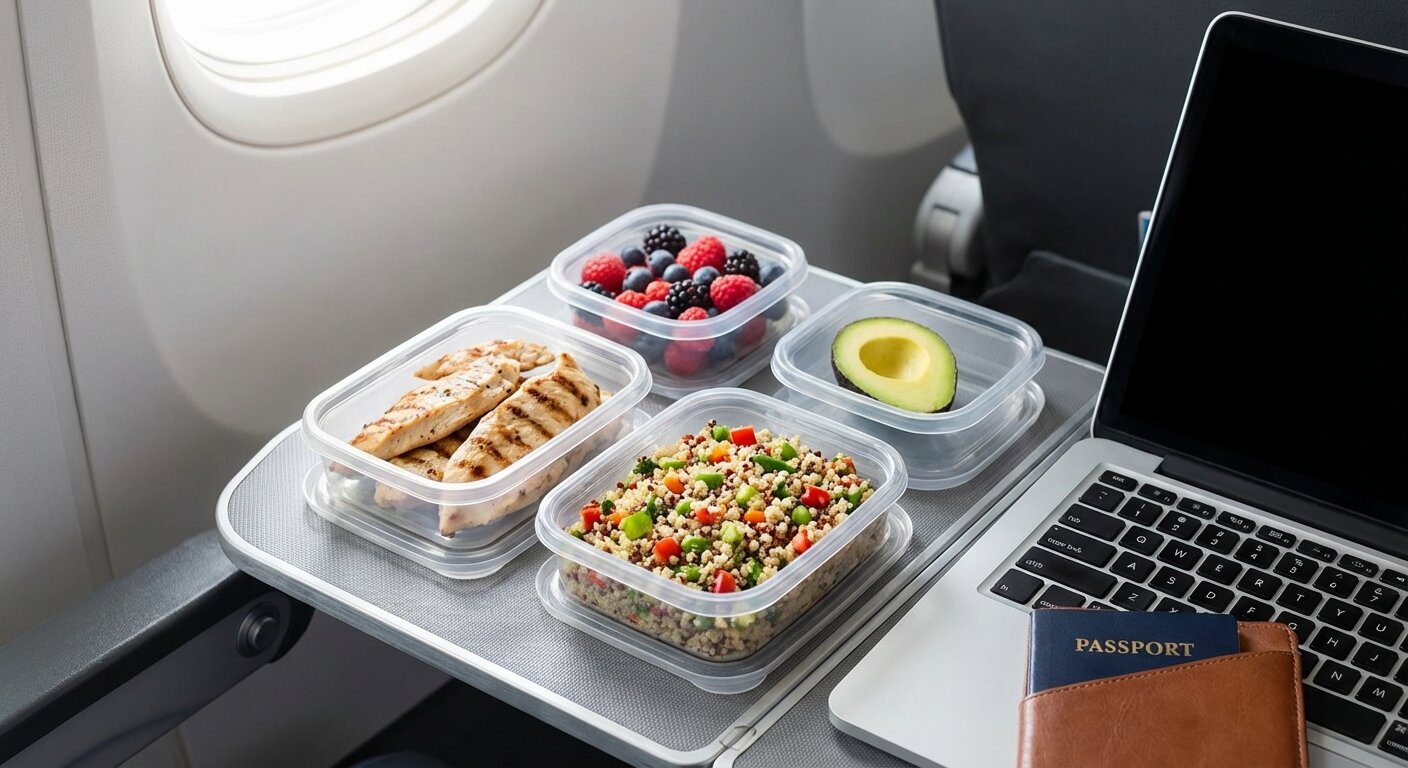
Travel Macros: How to Track Nutrition While Traveling
Complete guide to managing macros while traveling. Learn meal planning strategies,...
Read guide →
Macros for Shift Workers: Complete Guide to Nutrition on Rotating Schedules
Master macro tracking on night shifts and rotating schedules. Learn meal timing, sleep...
Read guide →
Macros During Ramadan: Complete Nutrition Guide for Fasting
Learn how to track macros during Ramadan fasting. Expert guide covering meal timing,...
Read guide →Disclaimer: This content is for informational purposes only. Consult a healthcare provider before making changes to your diet.