Macros for 16/8 Fasting: Complete Guide to Eating Windows
Macros for 16/8 Fasting: Complete Guide to Eating Windows
16/8 intermittent fasting is one of the most popular eating patterns for fat loss, muscle building, and metabolic health—and it’s surprisingly simple to combine with macro tracking. The challenge isn’t the fasting itself; it’s figuring out how to hit your protein, carb, and fat targets within an 8-hour eating window without feeling stuffed or sacrificing muscle.
Most people overthink this. They wonder if fasting changes their macro needs, whether they should eat differently on fasting days, or if they need special supplements to preserve muscle. The truth? Your macro targets don’t change—only the timing. Whether you eat 150g protein in 8 hours or 16 hours, your body uses it the same way. For a deeper understanding of how macronutrients work, see our guide to what are macronutrients. If your goal is fat loss, check out our complete macros for weight loss guide.
This guide will show you exactly how to calculate your macros for 16/8 fasting, structure your eating window for maximum results, and avoid the common mistakes that sabotage progress. Ready to use the macro calculator to get your personalized targets? Let’s do this.
What Is 16/8 Intermittent Fasting?
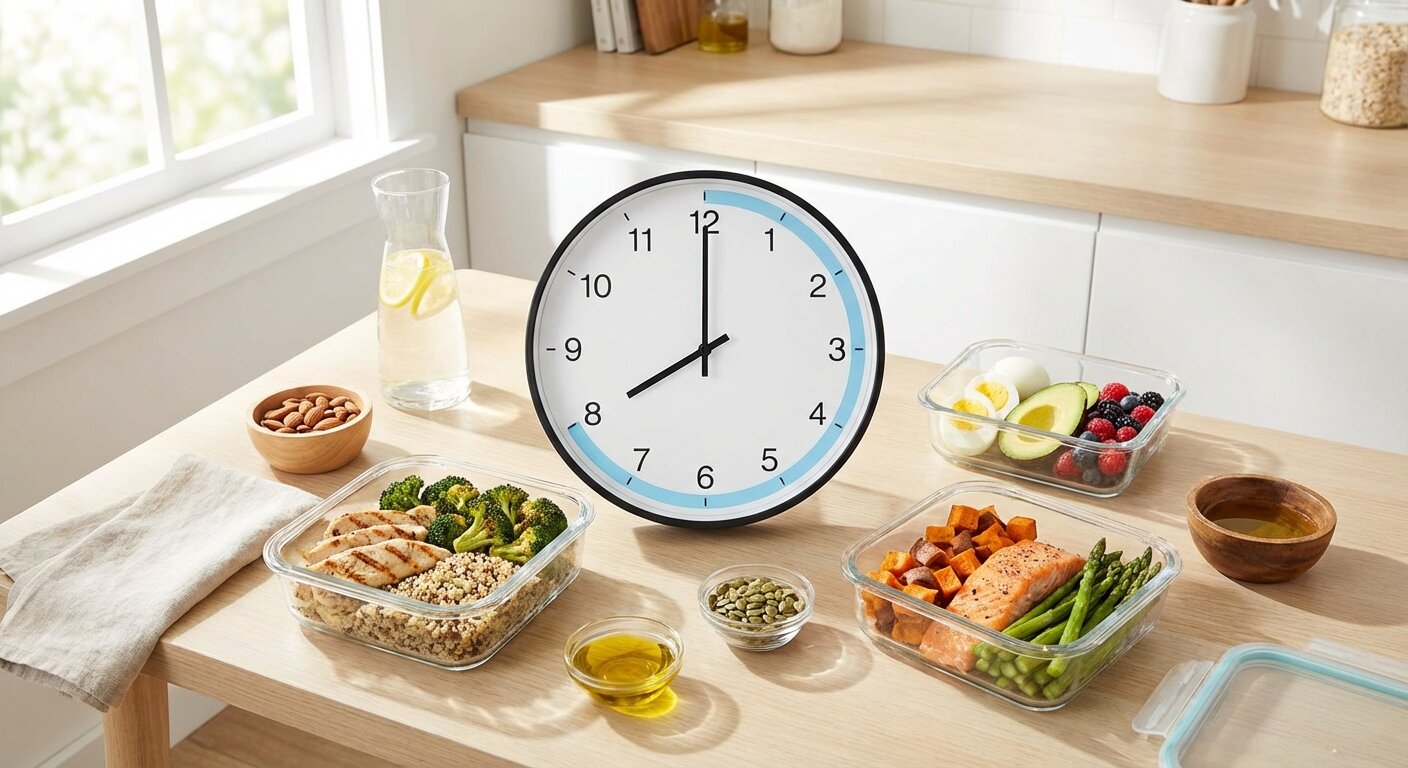
16/8 intermittent fasting means you fast for 16 hours and eat all your meals within an 8-hour window. It’s the most beginner-friendly form of intermittent fasting because it’s flexible, sustainable, and doesn’t require extreme calorie restriction.
How it works:
- 16-hour fast: No calories consumed (water, black coffee, tea are fine)
- 8-hour eating window: All meals and snacks fit here
- Daily schedule: Most people do 12pm-8pm, but you can adjust based on your lifestyle
Common eating windows:
- 12pm-8pm: Skip breakfast, eat lunch and dinner (most popular)
- 10am-6pm: Early bird schedule, includes breakfast
- 1pm-9pm: Late start, great for night owls
- 2pm-10pm: Shift workers or late gym sessions
What you can have during the fast:
- ✅ Water (plain or sparkling)
- ✅ Black coffee
- ✅ Unsweetened tea
- ✅ Zero-calorie drinks (sparingly)
- ❌ Anything with calories (breaks the fast)
The beauty of 16/8 fasting is that it simplifies meal planning—you only need to worry about 2-3 meals instead of 5-6 small meals throughout the day.
Do Macros Change on 16/8 Fasting?
No. Your macro needs are based on your body composition, activity level, and goals—not your eating schedule. Whether you eat your macros in 8 hours or 16 hours, your body processes them the same way.
What doesn’t change:
- Daily calorie target
- Protein requirements (0.8-1g per pound bodyweight)
- Fat minimums (0.3-0.4g per pound bodyweight)
- Carb intake (whatever fills remaining calories)
What does change:
- Meal frequency: 2-3 larger meals instead of 5-6 small meals
- Meal size: Each meal is bigger to fit your daily macros
- Nutrient timing: You might time meals around workouts
Example: If you need 180g protein, 200g carbs, and 60g fat daily (2,020 calories), those numbers stay exactly the same on 16/8 fasting. The only difference is you eat them between 12pm-8pm instead of throughout the day.
Why Timing Doesn’t Affect Macro Needs
Your body doesn’t reset at midnight. It operates on a 24-48 hour metabolic cycle, meaning it doesn’t care if you ate protein at 8am or 2pm—it uses it for muscle repair and growth when needed.
Metabolism myths debunked:
- ❌ Myth: “Fasting slows your metabolism”
- ✅ Truth: Short fasts (16-24 hours) don’t affect metabolic rate
- ❌ Myth: “You need to eat every 3 hours to preserve muscle”
- ✅ Truth: Muscle protein synthesis responds to daily protein intake, not meal frequency
- ❌ Myth: “Eating late at night causes fat storage”
- ✅ Truth: Total daily calories determine fat gain, not meal timing
The takeaway? Calculate your macros based on your TDEE and goals, then fit them into your 8-hour window. Don’t overthink it.
How to Calculate Macros for 16/8 Fasting
Use the same calculation method as any diet—16/8 fasting doesn’t require special formulas. Here’s the step-by-step process:
Step 1: Calculate Your TDEE
Total Daily Energy Expenditure (TDEE) is how many calories you burn per day including activity.
Quick formula:
- Sedentary: Bodyweight × 12-13
- Lightly active: Bodyweight × 13-14
- Moderately active: Bodyweight × 14-16
- Very active: Bodyweight × 16-18
Example: 180 lb person, moderately active
- TDEE = 180 × 15 = 2,700 calories/day
Or use the macro calculator for a more precise estimate based on your age, height, weight, and activity level.
Step 2: Set Your Calorie Target
Adjust calories based on your goal:
- Fat loss: TDEE - 500 calories (1 lb/week loss)
- Muscle gain: TDEE + 250-500 calories (0.5-1 lb/week gain)
- Maintenance: TDEE (no change)
Example (fat loss):
- TDEE: 2,700 calories
- Target: 2,700 - 500 = 2,200 calories/day
Step 3: Calculate Protein
Protein is the most important macro for preserving muscle during fat loss or building muscle during bulking.
Target: 0.8-1g per pound bodyweight
- Fat loss: Aim for 1g/lb (higher protein preserves muscle in deficit)
- Muscle gain: 0.8-1g/lb is sufficient
- Maintenance: 0.8g/lb minimum
Example (180 lb person):
- Protein: 180 × 1 = 180g
- Calories from protein: 180 × 4 = 720 calories
Step 4: Calculate Fat
Fat is essential for hormone production, brain function, and nutrient absorption.
Target: 0.3-0.4g per pound bodyweight
Example:
- Fat: 180 × 0.35 = 63g
- Calories from fat: 63 × 9 = 567 calories
Step 5: Calculate Carbs
Carbs fill the remaining calories after protein and fat are set.
Formula: (Target calories - Protein calories - Fat calories) ÷ 4
Example:
- Remaining calories: 2,200 - 720 - 567 = 913
- Carbs: 913 ÷ 4 = 228g
Your 16/8 Fasting Macros
For our 180 lb example on a fat loss plan:
- Calories: 2,200
- Protein: 180g
- Fat: 63g
- Carbs: 228g
These exact macros need to fit within your 8-hour eating window—no adjustments needed for fasting.
Best Macro Ratios for 16/8 Fasting
While the calculator above is personalized to your body and goals, here are common macro ratios that work well with 16/8 fasting:
Fat Loss (Most Popular)
40% Carbs / 30% Protein / 30% Fat
This ratio keeps protein high for muscle preservation while providing enough carbs for energy and fat for satiety.
Example (2,000 calories):
- Carbs: 200g (40%)
- Protein: 150g (30%)
- Fat: 67g (30%)
Best for: Active people who need carbs for workouts but want steady fat loss
Muscle Gain
45% Carbs / 30% Protein / 25% Fat
Higher carbs fuel intense training and recovery, while moderate protein supports muscle growth.
Example (2,500 calories):
- Carbs: 281g (45%)
- Protein: 188g (30%)
- Fat: 69g (25%)
Best for: Bulking, bodybuilders, strength athletes
Low-Carb / Keto
10% Carbs / 30% Protein / 60% Fat
Minimal carbs keep you in ketosis, high fat provides energy, moderate protein preserves muscle.
Example (2,000 calories):
- Carbs: 50g (10%)
- Protein: 150g (30%)
- Fat: 133g (60%)
Best for: People who feel better on low-carb, metabolic health goals, appetite control
Balanced Maintenance
40% Carbs / 30% Protein / 30% Fat
Flexible ratio that works for most people maintaining weight and muscle.
Example (2,200 calories):
- Carbs: 220g (40%)
- Protein: 165g (30%)
- Fat: 73g (30%)
Best for: Maintaining current physique, sustainable long-term eating
The bottom line: Any ratio works as long as you hit your calorie target and get enough protein. Choose based on personal preference and how you feel.
Structuring Your 8-Hour Eating Window
The key to hitting your macros on 16/8 fasting is meal structure—you need to fit 2-3 substantial meals into 8 hours without feeling overstuffed or under-fueled.
2-Meal Structure (Most Common)
Best for: People who don’t mind larger meals and want simplicity
Schedule:
- 12:00pm: First meal (40% of daily macros)
- 6:00pm: Second meal (60% of daily macros)
Example (2,200 calories, 180g protein):
Meal 1 (12pm): 880 calories
- Grilled chicken breast (8 oz): 62g protein, 374 cal
- Brown rice (1.5 cups cooked): 67g carbs, 300 cal
- Mixed vegetables (2 cups): 10g carbs, 60 cal
- Olive oil (1 tbsp): 14g fat, 120 cal
Meal 2 (6pm): 1,320 calories
- Salmon (8 oz): 50g protein, 30g fat, 480 cal
- Sweet potato (large, 300g): 60g carbs, 240 cal
- Spinach salad (3 cups): 5g carbs, 30 cal
- Avocado (half): 15g fat, 120 cal
- Protein bar: 20g protein, 25g carbs, 10g fat, 250 cal
- Dark chocolate (1 oz): 12g carbs, 8g fat, 150 cal
Total: 2,200 cal | 180g protein | 228g carbs | 63g fat ✅
3-Meal Structure (Easier on Digestion)
Best for: People who struggle with large meals or workout during eating window
Schedule:
- 12:00pm: Lunch (35% of macros)
- 3:30pm: Post-workout meal or snack (25% of macros)
- 7:30pm: Dinner (40% of macros)
Example (2,200 calories, 180g protein):
Meal 1 (12pm): 770 calories
- Turkey breast (6 oz): 52g protein, 280 cal
- Quinoa (1 cup cooked): 40g carbs, 220 cal
- Broccoli (2 cups): 12g carbs, 60 cal
- Almonds (1 oz): 14g fat, 160 cal
Meal 2 (3:30pm): 550 calories
- Greek yogurt (2 cups): 40g protein, 15g carbs, 300 cal
- Banana (large): 30g carbs, 120 cal
- Peanut butter (1 tbsp): 8g fat, 100 cal
Meal 3 (7:30pm): 880 calories
- Lean ground beef (6 oz): 48g protein, 18g fat, 360 cal
- White rice (1.5 cups cooked): 67g carbs, 300 cal
- Green beans (2 cups): 10g carbs, 60 cal
- Olive oil (1 tbsp): 14g fat, 120 cal
Total: 2,200 cal | 180g protein | 228g carbs | 63g fat ✅
Pre-Workout vs Post-Workout Timing
If you train during fasting (morning workout, 8am-10am):
- Break fast with post-workout meal immediately after training
- Load most carbs here for recovery
- Example: 12pm window opens with 60g protein, 100g carbs
If you train during eating window (afternoon, 4pm-6pm):
- Light pre-workout meal 1-2 hours before (20-30g protein, 40-50g carbs)
- Larger post-workout meal after training
- Example: 3pm snack, 7pm big dinner
Does nutrient timing matter? For most people, no—total daily macros are 90% of results. But if you’re an advanced lifter, having 30-40g protein within 2 hours of training can slightly improve recovery.
Sample 16/8 Fasting Macro Meal Plans
Here are complete meal plans for different goals and calorie levels.
Fat Loss Plan (1,800 Calories)
Macros: 180g protein | 150g carbs | 60g fat Window: 12pm-8pm
Meal 1 (12pm): 720 calories
- Chicken breast (6 oz): 54g protein, 280 cal
- Brown rice (1 cup cooked): 45g carbs, 200 cal
- Asparagus (2 cups): 8g carbs, 40 cal
- Avocado (1/4): 7g fat, 60 cal
Meal 2 (4pm): 360 calories
- Protein shake: 30g protein, 15g carbs, 160 cal
- Apple (medium): 25g carbs, 95 cal
Meal 3 (7:30pm): 720 calories
- Salmon (6 oz): 40g protein, 20g fat, 360 cal
- Sweet potato (medium): 30g carbs, 130 cal
- Spinach salad (3 cups): 5g carbs, 30 cal
- Walnuts (0.5 oz): 9g fat, 90 cal
- Berries (1 cup): 20g carbs, 80 cal
Total: 1,800 cal | 180g protein | 150g carbs | 60g fat ✅
Muscle Gain Plan (2,800 Calories)
Macros: 200g protein | 320g carbs | 80g fat Window: 12pm-8pm
Meal 1 (12pm): 1,000 calories
- Ground turkey (8 oz): 60g protein, 20g fat, 440 cal
- White rice (2 cups cooked): 90g carbs, 400 cal
- Bell peppers (1 cup): 10g carbs, 40 cal
Meal 2 (3:30pm, post-workout): 840 calories
- Protein shake: 40g protein, 60g carbs, 400 cal
- Bagel: 50g carbs, 250 cal
- Peanut butter (2 tbsp): 16g fat, 190 cal
Meal 3 (7:30pm): 960 calories
- Steak (8 oz): 60g protein, 24g fat, 520 cal
- Pasta (2 cups cooked): 80g carbs, 320 cal
- Olive oil (1 tbsp): 14g fat, 120 cal
Total: 2,800 cal | 200g protein | 320g carbs | 80g fat ✅
Low-Carb/Keto Plan (2,000 Calories)
Macros: 150g protein | 50g carbs | 133g fat Window: 12pm-8pm
Meal 1 (12pm): 800 calories
- Eggs (4 large): 28g protein, 20g fat, 280 cal
- Bacon (4 strips): 12g protein, 16g fat, 200 cal
- Avocado (whole): 30g fat, 240 cal
- Spinach (2 cups): 5g carbs, 20 cal
Meal 2 (4pm): 400 calories
- String cheese (3 sticks): 21g protein, 18g fat, 240 cal
- Macadamia nuts (1 oz): 11g fat, 200 cal
Meal 3 (7:30pm): 800 calories
- Ribeye steak (8 oz): 50g protein, 40g fat, 600 cal
- Cauliflower rice (2 cups): 10g carbs, 50 cal
- Butter (1 tbsp): 12g fat, 100 cal
Total: 2,000 cal | 150g protein | 50g carbs | 133g fat ✅
These plans show you don’t need complicated meal prep—just hit your macros within the window using whole foods you enjoy.
Common Mistakes to Avoid
1. Under-Eating Protein
The mistake: Focusing on calories but not hitting protein targets
Why it matters: Protein preserves muscle during fat loss and builds muscle during bulking. If you’re eating 1,800 calories but only 80g protein, you’ll lose muscle and look “skinny fat” instead of lean and strong.
The fix: Plan protein first, then fill remaining calories with carbs and fats. Aim for 0.8-1g per pound bodyweight.
2. Breaking the Fast with High-Carb Foods
The mistake: Starting eating window with sugary cereal, pastries, or white bread
Why it matters: Breaking a 16-hour fast with high-glycemic carbs causes blood sugar spikes and crashes, leaving you hungry and tired. You’ll also blow through half your carb allowance in one meal.
The fix: Start with protein + fat + moderate carbs. Examples: eggs and avocado, Greek yogurt with berries, chicken and rice bowl.
3. Eating Too Fast
The mistake: Rushing through meals because you have limited time
Why it matters: Eating too quickly leads to poor digestion, bloating, and overshooting macros because satiety signals don’t kick in until 15-20 minutes after eating.
The fix: Eat slowly, chew thoroughly, and give yourself 20-30 minutes per meal. You have 8 hours—there’s no rush.
4. Ignoring Hydration
The mistake: Only drinking water during meals, not during the 16-hour fast
Why it matters: Dehydration mimics hunger and can break your fast early. It also impairs performance, recovery, and fat oxidation.
The fix: Drink 2-3 liters of water throughout the day, including during fasting hours. Black coffee and unsweetened tea count toward hydration.
5. Not Adjusting for Activity Level
The mistake: Using the same macros on rest days and training days
Why it matters: If you’re highly active (training 5-6x/week), you might need more carbs on training days to support performance. Conversely, on rest days, you can drop carbs slightly without affecting results.
The fix: Consider carb cycling—higher carbs on training days, lower on rest days, keeping protein and total calories consistent.
6. Expecting Instant Results
The mistake: Trying 16/8 fasting for 1 week and giving up because the scale didn’t move
Why it matters: Fat loss takes time. Your body needs 2-4 weeks to adapt to the fasting schedule, and initial water weight fluctuations can mask real progress.
The fix: Track weekly averages (weight, measurements, progress photos) instead of daily fluctuations. Give it 4-6 weeks before assessing results.
Frequently Asked Questions
Can I drink protein shakes during the fasting window?
No—anything with calories breaks the fast. Protein shakes contain calories from protein and carbs, so they must be consumed during your 8-hour eating window. If you need protein immediately after an early morning workout, consider shifting your window to 10am-6pm instead of 12pm-8pm.
Is 16/8 fasting safe for women?
Yes, but some women find prolonged fasting (16+ hours) affects hormones, menstrual cycles, or energy levels. If you experience irregular periods, extreme fatigue, or mood swings, consider a shorter fasting window like 14/10 (14 hours fasting, 10 hours eating). Women often do better with slightly shorter fasts than men.
Should I take supplements while fasting?
Most supplements are fine during the fasting window, but fat-soluble vitamins (A, D, E, K) should be taken with meals for better absorption. BCAAs technically break a fast if you’re strict about autophagy, but they won’t affect fat loss. If in doubt, take all supplements during your eating window.
What if I get hungry during the fasting window?
Hunger comes in waves—it peaks around your usual meal times, then fades. Drink water, black coffee, or herbal tea. Distraction helps (work, exercise, hobbies). Most people adapt within 7-10 days and stop feeling hungry during fasting hours. If hunger is unbearable, you might need more calories overall.
Can I do 16/8 fasting long-term?
Yes—16/8 is sustainable indefinitely for most people. Unlike extreme diets or extended fasts (24-48 hours), 16/8 is just an eating schedule. Many people follow it for years without issues. If you feel great and hit your goals, there’s no reason to stop.
Does it matter which 8 hours I choose?
No, as long as you’re consistent. The most important factor is fitting the window into your lifestyle and social schedule. If you love breakfast, do 8am-4pm. If you prefer late dinners, do 2pm-10pm. The metabolic benefits are the same regardless of timing.
Can I workout fasted in the morning?
Yes—fasted training is popular and works well for many people, especially for fat loss. Your body uses stored glycogen and fat for energy. Some research suggests fasted cardio may slightly increase fat oxidation, but the effect is small. If performance suffers, have a small pre-workout meal at the start of your window.
What if I can’t hit my macros in 8 hours?
You have a few options:
- Extend to 10 hours (14/10 fasting): Slightly shorter fast, easier to fit macros
- Use calorie-dense foods: Nuts, nut butters, avocados, oils add calories without volume
- Drink calories: Protein shakes, smoothies are easier to consume than solid food
- Eat more frequently: Add a 4th smaller meal or snack during the window
Most people adapt within 2-3 weeks and find hitting macros gets significantly easier.
Should I track macros every day on 16/8 fasting?
Yes, especially at first. Tracking ensures you hit protein targets and stay consistent with calories. After 4-6 weeks, you might be able to intuitively eat without tracking if you’ve built solid habits. But for best results, track at least 5-6 days per week.
Can I do 16/8 fasting on a keto diet?
Absolutely—16/8 pairs extremely well with keto. Both approaches improve insulin sensitivity, fat oxidation, and appetite control. Many people find fasting easier on keto because dietary fat and ketones keep hunger low. Just make sure to hit your protein target (don’t go too low) and get enough electrolytes.
Is 16/8 fasting better than traditional dieting?
Not necessarily—research shows that when calories and macros are matched, 16/8 fasting produces similar fat loss results to traditional eating patterns. The advantage is adherence—many people find it easier to stick with 2-3 larger meals than 5-6 small meals. If you prefer eating throughout the day, traditional dieting works just as well.
Conclusion: Making 16/8 Fasting Work for You
16/8 intermittent fasting isn’t magic—it’s a flexible eating schedule that makes hitting your macros easier for most people. You don’t need special macro calculations, supplements, or meal timing tricks. Just calculate your macros based on your TDEE and goals, then fit them into an 8-hour window that aligns with your lifestyle.
Quick recap:
- Your macro needs don’t change—only the timing
- Aim for 2-3 meals within your eating window
- Prioritize protein (0.8-1g per pound bodyweight)
- Choose a window that fits your schedule (12pm-8pm is most popular)
- Track your macros consistently for best results
The biggest mistake people make is overcomplicating it. Start with the macro calculator to get your targets, pick an eating window that fits your life, and focus on whole foods that fill you up. Give it 4-6 weeks to adapt, and adjust as needed based on how you feel and perform.
Want more guidance on meal timing, workout nutrition, or specific diets? Check out these related guides:
- Macros for Intermittent Fasting — Complete guide to all IF protocols
- OMAD Macros — One meal a day macro strategies
- Pre-Workout Macros — Timing nutrition around training
- Post-Workout Macros — Recovery meal strategies
Track your progress, stay consistent, and enjoy the simplicity of 16/8 fasting with macro tracking. You’ve got this.
Related Articles
Travel Macros: How to Track Nutrition While Traveling
Complete guide to managing macros while traveling. Learn meal planning strategies,...
Read guide →
Macros for Shift Workers: Complete Guide to Nutrition on Rotating Schedules
Master macro tracking on night shifts and rotating schedules. Learn meal timing, sleep...
Read guide →
Macros During Ramadan: Complete Nutrition Guide for Fasting
Learn how to track macros during Ramadan fasting. Expert guide covering meal timing,...
Read guide →Disclaimer: This content is for informational purposes only. Consult a healthcare provider before making changes to your diet.