Hitting Your Macros on a Budget: Complete Guide to Affordable Macro Tracking
Introduction
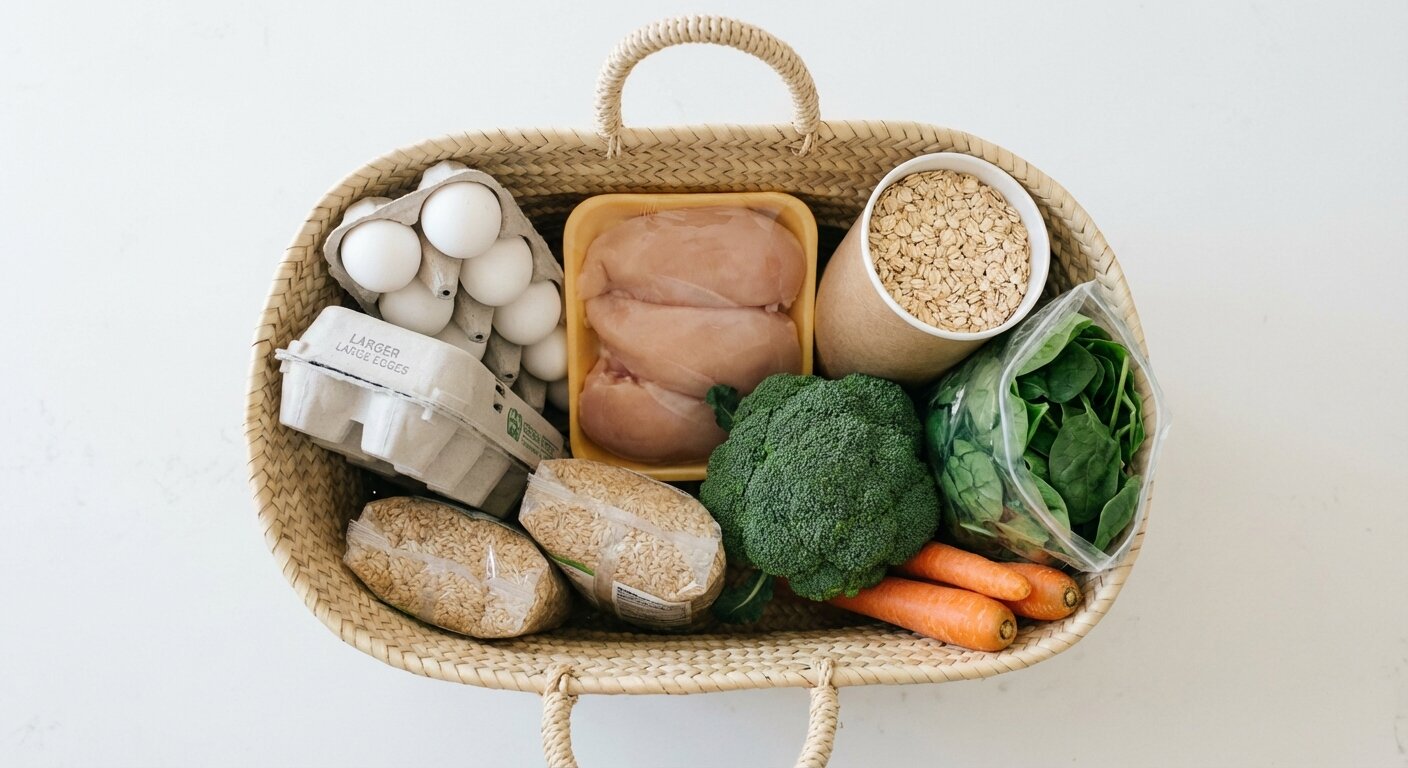
The myth that eating healthy costs more stops countless people from pursuing their fitness goals. They see social media influencers buying grass-fed beef, organic everything, and expensive supplements, then conclude macro tracking isn’t for them.
Here’s the truth: you can hit your macros and transform your body on $5-8 per day. The secret isn’t expensive superfoods—it’s understanding which affordable foods deliver the best macronutrient bang for your buck, how to shop strategically, and how to meal prep efficiently.
Whether you’re a college student living on ramen money, a family trying to eat better without increasing the grocery bill, or anyone watching their finances, this guide will show you exactly how to track macros without financial stress. Let’s dive into building your budget-friendly macro system.
New to macro tracking? Start with our complete guide to counting macros to understand the fundamentals. Then use our free Macro Calculator to get your exact protein, carb, and fat goals based on your body composition and fitness objectives.
The Reality of Macro Tracking Costs
What Actually Drives Up Food Costs
Most people overspend on macro tracking because of these common mistakes:
Convenience premium: Pre-portioned meals, meal delivery services, and prepared foods can cost 3-5x more than cooking yourself. A $12 meal prep container might contain $3 worth of actual ingredients.
Brand loyalty: Name-brand products often cost 30-50% more than store brands with identical macronutrient profiles. The protein in Fage Greek yogurt is the same molecule as store-brand Greek yogurt.
Trendy superfoods: Quinoa, chia seeds, and goji berries make great Instagram posts but aren’t necessary for results. Brown rice has nearly identical macros to quinoa at one-third the cost.
Organic everything: While organic has benefits, the macronutrient content is essentially identical to conventional produce. If budget is tight, conventional is fine—the most important thing is hitting your targets.
Inefficient shopping: Buying without a plan, shopping hungry, ignoring sales, and throwing away expired food waste massive amounts of money.
The True Cost of Budget Macro Tracking
Here’s what macro tracking actually costs when done efficiently:
Ultra-budget approach ($5-7/day, ~$150-210/month):
- 150-180g protein
- 2,000-2,500 calories
- Staple foods only: eggs, chicken thighs, ground turkey, rice, oats, beans, frozen vegetables
- Minimal variety, maximum efficiency
- Requires bulk buying and meal prep discipline
Moderate budget ($8-12/day, ~$240-360/month):
- 180-220g protein
- 2,500-3,000 calories
- Includes occasional lean cuts, fresh produce, protein powder, some variety
- Allows for taste preferences and meal diversity
- More sustainable long-term
Comfortable budget ($12-20/day, ~$360-600/month):
- 200+ g protein
- 3,000+ calories (or cutting with premium choices)
- Includes salmon, leaner cuts, organic options when desired, extensive variety
- Maximum flexibility and enjoyment
- Still strategic but not restricted
Most people tracking macros on a budget successfully operate in the $7-12/day range—enough for excellent results without feeling deprived.
The Most Affordable High-Protein Foods
Protein is typically the most expensive macronutrient and the hardest to hit on a budget. Here are the champions of cost-effective protein:
Eggs: The Budget Protein King
Cost per serving: $0.15-0.30 per egg Macros per large egg: 6g protein, 5g fat, 0g carbs (70 calories) Cost per gram of protein: ~$0.02-0.05
Eggs are unbeatable for budget macro tracking:
- Complete protein with all essential amino acids
- Incredibly versatile (scrambled, boiled, baked, fried)
- Long shelf life when refrigerated
- Can be bought in bulk (60-count flats)
- Provide healthy fats and micronutrients
Budget strategy: Buy the largest quantity available. Organic free-range might feel better, but conventional eggs have identical macros. A dozen large eggs gives you 72g protein for $2-4.
Chicken Thighs: Better Than Breast
Cost per serving: $2-3 per pound (often less on sale) Macros per 4oz cooked: 24g protein, 7g fat, 0g carbs (170 calories) Cost per gram of protein: ~$0.04-0.06
Chicken thighs often beat chicken breast on a budget:
- Cheaper per pound (breasts can be $4-6/lb)
- More forgiving when cooking (won’t dry out)
- Better flavor (more fat = more taste)
- Higher satiety factor
Budget strategy: Buy family packs or when on sale, portion into meal-sized bags, and freeze. Bone-in, skin-on thighs are even cheaper—learn to debone them yourself and render the fat for cooking.
Ground Turkey: Versatile Protein Powerhouse
Cost per serving: $3-4 per pound Macros per 4oz cooked (93% lean): 22g protein, 3g fat, 0g carbs (120 calories) Cost per gram of protein: ~$0.05-0.07
Ground turkey is incredibly budget-efficient:
- Extremely versatile (tacos, burgers, pasta sauce, stir-fry)
- Can be seasoned to taste like anything
- Leaner than ground beef at similar prices
- Easy to meal prep in large batches
Budget strategy: Don’t pay extra for “ground turkey breast”—regular ground turkey (85-93% lean) is cheaper and the small amount of extra fat isn’t problematic. Cook 3-5 lbs at once and portion for the week.
Canned Tuna: Shelf-Stable Protein
Cost per serving: $1-2 per 5oz can Macros per can: 30g protein, 1g fat, 0g carbs (120 calories) Cost per gram of protein: ~$0.03-0.07
Canned tuna is underrated for budget macro tracking:
- No refrigeration needed until opened
- Very long shelf life (2-5 years)
- Extremely lean protein source
- Quick and convenient
Budget strategy: Buy store-brand chunk light tuna in water (not albacore or flavored varieties). Stock up during sales—it won’t go bad. Mix with Greek yogurt instead of mayo to keep it lean.
Greek Yogurt: Protein-Rich Dairy
Cost per serving: $3-5 per 32oz tub Macros per cup (nonfat): 23g protein, 0g fat, 9g carbs (130 calories) Cost per gram of protein: ~$0.05-0.08
Greek yogurt is one of the best protein-per-dollar dairy options:
- High protein, low fat (in nonfat versions)
- Contains probiotics for gut health
- Versatile (breakfast, snacks, cooking, baking)
- Satisfying and filling
Budget strategy: Buy the largest containers (32oz+), choose store brands, and look for sales. Flavored varieties cost more and add sugar—buy plain and add your own fruit or zero-calorie sweetener.
Cottage Cheese: Underrated Protein Source
Cost per serving: $3-4 per 16oz tub Macros per cup (low-fat): 28g protein, 2g fat, 8g carbs (180 calories) Cost per gram of protein: ~$0.04-0.06
Cottage cheese offers excellent protein density:
- Very high protein per serving
- Casein protein (slow-digesting, ideal before bed)
- Low fat versions are very lean
- Versatile (sweet or savory)
Budget strategy: Buy store brands and larger tubs. Mix with canned fruit (in juice, not syrup) for a satisfying high-protein snack.
Whey Protein Powder: Cost-Effective Convenience
Cost per serving: $0.50-0.80 per scoop (when buying 5lb tubs) Macros per scoop: 24g protein, 2g fat, 3g carbs (120 calories) Cost per gram of protein: ~$0.02-0.03
Quality protein powder can be one of the cheapest protein sources:
- Extremely cost-effective per gram of protein
- Convenient and portable
- Long shelf life (1-2 years)
- Mixes into anything (shakes, oatmeal, yogurt, baking)
Budget strategy: Buy large tubs (5lb) of basic flavors (chocolate, vanilla) from reputable brands during sales. Avoid proprietary blends and trendy ingredients—you’re paying for protein, not marketing.
Beans and Lentils: Plant-Based Budget Champions
Cost per serving: $0.50-1.50 per cup (cooked from dried) Macros per cup (black beans, cooked): 15g protein, 1g fat, 41g carbs (227 calories) Cost per gram of protein: ~$0.03-0.10
Beans and lentils offer incredible value:
- Very inexpensive (especially dried)
- Complete macros (protein + carbs + fiber)
- Extremely filling and satisfying
- Versatile in many cuisines
Budget strategy: Buy dried beans in bulk (5-10lb bags). Yes, they require soaking and longer cooking, but the cost savings are massive. A 1lb bag of dried black beans (~$1.50) makes 6-7 cups cooked—that’s 90-105g protein for under $2.
Budget-Friendly Carbohydrate Sources
Carbs are typically the cheapest macronutrient. Focus on these affordable, macro-friendly options:
White and Brown Rice
Cost: $0.15-0.30 per cooked cup Macros per cup (cooked white rice): 4g protein, 0g fat, 45g carbs (200 calories)
Rice is the ultimate budget carb:
- Extremely cheap per serving
- Long shelf life (years when stored properly)
- Versatile base for any protein
- Easy to meal prep in large quantities
Budget strategy: Buy 20lb bags at wholesale stores or ethnic markets. White rice stores longer than brown (brown rice can go rancid due to natural oils). Invest in a rice cooker—cook once, eat all week.
Oats: Breakfast Carb Champion
Cost: $0.20-0.40 per serving Macros per cup (dry): 10g protein, 5g fat, 54g carbs (300 calories)
Oats offer exceptional value:
- Very inexpensive
- Decent protein for a grain
- High fiber for satiety
- Quick to prepare
Budget strategy: Buy old-fashioned oats in bulk, not instant packets (you’re paying for convenience and sugar). Flavor with cinnamon, sugar-free syrup, or frozen berries.
Sweet Potatoes and Regular Potatoes
Cost: $0.40-0.80 per medium potato Macros per medium sweet potato: 2g protein, 0g fat, 24g carbs (100 calories)
Potatoes are incredibly nutrient-dense and filling:
- Very affordable year-round
- Extremely filling (high satiety index)
- Rich in micronutrients
- Versatile preparation methods
Budget strategy: Buy in 5-10lb bags. Both sweet and regular potatoes have excellent macros—choose based on preference and price. Microwave or batch-bake for easy meal prep.
Pasta: Quick Carbs on a Budget
Cost: $0.30-0.60 per 2oz dry serving Macros per 2oz dry (yields ~1 cup cooked): 7g protein, 1g fat, 42g carbs (200 calories)
Pasta offers solid macro value:
- Very inexpensive
- Long shelf life
- Quick to prepare
- Pairs with anything
Budget strategy: Buy store-brand pasta in large boxes. Whole wheat pasta has slightly more fiber and protein but costs more—if budget is very tight, regular pasta is fine.
Bread and Tortillas
Cost: $1-3 per loaf/package Macros per slice (whole wheat): 4g protein, 1g fat, 12g carbs (70 calories)
Bread products offer convenient carbs:
- Inexpensive and filling
- Portable for packed lunches
- Versatile (sandwiches, wraps, toast)
Budget strategy: Buy store-brand whole wheat bread or tortillas. Check unit prices—sometimes larger packages are much cheaper. Freeze extra loaves to prevent waste.
Frozen Vegetables: Nutrient-Dense Carbs
Cost: $1-2 per 12-16oz bag Macros per cup (mixed vegetables): 3g protein, 0g fat, 12g carbs (60 calories)
Frozen vegetables are budget essentials:
- Cheaper than fresh and last much longer
- Already washed and cut (convenience without premium price)
- Flash-frozen at peak nutrition
- Zero waste
Budget strategy: Buy store-brand frozen vegetables in large bags. Broccoli, mixed vegetables, and green beans are usually cheapest. Use them in stir-fries, roasted, or steamed with meals.
Affordable Healthy Fats
Fats are calorie-dense, so a little goes a long way. Focus on these budget-friendly sources:
Cooking Oils (Olive, Vegetable, Canola)
Cost: $0.10-0.30 per tablespoon Macros per tablespoon: 0g protein, 14g fat, 0g carbs (120 calories)
Cooking oils are essential and economical:
- Small amounts provide needed fat
- Prevent food from sticking
- Add flavor and mouthfeel
- Long shelf life
Budget strategy: Buy larger bottles (32oz+) of basic oils. Extra virgin olive oil is great but expensive—regular olive oil or canola oil work fine for everyday cooking.
Peanut Butter
Cost: $0.20-0.40 per 2 tbsp serving Macros per 2 tbsp: 7g protein, 16g fat, 6g carbs (190 calories)
Peanut butter offers great macro variety:
- Provides both protein and fat
- Very filling and satisfying
- Versatile (snacks, cooking, baking)
- Long shelf life
Budget strategy: Buy store-brand “natural” peanut butter (just peanuts and salt). Avoid varieties with added sugar and hydrogenated oils—they cost more and offer worse macros.
Butter and Margarine
Cost: $0.15-0.30 per tablespoon Macros per tablespoon: 0g protein, 11g fat, 0g carbs (100 calories)
Butter adds flavor and fat economically:
- Inexpensive source of fat
- Makes food more enjoyable (adherence matters)
- Small amounts suffice
Budget strategy: Buy store-brand butter in sticks (easier to measure). Margarine is often cheaper if you need to save every penny, but butter tastes better.
Eggs (Yes, Again!)
Eggs count as a fat source too:
- Provide both protein AND healthy fats
- Yolks contain essential fatty acids
- Two-for-one macro source
Budget strategy: Don’t buy egg whites separately—they cost 3-4x more than whole eggs. Unless you need extremely lean protein for a specific cut, whole eggs are more efficient.
Cheese (in Moderation)
Cost: $3-5 per 8oz block Macros per oz (cheddar): 7g protein, 9g fat, 0g carbs (110 calories)
Cheese provides protein and fat but is calorie-dense:
- Affordable protein + fat combo
- Very satisfying
- Long shelf life
Budget strategy: Buy blocks and shred yourself (pre-shredded costs 30-50% more and contains anti-caking agents). Use smaller amounts for flavor rather than bulk—it’s easy to overshoot fat macros with cheese.
Weekly Budget Meal Plans
Here are three complete weekly meal plans at different budget levels. All hit standard macro targets for a 180lb person (180g protein, 200g carbs, 60g fat, ~2,200 calories).
Ultra-Budget Plan (~$40-50/week)
Breakfast (every day):
- 4 eggs, scrambled
- 1 cup oats with cinnamon
- Black coffee
- Macros: 38g protein, 60g carbs, 24g fat
Lunch (every day):
- 8oz cooked chicken thighs
- 1.5 cups white rice
- 1 cup frozen mixed vegetables
- Macros: 48g protein, 80g carbs, 14g fat
Dinner (every day):
- 1 can tuna (5oz)
- 2 cups steamed broccoli
- 1 medium sweet potato
- 1 tbsp olive oil on vegetables
- Macros: 32g protein, 35g carbs, 15g fat
Snack (every day):
- 1 cup nonfat Greek yogurt
- 2 tbsp peanut butter
- Macros: 30g protein, 9g carbs, 16g fat
Daily totals: 148g protein, 184g carbs, 69g fat (~2,050 calories)
Shopping list (weekly):
- 2 dozen eggs (~$4-6)
- 42oz oats (~$4)
- 3.5 lbs chicken thighs (~$7-10)
- 10 lbs white rice (~$5)
- 3 bags frozen mixed vegetables (~$3-6)
- 7 cans tuna (~$7-14)
- 3 bags frozen broccoli (~$3-6)
- 7 medium sweet potatoes (~$5)
- Olive oil (already have)
- 7 cups Greek yogurt (~$7-10)
- 1 jar peanut butter (~$3-4)
Total: ~$48-65 depending on location and sales
Notes: This plan is extremely repetitive but maximizes cost-efficiency. It provides excellent macros and nutrition. Add hot sauce, salsa, or seasonings (very cheap) for variety without changing macros.
Moderate Budget Plan (~$70-90/week)
Breakfast (alternating):
- Days 1, 3, 5, 7: 3 eggs + 2 slices whole wheat toast + 1 banana
- Days 2, 4, 6: 1 cup Greek yogurt + 1 cup oats + 1 scoop protein powder + berries
Lunch (alternating):
- Days 1, 3, 5: 8oz ground turkey (taco seasoned) + 1.5 cups rice + salsa + small tortilla
- Days 2, 4, 6, 7: Chicken thigh stir-fry (6oz chicken + 2 cups frozen vegetables + 1.5 cups rice + soy sauce)
Dinner (varying):
- Days 1, 5: Turkey burgers (6oz patty) + sweet potato + roasted vegetables
- Days 2, 6: Chicken breast (6oz) + pasta (2oz dry) + marinara + side salad
- Days 3, 7: Tuna (2 cans) + white rice (1 cup) + green beans
- Day 4: Turkey meatballs (8oz) + pasta (2oz dry) + marinara
Snacks (daily options):
- Greek yogurt + fruit
- Protein shake with banana
- Peanut butter on toast
- Cottage cheese with canned peaches
Shopping list (weekly):
- 1 dozen eggs (~$2-4)
- 1 loaf whole wheat bread (~$2-3)
- Bananas (~$2)
- 32oz Greek yogurt (~$4-6)
- 1 lb oats (~$3)
- 1 tub protein powder (lasts 3-4 weeks, ~$2-3/week)
- Frozen berries (~$3)
- 2 lbs ground turkey (~$6-8)
- Taco seasoning (~$1)
- 1.5 lbs chicken thighs (~$3-5)
- 1 lb chicken breast (~$4-6)
- 10 lbs rice (~$5)
- 3 bags frozen vegetables (~$3-6)
- Small tortillas (~$3)
- Salsa (~$2)
- 3 medium sweet potatoes (~$2)
- 1 lb pasta (~$1-2)
- Marinara sauce (~$2)
- Salad greens (~$3)
- 7 cans tuna (~$7-14)
- Frozen green beans (~$1-2)
- 16oz cottage cheese (~$3-4)
- Canned peaches (~$2)
- Cooking oil, seasonings
Total: ~$70-95 depending on location and sales
Notes: This plan offers much more variety while still being budget-conscious. Meals rotate to prevent boredom while keeping costs reasonable.
Comfortable Budget Plan (~$110-140/week)
This plan includes more variety, some premium proteins, fresh produce, and flexibility for preferences. It still focuses on value but allows for enjoyment and sustainability.
Breakfast (rotating):
- Greek yogurt parfait with granola and fresh berries
- Protein pancakes (protein powder + egg + oats)
- Veggie omelet (3 eggs + vegetables + cheese) with toast
- Overnight oats with protein powder, chia seeds, almond milk
Lunch (rotating):
- Grilled chicken Caesar salad (6oz chicken)
- Turkey and cheese sandwich with fruit and vegetables
- Chicken stir-fry with brown rice
- Salmon (4oz) with quinoa and roasted vegetables
- Tuna salad wrap with side of carrots
Dinner (rotating):
- Lean ground beef tacos (6oz) with all fixings
- Grilled chicken breast (8oz) with baked potato and broccoli
- Turkey chili with beans and cornbread
- Baked salmon (6oz) with asparagus and wild rice
- Lean steak (6oz) with sweet potato and salad
- Chicken fajitas with peppers and onions
- Pork tenderloin (6oz) with roasted root vegetables
Snacks (daily options):
- Protein bars (when on sale)
- Fresh fruit with nut butter
- Protein shake with frozen fruit
- Hummus with vegetables
- Cheese and crackers
- Trail mix (portion controlled)
Shopping list (weekly):
- Fresh eggs, Greek yogurt, cottage cheese, cheese blocks
- Variety of proteins: chicken breast, chicken thighs, ground turkey, ground beef, salmon, pork tenderloin, occasional lean steak
- Protein powder
- Fresh and frozen vegetables: lettuce, tomatoes, peppers, onions, broccoli, asparagus, carrots
- Carb sources: bread, rice, pasta, oats, sweet potatoes, regular potatoes, quinoa
- Fresh fruit: bananas, apples, berries
- Condiments and seasonings for variety
Total: ~$110-140 depending on protein sales and location
Notes: This plan prioritizes sustainability and enjoyment. It includes salmon and occasional lean beef, fresh produce, and variety to prevent diet fatigue. Still strategic about cost—buying on sale, comparing prices, meal prepping—but with room to enjoy food.
Strategic Shopping Tips for Macro Trackers
Effective shopping is the foundation of budget macro tracking. Here’s how to maximize every dollar:
Before You Shop
1. Calculate your weekly macros Know exactly how much protein, carbs, and fat you need per week. This prevents impulse buying and ensures you purchase enough of the right foods.
2. Check what you already have Inventory your pantry, fridge, and freezer. Don’t buy duplicates of shelf-stable items you already own.
3. Review sales flyers Plan your protein purchases around what’s on sale. If chicken is cheap this week, eat more chicken. If ground turkey is discounted, adjust your meals accordingly.
4. Make a detailed list Write everything you need, organized by store section. Stick to the list religiously—impulse purchases destroy budgets.
5. Calculate unit prices Before shopping, look up unit prices (cost per pound, per ounce, per serving) of your staple items at different stores. Know which store offers the best value for your most-purchased items.
While Shopping
1. Never shop hungry Hungry shopping leads to impulse purchases of expensive, convenient, high-calorie foods. Eat before you go.
2. Compare unit prices The price tag isn’t enough—calculate cost per ounce or per pound. The larger package is often (but not always) cheaper per unit. Store pricing labels usually show this.
3. Buy store brands Store-brand products are typically 30-50% cheaper than name brands with identical macros and quality, especially for basic items like Greek yogurt, cottage cheese, rice, oats, and canned goods.
4. Stock up on sales When your protein sources are on sale, buy extra and freeze. Chicken at $1.99/lb vs $3.99/lb is worth buying 10 lbs and freezing portions.
5. Choose frozen over fresh produce Frozen vegetables cost less, last longer, and have equal (sometimes better) nutrition since they’re flash-frozen at peak ripeness. Save fresh produce for items you’ll eat raw.
6. Avoid convenience foods Pre-cut vegetables, individually wrapped items, meal kits, and prepared foods cost 200-400% more than whole ingredients. You’re paying for labor you can do yourself.
7. Shop the perimeter first The store perimeter has whole foods (produce, meat, dairy). The interior aisles contain more processed, expensive items. Get your staples from the perimeter.
8. Check clearance sections Many stores have manager’s specials on meat and dairy approaching sell-by dates. If you’re cooking or freezing it immediately, these are incredible deals (30-50% off).
9. Use store loyalty programs Free to join and offer significant savings. Many grocery chains provide personalized coupons based on your purchase history.
After Shopping
1. Portion and freeze immediately Don’t let bulk purchases overwhelm you. Immediately portion proteins into meal-sized bags and freeze. Date everything.
2. Prep what you can Wash and cut vegetables, cook rice, hard-boil eggs—prep work done once saves time and reduces the temptation to order takeout during busy weeks.
3. Track your spending Keep receipts for 2-3 weeks to identify your average weekly cost and see where money is going. Awareness drives better decisions.
Meal Prep on a Budget: Maximum Efficiency
Meal prepping is non-negotiable for budget macro tracking. Here’s how to do it efficiently:
The Sunday Bulk Cook Method
Set aside 2-3 hours once per week to prepare most of your food:
1. Start with proteins (longest cooking time)
- Oven: Bake 4-5 lbs of chicken thighs/breasts at 375°F for 40-45 minutes
- Stovetop: Cook 3 lbs ground turkey or beef with seasonings
- Slow cooker: Set and forget another 3-4 lbs of chicken or pork
2. While proteins cook, prep carbs
- Rice cooker: Cook 10-15 cups of rice (keeps 5-7 days refrigerated)
- Stovetop: Boil 5-10 sweet potatoes or regular potatoes
- Prep oats for the week in individual containers
3. Prepare vegetables
- Roast 4-6 trays of mixed vegetables (broccoli, Brussels sprouts, cauliflower)
- Steam bags of frozen vegetables
- Wash and portion fresh vegetables for snacking
4. Portion everything
- Use meal prep containers or reusable bags
- Label with contents and date
- Organize in fridge/freezer by meal (breakfast, lunch, dinner, snacks)
5. Prep snacks
- Hard-boil a dozen eggs
- Portion Greek yogurt into containers
- Prepare protein shake bags (protein powder + oats + frozen fruit)
Total active time: 30-45 minutes of hands-on work, rest is passive cooking. You now have 15-20 meals ready to reheat and eat.
The Batch Cooking Strategy
Cook one recipe in large quantities, then use it multiple ways throughout the week:
Batch 1: Seasoned Ground Turkey (3 lbs)
- Taco Tuesday: Turkey + tortillas + salsa + vegetables
- Wednesday pasta: Turkey + marinara + pasta
- Thursday rice bowl: Turkey + rice + stir-fry vegetables + soy sauce
- Friday salad: Turkey + lettuce + vegetables + light dressing
Batch 2: Baked Chicken Thighs (5 lbs)
- Monday meal prep containers: Chicken + rice + broccoli
- Tuesday stir-fry: Chicken + mixed vegetables + teriyaki sauce
- Wednesday wraps: Chicken + tortilla + vegetables + Greek yogurt sauce
- Thursday grain bowl: Chicken + quinoa + roasted vegetables
Same base ingredient, different combinations keep meals interesting without multiplying prep time.
The Minimal Prep Method
If you hate spending hours in the kitchen, use this ultra-low-effort approach:
Breakfast: Same every day (4 scrambled eggs + 1 cup microwaved oats)
- Total prep time: 5 minutes
Lunch: Meal prep containers made Sunday
- Chicken thighs + rice + frozen vegetables
- Total weekly prep: 1 hour
Dinner: 15-minute meals
- Monday: Canned tuna + microwaved sweet potato + steamed broccoli
- Tuesday: Ground turkey (cooked Sunday) + pasta + jarred sauce
- Wednesday: Eggs (scrambled or omelet) + toast + fruit
- Thursday: Rotisserie chicken (store-bought) + microwave rice + salad
- Friday: Tuna + rice + frozen vegetables
Snacks: Zero prep
- Greek yogurt + peanut butter
- Protein shake (protein powder + water, shake)
- Hard-boiled eggs (made Sunday)
This approach requires minimal cooking skill and time while still hitting macros and staying on budget.
Common Budget Macro Tracking Mistakes
Avoid these pitfalls that sabotage budget-conscious macro tracking:
Mistake 1: Buying Too Much Variety Too Soon
The problem: Buying 15 different proteins and 20 ingredients in week one leads to food waste and blown budgets.
The solution: Start with 3-4 proteins you enjoy and can prepare easily. Master those first. Add variety slowly as you dial in your system.
Mistake 2: Ignoring Food Waste
The problem: The average American household wastes $1,500+ per year in thrown-out food. Buying fresh produce with good intentions, then watching it rot in the fridge destroys budgets.
The solution: Be realistic about what you’ll actually eat. Buy frozen vegetables if you’re not cooking daily. Use leftovers within 3-4 days. Freeze proteins immediately if you won’t use them soon.
Mistake 3: Eating Out “Just This Once” Repeatedly
The problem: A $12 lunch here, a $15 dinner there seems minor but adds up to $200-400+ monthly—more than your entire grocery budget.
The solution: Plan for realistic convenience needs. If you know Friday nights are hard, budget for one meal out. But track it and include it in your weekly spending.
Mistake 4: Buying Supplements Before Food
The problem: Spending $100+ on pre-workout, BCAAs, fat burners, and exotic supplements while eating inadequate protein.
The solution: Invest in food first. The only supplement worth considering on a budget is protein powder (cost-effective protein) and maybe creatine ($10 for 3+ months). Everything else is optional.
Mistake 5: Not Adjusting for Sales
The problem: Rigid meal plans that demand salmon every Tuesday regardless of whether it’s $15/lb or $8/lb this week.
The solution: Build flexible meal frameworks based on macro targets, not specific ingredients. If chicken breast is expensive but thighs are on sale, adjust. If Greek yogurt is 50% off, buy 6 tubs and eat more of it this week.
Mistake 6: Perfectionism Over Consistency
The problem: Obsessing over organic vs. conventional, grass-fed vs. grain-fed, wild-caught vs. farmed to the point of analysis paralysis or overspending.
The solution: The macros matter most. A chicken thigh is a chicken thigh from a macro perspective. Consistency in tracking and eating adequate protein will deliver 95% of your results. Perfect food sources matter far less than consistent execution.
Mistake 7: Not Tracking Actual Spending
The problem: Losing track of grocery spending, then being shocked by the monthly total.
The solution: Save all receipts for 1 month. Calculate your weekly average. Set a realistic budget and monitor whether you’re staying under it. Awareness creates accountability.
Budget-Friendly Macro Tracking FAQs
Can I track macros on a tight budget?
Yes, absolutely. Tracking macros on a budget is completely achievable by focusing on affordable staple foods like eggs, chicken thighs, ground turkey, rice, oats, beans, and frozen vegetables. These provide excellent macronutrient profiles at remarkably low costs.
The secret to budget macro tracking isn’t expensive superfoods or premium supplements—it’s understanding cost-per-gram of protein, shopping strategically, buying in bulk, and meal prepping efficiently. Many successful macro trackers eat high-quality, result-producing diets for $5-8 per day.
Budget constraints often force better habits: less eating out, more meal prep, fewer impulse purchases, and more consistent adherence. Some of the best transformations happen on tight budgets because necessity breeds discipline.
What are the cheapest high-protein foods for macro tracking?
The most affordable high-protein options include:
Eggs ($0.02-0.05 per gram of protein): Unbeatable value, complete amino acid profile, incredibly versatile.
Canned tuna ($0.03-0.07 per gram): Shelf-stable, very lean, convenient. Buy chunk light in water.
Chicken thighs ($0.04-0.06 per gram): Cheaper than breast, more forgiving when cooking, better flavor.
Ground turkey ($0.05-0.07 per gram): Extremely versatile, lean, cooks quickly, works in countless recipes.
Cottage cheese ($0.04-0.06 per gram): Very high protein per serving, casein protein for satiety.
Greek yogurt ($0.05-0.08 per gram): High protein, probiotic benefits, versatile for meals and snacks.
Whey protein powder ($0.02-0.03 per gram): When buying 5lb tubs on sale, often the cheapest option per gram.
Dried beans and lentils ($0.03-0.10 per gram): Plant-based, provide both protein and carbs, extremely inexpensive when bought dried.
Focus your budget on these staples, and hitting 150-200g of protein daily becomes very affordable.
How much does macro tracking cost per day?
Budget macro tracking can cost as little as $5-8 per day ($150-240/month) if you:
- Focus on affordable staple proteins (eggs, chicken thighs, ground turkey, canned tuna)
- Buy carbs in bulk (rice, oats, potatoes)
- Use frozen vegetables instead of fresh
- Buy store brands
- Meal prep efficiently to minimize waste
- Shop sales and stock up when prices are low
- Avoid convenience foods and eating out
This budget easily supports 150-200g protein daily, 2,000-2,500+ calories, and all the macros needed for muscle building or fat loss.
A moderate budget of $8-12 per day ($240-360/month) allows more variety, occasional lean cuts of meat, protein powder, and fresh produce while still being very cost-effective.
A comfortable budget of $12-20 per day ($360-600/month) provides extensive variety, premium proteins like salmon, organic options when desired, and maximum flexibility without financial stress.
For context, people spending $10-15 per day on restaurants, takeout, or convenience foods could redirect that money toward higher-quality, macro-optimized food and see better results while spending the same or less.
Are expensive foods necessary for hitting macros?
No, expensive foods are absolutely not necessary for hitting macros and achieving excellent results. The macronutrient content of affordable foods is often identical to premium options:
Protein quality: The amino acid profile of a $2.50/lb chicken thigh is essentially identical to a $12/lb grass-fed chicken breast. Your muscles can’t tell the difference.
Carb sources: Brown rice and quinoa have nearly identical macros, but quinoa costs 3-4x more. Sweet potatoes and regular potatoes have comparable nutritional value. Oats cost pennies per serving and provide excellent complex carbs.
Healthy fats: Olive oil, peanut butter, and whole eggs provide all the essential fatty acids you need at minimal cost. You don’t need expensive nut butters or exotic oils.
Micronutrients: Frozen vegetables are flash-frozen at peak ripeness, contain equal (sometimes better) nutrition than fresh, and cost a fraction of the price. Store-brand options have identical vitamin content to organic premium brands.
What actually matters for results:
- Hitting your protein target daily
- Consuming appropriate total calories for your goal
- Getting enough fiber and micronutrients
- Staying consistent over time
None of these require expensive foods. Consistency with affordable staples beats sporadic consumption of premium foods every time.
Premium foods can be enjoyable and fit into a macro plan, but they’re a preference, not a requirement. The most important food choice is the one you can afford to buy consistently.
Should I buy protein powder on a budget?
Protein powder can be very cost-effective on a budget when purchased strategically. When buying large tubs (5lbs) during sales from reputable brands, protein powder typically costs $0.50-0.80 per serving, providing 20-25g protein per scoop. This translates to approximately $0.02-0.03 per gram of protein.
Compare this to whole food protein sources:
- Eggs: $0.02-0.05 per gram
- Chicken thighs: $0.04-0.06 per gram
- Ground turkey: $0.05-0.07 per gram
- Greek yogurt: $0.05-0.08 per gram
Protein powder is competitive with the cheapest whole food sources and often wins in convenience.
When protein powder makes sense on a budget:
- You struggle to eat enough whole food protein
- You need quick, convenient protein (busy schedule)
- You’re cutting calories and need volume (protein powder + water is very low-calorie for the protein content)
- You find a quality brand on significant sale
When to skip it:
- You already hit protein targets easily with whole foods
- You’re on an extremely tight budget and eggs/canned tuna are cheaper in your area
- You prefer eating calories rather than drinking them
Budget protein powder strategy:
- Buy 5lb tubs (much cheaper per serving than 2lb)
- Stick to basic flavors (chocolate, vanilla) from established brands
- Wait for sales (20-30% off)
- Avoid proprietary blends, trendy ingredients, and premium marketing claims
- Check cost per gram of protein, not just the sticker price
Bottom line: Quality protein powder at the right price is an excellent budget tool, but it’s not mandatory if you can hit targets with affordable whole foods like eggs and chicken.
How do I meal prep on a budget for macro tracking?
Budget meal prep is all about efficiency and minimizing waste:
1. Plan around versatile staples: Buy ingredients that work in multiple dishes. Ground turkey can be tacos Monday, pasta Tuesday, rice bowls Wednesday, and salad Thursday—same ingredient, different meals.
2. Batch cook proteins: Cook 4-5 lbs of chicken thighs or ground meat at once on Sunday. Portion into meal-sized containers and refrigerate or freeze. This eliminates daily cooking and prevents expensive convenience meals.
3. Use the same sides repeatedly: Cook large batches of rice (rice cooker makes 10-15 cups), bake 10 sweet potatoes at once, steam bags of frozen vegetables. Mix and match with different proteins for variety.
4. Prep breakfasts in advance: Overnight oats in jars, hard-boiled eggs, or pre-portioned protein powder + oats in bags ready to blend. Having breakfast ready eliminates morning food decisions.
5. Freeze strategically: Double every recipe and freeze half in portion-sized containers. Label with contents and date. You’re building a rotation of ready-to-reheat meals.
6. Minimize variety initially: When starting, prep just 2-3 proteins and 2-3 carb sources weekly. Once you master the system, add variety. Too much complexity creates waste.
7. Use what you have: Before prepping, check what’s already in the fridge. Use ingredients nearing expiration first. Build the week’s meals around what needs to be eaten.
8. Invest in containers: Reusable meal prep containers ($15-25 for a set) pay for themselves in 2-3 weeks by preventing food waste and reducing takeout temptation.
Budget meal prep sample week:
- Sunday: Bake 5 lbs chicken thighs, cook 12 cups rice, roast 6 trays of vegetables, hard-boil 12 eggs, portion into 20 containers
- Monday-Friday: Grab container, microwave 2-3 minutes, eat
- Time invested: 2-3 hours Sunday vs. 10+ hours cooking daily or spending $10-15 per meal eating out
The key insight: Meal prepping isn’t just convenient—it’s the difference between staying on budget and blowing it on expensive convenience meals when you’re tired and hungry.
What’s the best way to shop for macro-friendly foods on a budget?
Strategic shopping is the foundation of budget macro tracking:
Before you go:
- Calculate your weekly macro needs
- Inventory what you already have
- Check store sales flyers and plan proteins around discounts
- Make a detailed shopping list organized by store section
- Eat before shopping (never shop hungry)
At the store:
- Compare unit prices, not just package prices (cost per pound/ounce)
- Buy store brands for staples (30-50% cheaper, identical macros)
- Stock up when proteins are on sale—buy 5-10 lbs and freeze
- Choose frozen over fresh produce (cheaper, lasts longer, equal nutrition)
- Buy in bulk for shelf-stable staples (rice, oats, beans)
- Avoid convenience items (pre-cut vegetables, meal kits, individually wrapped items)
- Shop the perimeter first (whole foods: produce, meat, dairy)
- Check clearance/manager specials for discounted meat and dairy near sell-by dates
- Use loyalty programs for personalized coupons and discounts
Specific strategies:
- Buy eggs in flats (60 count) rather than dozens
- Purchase large tubs of Greek yogurt (32oz+) vs. individual cups
- Buy whole chickens and break them down yourself if confident (50%+ savings)
- Choose chicken thighs over breasts (cheaper, more forgiving)
- Buy 5lb protein powder tubs during sales
- Purchase family packs of ground meat, portion immediately, freeze
- Stock canned tuna and beans for shelf-stable protein options
Timing:
- Shop early morning for best clearance selections
- Know your store’s markdown schedule (often late evening or early morning)
- Stack manufacturer coupons with store sales for maximum savings
After shopping:
- Portion and freeze proteins immediately
- Prep what you can (wash/cut vegetables, cook rice, boil eggs)
- Track your spending to identify where money goes
One major insight: Your protein purchases drive most of your food budget. Master buying proteins on sale and freezing them, and you’ve solved the hardest part of budget macro tracking.
Can I build muscle on a budget diet?
Yes, absolutely. Building muscle requires three things: adequate protein (0.7-1g per pound of bodyweight), a calorie surplus, and progressive resistance training. All three are completely achievable on a tight budget.
Protein: Budget-friendly sources like eggs ($0.02-0.05/g protein), chicken thighs ($0.04-0.06/g), ground turkey ($0.05-0.07/g), and whey protein ($0.02-0.03/g) provide complete amino acid profiles identical to expensive proteins. Your muscles don’t know if the leucine came from a $2.50/lb chicken thigh or a $15/lb grass-fed steak.
Calorie surplus: Carbs and fats are cheap. Rice, oats, potatoes, and pasta cost pennies per serving and provide easy calories for growth. Peanut butter, cooking oils, and whole eggs deliver inexpensive healthy fats. Eating 2,800-3,500 calories on a budget is easier than eating 1,800 calories on a diet because calorie-dense staples are very affordable.
Quality: Research consistently shows that protein source doesn’t significantly impact muscle protein synthesis as long as you’re consuming complete proteins with adequate leucine. Budget proteins check all the boxes.
Real-world example: A 180lb person bulking needs ~200g protein, 400g carbs, 80g fat, ~3,200 calories daily. Here’s how to hit it affordably:
- Breakfast: 4 eggs + 1.5 cups oats ($1.50)
- Lunch: 8oz chicken thighs + 2 cups rice + vegetables ($2.50)
- Dinner: 8oz ground turkey + 2 cups pasta + marinara ($2.50)
- Snacks: Protein shake + peanut butter sandwich ($2.00)
Daily cost: ~$8.50 | Macros: 205g protein, 410g carbs, 85g fat, 3,250 calories
That’s under $60/week for a solid muscle-building diet. Compare this to eating out twice daily ($20-30/day = $140-210/week) while getting worse macros and less protein.
The expensive part of building muscle is the gym membership ($20-50/month) or home equipment (one-time cost), not the food. Budget constraints don’t prevent muscle growth—inconsistency, inadequate protein, and poor training do.
Conclusion: Making Budget Macro Tracking Sustainable
The biggest obstacle to macro tracking isn’t the math or the meal prep—it’s the belief that eating well costs more than you can afford. This guide has shown you that’s simply not true.
By focusing on cost-effective staple foods, shopping strategically, meal prepping efficiently, and avoiding common pitfalls, you can track macros, hit your protein targets, and transform your body for $5-12 per day. That’s less than most people spend on coffee and snacks, and a fraction of what eating out or ordering delivery costs.
The key insight: Consistency beats perfection every time. You don’t need organic grass-fed everything, expensive supplements, or meal delivery services. You need adequate protein, appropriate calories, and the discipline to execute your plan day after day. Budget constraints often force the very habits that drive success—planning ahead, cooking at home, and eliminating impulsive food decisions.
Start with the ultra-budget approach if needed—eggs, chicken thighs, rice, oats, and frozen vegetables will absolutely deliver results. As your budget allows, add variety for enjoyment and sustainability. But never let finances be the excuse that prevents you from pursuing your health and fitness goals.
The food that builds muscle, burns fat, and optimizes your body composition is sitting in your local grocery store right now at prices you can afford. The only question is whether you’re ready to take action.
Calculate your personalized macro targets with our free Macro Calculator, then use this guide to build a budget-friendly system that actually works for your life and your wallet.
Related Articles
Travel Macros: How to Track Nutrition While Traveling
Complete guide to managing macros while traveling. Learn meal planning strategies,...
Read guide →
Macros for Shift Workers: Complete Guide to Nutrition on Rotating Schedules
Master macro tracking on night shifts and rotating schedules. Learn meal timing, sleep...
Read guide →
Macros During Ramadan: Complete Nutrition Guide for Fasting
Learn how to track macros during Ramadan fasting. Expert guide covering meal timing,...
Read guide →Disclaimer: This content is for informational purposes only. Consult a healthcare provider before making changes to your diet.