Macros for Cyclists: Complete Nutrition Guide for Performance & Recovery
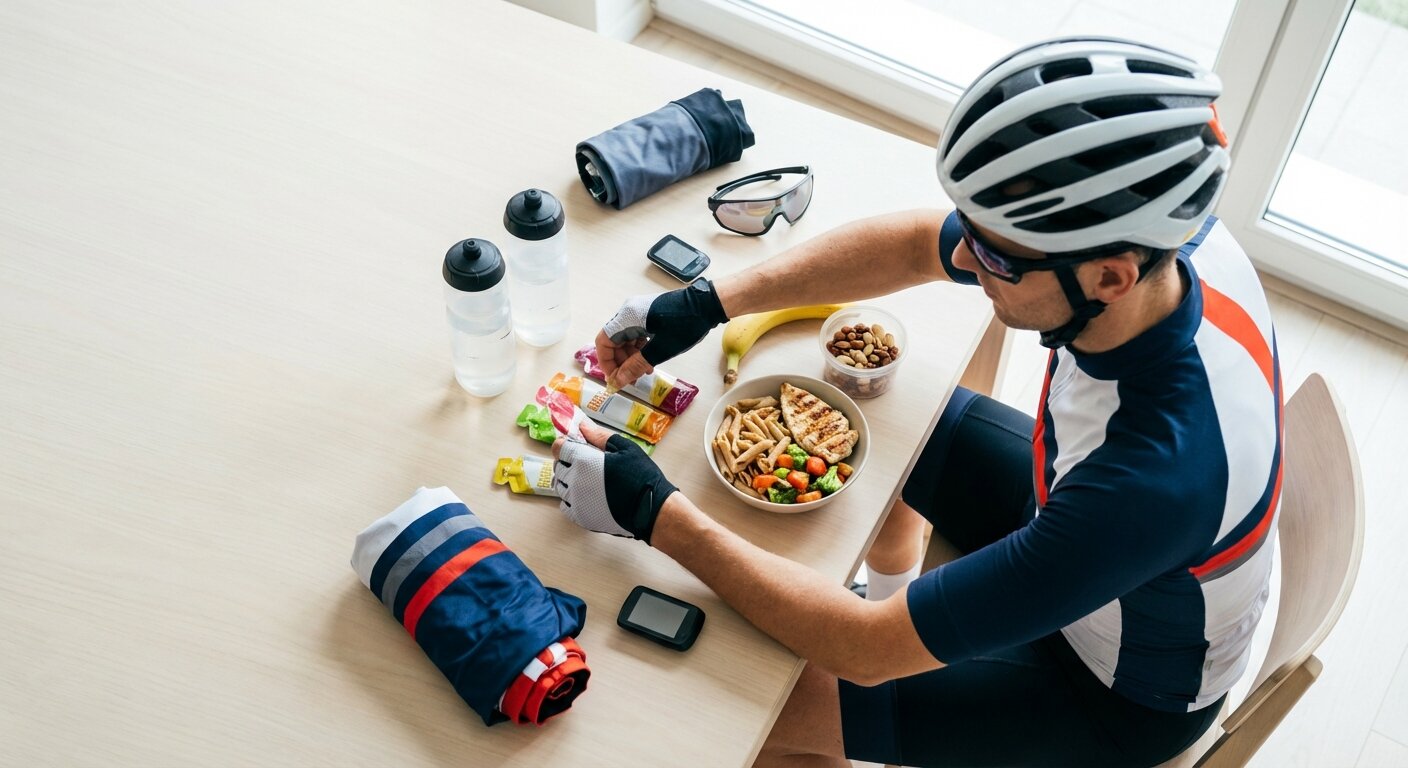
Related: Understand what macros are and how to count macros for athletic performance.
Introduction
Cycling demands precise nutritional strategy. Whether you’re grinding out century rides, racing crits, or tackling technical mountain bike trails, your macro balance directly impacts power output, endurance capacity, and recovery speed.
Unlike steady-state cardio, cycling involves variable intensities—threshold efforts on climbs, sprint finishes, long tempo intervals—each taxing different energy systems. Your body primarily burns carbohydrates during high-intensity cycling (above 75% VO2 max) and shifts toward fat oxidation during easier, aerobic efforts. Understanding how to fuel these demands through optimal macronutrient ratios is the difference between bonking at mile 50 and crushing your personal best.
This guide provides evidence-based macro targets for cyclists of all levels, practical meal timing strategies, and performance optimization techniques used by elite riders. Calculate your personalized needs with our macro calculator and build your cycling nutrition plan.
Why Macros Matter for Cycling Performance
Energy Systems in Cycling
Cycling activates multiple metabolic pathways simultaneously:
Anaerobic Glycolysis (High-Intensity Efforts)
- Powers sprints, attacks, and climbs above lactate threshold
- Burns exclusively carbohydrate
- Depletes glycogen rapidly (can empty stores in 60-90 minutes of intense riding)
- Requires constant carb replenishment during and after rides
Aerobic Metabolism (Endurance Riding)
- Sustains long, steady efforts below threshold
- Burns mix of carbs and fats (ratio depends on intensity and training adaptation)
- Fat provides unlimited fuel but slower energy release
- Carbs provide quick energy but limited storage (~500-600g total glycogen)
Phosphocreatine System (Max Efforts)
- Powers all-out sprints lasting 10-30 seconds
- Independent of macros but recovery depends on overall nutrition status
The ratio at which you burn carbs vs. fats is called your crossover point. Well-trained cyclists shift this point upward, burning more fat at higher intensities and preserving glycogen. However, even elite riders rely heavily on carbs above 75% of maximum heart rate.
The Cost of Poor Macro Balance
Too Few Carbs:
- Chronic fatigue and inability to complete high-intensity intervals
- Glycogen depletion leading to “bonking” (sudden, severe energy crash)
- Impaired recovery between rides
- Loss of power on climbs and sprints
- Increased cortisol and suppressed immune function
Too Few Protein:
- Muscle breakdown from sustained pedaling
- Slow recovery and persistent muscle soreness
- Loss of lean mass during calorie deficits
- Impaired adaptation to training stimulus
Too Few Fats:
- Hormonal disruption (especially in female cyclists)
- Impaired vitamin absorption (vitamins A, D, E, K are fat-soluble)
- Increased injury risk
- Reduced satiety leading to overeating carbs
Cycling performance is a metabolic optimization problem. The right macro balance keeps glycogen stores full, supports muscle repair, maintains hormone health, and maximizes your body’s ability to generate watts.
Optimal Macro Ratios for Cyclists
General Cyclist Macros (Moderate Training)
For cyclists riding 6-10 hours per week at mixed intensities:
Carbohydrates: 55-60%
- 5-7g per kg of body weight
- Example: 70kg cyclist = 350-490g carbs/day
- Provides adequate glycogen for 60-90 minute rides
- Supports 2-3 training sessions per week
Protein: 15-20%
- 1.4-1.6g per kg of body weight
- Example: 70kg cyclist = 98-112g protein/day
- Maintains muscle mass and supports recovery
- Higher end (1.6g/kg) during weight loss phases
Fats: 25-30%
- 1.0-1.2g per kg of body weight
- Example: 70kg cyclist = 70-84g fat/day
- Supports hormone production and inflammation management
- Provides secondary fuel source for long, easy rides
Daily Calorie Example (70kg cyclist, moderate training):
- Carbs: 420g × 4 cal/g = 1,680 calories (56%)
- Protein: 105g × 4 cal/g = 420 calories (14%)
- Fats: 100g × 9 cal/g = 900 calories (30%)
- Total: ~3,000 calories
Competitive Cyclist Macros (High Training Volume)
For cyclists riding 10-15+ hours per week with significant intensity:
Carbohydrates: 60-70%
- 7-10g per kg of body weight
- Example: 70kg cyclist = 490-700g carbs/day
- Necessary for multiple high-intensity sessions per week
- Prevents cumulative glycogen depletion across training blocks
Protein: 15-20%
- 1.6-1.8g per kg of body weight
- Example: 70kg cyclist = 112-126g protein/day
- Higher protein prevents muscle catabolism during high-volume training
- Supports immune function under training stress
Fats: 20-25%
- 1.0-1.2g per kg of body weight
- Example: 70kg cyclist = 70-84g fat/day
- Minimum necessary for hormone health
- Lower percentage due to increased carb needs, not absolute reduction
Daily Calorie Example (70kg cyclist, high training volume):
- Carbs: 595g × 4 cal/g = 2,380 calories (63%)
- Protein: 119g × 4 cal/g = 476 calories (13%)
- Fats: 100g × 9 cal/g = 900 calories (24%)
- Total: ~3,756 calories
Ultra-Endurance Cyclist Macros (100+ Mile Rides, Multi-Day Events)
For cyclists doing 4+ hour rides, century events, bikepacking, or stage races:
Carbohydrates: 60-65%
- 8-12g per kg of body weight (race days may require upper end)
- Example: 70kg cyclist = 560-840g carbs/day
- Extreme demands require extreme carb intake
- Multi-day events may require 1,000+ grams/day to prevent glycogen debt
Protein: 15-18%
- 1.6-2.0g per kg of body weight
- Example: 70kg cyclist = 112-140g protein/day
- Higher protein helps repair sustained muscle damage
- Timing protein intake post-ride becomes critical
Fats: 20-25%
- 1.0-1.5g per kg of body weight
- Example: 70kg cyclist = 70-105g fat/day
- Some ultra-endurance athletes use higher fat intake (30-35%) and fat adaptation strategies
- This is highly individual and requires experimentation in training, not racing
Daily Calorie Example (70kg cyclist, ultra-endurance training):
- Carbs: 700g × 4 cal/g = 2,800 calories (62%)
- Protein: 126g × 4 cal/g = 504 calories (11%)
- Fats: 135g × 9 cal/g = 1,215 calories (27%)
- Total: ~4,519 calories
Off-Season/Base Training Macros
During lower-intensity base building or off-season maintenance:
Carbohydrates: 45-50%
- 3-5g per kg of body weight
- Reduced needs due to lower training volume and intensity
- Focus on nutrient-dense whole food carbs
Protein: 20-25%
- 1.4-1.6g per kg of body weight
- Maintain muscle mass during reduced training
- Support strength training often done in off-season
Fats: 30-35%
- 1.2-1.5g per kg of body weight
- Higher fat intake supports satiety with reduced calorie needs
- Helps maintain hormone health through off-season
This macro split is also appropriate for recreational cyclists who ride primarily for fitness and enjoyment, not performance.
Macro Timing for Maximum Performance
When you eat is as important as what you eat for cyclists. Strategic macro timing optimizes glycogen storage, minimizes GI distress during rides, and accelerates recovery.
Pre-Ride Nutrition
2-4 Hours Before Ride (Pre-Load Meal):
- High carbs, moderate protein, low fat
- 1-4g carbs per kg body weight (higher for longer/harder rides)
- Example: Large bowl of oatmeal with banana, honey, and protein powder (70g carbs, 20g protein, 10g fat)
- Goal: Top off liver and muscle glycogen without causing GI distress
30-60 Minutes Before Ride (Final Fuel):
- Simple carbs only, minimal protein/fat
- 0.5-1g carbs per kg body weight
- Example: Energy gel, sports drink, or banana
- Goal: Spike blood glucose for immediate availability without digestion delay
Why Low Fat Pre-Ride? Fat slows gastric emptying and can cause cramping, nausea, or sluggishness during high-intensity efforts. Save fat for post-ride recovery meals.
During-Ride Nutrition
Rides Under 60 Minutes:
- Water only (assuming you ate pre-ride)
- Glycogen stores sufficient for efforts under 90 minutes
Rides 60-90 Minutes:
- 30-60g carbs per hour
- Sports drink or single gel mid-ride
- Especially important if riding at high intensity
Rides 90+ Minutes:
- 60-90g carbs per hour
- Mix of liquid and solid carbs
- Example: Sports drink (30g) + gel every 30 min (22g) + banana at hour 2 (27g) = ~80g/hour
- Train your gut to tolerate higher carb intake (elite cyclists can process 90-120g/hour)
Ultra-Endurance (4+ Hours):
- 60-90g carbs per hour (as tolerated)
- Add small amounts of protein after hour 3 (5-10g/hour) to reduce muscle breakdown
- Example: Real food becomes important—rice cakes, sandwiches, bars with 2-3g protein
- Some fat is tolerable at low intensities (nuts, nut butter)
Electrolytes: Cycling sweat rates can exceed 1-2 liters per hour. Replace sodium (500-1,000mg/hour), potassium, and magnesium through sports drinks or electrolyte tabs. This isn’t a “macro” but it’s critical for performance.
Post-Ride Recovery
The 30-60 minute window post-ride is when your muscles are most receptive to glycogen replenishment and protein synthesis.
Immediate Post-Ride (Within 30 Minutes):
- 3:1 or 4:1 carb-to-protein ratio
- 1.0-1.2g carbs per kg body weight + 0.3-0.4g protein per kg
- Example (70kg cyclist): 70-84g carbs + 21-28g protein
- Liquid/semi-liquid preferred for faster absorption (smoothie, chocolate milk, recovery shake)
Full Recovery Meal (1-2 Hours Post-Ride):
- Balanced meal with quality carbs, protein, fats
- 1.0-1.5g carbs per kg + 0.4-0.5g protein per kg
- Example: Large pasta dish with chicken, marinara, vegetables, olive oil
- This completes glycogen restoration and provides amino acids for overnight muscle repair
Multi-Ride Days (Races, Camps, Tours): Glycogen replenishment becomes urgent. Consume carbs every 2 hours post-ride until next ride. Aim for 8-10g carbs per kg over 24 hours between hard efforts.
Cycling Macro Adjustments for Specific Goals
Weight Loss for Cyclists
Losing weight while maintaining power requires careful macro manipulation:
Macro Targets:
- 40-45% carbs (3-4g per kg minimum)
- 25-30% protein (1.8-2.2g per kg—higher to preserve muscle)
- 25-30% fats
Calorie Deficit:
- 300-500 calories below maintenance (no more than 500)
- Lose 0.5-1 lb per week maximum
- Aggressive deficits destroy power and cause muscle loss
Carb Timing:
- Concentrate carbs around rides (before, during, after)
- Reduce carbs on rest days
- Never cut carbs below 3g/kg—you’ll lose performance
Example (70kg cyclist cutting weight):
- Maintenance: 3,000 calories
- Cutting: 2,500 calories (-500)
- Macros: 280g carbs (45%), 156g protein (25%), 83g fats (30%)
Key Principle: Nutrient timing > calorie restriction. Eat most calories around training, less on rest days. This preserves performance while creating a deficit.
Muscle Building for Cyclists (Sprinters, Track Cyclists)
Power-focused cyclists need more muscle mass:
Macro Targets:
- 45-50% carbs (5-6g per kg)
- 25-30% protein (1.8-2.2g per kg)
- 25-30% fats
Calorie Surplus:
- 200-300 calories above maintenance
- Gain 0.5-1 lb per week
- Focus on gym sessions + sprint intervals
Example (70kg track cyclist building muscle):
- Maintenance: 3,200 calories
- Bulking: 3,500 calories (+300)
- Macros: 438g carbs (50%), 219g protein (25%), 97g fats (25%)
Combine with 3-4 strength sessions per week focusing on compound lifts (squats, deadlifts, leg press) and explosive movements (box jumps, Olympic lifts).
Keto/Low-Carb for Cyclists (Fat Adaptation)
Some ultra-endurance cyclists experiment with ketogenic diets (70-80% fat, 5-10% carbs) to enhance fat oxidation. This is highly controversial and not recommended for most cyclists.
Pros:
- May improve fat burning at low-to-moderate intensities
- Reduces bonking risk on very long, steady rides
- Can help with weight loss
Cons:
- Severely impairs high-intensity performance (sprints, climbs, attacks)
- Reduces glycogen stores making hard efforts feel terrible
- Difficult to execute in group rides or races with variable pace
- Adaptation period (2-6 weeks) is miserable—low energy, poor performance
Verdict: Keto can work for ultra-endurance cyclists doing 100% aerobic efforts. For road racing, criteriums, cross-country mountain biking, or any high-intensity cycling, adequate carb intake (55-70%) is non-negotiable for performance.
A better approach: Periodized nutrition—higher carbs during intense training blocks, moderate carbs during base phase. Train your body to burn fat without sacrificing carb-fueled performance.
Common Mistakes Cyclists Make with Macros
1. Under-Eating Carbs Due to Fear of Weight Gain
Many cyclists cut carbs to lose weight and end up chronically glycogen-depleted. Symptoms: persistent fatigue, inability to hit power targets, poor recovery, increased illness. Solution: Eat adequate carbs (minimum 5g/kg during training) and create deficits through portion control and fat reduction, not carb elimination.
2. Neglecting Protein
Cyclists often over-prioritize carbs and under-eat protein. Protein requirements for cyclists are 75% higher than sedentary individuals. Insufficient protein = slow recovery, muscle loss, suppressed immune function. Target 1.6-1.8g per kg body weight minimum.
3. Eating Too Much Fat
“Healthy fats” like nuts, avocado, and olive oil are calorie-dense and easy to overconsume. While fats are essential, eating 35-40% fat crowds out carbs and protein. Unless you’re keto-adapted (which impairs high-intensity performance), keep fats at 20-30% of intake.
4. Ignoring Nutrient Timing
Eating the right macros but at the wrong times undermines performance. Carbs are most effective around rides. Protein is most effective post-workout. Eating a huge pasta dinner the night before a morning ride is less effective than eating carbs 2-3 hours pre-ride and immediately after.
5. Not Fueling During Rides
Many cyclists under-fuel during rides, thinking they’ll “save calories.” This causes glycogen depletion, poor performance, and overeating post-ride due to extreme hunger. Eat 60-90g carbs per hour on rides over 90 minutes. You’ll perform better and recover faster.
6. Copying Pro Cyclist Diets
Pro cyclists have 20-30 hours per week training volume and support staff optimizing their nutrition. What works for a Tour de France rider (eating 6,000+ calories/day, 70% carbs) will make a recreational cyclist fat. Scale macros to your training volume and goals.
Sample Cycling Meal Plans
Moderate Training Day (70kg cyclist, 90-minute ride)
Breakfast (Pre-Ride, 2 hours before):
- 2 cups cooked oatmeal (54g carbs)
- 1 banana (27g carbs)
- 1 tbsp honey (17g carbs)
- 1 scoop protein powder (25g protein)
- Total: 98g carbs, 25g protein, 8g fat
During Ride (90 minutes, moderate intensity):
- 2 energy gels (44g carbs)
- Sports drink (30g carbs)
- Total: 74g carbs
Post-Ride Recovery (Within 30 min):
- Smoothie: 1 cup milk, 1 banana, 1 scoop protein, 1 cup berries, spinach
- Total: 72g carbs, 30g protein, 5g fat
Lunch (2 hours post-ride):
- 2 cups pasta (86g carbs)
- 6 oz grilled chicken breast (52g protein)
- Marinara sauce (12g carbs)
- Side salad with olive oil dressing (8g fat)
- Total: 98g carbs, 52g protein, 8g fat
Snack:
- Greek yogurt (17g carbs, 20g protein)
- Handful almonds (6g carbs, 6g protein, 14g fat)
- Total: 23g carbs, 26g protein, 14g fat
Dinner:
- 1.5 cups brown rice (69g carbs)
- 5 oz salmon (35g protein, 11g fat)
- Roasted vegetables with olive oil (15g carbs, 10g fat)
- Total: 84g carbs, 35g protein, 21g fat
Evening Snack:
- Protein shake (5g carbs, 25g protein, 3g fat)
Daily Totals:
- Carbs: 454g (60%)
- Protein: 193g (25%)
- Fats: 69g (15%)
- Calories: ~3,036
High-Intensity Training Day (70kg cyclist, 2-hour threshold/interval ride)
Same structure as above but increase:
- Pre-ride carbs: Add 1 cup rice (45g) to breakfast
- During-ride carbs: Add 1 more gel (22g) + banana (27g)
- Post-ride carbs: Double smoothie carbs
- Dinner carbs: Add sweet potato (37g)
Daily Totals:
- Carbs: 585g (65%)
- Protein: 193g (21%)
- Fats: 69g (14%)
- Calories: ~3,585
Rest Day (70kg cyclist, no training)
Reduce carbs significantly, maintain protein, increase fats slightly for satiety:
Breakfast:
- 3 eggs scrambled (18g protein, 15g fat)
- 1 slice whole grain toast (15g carbs)
- Avocado (12g carbs, 15g fat)
- Total: 27g carbs, 18g protein, 30g fat
Lunch:
- Large salad with grilled chicken (52g protein)
- Mixed vegetables (20g carbs)
- Olive oil dressing (14g fat)
- Total: 20g carbs, 52g protein, 14g fat
Snack:
- Protein bar (20g carbs, 20g protein, 8g fat)
Dinner:
- 5 oz steak (38g protein, 18g fat)
- 1 cup quinoa (39g carbs)
- Steamed broccoli (10g carbs)
- Total: 49g carbs, 38g protein, 18g fat
Evening Snack:
- Greek yogurt with berries (25g carbs, 20g protein, 5g fat)
Daily Totals:
- Carbs: 141g (25%)
- Protein: 148g (26%)
- Fats: 75g (30%)
- Calories: ~2,247
Reduced calories on rest days create a slight weekly deficit without compromising training days.
Macros for Different Cycling Disciplines
Road Cycling
- High carb needs (60-70%) for sustained power on climbs and long rides
- Moderate protein (15-20%) for muscle maintenance
- Lower fat (20-25%) to maximize carb and protein intake
- Emphasis on carb timing around rides and race days
Mountain Biking
- Similar carb needs to road cycling (55-65%)
- Slightly higher protein (20-25%) due to upper body engagement and technical demands
- Moderate fat (20-25%)
- Focus on quick-digesting carbs due to variable intensity (constant surges)
Track Cycling (Sprint Events)
- Moderate carbs (45-55%) due to shorter events
- High protein (25-30%) to support muscle mass for explosive power
- Moderate-high fat (25-30%)
- More similar to strength athlete macros than endurance athlete
Criterium/Circuit Racing
- High carbs (60-65%) for repeated high-intensity efforts (attacks, sprints)
- Moderate protein (15-20%)
- Lower fat (20-25%)
- Must practice race-day fueling—criteriums are too intense to eat solid food during
Bikepacking/Ultra-Distance Touring
- Moderate-high carbs (55-60%) for daily mileage
- Moderate protein (15-20%)
- Higher fat (25-30%) for calorie density when carrying food
- Real food emphasis over gels/bars due to multi-day nature
Cyclocross
- High carbs (60-65%) for intense, short races (~45-60 minutes)
- Moderate protein (15-20%) for recovery between weekend races
- Lower fat (20-25%)
- Similar demands to criterium racing but more upper body engagement
Supplements to Support Cycling Macros
While whole foods should form the foundation, certain supplements help cyclists meet macro targets:
Protein Powder
- Whey or plant-based
- Convenient for hitting 1.6-1.8g/kg protein target
- Best post-ride for fast absorption
Energy Gels/Chews
- Concentrated carbs (20-25g per gel)
- Essential for rides over 90 minutes
- Practice in training to find what your gut tolerates
Carb Powders (Maltodextrin, Cluster Dextrin)
- Add to water bottles for easy carb intake during rides
- Cheaper than commercial sports drinks
- Can achieve 60-90g carbs per hour
BCAAs/EAAs
- May reduce muscle breakdown on very long rides
- Optional—whole protein sources are more effective
- Can sip during ultra-endurance events
Creatine
- 5g daily
- Improves sprint power and repeated high-intensity efforts
- Especially useful for track cyclists and criterium racers
Electrolyte Tablets
- Not a macro but critical for hydration
- 500-1,000mg sodium per hour of riding
- Prevents cramping and maintains performance
Real Food > Supplements: The best cycling nutrition comes from whole foods. Supplements fill gaps, not replace meals. A banana has carbs + potassium + fiber. A gel has carbs. Real food wins when possible.
Tracking Your Cycling Macros
Use Our Calculator
Start with our macro calculator to determine your baseline needs based on:
- Body weight
- Training volume (hours per week)
- Cycling discipline
- Performance goals (maintain, lose fat, build muscle)
Track Consistently for 2-4 Weeks
Use apps like MyFitnessPal, Cronometer, or MacroFactor to log:
- Everything you eat (food scale for accuracy)
- Training sessions (duration and intensity)
- Body weight (weigh daily, track weekly average)
- Performance metrics (FTP, power output, heart rate)
Adjust Based on Results
Indicators You Need More Carbs:
- Can’t complete high-intensity intervals at target power
- Energy crashes during or after rides
- Poor recovery (legs feel dead day after hard ride)
- Weight loss with performance decline
Indicators You Need More Protein:
- Persistent muscle soreness (beyond normal 24-48 hours)
- Frequent illness or slow wound healing
- Muscle loss during weight loss phases
- Difficulty building strength despite gym work
Indicators You Need More Calories:
- Unintended weight loss (>1 lb/week)
- Chronic fatigue, poor sleep quality
- Increased injuries, illness
- Loss of menstrual cycle (female cyclists)
- Significant power decline
Indicators You Can Reduce Calories:
- Not losing weight despite consistent training and calorie target
- Weight gain beyond intentional muscle building
- Check total intake before reducing macros—most cyclists underestimate calories consumed
Frequently Asked Questions
What are the best macros for cyclists?
Most cyclists perform best with 55-65% carbohydrates, 15-20% protein, and 20-30% fats. However, exact ratios depend on training volume and intensity:
- Moderate training (6-10 hours/week): 55-60% carbs, 15-20% protein, 25-30% fats
- High training volume (10-15+ hours/week): 60-70% carbs, 15-20% protein, 20-25% fats
- Off-season/base training: 45-50% carbs, 20-25% protein, 30-35% fats
Endurance cyclists need higher carb percentages to maintain glycogen stores. Sprinters and track cyclists can operate at the lower end of carb intake with higher protein for muscle maintenance.
Translate percentages to grams: carbs 5-10g/kg body weight, protein 1.4-1.8g/kg, fats 1.0-1.5g/kg depending on training phase.
How many carbs do cyclists need per day?
Carbohydrate needs for cyclists range from 3-12g per kg of body weight daily, depending on training intensity and duration:
- Light training (easy rides, <1 hour): 3-5g/kg
- Moderate training (1-2 hours, mixed intensity): 5-7g/kg
- Heavy training (2-3 hours, high intensity): 7-10g/kg
- Extreme training (4+ hours, races, multi-day events): 10-12g/kg
Example for 70kg cyclist:
- Light day: 210-350g carbs
- Moderate day: 350-490g carbs
- Hard day: 490-700g carbs
- Race/ultra day: 700-840g carbs
Carb needs are non-negotiable for performance. Cycling at high intensity depletes glycogen rapidly—you can empty muscle glycogen stores in 90 minutes of hard riding. Inadequate carb intake leads to bonking, poor recovery, and decreased power output.
Distribute carbs strategically: concentrate intake before, during, and after rides. Reduce carbs on rest days when glycogen demands are lower.
Do cyclists need more protein than non-athletes?
Yes. Cyclists require 1.4-1.8g of protein per kg of body weight, nearly double the RDA of 0.8g/kg for sedentary individuals.
Why cyclists need more protein:
- Muscle damage repair: Even though cycling is low-impact, sustained pedaling causes muscle microtrauma requiring protein for repair
- Metabolic demands: Protein supports enzyme production, immune function, and hormone synthesis—all stressed by training
- Glycogen sparing: Adequate protein prevents muscle breakdown (catabolism) when glycogen stores run low during long rides
- Recovery acceleration: Protein post-ride speeds muscle repair and adaptation to training stimulus
Protein targets by goal:
- Maintenance/performance: 1.4-1.6g/kg
- Weight loss (preserve muscle): 1.8-2.2g/kg
- Muscle building (track/sprint cyclists): 1.8-2.2g/kg
Example for 70kg cyclist:
- Minimum: 98g protein/day
- Optimal for performance: 112g/day
- During cutting phase: 126-154g/day
Distribute protein throughout the day (20-40g per meal) for optimal muscle protein synthesis. Prioritize protein immediately post-ride when muscles are most receptive to amino acids.
Should cyclists eat more carbs or fat for endurance?
Carbohydrates should be the primary fuel for most cyclists, especially those doing high-intensity efforts, intervals, climbs, or races. However, the carb vs. fat debate depends on riding intensity and duration.
Carbs are superior for:
- High-intensity efforts (threshold, VO2 max intervals, sprints, climbs)
- Shorter rides (under 2 hours) where glycogen depletion isn’t limiting
- Racing and group rides with variable pace
- Maximizing power output and performance
Fat becomes more relevant for:
- Very long, steady rides (4+ hours at aerobic pace)
- Ultra-endurance events where glycogen depletion is inevitable
- Low-intensity base training where you intentionally train fat oxidation
The science: Your body burns a mix of carbs and fats at all intensities, but the ratio shifts with effort level:
- Easy pace (under 60% max HR): ~50% fat, 50% carbs
- Moderate pace (60-75% max HR): ~30% fat, 70% carbs
- Hard pace (75-90% max HR): ~10% fat, 90% carbs
- Max effort (90%+ max HR): 100% carbs, 0% fat
Even ultra-endurance cyclists doing 100-mile rides need carbs. While fat provides massive energy reserves (even lean cyclists store 50,000+ calories as fat), fat metabolism is too slow to sustain high power output.
Bottom line: Train your fat oxidation capacity during low-intensity base miles, but fuel with carbs before, during, and after any ride where performance matters. The fastest cyclists are carb-burners, not fat-burners.
What should cyclists eat before a long ride?
Pre-ride nutrition should prioritize high-carb, moderate-protein, low-fat meals timed to maximize glycogen storage without causing GI distress.
2-4 hours before ride (main pre-load meal):
- Carbs: 1-4g per kg body weight (higher for longer/harder rides)
- Protein: 0.3-0.5g per kg (supports muscle readiness)
- Fat: Minimal (slows digestion and can cause cramping)
Good pre-ride meals:
- Oatmeal bowl: 2 cups cooked oats + banana + honey + protein powder (98g carbs, 25g protein, 8g fat)
- Pasta with chicken: 2 cups pasta + 4oz grilled chicken + marinara sauce (92g carbs, 35g protein, 6g fat)
- Rice and eggs: 1.5 cups white rice + 2 eggs + fruit (85g carbs, 18g protein, 12g fat)
- Bagel with peanut butter: 2 bagels + 2 tbsp peanut butter + banana (120g carbs, 18g protein, 16g fat)
30-60 minutes before ride (final fuel):
- Carbs only: 0.5-1g per kg body weight
- Simple carbs for quick absorption
- Options: Energy gel, sports drink, banana, white bread with honey
What to avoid before rides:
- High-fat foods (bacon, sausage, fried foods) → GI distress
- High-fiber foods (beans, cruciferous vegetables) → cramping and bathroom urgency
- Unfamiliar foods → never experiment on ride day
Hydration: Drink 500-750ml water with pre-ride meal. Start ride well-hydrated but not sloshing.
Pre-ride nutrition sets the foundation for performance. Nail this meal and you’ll have stable energy for the entire ride.
How do cycling macros differ from running macros?
Cycling and running have similar endurance demands but differ in impact, muscle engagement, and energy expenditure, resulting in slight macro variations.
Similarities:
- Both require high carbohydrate intake (55-70%) for glycogen-dependent performance
- Both need elevated protein (1.4-1.8g/kg) compared to sedentary individuals
- Both benefit from strategic carb timing around workouts
Key differences:
| Factor | Cycling | Running |
|---|---|---|
| Impact | Low (seated, no landing forces) | High (repeated ground strikes) |
| Carb needs | 5-10g/kg depending on volume | 5-10g/kg (similar range) |
| Protein needs | 1.4-1.8g/kg | 1.4-2.0g/kg (higher end for runners due to muscle damage) |
| Fat tolerance | 25-30% (can handle slightly more) | 20-25% (lower due to GI sensitivity during running) |
| Calorie burn | Lower per minute (60-80% of running) | Higher per minute |
| Upper body demand | Moderate (climbing, sprinting) | Minimal |
| GI sensitivity | Lower (less jostling) | Higher (bouncing impairs digestion) |
Fat percentage: Cyclists can often tolerate 25-30% dietary fat without performance decline because cycling is lower-impact and involves less GI distress than running. Runners often do better at 20-25% fat to avoid stomach issues during high-intensity efforts.
Protein: Runners may need the higher end of protein recommendations (1.6-2.0g/kg) due to greater muscle damage from impact forces. Cyclists can perform well at 1.4-1.6g/kg unless doing very high volume.
During-exercise fueling: Both require 60-90g carbs/hour for efforts over 90 minutes, but runners often struggle more with solid food due to stomach bouncing. Cyclists can tolerate gels, bars, and even real food more easily.
Bottom line: Macro targets are 80-90% identical. Cyclists have slightly more flexibility with fat intake and solid food during exercise. Runners need to prioritize GI-friendly carbs and may need slightly more protein for recovery.
What macros help cyclists lose weight without losing power?
Losing weight while maintaining cycling performance requires a careful balance of calorie restriction and strategic macro timing. Cut too aggressively and you’ll lose power, muscle, and performance.
Optimal macros for cyclist weight loss:
Carbohydrates: 40-45% (minimum 3-4g/kg body weight)
- Lower than normal but still adequate for training
- Time carbs around rides (before, during, after)
- Reduce carbs on rest days
Protein: 25-30% (1.8-2.2g/kg body weight)
- Higher than maintenance to preserve muscle mass
- Protein is satiating and has high thermic effect (burns calories during digestion)
- Distribute evenly across meals (20-40g per meal)
Fats: 25-30% (1.0-1.2g/kg body weight)
- Maintain minimum for hormone health
- Choose anti-inflammatory fats (omega-3s from fish, olive oil, avocado)
Calorie deficit:
- 300-500 calories below maintenance (no more than 500/day)
- Target 0.5-1 lb weight loss per week maximum
- Aggressive deficits (1,000+ calories) destroy performance and cause muscle loss
Example: 70kg cyclist cutting weight
- Maintenance: 3,000 calories
- Cutting target: 2,500 calories (-500/day)
- Macros: 280g carbs (45%), 156g protein (25%), 83g fats (30%)
Key strategies:
- Nutrient timing: Eat majority of calories around training. Example: 50% of daily carbs in pre-ride and post-ride meals.
- High-carb training days, low-carb rest days: Carb cycling preserves performance while creating weekly deficit.
- Never cut carbs below 3g/kg: You’ll lose power, feel miserable, and sacrifice training quality.
- Prioritize protein: Aim for upper range (2.0-2.2g/kg) to preserve lean mass.
- Track performance: Monitor FTP, power output, and training quality. If power drops >5%, increase calories.
Avoid these mistakes:
- ❌ Severe calorie restriction (1,000+ deficit)
- ❌ Cutting carbs too low (under 3g/kg)
- ❌ Eating low calories on hard training days
- ❌ Losing more than 1 lb/week
Weight loss for cyclists is a marathon, not a sprint. Slow, steady fat loss preserves muscle, performance, and long-term metabolic health.
Do mountain bikers need different macros than road cyclists?
Mountain biking and road cycling share many similarities, but differences in terrain, muscle engagement, and riding style result in slightly different macro needs.
Key differences:
| Factor | Mountain Biking | Road Cycling |
|---|---|---|
| Upper body demand | High (technical handling, drops, climbs) | Moderate (mainly climbing, sprinting) |
| Power profile | Interval-heavy (constant surges, short climbs) | Steady-state with planned intervals |
| Glycogen demand | Very high (repeated anaerobic efforts) | High but more predictable |
| Protein needs | 1.6-2.0g/kg (higher for muscle engagement) | 1.4-1.8g/kg |
| Recovery needs | Higher (full-body fatigue) | Moderate (leg-focused) |
Optimal macros for mountain bikers:
Carbohydrates: 55-65% (5-8g/kg body weight)
- Similar to road cycling
- Technical mountain biking involves constant surges above threshold, depleting glycogen rapidly
- Single-track and technical terrain = more high-intensity bursts than steady road riding
Protein: 20-25% (1.6-2.0g/kg body weight)
- Higher than road cyclists due to greater upper body engagement
- Technical descents, rock gardens, and drops require arm, shoulder, and core strength
- More full-body muscle damage requires more protein for recovery
Fats: 20-25% (1.0-1.5g/kg body weight)
- Similar to road cycling
- Maintain minimum for joint health (important given impact of mountain biking)
Example: 70kg mountain biker, high training volume
- Carbs: 455g (55%)
- Protein: 140g (25%)
- Fats: 82g (20%)
- Total: ~3,300 calories
Special considerations for mountain bikers:
- During-ride fueling is harder: Technical terrain makes eating difficult. Practice one-handed eating or plan stops at the top of climbs.
- Higher injury risk: Adequate protein and calories support bone health, tendon strength, and injury recovery.
- Variable intensity: Mountain biking has less steady-state riding than road cycling. Treat macro needs like criterium racing—high carbs to support repeated high-intensity efforts.
Cross-country racers: Similar macros to road cyclists (60-65% carbs, 15-20% protein) Downhill/enduro racers: Can operate at lower carb percentages (50-55%) due to shorter race durations, but need higher protein (25-30%) for muscle mass and power
Bottom line: Mountain bikers should eat slightly more protein than road cyclists to support full-body muscle engagement and technical demands, but carb needs remain high due to interval-heavy riding style.
Conclusion: Dial In Your Cycling Nutrition
Cycling performance is built on two foundations: training and nutrition. You can’t outride a bad diet, and optimal macros won’t compensate for inadequate training. But when both align, you unlock your full potential—sustained power, faster recovery, and consistent performance gains.
The macro ratios in this guide provide a starting point:
- Most cyclists: 55-65% carbs, 15-20% protein, 20-30% fats
- High-volume training: 60-70% carbs
- Off-season: 45-50% carbs
Translate percentages to grams based on body weight:
- Carbs: 5-10g per kg
- Protein: 1.4-1.8g per kg
- Fats: 1.0-1.5g per kg
Then refine through tracking, testing, and adjusting based on performance, recovery, and body composition changes.
Action steps:
- Calculate your baseline macros using our macro calculator
- Track food intake for 2-4 weeks to establish accuracy
- Time carbs around rides (before, during, after)
- Hit protein targets daily for recovery
- Monitor performance metrics (power, endurance, recovery rate)
- Adjust macros based on training phase (in-season vs. off-season)
The cyclists who master nutrition gain a competitive edge. Fuel your training correctly, and your body will adapt faster, recover quicker, and perform stronger. Start today.
Related Articles
Travel Macros: How to Track Nutrition While Traveling
Complete guide to managing macros while traveling. Learn meal planning strategies,...
Read guide →
Macros for Shift Workers: Complete Guide to Nutrition on Rotating Schedules
Master macro tracking on night shifts and rotating schedules. Learn meal timing, sleep...
Read guide →
Macros During Ramadan: Complete Nutrition Guide for Fasting
Learn how to track macros during Ramadan fasting. Expert guide covering meal timing,...
Read guide →Disclaimer: This content is for informational purposes only. Consult a healthcare provider before making changes to your diet.