Macros For Swimmers: Complete Nutrition Guide for Pool Performance
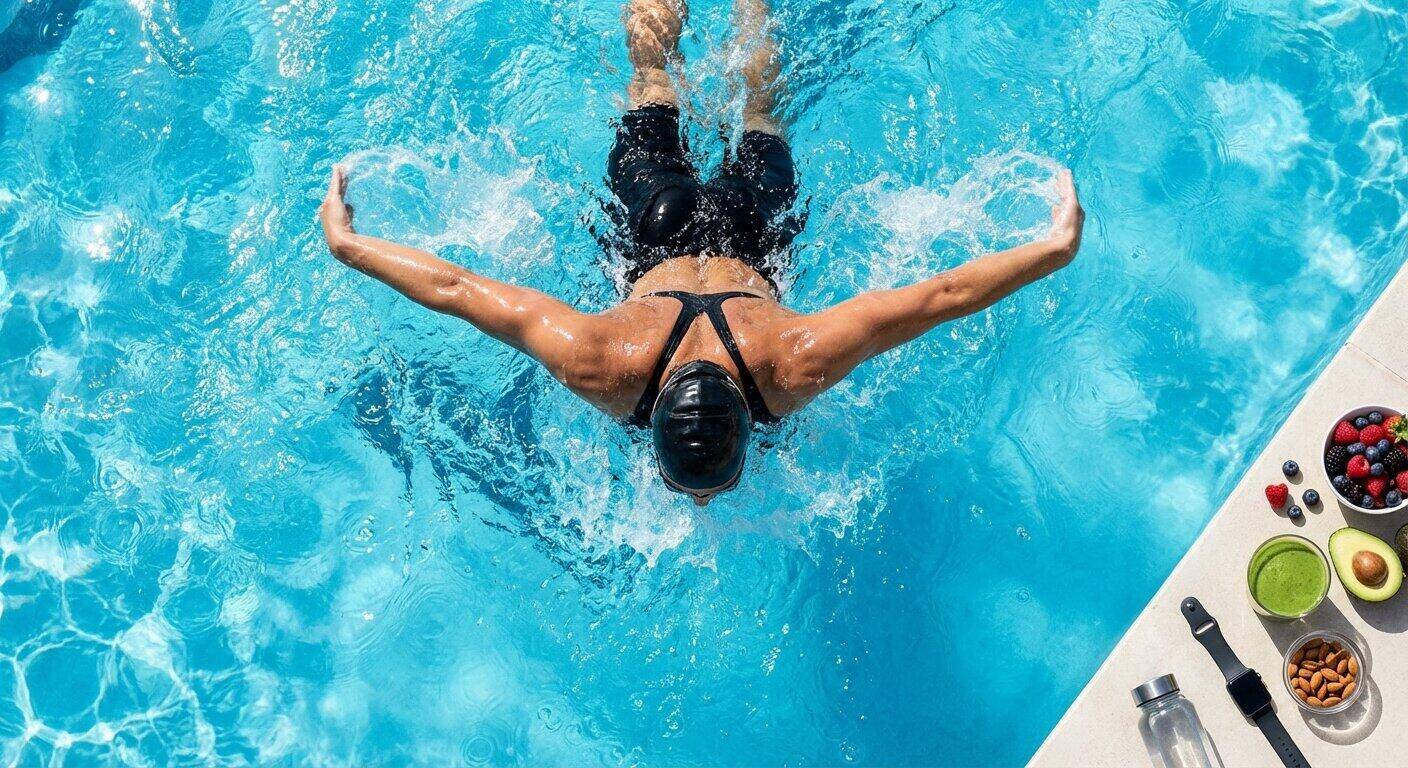
Swimming is one of the most demanding sports on the planet. Whether you’re logging 10,000 meters in a single practice session or racing all-out sprints in competition, your nutrition can make or break your performance in the pool.
The problem? Most swimmers either eat too little to fuel their training volume, or they don’t balance their macros correctly and wonder why they feel flat, tired, or can’t recover between sessions. Swimming burns serious calories—elite swimmers can require 4,000-8,000+ calories per day during heavy training blocks—and if your protein, carbs, and fats aren’t dialed in, you’re leaving speed on the starting blocks.
This guide breaks down exactly how to calculate your macros as a swimmer, optimize your nutrition for training vs competition, and adjust your intake based on your event specialty, training phase, and performance goals.
Ready to calculate your exact macro needs? Use our Macro Calculator to get personalized targets based on your weight, training volume, and swimming goals.
Related: Understand what macros are and how to count macros for athletic performance.
Why Macros Matter for Swimming Performance
Swimming is a unique sport that combines:
- High aerobic demand (distance events, long training sessions)
- Explosive power (starts, turns, sprints)
- Muscular endurance (maintaining technique under fatigue)
- Recovery challenges (multiple daily sessions common at elite levels)
Each macronutrient plays a specific role in supporting these demands:
Carbohydrates are your primary fuel source for the high-intensity intervals and volume work that define swimming training. Glycogen depletion leads to slower times, poor technique, and increased injury risk.
Protein repairs muscle damage from the constant resistance of water, supports immune function (critical for athletes in chlorinated pools), and helps maintain lean muscle mass during cutting phases.
Fats provide sustained energy for long aerobic sessions, support hormone production (especially important for female swimmers), aid vitamin absorption, and reduce inflammation from high training loads.
Get these wrong and you’ll experience:
- Chronic fatigue and poor recovery
- Stalled progress despite hard training
- Frequent illness or injury
- Body composition that doesn’t match your work ethic
- Performance plateaus or regression
Get them right and you’ll unlock:
- Faster recovery between sessions
- Improved power output and endurance
- Better body composition
- Consistent energy throughout long practices
- Faster race times
Optimal Macro Ratios for Swimmers
General Swimming Guidelines
Most competitive swimmers perform best on:
- 50-60% carbohydrates (5-10g per kg body weight)
- 20-25% protein (1.6-2.2g per kg body weight)
- 20-25% fat (0.8-1.2g per kg body weight)
These ratios support the high energy demands of swimming while providing adequate protein for recovery and fats for hormonal health.
Adjustments by Event Type
Distance Swimmers (800m+)
- Carbs: 55-60% (8-10g/kg)
- Protein: 20-22% (1.6-1.8g/kg)
- Fat: 20-25% (0.8-1.0g/kg)
Distance swimmers need maximum glycogen stores for sustained output. Higher carb ratios support the predominantly aerobic energy systems used in distance events.
Middle Distance (200-400m)
- Carbs: 50-55% (6-8g/kg)
- Protein: 22-25% (1.8-2.0g/kg)
- Fat: 20-25% (0.9-1.1g/kg)
Balanced approach supporting both aerobic capacity and power development for events mixing endurance and speed.
Sprint Swimmers (50-100m)
- Carbs: 45-50% (5-7g/kg)
- Protein: 25-30% (2.0-2.2g/kg)
- Fat: 20-25% (1.0-1.2g/kg)
Sprinters can afford slightly lower carbs with higher protein to support explosive power and muscle mass needed for short, intense efforts.
Training Phase Adjustments
Base/Build Phase (High volume, moderate intensity)
- Increase carbs to 55-60% to fuel volume
- Moderate protein at 20-22%
- Standard fats at 20-25%
Competition Phase (Lower volume, higher intensity)
- Maintain carbs at 50-55%
- Increase protein to 23-27% for recovery from intense efforts
- Maintain fats at 20-25%
Off-Season (Recovery and strength building)
- Reduce carbs to 40-45%
- Increase protein to 25-30% for muscle building
- Allow fats to increase naturally with lower total calories
Calculating Your Swimming Macros
Step 1: Determine Your Calorie Needs
Start with our Macro Calculator for personalized targets, or calculate manually:
Maintenance Calories = Body Weight (kg) × Activity Multiplier
Activity Multipliers for Swimmers:
- Light training (3-4 hours/week): 35-40 cal/kg
- Moderate training (6-8 hours/week): 40-50 cal/kg
- Heavy training (10-15 hours/week): 50-70 cal/kg
- Elite training (15-20+ hours/week): 70-100+ cal/kg
Example: 70kg swimmer training 10-12 hours weekly
- Maintenance: 70kg × 60 = 4,200 calories
Step 2: Apply Macro Ratios
Using 55% carbs / 22% protein / 23% fat for our example:
Carbohydrates:
- 4,200 × 0.55 = 2,310 calories from carbs
- 2,310 ÷ 4 cal/g = 578g carbs per day
Protein:
- 4,200 × 0.22 = 924 calories from protein
- 924 ÷ 4 cal/g = 231g protein per day
Fat:
- 4,200 × 0.23 = 966 calories from fat
- 966 ÷ 9 cal/g = 107g fat per day
Step 3: Adjust for Goals
For Fat Loss (cutting weight for competition)
- Reduce total calories by 300-500 daily
- Maintain protein (231g in our example)
- Reduce carbs and fats proportionally
- Never drop below 1.6g/kg protein or 0.8g/kg fat
For Muscle Gain (off-season strength building)
- Increase total calories by 300-500 daily
- Maintain or increase protein to 2.0-2.2g/kg
- Add calories primarily from carbs
- Monitor body composition weekly
Nutrient Timing for Swimmers
Pre-Practice Nutrition (1-2 Hours Before)
Morning Practice:
- 50-100g easily digestible carbs
- Minimal protein and fat (slows digestion)
- Examples: banana with honey, white toast with jam, instant oatmeal
Afternoon/Evening Practice:
- 75-150g carbs with 15-25g protein
- Light meal 2 hours out or snack 1 hour out
- Examples: rice bowl with chicken, pasta with marinara, turkey sandwich
During Practice
For sessions under 90 minutes:
- Water only, no calories needed
For sessions over 90 minutes:
- 30-60g carbs per hour from sports drinks
- Sip consistently rather than chugging
- Aim for 6-8% carb solution (Gatorade, Powerade)
Post-Practice Nutrition (Within 30-60 Minutes)
The Golden Window exists for swimmers due to:
- Depleted glycogen stores from high-volume training
- Muscle damage needing immediate repair
- Multiple daily sessions common at competitive levels
Target 3:1 or 4:1 Carb-to-Protein Ratio:
Quick Post-Workout Options:
- Chocolate milk (excellent 4:1 ratio)
- Protein smoothie with banana and berries
- Turkey sandwich on white bread
- Rice cakes with almond butter and honey
- Greek yogurt with granola and fruit
Aim for:
- 50-100g carbs (1-1.5g per kg body weight)
- 20-30g protein (0.3-0.4g per kg body weight)
Daily Meal Planning for Swimmers
Sample 4,200 Calorie Day (70kg Swimmer)
Macros: 578g carbs / 231g protein / 107g fat
Breakfast (900 calories)
- 1.5 cups oatmeal with milk
- 2 whole eggs + 3 egg whites scrambled
- 1 banana
- 1 tablespoon almond butter
Macros: 130g carbs / 45g protein / 30g fat
Post-Morning Practice Snack (400 calories)
- Chocolate milk (16oz)
- Granola bar
Macros: 60g carbs / 20g protein / 12g fat
Lunch (1,100 calories)
- Large chicken breast (8oz)
- 2 cups brown rice
- Steamed broccoli with olive oil
- Side salad with vinaigrette
Macros: 140g carbs / 70g protein / 25g fat
Pre-Practice Snack (350 calories)
- Rice cakes with honey
- Apple
- String cheese
Macros: 65g carbs / 12g protein / 8g fat
Post-Evening Practice Shake (450 calories)
- Protein powder (2 scoops)
- Banana
- 1 cup milk
- Peanut butter (1 tbsp)
Macros: 55g carbs / 50g protein / 12g fat
Dinner (1,000 calories)
- Salmon (6oz)
- Sweet potato (large)
- Asparagus with butter
- Quinoa (1 cup)
Macros: 128g carbs / 34g protein / 20g fat
Total: 578g carbs / 231g protein / 107g fat = 4,200 calories
Two-a-Day Training Adjustments
When training twice daily, distribute calories and carbs strategically:
Morning Session Emphasis:
- Larger carb load at breakfast
- Immediate post-practice refuel
- Moderate lunch to avoid sluggishness
Evening Session Emphasis:
- Lighter pre-practice snack (avoid full stomach)
- Major post-practice meal for recovery
- Carb-rich dinner to replenish overnight
Between Sessions:
- Continue sipping water and electrolytes
- Small protein-rich snacks maintain energy
- Avoid heavy meals that disrupt digestion
Best Foods for Swimmers’ Macros
High-Quality Carbohydrates
Fast-Digesting (Pre/Post-Workout):
- White rice
- White bread/bagels
- Rice cakes
- Instant oatmeal
- Bananas
- Honey
- Sports drinks
Slow-Digesting (Meals):
- Brown rice
- Quinoa
- Sweet potatoes
- Whole grain pasta
- Oatmeal
- Whole fruits
- Whole grain bread
Lean Protein Sources
Complete Proteins:
- Chicken breast
- Turkey
- Salmon and fatty fish
- Lean beef
- Eggs
- Greek yogurt
- Cottage cheese
- Protein powder
Plant Proteins:
- Lentils
- Chickpeas
- Black beans
- Tofu/tempeh
- Edamame
- Quinoa
Healthy Fats
Anti-Inflammatory:
- Salmon and fatty fish
- Walnuts
- Flaxseeds
- Chia seeds
- Olive oil
Energy-Dense:
- Avocado
- Nuts and nut butters
- Full-fat dairy
- Coconut oil
Special Considerations for Swimmers
Hydration is Critical
Swimming in water creates an illusion of adequate hydration, but swimmers sweat extensively:
Daily Baseline:
- 3-4 liters water minimum
- Add 500-750ml per hour of training
- Monitor urine color (pale yellow ideal)
During Practice:
- 150-250ml every 15-20 minutes
- Add electrolytes for sessions over 90 minutes
Post-Practice:
- 150% of fluid lost through sweat
- Weigh before/after to calculate losses
- Add sodium to aid rehydration
Managing Pool Chemicals Impact
Chlorine exposure affects:
- Increased oxidative stress (need more antioxidants)
- Potential thyroid disruption (ensure adequate iodine)
- Respiratory irritation (anti-inflammatory foods help)
Nutritional Support:
- Vitamin C-rich foods (citrus, berries, peppers)
- Vitamin E sources (nuts, seeds, avocado)
- Selenium (Brazil nuts, fish, eggs)
- Omega-3 fats (fatty fish, walnuts)
Female Swimmer Considerations
Energy Availability:
- Women need minimum 30 cal/kg lean body mass
- Low energy availability disrupts hormones
- Monitor menstrual cycle regularity
- Don’t sacrifice health for weight targets
Iron Needs:
- Higher requirements due to menstruation
- Include red meat, leafy greens, legumes
- Pair with vitamin C for absorption
- Consider supplementation if levels low
Bone Health:
- Swimming is non-weight bearing
- Ensure adequate calcium (1,200-1,500mg daily)
- Vitamin D critical (2,000-4,000 IU daily)
- Include weight training off-pool
Youth Swimmer Nutrition
Growing Athletes Need:
- Higher calories relative to body weight
- Focus on nutrient density, not restriction
- Regular meals and snacks (no skipping)
- Less emphasis on precise tracking
- Education on balanced choices
Avoid:
- Extreme calorie restriction
- Cutting weight before puberty complete
- Obsessive macro tracking in young teens
- Comparison to adult athlete needs
Tracking and Adjusting Your Macros
What to Monitor
Performance Metrics:
- Practice times and effort levels
- Recovery quality between sessions
- Energy levels throughout day
- Sleep quality and quantity
- Mood and motivation
Body Composition:
- Weight trends (weekly average)
- Visual changes in mirror
- How suits/clothes fit
- Body fat testing (if available)
- Strength and power output
When to Adjust
Increase calories/carbs if:
- Consistently hitting walls in practice
- Poor recovery between sessions
- Weight dropping too fast
- Constant fatigue despite adequate sleep
- Multiple colds or illness
Reduce calories if:
- Weight trending up too fast
- Not losing weight when that’s the goal
- Feeling sluggish and heavy
- Body composition moving wrong direction
Adjust protein if:
- Muscle soreness lasting 48+ hours
- Frequent illness or infection
- Not recovering well between sessions
- Losing muscle during weight cut
Competition Week Nutrition
Taper Phase (1-2 Weeks Out)
- Reduce training volume by 40-60%
- Maintain or slightly increase carbs
- Keep protein consistent
- Allow body to supercompensate glycogen
Race Week
3-4 Days Before:
- Begin carb loading: increase to 60-70% of diet
- Reduce fiber slightly to minimize GI issues
- Stay well-hydrated
- Maintain regular meal times
Day Before Competition:
- Familiar foods only (no experiments)
- Moderate portions (avoid stuffing)
- Higher carbs, lower fat/fiber
- Good hydration throughout day
Race Day:
3-4 Hours Before:
- Substantial meal with 100-150g carbs
- Low fiber, low fat
- Moderate protein
- Examples: pasta with marinara, rice and chicken, bagels with honey
1-2 Hours Before:
- Light snack with 50g easily digestible carbs
- Examples: banana, energy bar, rice cakes with jam
30 Minutes Before:
- Small simple carb if needed: gel, sports drink, honey
- Water sips only
Between Races:
- 30-50g carbs per hour between heats
- Sports drinks, gels, bananas, pretzels
- Light protein if long gap (turkey, Greek yogurt)
- Continue hydration
Common Macro Mistakes Swimmers Make
Mistake #1: Not Eating Enough
The Problem: Swimming burns enormous calories, but many swimmers underestimate needs and undereat chronically, especially young female athletes.
The Fix: Track intake for one week. Most are shocked to see they’re eating 1,000-2,000 calories below needs. Use our Macro Calculator for accurate targets.
Mistake #2: Low Carb Diets
The Problem: Swimming is glycolytic (burns glycogen). Low carb = depleted glycogen = poor performance.
The Fix: Carbs are not the enemy. Elite swimmers eat 500-800g+ daily. Fuel your training appropriately.
Mistake #3: Ignoring Pre/Post-Workout Nutrition
The Problem: Training fasted or not refueling immediately after practice limits adaptation and recovery.
The Fix: Eat something before practice (even small). Refuel within 30-60 minutes after. Non-negotiable for serious swimmers.
Mistake #4: Excessive “Clean Eating”
The Problem: Only eating “clean” foods makes hitting high calorie targets difficult. Swimmers need energy-dense foods.
The Fix: 80/20 rule. Most diet from whole foods, but allow processed carbs around training when needed. White rice and bagels are perfectly fine for athletes.
Mistake #5: Copying Other Swimmers’ Diets
The Problem: What works for a 6’4” male sprinter won’t work for a 5’2” female distance swimmer. Individual needs vary dramatically.
The Fix: Calculate your specific needs based on your body weight, training volume, and goals. Personalize rather than copy.
Supplements for Swimmers
While whole foods should be the foundation, certain supplements can support performance:
Evidence-Backed Supplements:
- Creatine monohydrate: 3-5g daily for power and sprint performance
- Protein powder: Convenient way to hit protein targets
- Omega-3s: 2-3g EPA/DHA daily for inflammation and recovery
- Vitamin D: 2,000-4,000 IU daily (most swimmers deficient)
- Caffeine: 3-6mg per kg pre-competition for sprint events
Possibly Beneficial:
- Beta-alanine for buffering lactate in middle-distance events
- Beetroot juice/nitrate supplements for endurance
- Electrolyte supplements for heavy sweaters
Not Necessary:
- BCAAs (whole protein better)
- Fat burners (fix diet instead)
- Most “performance” supplements (underwhelming evidence)
Macros for Different Training Cycles
Base Training (High Volume, Lower Intensity)
Focus: Building aerobic base and technique Volume: 40,000-60,000+ meters per week Macros: 60% carbs / 20% protein / 20% fat
This phase requires maximum carbohydrate to fuel extensive volume. Recovery between sessions is critical.
Intensity Phase (Lower Volume, Higher Intensity)
Focus: Speed work, lactate threshold, race pace Volume: 25,000-40,000 meters per week Macros: 55% carbs / 23% protein / 22% fat
Slightly higher protein supports recovery from intense efforts. Total calories may decrease with reduced volume.
Taper/Competition
Focus: Reduced volume, maintaining speed, peaking Volume: 15,000-25,000 meters per week Macros: 60% carbs / 20% protein / 20% fat
Increased carbs with reduced training loads glycogen supercompensation. Perfect for peak performance.
Off-Season
Focus: Recovery, strength building, cross-training Volume: Varies (often minimal swimming) Macros: 45% carbs / 28% protein / 27% fat
Lower carbs with reduced swimming volume. Higher protein supports muscle building and strength gains in weight room.
Frequently Asked Questions
How do I know if my macros are working?
Monitor your performance in practice, recovery quality, energy levels, body composition changes, and overall how you feel. If you’re improving in the pool, recovering well between sessions, and maintaining healthy body composition, your macros are likely dialed in. Poor recovery, declining times, or unwanted body composition changes signal the need for adjustment.
Should I eat differently on easy vs hard training days?
Yes, periodizing nutrition can be beneficial. On hard training days (long distance sets, intense intervals, double sessions), increase carbohydrates by 50-100g to fuel the work. On easy days or rest days, reduce total calories by 300-500, primarily from carbohydrates, while maintaining protein intake for recovery.
Can I build muscle while training for swimming?
Yes, but it requires deliberate effort. Swimming alone doesn’t build significant muscle mass. Combine swimming with 2-3 weekly strength training sessions, ensure adequate protein intake (2.0-2.2g per kg), maintain a slight calorie surplus (200-300 above maintenance), and prioritize recovery. Off-season is the best time for focused muscle building.
How much protein do I need if I’m not trying to build muscle?
Even swimmers focused purely on performance (not physique) need 1.6-1.8g protein per kg body weight. This supports muscle repair from training damage, maintains lean mass during high volume phases, supports immune function, and aids recovery. Don’t shortchange protein thinking it’s only for bodybuilders.
What if I can’t eat enough food to hit my macros?
Common problem for swimmers with extremely high calorie needs (4,000-8,000+ daily). Solutions include drinking calories (smoothies, chocolate milk, juice), choosing energy-dense foods (nuts, nut butters, avocado, full-fat dairy), eating more frequently (5-7 meals/snacks daily), adding healthy fats to meals, and using liquid meals when solid food is difficult.
How important is meal timing compared to total daily macros?
Both matter, but total daily intake is most important. Hitting your macro targets over the full day determines recovery and adaptation. Meal timing (pre-workout fuel, post-workout recovery) optimizes performance and speeds recovery, especially important when training multiple times daily. Get total daily macros right first, then refine timing.
Should I track macros every single day?
During competitive season or when working toward specific body composition goals, daily tracking provides accountability and helps ensure adequate fueling. During off-season or base training phases, many swimmers benefit from looser tracking—hitting protein targets daily, eating plenty of carbs around training, and trusting hunger cues. Track strictly when it matters most, relax when it doesn’t.
How do I adjust macros if I’m swimming and doing dryland training?
Add 200-400 calories for each hour of dryland training, distributed as 50% carbs, 30% protein, 20% fat. Strength training demands more protein than swimming alone. On days combining swimming and weights, aim for the higher end of protein recommendations (2.0-2.2g per kg) and ensure adequate carbs to fuel both sessions.
What’s the biggest nutrition mistake that limits swimming performance?
Chronic underfueling. Many swimmers, especially young athletes, eat far below their actual needs—often because they’re busy, don’t feel hungry due to high training loads, or are trying to control weight. Swimming requires enormous energy, and consistent underfueling leads to poor performance, frequent illness, overtraining symptoms, and eventually burnout or injury. Fuel your training.
Conclusion: Fuel Your Best Swimming
Dialing in your macros as a swimmer isn’t about obsessive perfection—it’s about consistently giving your body the fuel it needs to train hard, recover fully, and perform at your best when it matters.
Key takeaways:
- Calculate personalized macros using our Macro Calculator based on your body weight and training volume
- Prioritize carbohydrates (5-10g per kg) to fuel high-volume training
- Ensure adequate protein (1.6-2.2g per kg) for recovery and muscle maintenance
- Don’t fear fats (0.8-1.2g per kg) for hormonal health and sustained energy
- Time nutrition around training: carbs before and after, protein consistently throughout day
- Adjust macros based on training phase, event specialty, and individual response
- Monitor performance, recovery, and body composition to guide adjustments
The best macro plan is the one you can stick with consistently. Start with the guidelines here, track your results honestly, and adjust based on how you feel and perform in the pool.
Ready to calculate your exact swimmer macros? Use our Macro Calculator to get personalized targets in 60 seconds, and start fueling your best swimming today.
For more guidance on optimizing nutrition for athletic performance, check out our complete guides on macros for bodybuilders, macros for cyclists, and post-workout macros.
Related Articles
Travel Macros: How to Track Nutrition While Traveling
Complete guide to managing macros while traveling. Learn meal planning strategies,...
Read guide →
Macros for Shift Workers: Complete Guide to Nutrition on Rotating Schedules
Master macro tracking on night shifts and rotating schedules. Learn meal timing, sleep...
Read guide →
Macros During Ramadan: Complete Nutrition Guide for Fasting
Learn how to track macros during Ramadan fasting. Expert guide covering meal timing,...
Read guide →Disclaimer: This content is for informational purposes only. Consult a healthcare provider before making changes to your diet.