Macros vs Calories: Which Should You Track?
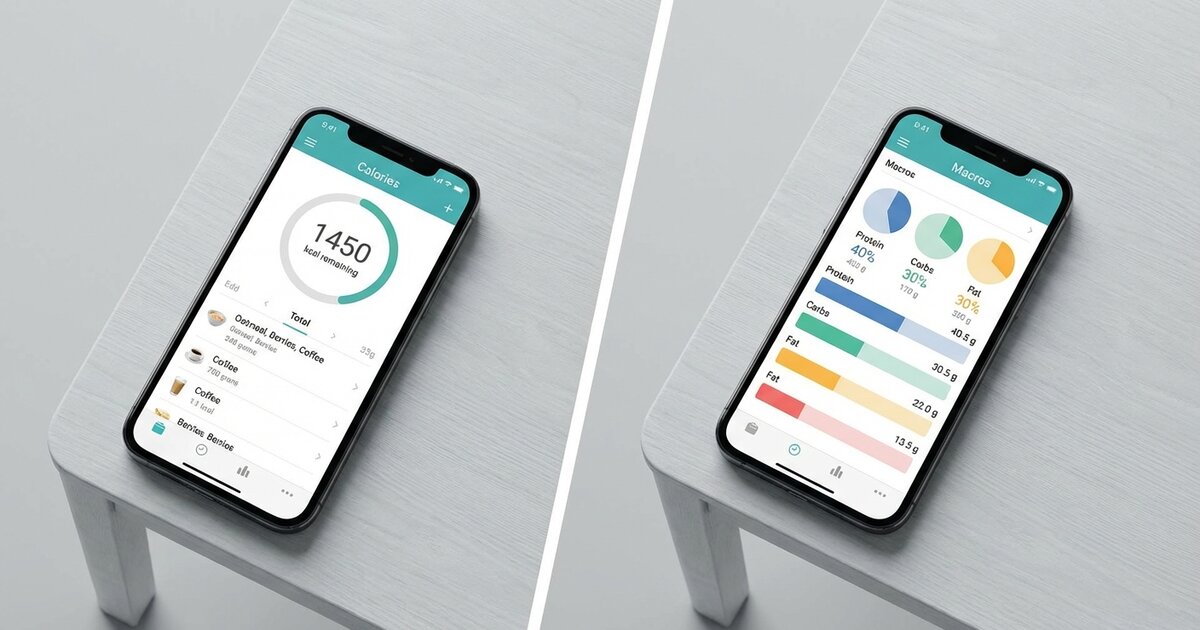
Related: Start with what macros are to understand the fundamentals.
Introduction
Walk into any gym and you’ll hear two camps arguing: the calorie counters and the macro trackers. Both swear their method is superior. Both have success stories. Both think the other side is overcomplicating things.
Here’s the truth: they’re both right. And both wrong.
The confusion between tracking macros versus calories isn’t just semantic. It fundamentally changes how you approach food, how much effort you put in, and what results you can expect. Choose wrong for your situation and you’ll either burn out from unnecessary complexity or miss your goals from being too vague.
This guide cuts through the noise. You’ll learn exactly what each approach does, when to use which method, and how to pick the right one for your specific goals. No bias, no fluff—just the practical framework you need to make an informed decision.
Whether you want to lose fat, build muscle, or simply maintain your physique with minimal stress, understanding this distinction will save you months of spinning your wheels.
What Are Calories?
A calorie is a unit of energy. Specifically, it’s the amount of energy needed to raise one kilogram of water by one degree Celsius. In nutrition, we’re talking about kilocalories (kcal), though everyone just says “calories.”
Your body needs energy to function. Every movement, every heartbeat, every thought burns calories. You get those calories from food. Eat more than you burn and you gain weight. Eat less and you lose weight. This is CICO—Calories In, Calories Out.
The concept is beautifully simple. Track your total calorie intake. Stay under your maintenance level to lose weight. Go over it to gain. That’s it.
How CICO Works
Your Total Daily Energy Expenditure (TDEE) represents everything you burn in a day. (Learn more in our complete TDEE guide.) This includes your basal metabolic rate (what you’d burn in a coma), activity from daily life, structured exercise, and the energy cost of digesting food.
Create a calorie deficit of 500 calories per day and you’ll lose roughly one pound per week. Create a surplus of 300-500 calories and you’ll gain weight. The math is straightforward.
Most calorie trackers don’t care where those calories come from. 2,000 calories of chicken and rice has the same energy value as 2,000 calories of donuts. Obviously, one choice is better for health and satiety, but for pure weight loss, the energy balance is what matters.
Pros of Calorie Tracking
Simplicity. One number to hit. You can eat anything that fits your daily target. No need to balance multiple variables.
Flexibility. Want pizza? Fine—just make it fit your calorie budget. This psychological freedom helps many people stick to their plan long-term.
Lower barrier to entry. Beginners can start immediately without understanding protein, carbs, or fats. Just focus on total intake.
Cons of Calorie Tracking
Lacks precision for body composition. You’ll lose weight, but you might lose more muscle than necessary. You’ll gain weight, but more might be fat than you’d like.
Ignores satiety differences. 500 calories of steak keeps you full for hours. 500 calories of candy leaves you hungry in 30 minutes. Calorie tracking alone doesn’t account for this.
Potential for poor food choices. When only calories matter, people sometimes hit their target with nutritionally empty foods, leaving them hungry, tired, and nutrient-deficient.
What Are Macros?
Macros—short for macronutrients—are the three calorie-containing nutrients your body needs in large amounts: protein, carbohydrates, and fats. Each serves different functions and contains different amounts of energy per gram.
Protein provides 4 calories per gram. It builds and repairs muscle tissue, supports immune function, and helps keep you full. You need adequate protein especially when trying to build muscle or preserve it during fat loss.
Carbohydrates provide 4 calories per gram. They’re your body’s preferred energy source, fuel your workouts, and support hormone production. They also refill muscle glycogen, which impacts your performance and appearance.
Fats provide 9 calories per gram. They’re essential for hormone production (including testosterone), support cell structure, help absorb vitamins, and keep your brain functioning properly.
How Macros Relate to Calories
Here’s what most people miss: tracking macros automatically tracks calories. If you eat 200g protein, 250g carbs, and 60g fat, you’re eating 2,340 calories. The math is built in.
When you track macros, you’re adding a layer of precision. You’re not just controlling total energy—you’re controlling where that energy comes from. This matters enormously for body composition.
Eating 2,000 calories with 180g protein yields very different results than 2,000 calories with 60g protein. Same energy, different outcomes for muscle retention, recovery, satiety, and performance.
Pros of Macro Tracking
Optimizes body composition. High protein preserves muscle during cutting macros. Adequate carbs fuel performance. Proper fat intake supports hormones. Everything is dialed in.
Better satiety. When you hit protein and fiber targets, you naturally feel fuller. Most people find macro tracking easier to sustain because they’re less hungry.
Educational. You learn what’s actually in your food. Most people drastically underestimate their carb intake and overestimate their protein. Tracking macros fixes this fast.
Cons of Macro Tracking
More complex. You’re juggling three numbers instead of one. This requires more mental effort and often more careful meal planning.
Steeper learning curve. You need to understand what foods contain which macros. You need to weigh and measure more carefully. The first few weeks feel tedious.
Can feel restrictive. If you’re 40g over on carbs but under on fats, you can’t just eat anything. You need to find high-fat, low-carb options. This requires more food knowledge.
Key Differences
The distinction between calorie tracking and macro tracking isn’t just philosophical—it creates real, measurable differences in your results and experience.
Precision vs Simplicity
Calorie tracking asks one question: “How much?” Macro tracking asks three: “How much protein? How much carbs? How much fat?” More questions mean more precision but also more cognitive load.
For someone who just wants to lose weight and doesn’t care about muscle retention, the extra precision might be unnecessary overhead. For someone trying to build muscle or maintain it during aggressive fat loss, that precision is the difference between success and spinning wheels.
Think of it like navigation. Calorie tracking tells you the destination. Macro tracking gives you turn-by-turn directions. Both get you there, but one route is faster and more efficient.
Body Composition vs Weight Loss
This is the big one. If your only goal is to see the number on the scale drop, calorie tracking works fine. Create a deficit, lose weight, done.
But most people don’t actually want weight loss—they want fat loss while keeping muscle. They want to look lean and defined, not just skinny. This is where macro tracking dominates.
Research consistently shows that higher protein intakes preserve more lean mass during a calorie deficit. You can hit a high protein target with calorie tracking, but you need to consciously prioritize it. With macro tracking, it’s built into the system.
The same applies for bulking macros. Yes, you’ll gain weight in a calorie surplus. But are you gaining mostly muscle or mostly fat? Proper macro distribution—especially adequate protein—tilts that ratio in your favor.
Flexibility and Sustainability
Ironically, despite being more complex, many people find macro tracking more sustainable long-term. Why? Because hitting a protein target with room for carbs and fats feels less restrictive than arbitrary calorie limits.
When you know you need 180g protein and 60g fat, you can build meals around those requirements and fill the rest with what you enjoy. You’re eating nutrient-dense foods by default, which keeps you full and energized.
Calorie tracking can feel more flexible day-to-day—“I have 600 calories left, what do I want?”—but often leaves people hungry if they make poor choices within their budget.
When Each Approach Works Best
Calorie tracking works best when:
- You’re new to nutrition tracking and need simplicity
- You want maximum day-to-day food flexibility
- Your primary goal is weight change, not body composition
- You’re in maintenance and just need rough guardrails
Macro tracking works best when:
- You have specific body composition goals
- You’re training seriously and want to optimize performance
- You’re doing reverse dieting after a cut
- You want to maximize muscle gain while minimizing fat gain
- You’ve been calorie tracking and hit a plateau
Which Should You Track?
The “right” choice depends entirely on your specific situation, goals, and tolerance for complexity. Let’s break it down by common scenarios.
For Weight Loss Goals
If you simply want to lose weight and don’t care much about muscle retention, calorie tracking is sufficient. Create a 300-500 calorie deficit, track your intake, adjust based on results. Simple and effective.
But here’s what most people discover: they lose weight, but don’t look how they expected. They’re “skinny fat”—lighter but still soft, without definition. This happens when you lose muscle along with fat.
If you want to lose fat while maintaining muscle and strength, macro tracking wins. Prioritize 0.8-1g protein per pound of body weight, fill in carbs and fats based on preference and performance, and you’ll preserve significantly more lean mass.
For Muscle Gain
Macro tracking is non-negotiable for optimal muscle gain. You need a calorie surplus, yes—but you also need adequate protein (0.8-1g per pound) to actually build tissue and enough carbs to fuel hard training.
Some people try bulking with just calorie tracking, aiming for a 300-500 calorie surplus. They gain weight, but the ratio of muscle to fat is poor because they’re not hitting protein targets consistently.
With proper bulking macros, you systematically eat for growth. You’re not just gaining weight—you’re gaining the right kind of weight.
For Body Recomposition
Body recomposition—building muscle while losing fat simultaneously—is already difficult. It requires everything to be dialed in: training stimulus, adequate protein, precise calorie control.
Trying to recomp with only calorie tracking is like performing surgery with mittens on. Technically possible, but unnecessarily hard. You need high protein (often 1g per pound or more), moderate calories, and consistency.
Macro tracking gives you the precision needed to walk that narrow line between deficit and maintenance while prioritizing protein.
For Maintenance/Lifestyle
Once you’ve reached your goal, maintenance is about finding sustainable habits. This is where personal preference matters most.
Some people love the simplicity of tracking calories loosely—staying within a 200-300 calorie range without stressing details. Others find that tracking protein and letting carbs and fats float naturally works better.
Many successful maintainers eventually stop tracking altogether, having internalized portion sizes and food choices. But when they do track, they often prefer macro tracking because it keeps protein high, which naturally controls appetite and preserves muscle.
Decision Framework
Ask yourself these questions:
How important is body composition versus scale weight? More important = macros.
How much complexity can you handle? Less tolerance = calories first, transition later.
How serious is your training? More serious = macros for performance optimization.
Have you tracked before? Never tracked = start with calories to build the habit.
What’s your timeline? Short-term cut or bulk = macros for precision. Long-term maintenance = whatever you’ll actually stick to.
How to Get Started
Regardless of which method you choose, success comes from starting properly and building consistency before trying to optimize everything.
Starting with Calories
Calculate your TDEE using an online calculator. Be honest about your activity level—most people overestimate. Start with maintenance calories for one week to establish your baseline.
For fat loss, subtract 300-500 calories. For muscle gain, add 300-500 calories. Use macro tracking apps like MyFitnessPal or Lose It to log everything you eat.
Weigh yourself daily at the same time (preferably morning, after bathroom, before eating) and track the weekly average. Adjust calories every 2-3 weeks based on results, not day-to-day fluctuations.
Transitioning to Macros
Once you’re comfortable tracking calories, adding macros is straightforward. Set your protein target first—0.8-1g per pound of body weight. Then set fats at 0.3-0.4g per pound for hormone health.
Fill the remaining calories with carbohydrates. For example, at 180 lbs eating 2,200 calories: 180g protein (720 cal), 60g fat (540 cal), leaves 940 calories for carbs = 235g carbs.
Most tracking apps show macro breakdowns automatically. You’ll adjust the same way you adjusted calories—based on weekly average weight and how you look and feel.
Tools and Apps
The best tracking app is the one you’ll actually use. MyFitnessPal has the largest food database. Cronometer is more accurate for micronutrients. MacroFactor uses AI to auto-adjust your targets.
Get a food scale. Eyeballing portions is fine once you’re experienced, but when learning, you’ll be shocked how wrong your estimates are. A $15 scale solves this.
Common Mistakes
Being too aggressive too fast. Start with moderate deficits or surpluses. Extreme changes tank adherence and performance.
Changing things too quickly. Give each calorie or macro target 2-3 weeks before adjusting. Your weight fluctuates daily from water, stress, digestion—you need weekly averages.
Perfectionism. Hitting within 50 calories or 5g of each macro is fine. Stop stressing over being exact to the gram.
Forgetting to adjust. As you lose or gain weight, your calorie needs change. Recalculate every 10-15 lbs.
FAQ
Can you track both macros and calories?
Yes—tracking macros automatically tracks calories since macros are what contain calories. When people say they “track both,” they usually mean they watch total calories while loosely monitoring protein. This hybrid approach works well for maintenance.
Is macro tracking harder than calorie tracking?
Initially, yes. You’re managing three variables instead of one, which requires more planning. But most people find it becomes second nature within 2-3 weeks. Many report it’s actually easier long-term because hitting protein targets naturally controls hunger.
Do I need to track forever?
No. Tracking is a tool for learning and achieving specific goals. Many people track during focused phases (cutting, bulking) and eat intuitively during maintenance. The education from tracking—understanding portion sizes and food content—stays with you even when you stop.
What about portion control instead of tracking?
Portion control works for some people, especially in maintenance. But it’s vague and relies on already having good intuition about food quantities. If portion control alone worked for you, you probably wouldn’t be reading this. Tracking provides the data needed to develop that intuition.
How accurate do I need to be?
Consistent beats perfect. Being 80-90% accurate every day outperforms being 100% accurate five days then not tracking weekends. Track everything—even estimates on restaurant meals—rather than only tracking “perfect” days. The data shows trends even with some noise.
Can I switch between methods?
Absolutely. Many people start with calories, transition to macros for focused goals, then return to loose calorie tracking for maintenance. Use the tool that fits your current situation. There’s no lifetime commitment.
What if I plateau?
Plateaus happen with both methods. The fix is the same: recalculate your targets based on your current weight, verify tracking accuracy (portions drift over time), and adjust calories or macros down for cuts or up for bulks. Sometimes taking a diet break or doing reverse dieting resets your metabolism.
Do macros matter for weight loss?
For pure scale weight loss, not really—calories are king. But for fat loss while preserving muscle, yes. High protein intake consistently shows better body composition outcomes. So while you can lose weight tracking only calories, tracking macros—especially protein—yields better visual results and helps maintain your metabolism.
Conclusion
The macros versus calories debate isn’t about finding one universal answer. It’s about matching the right tool to your specific goals and experience level.
Start with calorie tracking if you’re new or want simplicity. Transition to macro tracking when you’re ready for optimization. Use whichever method you’ll actually stick to—because consistency beats perfection every single time.
Both approaches work. The best choice is the one you’ll follow.
Related Articles
Travel Macros: How to Track Nutrition While Traveling
Complete guide to managing macros while traveling. Learn meal planning strategies,...
Read guide →
Macros for Shift Workers: Complete Guide to Nutrition on Rotating Schedules
Master macro tracking on night shifts and rotating schedules. Learn meal timing, sleep...
Read guide →
Macros During Ramadan: Complete Nutrition Guide for Fasting
Learn how to track macros during Ramadan fasting. Expert guide covering meal timing,...
Read guide →Disclaimer: This content is for informational purposes only. Consult a healthcare provider before making changes to your diet.