Macros for Women Over 40: Nutrition for Your Changing Body
Reviewed by Dr. Michael Torres, PhD
Something shifted.
The diet that worked at 30 doesn’t work anymore. The weight you used to drop easily now clings to your midsection. Your energy isn’t what it used to be. And everyone keeps giving you the same generic advice that doesn’t account for what’s actually happening in your body. The standard macros for weight loss principles need some important modifications for women in midlife.
Here’s the truth: your body after 40 is different. But different doesn’t mean broken—it means you need a different approach.
The generic macro advice floating around the internet? It’s designed for 25-year-olds. Your hormones, your metabolism, your recovery needs—they require something more tailored. (For general women’s macro guidance, see our complete guide to macros for women.)
This guide is built specifically for women 40 and over. We’ll cover exactly how to set your macros to work with your changing body, not against it. No gimmicks, no BS, just what actually works when the rules have changed.
Ready to calculate your personalized macros? Macro Calculator — get your numbers in 60 seconds.
Related Guide: What Are Macronutrients? Complete Guide — Learn the foundations of protein, carbs, and fats.
Why Macros Hit Different After 40
Before we talk numbers, let’s talk about what’s actually happening in your body. Understanding this isn’t about making excuses—it’s about making smarter choices.
The Hormonal Shift
If you’re between 40 and 55, you’re likely in perimenopause or approaching menopause. This isn’t a switch that flips overnight—it’s a gradual transition that can last 7-14 years.
What’s changing:
Estrogen decline affects:
- Where you store fat (hello, belly)
- Your ability to retain muscle
- Your metabolic rate
- Sleep quality
Progesterone changes affect:
- Water retention
- Mood and anxiety
- Sleep
- Bloating
Testosterone gradually decreases affecting:
- Muscle mass and strength
- Energy levels
- Sex drive
These hormonal shifts are real. They’re not excuses—they’re realities you need to work with, not against.
The Metabolism Reality
Let’s address the elephant in the room: yes, metabolism slows with age. But probably less than you think.
Research shows metabolism decreases about 1-2% per decade after 30. That’s maybe 100-200 fewer calories burned daily between 30 and 50.
The bigger factor? Muscle loss.
Most “metabolic slowdown” is actually loss of metabolically active tissue (muscle). We lose approximately 3-8% of muscle mass per decade after 30 if we don’t actively fight it. Less muscle = fewer calories burned at rest.
The good news: This is largely preventable. Maintain your muscle, maintain your metabolism. This is why strength training and adequate protein become more important after 40, not less.
The Recovery Factor
Your body doesn’t bounce back like it did at 25. This isn’t weakness—it’s biology.
- Workouts require more recovery time
- Sleep quality often decreases (thanks, hormones)
- Stress impacts you more significantly
- Your body is less forgiving of extremes
This means nutrition needs to support recovery, not just performance. Crash dieting hits harder. Aggressive deficits backfire faster. Your body needs adequate fuel to recover, adapt, and function well.
The 40+ Macro Framework
Now let’s build your actual plan. These recommendations are based on research specific to women over 40, accounting for the realities we just discussed.
Protein: Your #1 Priority (Non-Negotiable)
Target: 0.8-1.0g per pound of bodyweight
This is higher than the standard “0.7g per pound” often recommended. Here’s why you need more:
Anabolic resistance: After 40, your body becomes less efficient at using protein for muscle building and repair. You need more protein to get the same muscle-building signal you got easily at 30.
Fighting sarcopenia: Age-related muscle loss accelerates without intervention. Adequate protein is your first line of defense.
Satiety: As appetite and hunger cues change, protein keeps you satisfied and prevents overeating.
The thermic effect: Protein burns more calories during digestion than carbs or fat—every gram helps.
Your Protein Targets by Weight:
| Your Weight | Protein Target |
|---|---|
| 130 lbs | 105-130g |
| 140 lbs | 112-140g |
| 150 lbs | 120-150g |
| 160 lbs | 128-160g |
| 170 lbs | 135-170g |
| 180 lbs | 145-180g |
Pro tip: Spread protein across 4+ meals. Research shows older adults build more muscle when protein is distributed throughout the day rather than concentrated in one or two meals. Aim for 25-40g per meal.

Fat: Supporting Your Hormones
Target: 0.35-0.5g per pound of bodyweight
Notice this is slightly higher than the general recommendation of 0.3g. During hormonal transitions, fat becomes even more critical.
Why fat matters more after 40:
- Hormone production: Estrogen, progesterone, and testosterone all require dietary fat for synthesis
- Inflammation management: Omega-3 fatty acids help combat age-related inflammation
- Hormone symptom relief: Many women find adequate fat helps manage hot flashes, mood swings, and other symptoms
- Vitamin absorption: Fat-soluble vitamins (D, K, A, E) become more critical for bone health, immunity, and more
Prioritize these sources:
- Fatty fish (salmon, mackerel, sardines) — omega-3s
- Olive oil and avocados — monounsaturated fats
- Nuts and seeds (especially walnuts, flax, chia)
- Eggs — complete profile
- Quality dairy if tolerated
Warning: Don’t go too low on fat to “save calories.” This backfires by worsening hormonal symptoms, tanking energy, and actually making weight loss harder.
Learn more about choosing quality fats in our Healthy Fats Guide.
Carbs: The Flexible Macro
Target: Fill remaining calories after protein and fat
Carbs are where you have flexibility. Your target depends on activity level, preferences, and how your body handles them.
The 40+ carb reality:
- Insulin sensitivity may decrease with age
- This means your body might not handle large amounts of carbs as efficiently
- This doesn’t mean avoiding carbs—it means choosing quality and timing them strategically
General guidance:
| Activity Level | Carb Target |
|---|---|
| Very active (daily intense exercise) | 1.0-1.5g per pound |
| Moderately active (3-5 workouts/week) | 0.75-1.0g per pound |
| Lightly active/sedentary | 0.5-0.75g per pound |
Smart carb choices:
- Vegetables (unlimited—especially non-starchy)
- Whole grains (oats, quinoa, brown rice)
- Legumes (beans, lentils)
- Fruits (berries, apples, citrus)
- Sweet potatoes
Timing tip: If you’re active, place carbs around your workouts when your body uses them most efficiently.
Sample Macro Setups for Women 40+
Let’s see how this looks in practice with three real-world examples.
Example 1: Linda, 45 — Moderate Activity
Stats: 5’4”, 160 lbs, walks daily + strength trains 3x/week Goal: Lose 25 lbs while maintaining muscle
Calculation:
- TDEE estimate: ~1,900 calories
- Fat loss target: 1,500 calories (400 deficit)
- Protein: 135g (0.85g/lb) = 540 calories
- Fat: 55g (0.34g/lb) = 495 calories
- Carbs: 115g (remaining) = 460 calories
Final macros: 135P / 115C / 55F Percentage split: 36% / 31% / 33%
Linda’s notes: Balanced split that supports training while creating fat loss. Protein is high enough to preserve muscle, carbs provide workout energy, fat supports hormones.
Example 2: Susan, 52 — Desk Job + Light Exercise
Stats: 5’6”, 175 lbs, walks occasionally, new to strength training Goal: Lose 30 lbs, feel more energetic
Calculation:
- TDEE estimate: ~1,800 calories
- Fat loss target: 1,400 calories (400 deficit)
- Protein: 140g (0.8g/lb) = 560 calories
- Fat: 60g (0.34g/lb) = 540 calories
- Carbs: 75g (remaining) = 300 calories
Final macros: 140P / 75C / 60F Percentage split: 40% / 21% / 39%
Susan’s notes: Lower carb works well here—she’s less active and may have some insulin sensitivity concerns. Higher fat keeps her satisfied. As she becomes more active, carbs can increase.
Example 3: Marie, 48 — Very Active
Stats: 5’5”, 145 lbs, CrossFit 4x/week, wants to recomp Goal: Build muscle, lose stubborn belly fat
Calculation:
- TDEE estimate: ~2,200 calories
- Target: 2,000 calories (small deficit—prioritizing performance)
- Protein: 145g (1.0g/lb) = 580 calories
- Fat: 65g (0.45g/lb) = 585 calories
- Carbs: 210g (remaining) = 840 calories
Final macros: 145P / 210C / 65F Percentage split: 29% / 42% / 29%
Marie’s notes: Higher carbs fuel her intense training. Smaller deficit allows performance while slowly reducing body fat. She’s prioritizing body composition over rapid weight loss.
The Protein Challenge (And How to Solve It)
Let’s be honest: hitting 130-150+ grams of protein daily feels hard at first. Most women over 40 have spent years eating less protein than they need.
Why 40+ Women Struggle with Protein
- Smaller appetites: Hunger cues change with age
- Protein feels “heavy”: Large portions of meat can feel hard to eat
- Years of undereating: Decades of “eat less” advice created habits of restriction
- Less marketing: Protein supplements are marketed to gym bros, not women in midlife
Practical Strategies to Hit Your Target
Breakfast (aim for 30-40g):
- 3 eggs scrambled + Greek yogurt (0% fat, high protein) = ~35g
- Protein smoothie: 1 scoop protein powder + milk + fruit = 30-40g
- Cottage cheese parfait with fruit and nuts = ~25g
- Egg white omelet with cheese + turkey sausage = ~35g
Lunch (aim for 35-45g):
- Large chicken salad (5oz chicken) = ~35g
- Tuna salad wrap with Greek yogurt-based dressing = ~35g
- Leftover dinner protein (6oz) + roasted vegetables = ~40g
- Deli turkey wrap with cheese = ~30g (add Greek yogurt on side)
Dinner (aim for 35-45g):
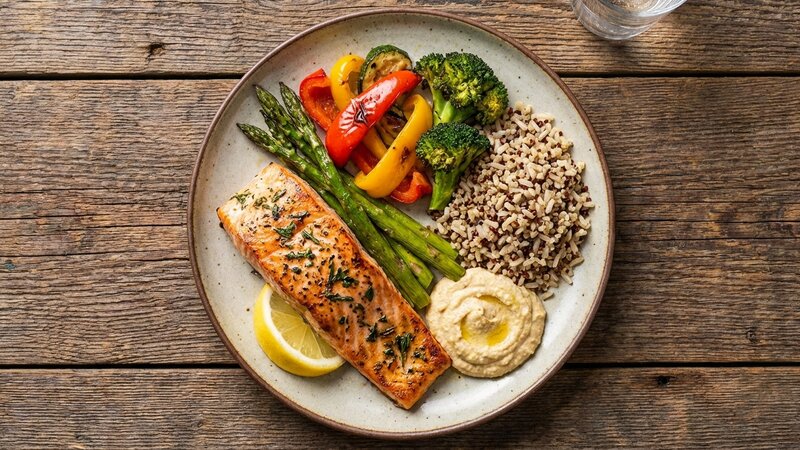
- 6oz salmon + vegetables + grain = ~40g
- 5oz chicken breast + sweet potato + greens = ~35g
- Lean ground turkey stir-fry (6oz) = ~35g
- Shrimp and vegetable bowl (8oz shrimp) = ~40g
Snacks (fill the gap with 15-25g):
- Greek yogurt (plain, 2%) = 17-20g per cup
- Protein shake = 20-30g
- String cheese + deli turkey slices = ~15g
- Cottage cheese (1/2 cup) = ~14g
- Hard-boiled eggs (2) = ~12g
The Protein Powder Question
Do you need protein powder? No—but it makes hitting your target easier.
When it helps:
- Busy mornings (quick shake)
- Post-workout (convenient and fast-absorbing)
- Hitting your numbers when appetite is low
- Travel or unpredictable days
What to look for:
- Whey protein (well-researched, complete amino acids)
- Casein (slow-digesting, good before bed)
- Plant-based with complete amino profile if dairy-free
Best uses:
- Smoothies
- Mixed into oatmeal or yogurt
- Post-workout shake
- Protein “fluff” desserts
The rule: Whole foods first, supplements to fill gaps. Don’t rely on shakes for more than 1-2 servings of your daily protein.
Managing the 40+ Metabolism
Let’s tackle the metabolism question head-on.
The Truth About Metabolism After 40
Your metabolism isn’t broken. But it has changed—and most of that change is within your control.
What you can’t control:
- Some hormonal decline
- Slight decrease in BMR with age
What you CAN control:
- Muscle mass (the biggest factor)
- Activity level
- Sleep quality
- Stress management
- Nutrition quality
The women who thrive in their 40s, 50s, and beyond aren’t doing magic—they’re doing the basics exceptionally well.
Metabolism-Supporting Habits
1. Strength train 2-4x per week This is non-negotiable. Muscle is metabolically active tissue. Every pound of muscle you build (or preserve) burns more calories at rest. Strength training also improves bone density, balance, and functional fitness.
2. Hit your protein Protein has the highest thermic effect of any macro. It takes energy to digest. High-protein diets burn more calories than low-protein diets at the same calorie level.
3. Don’t crash diet Aggressive calorie restriction (below 1,200) tanks your metabolism and increases muscle loss. Your body adapts to chronic undereating by slowing everything down. Moderate deficits work better.
4. Prioritize sleep Poor sleep crushes metabolism and increases hunger hormones. It’s not just about hours—it’s about quality. Address sleep issues directly; they affect everything else.
5. Manage stress Chronic stress elevates cortisol, which promotes belly fat storage and muscle breakdown. Find what works for you: exercise, meditation, boundaries, whatever reduces your stress load.
Signs Your Metabolism Needs Support
If you’re experiencing these, your metabolism may be stressed:
- Extreme fatigue despite eating “enough”
- Hair loss or thinning
- Feeling cold all the time
- Can’t lose weight even on very low calories
- Hormonal symptoms getting worse
- Persistent brain fog
What to do: Consider a diet break (eating at maintenance for 2-4 weeks), consult your doctor about thyroid function, and ensure you’re not chronically undereating.
The Belly Fat Reality (And What Actually Works)
Let’s talk about the elephant in the room: that stubborn midsection fat that appeared seemingly overnight.
Why Belly Fat Increases After 40
This isn’t your imagination. Estrogen decline specifically shifts fat storage from hips and thighs to the abdominal area. This visceral fat (around organs) is the health concern—and it’s also the most stubborn.
This is hormonal, not a character flaw. But it IS something you can address.
What Actually Reduces Belly Fat
1. Caloric deficit You cannot spot-reduce fat. To lose belly fat, you must lose total body fat—which requires eating less than you burn. There’s no special belly-fat diet.
2. High protein intake Higher protein diets preferentially spare muscle and target fat loss. They also help reduce visceral fat specifically.
3. Strength training Building muscle improves body composition. You may weigh the same but look completely different as muscle replaces fat.
4. Managing stress Cortisol specifically promotes belly fat storage. Chronic stress = more visceral fat. Stress management isn’t optional.
5. Quality sleep Sleep deprivation increases visceral fat storage directly. Prioritize 7-9 hours of quality sleep.
6. Time and consistency Belly fat is often the last to go. It requires patience. Women who’ve been in a deficit for months often see belly fat finally start releasing after the initial weight comes off elsewhere.
What Doesn’t Work
- “Belly fat burning” supplements — Scams, all of them
- Endless crunches — Builds muscle under fat, doesn’t burn fat
- Extreme low-calorie diets — Tanks metabolism, increases cortisol, backfires
- Avoiding all carbs — Unnecessary and often unsustainable
- Quick fixes — If it sounds too good to be true, it is
Tracking Macros: Practical Tips for Busy Women
You don’t need to be perfect. You need to be consistent.
The “Good Enough” Approach
Aim for 80% accuracy. That’s plenty for results.
- Weigh your protein — This is the biggest variable
- Estimate vegetables — Low calorie, hard to mess up
- Track cooking fats — Easy to miss, high calorie
- Don’t stress restaurant meals — Make your best guess and move on
Meal Prep for Success
Batch cooking solves most tracking challenges:
- Sunday: Grill 2-3 lbs chicken, cook ground turkey, hard-boil eggs
- Keep easy protein on hand: Rotisserie chicken, deli turkey, pre-cooked shrimp
- Wash and prep vegetables for the week
- Have 5 go-to meals you can make without thinking
Eating Out Without Derailing
- Prioritize protein: Order grilled chicken, fish, or steak
- Sauce on the side: Control what you actually use
- Swap when possible: Vegetables instead of fries
- Don’t stress it: One meal doesn’t ruin weeks of work
When to Adjust Your Macros
Your macros aren’t set forever. Here’s when to change them:
Signs You Need More Food
- Constantly hungry despite hitting macros
- Energy tanking, workouts suffering
- Mood issues, increased irritability
- Sleep getting worse
- Hair loss, feeling cold
- No progress after 4+ weeks with accurate tracking
Action: Increase calories by 100-200 per day. Add to carbs or fats, keep protein stable.
Signs You Need Less Food
- Not losing weight after 3+ weeks of accurate tracking
- Feeling overly full at meals
- Weight increasing despite “eating in a deficit”
Action: Verify tracking accuracy first. Then reduce by 100-200 calories from carbs or fats.
How to Adjust
- Change by 100-200 calories at a time
- Adjust carbs or fats first, keep protein stable
- Give changes 2-3 weeks before adjusting again
- Track weekly average weight, not daily fluctuations
Common Mistakes Women 40+ Make
Avoid these patterns that sabotage results:
Mistake #1: Eating Too Little
Decades of “1,200 calorie diet” advice has damaged metabolisms. Under-eating leads to muscle loss, which slows metabolism further. Most women over 40 need MORE food than they think—especially protein.
Mistake #2: Cardio Obsessed, Weights Neglected
Cardio alone won’t change your body composition. Without strength training, you’re just becoming a smaller version of your current shape. Muscle gives you definition, shape, and metabolic protection.
Mistake #3: Expecting Results in 2 Weeks
Your body didn’t change overnight. It won’t reverse overnight. Give any approach 8-12 weeks before judging. Progress photos and measurements often show change before the scale does.
Mistake #4: Comparing to Your Younger Self
Your body at 45 is different from your body at 25. Accept and work with it. “Getting your old body back” isn’t realistic or even the right goal. Building your BEST body NOW is.
Mistake #5: Going It Alone
This stage of life has unique challenges. Many women benefit from personalized guidance, coaching, or community support. It’s not weakness to ask for help—it’s wisdom.
FAQ: Your 40+ Macro Questions Answered
Can I still lose weight after menopause? Absolutely. The same principles apply—calorie deficit, adequate protein, strength training. It may be slower than at 30, but results are absolutely achievable.
How much protein is too much? For healthy women without kidney disease, up to 1.2g per pound is safe and potentially beneficial. Research doesn’t support concerns about high protein intake in healthy adults.
Should I try keto? It’s an option, not a requirement. Some women thrive on very low carb; others feel terrible. Moderate carbs work well for most active women. Try it if curious, but it’s not necessary.
Why am I always hungry? Usually insufficient protein or total calories. Increase protein first—it’s the most satiating macro. If that doesn’t help, you may need more total food.
How long until I see results? Noticeable changes typically appear in 4-8 weeks with consistent effort. Scale changes often come first; visual changes follow.
Is it worth tracking if I’m not perfect? 100% yes. Imperfect tracking beats not tracking at all. 80% accuracy consistently produces results.
Related Guide: This guide is part of our Macros for Weight Loss guide.
Frequently Asked Questions
How do macros change for women over 40?
Women over 40 need higher protein (0.8-1.0g per pound vs 0.7-0.8g for younger women) to counteract age-related muscle loss and slower protein synthesis. Total calorie needs decrease 5-10% per decade due to reduced muscle mass and metabolic rate—expect to need 100-200 fewer calories than in your 30s. Fat needs remain consistent (0.35-0.5g per pound) to support hormone production during perimenopause and menopause transitions.
Carb tolerance may decrease slightly with age and hormonal changes, though individual variation is significant. Start with moderate carbs (100-150g) and adjust based on energy levels and results. The biggest change isn’t macro ratios but total calories—what worked at 35 may cause gradual weight gain at 45 if unadjusted for lower TDEE.
Why is it harder to lose weight after 40?
Women over 40 experience 5-10% metabolic slowdown per decade, primarily from muscle loss (sarcopenia) and hormonal changes reducing metabolically active tissue. Declining estrogen affects fat distribution (more belly fat), appetite regulation, and insulin sensitivity. Additionally, lifestyle factors (less activity, higher stress, poor sleep) compound metabolic challenges, making the same eating habits that maintained weight at 30 cause gradual gain at 45.
However, these changes don’t make fat loss impossible—they just require intentional adjustments. Strength training 3-4 times weekly combats muscle loss, high protein preserves lean tissue during deficits, and tracking macros prevents the “calorie creep” that often goes unnoticed. Women over 40 can absolutely lose fat effectively; it just requires more patience (0.5-1 lb weekly vs 1-2 lbs) and precision than in younger years.
How much protein should women over 40 eat?
Women over 40 should eat 0.8-1.0g protein per pound bodyweight (higher end than younger women) to combat age-related muscle loss and support slower protein synthesis. A 150lb woman needs 120-150g protein daily. Research shows women over 40 require 20-30% more protein than younger women to achieve the same muscle protein synthesis response—making protein the single most important macro for this age group.
Distribute protein across 4-5 meals (25-35g per feeding) since aging muscles are less responsive to protein—smaller frequent doses work better than one large evening meal. Prioritize high-quality complete proteins (chicken, fish, eggs, Greek yogurt) over plant proteins, as digestibility and amino acid profiles matter more with age. Protein also increases satiety, helping manage appetite changes common during hormonal transitions.
Can you build muscle after 40 as a woman?
Yes—women over 40 can absolutely build muscle with proper training and nutrition, though the rate is slower than in their 20s and 30s. Expect 0.25-0.5 pounds muscle gain monthly (vs 0.5-1 lb for younger women) with consistent progressive resistance training 3-4 times weekly and adequate protein (0.8-1.0g per pound). Strength gains appear within 4-6 weeks as neuromuscular adaptations, while visible muscle growth takes 3-4 months.
Prioritize compound lifts (squats, deadlifts, presses) over isolation exercises, progressively increase weight lifted over time, and eat at maintenance or slight surplus (100-200 calories above TDEE) to support muscle growth. Building muscle becomes more important after 40 because it directly counteracts age-related metabolic slowdown—every pound of muscle gained increases resting metabolic rate by 30-50 calories daily.
What role do hormones play in macros for women over 40?
Declining estrogen during perimenopause and menopause shifts fat storage toward the midsection, reduces insulin sensitivity (making carb handling less efficient), and can increase appetite and cravings. Adequate dietary fat (0.4-0.5g per pound minimum) supports hormone production and may ease menopausal symptoms. Some women find slightly lower carbs (100-150g vs 150-200g) improve how they feel as insulin sensitivity declines, though this is individual.
Thyroid function also commonly slows with age, further reducing metabolic rate. While macros don’t directly “fix” hormonal changes, proper nutrition supports your body through the transition. High protein preserves muscle (your metabolic engine), adequate fat supports hormone synthesis, and appropriate total calories prevent metabolic adaptation. Consider working with a healthcare provider to assess thyroid and hormone levels if symptoms are severe.
Should women over 40 follow different macro ratios?
Women over 40 should emphasize higher protein (35-40% of calories vs 25-30% for younger women) while moderating carbs (30-40%) and maintaining adequate fat (25-30%). For a 1,800 calorie target, this translates to 140-160g protein, 120-150g carbs, and 55-65g fat. This ratio supports muscle preservation, manages age-related metabolic slowdown, and accounts for reduced carb tolerance common with declining estrogen.
However, individual needs vary more than age-based generalizations—an active 45-year-old training 5 days weekly may thrive on higher carbs (200g+), while a sedentary 50-year-old feels better on 100-120g. Start with higher protein as non-negotiable, ensure adequate fat for hormones (never below 0.3g per pound), and adjust carbs based on activity level and how you feel.
How long does it take to see results tracking macros after 40?
Women over 40 typically see initial results in 4-6 weeks (vs 2-3 weeks for younger women), with significant visible changes taking 12-16 weeks of consistent tracking and training. Scale weight may drop 0.5-1 pound weekly with proper deficit, though body composition changes (less fat, more definition) often precede scale changes. Take progress photos every 2 weeks and body measurements monthly—these reveal changes the scale doesn’t show.
Be patient—age-related metabolic changes mean slower progress, but results are absolutely achievable with consistency. Many women over 40 report their best physiques in their 40s and 50s after implementing proper macro tracking and strength training, despite slower initial progress. The key is sustainable habits over 3-6 months, not quick fixes over 3-6 weeks.
Are supplements necessary for women over 40 tracking macros?
Supplements aren’t required, but some may benefit women over 40: protein powder for convenient protein (hitting 120-150g daily can be challenging), creatine for muscle preservation and strength (3-5g daily), vitamin D if deficient (common with age), calcium for bone health (1,000-1,200mg daily from food or supplements), and omega-3s if not eating fatty fish 2-3 times weekly (1-2g EPA+DHA).
Women over 40 experiencing perimenopause may also benefit from magnesium for sleep quality and muscle recovery. However, prioritize whole foods first—supplements fill gaps, they don’t replace nutritious eating. Spend money on a food scale, quality protein sources, and fresh vegetables before expensive supplement stacks. If considering hormone replacement therapy (HRT) for menopausal symptoms, work with a healthcare provider—HRT can significantly impact body composition and macro needs.
Your Next Steps
Your body after 40 isn’t broken. It just needs a different approach.
The key principles:
- Protein is your best friend: aim for 0.8-1.0g per pound
- Strength training is non-negotiable for metabolism and body composition
- Adequate fat supports your changing hormones
- Patience matters: real transformation takes time
Your action plan:
- Calculate your macros using our Macro Calculator
- Prioritize protein — make it your #1 focus
- Start strength training if you haven’t already
- Track with 80% accuracy — good enough beats perfect
- Give it 8-12 weeks before judging results
You’ve got this. Women in their 40s, 50s, and beyond are building their strongest, leanest bodies ever. They’re not doing magic—they’re doing the fundamentals consistently.
Want expert guidance?
If you want personalized coaching, expert support, and a community of women who understand exactly what you’re going through, WarriorBabe’s Macro Method was built for women just like you. Real coaching, real support, real results. WarriorBabe
Your body changed. Your approach should too. Now you know exactly how to make that happen.
Let’s go.
Related Articles
Travel Macros: How to Track Nutrition While Traveling
Complete guide to managing macros while traveling. Learn meal planning strategies,...
Read guide →
Macros for Shift Workers: Complete Guide to Nutrition on Rotating Schedules
Master macro tracking on night shifts and rotating schedules. Learn meal timing, sleep...
Read guide →
Macros During Ramadan: Complete Nutrition Guide for Fasting
Learn how to track macros during Ramadan fasting. Expert guide covering meal timing,...
Read guide →Disclaimer: This content is for informational purposes only. Consult a healthcare provider before making changes to your diet.