Meal Timing and Macros: Does When You Eat Matter?
Reviewed by Sarah Chen, MS, RD
Introduction
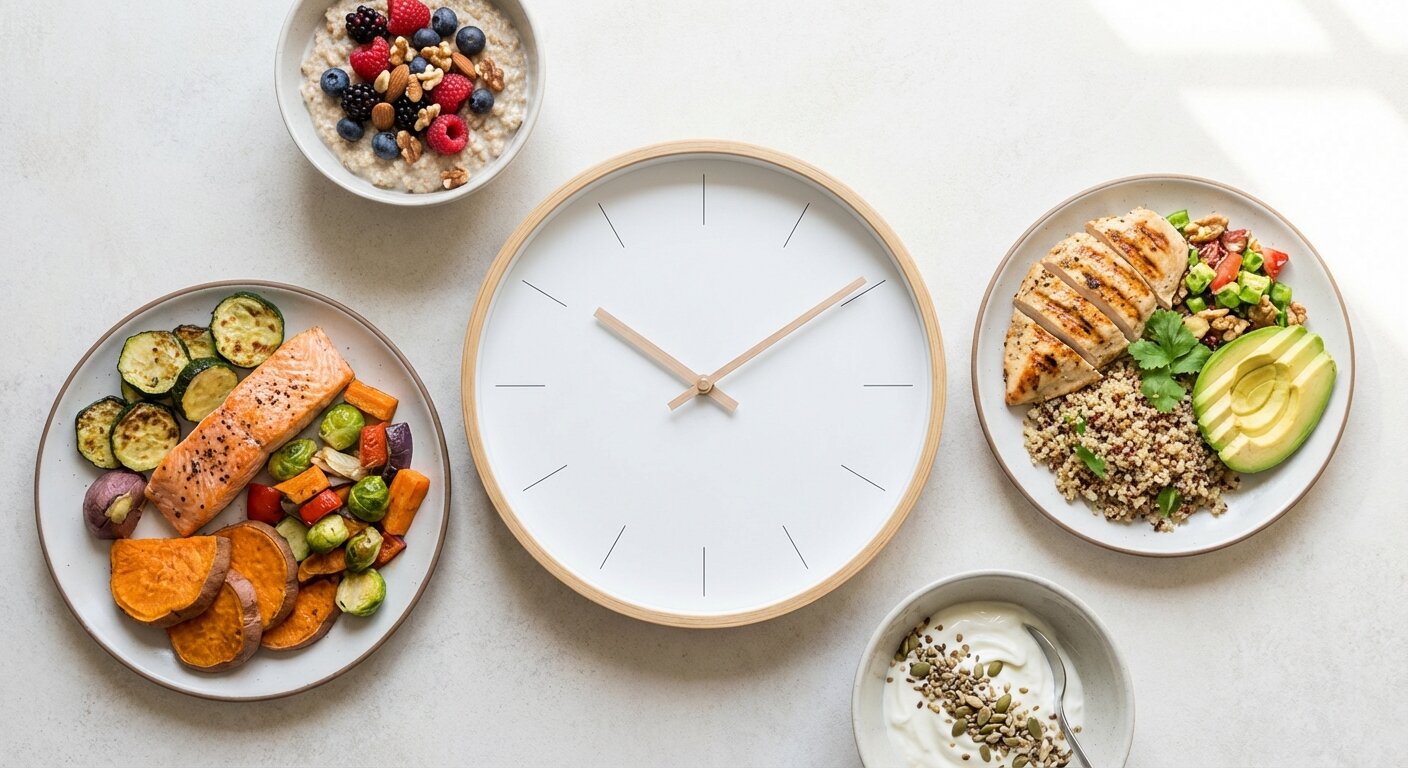
You’ve calculated your macros, you’re tracking your food—but now you’re wondering: does it matter when I eat these macros? Should you front-load carbs in the morning? Save them for night? Eat six small meals or three big ones? Slam protein immediately after training or is there a window?
The fitness industry has created endless confusion around meal timing, with conflicting advice ranging from “eating after 7pm causes fat storage” to “you must eat protein every 2-3 hours or lose muscle.” Let’s cut through the noise with what research actually shows about meal timing and macros.
The short answer: Meal timing matters far less than your total daily macro intake. That said, strategic timing can offer small advantages for performance, recovery, and adherence—especially if you’re an athlete or training at high intensity.
Ready to learn which timing strategies actually work and which are myths? Use our macro calculator to dial in your daily targets, then read on to optimize when you eat them.
The Hierarchy of Nutrition: Where Meal Timing Actually Ranks
Before diving into specific timing strategies, let’s establish context. Nutrition priorities rank in this order:
1. Total Calories (Most Important)
Whether you’re trying to lose fat, build muscle, or maintain weight, total daily calorie intake is the primary driver. Eating 2,000 calories at night versus morning won’t change the outcome if totals are equal.
2. Macronutrient Ratios
Once calories are set, hitting your daily protein, carb, and fat targets is next most important. This ensures you’re getting adequate protein for muscle preservation, enough carbs for energy and performance, and sufficient fats for hormone health.
3. Food Quality and Micronutrients
Choosing whole foods over processed options, getting enough fiber, vitamins, and minerals—these matter more than meal timing for overall health and body composition.
4. Meal Timing (Least Important for General Population)
Only after nailing the above three factors does meal timing start to offer marginal benefits. For recreational lifters and general fitness enthusiasts, timing might provide a 5-10% edge at most. For elite athletes pushing performance limits, that edge matters more.
Bottom line: If you’re not consistently hitting your daily calorie and macro targets, worrying about meal timing is like rearranging deck chairs on the Titanic. Get the fundamentals right first.
Meal Frequency: 3 Meals vs. 6 Meals
One of the oldest debates in nutrition is whether you should eat many small meals or fewer large meals throughout the day.
The Myth of “Stoking the Metabolic Fire”
For decades, fitness gurus claimed eating every 2-3 hours “keeps your metabolism elevated” and prevents muscle loss. This has been thoroughly debunked.
What research shows:
- Total daily energy expenditure remains the same regardless of meal frequency when calorie intake is controlled
- There’s no metabolic advantage to eating 6 meals versus 3 meals per day
- Protein synthesis can be maintained with as few as 3-4 protein-rich meals daily
- The thermic effect of food (TEF) is determined by total food intake, not meal frequency
A 2009 study in the British Journal of Nutrition found no difference in weight loss, fat loss, or hunger between people eating 3 meals versus 6 meals per day when calories and macros were matched.
What Actually Matters: Adherence
The best meal frequency is the one you can stick to consistently.
Prefer fewer, larger meals if you:
- Enjoy feeling full and satisfied after eating
- Have a busy schedule with limited meal prep time
- Practice intermittent fasting
- Find constant eating mentally exhausting
Prefer more frequent, smaller meals if you:
- Feel better with steady energy throughout the day
- Get excessively hungry with long gaps between meals
- Are an athlete needing to consume large amounts of food (easier to spread it out)
- Find it easier to hit high protein targets with more eating occasions
Both approaches work equally well for fat loss, muscle gain, and hitting your macros—as long as daily totals are met.
Protein Timing: Does the Anabolic Window Exist?
Perhaps no timing topic has created more gym-bro panic than the infamous “anabolic window”—the supposed 30-60 minute post-workout period where you must consume protein or “waste your workout.”
What Research Actually Shows
The post-workout anabolic window is real, but much longer than previously thought.
Recent research shows:
- Muscle protein synthesis stays elevated for 24-48 hours after resistance training
- The “window” for optimal protein intake is closer to 3-4 hours around your workout (before and/or after), not 30 minutes
- Pre-workout protein can be just as beneficial as post-workout since amino acids remain available during and after training
- If you train fasted, post-workout protein becomes more important
- If you had a protein-rich meal 3-4 hours before training, the immediate post-workout shake is less critical
A landmark 2013 meta-analysis in the Journal of the International Society of Sports Nutrition concluded that total daily protein intake matters far more than specific timing for muscle growth and recovery.
Practical Protein Timing Strategy
For optimal muscle protein synthesis, aim for:
- 20-40g of protein per meal (higher end for larger individuals or those training hard)
- 3-6 protein-rich meals spread throughout the day
- Protein within 3-4 hours around training—before, after, or both
Example daily protein timing:
- 7am: Breakfast with 30g protein
- 10am: Training session
- 12pm: Post-workout meal with 40g protein
- 4pm: Snack with 25g protein
- 8pm: Dinner with 40g protein
Total: 135g protein across 4 meals = optimal muscle protein synthesis
Don’t stress if you can’t eat immediately after training. Having a protein-rich meal within a few hours is sufficient.
Carbohydrate Timing: When to Fuel
Carbohydrate timing can impact performance and recovery, especially for athletes training at high intensity or multiple times per day.
Pre-Workout Carbs for Performance
Eating carbs before training provides readily available fuel for high-intensity work.
Timing recommendations:
- 2-3 hours before training: Eat a mixed meal with 30-60g carbs (along with protein and some fat)
- 30-60 minutes before training: Quick-digesting carbs like fruit, rice cakes, or sports drinks (20-30g)
- Immediately before/during training: Only necessary for sessions longer than 60-90 minutes or very high intensity
Example pre-workout meals:
- 2 hours before: Oatmeal with banana and protein powder (50g carbs, 30g protein)
- 30 minutes before: Apple and rice cake with honey (25g carbs)
Post-Workout Carbs for Recovery
After intense training, carbs help replenish muscle glycogen and reduce cortisol.
When post-workout carbs matter most:
- Training twice per day (need rapid glycogen replenishment)
- Very high-volume training (bodybuilders, CrossFit athletes)
- Endurance athletes with daily training
For general fitness enthusiasts: Post-workout carbs are beneficial but not critical. Getting carbs within your next meal (1-3 hours post-workout) is sufficient.
Recommended post-workout carbs:
- 0.5-1g per kg bodyweight within 2 hours after training
- Example: 180lb person = 40-80g carbs post-workout
Carbs at Night: Friend or Foe?
The myth: Eating carbs at night causes fat storage because metabolism slows during sleep.
The reality: Fat storage is determined by your overall calorie balance over days and weeks, not the specific timing of carb intake.
Potential benefits of evening carbs:
- May improve sleep quality (carbs increase serotonin and melatonin)
- Can reduce nighttime hunger
- Useful for athletes who train in the evening and need recovery carbs
Some studies even suggest that eating most of your carbs at dinner can improve fat loss and insulin sensitivity compared to eating them throughout the day—though the effect is small and individual responses vary.
Bottom line: Eat carbs when they fit your schedule, support your training, and keep you satisfied. Don’t fear nighttime carbs.
Fat Timing: The Forgotten Macronutrient
Dietary fat is often ignored in nutrient timing discussions, but there are a few considerations.
Pre-Workout Fat
Fat slows digestion, which can cause gastrointestinal discomfort during training if eaten too close to your workout.
Recommendation: Keep fat intake low in meals eaten 1-2 hours before training. Save most fats for other meals throughout the day.
Post-Workout Fat
Fat doesn’t significantly impact post-workout recovery. While some research suggests that fat may slow protein and carb digestion slightly, this effect is negligible for practical purposes.
You don’t need to avoid fat post-workout—a balanced meal with all three macros is perfectly fine.
Daily Fat Distribution
Unlike protein and carbs, fat timing has minimal impact on performance or body composition. Spread your daily fat intake across meals based on preference.
Practical approach:
- Include moderate fat in most meals for satiety
- Reduce fat slightly in pre-workout meals
- Don’t stress about precise fat timing—daily total matters most
Intermittent Fasting and Meal Timing
Intermittent fasting (IF) is an eating pattern that restricts food intake to specific time windows—typically 16:8 (16 hours fasting, 8 hours eating) or 20:4.
Does Fasting Affect Macros?
IF doesn’t change macro needs—it only changes when you eat them.
Benefits of IF:
- May improve insulin sensitivity
- Can make calorie restriction easier (fewer eating occasions = less opportunity to overeat)
- Some people feel more energized fasting
- Simplifies meal planning
Potential downsides:
- Harder to hit high protein targets in a shorter eating window
- May impair workout performance if training fasted
- Not ideal for those needing to eat frequently due to hunger or medical conditions
- Can be challenging for muscle gain (need to consume large amounts of food in limited time)
IF works well for fat loss because it naturally creates a calorie deficit for many people. However, it’s not magic—if you overeat during your feeding window, you won’t lose fat.
Training Fasted vs. Fed
Fasted training (training before eating):
- May increase fat oxidation during the session
- Can improve metabolic flexibility
- Doesn’t significantly impair performance for low-moderate intensity work
- May reduce performance for high-intensity training
Fed training (eating before training):
- Improves performance for high-intensity work
- Supports muscle protein synthesis better
- Reduces muscle breakdown during training
Verdict: If your primary goal is performance and muscle gain, eating before training is superior. If you prefer fasting and do moderate-intensity work, fasted training is fine.
Practical Meal Timing Strategies by Goal
Let’s bring this together with actionable timing strategies based on your specific goal.
For Fat Loss
Priority: Total calorie and macro adherence matters most.
Meal timing tips:
- Eat in a pattern that controls hunger and prevents overeating
- Consider skipping breakfast if you’re not hungry (intermittent fasting)
- Save most carbs for later in the day if it improves adherence
- Eat protein at every meal to maximize satiety
- Don’t stress about specific timing—focus on consistency
Sample meal timing:
- 12pm: First meal (breaking fast) – 30g protein, 50g carbs
- 4pm: Second meal – 35g protein, 40g carbs
- 8pm: Dinner – 40g protein, 60g carbs, higher fat
Total: 105g protein, 150g carbs—macros hit, hunger managed, fat loss proceeds.
For Muscle Gain
Priority: Adequate protein distribution and fueling workouts.
Meal timing tips:
- Eat protein every 3-5 hours (3-6 meals daily)
- Include carbs before and after training for performance and recovery
- Don’t train fasted—eat a balanced meal 2-3 hours pre-workout
- Consider a protein snack before bed (casein or Greek yogurt)
- Eat in a slight surplus consistently
Sample meal timing:
- 7am: Breakfast – 40g protein, 80g carbs
- 10am: Pre-workout snack – 25g protein, 40g carbs
- 11am: Training
- 1pm: Post-workout meal – 45g protein, 100g carbs
- 5pm: Afternoon meal – 35g protein, 60g carbs
- 9pm: Evening meal – 40g protein, 70g carbs
Total: 185g protein, 350g carbs—multiple protein doses, workouts fueled properly, muscle growth supported.
For Performance and Athletes
Priority: Fuel workouts, optimize recovery, support training volume.
Meal timing tips:
- Time carbs around training (before/during/after)
- If training twice daily, prioritize post-workout carbs for glycogen replenishment
- Consume 20-40g protein within 3 hours of training
- Consider intra-workout carbs for sessions over 90 minutes
- Adjust timing based on training schedule
Sample timing for morning training:
- 6am: Pre-workout (30 min before) – 20g protein, 30g carbs (shake + banana)
- 7-9am: Training with intra-workout carbs
- 9:30am: Post-workout meal – 40g protein, 80g carbs
- 12pm: Lunch – 35g protein, 60g carbs
- 3pm: Snack – 25g protein, 40g carbs
- 7pm: Dinner – 40g protein, 70g carbs
Total: 160g protein, 280g carbs—training fueled, recovery optimized, performance supported.
Common Meal Timing Myths Debunked
Myth 1: “Eating after 7pm causes fat gain”
Truth: Total daily calories determine fat gain, not when you eat them. If you’re in a calorie deficit, you’ll lose fat whether you eat at 7am or 10pm.
Myth 2: “You must eat breakfast to boost metabolism”
Truth: Breakfast doesn’t “jump-start” your metabolism. Your metabolic rate is determined by total daily food intake (thermic effect of food), not whether you eat in the morning.
Myth 3: “You need to eat protein every 2-3 hours or lose muscle”
Truth: Muscle protein synthesis stays elevated for many hours after eating protein. 3-6 protein-rich meals per day is sufficient; you don’t need to eat every 2 hours.
Myth 4: “Fasted cardio burns more fat”
Truth: While fasted cardio may increase fat oxidation during the session, this doesn’t translate to greater overall fat loss. Total daily calorie deficit is what matters.
Myth 5: “Post-workout protein must be consumed within 30 minutes”
Truth: The anabolic window is 3-4 hours, not 30 minutes. If you ate protein before training, you have even more flexibility. Don’t panic if you can’t eat immediately after training.
When Meal Timing DOES Matter
While we’ve established that meal timing is lower priority than total daily intake, there are situations where timing offers real benefits:
1. Pre-Competition Athletes
Timing carbs and fluids around events can significantly impact race-day performance.
2. High-Volume Training
Athletes training 2+ times per day need strategic post-workout nutrition for adequate recovery between sessions.
3. Metabolic Conditions
People with diabetes or insulin resistance may benefit from specific carb timing strategies under medical supervision.
4. Personal Preference and Adherence
If eating at specific times helps you stick to your macros and feel better, that psychological benefit is real and valuable.
5. Digestion and Comfort
Eating heavy meals too close to training can cause discomfort. Timing meals for optimal digestion matters for workout quality.
In these contexts, meal timing is worth optimizing. For everyone else, it’s icing on the cake.
How to Find Your Optimal Meal Timing
The best meal timing strategy is highly individual. Here’s how to experiment and find what works for you:
Step 1: Establish Your Daily Macro Targets
Use our macro calculator to determine your daily protein, carb, and fat needs based on your goal.
Step 2: Start with a Default Pattern
Begin with 3-4 meals per day spaced 4-5 hours apart. This is a solid baseline for most people.
Step 3: Track Your Metrics
Monitor:
- Energy levels throughout the day
- Workout performance (strength, endurance, recovery)
- Hunger and satiety between meals
- Sleep quality
- Body composition changes over weeks
Step 4: Adjust Based on Feedback
- If you’re hungry between meals, add a snack or increase meal frequency
- If you feel sluggish during workouts, adjust pre-workout meal timing or composition
- If you struggle to hit protein targets, add an extra protein-rich meal
- If you’re not losing fat despite hitting macros, verify you’re accurately tracking (timing likely isn’t the issue)
Step 5: Optimize Around Training
Once your baseline is working, fine-tune pre/post-workout nutrition if you’re focused on performance.
Remember: The best meal timing is the one you can maintain consistently. Perfection that you can’t sustain beats optimal timing you abandon after two weeks.
Meal Timing and Macros: The Bottom Line
What matters most:
- Total daily calorie intake (calorie surplus, deficit, or maintenance)
- Total daily macronutrient intake (hitting your protein, carb, fat targets)
- Consistency over time (sticking to your plan day after day)
What matters least:
- Eating every 2-3 hours
- Avoiding carbs at night
- Eating breakfast to “boost metabolism”
- Immediately post-workout protein shakes
When meal timing offers benefits:
- Eating protein 3-6 times daily for muscle protein synthesis
- Timing carbs around workouts for performance (especially athletes)
- Using meal frequency to manage hunger and adherence
- Personal preference and lifestyle fit
Bottom line: If you’re not consistently hitting your daily macro targets, don’t worry about meal timing. Master the fundamentals first. Once you’re nailing those, strategic timing can offer small additional benefits—especially if you’re an athlete or training at high intensity.
For 95% of people, the best meal timing is simply: eat in a pattern that lets you hit your macros consistently and feel good.
Want to optimize your macros first (because that matters more)? Use our macro calculator to get your personalized daily targets based on your goal, then structure your meals around your lifestyle and training schedule.
Frequently Asked Questions
Does meal timing affect weight loss?
Meal timing has minimal direct impact on weight loss. Total daily calorie and macro intake is the primary driver. However, strategic meal timing can help indirectly by improving adherence, controlling hunger, and supporting workout performance—which all contribute to maintaining a calorie deficit consistently.
Research consistently shows that when total calories are matched, eating patterns (3 meals vs. 6 meals, early vs. late eating) produce similar weight loss results. That said, if eating more frequently prevents binge eating or skipping breakfast helps you avoid mid-morning hunger, those timing strategies can support your fat loss success.
The exception: people with metabolic conditions like diabetes or insulin resistance may see additional benefits from specific carb timing strategies under medical guidance.
Is it better to eat 3 meals or 6 meals a day for macros?
Neither is inherently superior—the best meal frequency depends on your individual preferences, schedule, and goals.
Benefits of 3-4 larger meals:
- More satisfying and filling
- Simpler meal prep and planning
- Better for intermittent fasting
- Easier to fit into busy schedules
Benefits of 5-6 smaller meals:
- Steady energy throughout the day
- May help control hunger for some people
- Easier to consume large amounts of food (useful for bulking)
- More opportunities to hit high protein targets
Research shows no metabolic advantage to either approach when daily calories and macros are matched. Choose the frequency that makes it easiest to hit your macro targets consistently and fits your lifestyle best. Many people find 4 meals (breakfast, lunch, snack, dinner) to be the sweet spot.
Should I eat protein immediately after working out?
You don’t need to rush to consume protein within 30 minutes of training. The so-called “anabolic window” is much wider than gym lore suggests—closer to 3-4 hours before and after training.
When post-workout protein timing matters more:
- You trained fasted (no food for 4+ hours before training)
- Your next meal won’t be for several hours
- You’re training multiple times per day and need rapid recovery
When it matters less:
- You ate a protein-rich meal 2-4 hours before training (amino acids are still available)
- You’ll eat a regular meal within 2-3 hours post-workout
- Your primary goal is general fitness or fat loss (not elite performance)
Practical recommendation: Aim to eat a protein-rich meal (20-40g) within 3-4 hours of your workout—whether that’s before, after, or both. Don’t stress if you can’t eat immediately post-training. Total daily protein intake (around 0.7-1g per pound bodyweight) matters far more than precise timing.
Does eating carbs at night make you fat?
No—eating carbs at night does not cause fat gain. This is one of the most persistent myths in fitness.
Why the myth exists: People mistakenly believe that because you’re less active at night and metabolism “slows down” during sleep, carbs eaten at night are more likely to be stored as fat.
Why it’s wrong: Fat storage is determined by your overall energy balance over days and weeks, not when you eat specific macronutrients. If you’re in a calorie deficit, you’ll lose fat whether your carbs come at breakfast or bedtime. If you’re in a surplus, you’ll store fat regardless of timing.
Potential benefits of nighttime carbs:
- Can improve sleep quality (carbs increase serotonin production)
- May reduce nighttime hunger and late-night snacking
- Useful for athletes who train in the evening and need recovery carbs
- Some research suggests eating most carbs at dinner may improve insulin sensitivity (though effects are modest)
Bottom line: Distribute your carbs based on personal preference, workout timing, and what helps you stick to your overall calorie and macro targets. If eating carbs at night helps you sleep better or fits your schedule, go for it.
What is nutrient timing and does it matter?
Nutrient timing refers to strategically scheduling when you consume specific macronutrients—particularly protein and carbs—in relation to exercise and throughout the day to optimize performance, recovery, and body composition.
Common nutrient timing strategies:
- Eating protein before and after workouts to support muscle protein synthesis
- Consuming carbs pre-workout for energy and post-workout for glycogen replenishment
- Distributing protein evenly across 3-6 meals to maximize muscle building
- Timing meals around competition or training sessions
Does it matter? Yes and no, depending on context.
For general fitness enthusiasts and recreational lifters: Nutrient timing offers minimal practical benefit (perhaps 5-10% difference at most). Hitting your total daily calorie and macro targets matters far more. If you’re not consistently hitting those fundamentals, worrying about timing is premature.
For athletes and competitive lifters: Nutrient timing offers meaningful performance benefits:
- Better workout quality and recovery when carbs are timed around training
- Enhanced muscle protein synthesis with strategic protein distribution
- Faster recovery between training sessions
- Small but cumulative advantages that matter at elite levels
Practical takeaway: Master total daily intake first (calories and macros). Once that’s dialed in and you’re training seriously, strategic timing can provide an extra edge. For most people, simply eating protein at most meals and fueling workouts properly covers the important bases.
Should I eat before or after cardio for fat loss?
Both fasted cardio (exercising before eating) and fed cardio (eating before exercise) can work for fat loss. The difference is minor, and the best choice depends on personal preference and performance.
Fasted cardio pros:
- May slightly increase fat oxidation during the workout
- Can improve metabolic flexibility over time
- Feels better for some people (no food in stomach)
- Works well for morning exercisers who don’t like eating early
Fasted cardio cons:
- May reduce performance intensity (less available fuel)
- Can feel uncomfortable or cause lightheadedness for some
- Doesn’t meaningfully increase overall daily fat loss
Fed cardio pros:
- Better performance, especially for high-intensity work
- Prevents excessive hunger post-workout
- More comfortable for some people
Fed cardio cons:
- Eating too close to exercise can cause GI discomfort
- Adds a meal/snack to your daily planning
What research shows: While fasted cardio does increase fat burning during the workout, this doesn’t translate to greater fat loss over 24 hours or longer periods. Total daily calorie deficit drives fat loss, not the specific timing of fuel around cardio.
Practical recommendation: Choose whichever approach helps you:
- Maintain higher workout intensity and consistency
- Control hunger throughout the day
- Stick to your overall calorie and macro targets
If you prefer fasted cardio and it doesn’t hurt your performance, do it. If you perform better with pre-workout fuel, eat first. Consistency and adherence beat optimization.
How long should I wait between meals when tracking macros?
There’s no mandatory waiting period between meals when tracking macros. Meal spacing is entirely flexible based on your preferences, hunger, schedule, and performance needs.
Common approaches:
- 3-4 hours between meals: A traditional schedule that works well for most people (breakfast, lunch, snack, dinner)
- 5-6 hours between meals: Larger, more satisfying meals with longer gaps (common with intermittent fasting)
- 2-3 hours between meals: More frequent eating for those who prefer smaller portions or need to consume large amounts of food (athletes, bulking)
Factors to consider when spacing meals:
1. Hunger and satiety
- If you’re starving 2 hours after eating, meals may be too small or not balanced (add protein/fat for satiety)
- If you’re still full 5 hours later, you can space meals further apart
2. Training schedule
- May want a meal 2-3 hours before training for fuel
- May want another meal within 2-3 hours after training for recovery
3. Muscle protein synthesis
- Research suggests eating protein every 3-6 hours optimizes muscle building
- This translates to 3-6 protein-rich meals per day for most people
4. Lifestyle and convenience
- Space meals based on work schedule, family meals, and social commitments
- Consistency and adherence matter more than perfect spacing
Bottom line: Space your meals in whatever pattern allows you to hit your daily macro targets comfortably and consistently. There’s no magic meal frequency or spacing interval—it’s highly individual. Daily totals beat timing every time.
Related Articles
Travel Macros: How to Track Nutrition While Traveling
Complete guide to managing macros while traveling. Learn meal planning strategies,...
Read guide →
Macros for Shift Workers: Complete Guide to Nutrition on Rotating Schedules
Master macro tracking on night shifts and rotating schedules. Learn meal timing, sleep...
Read guide →
Macros During Ramadan: Complete Nutrition Guide for Fasting
Learn how to track macros during Ramadan fasting. Expert guide covering meal timing,...
Read guide →Disclaimer: This content is for informational purposes only. Consult a healthcare provider before making changes to your diet.