Pistachios Macros: Complete Nutrition Breakdown & Health Benefits
Reviewed by Dr. Michael Torres, PhD
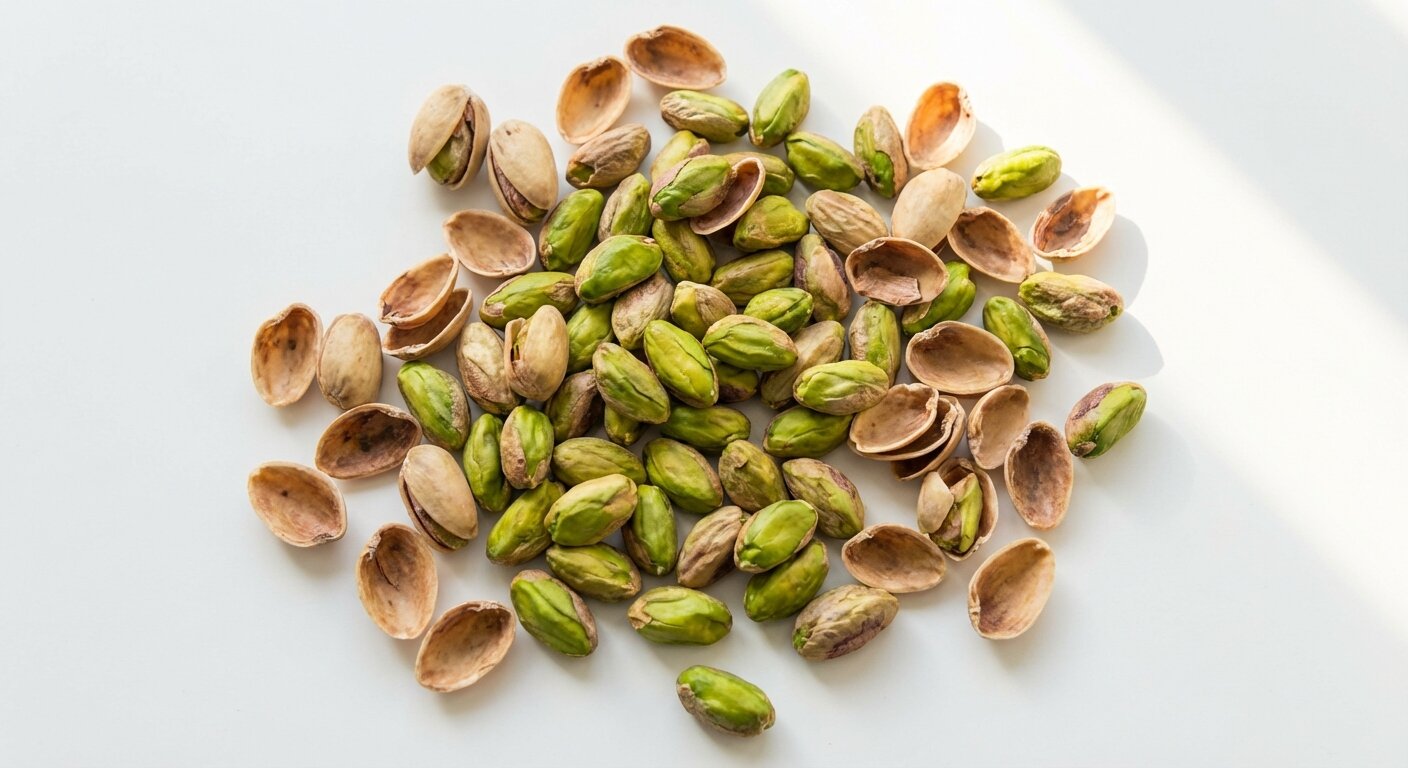
Pistachios stand out among nuts for their impressive nutritional profile, bright green color, and unique flavor. Whether you’re tracking macros for weight loss, muscle building, or general health, understanding pistachio nutrition helps you make informed dietary choices.
This comprehensive guide breaks down pistachios macros in detail, covering everything from protein and carb content to practical tips for incorporating these nutrient-dense nuts into your diet. You’ll learn exactly how pistachios fit into various eating plans, their health benefits backed by research, and smart ways to enjoy them without overdoing calories.
Ready to calculate your personalized macro targets? Use our free macro calculator to determine your optimal daily protein, carbs, and fat based on your specific goals.
Related: Learn more about what macros are and how they impact your diet.
Pistachios Macros: Complete Nutritional Breakdown
Standard Serving (1 oz / 28g / ~49 kernels)
Macronutrients:
- Calories: 159
- Protein: 5.7g (14% of calories)
- Total Carbohydrates: 7.7g (19% of calories)
- Dietary Fiber: 2.8g
- Net Carbs: 4.9g
- Sugars: 2.2g
- Total Fat: 12.9g (67% of calories)
- Saturated Fat: 1.5g
- Monounsaturated Fat: 6.8g
- Polyunsaturated Fat: 3.9g
Key Micronutrients (1 oz serving):
- Vitamin B6: 0.5mg (24% DV)
- Thiamin: 0.2mg (18% DV)
- Copper: 0.4mg (41% DV)
- Manganese: 0.3mg (15% DV)
- Phosphorus: 139mg (14% DV)
- Magnesium: 34mg (8% DV)
- Potassium: 291mg (6% DV)
Pistachios Macros by Common Portions
| Serving Size | Calories | Protein | Carbs | Fiber | Net Carbs | Fat |
|---|---|---|---|---|---|---|
| 1 nut (~0.6g) | 3 | 0.1g | 0.2g | 0.1g | 0.1g | 0.3g |
| 10 nuts (6g) | 34 | 1.2g | 1.6g | 0.6g | 1.0g | 2.7g |
| 25 nuts (15g) | 85 | 3.0g | 4.1g | 1.5g | 2.6g | 6.9g |
| 49 nuts / 1 oz (28g) | 159 | 5.7g | 7.7g | 2.8g | 4.9g | 12.9g |
| 1/4 cup (31g) | 176 | 6.3g | 8.5g | 3.1g | 5.4g | 14.3g |
| 1/2 cup (62g) | 352 | 12.6g | 17.0g | 6.2g | 10.8g | 28.6g |
| 100g | 567 | 20.3g | 27.5g | 10.0g | 17.5g | 45.4g |
In-Shell vs. Shelled Pistachios
The serving sizes above refer to shelled pistachios (edible kernels only). When buying or measuring in-shell pistachios:
- In-shell weight: Approximately 50% is shell, 50% is edible nut
- 1 oz serving equivalent: 2 oz (56g) in-shell pistachios
- Calorie difference: None for the edible portion, but the shells add no calories
- Portion control benefit: Shelling slows eating, promotes mindfulness, and research shows reduces total consumption by up to 41%
Pistachios Macro Ratio Analysis
The macronutrient distribution in pistachios creates a balanced nutritional profile:
Calorie breakdown:
- Fat: 67% of total calories
- Carbohydrates: 19% of total calories
- Protein: 14% of total calories
This makes pistachios a higher-fat, moderate-protein, lower-carb food that fits well into various dietary patterns.
How Pistachios Compare to Other Nuts
Pistachios offer a unique nutritional advantage among tree nuts:
| Nut (1 oz) | Calories | Protein | Carbs | Net Carbs | Fat |
|---|---|---|---|---|---|
| Pistachios | 159 | 5.7g | 7.7g | 4.9g | 12.9g |
| Almonds | 164 | 6.0g | 6.1g | 2.8g | 14.2g |
| Cashews | 157 | 5.2g | 8.6g | 7.7g | 12.4g |
| Walnuts | 185 | 4.3g | 3.9g | 1.9g | 18.5g |
| Peanuts | 161 | 7.3g | 4.6g | 2.3g | 14.0g |
| Peanut Butter | 188 | 7.0g | 7.0g | 5.0g | 16.0g |
Key observations:
- Protein: Pistachios rank second only to peanuts in protein content
- Net carbs: Higher than walnuts and almonds but lower than cashews
- Calories: Among the lowest-calorie nuts per ounce
- Fat: Moderate fat content with excellent unsaturated fat profile
- Fiber: Higher fiber than most nuts, supporting digestive health
Pistachios for Different Diet Plans
Pistachios for Weight Loss
Pistachios can be an excellent addition to weight loss diets when consumed mindfully:
Benefits for weight loss:
- Lower calorie density: At 159 calories per ounce, pistachios are among the lowest-calorie nuts
- High protein and fiber: The 5.7g protein and 2.8g fiber per serving promote satiety and reduce hunger
- Shelling effect: Research from Eastern Illinois University found that people eating in-shell pistachios consumed 41% fewer calories than those eating pre-shelled nuts
- Visual cues: Empty shells provide a visual reminder of how much you’ve eaten, promoting awareness
- Slower eating: The act of shelling forces you to eat more slowly, giving satiety signals time to reach your brain
Portion control strategies:
- Pre-portion into 1-ounce servings (about 49 nuts)
- Buy in-shell varieties to slow consumption
- Track accurately using a food scale for the first few days
- Include as a planned snack rather than mindless munching
- Pair with protein for more balanced satiety
Sample weight loss portions:
- Light snack: 0.5 oz (25 nuts) = 80 calories
- Standard snack: 1 oz (49 nuts) = 159 calories
- Meal addition: 0.5 oz added to salad or yogurt
Pistachios for Muscle Building
While not as protein-dense as animal sources, pistachios offer valuable nutrition for muscle building:
Muscle-building benefits:
- Complete protein: Contains all nine essential amino acids, though not in optimal ratios
- BCAA content: Provides branched-chain amino acids leucine, isoleucine, and valine crucial for muscle protein synthesis
- Healthy fats: Support hormone production including testosterone
- Micronutrients: Copper, manganese, and B vitamins support energy metabolism
- Anti-inflammatory: Antioxidants help reduce exercise-induced inflammation
How to use for muscle building:
- Post-workout snack: 1-2 oz pistachios + Greek yogurt (adds 6-12g protein)
- Meal addition: Sprinkle on high-protein meals to add healthy fats and calories
- Between meals: Helps meet daily calorie needs during bulking phases
- Pre-workout: Provides sustained energy without digestive discomfort
Realistic protein contribution: A 2-oz serving provides about 11g protein, which is helpful but shouldn’t be your primary protein source. Combine with chicken breast, salmon, eggs, or protein powder to meet daily protein targets.
Pistachios on Keto
Pistachios can fit into a ketogenic diet but require careful portion management:
Keto considerations:
- Net carbs: 4.9g net carbs per ounce (7.7g total carbs - 2.8g fiber)
- Daily keto limit: Most keto dieters target 20-50g net carbs daily
- Portion impact: 1 oz uses 10-25% of daily carb allowance
Keto-friendly strategies:
- Limit to 1 oz daily: Keeps carbs in check while providing nutrition
- Choose over higher-carb nuts: Lower in net carbs than cashews (7.7g net carbs per oz)
- Track carefully: Weigh portions rather than estimating
- Pair with fat: Add to full-fat cheese or use in fat bombs
- Timing: Eat earlier in the day when you have more carb budget available
Better keto nut alternatives: If you need to minimize carbs further:
- Macadamia nuts: 1.5g net carbs per oz
- Pecans: 1.2g net carbs per oz
- Brazil nuts: 1.4g net carbs per oz
Pistachios for Paleo
Pistachios fit perfectly into a paleo diet framework:
Paleo-friendly aspects:
- Whole food: Minimally processed, naturally occurring food
- Nutrient-dense: Rich in vitamins, minerals, and beneficial fats
- Anti-inflammatory: Contains antioxidants and polyphenols
- No additives: Pure pistachios contain no grains, dairy, or processed ingredients
Paleo serving recommendations:
- Daily allowance: 1-2 oz as part of balanced fat intake
- Choose raw or dry-roasted: Avoid oils and additives
- Unsalted preferred: Aligns with paleo’s reduced-sodium approach
- Buy in bulk: Store properly to maintain freshness
For a comprehensive approach to paleo eating, check out our complete paleo macros guide.
Pistachios for Vegan and Plant-Based Diets
Pistachios are an excellent protein and nutrient source for plant-based eaters:
Plant-based benefits:
- Protein source: Contributes to daily protein needs from plants
- Iron: Provides non-heme iron (pair with vitamin C for better absorption)
- B vitamins: Especially high in B6, important for vegans
- Healthy fats: Supports absorption of fat-soluble vitamins
- Complete amino acids: Contains all essential amino acids
Maximizing nutrition on plant-based diets:
- Protein combining: Pair with quinoa, lentils, or chickpeas for complete protein
- Iron absorption: Eat with vitamin C sources like oranges or bell peppers
- Calorie density: Helps meet calorie needs on high-volume plant diets
- Nut rotation: Vary between pistachios, almonds, and walnuts for diverse nutrient intake
Pistachios for Intermittent Fasting
Pistachios work well with intermittent fasting protocols:
IF-friendly characteristics:
- Calorie-controlled: Easy to portion and track
- Satiating: Protein and fat content extends satiety during eating windows
- Nutrient-dense: Maximizes nutrition within limited eating time
- Breaking fast: Gentle on digestive system when breaking longer fasts
- Portable: Convenient for eating windows away from home
Using pistachios with IF:
- Breaking fast: Start with a small portion (0.5 oz) to ease digestion
- Mid-eating window: 1 oz as a snack between meals
- Pre-fast meal: Include in last meal to extend satiety
- 16:8 protocol: Fits easily within 8-hour eating window
- OMAD: Can contribute healthy fats to one meal a day
Learn more about optimizing macros with different fasting protocols in our guides to intermittent fasting macros and 16:8 fasting macros.
Health Benefits of Pistachios
Beyond macros, pistachios offer impressive health benefits supported by scientific research:
Cardiovascular Health
Heart-protective mechanisms:
- Cholesterol management: Studies show pistachios reduce LDL cholesterol and increase HDL cholesterol
- Blood pressure: Multiple trials demonstrate modest but consistent blood pressure reduction
- Endothelial function: Improves blood vessel health and flexibility
- Inflammation reduction: Antioxidants reduce markers of systemic inflammation
Research highlights: A 2015 systematic review in the American Journal of Clinical Nutrition found that pistachio consumption significantly reduced systolic blood pressure and improved lipid profiles compared to control diets.
Blood Sugar Management
Diabetes-friendly properties:
- Low glycemic index: GI of 15, one of the lowest among nuts
- Improved glucose response: When added to high-carb meals, pistachios blunt blood sugar spikes
- Insulin sensitivity: Regular consumption may improve insulin sensitivity
- Fiber content: Slows carbohydrate absorption
Research insight: A 2014 study published in Diabetes Care found that substituting pistachios for carbohydrate-rich foods improved glycemic control in people with type 2 diabetes.
Weight Management Support
Weight loss mechanisms:
- Satiety hormones: Increases levels of GLP-1 and peptide YY, hunger-regulating hormones
- Energy expenditure: Some studies suggest increased resting energy expenditure
- Incomplete absorption: Research indicates 5-10% of calories in nuts may not be absorbed due to cell wall structure
- Behavioral factors: Shelling pistachios creates a “pause effect” that reduces total intake
Real-world application: UCLA researchers found that people who ate in-shell pistachios as a snack consumed 41% fewer calories than those eating pre-shelled nuts, demonstrating the powerful effect of effort-based portion control.
Antioxidant and Anti-Inflammatory Properties
Protective compounds:
- Lutein and zeaxanthin: Carotenoids that protect eye health
- Gamma-tocopherol: Vitamin E form with anti-inflammatory properties
- Polyphenols: Plant compounds with antioxidant effects
- Phytosterols: Compete with cholesterol absorption in the gut
Health implications: These antioxidants protect cells from oxidative damage, potentially reducing risk of chronic diseases including cancer, heart disease, and neurodegenerative conditions.
Gut Health
Prebiotic effects:
- Fiber: Feeds beneficial gut bacteria
- Microbiome diversity: Studies show pistachio consumption increases microbial diversity
- Short-chain fatty acids: Gut bacteria ferment fiber into beneficial SCFAs
- Digestive health: Supports regular bowel movements and gut barrier function
A 2014 study in the British Journal of Nutrition demonstrated that pistachios increased beneficial bacteria while decreasing potentially harmful bacteria in the gut.
Nutrient Density
Pistachios rank among the most nutrient-dense nuts:
Per 100 calories, pistachios provide:
- 3.6g protein (higher than most nuts)
- Excellent source of copper (26% DV)
- Very good source of vitamin B6 (15% DV)
- Good source of thiamin, phosphorus, and magnesium
This nutrient density means you get more nutrition per calorie compared to many other snack options.
Practical Tips for Adding Pistachios to Your Diet
Buying and Storage
Selecting quality pistachios:
- Look for: Bright green kernels, minimal shell splitting, fresh aroma
- Avoid: Moldy appearance, rancid smell, excessive shell damage
- In-shell vs. shelled: In-shell lasts longer and promotes portion control; shelled is more convenient
- Roasted vs. raw: Both are nutritious; raw has slightly more antioxidants
- Salted vs. unsalted: Unsalted better for sodium-restricted diets
Proper storage:
- Pantry: Unopened packages last 6 months in cool, dry place
- Refrigerator: Extends shelf life to 1 year in airtight container
- Freezer: Can store up to 2 years in freezer-safe bag or container
- Signs of spoilage: Rancid smell, bitter taste, mold growth
Portion Control Techniques
Visual cues:
- Hand size: One cupped palm = approximately 1 oz
- 49 kernels: Count out a standard serving to calibrate your eye
- Small bowl: Pre-portion into a small bowl rather than eating from the bag
- Empty shells: Keep shells visible as you eat to track consumption
Measuring methods:
- Food scale: Most accurate method, especially when starting
- Measuring cups: 1/4 cup ≈ 1 oz (31g)
- Pre-portioned packs: Buy single-serve 1-oz packages
- DIY portions: Create your own single-serve bags at home
Recipe Ideas and Meal Combinations
Breakfast additions:
- Greek yogurt parfait: Layer yogurt, pistachios, berries, and honey
- Oatmeal topping: Sprinkle on oatmeal with cinnamon and banana
- Smoothie bowl: Blend into smoothies or use as crunchy topping
- Whole grain toast: Add pistachio butter to whole wheat toast
Lunch and dinner applications:
- Salad crunch: Toss into green salads with chicken breast and vinaigrette
- Grain bowl topper: Add to quinoa or rice bowls
- Vegetable coating: Crushed pistachios as coating for roasted fish
- Pasta addition: Stir into whole wheat pasta with olive oil and vegetables
Snack combinations:
- Fruit and nuts: Pair 1 oz pistachios with apple slices or grapes
- Cheese plate: Combine with cheese and whole grain crackers
- Trail mix: Mix with dried fruit, dark chocolate, and other nuts
- Energy balls: Blend with dates and oats for no-bake snacks
Dessert options:
- Nice cream: Blend frozen banana with pistachios for healthy ice cream
- Nut butter: Make homemade pistachio butter for spreading
- Baked goods: Add to muffins, cookies, or energy bars
- Chocolate bark: Press into melted dark chocolate with sea salt
Pre- and Post-Workout Nutrition
Pre-workout (1-2 hours before):
- Small portion: 0.5 oz (25 nuts) provides sustained energy without digestive discomfort
- Pairing: Combine with fruit for quick carbs and lasting fats
- Timing: Eat 60-90 minutes before training for optimal digestion
Learn more about optimal pre-workout nutrition in our pre-workout macros guide.
Post-workout (within 30-60 minutes):
- Standard portion: 1 oz pistachios provides protein and fats
- Enhanced recovery: Pair with Greek yogurt or protein shake for complete recovery nutrition
- Glycogen replenishment: Add fruit or honey for carbs
Explore optimal post-training nutrition in our post-workout macros guide.
Common Questions and Concerns
Are roasted pistachios as healthy as raw?
Short answer: Yes, with minor differences.
Detailed comparison:
- Nutrient retention: Roasting causes minimal loss of most nutrients
- Antioxidants: Slight reduction in some antioxidants, but roasting also creates new beneficial compounds
- Digestibility: Roasting may improve digestibility and bioavailability of some nutrients
- Flavor: Roasting enhances flavor, which may increase adherence to healthy eating
Best choice: Both are excellent options. Choose raw for maximum antioxidant content or roasted for enhanced flavor and digestibility.
Can pistachios cause weight gain?
Context matters:
Will cause weight gain if:
- Eating beyond your daily calorie needs consistently
- Mindlessly snacking without tracking portions
- Using as an addition without reducing other foods
- Consuming multiple servings per day
Won’t cause weight gain if:
- Eating within your total daily calorie budget
- Tracking portions accurately (1-2 oz daily)
- Replacing less nutritious snacks with pistachios
- Using in-shell varieties for built-in portion control
Bottom line: No food causes weight gain in isolation. It’s about total daily calories and macros. Use our macro calculator to determine your ideal intake for your goals.
Are pistachios high in sodium?
It depends on the type:
Salted pistachios (typical 1 oz serving):
- Sodium content: 115-160mg per ounce (varies by brand)
- % Daily Value: 5-7% of 2,300mg daily limit
- Considerations: Moderate amount that fits most diets
Unsalted pistachios:
- Sodium content: 0-2mg per ounce (naturally occurring)
- Best for: Those on sodium-restricted diets, high blood pressure
Recommendation: If you’re watching sodium, choose unsalted varieties. Otherwise, lightly salted pistachios can be enjoyed in moderation as part of an overall low-sodium diet.
Can you eat too many pistachios?
Yes, potential issues with overconsumption:
Digestive problems:
- Fiber overload: Excessive fiber can cause bloating, gas, and diarrhea
- FODMAPs: High intake may trigger IBS symptoms in sensitive individuals
- Portion: Stick to 1-2 oz daily for most people
Calorie excess:
- Easy to overeat: 4 oz (less than 1 cup) = 636 calories
- Weight gain: Consistently exceeding calorie needs leads to fat gain
Nutrient imbalances:
- Displacement: Eating too many pistachios may crowd out other nutritious foods
- Variety: Diet quality depends on consuming diverse foods
Rare concerns:
- Aflatoxins: Moldy nuts may contain harmful compounds
- Kidney stones: Excessive oxalate intake in predisposed individuals
Recommended maximum: 2-3 ounces (56-84g) daily for most adults, assuming it fits within your total calorie and macro targets.
Are pistachios safe for people with nut allergies?
Important distinction:
Tree nut allergy:
- Not safe: Pistachios are tree nuts and must be avoided with tree nut allergies
- Cross-reactivity: High cross-reactivity with cashews (botanically related)
- Severity: Can cause severe, life-threatening allergic reactions
Peanut allergy only:
- May be safe: Peanuts are legumes, not tree nuts
- Individual variation: Some people with peanut allergies also react to tree nuts
- Medical guidance required: Always consult allergist before trying
Bottom line: If you have any nut allergies, consult your allergist before consuming pistachios. Food allergy testing can determine specific sensitivities.
Do pistachios need to be organic?
Pesticide considerations:
Pistachios generally have low pesticide residues because:
- Shells provide natural protection
- Most pesticides don’t penetrate the shell to the edible kernel
- Grown in dry climates with fewer pest pressures
Organic vs. conventional:
- Nutritional content: Virtually identical
- Pesticide exposure: Already minimal in conventional pistachios
- Price difference: Organic typically 30-50% more expensive
- Environmental impact: Organic farming may be more sustainable
Recommendation: Conventional pistachios are safe and nutritious for most people. Choose organic if you prefer to minimize any pesticide exposure or support organic farming practices, but it’s not necessary from a health perspective.
Can diabetics eat pistachios?
Yes, pistachios are excellent for diabetics:
Diabetes-friendly properties:
- Low glycemic index: GI of 15 means minimal blood sugar impact
- High fiber: Slows carbohydrate absorption
- Healthy fats: Improve insulin sensitivity
- Glycemic response: Research shows pistachios blunt blood sugar spikes when eaten with high-carb foods
Practical guidance for diabetics:
- Portion control: Stick to 1 oz servings to manage carbs
- Pair strategically: Add to meals to lower overall glycemic impact
- Monitor response: Check blood sugar to see individual effect
- Replace refined snacks: Use pistachios instead of crackers or chips
- Talk to dietitian: Incorporate into personalized meal plan
Research support: Multiple studies show pistachio consumption improves glycemic control in people with type 2 diabetes, making them one of the best nut choices for blood sugar management.
How do pistachios compare to pistachio butter?
Macros comparison (per oz):
| Product | Calories | Protein | Carbs | Fat |
|---|---|---|---|---|
| Whole pistachios | 159 | 5.7g | 7.7g | 12.9g |
| Pistachio butter | 180 | 6.0g | 8.0g | 15.0g |
Key differences:
Whole pistachios:
- Portion control: Easier to measure and control
- Satiety: Chewing whole nuts increases fullness signals
- Fiber intact: Whole structure provides full fiber benefit
- Convenience: Portable, no refrigeration needed
Pistachio butter:
- Versatility: Easier to add to recipes, smoothies, toast
- Digestibility: Pre-ground may be easier to digest for some
- Calorie density: More calories in same volume
- Risk of overeating: Easier to consume more without realizing
Best choice: Depends on use case. Choose whole pistachios for snacking and portion control, pistachio butter for cooking and spreading applications.
Tracking Pistachios in Your Macros
Using a Food Scale
Why weigh pistachios:
- Accuracy: Counting nuts is time-consuming and imprecise
- Consistency: Weight ensures same portions every time
- Macro tracking: Precise weight allows accurate macro calculations
- Learning tool: Calibrates your eye for future estimation
How to weigh correctly:
- Place bowl on scale: Tare (zero) the scale with empty bowl
- Add pistachios: Pour until reaching 28g (1 oz)
- Remove bowl: Now you know what 1 oz looks like
- For shelled: Weigh only the edible kernels, not shells
- For in-shell: Weigh the whole nuts, then track as 50% of weight (e.g., 56g in-shell = 28g edible portion)
After a few days: You’ll develop intuition for portion sizes and can estimate more accurately without constant weighing.
Logging in Apps
Popular macro tracking apps:
- MyFitnessPal: Search “pistachios, raw” or “pistachios, dry roasted”
- Cronometer: Most accurate nutrient data
- Lose It: User-friendly interface
- MacroFactor: Adaptive calorie and macro recommendations
Database entries to use:
- Best: USDA entries (verified, accurate)
- Look for: “Nuts, pistachio nuts, raw” or “Nuts, pistachio nuts, dry roasted, without salt”
- Avoid: Generic or user-created entries without USDA verification
Quick logging tips:
- Create favorite foods: Save 1 oz serving for quick access
- Batch prep: Log multiple servings if eating same portion daily
- Adjust for in-shell: Log half the weight for in-shell pistachios
Sample Daily Macro Plans
Example 1: Weight Loss (1,600 calories)
- Breakfast: Greek yogurt (150 cal), berries (50 cal), 0.5 oz pistachios (80 cal) = 280 cal
- Lunch: Grilled chicken salad with 0.5 oz pistachios (400 cal)
- Snack: Apple (95 cal)
- Dinner: Salmon, quinoa, vegetables (725 cal)
- Daily totals: 1,600 cal | 120g P | 140g C | 60g F
Example 2: Muscle Building (2,800 calories)
- Breakfast: Eggs, toast, avocado (500 cal)
- Snack: 1 oz pistachios + protein shake (350 cal)
- Lunch: Chicken breast, rice, vegetables with 0.5 oz pistachios (650 cal)
- Snack: Greek yogurt, granola, 0.5 oz pistachios (350 cal)
- Dinner: Steak, sweet potato, salad (650 cal)
- Evening: Cottage cheese with fruit (300 cal)
- Daily totals: 2,800 cal | 200g P | 280g C | 93g F
Example 3: Maintenance (2,200 calories)
- Breakfast: Oatmeal with 0.5 oz pistachios and banana (400 cal)
- Lunch: Turkey sandwich, side salad with 0.5 oz pistachios (550 cal)
- Snack: 1 oz pistachios + fruit (250 cal)
- Dinner: Shrimp stir-fry with vegetables and rice (700 cal)
- Dessert: Dark chocolate (150 cal)
- Daily totals: 2,200 cal | 140g P | 220g C | 80g F
Use our macro calculator to find your personalized daily targets based on your specific goals, activity level, and preferences.
Frequently Asked Questions
What happens if you eat pistachios every day?
Eating pistachios daily can provide numerous health benefits when consumed in appropriate portions (1-2 oz). Regular consumption has been linked to improved heart health, better cholesterol levels, enhanced blood sugar control, and easier weight management. The key is consistency and moderation—daily intake within your calorie budget is beneficial, while excessive consumption can lead to unwanted weight gain.
Are pistachios better before or after workout?
Pistachios work well both pre- and post-workout but serve different purposes. Pre-workout (1-2 hours before), a small portion (0.5 oz) provides sustained energy from fats without digestive discomfort. Post-workout (within 30-60 minutes), 1-2 oz provides protein and healthy fats that support recovery, though you should pair with a faster protein source like Greek yogurt or protein powder for optimal muscle protein synthesis.
Do pistachios help with belly fat?
While no food specifically targets belly fat, pistachios can support overall fat loss when included in a calorie-controlled diet. Their protein and fiber promote satiety, reducing overall calorie intake. Studies show people eating in-shell pistachios consume fewer total calories due to the built-in portion control. However, fat loss requires a total calorie deficit—use our calorie deficit calculator to determine your target intake.
Can you eat pistachios on an empty stomach?
Yes, pistachios are safe to eat on an empty stomach for most people. Their combination of protein, fat, and fiber provides sustained energy and stable blood sugar without causing digestive upset. Some people find nuts slightly heavy first thing in the morning, but this varies individually. If breaking a fast or eating first thing, start with a smaller portion (0.5 oz) and see how you feel.
How many pistachios equal 100 calories?
Approximately 31 pistachios (about 0.6 oz or 18g) contain 100 calories. This makes pistachios one of the most voluminous nut options per 100 calories—you get more nuts to eat compared to calorically denser options like macadamia nuts or pecans. This higher volume can increase satisfaction and the perception of eating more.
Are pistachios anti-inflammatory?
Yes, pistachios have anti-inflammatory properties due to their antioxidant content, including polyphenols, vitamin E (gamma-tocopherol), and carotenoids like lutein and zeaxanthin. Research shows that regular pistachio consumption can reduce markers of inflammation in the body, which may help protect against chronic diseases. The monounsaturated and polyunsaturated fats also contribute to anti-inflammatory effects.
Do pistachios lower cholesterol?
Yes, multiple studies demonstrate that pistachios can improve cholesterol profiles. Regular consumption has been shown to reduce LDL (“bad”) cholesterol while maintaining or increasing HDL (“good”) cholesterol. A 2015 systematic review found significant improvements in lipid profiles with pistachio consumption. The mechanisms include phytosterols that block cholesterol absorption and healthy fats that improve overall lipid metabolism.
Can pregnant women eat pistachios?
Yes, pistachios are safe and beneficial during pregnancy when consumed as part of a balanced diet. They provide protein, healthy fats, folate, vitamin B6, and other nutrients important for fetal development. The fiber helps manage pregnancy-related constipation. Stick to 1-2 oz daily as part of total nut intake. Choose unsalted or lightly salted varieties to manage sodium intake, and always buy from reputable sources to minimize risk of contamination.
How do you know if pistachios have gone bad?
Signs of spoiled pistachios include:
- Rancid smell: Unpleasant, paint-like, or chemical odor
- Bitter taste: Strong bitter or sour flavor
- Discoloration: Dark spots, mold, or unusual colors
- Texture changes: Excessively dry, shriveled, or sticky
- Visible mold: White, green, or black fuzzy growth
Fresh pistachios should smell nutty and pleasant, taste slightly sweet and buttery, and have vibrant green kernels. Store properly in airtight containers in the refrigerator or freezer to maximize shelf life.
Are there different varieties of pistachios?
Yes, several varieties exist, though most sold in the US are:
Kerman: Most common commercial variety in the US, large kernels, grown primarily in California.
Other varieties include:
- Turkish Antep: Smaller, intensely flavored
- Iranian Ahmad Aghaei: Large, elongated, sweet
- Sicilian: Bright green, rich flavor used in Italian desserts
For nutritional tracking purposes, macro differences between varieties are minimal—all varieties have similar protein, carb, and fat content. The main differences are in size, flavor intensity, and price.
Conclusion: Making Pistachios Work for Your Macros
Pistachios offer an impressive nutritional profile that fits well into virtually any eating plan. With 5.7g protein, 7.7g carbs, and 12.9g healthy fats per ounce, they provide balanced macros that support weight loss, muscle building, and overall health maintenance.
Key takeaways:
- Portion control is crucial: 1-2 oz daily fits most macro plans without excessive calories
- In-shell varieties: Built-in portion control that reduces total consumption by up to 41%
- Nutrient density: Among the most nutritious nuts with high protein and micronutrient content
- Versatility: Works for keto, paleo, vegan, intermittent fasting, and conventional diets
- Research-backed benefits: Supports heart health, blood sugar management, and weight control
- Strategic use: Pre-portion servings, track accurately, and pair with complementary foods
Whether you’re tracking macros for fat loss, building muscle, or simply eating healthier, pistachios deserve a place in your nutrition plan. Their unique combination of protein, fiber, healthy fats, and micronutrients makes them one of the smartest snack choices available.
Ready to optimize your nutrition? Use our free macro calculator to determine your personalized protein, carb, and fat targets based on your specific goals and activity level.
Related articles to explore:
- Almonds Macros - Compare pistachio nutrition to another high-protein nut
- Cashews Macros - Learn about a botanically related nut with different macro ratios
- Walnuts Macros - Discover a nut with exceptional omega-3 content
- Peanuts Macros - Explore the highest-protein nut (technically a legume)
- Chia Seeds Macros - Find another nutritious plant-based protein source
- Greek Yogurt Macros - Perfect pairing for pistachios in high-protein snacks
Track your pistachios along with all your other foods, stay consistent with portions, and you’ll successfully incorporate these nutritious nuts into your macro targets while reaping their many health benefits.
Related Articles
Travel Macros: How to Track Nutrition While Traveling
Complete guide to managing macros while traveling. Learn meal planning strategies,...
Read guide →
Macros for Shift Workers: Complete Guide to Nutrition on Rotating Schedules
Master macro tracking on night shifts and rotating schedules. Learn meal timing, sleep...
Read guide →
Macros During Ramadan: Complete Nutrition Guide for Fasting
Learn how to track macros during Ramadan fasting. Expert guide covering meal timing,...
Read guide →Disclaimer: This content is for informational purposes only. Consult a healthcare provider before making changes to your diet.