Muscle Building Guide
Macros for Muscle Gain: Complete Bulking Guide
The complete guide to eating for lean muscle growth — optimal protein, strategic carbs, and smart surplus strategies.
Medically reviewed by Dr. Michael Torres, PhD
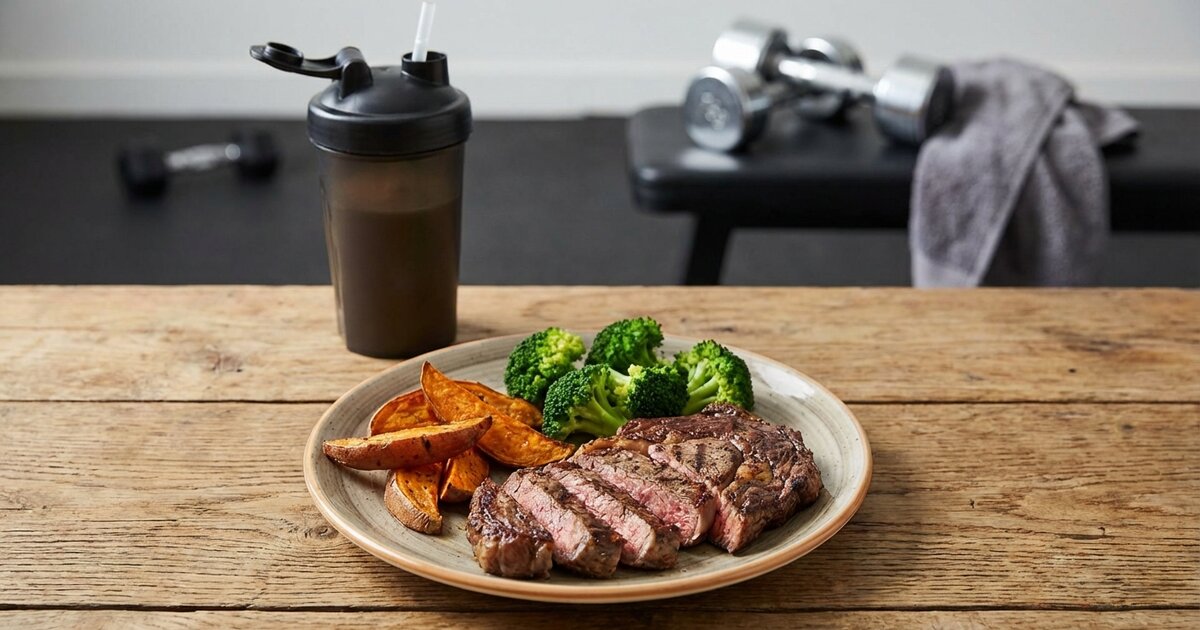
The Fundamentals of Muscle Growth
Building muscle requires three essential elements working together:
- Progressive resistance training — The stimulus that tells your body to grow
- Adequate protein — The building blocks for muscle tissue
- Caloric surplus — The energy required for growth
You can’t out-eat bad training, and you can’t out-train inadequate nutrition. This guide focuses on the nutrition side — specifically how to set up your macros for maximum muscle gain with minimal fat.
Reality Check: How Fast Can You Build Muscle?
Natural muscle growth is slow. Realistic expectations:
Training Experience Monthly Muscle Gain Beginner (Year 1) 1-2 lbs/month Intermediate (Year 2-3) 0.5-1 lb/month Advanced (Year 4+) 0.25-0.5 lb/month Anyone claiming to gain 10 lbs of muscle in a month naturally is either gaining significant fat, regaining previously lost muscle, or not natural. Understanding this prevents you from over-eating in pursuit of faster gains.
The Science of Muscle Building
How Muscle Actually Grows
When you lift weights, you create microscopic damage to muscle fibers. Your body responds by:
- Initiating muscle protein synthesis (MPS) — Building new muscle proteins
- Repairing damaged fibers — Fusing them together stronger than before
- Increasing satellite cell activity — Adding new nuclei to muscle cells
For net muscle growth, muscle protein synthesis must exceed muscle protein breakdown. Your macros directly influence this balance:
- Protein provides amino acids for MPS
- Carbohydrates spare protein from being used as energy
- Calories (surplus) provide the energy required for tissue building
- Fat supports hormones that regulate muscle growth
Why a Caloric Surplus Matters
Building new tissue requires energy — about 2,500 calories to build one pound of muscle (bulking macros guide). If you’re eating at maintenance or in a deficit, your body lacks the raw energy for optimal muscle growth.
However, there’s a limit. Your body can only build so much muscle per day/week — eating 1,000 extra calories won’t build twice as much muscle as eating 500 extra. The excess just gets stored as fat.
The sweet spot: A modest surplus that provides enough energy for muscle growth without excessive fat gain.
The Role of Insulin
Insulin is an anabolic hormone — it promotes nutrient storage and tissue building. Carbohydrates spike insulin the most, which:
- Shuttles amino acids into muscle cells
- Enhances muscle protein synthesis
- Inhibits muscle protein breakdown
- Replenishes glycogen stores
This is why carbs are particularly valuable for muscle building.
Optimal Macros for Muscle Gain
Here are the evidence-based macro ranges for building muscle:
The Muscle-Building Macro Framework
| Macro | % of Calories | Grams Calculation |
|---|---|---|
| Protein | 25-30% | 0.7-1g per pound bodyweight |
| Carbohydrates | 45-55% | 2-3g per pound bodyweight |
| Fat | 20-25% | 0.3-0.45g per pound bodyweight |
Protein: The Foundation
Protein provides the amino acids your body uses to build new muscle tissue. Without adequate protein, you won’t grow — regardless of training intensity.
Optimal protein for muscle gain: 0.7-1g per pound of bodyweight
| Bodyweight | Minimum Protein | Optimal Protein |
|---|---|---|
| 150 lbs | 105g | 135-150g |
| 175 lbs | 123g | 158-175g |
| 200 lbs | 140g | 180-200g |
| 225 lbs | 158g | 203-225g |
Why not more? Research consistently shows diminishing returns beyond 1g/lb. Higher protein:
- Takes calories away from carbs (which fuel training)
- Doesn’t increase muscle protein synthesis further
- May reduce appetite (counterproductive when bulking)
For most people bulking, 0.8-0.9g/lb is plenty.
Carbohydrates: Fuel and Recovery
Carbs are particularly important for muscle gain because they:
- Fuel intense training — Glycogen is the primary energy source for lifting
- Improve recovery — Replenish glycogen post-workout
- Support hormones — Adequate carbs maintain testosterone levels
- Spike insulin — Enhances nutrient delivery to muscles
- Spare protein — Body uses carbs for energy, saving protein for building
Optimal carbs for muscle gain: 2-3g per pound of bodyweight
| Bodyweight | Moderate Carbs | Higher Carbs |
|---|---|---|
| 150 lbs | 300g | 375-450g |
| 175 lbs | 350g | 438-525g |
| 200 lbs | 400g | 500-600g |
| 225 lbs | 450g | 563-675g |
When to go higher:
- Very high training volume (6+ days/week)
- Naturally lean/fast metabolism
- Endurance activity alongside lifting
Fat: Hormonal Support
Fat supports testosterone production, cell membrane health, and nutrient absorption. Going too low impairs hormone levels — not good for building muscle.
Optimal fat for muscle gain: 0.3-0.45g per pound of bodyweight
| Bodyweight | Minimum Fat | Moderate Fat |
|---|---|---|
| 150 lbs | 45g | 53-68g |
| 175 lbs | 53g | 61-79g |
| 200 lbs | 60g | 70-90g |
| 225 lbs | 68g | 79-101g |
Don’t go below 0.3g/lb — hormonal consequences affect muscle building and overall health.
How to Calculate Your Bulking Macros
Here’s the step-by-step process:
Step 1: Find Your TDEE
Your Total Daily Energy Expenditure is how many calories you burn daily.
Quick calculation:
| Activity Level | Multiply Bodyweight By |
|---|---|
| Sedentary + gym 3x/week | 14-15 |
| Moderately active + gym 4-5x/week | 15-17 |
| Very active + gym 5-6x/week | 17-19 |
| Athlete or physical job + gym | 19-21+ |
Step 2: Add Your Surplus
For lean muscle gain, add a moderate surplus:
| Approach | Surplus | Monthly Weight Gain | Notes |
|---|---|---|---|
| Conservative lean bulk | 200-300 cal | 1-1.5 lbs | Minimal fat gain |
| Standard lean bulk | 300-400 cal | 1.5-2 lbs | Good balance |
| Moderate bulk | 400-500 cal | 2-2.5 lbs | Faster gains, some fat |
| Aggressive bulk | 500+ cal | 2.5+ lbs | More fat gain |
Recommendation: Start with 300-400 calories above TDEE. You can always increase if not gaining.
Step 3: Set Protein
0.8-1g per pound bodyweight. For bulking, 0.8-0.9g is usually sufficient since you’re not in a deficit.
Step 4: Set Fat
0.35-0.4g per pound bodyweight ensures hormonal health without taking too many calories from carbs.
Step 5: Fill with Carbs
Remaining calories divided by 4.
Complete Calculation Example
Person: 175 lbs, moderately active, lifts 5x/week
| Step | Calculation | Result |
|---|---|---|
| TDEE | 175 × 16 | 2,800 cal |
| Surplus | 2,800 + 350 | 3,150 cal |
| Protein | 175 × 0.9 | 158g (632 cal) |
| Fat | 175 × 0.35 | 61g (549 cal) |
| Carbs | (3,150 - 632 - 549) ÷ 4 | 492g (1,969 cal) |
Final targets: 3,150 cal | 158g protein | 492g carbs | 61g fat
Get Your Bulking Macros
Calculate your personalized muscle-building macros in 60 seconds.
Calculate My Macros →Lean Bulk vs. Dirty Bulk: Which Is Better?
This is one of the most debated topics in fitness nutrition.
Dirty Bulk
What it is: Eating in a large surplus (500-1000+ calories) without much concern for food quality or macro ratios. The “see food” diet.
Claimed benefits:
- Easier to eat enough (no tracking)
- Potentially faster strength gains
- More enjoyable (eat whatever)
Actual downsides:
- Significant fat gain (often 1:1 with muscle or worse)
- Longer, harder cuts afterward
- No additional muscle gained beyond moderate surplus
- Possible health consequences (inflammation, insulin resistance)
- Feeling sluggish and uncomfortable
Lean Bulk
What it is: Eating in a modest surplus (200-400 calories) with attention to food quality and macro targets.
Benefits:
- Minimal fat gain alongside muscle
- Shorter, easier cuts when needed
- Better energy and performance
- Year-round respectable physique
- Healthier overall
Downsides:
- Requires tracking
- Slower scale movement (psychologically challenging)
- May need to eat when not hungry
The Science Says: Lean Bulk Wins
Research consistently shows that controlled calorie surpluses produce better results (macros for bulking):
- Muscle growth has a maximum rate — eating more doesn’t accelerate it
- Extra calories beyond ~300-500 surplus are stored as fat, not muscle
- Higher body fat impairs insulin sensitivity — making future bulks less efficient
- Lower body fat individuals build muscle more efficiently than higher body fat individuals
Clean bulking requires precise macro management to maximize muscle while minimizing fat gain (bulking macros for clean bulk).
The Math: If you can build 1-2 lbs of muscle per month max, you need roughly 2,500-5,000 extra calories monthly for muscle growth. That’s only 80-165 extra calories daily — far less than most “bulks” provide.
Exceptions Where Larger Surpluses Make Sense
- Hard gainers with extremely fast metabolisms
- Underweight individuals who need to gain overall mass
- Recovery from illness or injury where extra calories aid healing
- Athletes in high-volume training phases (swimmers, wrestlers)
Even in these cases, monitoring body composition prevents excess fat gain.
For a detailed comparison of both approaches with specific macro recommendations, read our dirty bulk vs clean bulk guide.
Nutrient Timing for Muscle Gain
While total daily intake matters most, strategic timing can optimize muscle growth:
Pre-Workout Nutrition (1-3 Hours Before)
Goal: Provide energy and amino acids for training
Optimal pre-workout meal:
- Protein: 20-40g
- Carbs: 30-60g
- Fat: Low to moderate (slows digestion)
Examples:
- Chicken + rice
- Greek yogurt + banana + granola
- Protein shake + oatmeal
- Turkey sandwich on whole grain bread
Timing:
- Large meal: 2-3 hours before
- Small meal/snack: 1-1.5 hours before
- Easily digested (shake): 30-60 minutes before
Intra-Workout Nutrition (During Training)
For most people: Water is sufficient for workouts under 90 minutes.
Consider intra-workout carbs if:
- Training over 90 minutes
- Very high volume sessions
- Training fasted
- Multiple sessions per day
Options: Gatorade, highly branched cyclic dextrin, fruit juice, or specialized intra-workout supplements.
Post-Workout Nutrition (Within 2-3 Hours)
Goal: Stimulate muscle protein synthesis and begin recovery
Optimal post-workout meal:
- Protein: 30-50g (leucine-rich sources ideal)
- Carbs: 50-100g
- Fat: Moderate (doesn’t need to be low)
Examples:
- Whey protein + banana + honey
- Steak + potatoes
- Salmon + rice + vegetables
- Chicken stir-fry
The “Anabolic Window”: It’s not as narrow as once thought. Eating within 2-3 hours post-workout is fine. If you trained fasted, prioritize eating sooner.
Protein Distribution Throughout the Day
Muscle protein synthesis is maximized when you spread protein across multiple meals:
Optimal: 3-5 meals with 25-50g protein each
| Meal Frequency | Protein Per Meal | MPS Benefit |
|---|---|---|
| 3 meals | 40-60g each | Good |
| 4 meals | 30-45g each | Better |
| 5 meals | 25-35g each | Optimal |
The leucine threshold: Each meal should contain ~2-3g leucine (found in ~25-30g quality protein) to maximally stimulate MPS.
Practical example (175g daily protein):
- Breakfast: 35g
- Lunch: 40g
- Pre-workout snack: 25g
- Post-workout dinner: 45g
- Evening snack: 30g
Before Bed Protein
Research supports eating protein before sleep:
- Promotes overnight muscle protein synthesis
- Doesn’t impair sleep for most people
- Casein (slow-digesting) is ideal but not required
Good options:
- Greek yogurt or cottage cheese (casein-rich)
- Casein protein shake
- Any protein source works (chicken, eggs, etc.)
Best Foods for Muscle Gain
High-Quality Protein Sources
Meat and Poultry:
- Chicken breast (31g protein / 165 cal per 100g)
- Chicken thighs (26g protein / 209 cal per 100g)
- Turkey (29g protein / 189 cal per 100g)
- Lean beef (26g protein / 250 cal per 100g)
- Beef (various cuts based on leanness)
Fish and Seafood:
- Salmon (25g protein / 208 cal per 100g) — also omega-3s
- Tuna (30g protein / 144 cal per 100g)
- Shrimp (24g protein / 99 cal per 100g)
- Cod (23g protein / 105 cal per 100g)
Eggs and Dairy:
- Whole eggs (13g protein / 155 cal per 100g)
- Egg whites (11g protein / 52 cal per 100g)
- Greek yogurt (10g protein / 59-100 cal per 100g)
- Cottage cheese (12g protein / 98 cal per 100g)
- Milk (3.4g protein / 60 cal per 100g)
Plant Proteins:
- Tofu (8g protein / 76 cal per 100g)
- Tempeh (19g protein / 193 cal per 100g)
- Lentils (9g protein / 116 cal per 100g cooked)
- Edamame (11g protein / 121 cal per 100g)
Supplements:
- Whey protein (~25g protein per scoop)
- Casein protein (~24g protein per scoop)
- Plant-based blends (~20-25g protein per scoop)
Understanding how protein supports muscle synthesis is critical (protein for building muscle). For optimal results, prioritize high-protein foods in every meal (high-protein macros).
Quality Carbohydrate Sources
Grains:
- Rice (white or brown) — 28g carbs per 100g cooked
- Oats — 66g carbs per 100g dry
- Pasta — 25g carbs per 100g cooked
- Quinoa — 21g carbs per 100g cooked
- Bread — 49g carbs per 100g
Starchy Vegetables:
- Potatoes — 17g carbs per 100g
- Sweet potatoes — 20g carbs per 100g
- Corn — 19g carbs per 100g
Fruits:
- Bananas — 23g carbs per 100g (great pre/post workout)
- Berries — 12g carbs per 100g
- Apples — 14g carbs per 100g
- Mangoes — 15g carbs per 100g
Legumes (carbs + protein):
- Black beans — 24g carbs per 100g cooked
- Chickpeas — 27g carbs per 100g cooked
- Lentils — 20g carbs per 100g cooked
Healthy Fat Sources
Monounsaturated:
- Olive oil — 14g fat per tbsp
- Avocados — 15g fat per 100g
- Almonds — 49g fat per 100g
- Peanut butter — 50g fat per 100g
Polyunsaturated (omega-3 rich):
- Salmon — 13g fat per 100g
- Walnuts — 65g fat per 100g
- Flaxseed — 42g fat per 100g
- Chia seeds — 31g fat per 100g
Saturated (in moderation):
- Eggs — 11g fat per 100g
- Butter — 81g fat per 100g
- Coconut oil — 99g fat per 100g
Sample Bulking Meal Plan
Here’s what a muscle-building day might look like:
Stats: 180 lbs male, lifting 5x/week, lean bulk Targets: 3,100 cal | 165g protein | 425g carbs | 85g fat
Meal 1: Breakfast (650 cal | 35g P | 80g C | 18g F)
- 3 whole eggs scrambled (234 cal | 18g P | 2g C | 15g F)
- 80g oats with milk (320 cal | 12g P | 56g C | 6g F)
- 1 banana (105 cal | 1g P | 27g C | 0g F)
Meal 2: Lunch (750 cal | 50g P | 85g C | 20g F)
- 200g chicken thigh (418 cal | 52g P | 0g C | 22g F)
- 200g rice cooked (260 cal | 5g P | 56g C | 0g F)
- Mixed vegetables with 1 tsp olive oil (80 cal | 2g P | 10g C | 5g F)
Meal 3: Pre-Workout Snack (400 cal | 30g P | 55g C | 8g F)
- Greek yogurt 200g (118 cal | 20g P | 8g C | 0g F)
- 1 scoop whey protein (120 cal | 25g P | 3g C | 1g F)
- Granola 30g (140 cal | 3g P | 22g C | 5g F)
- Berries 100g (57 cal | 1g P | 14g C | 0g F)
Meal 4: Post-Workout Dinner (850 cal | 45g P | 110g C | 22g F)
- 200g salmon (416 cal | 50g P | 0g C | 26g F)
- 250g sweet potato (215 cal | 4g P | 50g C | 0g F)
- 200g rice cooked (260 cal | 5g P | 56g C | 0g F)
- Broccoli steamed unlimited (30 cal | 3g P | 6g C | 0g F)
Meal 5: Evening Snack (450 cal | 35g P | 45g C | 17g F)
- Cottage cheese 200g (196 cal | 24g P | 6g C | 8g F)
- 30g almonds (173 cal | 6g P | 6g C | 15g F)
- 1 apple (95 cal | 0g P | 25g C | 0g F)
Daily Totals
- Calories: 3,100 ✓
- Protein: 195g (over target, which is fine)
- Carbs: 375g (slightly under, can adjust rice/oats)
- Fat: 85g ✓
Find more meal ideas in our high-protein macro meals guide.
Tracking Progress: Are You Gaining Muscle?
Metrics to Track
1. Bodyweight (Weekly Average)
- Weigh daily, take weekly averages
- Target: 0.5-1 lb gain per week (beginners), 0.25-0.5 lb (intermediate)
- Too fast = too much fat; too slow = surplus may be too small
2. Strength Progress
- Primary lifts should be increasing over time
- Track your weights, reps, and sets
- Strength gain indicates muscle gain
3. Body Measurements
- Arms, chest, thighs, waist (every 2-4 weeks)
- Arms/chest/thighs growing + waist relatively stable = good
- Everything growing including waist rapidly = too much fat
4. Progress Photos
- Same lighting, time of day, poses
- Monthly comparison
- Visual changes take time but are ultimately what matter
5. Body Fat Percentage (Optional)
- Calipers, DEXA scans, or smart scales (less accurate but consistent)
- Track trends, not exact numbers
Signs You’re Bulking Too Aggressively
- Weight gain > 1.5-2 lbs per week consistently
- Waist measurement increasing rapidly
- Visible fat gain outpacing muscle gain
- Feeling sluggish and bloated
- Strength not increasing proportionally to weight gain
Solution: Reduce surplus by 200-300 calories
Signs You Need More Calories
- Weight not increasing or very slowly
- Strength plateauing despite good training
- Feeling flat and depleted
- Recovery seems slow
- Low energy
Solution: Increase surplus by 200-300 calories
When to Stop Bulking
General guidelines for ending a bulk:
Body fat thresholds:
- Men: When reaching 15-18% body fat
- Women: When reaching 25-28% body fat
Duration:
- 4-6 months of consistent bulking is typical
- Then a mini-cut or maintenance phase
Why not bulk indefinitely?
- Higher body fat impairs insulin sensitivity
- Makes subsequent bulks less efficient
- Health considerations
- Psychological benefits of staying leaner
Special Scenarios
Building Muscle as a Beginner
Beginners have advantages:
Newbie gains: First 6-12 months allow rapid muscle growth Body recomposition possible: May build muscle and lose fat simultaneously Lower protein needs: 0.7-0.8g/lb is often sufficient Response to any program: Almost any reasonable program works
Recommendations for beginners:
- Start at maintenance or small surplus (100-200 cal)
- Focus on progressive overload in training
- Ensure 0.7-0.8g/lb protein minimum
- Don’t overthink it — consistency matters most
Building Muscle After a Cut
Coming out of a fat loss phase:
Don’t immediately jump to large surplus — metabolic adaptation means your TDEE is suppressed
Reverse diet approach:
- Week 1-2: Add 100 cal (mostly carbs)
- Week 3-4: Add another 100 cal
- Continue until at maintenance or desired surplus
- Monitor weight — adjust if gaining too fast
This allows metabolism to recover and prevents rapid fat regain.
Building Muscle on a Vegan Diet
It’s absolutely possible with planning:
Challenges:
- Lower protein density in most plant foods
- Incomplete amino acid profiles
- Lower leucine content per gram of protein
- Higher volume of food needed
Solutions:
- Combine protein sources (legumes + grains)
- Prioritize high-protein plants (tofu, tempeh, seitan, legumes)
- Consider protein powder supplementation
- Track protein carefully to ensure adequacy
- May benefit from BCAA or leucine supplement
Protein sources by efficiency:
- Seitan: 25g protein per 100g
- Tempeh: 19g protein per 100g
- Tofu: 8g protein per 100g (extra firm is higher)
- Lentils: 9g protein per 100g cooked
- Chickpeas: 9g protein per 100g cooked
- Plant protein powder: 20-25g per scoop
Building Muscle Over 40
Muscle building remains possible but with considerations:
Changes with age:
- Anabolic resistance (need more protein to stimulate MPS)
- Slower recovery
- Potential hormone changes (lower testosterone)
- Joint considerations
Adjustments:
- Higher protein: 1-1.2g per pound bodyweight
- Longer recovery between hard sessions
- Focus on joint-friendly exercises
- Consider testosterone support if medically indicated
- Prioritize sleep and stress management
Common Bulking Mistakes
Mistake #1: Eating Too Much
The problem: “More food = more muscle” mentality leading to excessive surplus.
Reality: Your body has a maximum muscle-building rate. Excess calories beyond that become fat.
Fix: Start with 300-400 surplus max. Increase only if not gaining.
Mistake #2: Neglecting Carbs
The problem: Prioritizing protein so heavily that carbs are too low.
Reality: Carbs fuel training, support recovery, and maintain hormones.
Fix: After hitting protein, prioritize carbs over fat for muscle building.
Mistake #3: Eating Too Clean
The problem: Obsessing over food quality makes it hard to eat enough.
Reality: While quality matters, some “fun” foods make hitting calories easier.
Fix: 80/20 rule — mostly whole foods, but include foods you enjoy to hit targets.
Mistake #4: Ignoring Body Fat Levels
The problem: Bulking indefinitely regardless of fat gain.
Reality: Getting too fat impairs future muscle building and requires longer cuts.
Fix: Set body fat thresholds and cut when you hit them.
Mistake #5: Not Training Hard Enough
The problem: Eating for muscle growth without providing adequate stimulus.
Reality: Food provides building blocks; training provides the signal.
Fix: Ensure progressive overload — weights, reps, or volume should increase over time.
Mistake #6: Insufficient Sleep
The problem: Staying up late, poor sleep quality.
Reality: Growth hormone peaks during sleep; recovery happens during sleep; testosterone is affected by sleep.
Fix: Prioritize 7-9 hours of quality sleep.
Mistake #7: Fear of Fat Gain
The problem: Eating too little out of fear of any fat gain.
Reality: Some fat gain during a bulk is normal and expected.
Fix: Accept that a lean bulk means some fat gain. A good ratio is 1 lb muscle: 0.5 lb fat.
Related Articles
- High Protein Macro Meals: 25+ Recipes for Fat Loss and Muscle
- Macro Meal Prep: The Complete Beginner
Frequently Asked Questions
How much protein do I need to build muscle?
Research shows 0.7-1g of protein per pound of bodyweight is optimal for muscle growth. Going significantly higher doesn’t build more muscle but does take calories from carbs that fuel training. For a 180-lb person, that’s 126-180g protein daily.
How many calories should I eat to gain muscle?
A moderate surplus of 200-400 calories above your TDEE is optimal for lean muscle gain. Larger surpluses lead to more fat gain without significantly more muscle growth. Natural lifters build muscle slowly regardless of calorie excess.
What’s the best macro ratio for bulking?
A typical muscle-building macro split is 25-30% protein, 45-55% carbs, and 20-25% fat. Carbs are elevated because they fuel training performance and recovery, and spike insulin which supports muscle growth.
Do I need carbs to build muscle?
Technically no, but practically yes for most people. Carbs fuel intense training, replenish glycogen, support recovery, and help maintain testosterone. Building muscle on low-carb is possible but harder.
How fast can I build muscle naturally?
Natural lifters can realistically gain 1-2 lbs of muscle per month in their first year, 0.5-1 lb/month in year two, and progressively slower thereafter. Most genetic potential is reached within 4-5 years.
Should I do a lean bulk or dirty bulk?
Lean bulk (200-400 cal surplus) is recommended for most people. Dirty bulking adds unnecessary fat without building more muscle. The extra calories beyond what your body can use for muscle just get stored as fat.
How do I know if I’m gaining muscle or just fat?
Track multiple metrics: weight (should increase slowly), measurements (arms, chest, thighs should grow), strength (should be increasing), and visual changes. If weight is jumping quickly and lifts aren’t improving, you’re gaining too much fat.
When should I stop bulking and start cutting?
Stop bulking when you reach 15-18% body fat (men) or 25-28% (women), or after 4-6 months. Cutting from too high a body fat percentage makes the next bulk more efficient.
Can I build muscle and lose fat at the same time?
It’s possible for beginners, those returning after a break, or people with higher body fat. This “recomposition” is slower than dedicated bulk/cut cycles but works for some. Learn the complete approach in our body recomposition macros guide with specific protocols for simultaneous fat loss and muscle gain.
What should I eat before and after workouts for muscle gain?
Pre-workout (1-2 hours before): protein + carbs. Post-workout (within 2 hours): protein + carbs. This provides energy and amino acids for training and recovery.
How important is protein timing for building muscle?
Total daily protein matters most. However, spreading protein across 3-5 meals with 25-50g each optimizes muscle protein synthesis. The “anabolic window” isn’t as narrow as once thought.
Can I build muscle on a vegan diet?
Yes, with planning. Combine multiple plant proteins daily, consider supplementing with BCAAs or leucine, and track protein carefully to ensure adequacy.
Calculate Your Muscle-Building Macros
Ready to get your personalized bulking targets? Our calculator considers your stats, activity level, and goals.
Get Your Bulking Macros
60 seconds. No email required. Science-backed formulas.
Calculate My Macros →Summary
Building muscle requires a strategic approach to nutrition:
- Eat in a moderate surplus (200-400 calories above TDEE)
- Prioritize protein (0.7-1g per pound bodyweight)
- Emphasize carbs (2-3g per pound bodyweight) for training fuel
- Maintain adequate fat (0.3-0.45g per pound) for hormones
- Time nutrients strategically — especially around workouts
- Track progress through weight, measurements, and strength
- Train hard — nutrition supports training, not the other way around
- Be patient — natural muscle building is slow
The lean bulk approach maximizes muscle gain while minimizing unnecessary fat. It requires patience and consistency, but produces results you can maintain and build upon.
Next steps:
- Calculate your muscle-building macros or use our specialized muscle gain calculator
- Read our complete bulking macros guide for detailed protocols
- Learn about body recomposition macros to build muscle while losing fat
- Discover high-protein macro meals for easy meal planning
- Learn how to count macros step by step
- When ready to cut, check out macros for weight loss
Related Articles
What is Protein? The Complete Guide to the Most Important Macronutrient
Protein explained simply: what it is, why it matters, how much you need, and the best...
Read guide →
Counting Macros for Beginners: The Complete Starter Guide
New to counting macros? This guide walks you through everything step-by-step — from...
Read guide →
TDEE Explained: How to Calculate Your Total Daily Energy Expenditure
What is TDEE and how do you calculate it? This guide explains total daily energy...
Read guide →