Barley Macros: Complete Nutrition Facts & Calories
Reviewed by Sarah Chen, MS, RD
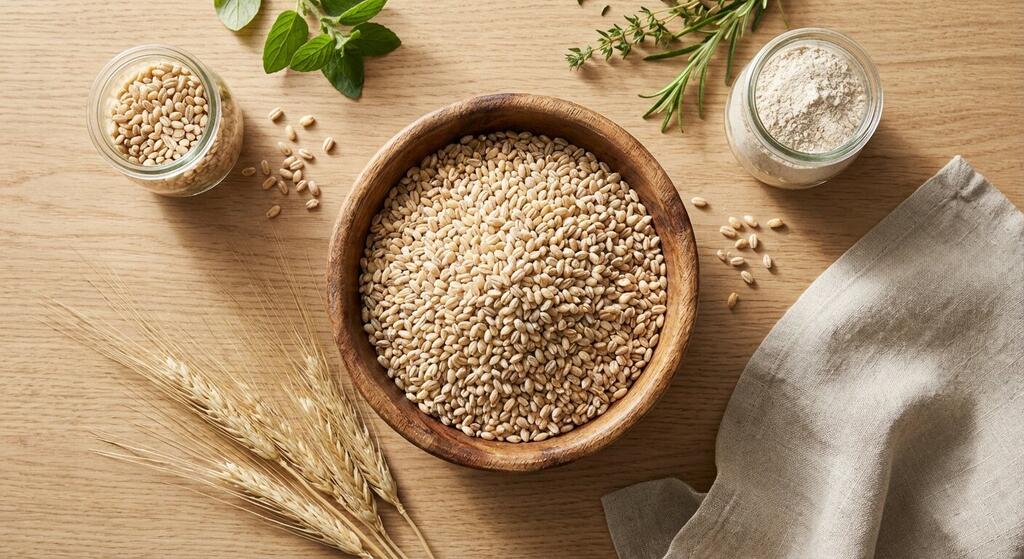
Barley is one of the oldest cultivated grains and a nutritional powerhouse packed with fiber, vitamins, and minerals. But if you’re tracking macros, understanding the calorie difference between raw and cooked barley—and between pearled and hulled varieties—is essential.
A cup of cooked barley contains significantly fewer calories than raw because it absorbs water and triples in volume. This guide breaks down barley macros exactly by weight, serving size, and preparation method, so you can track accurately and incorporate this nutrient-dense grain into your diet.
Barley Macros: Quick Reference
Here’s what you need to know at a glance for the most common type: pearled barley.
Cooked Pearl Barley
| Serving | Calories | Protein | Carbs | Fat | Fiber |
|---|---|---|---|---|---|
| 100g | 123 | 2.3g | 28.2g | 0.4g | 3.8g |
| 1 cup (157g) | 193 | 3.6g | 44.3g | 0.7g | 6g |
| 1/2 cup (78.5g) | 97 | 1.8g | 22.1g | 0.3g | 3g |
| 1/4 cup (39g) | 48 | 0.9g | 11g | 0.2g | 1.5g |
Raw Pearl Barley (Dry)
| Serving | Calories | Protein | Carbs | Fat | Fiber |
|---|---|---|---|---|---|
| 100g | 352 | 9.9g | 77.7g | 1.2g | 15.6g |
| 1 cup (200g) | 704 | 19.8g | 155.4g | 2.3g | 31.2g |
| 1/2 cup (100g) | 352 | 9.9g | 77.7g | 1.2g | 15.6g |
| 1/4 cup (50g) | 176 | 5g | 38.9g | 0.6g | 7.8g |
Key insight: Raw barley has nearly 3x the calories per 100g compared to cooked (352 vs 123) because cooking adds significant water weight. Always track cooked barley by cooked weight to avoid miscounting.
Understanding Raw vs. Cooked Barley Calories
The biggest mistake people make when tracking barley is using raw nutrition data for cooked portions—or vice versa.
The Water Weight Factor
When you cook barley, it absorbs approximately 2-2.5x its weight in water:
| State | Weight | Calories | Volume |
|---|---|---|---|
| 100g raw barley | 100g | 352 cal | ~1/2 cup |
| After cooking | ~300g | 352 cal | ~1.5 cups |
The math:
- 100g raw = 352 calories
- Those same 100g raw → 300g cooked = same 352 calories
- Therefore: 100g cooked = ~123 calories (352 ÷ 2.86)
How to Track Accurately
Option 1: Weigh after cooking (recommended)
- Cook barley first
- Weigh your cooked portion
- Use cooked barley nutrition data
- Most accurate for meal prep
Option 2: Weigh before cooking
- Weigh dry barley
- Cook it
- Use raw barley nutrition data
- Better for batch cooking when dividing later
Don’t: Mix raw and cooked data. If you weigh 100g cooked barley but use raw nutrition (352 cal instead of 123 cal), you’ll overcount by nearly 200%.
Pearled vs. Hulled Barley: What’s the Difference?
Not all barley is the same. The processing method significantly affects nutrition, cooking time, and texture.
Pearled (Pearl) Barley
What it is: The outer hull and bran layer are removed through polishing
Nutrition per 100g cooked:
- Calories: 123
- Protein: 2.3g
- Fiber: 3.8g
- Carbs: 28.2g
Pros:
- Cooks faster (25-30 minutes)
- Softer, less chewy texture
- More widely available
- Longer shelf life
Cons:
- Less fiber than hulled
- Fewer vitamins and minerals
- Lower antioxidant content
Hulled (Hulless) Barley
What it is: Only the inedible outer hull is removed; bran remains intact
Nutrition per 100g cooked:
- Calories: 135
- Protein: 2.6g
- Fiber: 6g (57% more than pearled)
- Carbs: 28.2g
Pros:
- 50% more fiber
- Higher vitamin B content
- More minerals (selenium, manganese)
- Better blood sugar control
Cons:
- Takes longer to cook (45-60 minutes)
- Chewier, nuttier texture
- More expensive
- Harder to find
Bottom line: Hulled barley is nutritionally superior, but pearled barley is more convenient. For macro tracking, the calorie difference is minimal—choose based on your fiber needs and cooking time.
Barley Macros by Preparation Method
Barley is versatile. Here’s how different preparations affect macros.
Plain Cooked Barley
Per 1 cup cooked:
- Calories: 193
- Protein: 3.6g
- Carbs: 44.3g
- Fat: 0.7g
- Fiber: 6g
Best for: Meal prep, salads, side dishes, soups
Barley Soup (Homemade)
Per 1 cup with vegetables and broth:
- Calories: 120-150
- Protein: 4-6g
- Carbs: 20-25g
- Fat: 2-4g
Varies based on recipe and additions
Barley Porridge/Breakfast Bowl
Per 1 cup cooked barley + 1/2 cup milk + berries:
- Calories: 280-320
- Protein: 9-11g
- Carbs: 55-60g
- Fat: 3-5g
Barley Pilaf with Oil/Butter
Per 1 cup cooked with 1 tbsp oil:
- Calories: 313
- Protein: 3.6g
- Carbs: 44.3g
- Fat: 14.7g
The takeaway: Plain barley is low-fat and moderate-calorie, but additions (oils, butter, cheese, nuts) can significantly increase calories. Track all ingredients.
How Barley Compares to Other Grains
Here’s how barley stacks up against popular alternatives (per 100g cooked):
| Grain | Calories | Protein | Carbs | Fiber | Glycemic Index |
|---|---|---|---|---|---|
| Pearl Barley | 123 | 2.3g | 28.2g | 3.8g | 28 (low) |
| Brown Rice | 111 | 2.6g | 23g | 1.8g | 68 (medium) |
| White Rice | 130 | 2.7g | 28.2g | 0.4g | 73 (high) |
| Quinoa | 120 | 4.4g | 21.3g | 2.8g | 53 (low-med) |
| Oats (cooked) | 71 | 2.5g | 12g | 1.7g | 55 (low-med) |
| Farro | 114 | 4.2g | 23g | 3.5g | 40 (low) |
Key observations:
- Fiber champion: Barley has more than 2x the fiber of brown rice
- Lowest GI: Barley’s glycemic index (28) is the lowest of common grains
- Moderate protein: Quinoa and farro edge out barley for protein
- Similar calories: Most whole grains cluster around 110-130 calories per 100g cooked
- Best for satiety: High fiber + low GI makes barley extremely filling
Best choice for:
- Blood sugar control: Barley (lowest GI)
- Weight loss: Barley (highest fiber, lowest GI)
- Protein: Quinoa or farro
- Convenience: White rice (fastest cooking)
- Gluten-free: Rice, quinoa, oats (barley contains gluten)
Barley’s Unique Nutritional Benefits
Beyond macros, barley offers specific health compounds worth noting.
Beta-Glucan Soluble Fiber
Barley contains 3-6% beta-glucan, a type of soluble fiber that:
- Reduces LDL cholesterol by 5-10%
- Slows glucose absorption (improves blood sugar)
- Increases satiety hormones
- Supports gut bacteria health
Research-backed: The FDA allows health claims for barley’s cholesterol-lowering effects based on beta-glucan content.
Resistant Starch
Cooked and cooled barley develops resistant starch, which:
- Acts like fiber (feeds beneficial gut bacteria)
- Reduces calorie absorption slightly
- Improves insulin sensitivity
- Increases fat burning
Practical tip: Make barley ahead and refrigerate. The cooling process increases resistant starch by up to 25%.
Micronutrient Profile (Per 1 Cup Cooked)
| Nutrient | Amount | % Daily Value |
|---|---|---|
| Selenium | 13.5 mcg | 25% |
| Manganese | 0.4 mg | 18% |
| Copper | 0.16 mg | 18% |
| Vitamin B3 (Niacin) | 3.2 mg | 20% |
| Iron | 2.1 mg | 12% |
| Magnesium | 35 mg | 8% |
| Zinc | 1.3 mg | 12% |
Standout: Selenium (immune function, thyroid health) and manganese (bone health, antioxidant enzyme production).
Barley for Different Diet Goals
Here’s how barley fits various macro targets.
Weight Loss
Why it works:
- High fiber (6g per cup) increases fullness
- Low glycemic index prevents blood sugar spikes/crashes
- Studies show barley reduces appetite more than rice or wheat
- Volume-to-calorie ratio is excellent (1 cup = 193 calories)
How to use:
- Replace white rice or pasta with barley
- Add to soups for filling, low-calorie volume
- Use in salads for sustained energy
Portion recommendation: 1/2 - 3/4 cup cooked per meal
Muscle Building
Why it’s okay (but not optimal):
- Moderate protein (3.6g per cup)
- Amino acid profile includes all essentials
- But low in lysine (muscle-building amino acid)
How to use:
- Pair with higher-protein foods (chicken, fish, eggs, beans)
- Use as carb source post-workout
- Don’t rely on it for protein needs
Better protein grains: Quinoa (8.1g per cup), amaranth (9g per cup)
Blood Sugar Management (Diabetes)
Why it’s excellent:
- Glycemic index of 28 (vs. white rice at 73)
- Beta-glucan slows glucose absorption
- High fiber blunts blood sugar spikes
- Research shows improved HbA1c in regular barley consumers
How to use:
- Substitute for high-GI grains
- Combine with protein and healthy fats
- Monitor portions (still contains carbs)
Portion recommendation: 1/2 cup cooked, measured carefully
Heart Health
Why it’s ideal:
- FDA-approved health claim for cholesterol reduction
- 3g beta-glucan daily (from 1.5 cups barley) lowers LDL by ~8%
- High potassium, low sodium
- Antioxidants support arterial health
How to use:
- Eat daily or most days
- Combine with other heart-healthy foods (salmon, nuts, vegetables)
- Choose hulled barley for maximum benefit
Keto/Low-Carb
Not suitable:
- Too high in carbs (44g per cup, 38g net carbs)
- Would consume entire daily carb allowance in one serving
- No keto-friendly barley alternatives exist
Alternatives for keto: Cauliflower rice, shirataki rice, broccoli rice
How to Cook Barley Perfectly
Proper cooking ensures you get the nutrition you expect and can track accurately.
Basic Stovetop Method
Pearled barley:
- Rinse 1 cup dry barley
- Combine with 3 cups water or broth
- Bring to boil, reduce to simmer
- Cover and cook 25-30 minutes
- Let stand 5 minutes, fluff
Yield: ~3-3.5 cups cooked (200-220g dry → 600-660g cooked)
Hulled barley:
- Same method, but use 4 cups water
- Cook 45-60 minutes
- Soak overnight to reduce cooking time to 30-35 minutes
Instant Pot Method
- Rinse 1 cup barley
- Add 2.5 cups water
- High pressure for 20 minutes (pearled) or 25 minutes (hulled)
- Natural release for 10 minutes
Advantage: Consistent results, no monitoring needed
Meal Prep Tips
Batch cooking:
- Cook 2-3 cups dry barley at once
- Yields 6-9 cups cooked
- Stores 5-6 days refrigerated
- Freezes well (portion into bags)
Tracking cooked barley:
- Weigh your batch after cooking
- Divide by servings you want
- Pre-portion into containers
- Label with weight and macros
Example:
- 200g dry barley = 600g cooked
- Divide into 6 portions = 100g each
- Each portion = 123 calories, 2.3g protein, 28.2g carbs
Common Barley Tracking Mistakes
Avoid these pitfalls that throw off your macro counts.
Mistake #1: Using Raw Data for Cooked Portions
Wrong: “I ate 100g barley = 352 calories” (using raw data for cooked barley)
Right: “I ate 100g cooked barley = 123 calories”
Fix: Always specify raw or cooked. Default to weighing cooked portions.
Mistake #2: Forgetting About Cooking Liquids
Barley absorbs water, not calories from broth.
Impact:
- Cooking in chicken broth adds ~5-10 cal per cup cooked (minimal)
- The barley absorbs liquid volume, not significant calories
- No need to count broth calories separately if absorbed
Exception: If there’s leftover broth in your bowl, count that separately.
Mistake #3: Not Accounting for Added Fats
Plain barley is low-fat (0.4g per 100g). But recipes often add:
- Butter: +100 cal/tbsp
- Olive oil: +120 cal/tbsp
- Cheese: +110 cal/oz
Fix: Track all additions separately. A “barley pilaf” isn’t the same as plain barley.
Mistake #4: Confusing Serving Sizes
Food labels and recipes use different references:
- Nutrition labels (dry): Usually 1/4 cup (50g) dry
- Recipes: Often list “1 cup cooked” as a serving
- Database entries: May be raw or cooked (check carefully)
Fix: Always check if the entry specifies raw/dry vs. cooked. When in doubt, use weight (grams) instead of volume (cups).
Mistake #5: Assuming All Barley Is the Same
Pearled and hulled barley have different fiber content but similar calories. Barley flour, barley flakes, and barley malt have completely different macros.
Calories per 100g:
- Cooked pearled barley: 123
- Cooked hulled barley: 135
- Barley flour: 345
- Barley flakes (dry): 361
- Barley malt syrup: 318
Fix: Be specific. “Barley” alone isn’t enough—specify the form.
Barley Recipe Ideas That Fit Your Macros
Here are practical ways to incorporate barley while staying on track.
High-Protein Barley Bowl
Ingredients:
- 1 cup cooked barley (193 cal, 3.6g protein)
- 4 oz grilled chicken (140 cal, 26g protein)
- 1 cup steamed broccoli (55 cal, 4g protein)
- 1 tbsp olive oil + lemon (120 cal, 0g protein)
Total: 508 calories, 33.6g protein, 48g carbs, 15g fat
Barley Vegetable Soup (Low-Cal)
Per serving (2 cups):
- 1/2 cup cooked barley (97 cal)
- Carrots, celery, tomatoes, onions (40 cal)
- 2 cups vegetable broth (20 cal)
Total: 157 calories, 3g protein, 30g carbs, 1g fat
Breakfast Barley Porridge
Ingredients:
- 3/4 cup cooked barley (145 cal, 2.7g protein)
- 1/2 cup unsweetened almond milk (15 cal, 0.5g protein)
- 1/2 cup blueberries (42 cal, 0.5g protein)
- 1 tbsp almond butter (98 cal, 3.5g protein)
Total: 300 calories, 7.2g protein, 40g carbs, 10g fat
Barley Salad with Feta
Ingredients:
- 1 cup cooked barley (193 cal, 3.6g protein)
- 1 oz feta cheese (75 cal, 4g protein)
- Cherry tomatoes, cucumber, red onion (25 cal)
- 1 tbsp olive oil + vinegar (120 cal)
Total: 413 calories, 7.6g protein, 45g carbs, 18g fat
Frequently Asked Questions
How many calories are in a cup of cooked barley?
One cup of cooked pearl barley (157g) contains 193 calories, 3.6g protein, 44.3g carbohydrates, and 0.7g fat. This is for plain barley cooked in water with no added fats. If your barley is cooked in broth or with butter/oil, calories will be higher.
Is barley healthier than rice?
Barley is generally healthier than white rice and comparable to brown rice. Barley has more than double the fiber of brown rice (6g vs 2.6g per cup cooked), a significantly lower glycemic index (28 vs 68), and contains beta-glucan, a cholesterol-lowering soluble fiber. Both provide similar calories, but barley keeps you fuller longer and has better blood sugar control properties. However, brown rice has slightly more protein and is gluten-free, while barley contains gluten.
Can you eat barley every day?
Yes, eating barley daily is safe and beneficial for most people. Regular barley consumption has been linked to lower cholesterol, better blood sugar control, improved digestive health, and reduced heart disease risk. Aim for 1-2 cups cooked per day as part of a balanced diet. However, barley contains gluten, so it’s not suitable for people with celiac disease or gluten sensitivity. Also, gradually increase intake to avoid digestive discomfort from the high fiber content.
Does barley make you gain weight?
No, barley doesn’t inherently cause weight gain. At 123 calories per 100g cooked, barley is a moderate-calorie food. Its high fiber content (3.8g per 100g) and low glycemic index actually make it excellent for weight management by increasing satiety and reducing overall calorie intake. Studies show people who eat whole grains like barley tend to have lower body weight and less belly fat. Weight gain occurs from eating more calories than you burn, not from specific foods. Track portion sizes and total daily intake.
What’s better for weight loss: barley or quinoa?
Both are excellent for weight loss, but they excel in different ways. Barley has more fiber (6g vs 2.8g per 100g cooked) and a lower glycemic index (28 vs 53), making it more filling and better for blood sugar control. Quinoa has nearly double the protein (4.4g vs 2.3g per 100g) and is a complete protein, which is better for preserving muscle during weight loss. For maximum satiety and blood sugar stability, choose barley. For higher protein intake, choose quinoa. Calories are virtually identical (123 vs 120 per 100g).
How much barley should I eat per day for cholesterol benefits?
Research shows that consuming 3 grams of beta-glucan daily can lower LDL cholesterol by 5-10%. Since pearl barley contains about 2% beta-glucan, you’d need approximately 150g of beta-glucan-rich foods. For practical purposes, eating about 1.5 cups (235g) of cooked barley daily provides sufficient beta-glucan for cholesterol-lowering effects. You can split this across meals—for example, 3/4 cup at lunch and 3/4 cup at dinner. Combine with other heart-healthy habits (exercise, healthy fats, vegetables) for maximum benefit.
Can diabetics eat barley?
Yes, barley is one of the best grain choices for diabetics. With a glycemic index of just 28 (very low), barley causes minimal blood sugar spikes compared to rice (GI 73) or bread (GI 75). The high fiber and beta-glucan content slow glucose absorption and improve insulin sensitivity. Multiple studies show barley reduces HbA1c (long-term blood sugar marker) and postprandial (after-meal) glucose levels. However, barley still contains carbs (28g per 100g cooked), so portion control matters. Start with 1/2 cup portions, pair with protein and vegetables, and monitor your individual blood sugar response.
Is barley gluten-free?
No, barley contains gluten and is not safe for people with celiac disease or non-celiac gluten sensitivity. Barley contains hordein, a type of gluten protein similar to the gliadin in wheat. Even small amounts can trigger immune reactions in gluten-sensitive individuals. Gluten-free alternatives with similar nutrition profiles include quinoa, brown rice, wild rice, buckwheat (despite the name, it’s gluten-free), and amaranth. Always check labels on processed foods, as barley malt and barley derivatives are common ingredients in cereals, soups, and beer.
The Bottom Line on Barley Macros
Barley is a nutrient-dense, high-fiber grain that offers exceptional value for macro-conscious eaters. With 123 calories, 2.3g protein, 28.2g carbs, and 3.8g fiber per 100g cooked, it’s a moderate-calorie carbohydrate source that excels at satiety and blood sugar control.
Best for: Weight loss, blood sugar management, heart health, digestive health
Not ideal for: Keto/very low-carb diets, gluten-free diets, those seeking high-protein grains
Tracking essentials:
- Always specify cooked vs. raw (calories differ by 3x)
- Weigh cooked barley for accuracy (volume can vary)
- Track any added fats, oils, or cheese separately
- Remember: 100g raw becomes ~300g cooked
Whether you’re meal prepping for the week or exploring alternatives to rice and pasta, barley deserves a place in your rotation. Its combination of filling fiber, low glycemic impact, and cholesterol-lowering beta-glucan makes it a standout choice for long-term health and sustainable macro targets.
Related Guides:
- Carbohydrates Explained — Understanding this energy macro
- Macros for Weight Loss — Fat loss nutrition strategy
- How to Track Your Macros — Master your nutrition tracking
More Carb Sources:
- Quinoa Macros — Complete protein grain
- Brown Rice Macros — Higher fiber option
- Oatmeal Macros — Breakfast staple
- All Food Guides — Browse our complete food database
Related Articles

Dragonfruit Macros: Complete Nutrition Guide for Pitaya
Complete macro breakdown of dragonfruit (pitaya). Learn the calories, protein, carbs, and...
Read guide →
Bulgur Macros: Complete Nutritional Guide & Health Benefits
Discover bulgur's complete macro breakdown, nutritional benefits, and how to incorporate...
Read guide →
Radish Macros: Nutrition Facts and Health Benefits
Complete guide to radish macros and nutrition. Learn calories, protein, carbs, and health...
Read guide →Note: Nutrition values are approximate and may vary based on preparation method and source.