BBQ Sauce Macros: Complete Nutrition Guide for All Popular Brands
Reviewed by Jessica Williams, CPT, CSCS
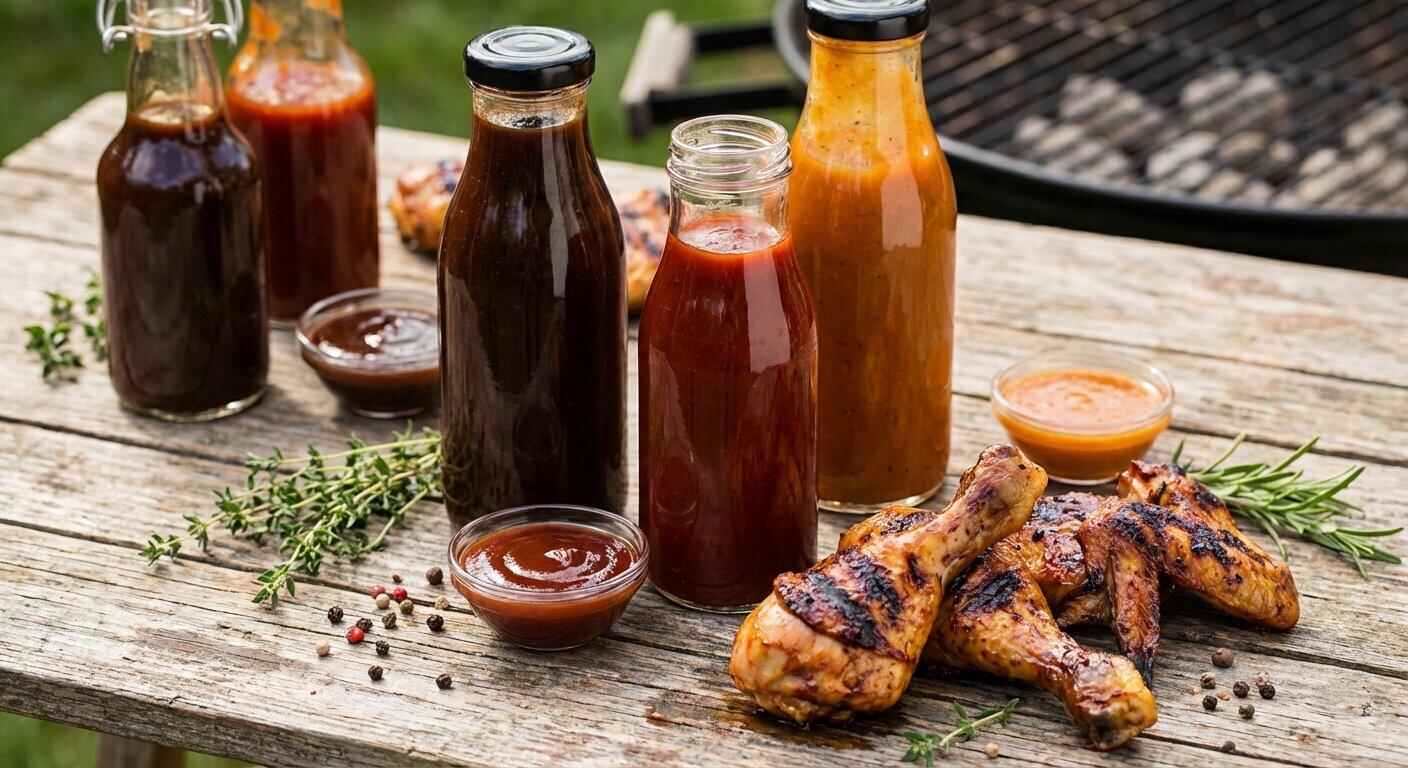
BBQ sauce is a beloved American condiment that can make or break your macro tracking goals. Whether you’re slathering it on grilled chicken, dipping your fries, or glazing ribs, understanding the macros in BBQ sauce helps you enjoy your meals without derailing your nutrition plan.
The challenge? Most traditional BBQ sauces are surprisingly high in sugar and carbohydrates, with minimal protein or healthy fats. A single serving can pack 12-17 grams of sugar—equivalent to what’s in some candy bars. But don’t despair: with the right knowledge and smart brand choices, you can absolutely enjoy BBQ sauce while staying on track with your fitness goals.
In this comprehensive guide, we’ll break down the macros of popular BBQ sauce brands, compare traditional versus low-sugar options, explore how to make BBQ sauce work within your macros, and provide practical tips for choosing the best BBQ sauce for your specific dietary needs. Ready to calculate your perfect macro balance? Use our macro calculator to determine your daily targets before diving in.
Related: Learn more about what macros are and how they impact your diet.
Standard BBQ Sauce Macronutrient Breakdown
Classic BBQ Sauce (2 Tbsp / 35g serving)
Typical Traditional BBQ Sauce:
- Calories: 60-70
- Protein: 0g
- Carbohydrates: 15-17g
- Sugars: 12-15g
- Fiber: 0-1g
- Fat: 0-0.5g
- Sodium: 300-450mg
Sweet Baby Ray’s Original (Most Popular Brand):
- Calories: 70
- Protein: 0g
- Carbohydrates: 17g
- Sugars: 16g
- Fiber: 0g
- Fat: 0g
- Sodium: 290mg
Key Takeaway: Traditional BBQ sauce is essentially a carbohydrate condiment. Nearly 100% of its calories come from sugars and carbohydrates, with zero contribution to your protein or fat macros. This makes it important to measure portions carefully when tracking.
BBQ Sauce Macro Ratios
When we look at macronutrient distribution, traditional BBQ sauce breaks down as:
- 95-100% Carbohydrates
- 0-5% Protein
- 0-5% Fat
This extreme carb dominance means BBQ sauce should be counted as part of your daily carbohydrate budget, not as a “free” condiment. If you’re on a low-carb or ketogenic diet, traditional BBQ sauce can quickly eat into your limited carb allowance.
Popular BBQ Sauce Brands: Macro Comparison
Traditional High-Sugar Options
Sweet Baby Ray’s Original
- Calories: 70 | Protein: 0g | Carbs: 17g | Fat: 0g
- Notes: America’s #1 selling BBQ sauce. Sweet, thick, and perfect for ribs, but very high in sugar.
KC Masterpiece Original
- Calories: 60 | Protein: 0g | Carbs: 15g | Fat: 0g
- Notes: Slightly less sugar than Sweet Baby Ray’s but still a high-carb choice.
Stubb’s Original
- Calories: 45 | Protein: 0g | Carbs: 11g | Fat: 0g
- Notes: Made with real ingredients, lower sugar than many competitors.
Bull’s-Eye Original
- Calories: 60 | Protein: 0g | Carbs: 15g | Fat: 0g
- Notes: Similar macro profile to KC Masterpiece, tangy-sweet flavor.
Kraft Original
- Calories: 50 | Protein: 0g | Carbs: 13g | Fat: 0g
- Notes: Mid-range option with moderate sugar content.
Low-Sugar & Sugar-Free Options
G Hughes Sugar-Free BBQ Sauce (Multiple Flavors)
- Calories: 10 | Protein: 0g | Carbs: 2g | Fat: 0g | Sugar: 0g
- Notes: Sweetened with sucralose. Available in hickory, honey, maple, and smokehouse varieties.
Primal Kitchen Organic & Unsweetened BBQ Sauce
- Calories: 30 | Protein: 0g | Carbs: 7g | Fat: 0g | Sugar: 5g
- Notes: Uses balsamic vinegar and organic ingredients. Lower sugar than traditional but not sugar-free.
Tessemae’s Organic BBQ Sauce
- Calories: 35 | Protein: 0g | Carbs: 8g | Fat: 0g | Sugar: 6g
- Notes: Organic, no added sugar, uses date paste for sweetness.
Stubb’s Sugar-Free BBQ Sauce
- Calories: 15 | Protein: 0g | Carbs: 3g | Fat: 0g | Sugar: 0g
- Notes: Uses sucralose, maintains Stubb’s signature smoky flavor.
Walden Farms Zero Calorie BBQ Sauce
- Calories: 0 | Protein: 0g | Carbs: 0g | Fat: 0g | Sugar: 0g
- Notes: Completely calorie-free using cellulose gel and sweeteners. Taste is polarizing.
Specialty & Flavored Varieties
Sweet Baby Ray’s Honey Chipotle
- Calories: 70 | Protein: 0g | Carbs: 18g | Fat: 0g
- Notes: Even higher in carbs than original due to added honey.
Sweet Baby Ray’s Hot & Spicy
- Calories: 60 | Protein: 0g | Carbs: 15g | Fat: 0g
- Notes: Heat doesn’t reduce sugar content significantly.
Stubb’s Spicy Bar-B-Q
- Calories: 45 | Protein: 0g | Carbs: 11g | Fat: 0g
- Notes: One of the better macro profiles among spicy options.
How BBQ Sauce Fits Into Different Diets
For Fat Loss / Cutting
When you’re in a caloric deficit trying to lose fat, every calorie matters. Here’s how to make BBQ sauce work:
Best Practices:
- Choose sugar-free options: G Hughes or Stubb’s Sugar-Free save 50-60 calories per serving
- Measure carefully: Use measuring spoons, not free-pouring
- Budget it in: Account for 40-70 calories per 2-tablespoon serving in your daily total
- Use strategically: Add BBQ sauce to lean proteins (chicken breast, turkey) to make them more enjoyable while cutting
Sample Cutting Meal with BBQ Sauce:
- 8 oz grilled chicken breast: 360 calories, 70g protein, 0g carbs, 4g fat
- 2 Tbsp G Hughes Sugar-Free BBQ: 10 calories, 0g protein, 2g carbs, 0g fat
- 1 cup steamed broccoli: 55 calories, 4g protein, 11g carbs, 0g fat
- Total: 425 calories, 74g protein, 13g carbs, 4g fat
This meal is protein-rich, satisfying, and fits easily into a 1,500-2,000 calorie cutting diet.
For Muscle Building / Bulking
When you’re in a caloric surplus building muscle, BBQ sauce can actually be helpful:
Advantages:
- Easy carbs: Helps hit higher carb targets without excessive food volume
- Improves palatability: Makes it easier to eat large quantities of lean protein
- Fast-digesting carbs: Good for post-workout meals paired with protein
Sample Bulking Meal with BBQ Sauce:
- 12 oz grilled chicken thighs: 560 calories, 72g protein, 0g carbs, 28g fat
- 4 Tbsp Sweet Baby Ray’s Original: 140 calories, 0g protein, 34g carbs, 0g fat
- 2 cups white rice: 400 calories, 8g protein, 88g carbs, 2g fat
- Total: 1,100 calories, 80g protein, 122g carbs, 30g fat
This meal provides substantial calories and macros perfect for muscle building, with BBQ sauce making the large protein portion more enjoyable.
For Low-Carb & Keto Diets
Traditional BBQ sauce is problematic for keto (typically <20-50g carbs per day):
The Problem:
- 2 Tbsp Sweet Baby Ray’s = 17g carbs (nearly a full day’s allowance on strict keto)
- Most traditional BBQ sauces use sugar as the first or second ingredient
The Solution:
- G Hughes Sugar-Free: 2g net carbs per serving (keto-friendly)
- Homemade with alternative sweeteners: Full control over carb content
- Stubb’s Sugar-Free: 3g net carbs per serving (acceptable for most keto dieters)
Keto-Friendly BBQ Meal:
- 8 oz pork ribs: 680 calories, 48g protein, 0g carbs, 54g fat
- 3 Tbsp G Hughes Sugar-Free BBQ: 15 calories, 0g protein, 3g carbs, 0g fat
- Side salad with olive oil: 200 calories, 2g protein, 8g carbs, 18g fat
- Total: 895 calories, 50g protein, 11g carbs, 72g fat
This meal keeps you well within keto macro targets while still enjoying BBQ flavor.
For Flexible Dieting (IIFYM)
If It Fits Your Macros (IIFYM) is perfect for BBQ sauce lovers:
Philosophy:
- No foods are off-limits if they fit within your daily macro targets
- BBQ sauce is just another tool in your nutrition toolkit
- Balance higher-carb condiments with lower-carb meals throughout the day
Tips for IIFYM with BBQ Sauce:
- Pre-log your meals: Plan your BBQ sauce portions before cooking
- Adjust other meals: If you want 4 Tbsp of Sweet Baby Ray’s (34g carbs), reduce carbs elsewhere
- Don’t fear sugar: In the context of adequate protein, appropriate calories, and good overall nutrition, the sugar in BBQ sauce isn’t inherently harmful
- Mix and match: Use traditional BBQ sauce when calories allow, sugar-free when you’re tighter on macros
For a deeper dive into flexible dieting principles, check out our IIFYM guide.
Sugar Content in BBQ Sauce: What You Need to Know
Why BBQ Sauce Is So High in Sugar
BBQ sauce traditionally contains:
- Tomato paste or ketchup (already contains natural sugars)
- Added sugars: Brown sugar, white sugar, honey, molasses
- High fructose corn syrup (in many commercial brands)
- Fruit juices (concentrated apple or pineapple juice)
The result? Some BBQ sauces are 40-50% sugar by weight.
Sugar Breakdown by Brand (per 2 Tbsp)
- Sweet Baby Ray’s Original: 16g sugar
- KC Masterpiece: 14g sugar
- Kraft Original: 12g sugar
- Stubb’s Original: 9g sugar
- Primal Kitchen: 5g sugar
- G Hughes Sugar-Free: 0g sugar
Is BBQ Sauce Sugar “Bad” for You?
Context matters:
- In isolation: 16g of sugar is significant (about 4 teaspoons)
- In a balanced diet: If it helps you eat nutritious protein and you’re within calorie targets, it’s fine
- For diabetics: High-sugar BBQ sauce can cause blood sugar spikes; choose sugar-free versions
- For dental health: Frequent exposure to sugary condiments can contribute to tooth decay
Bottom line: The sugar in BBQ sauce isn’t inherently harmful if it fits your overall nutrition plan. However, if you’re trying to reduce added sugar intake, choosing lower-sugar or sugar-free options makes sense.
Making BBQ Sauce Work With Your Macros
Portion Control Strategies
Use a Food Scale: The difference between 2 tablespoons (measured) and 2 tablespoons (eyeballed) can be 50-100% more calories. A digital food scale ensures accuracy.
Dilution Technique: Mix BBQ sauce with:
- Vinegar (0 calories): Adds tanginess and volume
- Hot sauce (minimal calories): Increases flavor without carbs
- Mustard (5 calories per Tbsp): Adds complexity with fewer carbs than straight BBQ sauce
- Water (0 calories): Simple dilution for more volume with same flavor
Example: Mix 1 Tbsp Sweet Baby Ray’s + 1 Tbsp apple cider vinegar = same volume as 2 Tbsp but only 35 calories and 8g carbs instead of 70 calories and 17g carbs.
Smart Cooking Applications
1. Marinade (Not Just Glaze):
- Marinate chicken/pork in BBQ sauce before cooking
- Much of the sauce drips off during cooking
- You get flavor without consuming all the sauce’s macros
2. Thin Layer Brushing:
- Instead of drowning food in sauce, brush a thin layer
- Use a silicone brush for even, controlled application
- Reapply during cooking for layered flavor without excess
3. Dipping on the Side:
- Serve BBQ sauce as a dipping sauce instead of mixing it in
- You’ll use less sauce when dipping vs. coating
- Better portion control and awareness
4. Mix Into Other Foods:
- Stir 1 Tbsp into ground meat (spreads flavor throughout)
- Mix with Greek yogurt for a protein-rich BBQ dipping sauce
- Add to cauliflower rice for flavor without much added volume
Meal Prep Considerations
Pre-Portion Your Sauce:
- Pour individual servings into small containers or silicone molds
- Freeze for easy grab-and-go portions
- Prevents over-serving during meal prep
Batch Cooking:
- When grilling large quantities, use BBQ sauce strategically
- Not every piece needs to be sauce-covered
- Alternate plain and sauced pieces for variety and macro flexibility
DIY BBQ Sauce: Control Your Macros
Benefits of Homemade BBQ Sauce
- Complete control: Choose exactly what goes in
- Lower sugar options: Use alternative sweeteners
- Bulk preparation: Make large batches for the same effort
- Customization: Adjust heat, sweetness, and tang to your preference
- Often cheaper: Especially when making large quantities
Basic Low-Sugar BBQ Sauce Recipe
Ingredients:
- 1 cup tomato paste (no salt added)
- ½ cup apple cider vinegar
- ¼ cup water
- 2 Tbsp liquid smoke
- 2 Tbsp Worcestershire sauce
- ¼ cup erythritol or monk fruit sweetener (or 2 Tbsp honey if not avoiding sugar)
- 1 Tbsp onion powder
- 1 Tbsp garlic powder
- 1 tsp smoked paprika
- 1 tsp black pepper
- ½ tsp salt
- Optional: cayenne pepper for heat
Instructions:
- Combine all ingredients in a saucepan
- Whisk until smooth
- Simmer on low heat for 15-20 minutes, stirring occasionally
- Let cool and store in an airtight container
Macros per 2 Tbsp (using erythritol):
- Calories: ~25
- Protein: 1g
- Carbs: 5g (net carbs: 4g)
- Fat: 0g
- Sugar: 3g (natural from tomatoes, no added sugar)
Comparison to Sweet Baby Ray’s:
- Saves: 45 calories and 13g sugar per serving
- Maintains: Rich BBQ flavor and thick texture
- Lasts: 2-3 weeks refrigerated
Alternative Sweetener Options
Erythritol:
- Nearly zero calories
- Doesn’t spike blood sugar
- Can crystallize when cooled (mix well before using)
- Best for: Keto and low-carb diets
Monk Fruit Sweetener:
- Zero calories
- Natural sweetness from monk fruit extract
- No aftertaste for most people
- Best for: Anyone avoiding artificial sweeteners
Stevia:
- Zero calories
- Can have a bitter aftertaste if overused
- Very concentrated (use less than you think)
- Best for: Small batches where you can adjust to taste
Date Paste:
- Natural whole food sweetener
- Contains fiber and nutrients
- About 60 calories per 2 Tbsp
- Best for: Those avoiding refined sugars but not tracking macros strictly
Raw Honey:
- Natural but still sugar (64 calories per Tbsp)
- Contains trace minerals and antioxidants
- Use half the amount of regular sugar for similar sweetness
- Best for: Paleo diets, those prioritizing natural ingredients
BBQ Sauce vs. Other Condiments: Macro Comparison
Understanding how BBQ sauce compares to other popular condiments helps you make informed choices:
Head-to-Head Comparison (per 2 Tbsp)
| Condiment | Calories | Protein | Carbs | Fat | Sugar |
|---|---|---|---|---|---|
| BBQ Sauce (traditional) | 60-70 | 0g | 15-17g | 0g | 12-16g |
| Ketchup | 30-40 | 0g | 7-8g | 0g | 6-8g |
| Mayo | 180-200 | 0g | 0-1g | 20-22g | 0-1g |
| Ranch Dressing | 140 | 0g | 2g | 14g | 1g |
| Mustard | 10 | 0g | 1-2g | 0g | 0-1g |
| Soy Sauce | 10 | 2g | 1g | 0g | 0g |
| Hot Sauce | 0-5 | 0g | 0-1g | 0g | 0g |
| Honey | 120 | 0g | 32g | 0g | 32g |
Strategic Condiment Combinations
For Lower Calories:
- Mix BBQ sauce 50/50 with mustard: ~35 calories per 2 Tbsp
- Mix BBQ sauce with hot sauce: ~30-40 calories per 2 Tbsp
For Higher Protein:
- Mix BBQ sauce into Greek yogurt (2:1 ratio yogurt to BBQ)
- Creates a creamy, tangy dip with protein
For Keto:
- Skip BBQ sauce, use combination of mayo + mustard + hot sauce
- Or use sugar-free BBQ sauce brands
Practical Tips for BBQ Sauce in Meal Planning
Restaurant Considerations
When eating out, BBQ sauce portions can be unpredictable:
Strategies:
- Ask for sauce on the side: Control how much you use
- Request “light sauce”: Most restaurants will accommodate
- Estimate conservatively: If tracking, assume restaurants use 3-4 Tbsp (double a home portion)
- Choose grilled over smothered: BBQ chicken sandwich has less sauce than BBQ chicken pizza or BBQ-smothered ribs
Common Restaurant Items (estimated macros):
- BBQ Chicken Sandwich: ~600-800 calories (includes 3-4 Tbsp sauce = 100+ calories from sauce alone)
- BBQ Ribs (half rack): ~700-900 calories (includes 4-6 Tbsp sauce = 150+ calories from sauce)
- BBQ Chicken Wings (6 pieces): ~450-550 calories (includes 2-3 Tbsp sauce = 60-100 calories from sauce)
Meal Prep Applications
BBQ Chicken Meal Prep (4 servings):
Ingredients:
- 2 lbs chicken breast
- 8 Tbsp BBQ sauce (2 Tbsp per serving)
- 4 cups cooked brown rice (1 cup per serving)
- 4 cups steamed broccoli (1 cup per serving)
Macros per serving (using Sweet Baby Ray’s):
- Chicken (8 oz): 360 cal, 70g protein, 0g carbs, 4g fat
- BBQ sauce (2 Tbsp): 70 cal, 0g protein, 17g carbs, 0g fat
- Brown rice (1 cup): 215 cal, 5g protein, 45g carbs, 2g fat
- Broccoli (1 cup): 55 cal, 4g protein, 11g carbs, 0g fat
- Total per container: 700 calories, 79g protein, 73g carbs, 6g fat
Macros per serving (using G Hughes Sugar-Free):
- Total per container: 640 calories, 79g protein, 58g carbs, 6g fat
- Difference: Saves 60 calories and 15g carbs per meal
Pre- and Post-Workout Nutrition
Post-Workout with BBQ Sauce: After training, you want fast-digesting carbs and protein. BBQ sauce can actually be beneficial:
- 8 oz grilled chicken: 70g protein
- 3 Tbsp Sweet Baby Ray’s: 25g fast-digesting carbs
- 1 cup white rice: 45g carbs
- Total: 70g protein, 70g carbs (ideal for post-workout)
The sugar in BBQ sauce provides quick glycogen replenishment when your body can use it most effectively.
Pre-Workout: BBQ sauce is less ideal pre-workout due to sugar content, which may cause energy crashes for some people. If using, pair with slower-digesting carbs and moderate protein 1-2 hours before training.
Brand Deep Dives: Best BBQ Sauces for Macro Tracking
Best Overall: Stubb’s Original
Why it wins:
- Lower sugar than most traditional sauces (9g vs. 15-16g)
- Real ingredients (no HFCS)
- Great flavor that doesn’t taste “diet”
- Widely available in grocery stores
- Reasonable price point
Best for: People who want traditional BBQ flavor with slightly better macros
Best for Cutting: G Hughes Sugar-Free
Why it wins:
- Only 10 calories per serving
- 0g sugar (sweetened with sucralose)
- Multiple flavor options (Hickory, Honey, Maple Brown, Original)
- Thick texture like traditional BBQ sauce
Best for: Anyone in a caloric deficit who wants BBQ flavor without the carbs
Best Natural Option: Primal Kitchen Organic
Why it wins:
- Organic ingredients
- No refined sugars (uses balsamic vinegar for sweetness)
- Only 5g sugar per serving
- Paleo and Whole30 compliant
Best for: People prioritizing ingredient quality and natural foods
Best Budget Option: Kraft Original BBQ Sauce
Why it wins:
- Very affordable (usually under $2)
- Moderate macros (50 calories, 13g carbs)
- Widely available
- Consistent flavor
Best for: Budget-conscious macro trackers who don’t mind moderate sugar content
Best for Keto: Stubb’s Sugar-Free
Why it wins:
- Only 3g net carbs
- Maintains Stubb’s smoky, authentic flavor
- No artificial aftertaste
- Accessible in most stores
Best for: Keto dieters who want real BBQ taste
Common Mistakes When Tracking BBQ Sauce Macros
Mistake #1: Not Measuring Portions
The Problem: “Eyeballing” BBQ sauce leads to consuming 2-3x more than intended
The Solution: Use measuring spoons or a food scale. Two tablespoons is approximately 35 grams or about the size of a golf ball.
Mistake #2: Forgetting to Log It
The Problem: Condiments are often forgotten in food logs, but 3-4 Tbsp of BBQ sauce can add 100-150 calories
The Solution: Log condiments before eating. Build them into your meal plan rather than adding them as an afterthought.
Mistake #3: Assuming All BBQ Sauces Are the Same
The Problem: Sugar-free BBQ sauce has 1/7th the calories of traditional sauce, but people treat them equally
The Solution: Read labels. Don’t just grab any BBQ sauce—choose based on your current macro needs.
Mistake #4: Using BBQ Sauce as a “Free” Food
The Problem: Some people think condiments don’t count in their macros
The Solution: Every calorie counts. BBQ sauce is primarily sugar and should be tracked as carbohydrates.
Mistake #5: Choosing Sugar-Free Without Reading Labels
The Problem: Not all “sugar-free” options are low-calorie (some use honey or other caloric sweeteners)
The Solution: Check the nutrition label. “Sugar-free” should have 0-2g sugar and 10-20 calories per serving.
Mistake #6: Overcomplicated Substitutions
The Problem: Trying to make complicated “hacks” that don’t taste good and aren’t sustainable
The Solution: Choose a good-tasting lower-sugar option like Stubb’s or G Hughes and use it confidently. Sustainability beats perfection.
Special Dietary Considerations
Diabetes and Blood Sugar Management
BBQ sauce can significantly impact blood sugar due to high sugar content.
Guidelines for Diabetics:
- Choose sugar-free options: G Hughes, Stubb’s Sugar-Free, or Walden Farms
- Pair with protein and fat: Never consume BBQ sauce alone; always with a balanced meal
- Monitor portions: Even 2 Tbsp of regular BBQ sauce (17g carbs) can spike blood sugar
- Check your levels: Test blood glucose 1-2 hours after eating to understand your personal response
Glycemic Impact: Traditional BBQ sauce has a high glycemic index (estimated 60-70) due to concentrated sugars. Sugar-free versions have minimal glycemic impact.
Gluten Sensitivity and Celiac Disease
Many BBQ sauces contain gluten from:
- Worcestershire sauce (often contains malt vinegar)
- Soy sauce (traditional soy sauce contains wheat)
- Thickeners or stabilizers
Certified Gluten-Free BBQ Sauces:
- Sweet Baby Ray’s (most varieties are gluten-free)
- Stubb’s (check labels; most are gluten-free)
- Primal Kitchen (certified gluten-free)
- Tessemae’s (certified gluten-free)
Always check labels, as formulations can change.
Sodium Content Concerns
BBQ sauce is relatively high in sodium:
- Traditional BBQ sauce: 300-450mg per 2 Tbsp
- Daily recommended limit: 2,300mg (or 1,500mg for those with hypertension)
For Those Watching Sodium:
- Look for “low-sodium” varieties (usually 150-200mg per serving)
- Make homemade BBQ sauce with reduced or no added salt
- Reduce portions to 1 Tbsp instead of 2 Tbsp
- Balance with low-sodium foods throughout the day
Vegan and Vegetarian Considerations
Most BBQ sauces are naturally vegan/vegetarian, but check for:
- Worcestershire sauce: Traditional versions contain anchovies; look for vegan versions
- Honey: Not vegan; choose brands that use sugar or agave instead
- Natural flavors: May be derived from animal sources
Confirmed Vegan BBQ Sauces:
- Stubb’s Original
- Primal Kitchen
- G Hughes (most varieties)
- Most store brands (check labels)
Frequently Asked Questions
How do I calculate BBQ sauce macros for homemade recipes?
To calculate macros for homemade BBQ sauce, add up the total macros of all ingredients, then divide by the number of servings. For example, if your recipe yields 2 cups (32 tablespoons) and contains 400 calories total, each 2-tablespoon serving has 25 calories. Use a recipe calculator app like MyFitnessPal’s recipe builder or Cronometer for accuracy. Weigh your final batch and divide by portion weight for the most precise macro calculations.
Can I use BBQ sauce on a paleo diet?
Yes, but choose carefully. Traditional BBQ sauces contain refined sugars and high fructose corn syrup, which aren’t paleo-compliant. Look for paleo-certified brands like Primal Kitchen, Tessemae’s, or The New Primal. These use natural sweeteners like dates, coconut sugar, or pure maple syrup. Alternatively, make homemade BBQ sauce using paleo-approved ingredients: tomato paste, apple cider vinegar, coconut aminos (instead of Worcestershire), and honey or maple syrup.
Does grilling burn off BBQ sauce calories?
No, grilling does not significantly reduce BBQ sauce calories. While some sauce may drip off during cooking or caramelize on the grill, the majority remains on your food. Any sugar that caramelizes is still consumed—it’s just in a different form (caramelization is a chemical change, not a caloric reduction). For accurate tracking, count the full amount of BBQ sauce you apply to your food, whether raw, marinated, or brushed on during grilling.
What’s the best BBQ sauce for meal prep that won’t get soggy?
For meal prep, choose thicker BBQ sauces and store them separately from your protein and carbs until eating. If you prefer pre-sauced meals, brush BBQ sauce on after cooking and cooling your protein, then refrigerate. Thick sauces like Sweet Baby Ray’s, KC Masterpiece, or G Hughes maintain better texture than thin, vinegar-heavy sauces. Alternatively, pack sauce in small containers (2 Tbsp portions) and add just before eating to prevent sogginess and maintain food quality throughout the week.
Are there any BBQ sauces with protein?
Standard BBQ sauces contain negligible protein (0-1g per serving). However, you can create high-protein BBQ sauce by mixing traditional BBQ sauce with plain Greek yogurt. Use a 1:1 ratio of sauce to yogurt for a creamy, tangy BBQ dip with approximately 5-7g protein per 2-tablespoon serving. This works especially well for chicken tenders, vegetables, or as a salad dressing. Store this mixture for only 3-4 days as the yogurt reduces shelf life compared to pure BBQ sauce.
How long does homemade BBQ sauce last?
Homemade BBQ sauce lasts 2-3 weeks when stored in an airtight container in the refrigerator. The high acidity from vinegar and tomatoes acts as a natural preservative. For longer storage, freeze homemade BBQ sauce in ice cube trays or small portions for up to 6 months. Thaw in the refrigerator overnight before using. Signs of spoilage include mold growth, off-smells, or separation that doesn’t remix when stirred. Always use clean utensils when serving to prevent bacterial contamination.
Can I use BBQ sauce during contest prep?
Yes, but strategically. During the final weeks of contest prep when calories are very restricted, choose sugar-free options like G Hughes (10 calories) or Walden Farms (0 calories) to save every possible calorie for nutrient-dense foods. In the earlier phases of prep, traditional BBQ sauce in measured portions (1-2 Tbsp) can make plain chicken and rice more palatable, improving diet adherence. Always account for the carbohydrates and factor them into your daily totals. Many successful competitors use BBQ sauce throughout prep to maintain sanity while staying on track.
Is BBQ sauce inflammatory?
Traditional BBQ sauce contains sugar and processed ingredients, which some research suggests may contribute to inflammation when consumed in large amounts regularly. However, the occasional 2-tablespoon serving is unlikely to cause significant inflammatory response in healthy individuals. If you’re concerned about inflammation, choose BBQ sauces with minimal added sugars, no high fructose corn syrup, and organic ingredients. Better yet, make homemade BBQ sauce with anti-inflammatory spices like turmeric, ginger, and garlic. Overall diet quality matters more than any single condiment.
Conclusion: Making BBQ Sauce Work for Your Macros
BBQ sauce doesn’t have to be a macro-tracking nightmare. Whether you’re cutting, bulking, eating keto, or following flexible dieting, there’s a BBQ sauce strategy that works for you:
Key Takeaways:
- Measure your portions: Two tablespoons is a standard serving; use measuring tools for accuracy
- Choose wisely based on goals: Sugar-free for cutting, traditional for bulking, keto-friendly for low-carb diets
- Read labels: Not all BBQ sauces are equal; sugar content varies dramatically between brands
- Make it fit: BBQ sauce is primarily carbohydrates; budget it into your daily carb target
- Consider homemade: Control ingredients, reduce sugar, and save money with DIY BBQ sauce
Recommended Approach by Diet Type:
- Fat loss: G Hughes Sugar-Free or Stubb’s Sugar-Free (10-15 calories per serving)
- Muscle building: Sweet Baby Ray’s or KC Masterpiece (60-70 calories; the carbs help with training fuel)
- Keto: G Hughes or homemade with erythritol (0-3g net carbs)
- Paleo: Primal Kitchen or Tessemae’s (natural ingredients, moderate sugar)
- IIFYM: Any BBQ sauce that fits your daily macros
Remember, the best BBQ sauce is the one you actually enjoy and can sustain long-term. If you hate the taste of sugar-free options, it’s better to use smaller portions of traditional sauce and stay consistent with your tracking than to force yourself to eat something you dislike.
Ready to determine exactly how BBQ sauce fits into your personalized macro targets? Use our macro calculator to get your custom daily protein, carb, and fat goals. Then explore our other condiment guides like ketchup macros, ranch dressing macros, and honey macros to build a complete understanding of how your favorite flavors fit your nutrition plan.
Whether you’re firing up the grill for meal prep Sunday or ordering BBQ chicken wings with friends, you now have the knowledge to make informed choices about BBQ sauce that support your health and fitness goals without sacrificing flavor. Happy grilling!
Related Articles

Dragonfruit Macros: Complete Nutrition Guide for Pitaya
Complete macro breakdown of dragonfruit (pitaya). Learn the calories, protein, carbs, and...
Read guide →
Bulgur Macros: Complete Nutritional Guide & Health Benefits
Discover bulgur's complete macro breakdown, nutritional benefits, and how to incorporate...
Read guide →
Radish Macros: Nutrition Facts and Health Benefits
Complete guide to radish macros and nutrition. Learn calories, protein, carbs, and health...
Read guide →Note: Nutrition values are approximate and may vary based on preparation method and source.