Peanuts Macros: Calories, Protein & Nutritional Guide
Reviewed by Sarah Chen, MS, RD
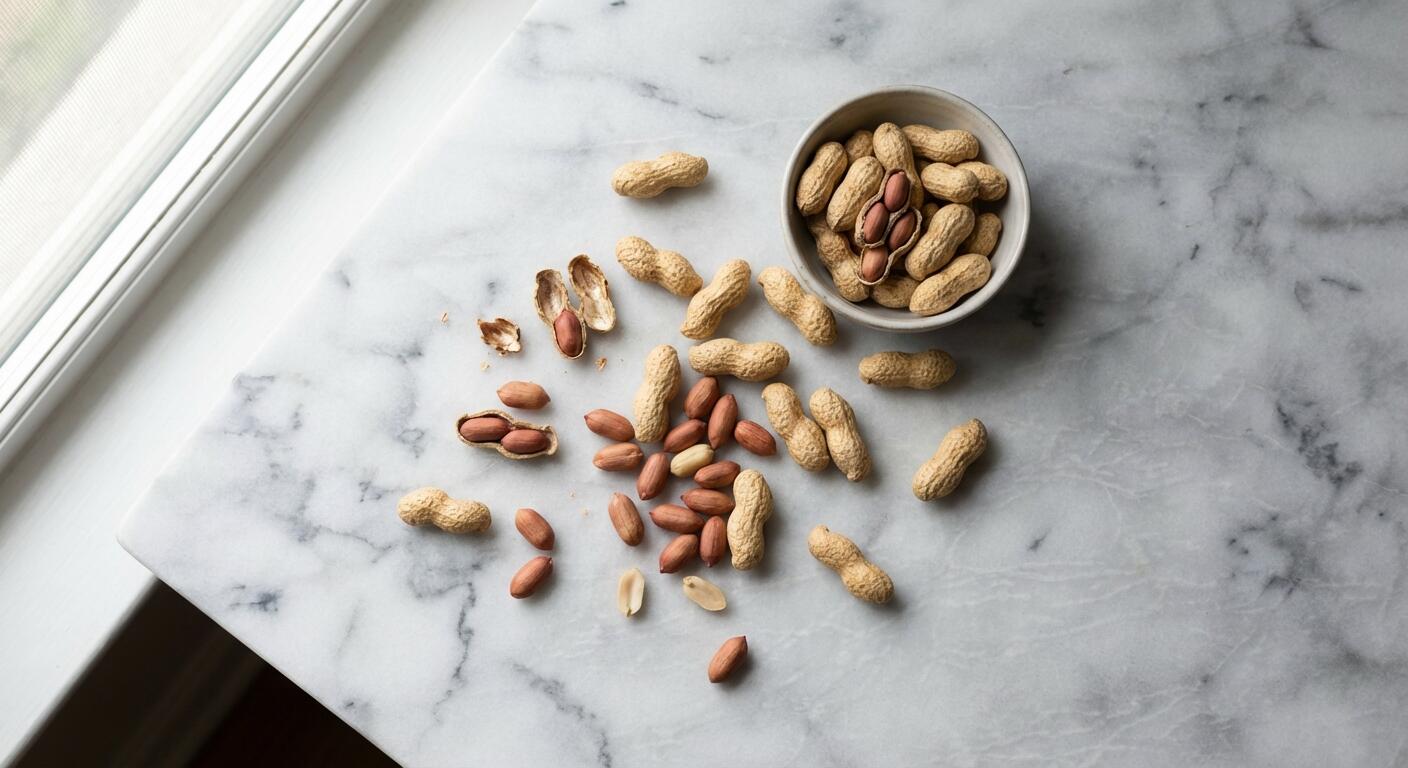
Peanuts are one of the most versatile and popular protein-rich snacks in the world. They’re affordable, shelf-stable, packed with nutrients, and deliver a satisfying crunch that makes them a staple in everything from trail mix to baseball games.
But here’s the catch: peanuts are incredibly calorie-dense. The difference between a carefully measured serving and “eating straight from the jar” can easily be 200-300 calories. And with different varieties—raw, roasted, boiled, honey-roasted, in-shell, shelled—tracking peanuts accurately requires knowing exactly what you’re eating.
This comprehensive guide breaks down peanut macros for every variety and preparation. You’ll learn when to weigh, how different varieties compare, and how to fit peanuts into your macro goals without accidentally torpedoing your calorie budget.
Peanuts Macros: Quick Reference
Here’s what you need to know at a glance for raw, shelled peanuts.
By Weight (Raw Peanuts)
| Serving | Calories | Protein | Carbs | Fat | Fiber |
|---|---|---|---|---|---|
| 100g | 567 | 26g | 16g | 49g | 8.5g |
| 1 oz (28g) | 161 | 7.3g | 4.6g | 14g | 2.4g |
| 1/4 cup (37g) | 207 | 9.5g | 6g | 18g | 3.1g |
| 1/2 cup (73g) | 414 | 19g | 12g | 36g | 6.2g |
| 1 cup (146g) | 828 | 38g | 23g | 72g | 12.4g |
By Count (Average)
| Count | Weight | Calories | Protein | Fat |
|---|---|---|---|---|
| 1 peanut | 0.7g | 4 | 0.18g | 0.35g |
| 10 peanuts | 7g | 40 | 1.8g | 3.4g |
| 20 peanuts | 14g | 80 | 3.6g | 6.9g |
| 28 peanuts | 20g | 113 | 5.2g | 9.8g |
| 35 peanuts | 25g | 142 | 6.5g | 12.3g |
| 40 peanuts (~1 oz) | 28g | 161 | 7.3g | 14g |
Key insight: The standard “serving” is about 1 ounce (28g), which equals roughly 40 peanuts or a small handful. But peanut sizes vary significantly—Spanish peanuts are smaller than Virginia peanuts.
Peanuts by Variety: Complete Macro Breakdown
Different peanut varieties and preparation methods change the macros—sometimes dramatically.
Raw Peanuts (Shelled)
| Serving | Calories | Protein | Carbs | Fat | Fiber |
|---|---|---|---|---|---|
| 1 oz (28g) | 161 | 7.3g | 4.6g | 14g | 2.4g |
| 1/4 cup (37g) | 207 | 9.5g | 6g | 18g | 3.1g |
Best for: Roasting at home, cooking, baking. Slightly lower in calories than roasted varieties.
Dry Roasted Peanuts (Unsalted)
| Serving | Calories | Protein | Carbs | Fat | Fiber |
|---|---|---|---|---|---|
| 1 oz (28g) | 166 | 6.7g | 6g | 14g | 2.3g |
| 1/4 cup (36g) | 214 | 8.6g | 7.7g | 18g | 3g |
What changed: Slightly more calories due to moisture loss during roasting, concentrating nutrients. Macros nearly identical to raw.
Dry Roasted Peanuts (Salted)
| Serving | Calories | Protein | Carbs | Fat | Sodium |
|---|---|---|---|---|---|
| 1 oz (28g) | 166 | 6.7g | 6g | 14g | 230mg |
| 1/4 cup (36g) | 214 | 8.6g | 7.7g | 18g | 296mg |
Key difference: Added salt increases sodium significantly. The macros are identical to unsalted dry roasted.
Tip: If you’re tracking sodium for blood pressure or competition prep, choose unsalted varieties or roast your own.
Oil Roasted Peanuts
| Serving | Calories | Protein | Carbs | Fat | Fiber |
|---|---|---|---|---|---|
| 1 oz (28g) | 170 | 7g | 5g | 15g | 2.2g |
| 1/4 cup (36g) | 219 | 9g | 6.4g | 19g | 2.8g |
What changed: +4-10 calories per ounce from roasting oil. The peanuts absorb small amounts of oil during roasting.
Best for: Flavor seekers who don’t mind slightly higher fat content.
Boiled Peanuts (Southern Style)
| Serving | Calories | Protein | Carbs | Fat | Fiber |
|---|---|---|---|---|---|
| 1 oz (28g) | 116 | 5g | 8g | 10g | 2g |
| 1/2 cup (65g) | 268 | 11.6g | 18.5g | 23g | 4.6g |
Why so different? Boiled peanuts absorb water during cooking, which significantly increases their weight while diluting calorie density. You get fewer calories per ounce because a large portion of that ounce is now water.
Key insight: Boiled peanuts are actually more volume-filling per calorie than roasted peanuts, making them excellent for cutting phases if you enjoy the soft, savory texture.
Honey Roasted Peanuts
| Serving | Calories | Protein | Carbs | Fat | Sugar |
|---|---|---|---|---|---|
| 1 oz (28g) | 162 | 6g | 8g | 13g | 4g |
| 1/4 cup (37g) | 214 | 7.9g | 10.5g | 17g | 5.3g |
What changed: Added sugar from honey coating increases carbs by 2-3g per ounce and adds about 10-20 calories. Fat is slightly lower because some of the weight comes from sugar instead.
Watch out for: Pre-packaged honey roasted peanuts often add more sugar than you’d expect. Check labels—some varieties have 6-8g sugar per ounce.
Spanish Peanuts vs Virginia Peanuts
| Type | Size | Taste | Typical Use |
|---|---|---|---|
| Spanish | Smaller, 2-3 per gram | Slightly sweeter, more intense | Peanut candy, snacks |
| Virginia | Larger, 1-2 per gram | Milder, classic peanut flavor | In-shell snacking, ballpark peanuts |
Macro difference: Virtually none. The nutritional profile per gram is identical—only the size differs.
Portion awareness: If you count peanuts instead of weighing them, Spanish peanuts will give you fewer calories per count (you need more to reach 1 oz).
In-Shell vs Shelled: The Critical Distinction
| Form | Edible Yield | Waste |
|---|---|---|
| In-shell | 50-60% by weight | 40-50% (shells) |
| Shelled | 100% | 0% |
Example:
- 100g in-shell peanuts → ~55g edible peanuts = ~312 calories
- 100g shelled peanuts → 100g edible = ~567 calories
Critical rule: Always use a “shelled” entry in your tracking app unless you’re specifically tracking in-shell weight and using an in-shell database entry. Mixing these up will cause massive tracking errors.
Why it matters for cutting: Eating in-shell peanuts forces you to slow down (the “shelling tax”), which can reduce mindless overeating. You’ll consume fewer calories in the same sitting.
Learn more about tracking accuracy in our Macro Calculator Guide
Peanut Macros vs Other Nuts
How do peanuts stack up against popular tree nuts? Here’s a direct comparison per 1 oz (28g) serving.
| Nut | Calories | Protein | Carbs | Fat | Net Carbs |
|---|---|---|---|---|---|
| Peanuts | 161 | 7.3g | 4.6g | 14g | 2.2g |
| Almonds | 164 | 6g | 6g | 14g | 2.5g |
| Cashews | 157 | 5g | 9g | 12g | 8g |
| Walnuts | 185 | 4.3g | 4g | 18.5g | 2g |
| Pistachios | 159 | 6g | 8g | 13g | 5g |
| Pecans | 196 | 2.6g | 4g | 20g | 1g |
| Macadamias | 204 | 2.2g | 4g | 21g | 2g |
Key takeaways:
- Highest protein: Peanuts win for protein density, followed closely by almonds
- Lowest calories: Cashews edge out peanuts slightly, but peanuts are more protein-dense
- Best protein-to-calorie ratio: Peanuts deliver the most protein per calorie among popular nuts
- Keto ranking: Peanuts are moderate (2.2g net carbs). Pecans and macadamias are lower (1-2g), cashews much higher (8g)
Bottom line: If you’re prioritizing protein, peanuts beat every other nut. If you’re strict keto, pecans or macadamias are better. For general macro balance, peanuts are hard to beat.
Read our complete Almonds Macros Guide for more nut comparisons.
Fitting Peanuts Into Your Macro Goals
Peanuts are versatile, but how you use them depends on your goals.
Cutting (Fat Loss)
The challenge: Peanuts are calorie-dense. It’s easy to blow 300+ calories on a “small snack.”
Strategies that work:
- Pre-portion everything: Never eat peanuts from the container. Measure 1 oz into a small bowl.
- Choose boiled peanuts: At 116 calories per ounce vs 161-170, boiled peanuts give you more volume.
- Use the in-shell trick: Buying in-shell forces you to slow down and creates a visual “pile of shells” reminder of how much you’ve eaten.
- Pair with volume foods: Mix 0.5 oz peanuts with air-popped popcorn or raw vegetables for a more filling snack with fewer calories.
- Track before eating: Log the portion first. This creates psychological commitment to stopping at that amount.
Sample cutting portion:
- 0.5 oz (14g) peanuts = ~80 calories, 3.5g protein, 7g fat
- Mixed with 2 cups air-popped popcorn (62 calories) = 142 total calories with significantly more volume
Bulking (Muscle Gain)
The advantage: Peanuts pack serious calories into a small volume—perfect when you need to eat more but struggle with appetite.
Strategies that work:
- Add to everything: Sprinkle peanuts on oatmeal, yogurt, salads, stir-fries
- Trail mix bulking: Combine peanuts, dried fruit, dark chocolate chips, and granola for 400+ calorie snacks
- Peanut butter + peanuts: Double down—spread peanut butter on toast and top with crushed peanuts
- Pre-workout energy: 1-2 oz peanuts 60-90 minutes before training provides sustained energy
- Liquid calories: Blend peanuts into protein shakes for extra calories without extra volume
Sample bulking snack:
- 2 oz peanuts = ~320 calories, 14g protein, 28g fat
- With 1 oz raisins = +85 calories, 22g carbs
- Total: 405 calories with balanced macros
Check out our Protein Guide for optimal protein targets
Maintenance
The sweet spot: Peanuts work great for maintenance—satisfying, nutrient-dense, and easy to track consistently.
Strategies that work:
- Daily 1 oz portion: Build a consistent 161-166 calorie peanut snack into your routine
- Meal enhancement: Use 0.5 oz portions to add flavor and healthy fats to meals
- Smart substitution: Swap chips or crackers for peanuts—better macros, more filling
- Variety rotation: Rotate between peanuts, almonds, and walnuts to prevent boredom
Sample maintenance portion:
- 1 oz dry roasted peanuts = 166 calories
- Provides 6.7g protein, 14g healthy fats
- Satisfies for 2-3 hours between meals
Common Peanut Tracking Mistakes
Even experienced macro trackers make these errors with peanuts.
Mistake #1: Eyeballing Portions
The problem: A “handful” of peanuts can range from 0.5 oz (80 calories) to 2 oz (320 calories).
The fix: Weigh on a food scale. Every single time. At least until you’ve calibrated your visual estimation through repeated weighing.
Mistake #2: Not Accounting for Shells
The problem: Weighing in-shell peanuts and logging as regular peanuts doubles your actual intake.
The fix:
- Weigh shelled peanuts only
- Or use a database entry specifically for “peanuts, in-shell” (about 50-60% yield)
- Never mix in-shell weights with shelled database entries
Mistake #3: Ignoring Oil-Roasted vs Dry-Roasted
The problem: “Roasted peanuts” entries vary widely. Oil-roasted can have 10-15 more calories per ounce.
The fix: Read the label and use the exact product entry, or verify the database entry matches (dry roasted ~166 cal/oz, oil roasted ~170 cal/oz).
Mistake #4: Underestimating Flavored Varieties
The problem: Honey roasted, chocolate covered, and candied peanuts add significant sugar and calories.
The reality:
- Honey roasted: +10-30 calories per oz from sugar
- Chocolate covered: +50-80 calories per oz from chocolate coating
- Wasabi peanuts: Often have added starches (+20-40 cal/oz)
The fix: Always verify the label. Don’t assume flavored varieties have the same macros as plain.
Mistake #5: The “Healthy Food” Mindset
The problem: “Peanuts are healthy, so I can eat as much as I want.”
The reality: Peanuts are nutrient-dense but calorie-dense. 4 oz of peanuts (a large “snack” bowl) is 650+ calories—more than many full meals.
The fix: Healthy ≠ unlimited. Track peanuts just as carefully as you’d track cookies or chips.
Macro-Friendly Peanut Recipes
Here are portion-controlled recipes that deliver flavor without derailing your macros.
Measured Trail Mix (Per Serving)
Ingredients:
- 0.5 oz (14g) roasted peanuts - 83 cal, 3.5g protein, 7g fat
- 0.5 oz (14g) raw almonds - 82 cal, 3g protein, 7g fat
- 0.25 oz (7g) dark chocolate chips - 35 cal, 0.4g protein, 2.3g fat
- 0.25 oz (7g) dried cranberries - 25 cal, 0g protein, 6g carbs
Total per serving: 225 calories | 6.9g protein | 8.3g carbs | 16.3g fat
Macro tip: This ratio keeps portions controlled while providing variety. Make 4-5 servings at once in individual bags.
High-Protein Peanut Smoothie
Ingredients:
- 1 scoop vanilla protein powder - 120 cal, 24g protein
- 1 cup unsweetened almond milk - 30 cal, 1g protein
- 1 medium banana - 105 cal, 1.3g protein, 27g carbs
- 0.5 oz (14g) peanuts - 80 cal, 3.5g protein, 7g fat
- 1 cup ice
Total: 335 calories | 29.8g protein | 29.3g carbs | 7.8g fat
Why it works: The peanuts add creaminess and healthy fats while boosting protein. Blending whole peanuts (vs peanut butter) adds texture.
Peanut-Crusted Chicken Breast
Ingredients (per serving):
- 6 oz raw boneless chicken breast - 204 cal, 39g protein
- 0.5 oz (14g) crushed dry-roasted peanuts - 83 cal, 3.4g protein, 7g fat
- 1 tbsp whole wheat breadcrumbs - 27 cal, 1g protein, 5g carbs
- 1 egg white for coating - 17 cal, 3.6g protein
Total: 331 calories | 47g protein | 6g carbs | 8.2g fat
Preparation: Coat chicken in egg white, press crushed peanut mixture onto surface, bake at 400°F for 22-25 minutes.
Macro advantage: Adds crunch and flavor while keeping protein extremely high and calories reasonable.
Savory Peanut Stir-Fry Sauce (4 servings)
Ingredients:
- 1 oz (28g) crushed peanuts - 161 cal, 7.3g protein, 14g fat
- 2 tbsp reduced-sodium soy sauce - 20 cal
- 1 tbsp rice vinegar - 3 cal
- 1 tsp sesame oil - 40 cal, 4.5g fat
- 1 clove garlic, minced
- 1 tsp ginger, minced
- 1 tsp sriracha
Per 1/4 recipe: 56 calories | 1.8g protein | 1g carbs | 4.6g fat
Usage: Toss with 6 oz protein and 2 cups vegetables for a complete macro-balanced meal.
Find more recipes in our Peanut Butter Macros article
Peanut Nutrition Beyond Macros
While macros get most of the attention, peanuts provide significant micronutrients and health benefits.
Key Micronutrients (per 1 oz serving)
| Nutrient | Amount | % Daily Value |
|---|---|---|
| Niacin (B3) | 3.8mg | 24% |
| Folate | 41mcg | 10% |
| Vitamin E | 2.4mg | 12% |
| Magnesium | 48mg | 12% |
| Phosphorus | 107mg | 11% |
| Manganese | 0.5mg | 25% |
Health Benefits
Heart health: Despite being high in fat, peanuts contain primarily monounsaturated and polyunsaturated fats—the same heart-healthy fats found in olive oil. Studies show regular peanut consumption is associated with reduced cardiovascular disease risk.
Blood sugar control: The combination of protein, fat, and fiber helps stabilize blood sugar levels, preventing the spikes and crashes associated with high-carb snacks.
Satiety and appetite control: Peanuts rank high on satiety scales—you feel fuller longer, which can reduce overall calorie intake despite their calorie density.
Antioxidants: Peanuts contain resveratrol (the same compound found in red wine) and other polyphenols with antioxidant properties.
Important note: All these benefits assume reasonable portions. Eating a jar of peanuts daily will still wreck your calorie budget.
Peanut Allergies and Alternatives
Peanut allergies are one of the most common and potentially serious food allergies. If you have a peanut allergy, tree nuts may be an option (many people allergic to peanuts can tolerate almonds, cashews, etc.), but always consult your allergist first.
Macro-similar alternatives if you can’t eat peanuts:
- Almonds: 164 cal/oz, 6g protein - nearly identical macros, slightly less protein
- Soy nuts: 130 cal/oz, 11g protein - higher protein, lower fat
- Sunflower seeds: 165 cal/oz, 5.8g protein - nut-free, similar calories
- Pumpkin seeds (pepitas): 151 cal/oz, 7g protein - similar protein, lower calories
Learn about other protein-rich foods in our Healthy Fats Guide
Frequently Asked Questions
How many calories are in a handful of peanuts?
A medium handful (about 1 oz or 28g) of dry roasted peanuts contains approximately 166 calories, 7g protein, 14g fat, and 6g carbs. However, handfuls vary significantly between people—weigh your portions for accuracy.
Are peanuts good for weight loss?
Yes, despite being calorie-dense. Peanuts’ combination of protein, fiber, and healthy fats increases satiety and helps control appetite. Studies show people who regularly eat peanuts don’t gain more weight than those who avoid them, and may even lose more weight when used strategically in calorie-controlled diets. The key is portion control.
How much protein is in peanuts?
Peanuts contain 7g of protein per ounce (28g) or 26g per 100g. While this is good for a plant food, they’re primarily a fat source at 49g fat per 100g. Use peanuts to supplement protein intake, not as your primary protein source.
Can you eat peanuts on a keto diet?
Yes, in moderation. Peanuts have 4-5g net carbs per ounce (total carbs minus fiber), which fits most keto diets if you track carefully. They’re lower in carbs than cashews (8g net) but higher than pecans or macadamias (1-2g net). Stick to 1-2 oz portions and account for them in your daily carb limit.
Are raw or roasted peanuts healthier?
Nutritionally, raw and dry-roasted peanuts are nearly identical. Dry roasted have slightly more calories per ounce (166 vs 161) due to moisture loss concentrating nutrients. Oil-roasted peanuts have about 10-15 more calories per ounce from added oil. All retain similar protein, healthy fats, and micronutrients. Choose based on taste preference and whether you want to avoid added oil.
Why do peanuts have so many calories?
Peanuts are about 50% fat by weight, and fat contains 9 calories per gram compared to 4 for protein and carbs. This makes them calorie-dense at 161-170 calories per ounce. However, those fats are primarily heart-healthy monounsaturated and polyunsaturated fats, similar to olive oil and avocados.
Should I weigh peanuts in-shell or shelled?
Always weigh shelled (without shells) unless you’re using a database entry specifically for “in-shell peanuts.” Shells add significant weight but zero nutrition. A pound of in-shell peanuts yields only about 50-60% edible peanuts (about 8-10 oz). Using an in-shell weight with a shelled database entry will cause you to massively overcount your intake.
How do boiled peanuts compare to roasted peanuts nutritionally?
Boiled peanuts have significantly fewer calories per ounce (116 vs 166) because they absorb water during cooking, which dilutes the calorie density. They have slightly less protein (5g vs 7g per oz) and fat (10g vs 14g) simply because water takes up more of the weight. The actual peanut nutrition is the same—boiled peanuts are just hydrated. This makes them more volume-filling per calorie, which can be helpful during fat loss phases.
The Bottom Line on Peanuts
Peanuts are an exceptional macro-friendly food when tracked accurately. They deliver more protein per calorie than any other popular nut, provide heart-healthy fats, and offer impressive satiety for their calorie content.
Key takeaways:
✅ Always weigh peanuts - handfuls are wildly inconsistent
✅ Use shelled weights - shells add weight but zero nutrition
✅ Raw and dry-roasted are nearly identical - choose based on preference
✅ Oil-roasted and flavored varieties add calories - verify labels
✅ Boiled peanuts are lower-calorie - the water dilutes calorie density
✅ Pre-portion for cutting - never eat from the container
✅ Embrace peanuts for bulking - calorie-dense and easy to eat
✅ Track consistently - peanuts fit any macro goal with proper portions
Whether you’re cutting, bulking, or maintaining, peanuts have a place in your diet. Just respect the calories, measure your portions, and enjoy one of nature’s most perfect macro-balanced snacks.
Related articles:
Related Articles
Dragonfruit Macros: Complete Nutrition Guide for Pitaya
Complete macro breakdown of dragonfruit (pitaya). Learn the calories, protein, carbs, and...
Read guide →
Bulgur Macros: Complete Nutritional Guide & Health Benefits
Discover bulgur's complete macro breakdown, nutritional benefits, and how to incorporate...
Read guide →
Radish Macros: Nutrition Facts and Health Benefits
Complete guide to radish macros and nutrition. Learn calories, protein, carbs, and health...
Read guide →Note: Nutrition values are approximate and may vary based on preparation method and source.